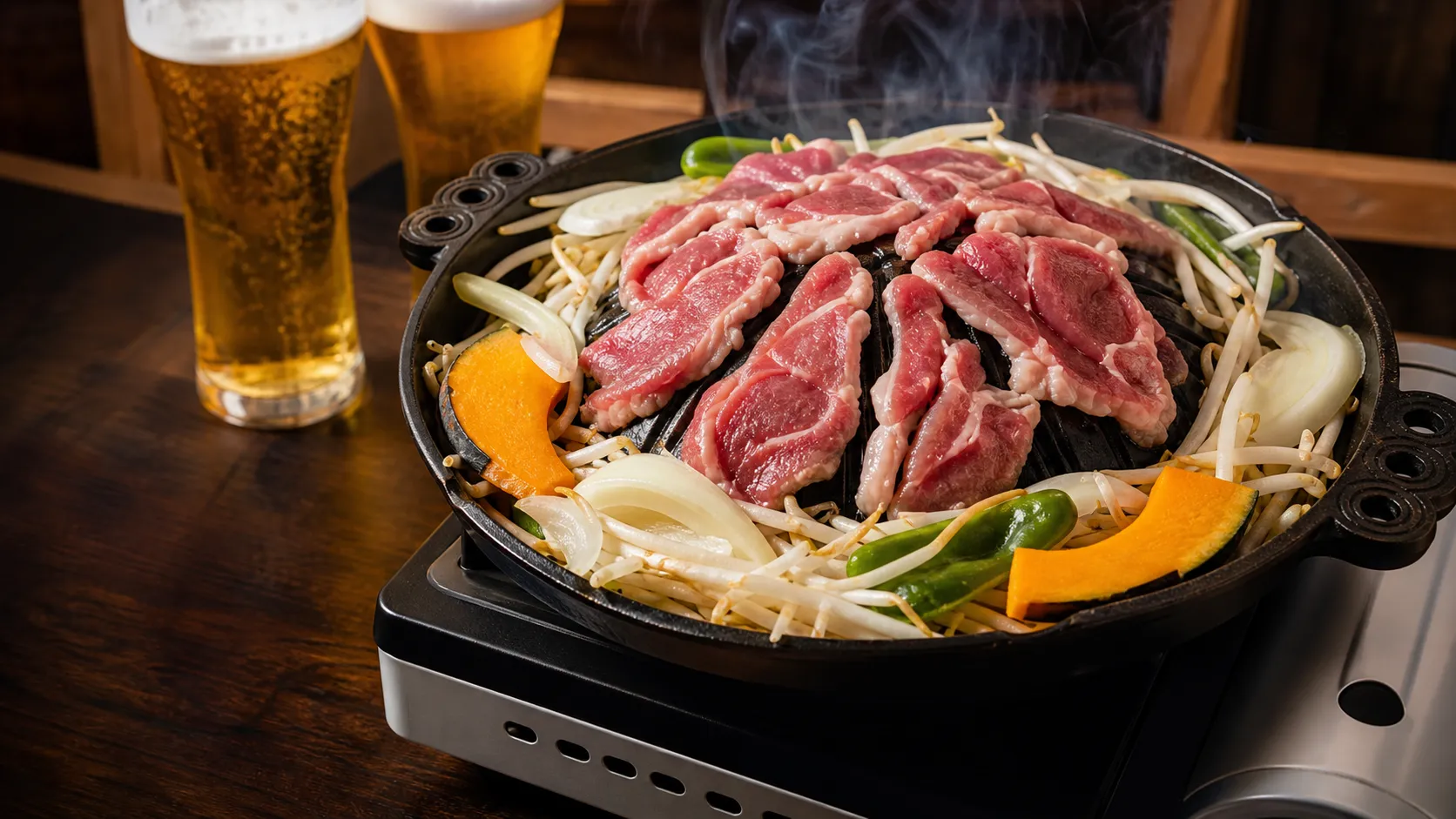
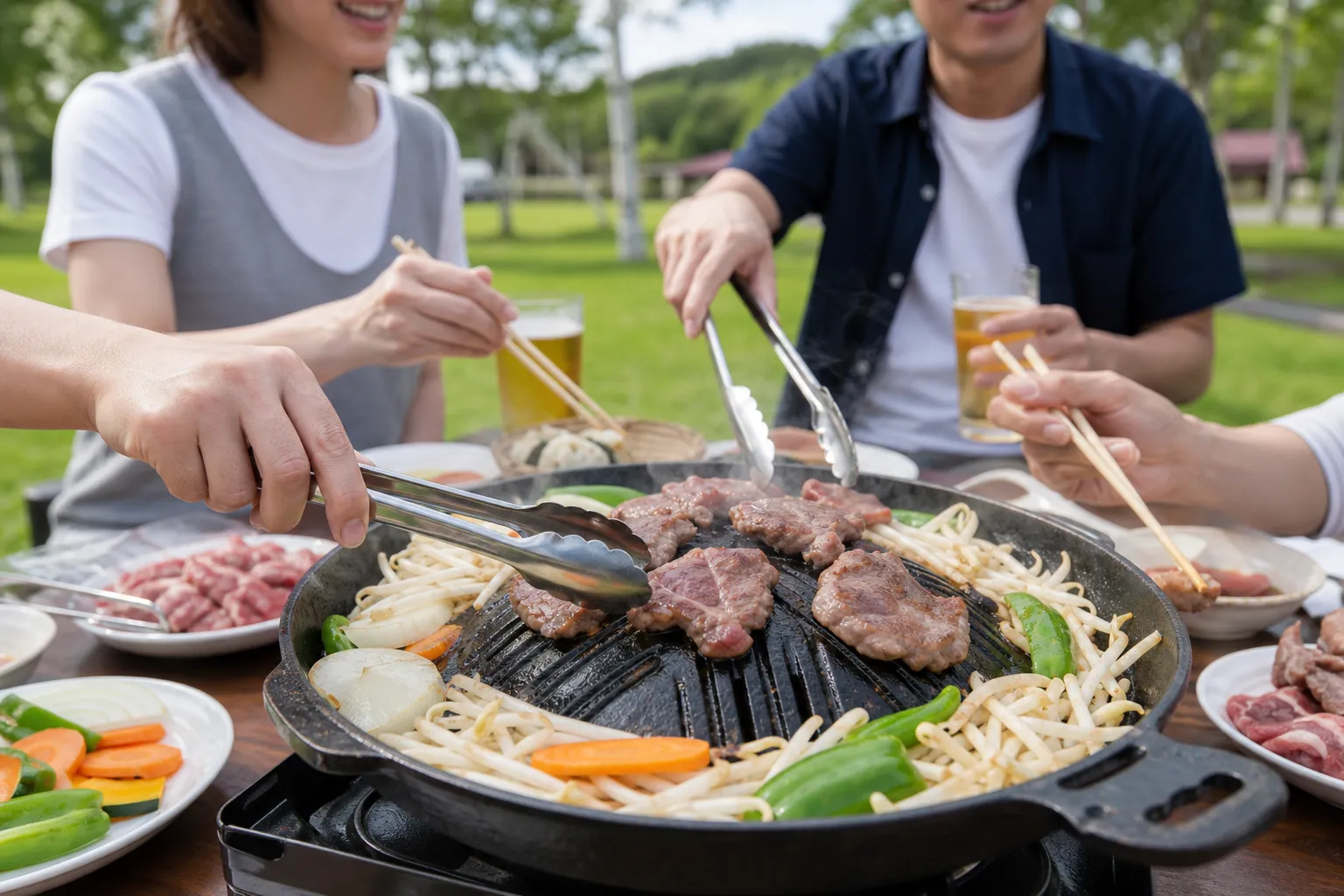
Hokkaido decided something about lamb. If you're going to eat it — and you should eat it — you should eat it outside, in the cool air, at a long table under autumn leaves, with a cold Sapporo beer in your hand and a dome-shaped iron pan screaming between you and your companions. The lamb goes on top. The fat runs down. The vegetables braise in the runoff below. The smell alone is enough to make you deeply, unreasonably happy.
Share this dish


Hokkaido's mutton BBQ: lamb and vegetables sizzled on a domed iron pan, dipped in a sweet-soy tare that cuts right through the richness. Named after Genghis Khan. Eaten outdoors in the cold. Absolutely correct.
🍜 Planning a food trip to Hokkaido?Add this dish to my Food Trip →
 Add this dish to my Food Trip →
I have never once regretted eating jingisukan. I have occasionally regretted stopping.
Jingisukan (ジンギスカン) is Hokkaido's defining meat dish: lamb and mutton BBQ cooked on a domed iron grill pan that's allegedly shaped like a Mongolian warrior's helmet — hence the name, Genghis Khan. The lamb sears on the crown of the dome, fat rendering and dripping; the vegetables sit in the moat around the edges, soaking it all up. Everything goes into a sharp, apple-forward, sweet-soy tare dipping sauce that cuts through the richness like it was engineered for exactly this situation. Because it was. Someone in Hokkaido put real thought into that sauce, and the result has been making people very happy since the 1930s.
How Hokkaido inherited the sheep
Sheep came to Hokkaido in the Meiji era as part of the government's plan to develop the island and build a wool industry. The wool plan didn't quite work. The sheep stayed. And when a resourceful cook looked at all those sheep and thought "dinner," a regional food tradition was born that the rest of Japan has never fully replicated.
The dome-shaped pan developed in the 1930s–40s, inspired loosely by the image of Mongolian warriors cooking over their helmets — historically debatable, mythologically irresistible. By the postwar era, outdoor jingisukan gaaden (garden BBQ parks) had become a Hokkaido summer institution. The Sapporo Beer Garden still runs one of the most famous in Japan: all-you-can-eat mutton in a converted brick factory, with draft beer on tap and the smell of grilled lamb hanging over everything like a beautiful smoke signal. I ate there until I couldn't stand up. I consider this a success.
The dome and the tare
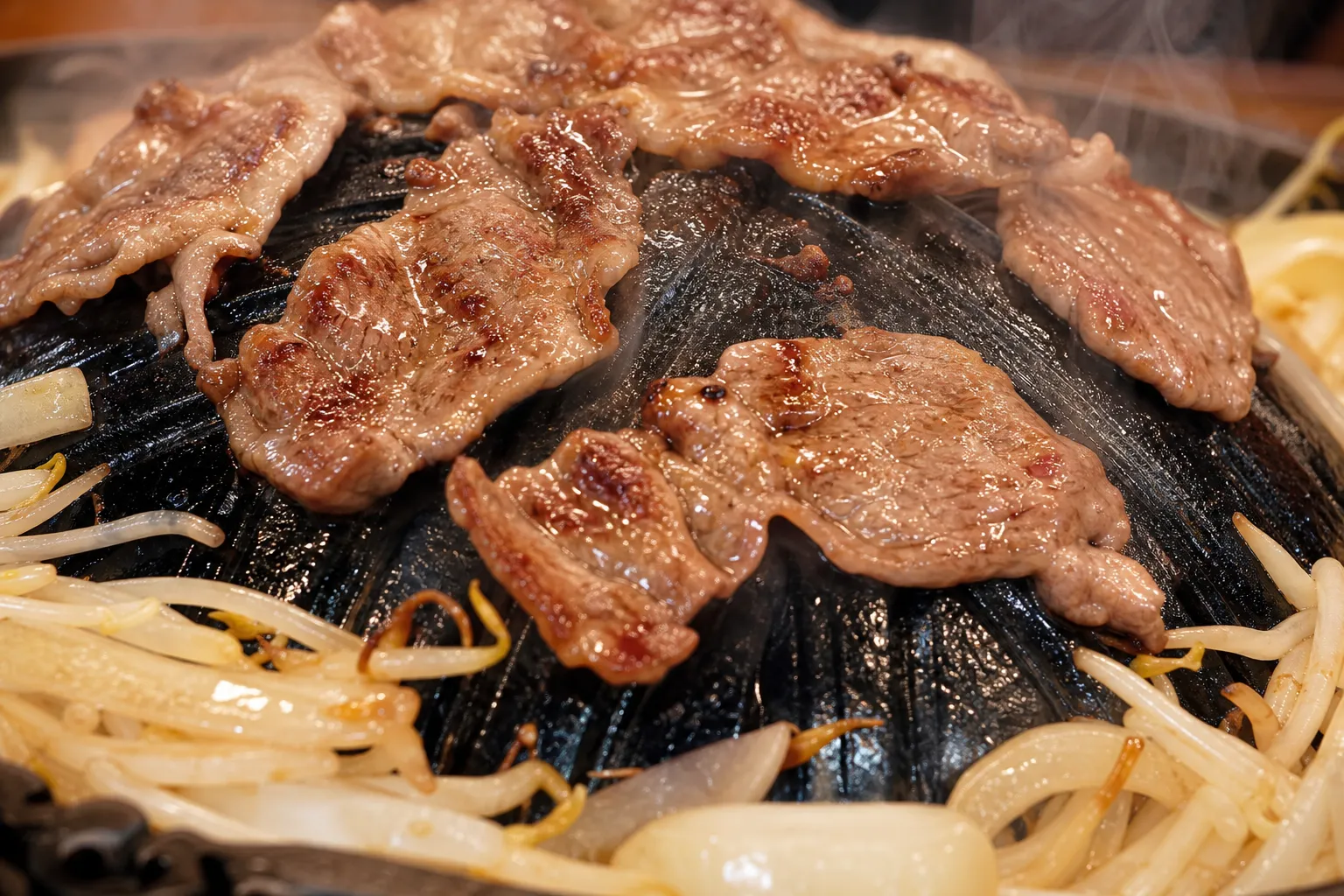
The dome isn't a gimmick. The crown runs hot — hot enough to char the lamb's edges while the center stays pink and tender. The moat runs cooler, so bean sprouts and onions and peppers braise slowly in lamb fat rather than burning. It's designed to cook two things perfectly at the same time with zero effort from the person eating. Whoever designed this understood that people at a BBQ want to eat, not manage heat zones.
The tare is the other essential. Hokkaido-style jingisukan tare is apple-and-soy based: fruit sweetness cutting through the savory, garlic and ginger underneath. It's not subtle. It doesn't need to be. It matches the lamb note for note and makes the whole thing sing. Without tare, you're eating decent grilled lamb. With tare, you're eating something you'll try to recreate at home and fail to fully capture, which is correct — come back to Hokkaido.
How it's made
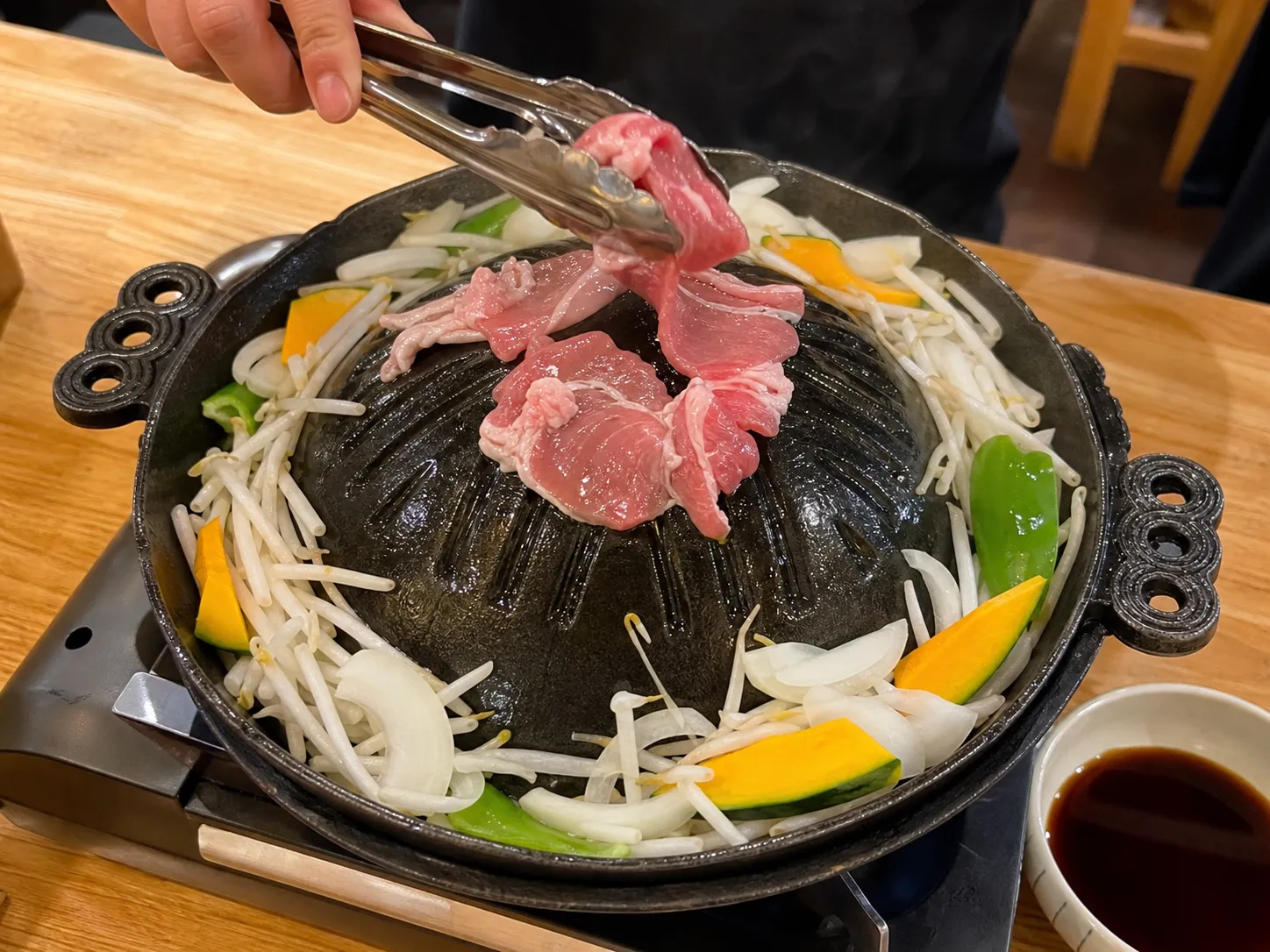
- Heat the domed cast-iron pan over charcoal or gas until smoke is rising off the dome
- Lamb or mutton slices go on the crown; vegetables go in the moat around the edge
- Sear the meat, turning once — you want charred edges and a pink center, not gray throughout
- Fat runs from the dome into the moat, continuously basting the vegetables
- Everything into the tare. Eat immediately. Reload the dome. Repeat.
Before you go — go all-you-can-eat
Your questions, answered honestly
"Does it taste gamey?" — Lamb has more character than chicken, yes. The younger cut (ramu, lamb) is mild and sweet. The older (maton, mutton) is deeper and more assertive. First time, go ramu. Second time, do both and compare. Either way, the tare handles the richness completely.
"Lamb or mutton?" — Ramu (子羊) is younger, tender, mild. Maton (マトン) is older, fattier, more complex. Order one plate of each. It costs almost nothing at all-you-can-eat and the comparison is one of the great small joys of eating in Hokkaido.
"Pre-marinated or dip-after?" — This is a real debate with passionate defenders on both sides. Pre-marinated (tsuke-komi) means the tare is in the meat. Dip-after means you control the sauce. The Sapporo Beer Garden does dip-after; most city restaurants do pre-marinated. I have a slight preference for dip-after because I like more sauce than anyone would reasonably apply.
"Is this only in Hokkaido?" — Jingisukan exists elsewhere in Japan but only in Hokkaido does it feel like a complete cultural experience. The outdoor garden setting, the all-you-can-eat format, the beer culture around it — it's a Hokkaido thing.
What the staff will ask you
| You'll hear | Romaji | Meaning | Just say |
|---|---|---|---|
| ラムとマトン、どちらにしますか? | Ramu to maton, dochira ni shimasu ka? | "Lamb or mutton?" | Ramu kudasai (lamb please) |
| 食べ放題にしますか? | Tabehōdai ni shimasu ka? | "All-you-can-eat?" | Hai, onegaishimasu — always say yes |
| 野菜のおかわりは? | Yasai no okawari wa? | "More vegetables?" | Hai, onegaishimasu |
To order, just say "Jingisukan kudasai" (ジンギスカンください) — "Jingisukan, please."
Where to eat it
- Sapporo Beer Garden (サッポロビール園) — Sapporo. All-you-can-eat mutton in a beautiful old brick factory. Book ahead. Go hungry.
- Daruma (だるま) — Susukino, Sapporo. Famous for pre-marinated mutton, counter seating, and a tare people travel specifically for. Lines are real.
- Yoshitsune (義経) — Sapporo, multiple locations. Reliable, beloved, good for both ramu and maton side-by-side.
If you're going to Hokkaido — and you should go to Hokkaido — jingisukan is mandatory. Commit to the all-you-can-eat. Bring people to share it with. The cold beer is part of the dish.
Soul Score
Local Roots5/5
First-Timer Friendly4/5
Adventure Level4/5
Comfort Level4/5
Travel Worthy5/5
These scores are one obsessed eater's gut feeling — not a verdict. A low number isn't a bad mark, just a different kind of adventure.
Planning what to eat in Hokkaido?❄️ Hokkaido Food Guide: Ramen, Soup Curry, Zangi, Sweets, and Winter Comfort Food →
Know someone planning Japan?
← All Articles
Local Food · Sapporo, Hokkaido
Still hungry?
Eat more from Hokkaido
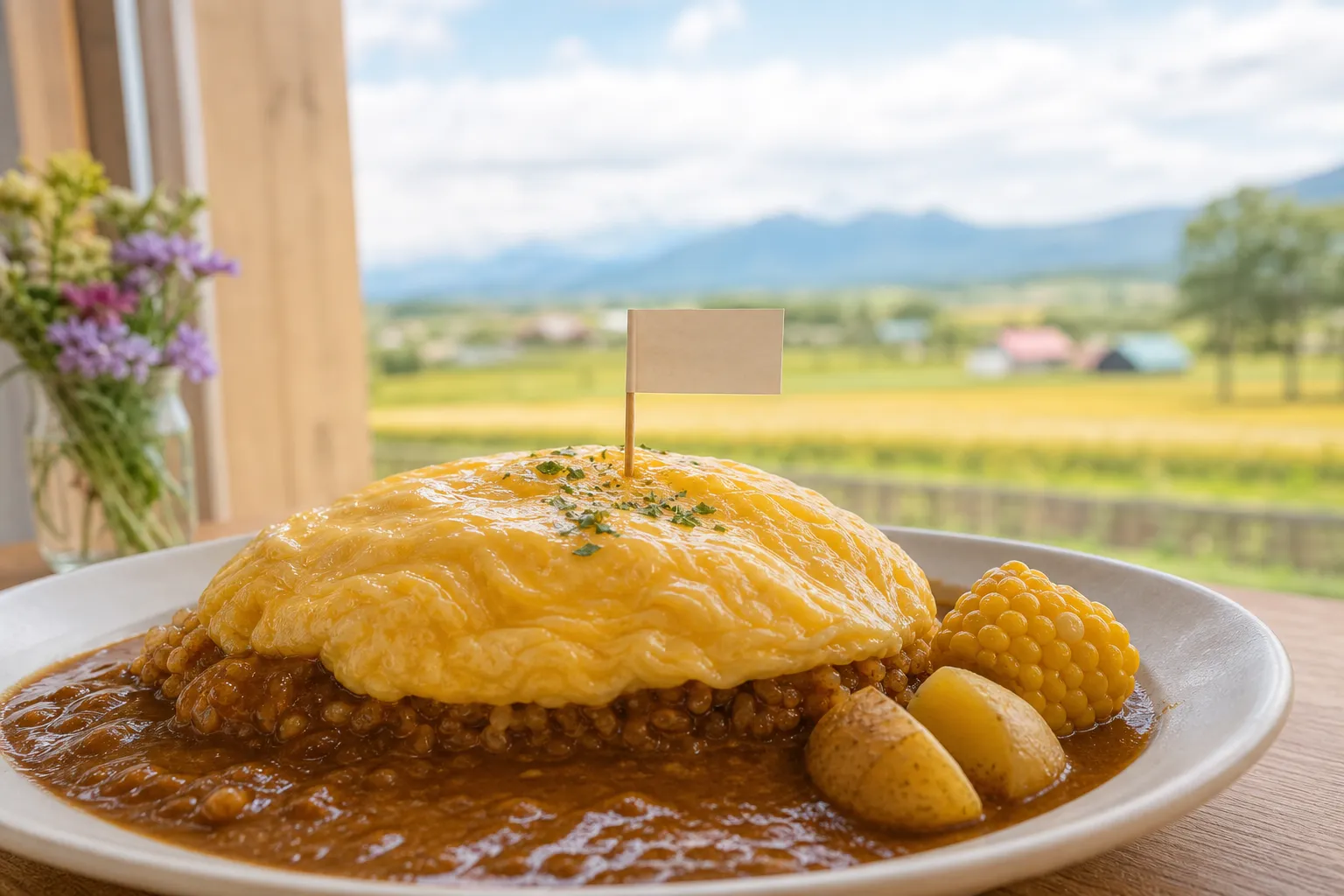
Local FoodFurano, Hokkaido
Furano Omu-Curry (富良野オムカレー)
Cut into the omelette and curry sauce comes flooding out like it's been waiting all morning for permission — with a lavender field in the window behind it.
August 2, 2026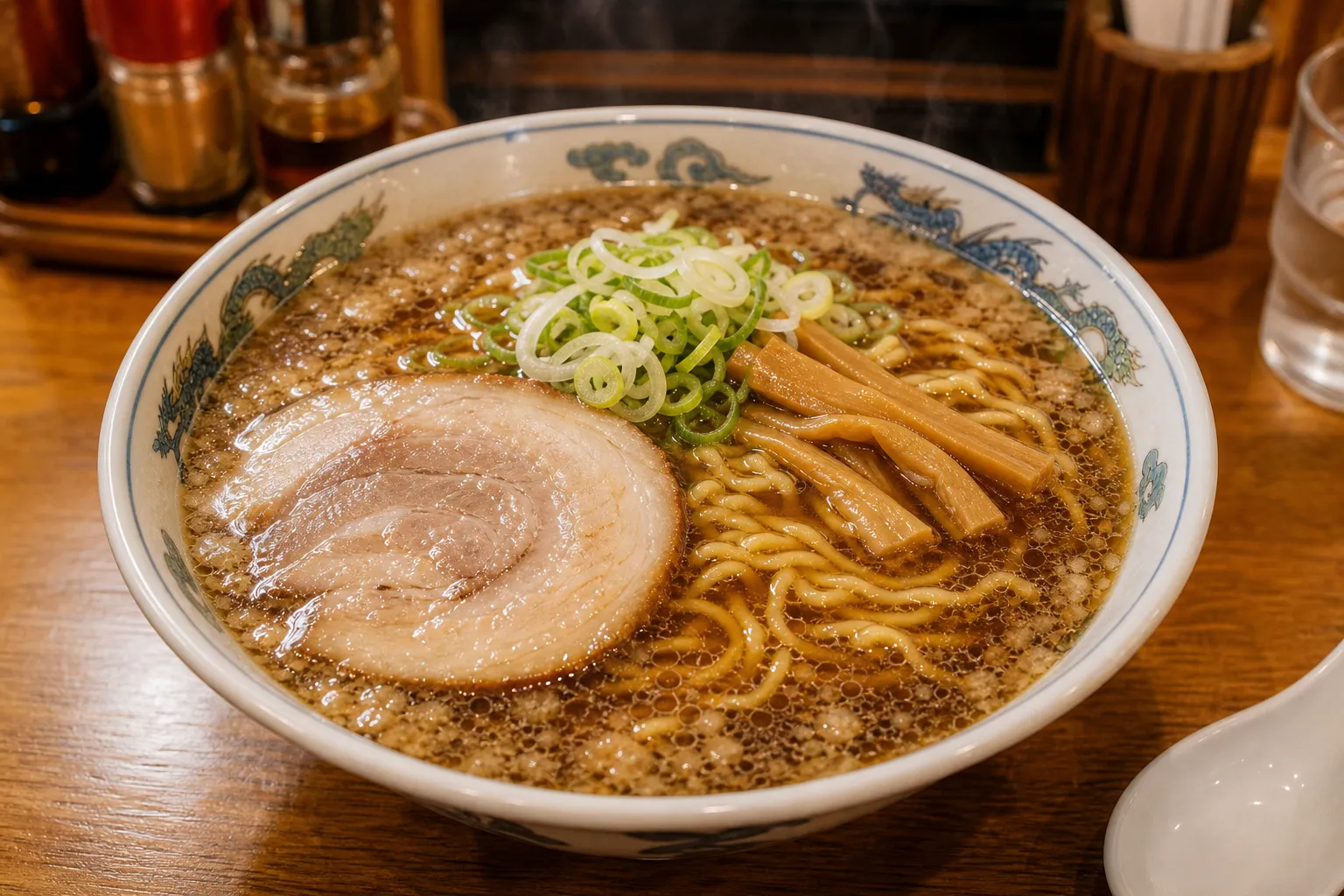
Local FoodAsahikawa, Hokkaido
Asahikawa Ramen (旭川ラーメン)
A slick of lard traps the heat so your soy broth stays scalding to the last drop — because in Asahikawa, the cold outside is trying to kill your ramen. It loses.
July 9, 2026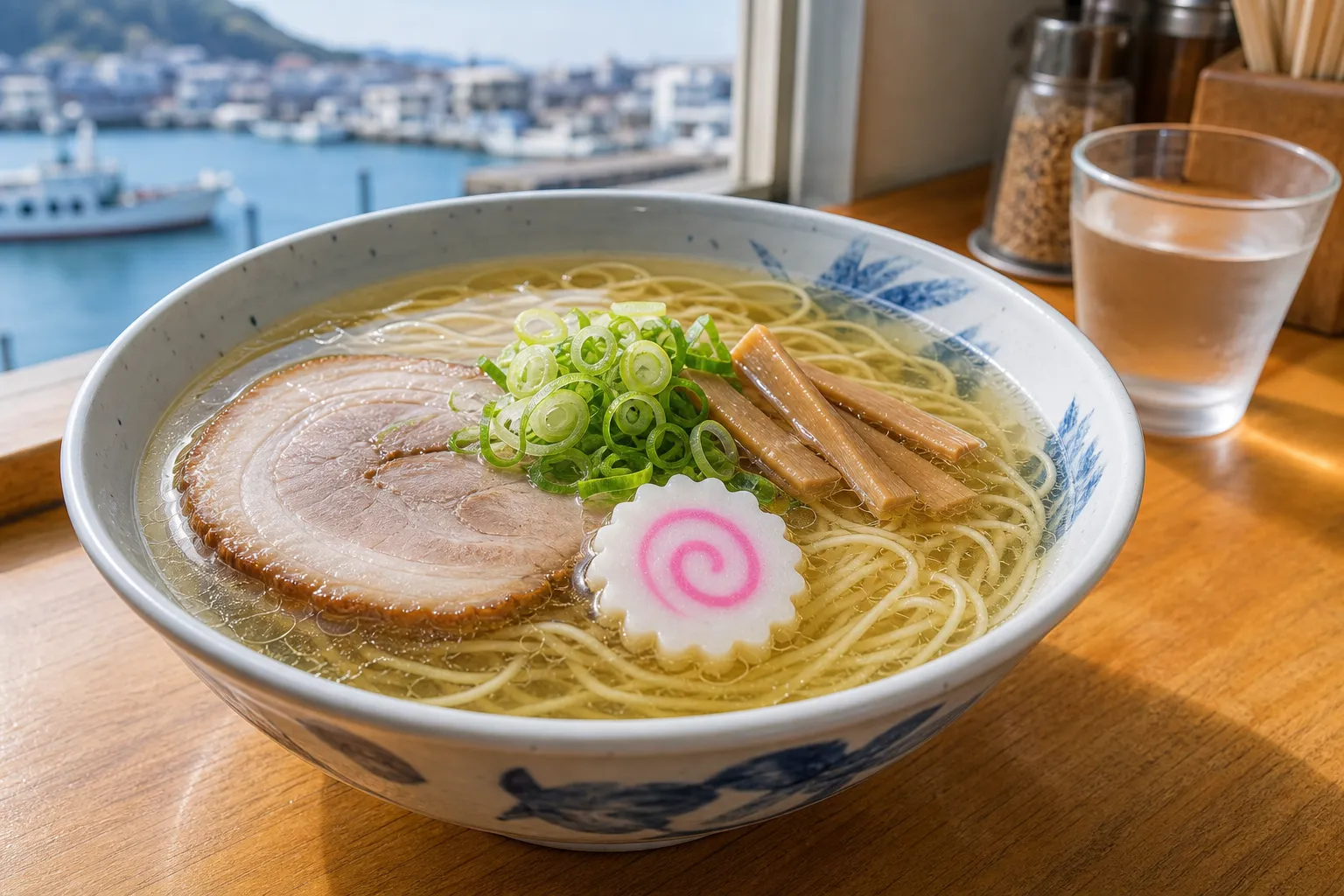
Local FoodHakodate, Hokkaido
Hakodate Shio Ramen (函館塩ラーメン)
Clear as tea, gold as morning light, quiet as a held breath — this is the ramen that proves subtraction is a flavor. Hokkaido's gentle bowl, and my hangover's best friend.
July 9, 2026