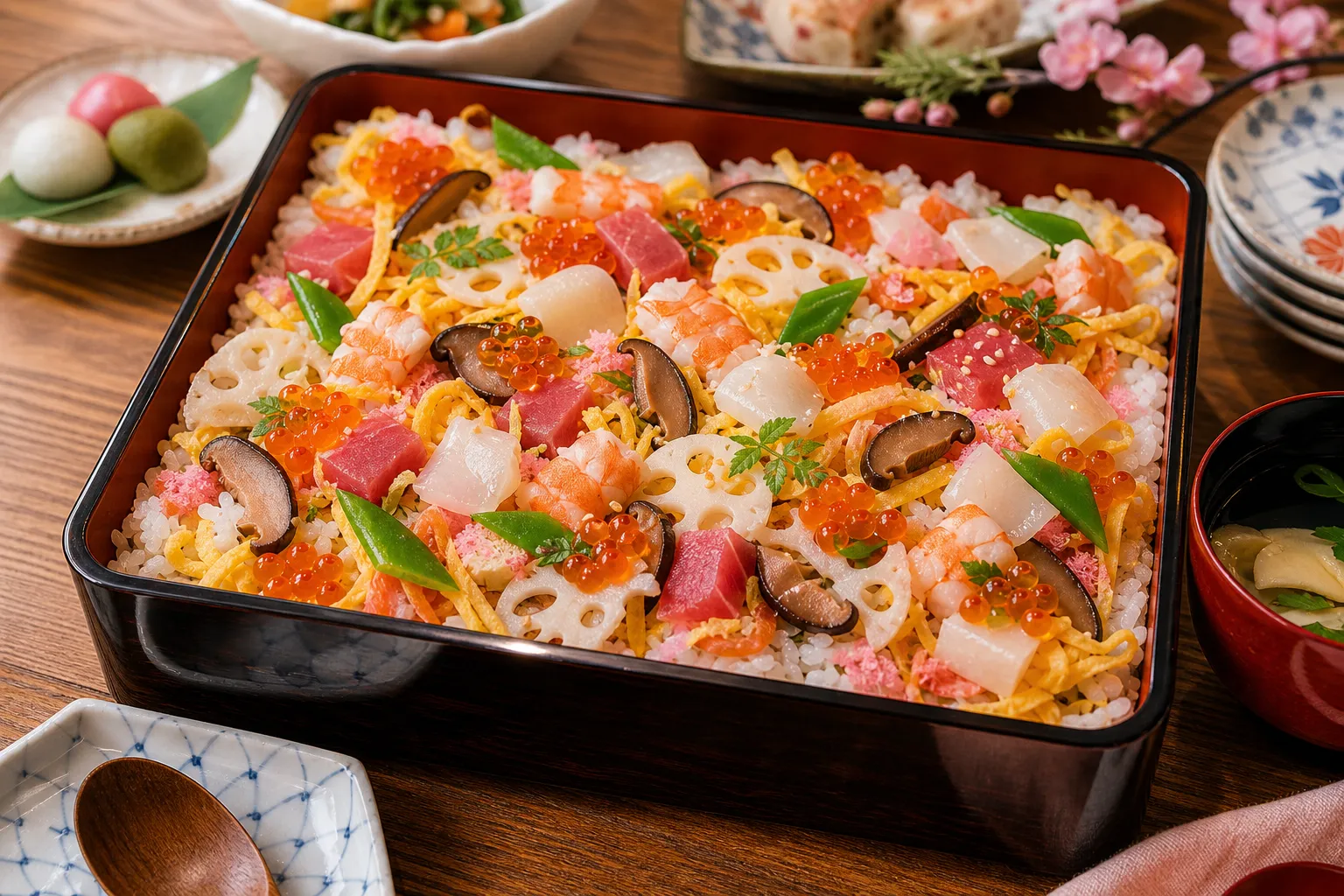
Some days I don't want ten dainty pieces of nigiri arriving one polite bite at a time — I want a whole bowl of sushi, right now, all at once, and permission to just dig in. That's chirashi-zushi, and it might be the happiest thing on any sushi menu. Chirashi-zushi means "scattered sushi": a bed of vinegared rice with the good stuff piled, fanned, and tumbled on top instead of pressed into individual pieces.
Share this dish


Sushi that gave up on tidy little pieces and just threw everything into a bowl — glossy sashimi in the city, confetti-bright vegetables and egg at home. Either way it's the most joyful, least intimidating way to eat sushi in Japan.
Here's the twist nobody tells you — it's really two different dishes wearing the same name. In Tokyo and at sushi counters, kaisen-chirashi is a seafood feast in a bowl: glossy slices of tuna, salmon, prawn, and roe fanned over the rice like a jeweler's tray. But in Kansai and in home kitchens, chirashi (also called gomoku-zushi) is something warmer and homier — vinegared rice mixed through with sweet-simmered vegetables, shredded egg, and pink denbu, made to celebrate. Same idea, two completely different souls.
The festival bowl and the feast bowl
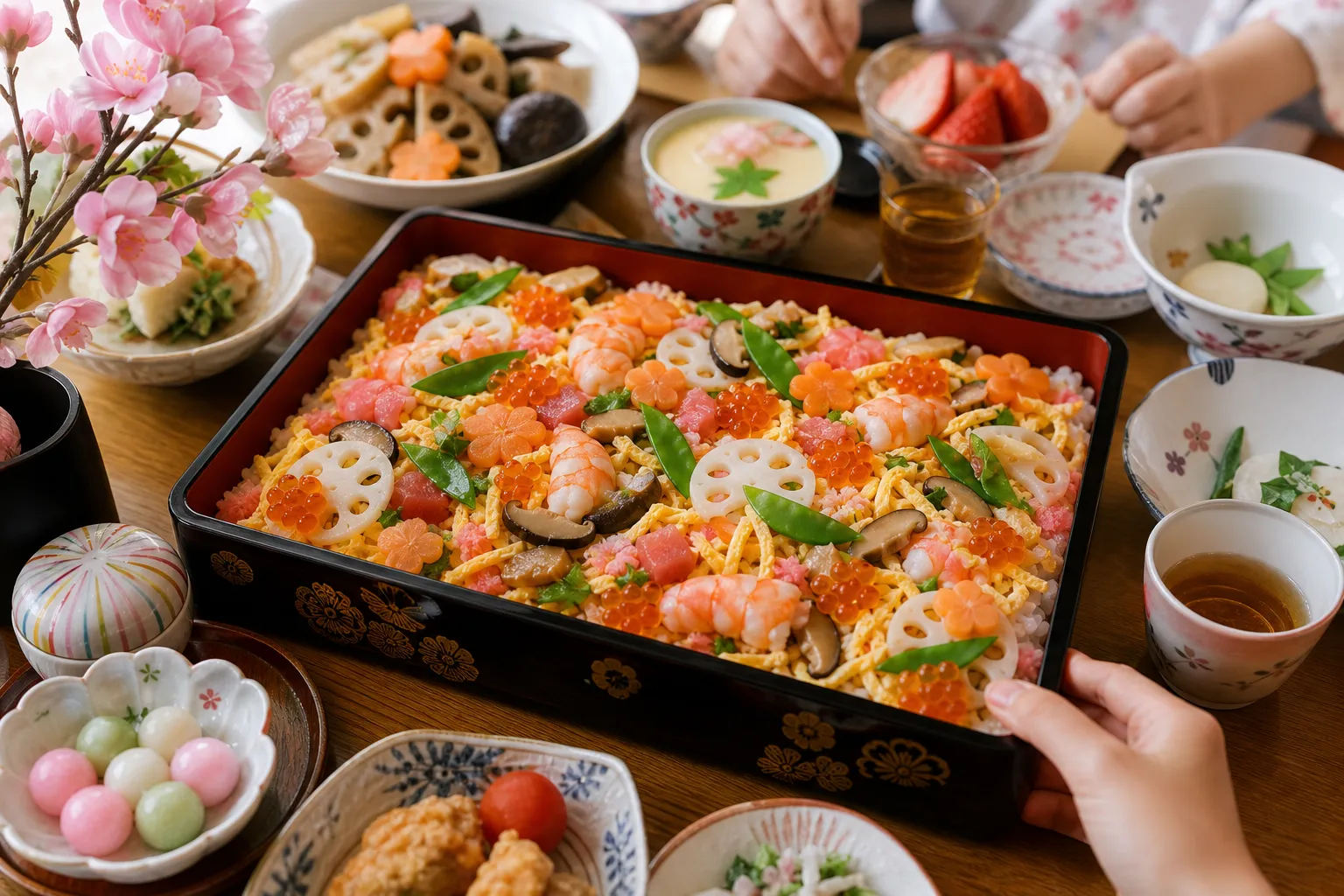
The homestyle version has deep roots as a celebration food. It's the dish Japanese families make for Hinamatsuri, the Doll's Festival on March 3rd — a big colorful platter of vinegared rice studded with simmered shiitake, carrot, lotus root, sweet egg ribbons, snow peas, and bright pink fish flakes. The colors matter: it's meant to look like spring, like good fortune scattered across the table. If you grew up in Japan, this is a bowl that smells like your family's kitchen on a lucky day.
The seafood kaisen-chirashi came from the sushi shops — a way to serve the day's best fish generously without hand-pressing every piece. I have a soft spot for the honesty of it: a chef basically says "here's everything, arranged beautifully, go." It's also, quietly, one of the best deals in a sushi-ya, because you get a spread of premium neta for less than ordering each as nigiri. Both bowls, in their own way, are about abundance — one celebrates the calendar, the other celebrates the catch.
Why a bowl beats individual pieces
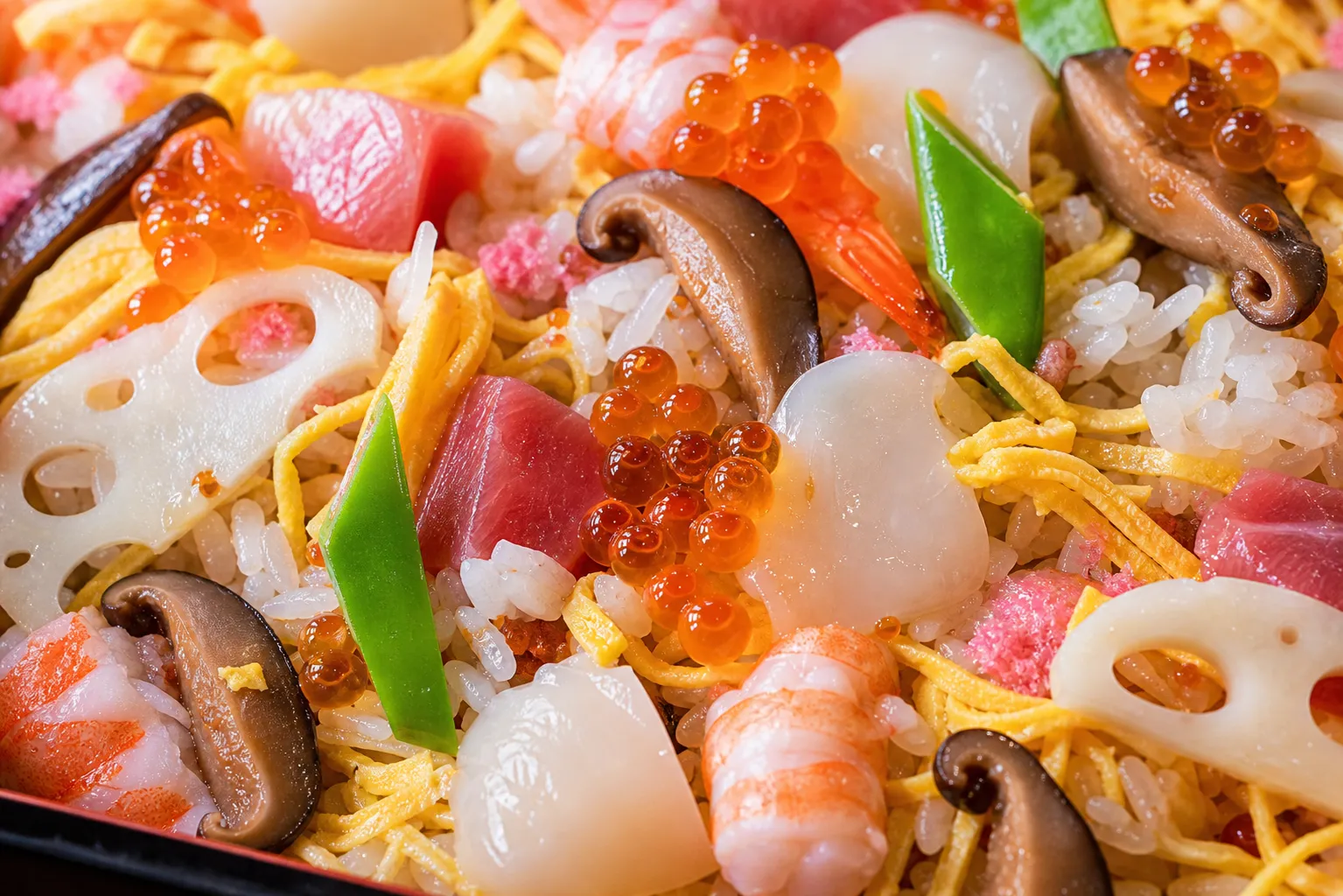
The magic of chirashi is that every mouthful is a little different and you build it yourself. One bite might be tuna and a smear of wasabi; the next, sweet egg and a curl of pickled lotus root; the next, salmon roe popping against the cool vinegared rice. Nothing arrives seasoned and finished for you the way nigiri does — you're the one mixing, scooping, and deciding. It's sushi with the pressure taken off, which is exactly why I hand it to nervous first-timers.
And the rice does the same quiet heavy lifting it always does. Good sushi-meshi underneath is warm-ish, glossy, and seasoned with vinegar, sugar, and salt so it can hold its own against all that topping. In the homestyle bowl the flavors are cooked right into the rice; in the seafood bowl the plain vinegared rice is a clean, tart counterweight to rich raw fish. Either way, the bowl format means you get generous scoops of it — and honestly, more rice is never the problem.
How it's made
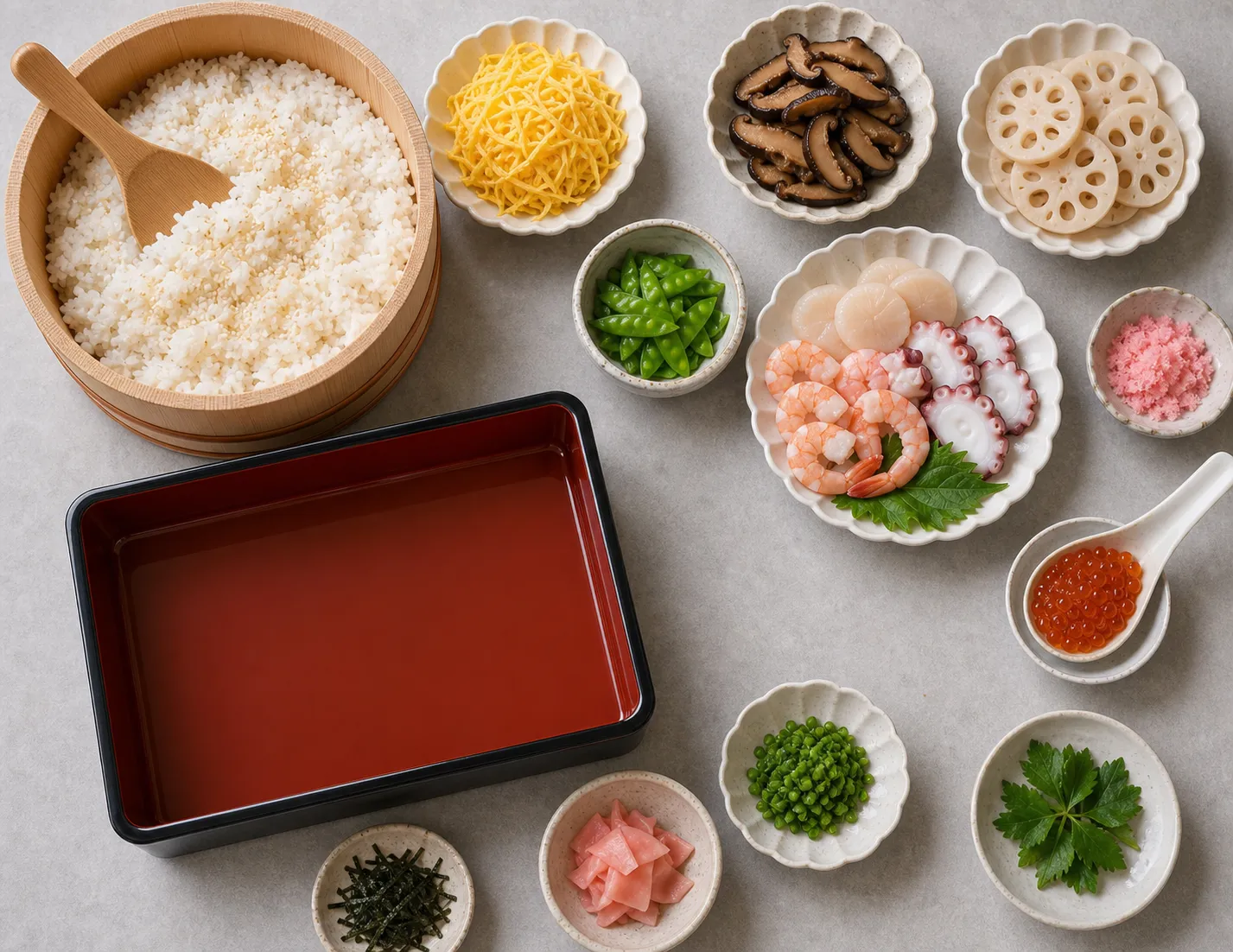
- Cook short-grain rice, then fold in seasoned vinegar (vinegar, sugar, salt), fanning it to a glossy sheen and cooling it to just above room temperature
- For the festive style, simmer shiitake, carrot, lotus root, and dried gourd in a sweet-savory broth, then mix them through the rice; for the seafood style, keep the rice plain
- Make thin omelette and slice it into fine ribbons (kinshi tamago)
- Spread the rice into a bowl or wide dish
- Scatter and fan the toppings on top — sashimi, prawn, and roe for kaisen-chirashi; egg ribbons, pink denbu, snow peas, and nori for the homestyle bowl
Before you go — pick your bowl
Your questions, answered honestly
"Do I mix it all up or eat it neatly?" — For the seafood kaisen-chirashi, eat from the top down and keep it looking nice — pick up toppings with a little rice. For the homestyle festival version, it's already mixed, so just dig in. There's no wrong way; the bowl is meant to be relaxed.
"How is this different from a kaisen-don?" — Fair question, they look almost identical. The line is the rice: chirashi sits on vinegared sushi rice, while a kaisen-don (seafood rice bowl) usually sits on plain steamed rice. If the rice tastes tangy, it's chirashi.
"Where's the soy sauce?" — Pour a little into a side dish and lightly dip the fish, or drizzle sparingly. The homestyle veg-and-egg version usually needs no soy at all — it's already seasoned.
"Is this good for a nervous first-timer?" — Honestly, it's my top pick. No etiquette pressure, no chopstick gymnastics, you control every bite, and you can see exactly what you're eating. Start here and work up to the counter.
What the staff will ask you
| You'll hear | Romaji | Meaning | Just say |
|---|---|---|---|
| 海鮮ちらしでよろしいですか? | Kaisen chirashi de yoroshii desu ka? | "The seafood chirashi, right?" | Hai, onegaishimasu (yes please) |
| わさびは別にしますか? | Wasabi wa betsu ni shimasu ka? | "Wasabi on the side?" | Hai (yes) / Issho de (mixed in is fine) |
| ご飯の量は? | Gohan no ryō wa? | "How much rice?" | Futsū de (normal) / Ōmori de (large) |
| お味噌汁はつけますか? | Omisoshiru wa tsukemasu ka? | "Add miso soup?" | Hai, onegaishimasu (yes please) |
To order, just say "Kaisen chirashi hitotsu kudasai" (海鮮ちらし一つください) — "one seafood chirashi, please."
Where to eat it
- Tsukiji Outer Market (Tokyo) — packed with shops serving generous, glossy seafood chirashi bowls; one of the best-value ways to eat premium fish anywhere.
- Toyosu Market (Tokyo) — the sushi counters at the modern fish market do beautiful kaisen-chirashi alongside their nigiri.
- Sushi-ya and department-store food halls nationwide — almost every proper sushi restaurant offers a chirashi set, and depachika basements sell excellent takeaway bowls.
- Any home in early March — if you're lucky enough to be invited over near Hinamatsuri, the homestyle festival chirashi is the real prize.
Seafood chirashi is best eaten the day it's made and shop selections change with the catch, so go earlier in the day when the fish is freshest.
Soul Score
Local Roots4/5
First-Timer Friendly5/5
Adventure Level3/5
Comfort Level5/5
Travel Worthy4/5
These scores are one obsessed eater's gut feeling — not a verdict. A low number isn't a bad mark, just a different kind of adventure.
Know someone planning Japan?
← All Articles
Japanese Food · Nationwide
Still hungry?
You might also like
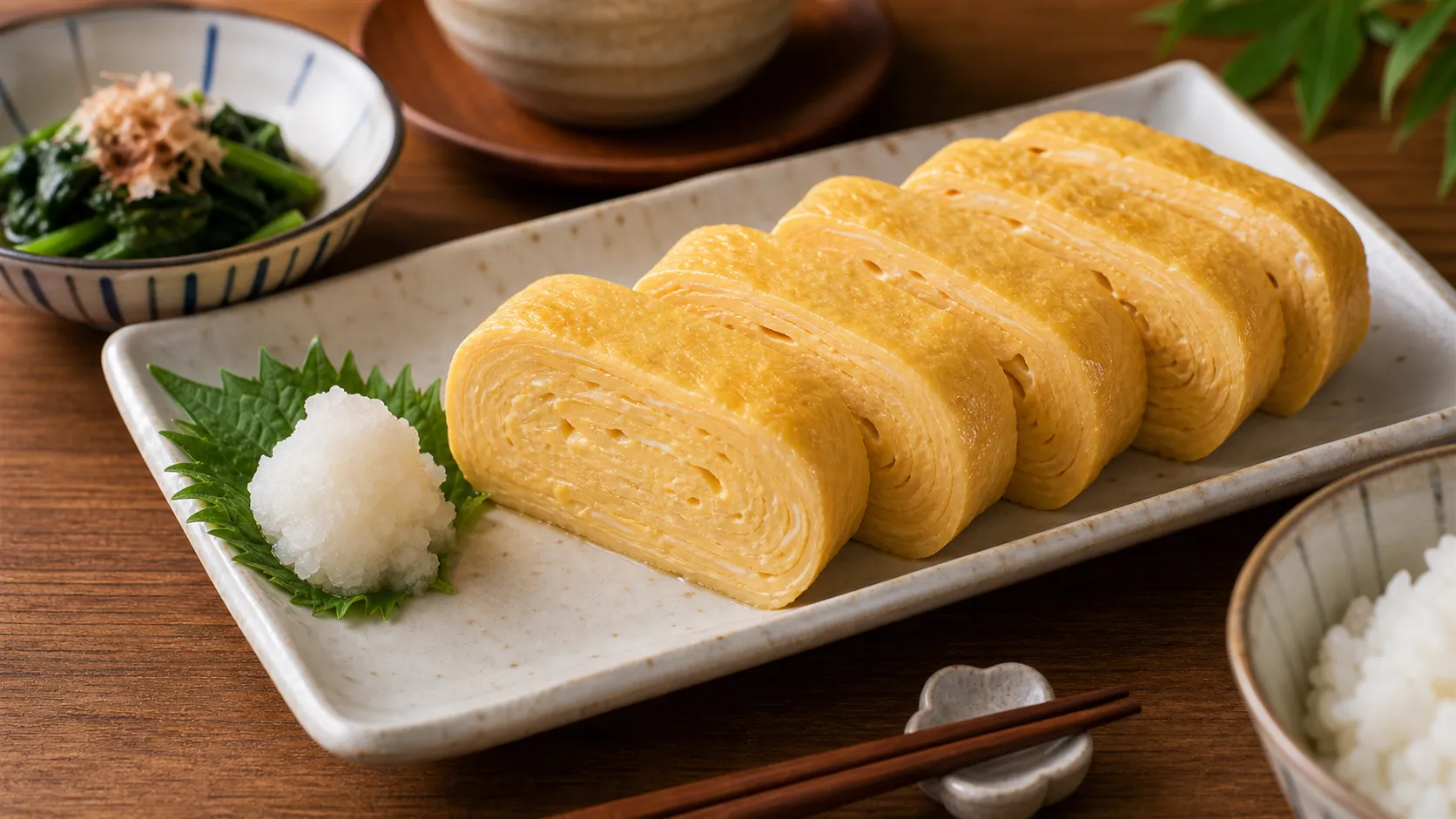
Japanese FoodNationwide
Dashimaki-tamago (だし巻き卵)
A rolled omelette so soft it almost trembles, layered fold over fold and soaked with dashi so that biting in releases a little warm rush of savory broth — the deceptively simple egg dish that Japanese chefs spend years perfecting.
July 11, 2026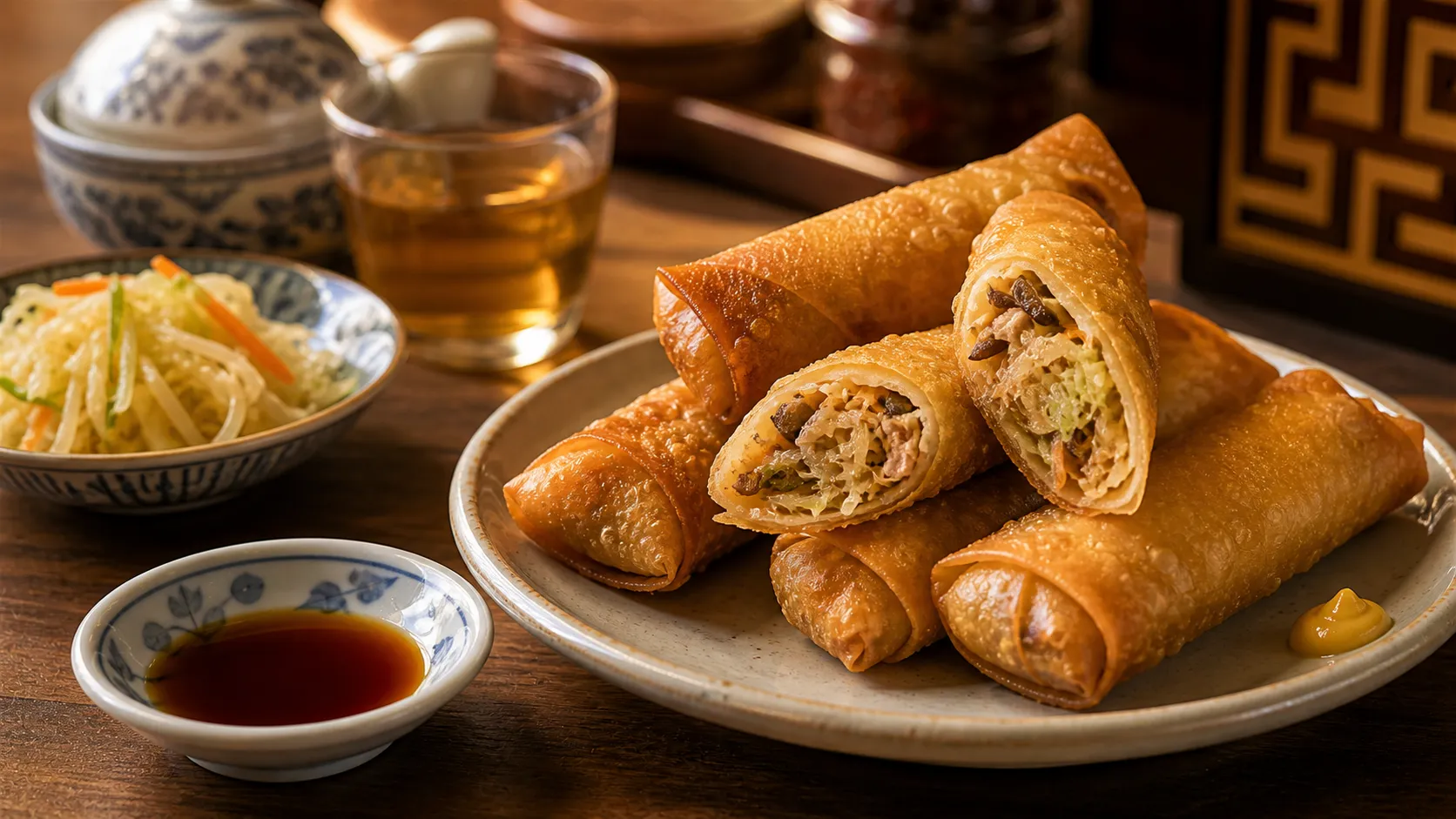
Japanese FoodNationwide
Harumaki (春巻き)
The Japanese spring roll — a shatteringly crisp golden tube that gives way to a hot, savory tangle of pork, cabbage and bamboo shoot, best eaten the second it's cool enough not to burn your mouth (you will not wait that long).
July 11, 2026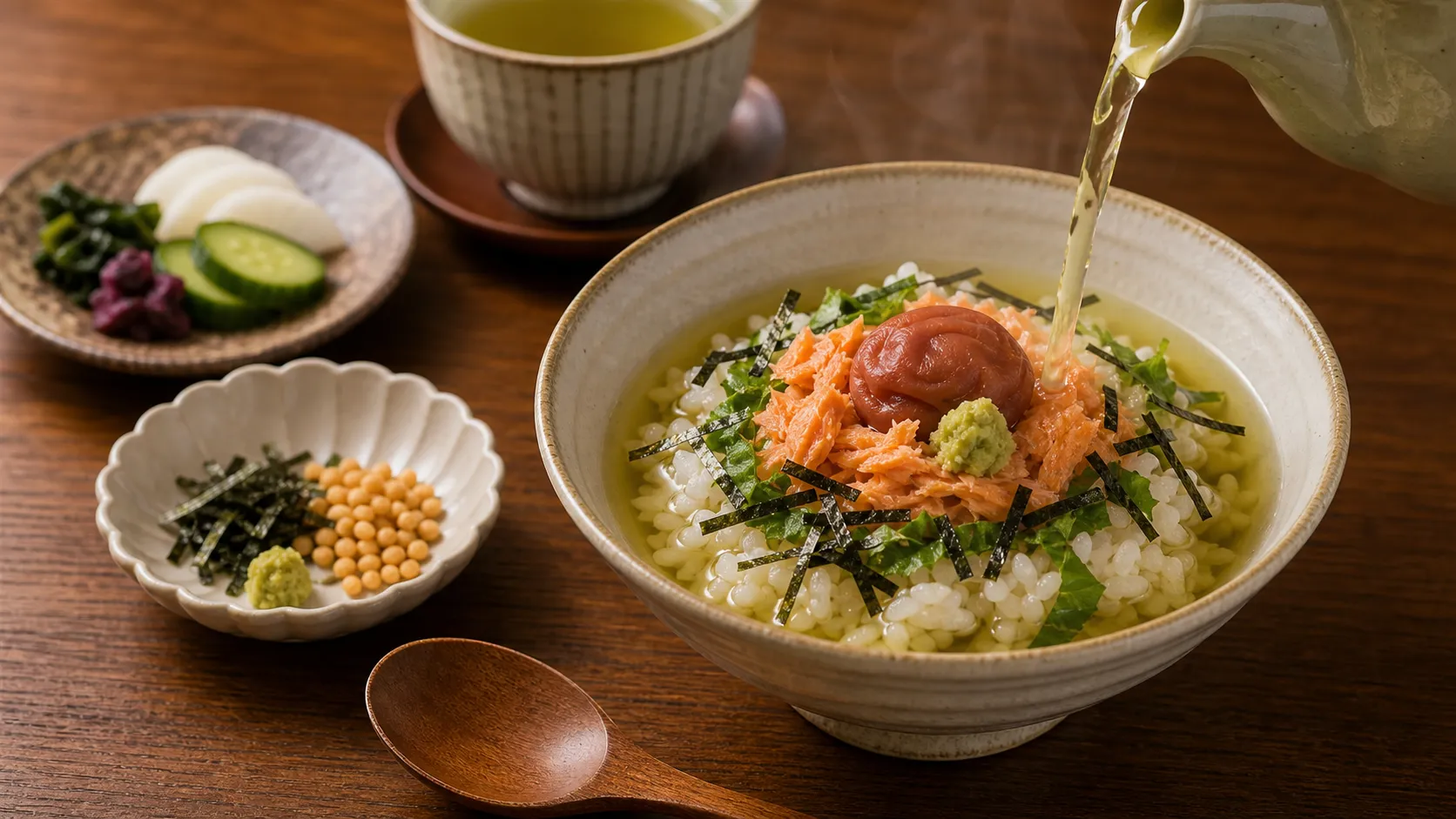
Japanese FoodNationwide
Ochazuke (お茶漬け)
Pour hot green tea or dashi over a bowl of rice, scatter something savory on top, and eat — the gentlest, most quietly restorative dish in Japan, the one you reach for late at night when you just need a warm bowl to make everything okay.
July 11, 2026