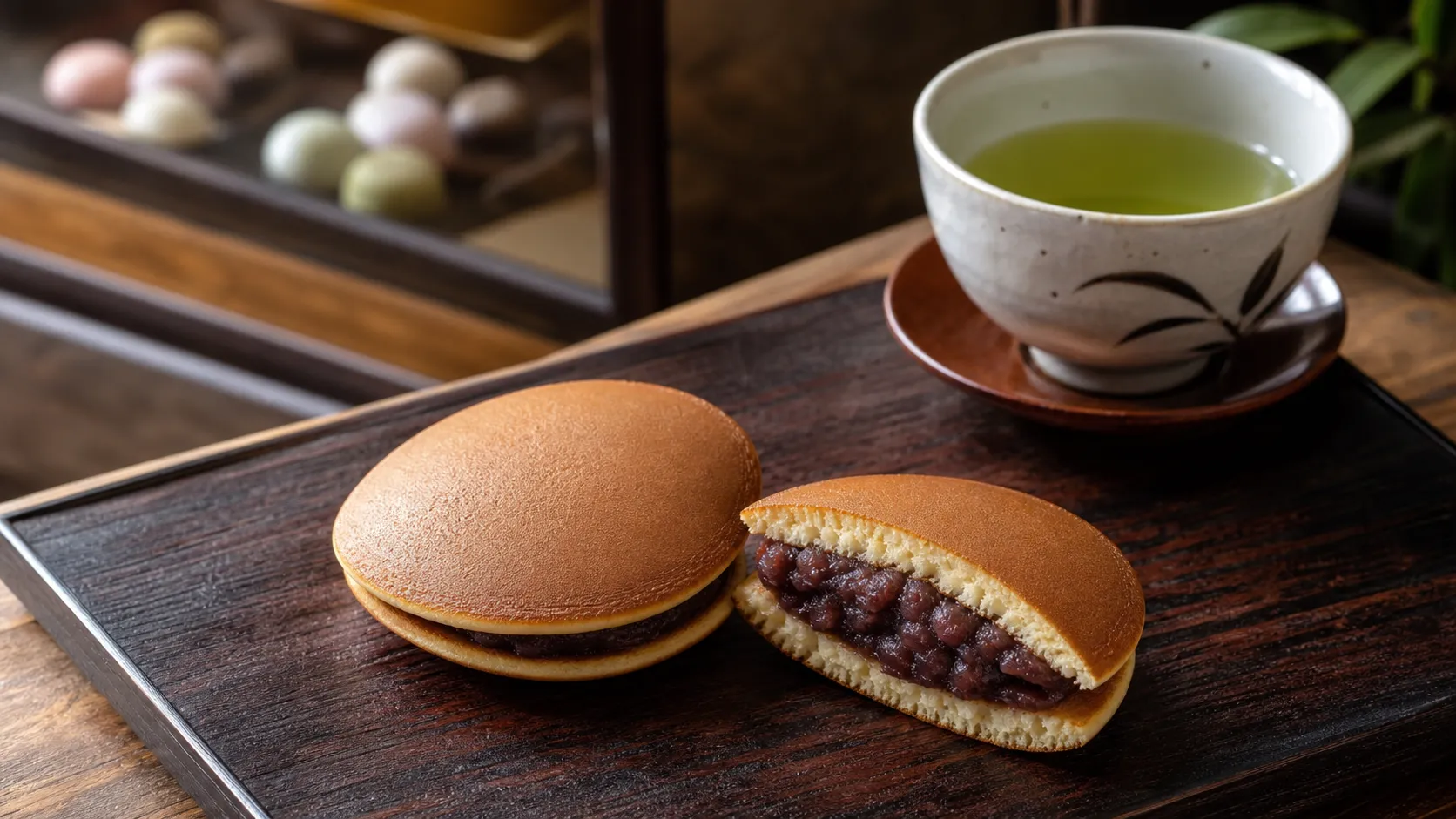
Two little golden domes with a faint honey smell, and a fat seam of smooth red bean paste holding them together — you take one bite of dorayaki and it's so soft, so springy, so gently sweet that even the people who swear they "don't really like Japanese sweets" go quiet and reach for a second. The pancakes are pillowy and honey-scented; the anko in the middle is smooth and not too sweet. No acquired taste, no ceremony, no catch. It's the friendliest sweet in Japan, and everyone's invited.
Share this dish


Two fluffy honey-pancakes sandwiching sweet red bean paste. Doraemon's favorite food, a teatime classic, and the most foolproof introduction to Japanese sweets there is.
It's also famous worldwide as the favorite food of Doraemon, the beloved robot-cat from the classic anime — which has made dorayaki a gateway sweet for fans everywhere.
Named after a gong
Dorayaki gets its name from dora (銅鑼) — a gong — because the round, golden, slightly domed pancakes look just like one. (There's even a charming legend that a samurai left his gong behind and a cook used it to fry the cakes.) The modern two-pancake-sandwich form was popularized by a Tokyo confectioner in the early 1900s and has been a teatime staple ever since.
It sits in the wagashi (traditional Japanese sweets) family but feels familiar to anyone who likes pancakes — which is exactly why it travels so well.
Why the pancake matters as much as the filling
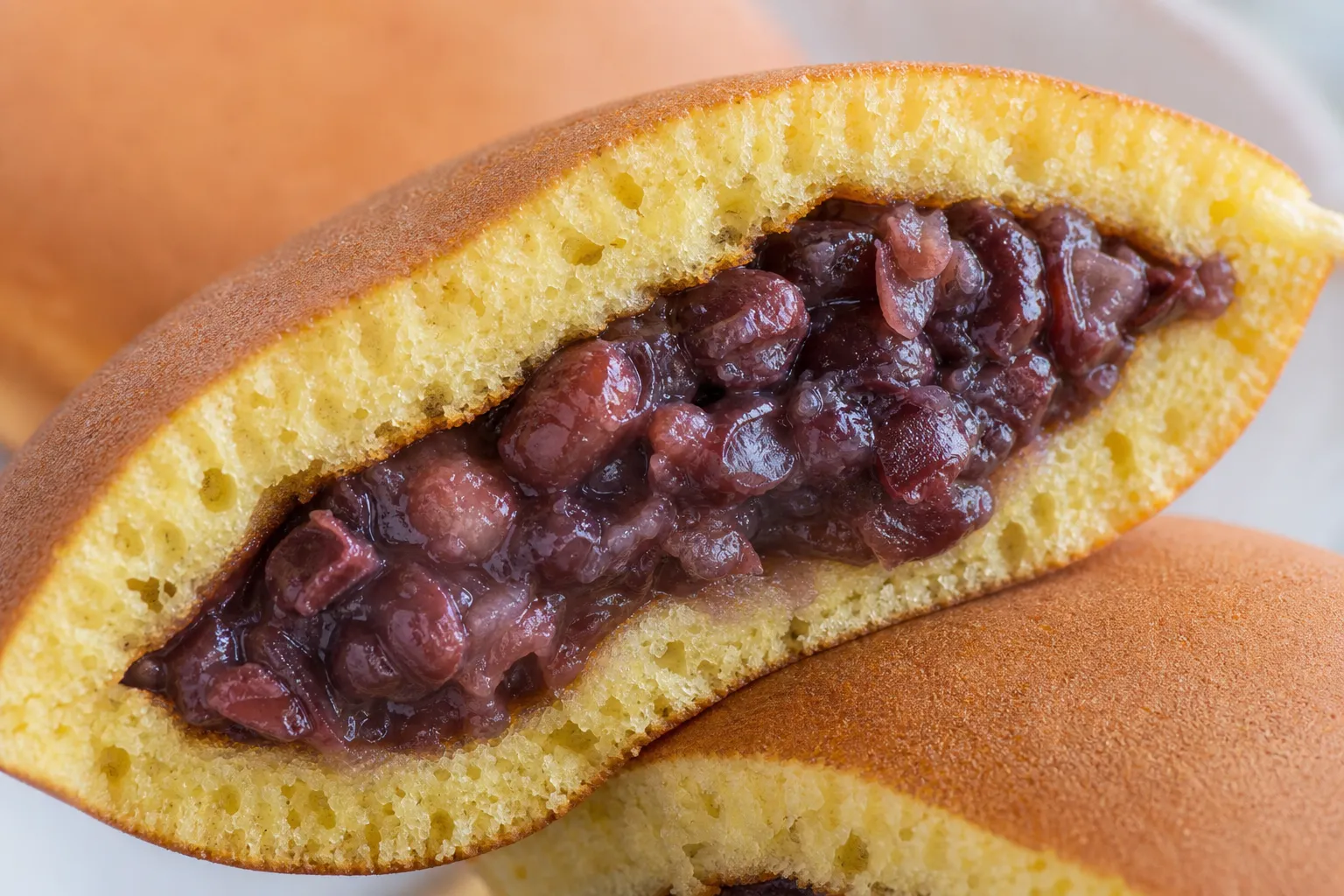
The filling is classic sweet anko, but the soul of a great dorayaki is the pancake — or rather the kasutera-style sponge. A good one is moist, springy, and fragrant with honey and a hint of mirin, with a beautifully even golden-brown surface. It should be tender, never dry, and just sweet enough to complement the beans.
Modern shops play with the filling — anko with a pat of butter, fresh cream, chestnuts, even fruit — but the honey-pancake-and-red-bean original is timeless.
How it's made
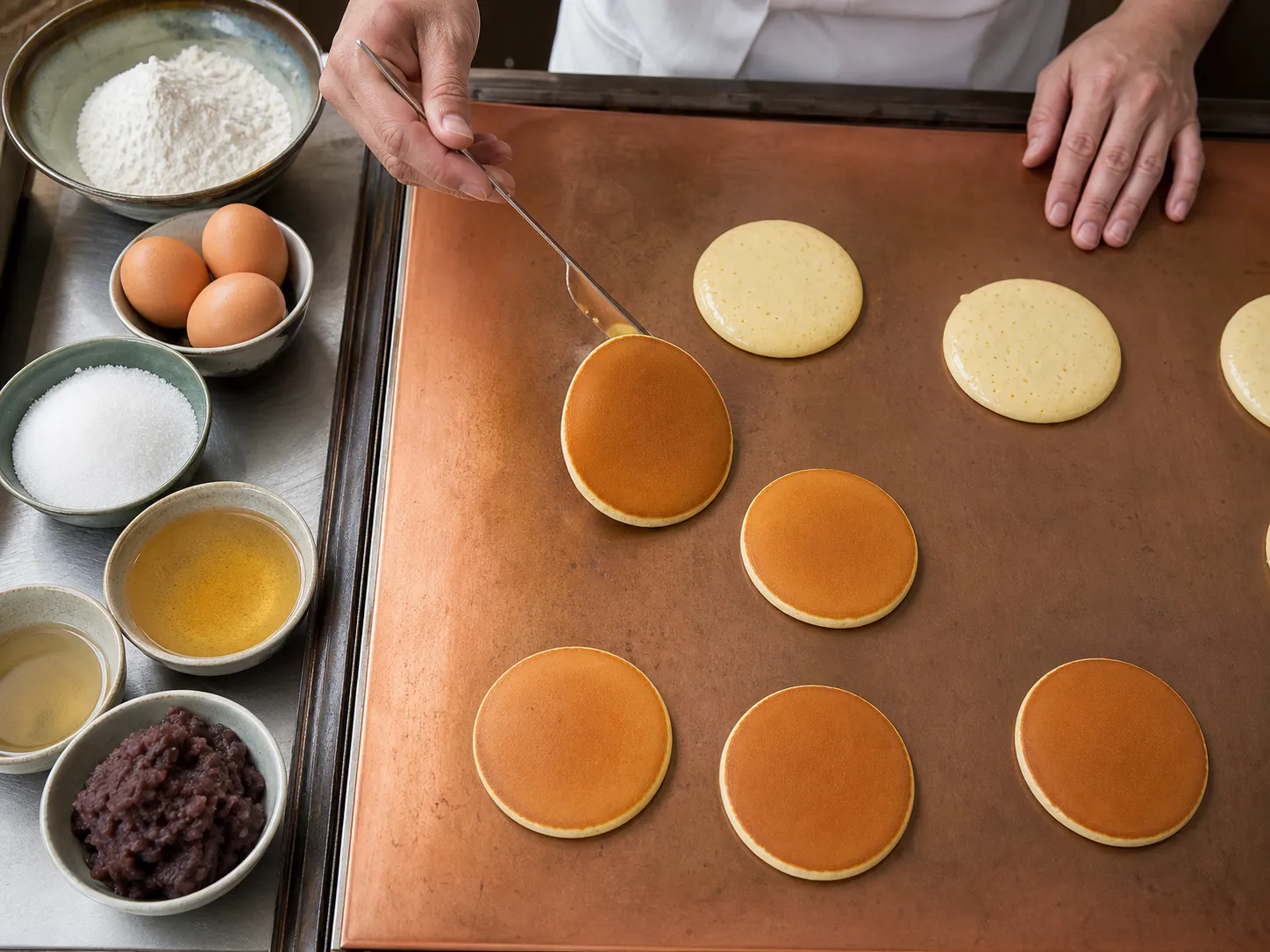
- Whisk eggs and sugar, then mix in honey and a little mirin
- Fold in flour and leavening to make a smooth, pourable batter; rest it
- Cook round pancakes on a griddle until golden, flipping once
- Spread sweet anko on the flat side of one pancake
- Sandwich with a second pancake, slightly doming the filling in the center
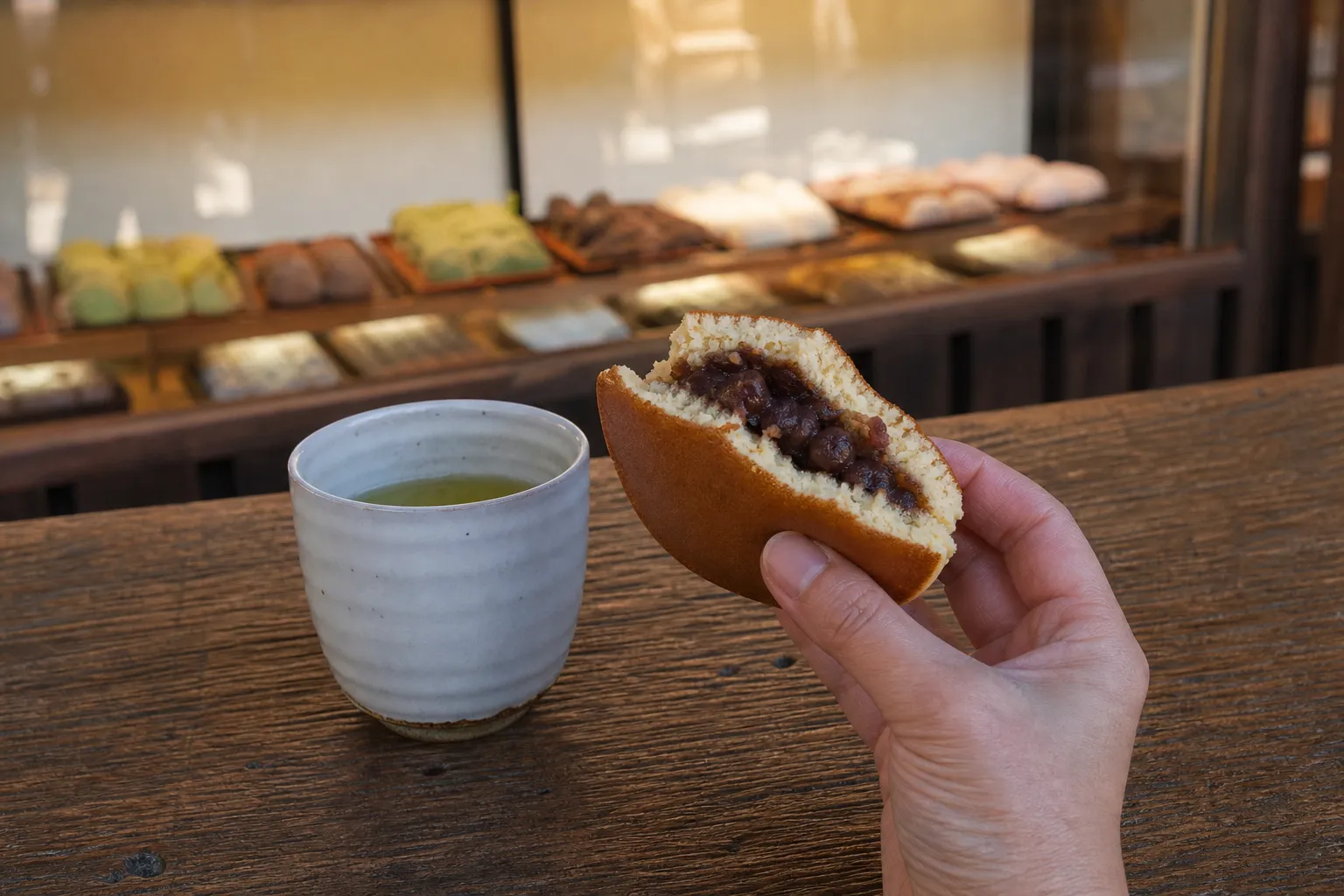
Before you go — the teatime pick
Your questions, answered honestly
"Is it very sweet?" — Pleasantly, not overwhelmingly. Japanese anko is gently sweet, and the pancake is mild. It pairs perfectly with green tea, which cuts any sweetness.
"Tsubu-an or koshi-an?" — Tsubu-an (chunky, with whole beans) has more texture; koshi-an (smooth, strained) is silky. Both are common — try each.
"Where do I get a good one?" — Traditional wagashi shops, department-store food halls, and even convenience stores (the konbini versions are genuinely decent). Freshly-made from a specialist is best.
"Doraemon really eats these?" — Famously, obsessively. It's a fun cultural touchstone — and a great gift for an anime fan.
What the staff will ask you
| You'll hear | Romaji | Meaning | Just say |
|---|---|---|---|
| 何個にしますか? | Nan-ko ni shimasu ka? | "How many?" | Hitotsu kudasai (one, please) |
| 贈り物ですか? | Okurimono desu ka? | "Is it a gift?" | Jibun-yō desu (for myself) |
| 袋はご利用ですか? | Fukuro wa goriyō desu ka? | "Need a bag?" | Onegaishimasu (yes) |
To order, just say "Dorayaki hitotsu kudasai" (どら焼き一つください) — "one dorayaki, please."
Where to eat it
- Traditional wagashi shops — the freshest, most fragrant versions; some Tokyo shops are legendary.
- Department-store food halls (depachika) — a great range of premium and seasonal types.
- Convenience stores — a surprisingly solid, cheap everyday option.
Best with a cup of green tea — the classic pairing for a reason.
Soul Score
Local Roots4/5
First-Timer Friendly5/5
Adventure Level3/5
Comfort Level5/5
Travel Worthy3/5
These scores are one obsessed eater's gut feeling — not a verdict. A low number isn't a bad mark, just a different kind of adventure.
Know someone planning Japan?
← All Articles
Sweets & Snacks · Nationwide
Still hungry?
You might also like
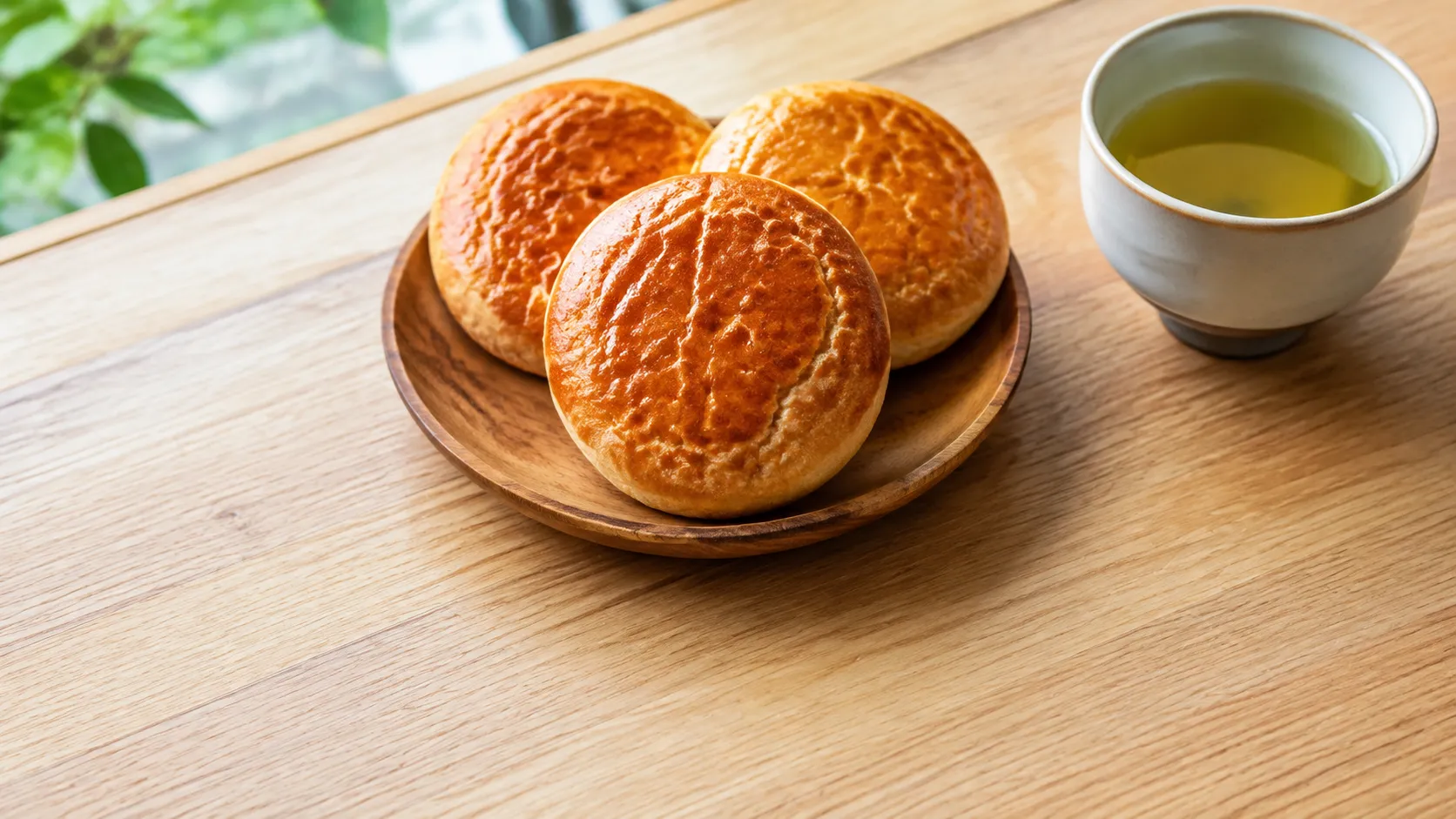
Sweets & SnacksSaga
Maruboro (丸ぼうろ)
It looks like the most boring biscuit in Japan. Then you bite it and it's soft, and honey-warm, and about four hundred years of Portuguese sailors arrive all at once.
September 2, 2026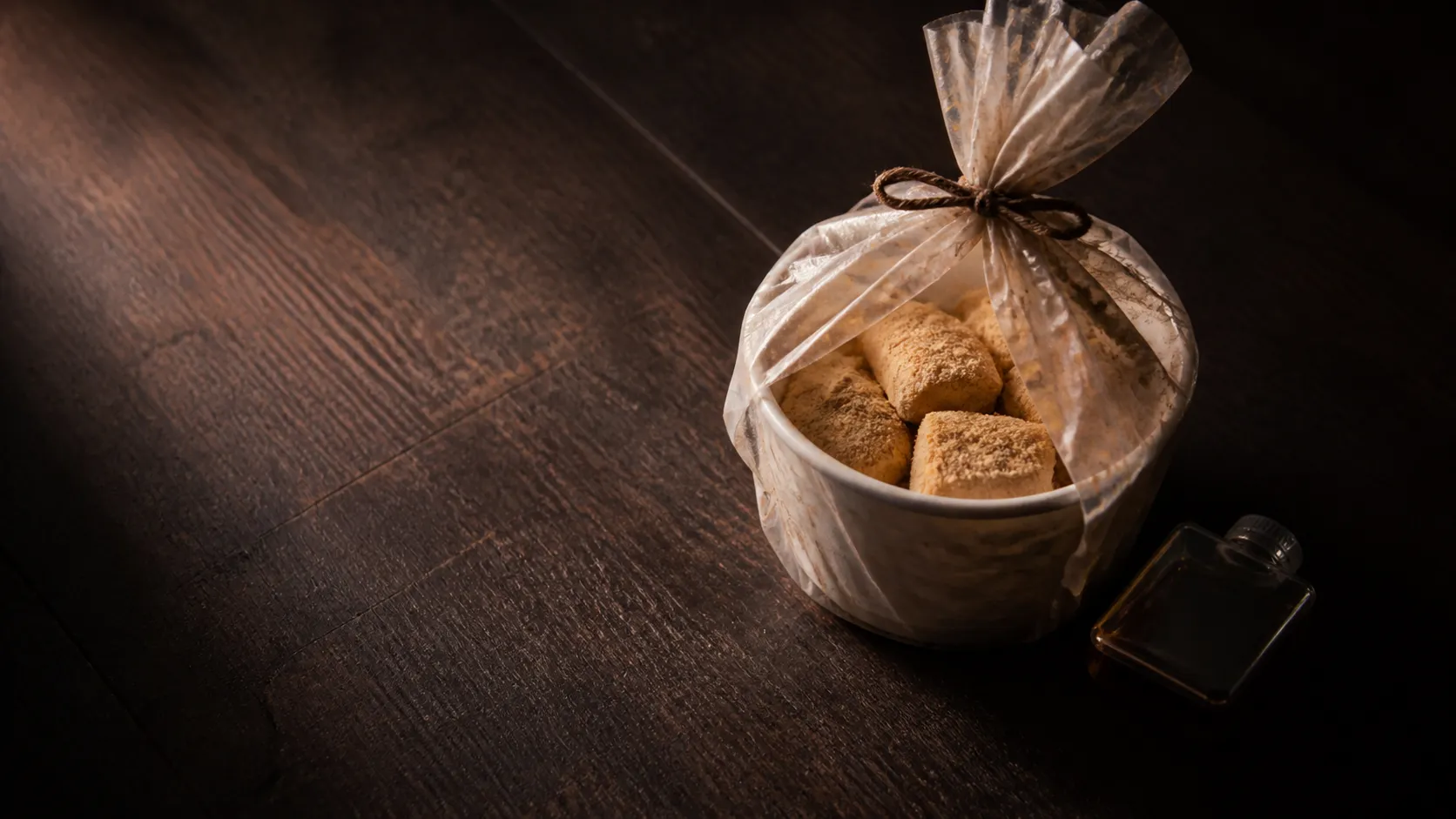
Sweets & SnacksYamanashi
Shingen Mochi (信玄餅)
There is a correct way to eat this and I did not know it, so I made a mess in front of several Yamanashi locals who were extremely kind about it and absolutely watching.
September 2, 2026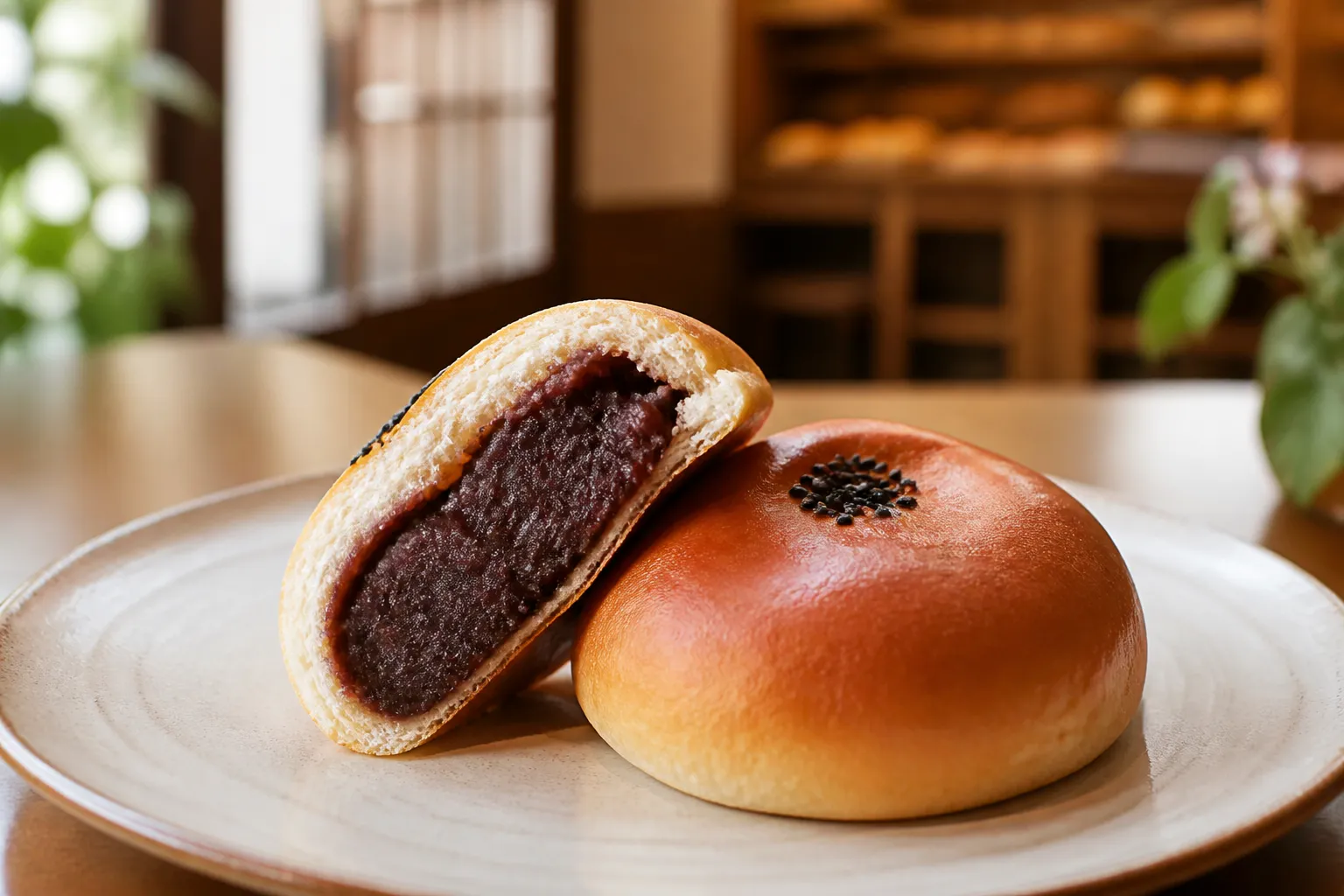
Sweets & SnacksTokyo
Anpan (あんパン)
A soft little bun, one bite in, and suddenly it's dense, dark, sweet red bean all the way through — the bread that talked 1870s Japan into eating Western-style bread at all.
July 27, 2026