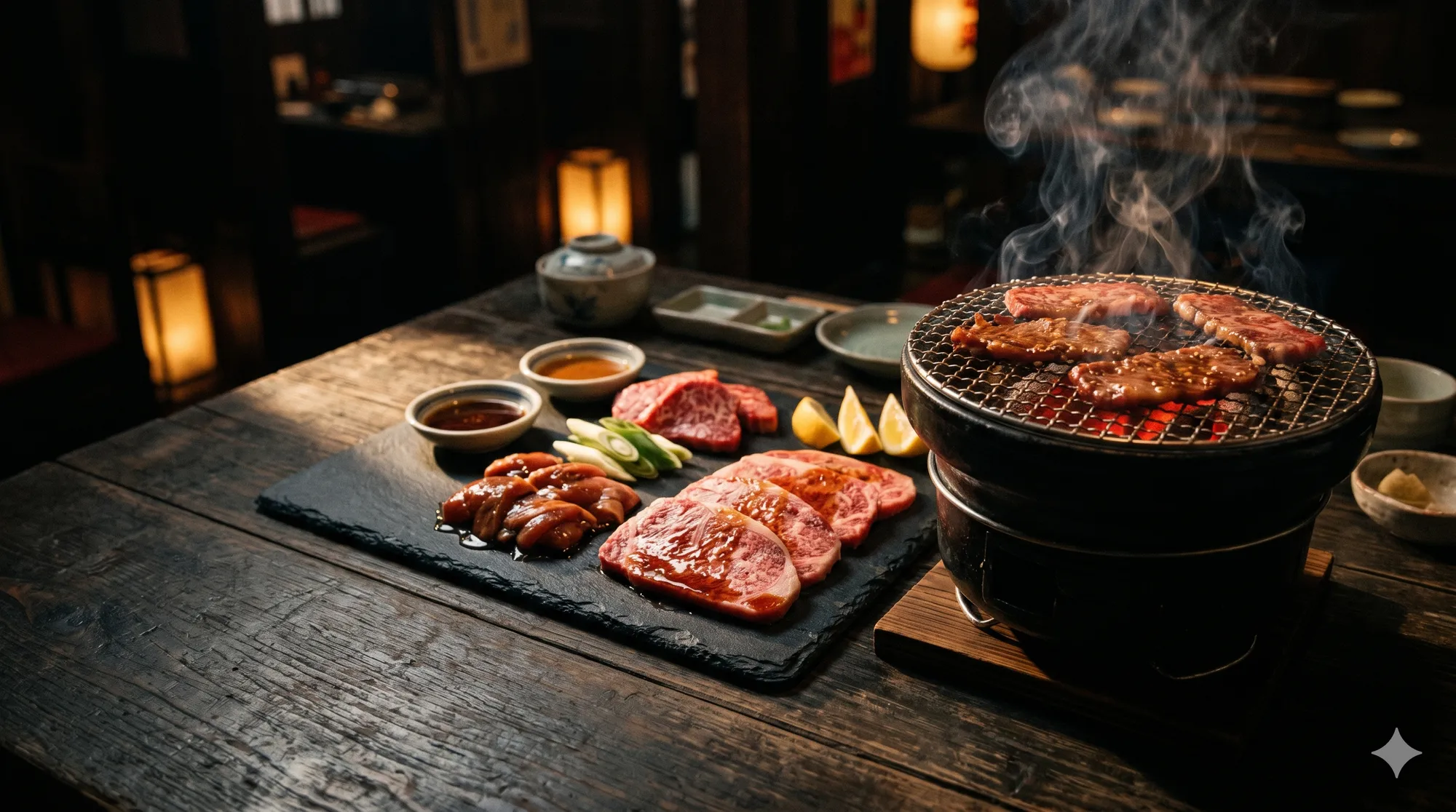
The first piece hits the grill and the whole table leans in. That sound — fat meeting fire, the hiss and snap — then the smoke curls up and suddenly everyone is deeply invested in a single square of beef. You flip it. You wait. You're not really talking anymore. This is the best kind of meal: the one you cook with your own hands, one bite at a time, with a cold beer sweating beside you.
Share this dish


Japanese barbecue: bite-sized cuts of beef you grill yourself over fire at the table, dunk in sauce, and eat the second they're done. Social, smoky, customizable, and one of the best nights out you can have.
Yakiniku (焼肉) — literally "grilled meat" — is Japan's take on barbecue, and it's an event as much as a meal. A grill sits in the middle of your table; plates of beautifully marbled, bite-sized beef arrive raw; and you cook it, piece by piece, exactly to your liking, then dunk it in sauce and eat it sizzling hot. Hands-on, social, smoky, and endlessly fun — the meal you book when you want to celebrate, drink, and graze for two hours.
The range is huge: premium wagyu cuts that melt like butter, everyday beef, horumon (offal) for the adventurous, plus pork, chicken, veg, and the famous beef tongue. You order in rounds, grill as you go, and pace yourself. It's interactive dining at its most addictive.
Korean roots, Japanese refinement
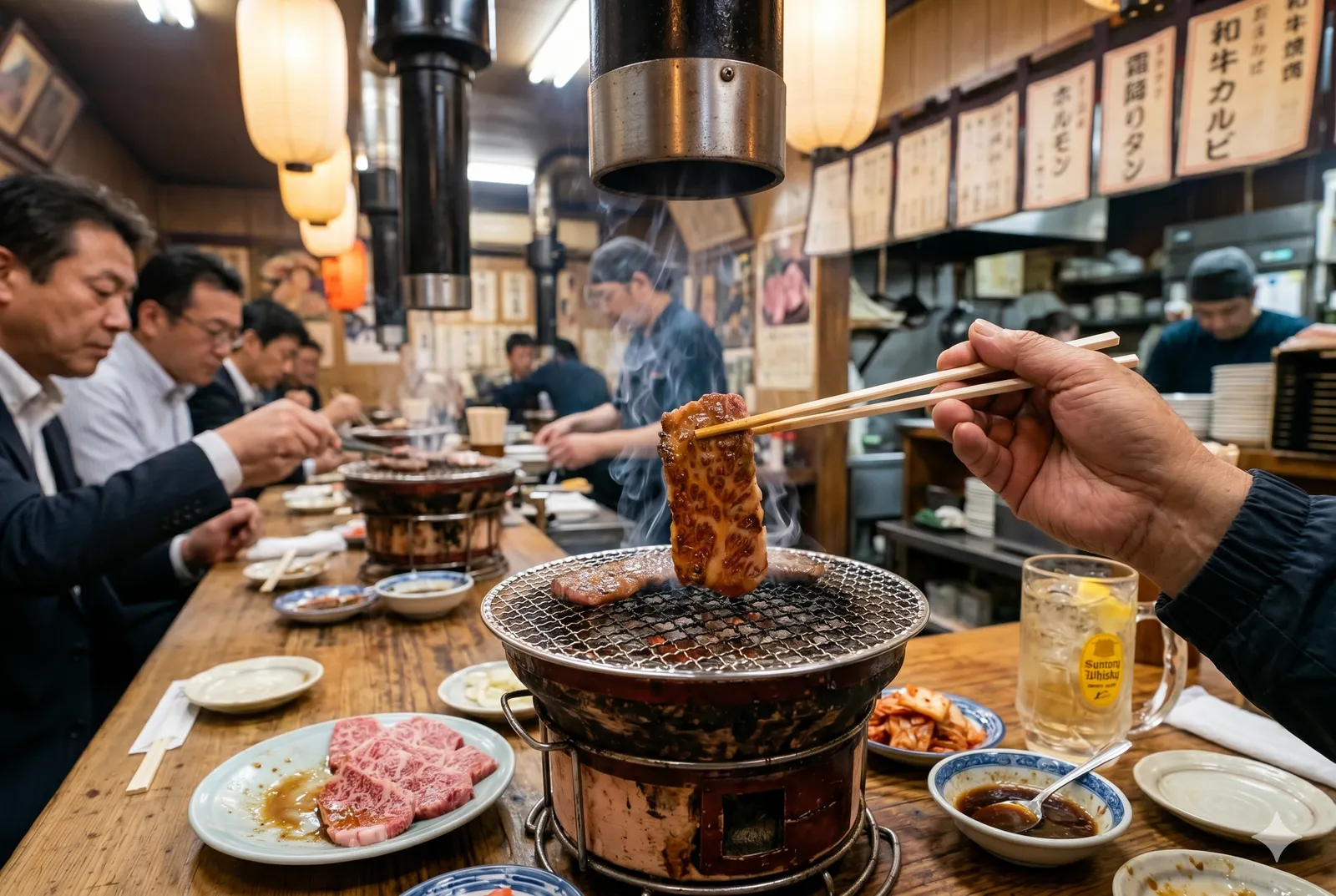
Yakiniku grew from Korean barbecue brought to Japan, and boomed in the post-war decades into its own distinct, beloved genre. Japan refined it around premium beef — especially wagyu, the intensely marbled, melt-in-the-mouth domestic beef that's now world-famous — and a culture of precise cuts, table grills, and a dizzying array of dipping sauces.
Today yakiniku ranges from cheap all-you-can-eat (tabehodai) chains to hushed high-end shops serving single perfect slices of A5 wagyu. It's a national favorite for celebrations, dates, and group nights out.
Why grilling it yourself changes everything
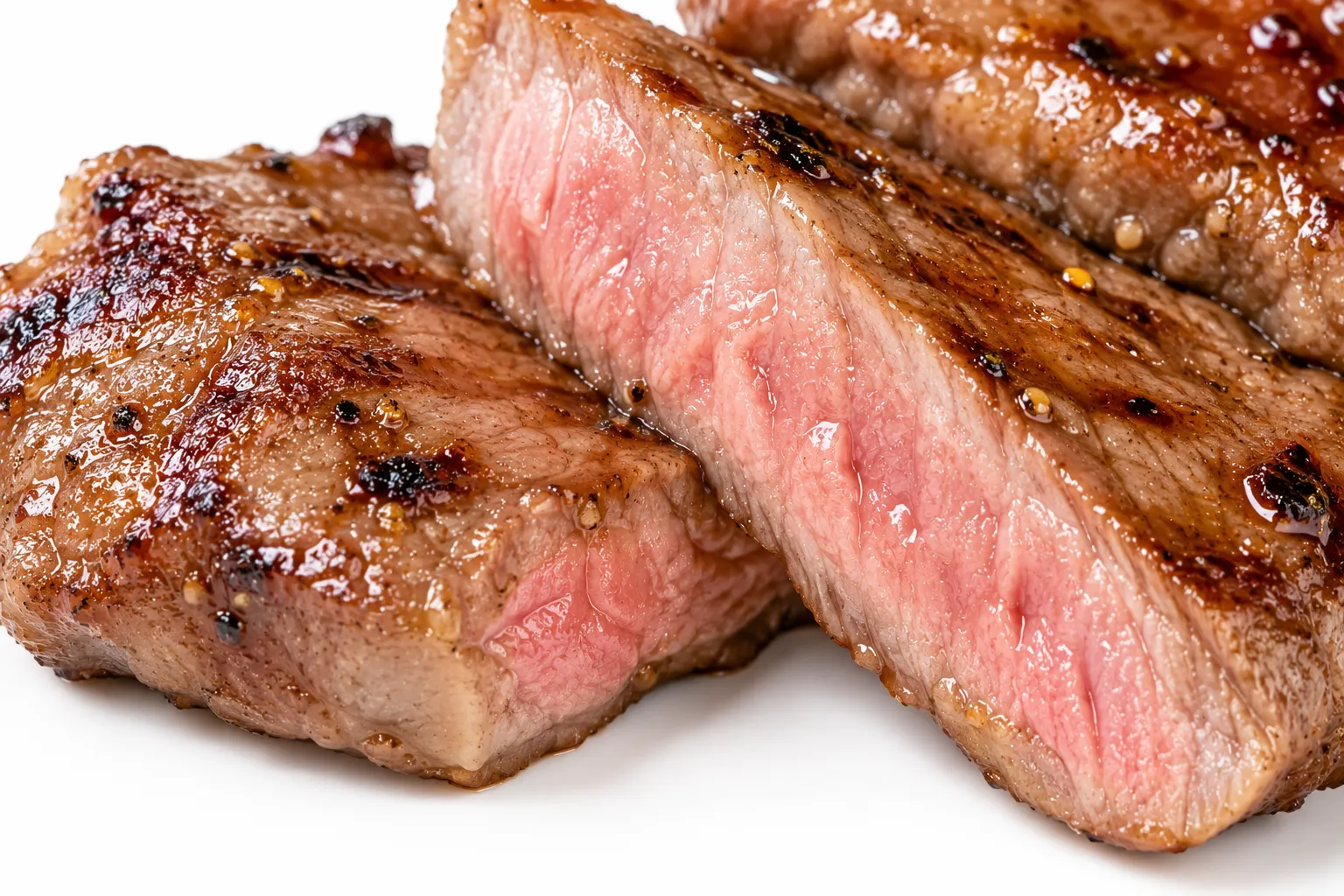
The magic of yakiniku is control. You decide how each piece is cooked — a quick sear for fatty wagyu so it just melts, a bit longer for leaner cuts — and you eat it at its absolute peak, straight off the grill. Nothing sits getting cold. Every bite is hot, fresh, and exactly how you like it.
Then there's the tare (dipping sauce) — usually a sweet-savory soy-garlic-sesame blend — plus salt-and-lemon for premium cuts, and miso-based dips for offal. Wrap a piece in lettuce, add rice and a cold beer, and you've got the perfect bite.
How it's made (well, how you make it)
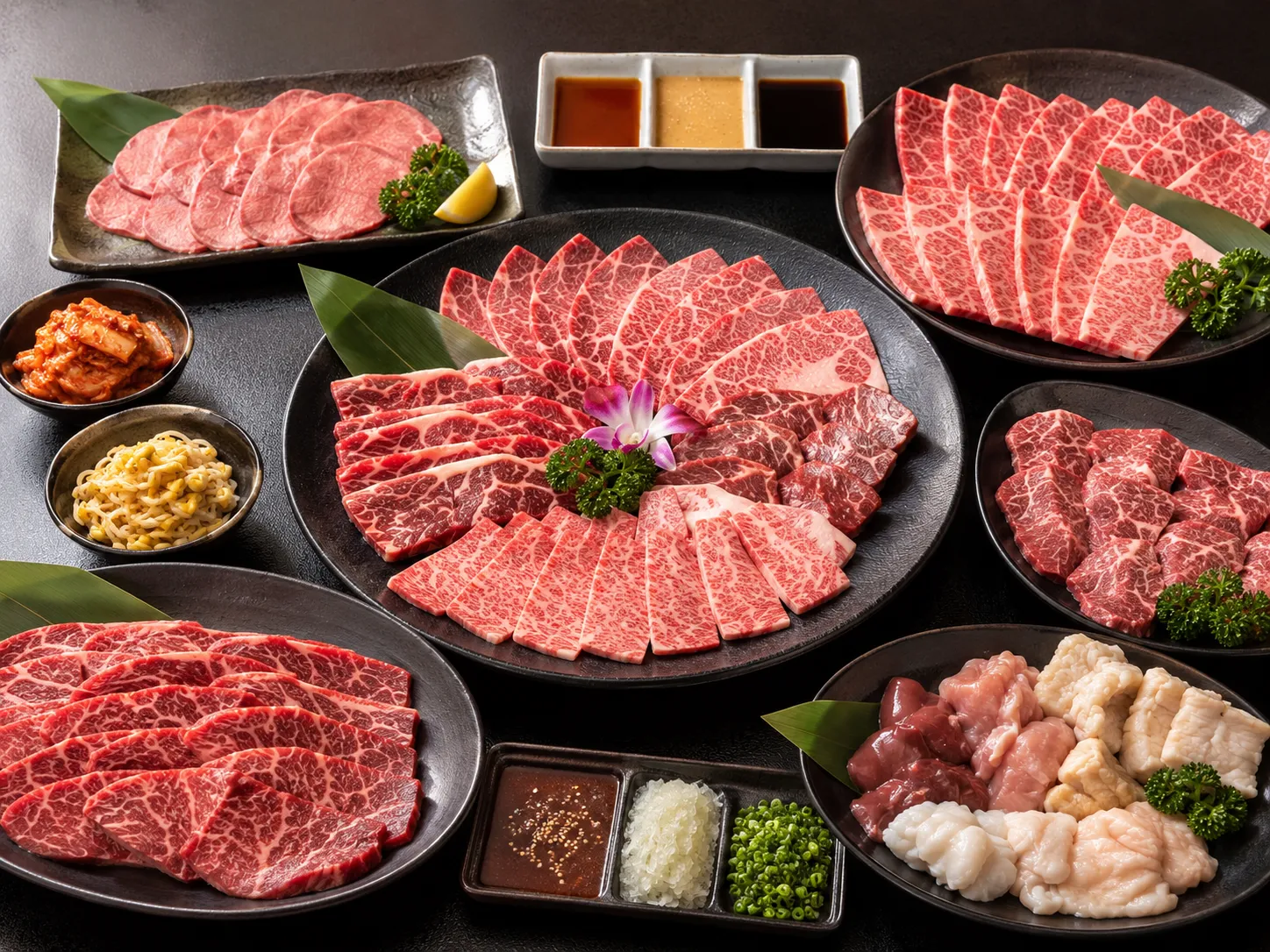
- Order plates of raw, bite-sized cuts (beef, tongue, offal, pork, veg)
- Grill pieces yourself over the table's charcoal or gas grill, turning once
- Cook fatty cuts fast (just a sear); leaner cuts a touch longer
- Dip in tare sauce or salt-and-lemon, or wrap in lettuce
- Eat immediately, hot off the grill — then start the next round
Before you go — grill like a pro
Your questions, answered honestly
"What do I order first?" — Start with beef tongue (tan) with salt and lemon — the traditional opener. Then karubi (fatty short rib) and harami (skirt, leaner and beefy). Add rice and kimchi.
"How do I not overcook it?" — Don't walk away. Fatty cuts need only seconds per side — when the edges curl and the surface glistens, it's done. Thin slices cook fast. Less is more.
"What's horumon?" — Horumon is offal (intestine, etc.) — chewy, rich, and a yakiniku delicacy. Adventurous eaters love it; skip it if you'd rather not.
"Tare or salt?" — Salt-and-lemon for premium/lean cuts (lets the beef shine); tare dipping sauce for everyday and fattier cuts. Try both.
"All-you-can-eat?" — Tabehodai (often with nomihodai, all-you-can-drink) is great value and fun for groups — usually a 90–120 minute limit. Order in small rounds so nothing burns.
What the staff will ask you
| You'll hear | Romaji | Meaning | Just say |
|---|---|---|---|
| お飲み物は? | Onomimono wa? | "Anything to drink?" | Nama biiru (a draft beer) |
| 食べ放題にしますか? | Tabehōdai ni shimasu ka? | "All-you-can-eat?" | Hai, onegaishimasu (yes please) |
| ご飯は付けますか? | Gohan wa tsukemasu ka? | "Add rice?" | Hai, futatsu (yes, two) |
| 焼きましょうか? | Yakimashō ka? | "Shall I grill it for you?" | Daijōbu desu (we're fine, thanks) |
To order, just say "Tan shio to karubi kudasai" (タン塩とカルビください) — "salted tongue and short rib, please."
Where to eat it
- Yakiniku chains (Gyukaku, Anan, Jojoen for upscale) — reliable, with English menus and grills at the table.
- Tsuruhashi (Osaka) — a legendary Korean-Japanese district packed with yakiniku shops.
- Specialist wagyu shops for the splurge — a few slices of A5 wagyu is a once-in-a-trip experience.
Popular shops need reservations on weekends, and all-you-can-eat is time-limited, so arrive ready to eat.
Soul Score
Local Roots3/5
First-Timer Friendly5/5
Adventure Level3/5
Comfort Level5/5
Travel Worthy3/5
These scores are one obsessed eater's gut feeling — not a verdict. A low number isn't a bad mark, just a different kind of adventure.
Planning what to eat in Osaka?🐙 Osaka Food Guide: What to Eat, Where to Start, and How to Order →
Know someone planning Japan?
← All Articles
Japanese Food · Nationwide
Still hungry?
You might also like
Japanese FoodNationwide
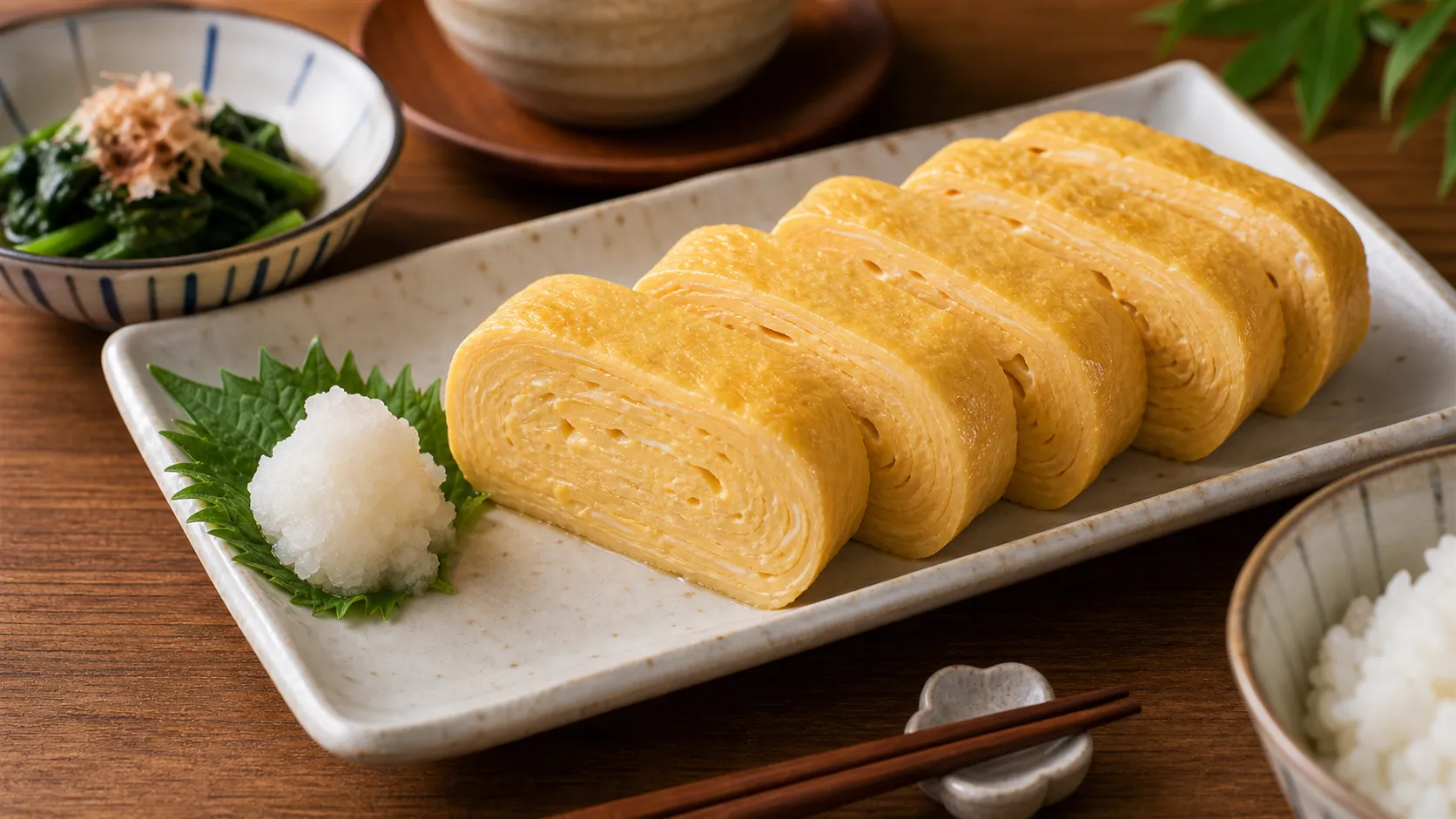
Dashimaki-tamago (だし巻き卵)
A rolled omelette so soft it almost trembles, layered fold over fold and soaked with dashi so that biting in releases a little warm rush of savory broth — the deceptively simple egg dish that Japanese chefs spend years perfecting.
July 11, 2026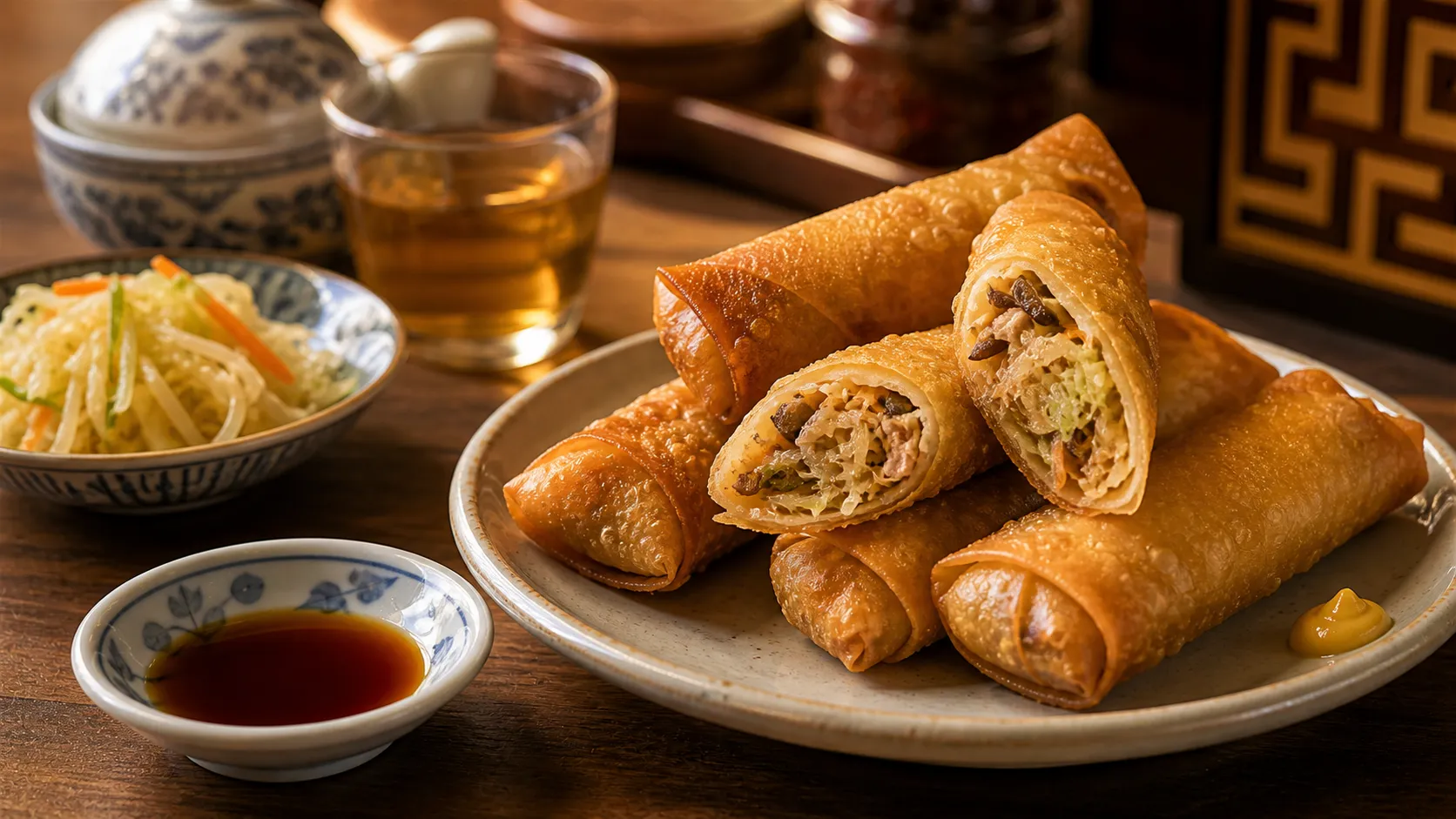
Japanese FoodNationwide
Harumaki (春巻き)
The Japanese spring roll — a shatteringly crisp golden tube that gives way to a hot, savory tangle of pork, cabbage and bamboo shoot, best eaten the second it's cool enough not to burn your mouth (you will not wait that long).
July 11, 2026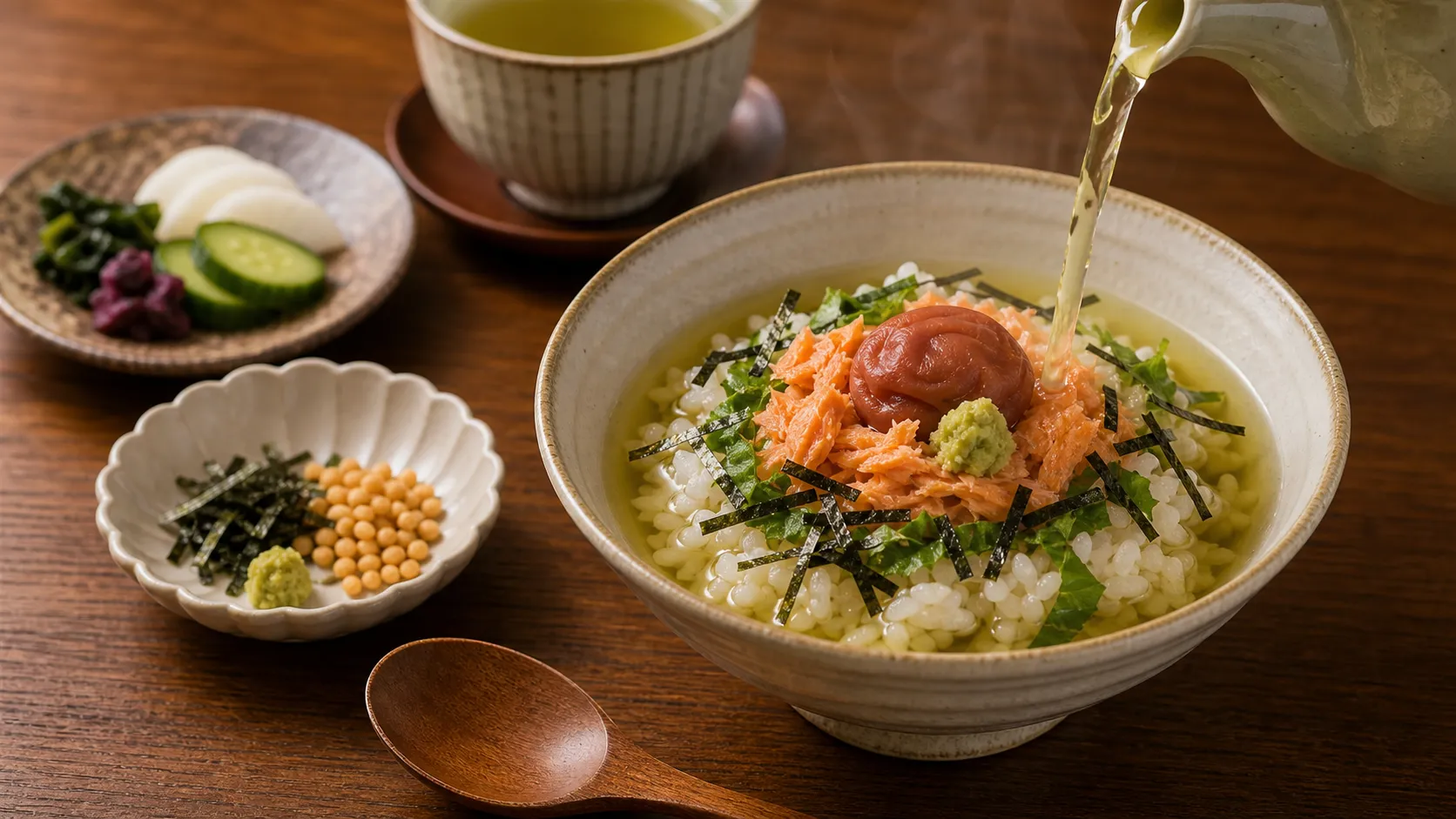
Japanese FoodNationwide
Ochazuke (お茶漬け)
Pour hot green tea or dashi over a bowl of rice, scatter something savory on top, and eat — the gentlest, most quietly restorative dish in Japan, the one you reach for late at night when you just need a warm bowl to make everything okay.
July 11, 2026