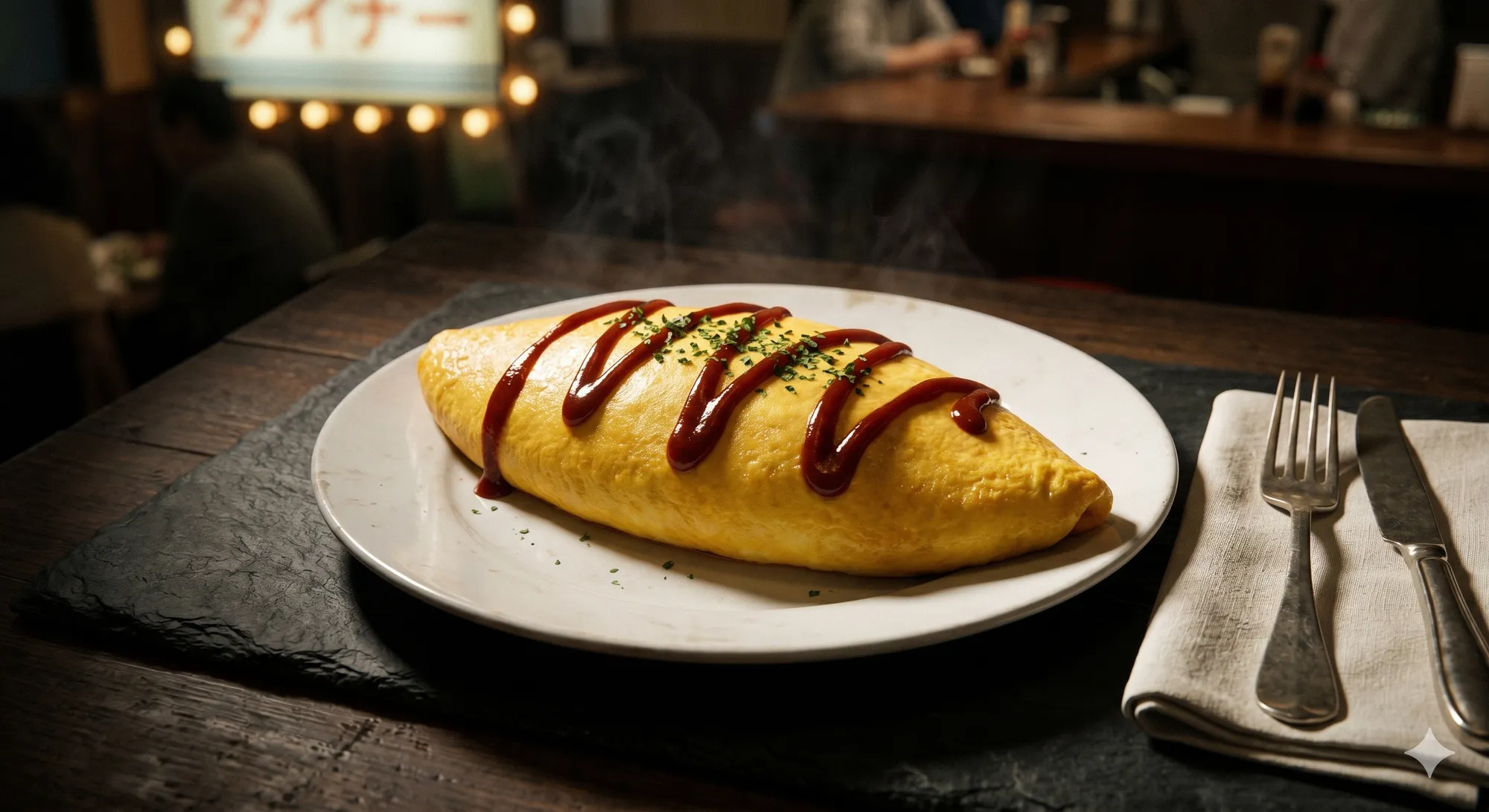
Some foods impress you. Omurice hugs you.
Share this dish


A silky egg blanket over ketchup rice — the most nostalgic plate in Japan. Born in 1925 for a customer with a weak stomach, now beloved by everyone with a heart.
🍜 Planning a food trip to Osaka?Add this dish to my Food Trip →
 Add this dish to my Food Trip →
It's a soft golden omelet wrapped around warm ketchup rice, and the first time you cut into one and watch that egg fall open like a curtain — steam rising, rice spilling out, a red ribbon of ketchup on top — something in your chest just goes quiet. This is the taste of being a kid again, of your mom calling you to the table, of everything being okay for exactly one meal. I'm not being dramatic. Ask anyone in Japan about omurice and watch their face soften.
Born from kindness, in 1925
Here's the part that gets me every time. In Taisho-era Osaka, a Western-style restaurant called Hokkyokusei had a regular customer with a weak stomach who kept ordering the same plain omelet and rice. So the manager, Shigeo Kitahashi, did something gentle: he wrapped the rice inside the egg, made it soft, made it easy, made it special.
That's it. That's the whole origin. Omurice wasn't invented to dazzle — it was invented to take care of someone. You can taste that. It's comfort food that literally started as an act of comfort.
Why it melts hearts
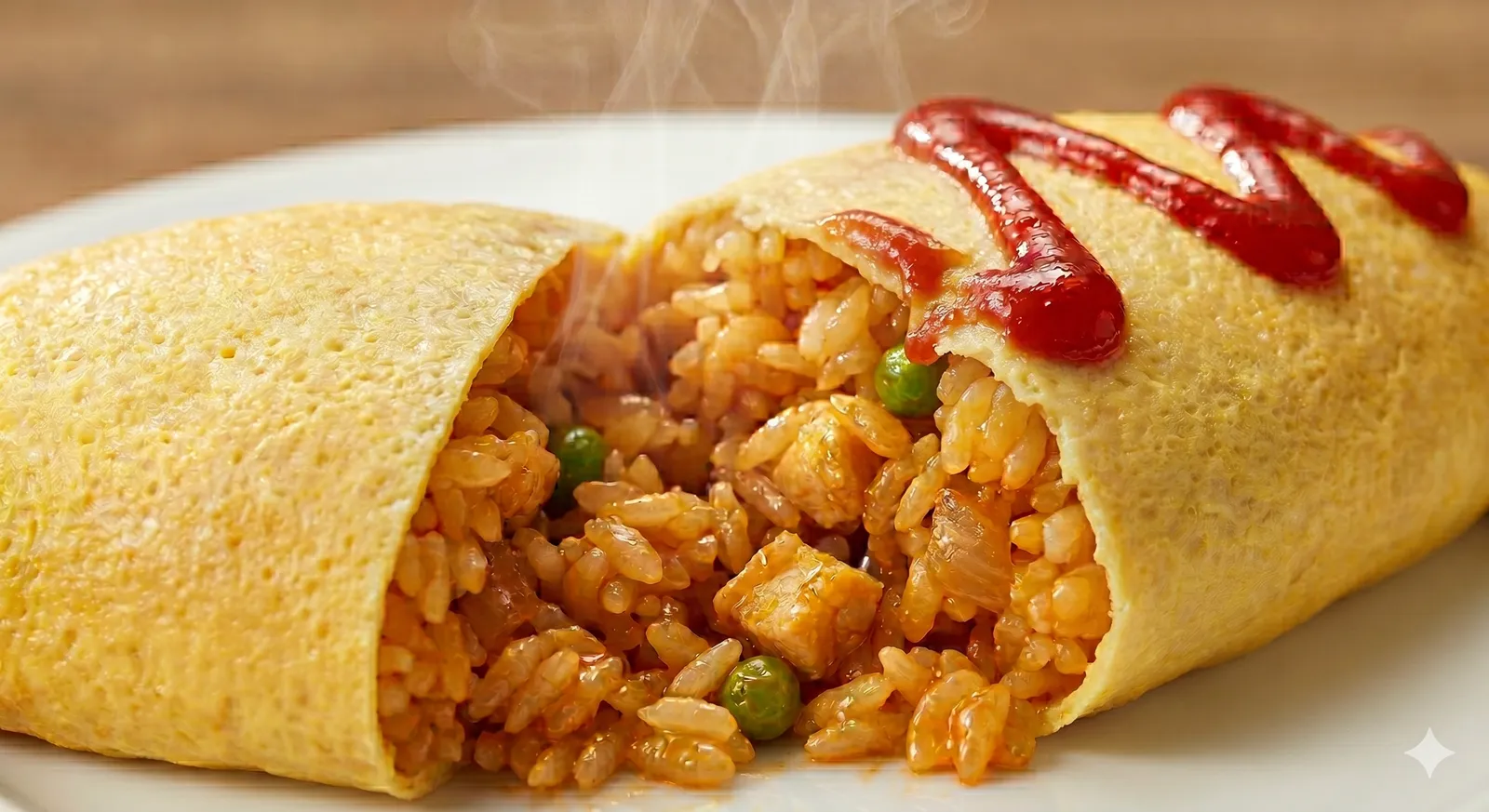
The magic is the contrast between the barely-set, custardy egg and the sweet-savory ketchup rice inside. Chicken rice — onions, chicken, and ketchup fried together until it's glossy and a little caramelized — gets wrapped in an omelet cooked just to the edge of done, still trembling. Then a zigzag of ketchup, or for the fancy places, a glossy demi-glace.
The modern showstopper is the fuwatoro "tornado" style: a soft mound of egg sliced open tableside so it blooms over the rice. It's pure theater, and it works every single time.
How it's made
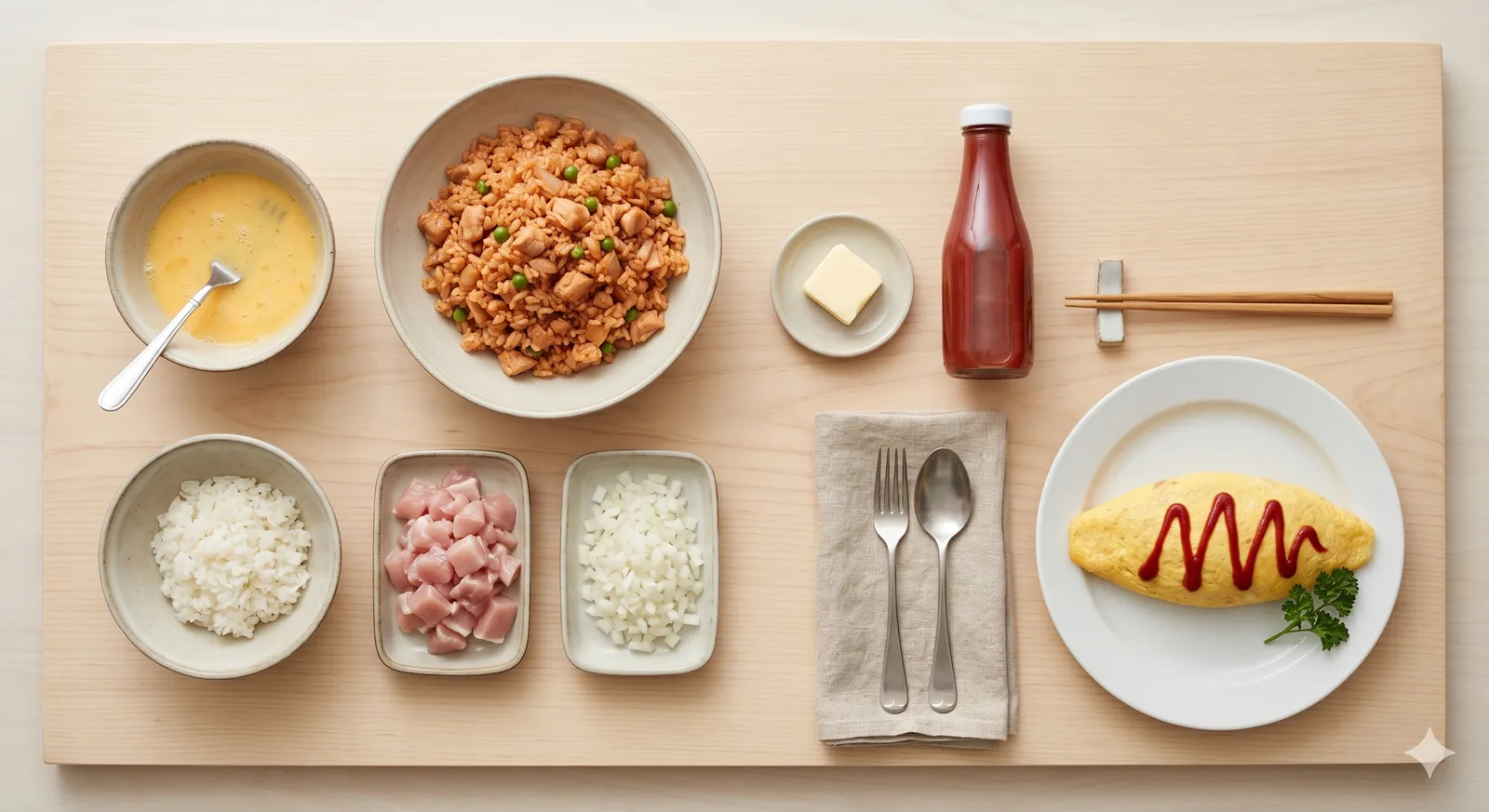
- Fry diced chicken and onion, add cooked rice and plenty of ketchup, season with salt, pepper, and a splash of Worcestershire
- Mound the chicken rice and set it aside
- Beat eggs, pour into a hot buttered pan, and swirl — pull it off the heat while the center is still soft
- Lay the rice in the middle and fold the egg over it
- Roll it seam-side down onto the plate and shape it with the pan or a towel
- Finish with ketchup — or demi-glace if you're feeling grown-up
The fold is where home cooks (me, repeatedly) humble themselves. The pros make it look like breathing.
Before you go — how to have the best one
Your questions, answered honestly
"Ketchup or demi-glace?" — Ketchup is the nostalgic original — sweet, simple, perfect. Demi-glace is the dressed-up version — rich, beefy, restauranty. First time, get ketchup. Then come back for demi.
"Classic wrapped, or the soft tornado kind?" — Wrapped is the timeless one. Fuwatoro (the soft, sliced-open mound) is the Instagram star and genuinely incredible — but harder to find and pricier. Both are right.
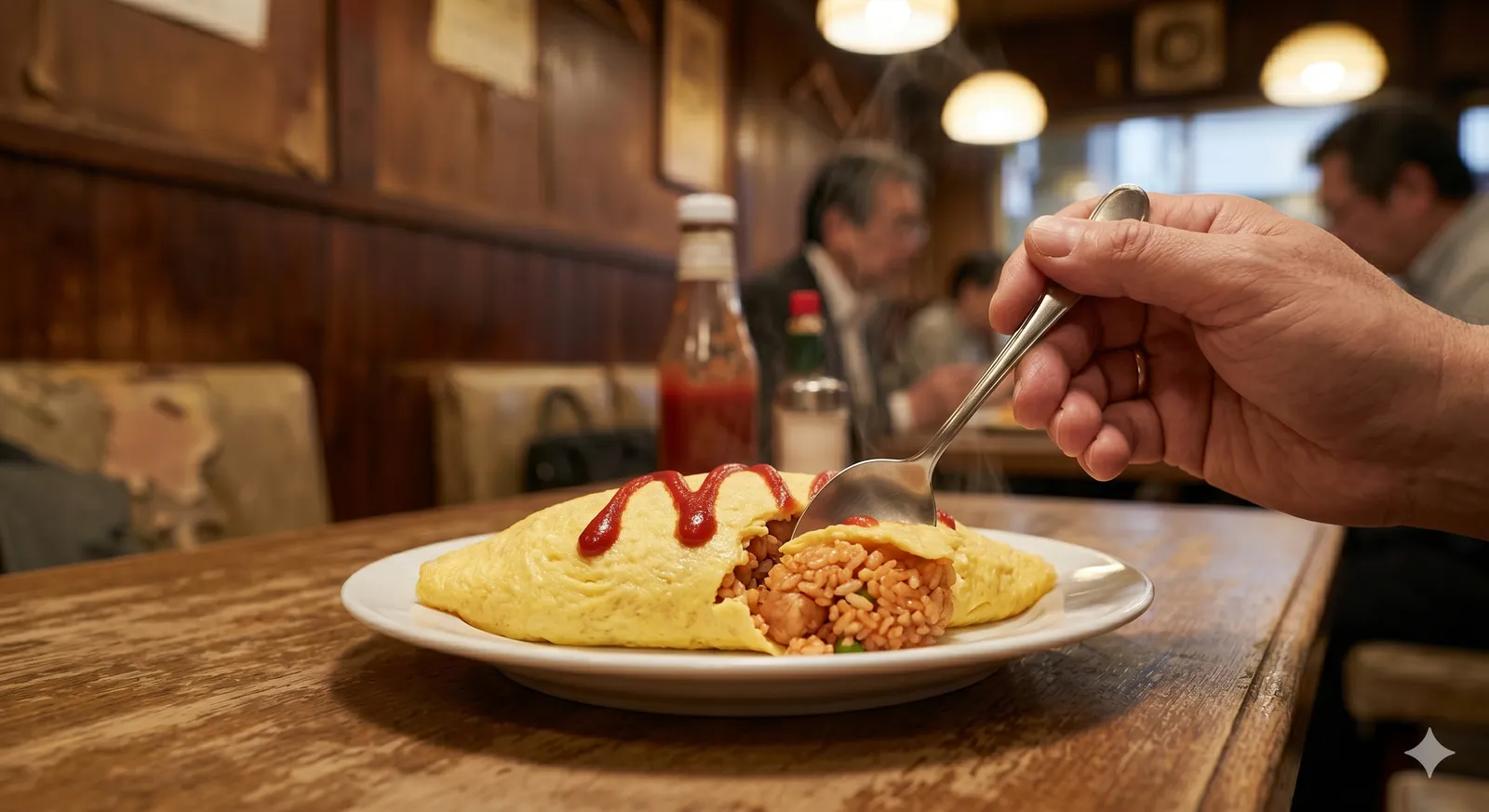
"Fork or spoon?" — Spoon. Always a spoon. You want to scoop egg and rice in one go, and a fork betrays you.
"Is it a kids' meal?" — It's served to kids, sure, but proper yoshoku omurice at an old Osaka or Ginza restaurant is a grown-up pleasure with decades of craft behind it. Order it with your whole chest.
What the staff might ask you
| You'll hear | Romaji | Meaning | Just say |
|---|---|---|---|
| ソースはケチャップ?デミグラス? | Sōsu wa kechappu? Demi-gurasu? | "Ketchup or demi-glace?" | Kechappu de (ketchup) / Demi de (demi-glace) |
| 大盛りにしますか? | Ōmori ni shimasu ka? | "Large portion?" | Hai (yes) / Futsū de (normal size) |
| お飲み物は? | Onomimono wa? | "Anything to drink?" | Mizu de ii desu (water's fine) |
To order, just say "Omuraisu hitotsu kudasai" (オムライス一つください) — "One omurice, please." Easy.
Where to eat it
- Hokkyokusei (北極星) — Shinsaibashi, Osaka. The 1925 birthplace. Tatami rooms, the original recipe, a little time machine.
- Shiseido Parlour (資生堂パーラー) — Ginza, Tokyo. The refined, old-money take on yoshoku since forever.
- Grill Manten-boshi (グリル満天星) — Tokyo. Famous for a luxurious demi-glace version that'll ruin ketchup for you (temporarily).
Hours and locations change, so check before you make the trip — and bring someone you like, because omurice is best shared with a soft heart.
Soul Score
Local Roots4/5
First-Timer Friendly5/5
Adventure Level3/5
Comfort Level5/5
Travel Worthy3/5
These scores are one obsessed eater's gut feeling — not a verdict. A low number isn't a bad mark, just a different kind of adventure.
Planning what to eat in Osaka?🐙 Osaka Food Guide: What to Eat, Where to Start, and How to Order →
Know someone planning Japan?
← All Articles
Japanese Food · Osaka
Still hungry?
Eat more from Osaka
Local FoodOsaka
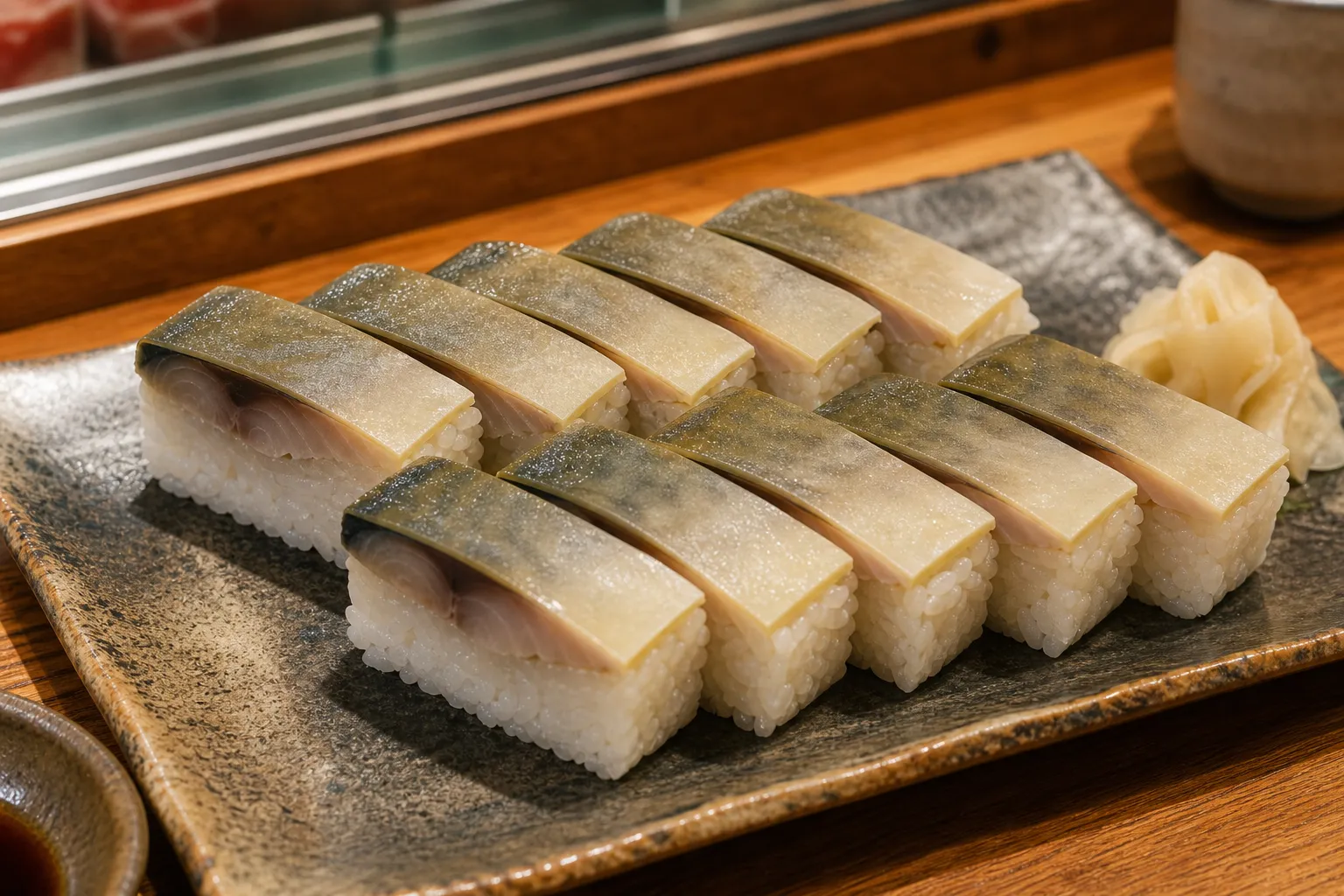
Battera (バッテラ)
Osaka's beautiful pressed sushi — vinegar-cured mackerel and rice squared off in a wooden box and crowned with a translucent sheet of kelp, sliced into glossy little bricks that taste like the city's quieter, older idea of sushi.
July 10, 2026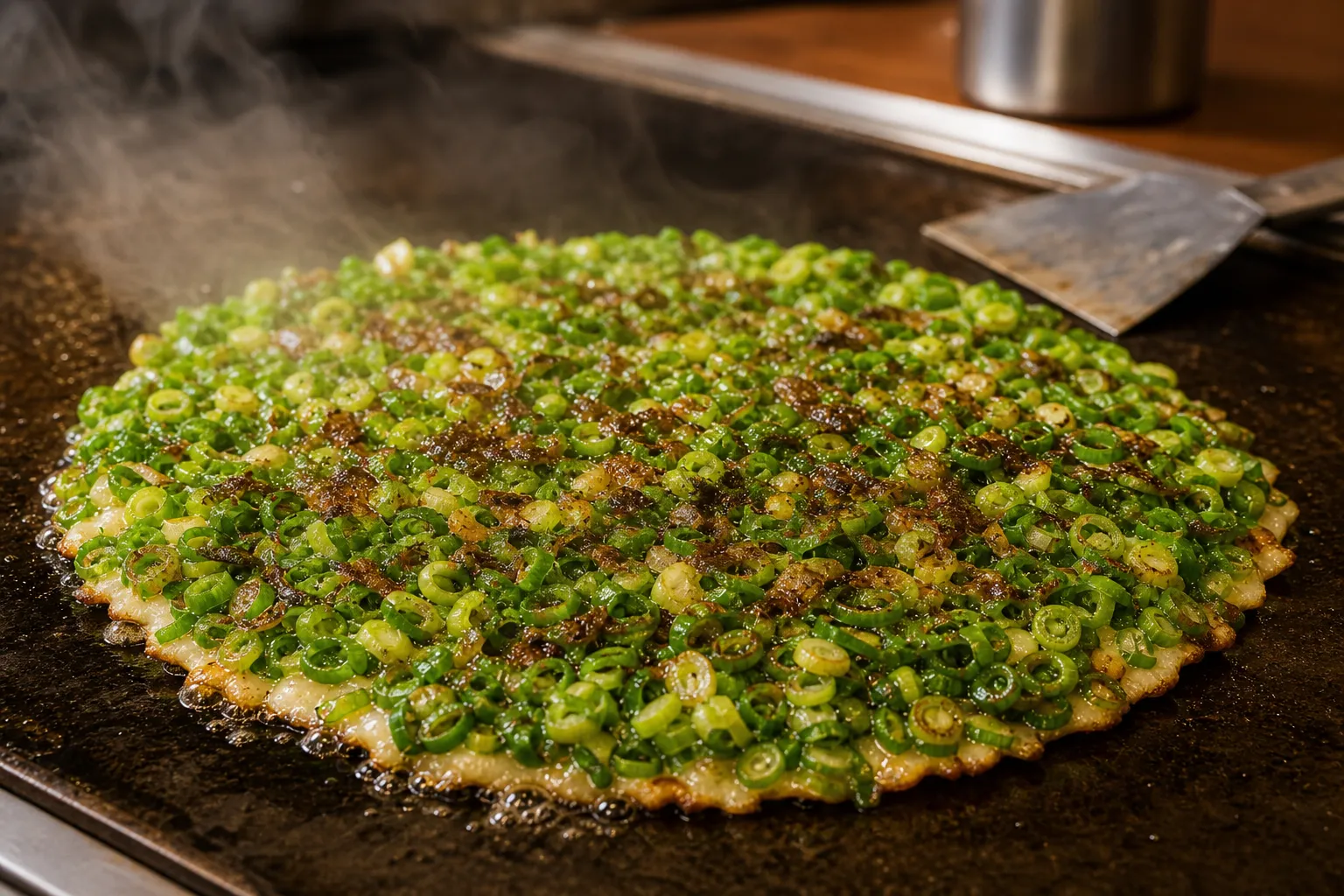
Local FoodOsaka
Negiyaki (ねぎ焼き)
Okonomiyaki's leaner, greener Osaka cousin — a thin griddle cake packed with a mountain of chopped green onion instead of cabbage, savory with beef tendon, and finished with soy instead of sweet sauce.
July 10, 2026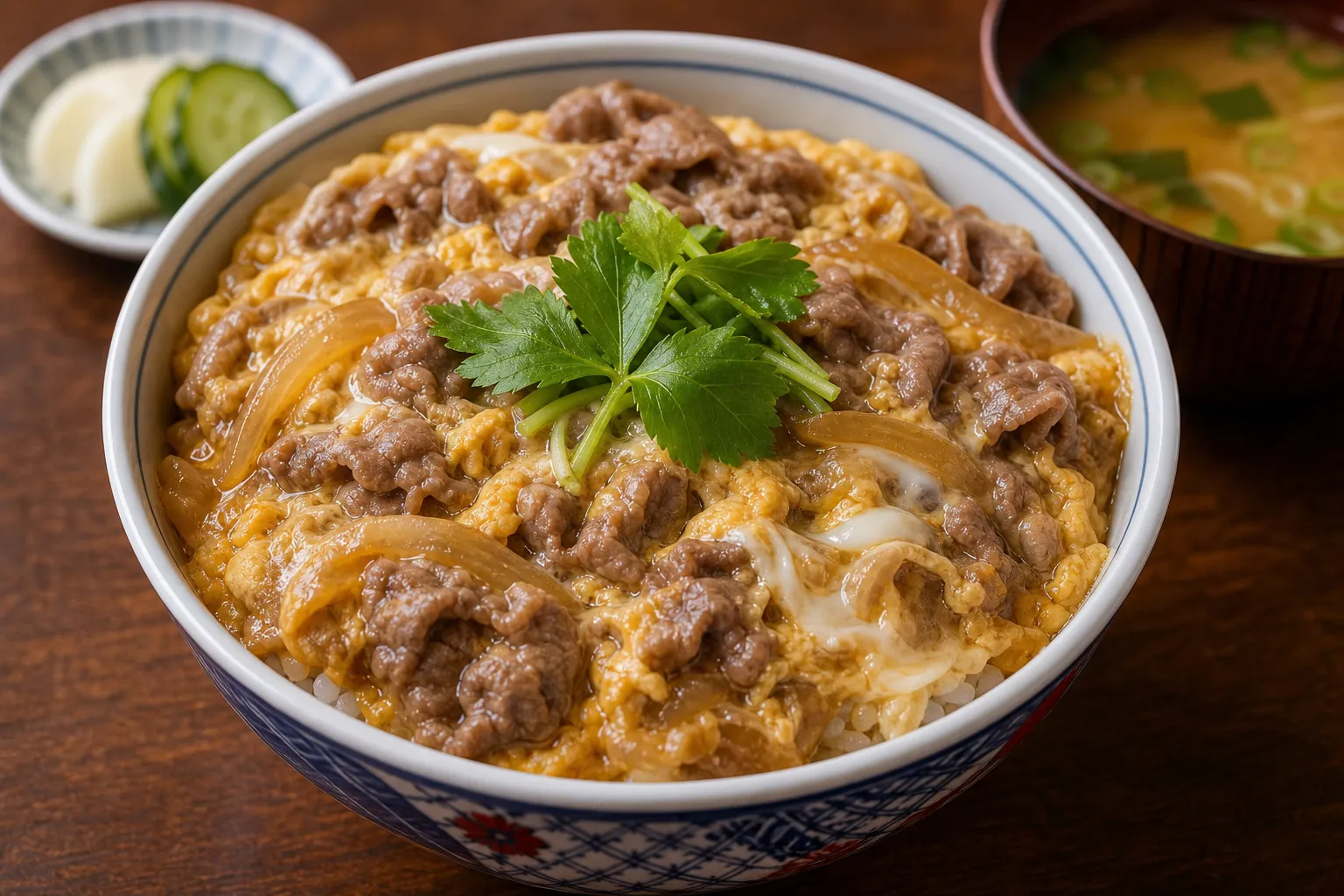
Japanese FoodOsaka, Kansai
Tanindon (他人丼)
Beef and egg who've never met, thrown together in sweet dashi over rice — the cheeky Kansai bowl with the best name in Japan. Oyakodon's troublemaker cousin, and quietly just as good.
July 9, 2026