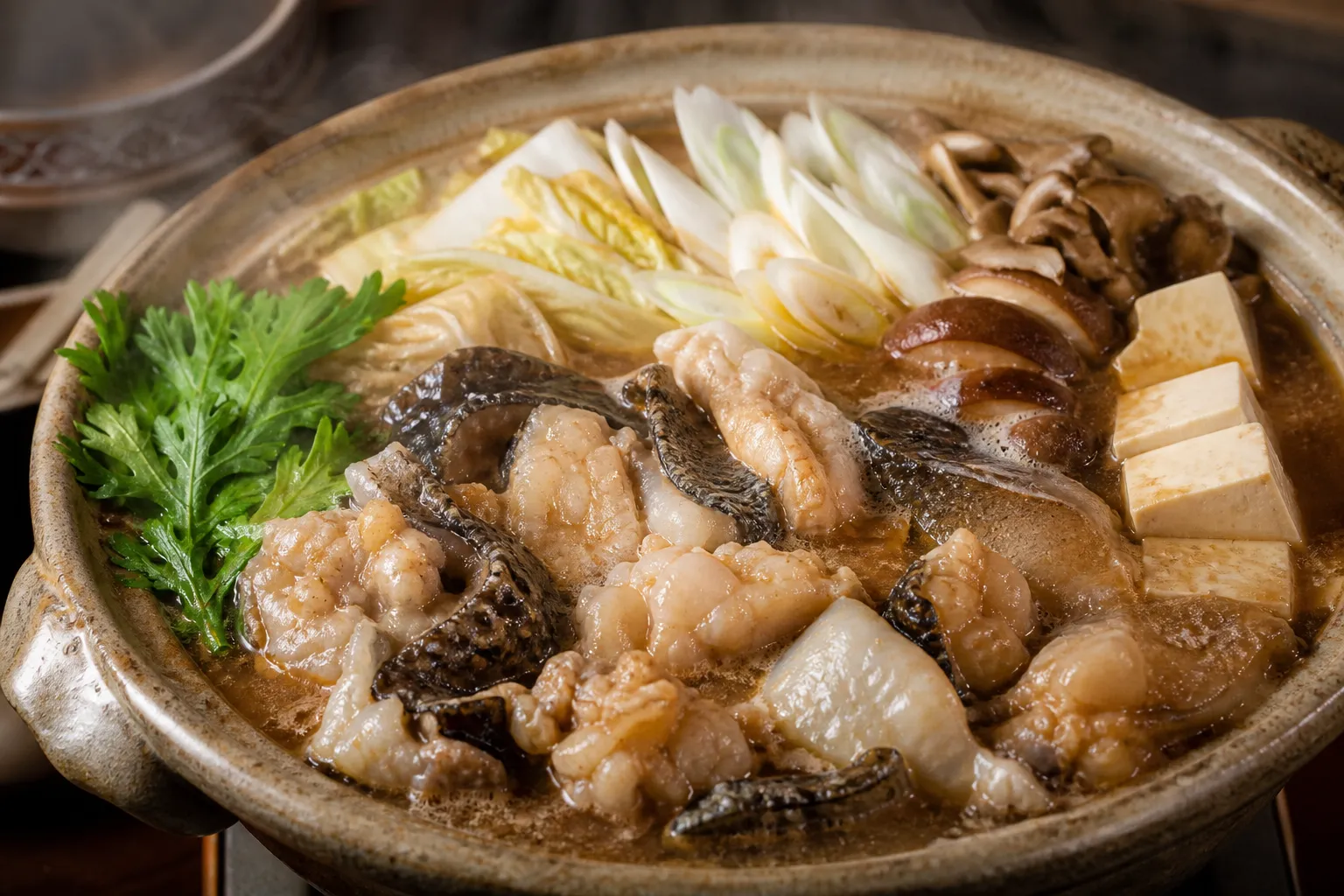
Look, I'm going to be honest about the fish first, because you'll see a photo eventually and I don't want you to feel betrayed: the monkfish is hideous. Enormous mouth, flattened glaring face, the general vibe of a creature that lost a bet with evolution. And that ugly, gloomy, deep-sea fish makes one of the most luxurious, soul-restoring pots in all of Japan — the kind you eat on a freezing coast in Ibaraki and feel your entire body come back to life. That's anko-nabe, and its ugliness-to-deliciousness ratio might be the most extreme in Japanese cooking.
Share this dish


One of the ugliest fish in the entire ocean somehow makes one of the best winter pots in Japan — and the secret weapon is its liver, melted straight into the broth until the whole thing turns rich enough to make you gasp.
🍜 Planning a food trip to Ibaraki?Add this dish to my Food Trip →
 Add this dish to my Food Trip →
Here's the engine of it: anko-nabe (あんこう鍋) is a hot pot built around monkfish (anko), but the true star is the fish's liver — ankimo, sometimes called "the foie gras of the sea." That liver gets melted straight into a deep miso-and-soy broth, and the whole thing turns rich, glossy, and almost creamy. Into that you add vegetables and pieces of the monkfish — including its wonderfully gelatinous skin. Monkfish, melted liver, deep miso-soy broth: that trinity is what makes it anko-nabe, and not a delicate pufferfish pot or a generic mixed yosenabe. Ibaraki's cold Pacific coast, especially the town of Oarai, is where this dish is a religion.
Why a hideous fish becomes winter royalty
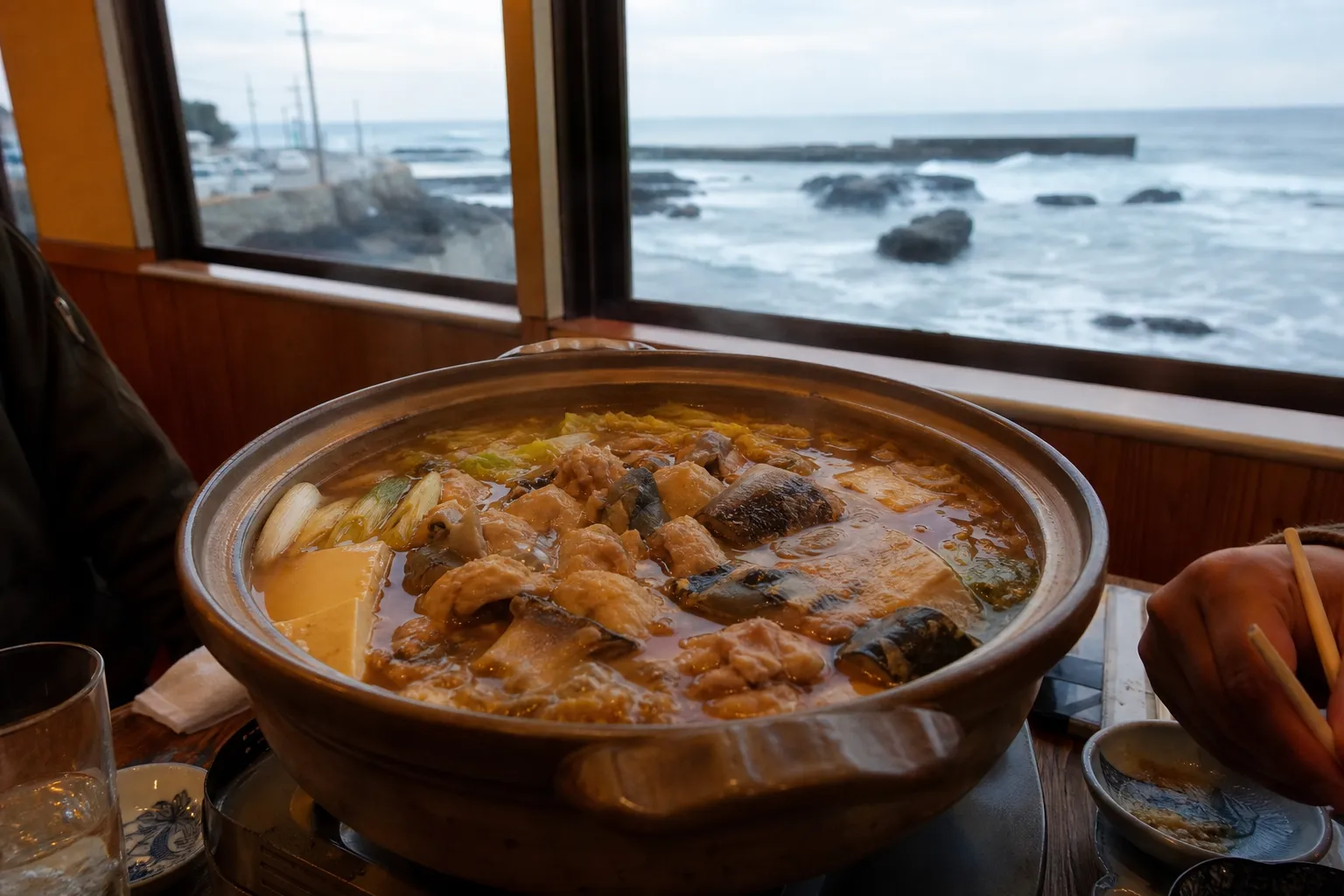
Monkfish is a cold-water bottom-dweller, and it's at its absolute best in the depths of winter, when the liver swells fat and rich. On the Ibaraki coast there's an old saying that pairs it with the region's other prized winter fish — "fugu in the west, anko in the east" — putting this humble-looking creature on the same pedestal as the notoriously luxurious pufferfish. I love that. The ugliest fish on the boat, ranked next to Japan's most aristocratic one, purely on the strength of how good it is to eat.
There's also a genuinely brilliant piece of technique in the tradition: monkfish is so soft and slippery it can't be cut on a board like a normal fish, so it's butchered by hanging — the "tsurushi-giri," a hanging cut where the fish is suspended and water is poured into it to firm the flesh as it's broken down. Almost nothing is wasted: the flesh, the skin, the stomach, the gills, and above all the liver all go into the pot. That whole-fish, waste-nothing philosophy is the soul of a fishing-town dish. And when the liver hits the miso broth and dissolves into it, you understand instantly why this coast built its whole winter around such an unlovely animal.
What makes the eating experience different
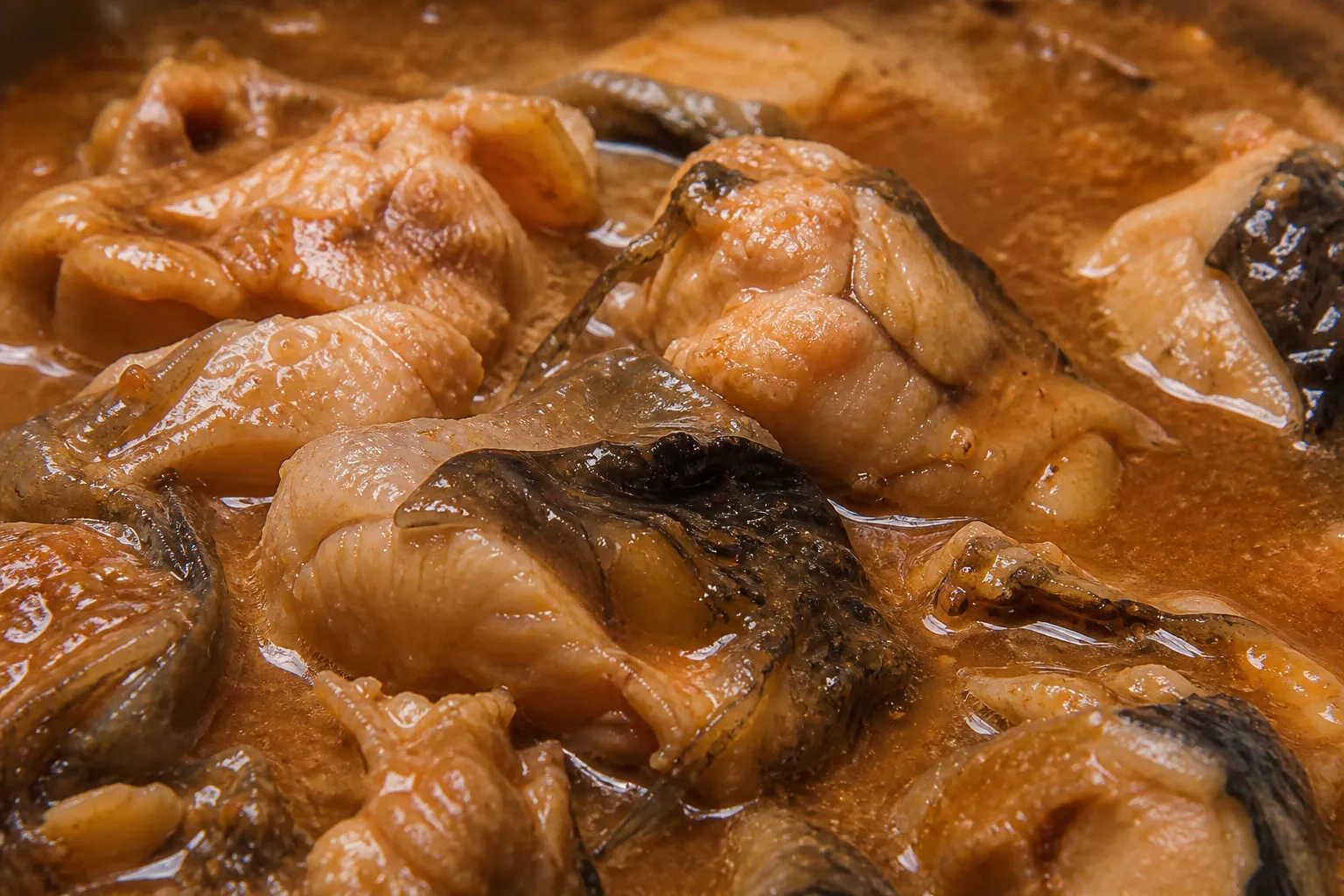
- Monkfish (anko) is broken down almost entirely — flesh, gelatinous skin, and other parts all used — traditionally by the hanging cut (tsurushi-giri)
- The prized liver (ankimo) is melted into the broth, which is typically a deep, rich miso (or miso-soy) base
- Vegetables — napa cabbage, negi, tofu, mushrooms — go into the pot with the monkfish pieces
- Everything simmers together at the table until the broth turns glossy and rich from the dissolved liver
- You ladle out portions as it cooks, and at the end you finish with shime — rice cooked into the intensely flavorful remaining broth (zosui) is the classic, glorious ending
How it's made
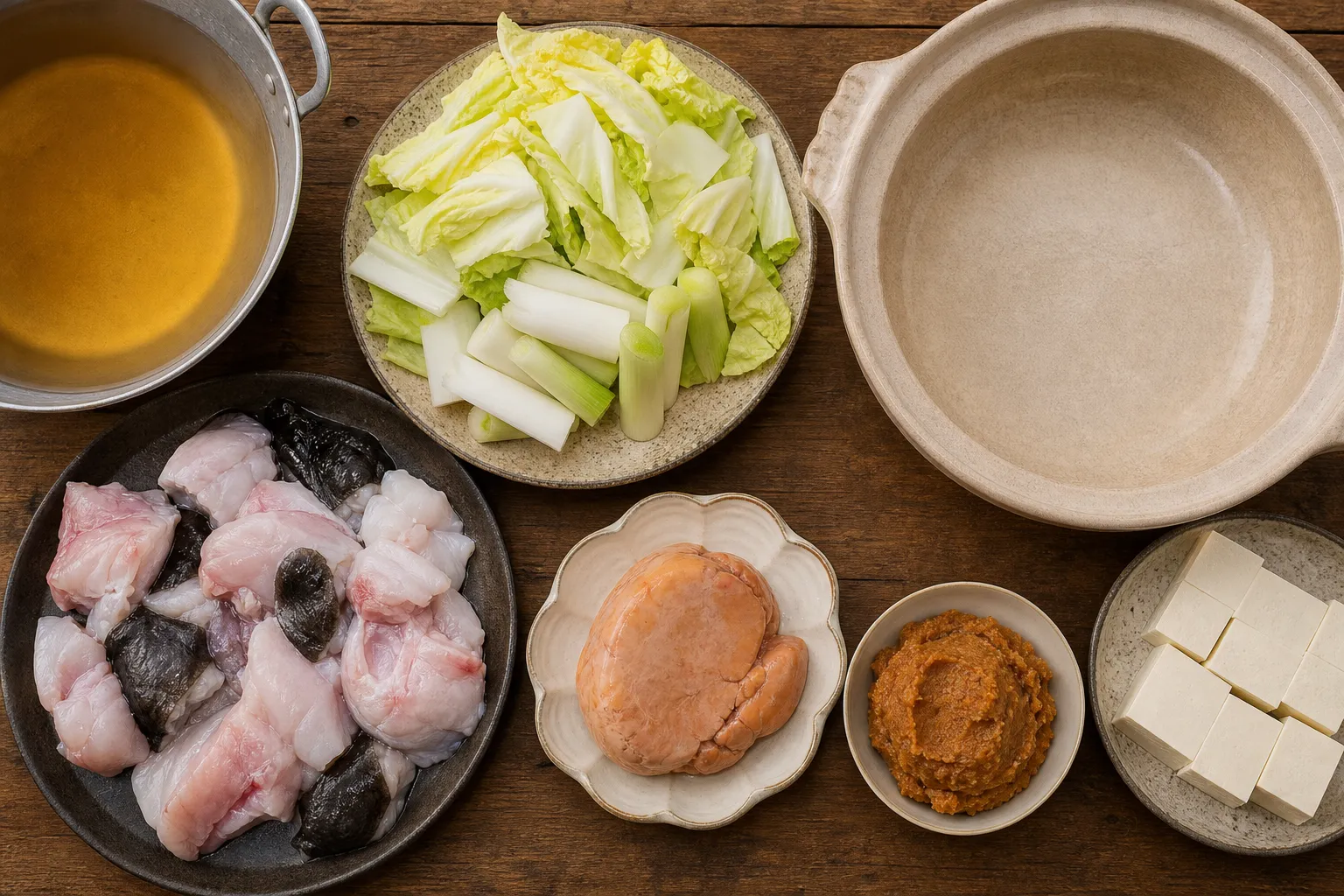
The technique here is half fishmonger theater, half restraint — and it all revolves around not wasting a scrap of an animal this precious in winter.
- Break the fish down by hanging it. Monkfish is too soft and slippery to cut on a board, so it's butchered with the tsurushi-giri — suspended from a hook while water is poured in to firm the flesh. Flesh, skin, stomach, gills, and the prized liver are all kept.
- Render the liver into the broth. The ankimo is melted into a deep miso (or miso-soy) base — that dissolved liver is what turns the whole pot glossy, rich, and almost creamy.
- Add the fish and vegetables. Pieces of monkfish, including that gelatinous skin, go in with napa cabbage, negi, tofu, and mushrooms.
- Simmer at the table. It all cooks together until the broth thickens with the liver and the coast's whole winter obsession suddenly makes sense.
- Finish with zosui. Rice cooked into the leftover broth is the traditional, glorious ending — do not let that soup leave the table un-eaten.
The hanging cut is one of those bits of technique I could watch for an hour. It looks brutal and is, in fact, the gentlest way to handle a fish this soft.
Before you go — chase the cold season
Your questions, answered honestly
"Isn't monkfish bland? Why the fuss?" — The flesh itself is mild, firm, and clean — but that's not where the magic is. The magic is the liver melted into the broth, which makes the whole pot deep, rich, and almost creamy. Anko-nabe isn't about the fish being flavorful on its own; it's about what the whole fish, especially the liver, does to the broth. That broth is the reason people travel for this.
"When should I eat it?" — Winter. This is a seasonal dish, and it peaks in the coldest months when the monkfish liver is at its richest. In summer you'll struggle to find it done well. If you're on the Ibaraki coast between roughly late autumn and early spring, this is the thing to eat.
"What's the gelatinous stuff — is it the skin?" — Probably, yes. Monkfish skin is wonderfully soft and gelatinous when simmered, and it's a valued part of the pot, not something to avoid. If a slightly wobbly, collagen-rich texture isn't your thing, stick to the firmer white flesh — but honestly, the skin is worth trying.
"Do I really have to finish with the rice?" — You really, really should. After a whole monkfish and its liver have simmered in that pot, the leftover broth is liquid gold. Ordering zosui (rice simmered into the remaining broth) at the end is the traditional finale, and it's frequently the best bite of the entire meal. Don't let them clear the pot before you do it.
What the staff will ask you
| You'll hear | Romaji | Meaning | Just say |
|---|---|---|---|
| 何名様ですか? | Nan-mei sama desu ka? | "How many people?" | Futari desu (two people) — or hold up fingers |
| だしは味噌と醤油どちらになさいますか? | Dashi wa miso to shōyu dochira ni nasaimasu ka? | "Miso or soy broth?" | Osusume wa dore desu ka (which do you recommend?) |
| 〆に雑炊はいかがですか? | Shime ni zōsui wa ikaga desu ka? | "Rice porridge to finish?" | Onegaishimasu (yes, please) |
To order, just say "Anko-nabe o kudasai" (あんこう鍋をください) — "Monkfish hot pot, please."
Where to eat it
- Oarai, Ibaraki — the coastal town most associated with anko-nabe; its seaside restaurants specialize in monkfish pots through the winter season, often with a view of the Pacific.
- The Ibaraki coast (Kita-Ibaraki, Hitachi and nearby fishing towns) — the whole northern Ibaraki shoreline is monkfish country in winter, and many coastal eateries feature anko-nabe as their signature cold-season dish.
- Winter anko festivals and events — Ibaraki coastal towns hold monkfish-season events in winter; timing a visit to one is a great way to eat it at its freshest.
Anko-nabe is a seasonal, winter-focused dish and prices, menus, and opening periods vary by shop and season — check current details, confirm they're serving it, and consider reserving before you go.
Soul Score
Local Roots5/5
First-Timer Friendly3/5
Adventure Level4/5
Comfort Level5/5
Travel Worthy4/5
These scores are one obsessed eater's gut feeling — not a verdict. A low number isn't a bad mark, just a different kind of adventure.
Know someone planning Japan?
← All Articles
Local Food · Oarai, Ibaraki
Still hungry?
Eat more from Ibaraki
Local FoodIbaraki
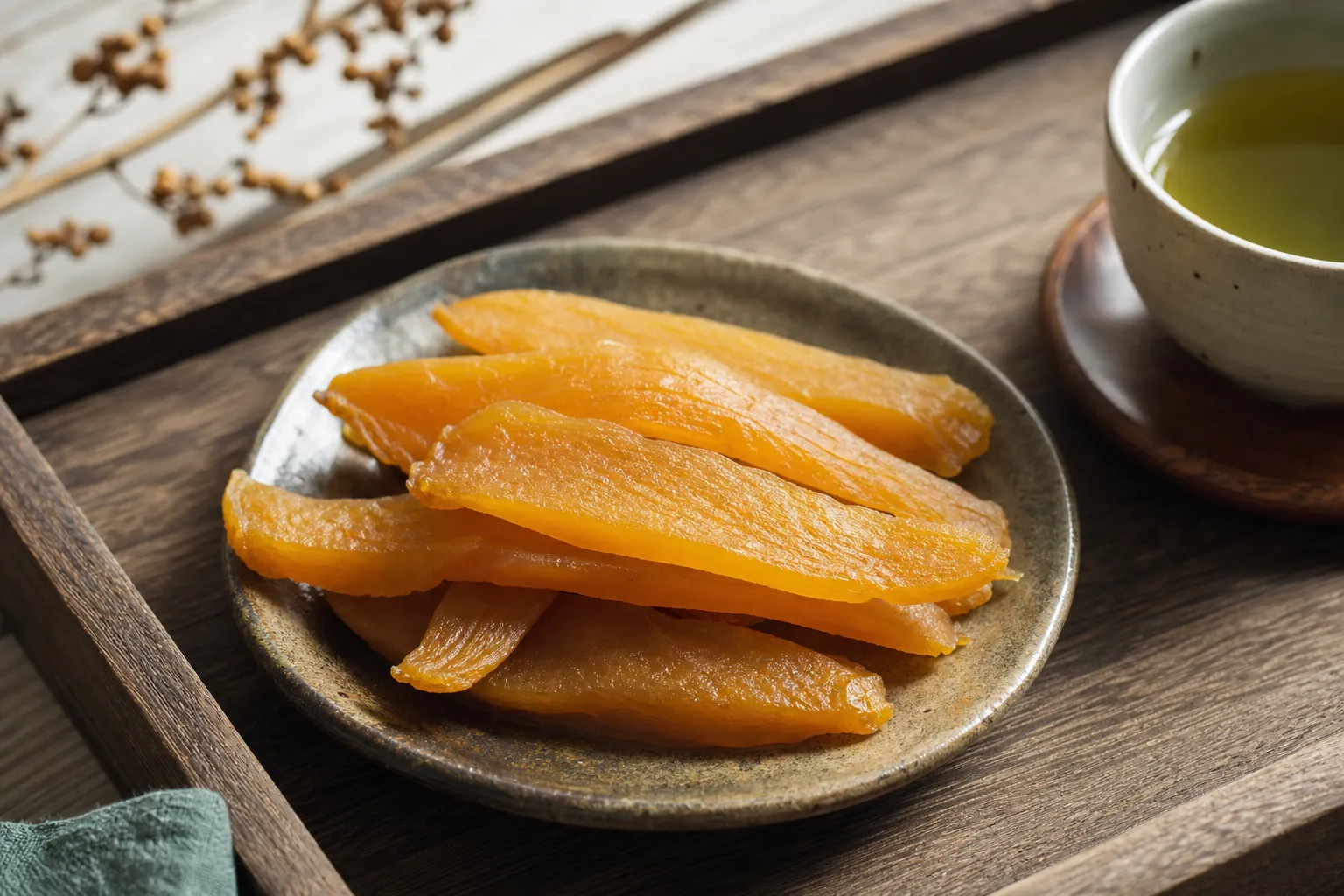
Hoshi-imo (干し芋)
Amber, chewy slabs of nothing but sun-dried sweet potato — no sugar, no additives, just winter, patience and Ibaraki sunshine folded into candy that happens to be a vegetable.
July 12, 2026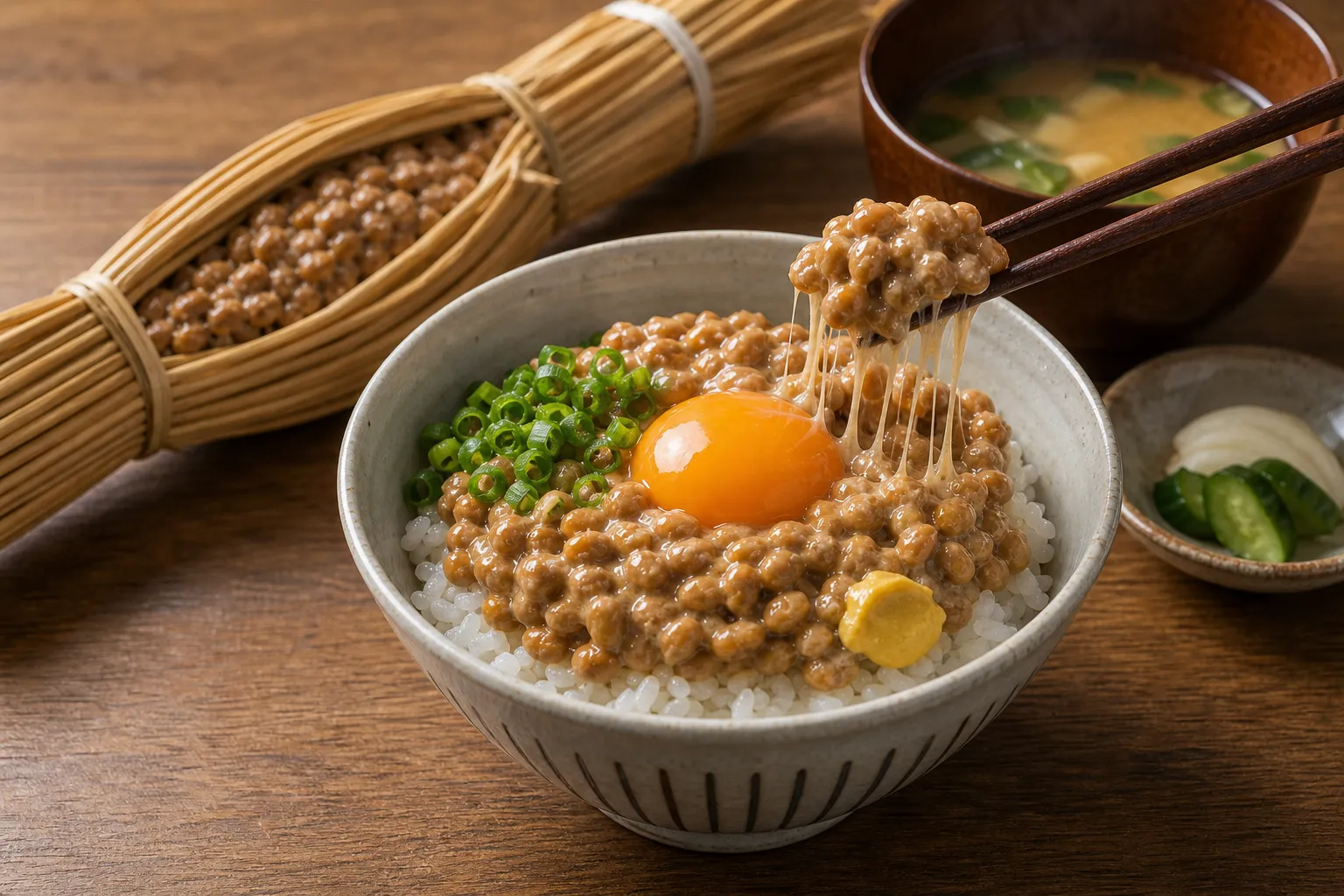
Local FoodMito, Ibaraki
Mito Natto (水戸納豆)
The smell arrives before the beans do. Stir, and the strings pull a foot into the air. This is the food Japan dares you to love — and in Mito, the whole city is on natto's side.
July 12, 2026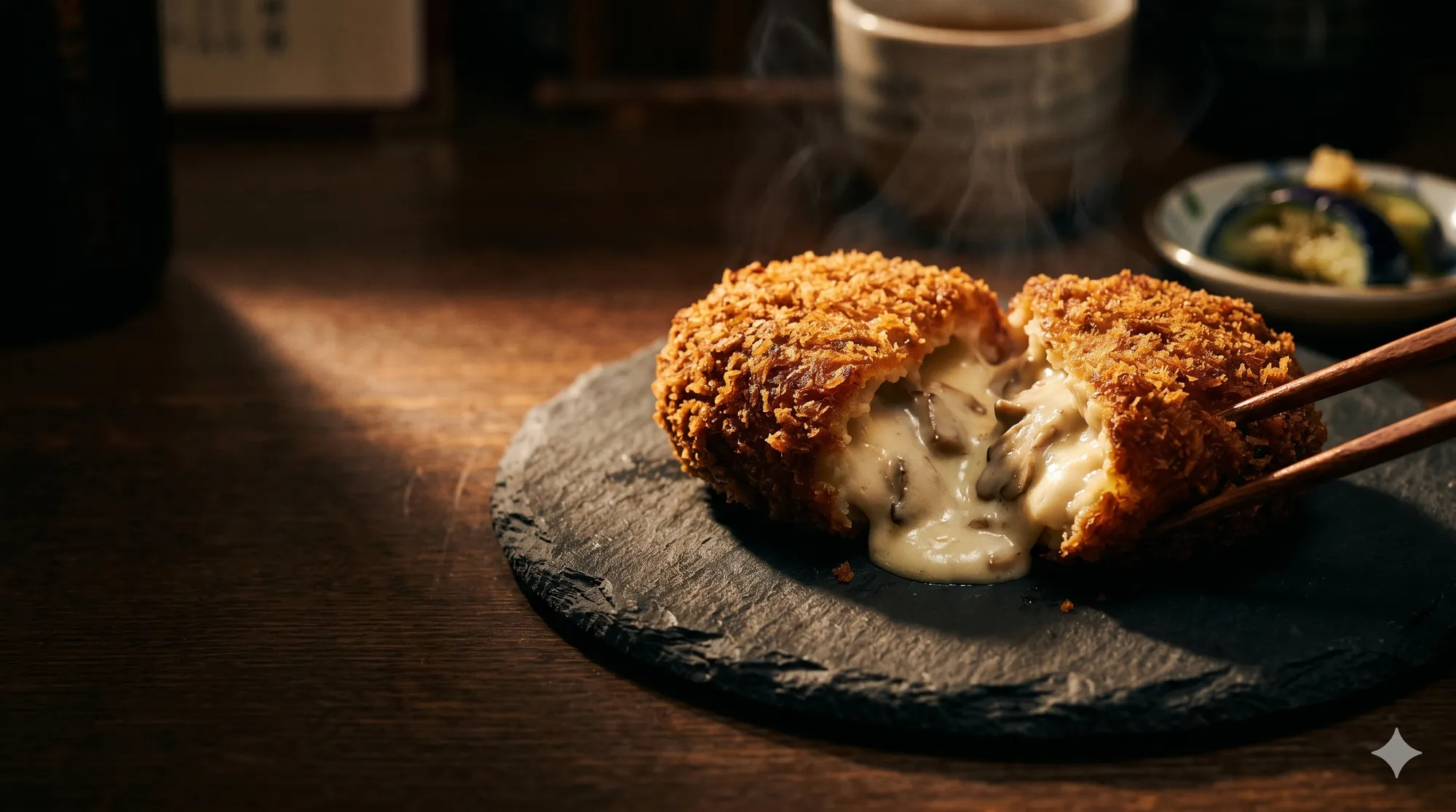
Local FoodIbaraki
Ryugasaki Croquettes (竜ケ崎コロッケ)
A small-town croquette so good it won a national contest. The star? A rice-flour cream croquette oozing maitake and béchamel. Underdog energy, championship flavor.
July 11, 2024