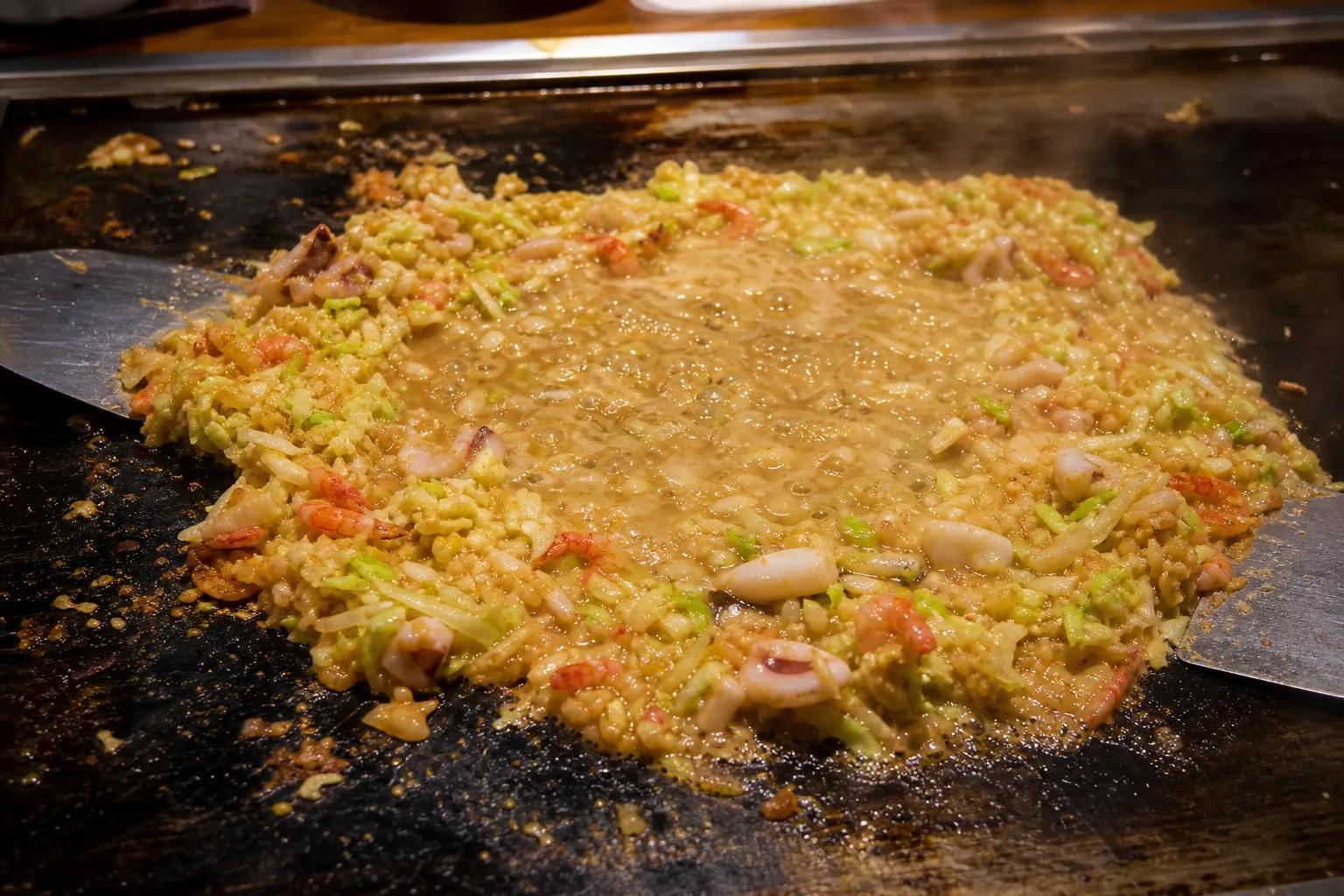
I put a spoon near it out of instinct and the staff actually laughed at me. "No spoon," she said, sliding a tiny metal spatula across the table instead. "This."
Share this dish


It looks like a griddle accident, tastes like a savory soup that decided to crisp up, and somehow gets more addictive the messier it gets.
That little spatula — the hera — is the whole story of monjayaki in one object. This is not a pancake. It's not trying to be. It's a thin, savory, almost soupy batter that you cook on a hot iron griddle right at your table, and instead of flipping it like its famous cousin okonomiyaki, you just... scrape it. Little crispy bits, seared onto the metal, peeled up hot and eaten straight off the hera before they even make it to a plate. It sounds like a disaster. It behaves like one, briefly, in the middle of cooking. And then it turns into one of the most quietly obsessive foods in Japan.
From a kid's candy-shop scribble to a full meal
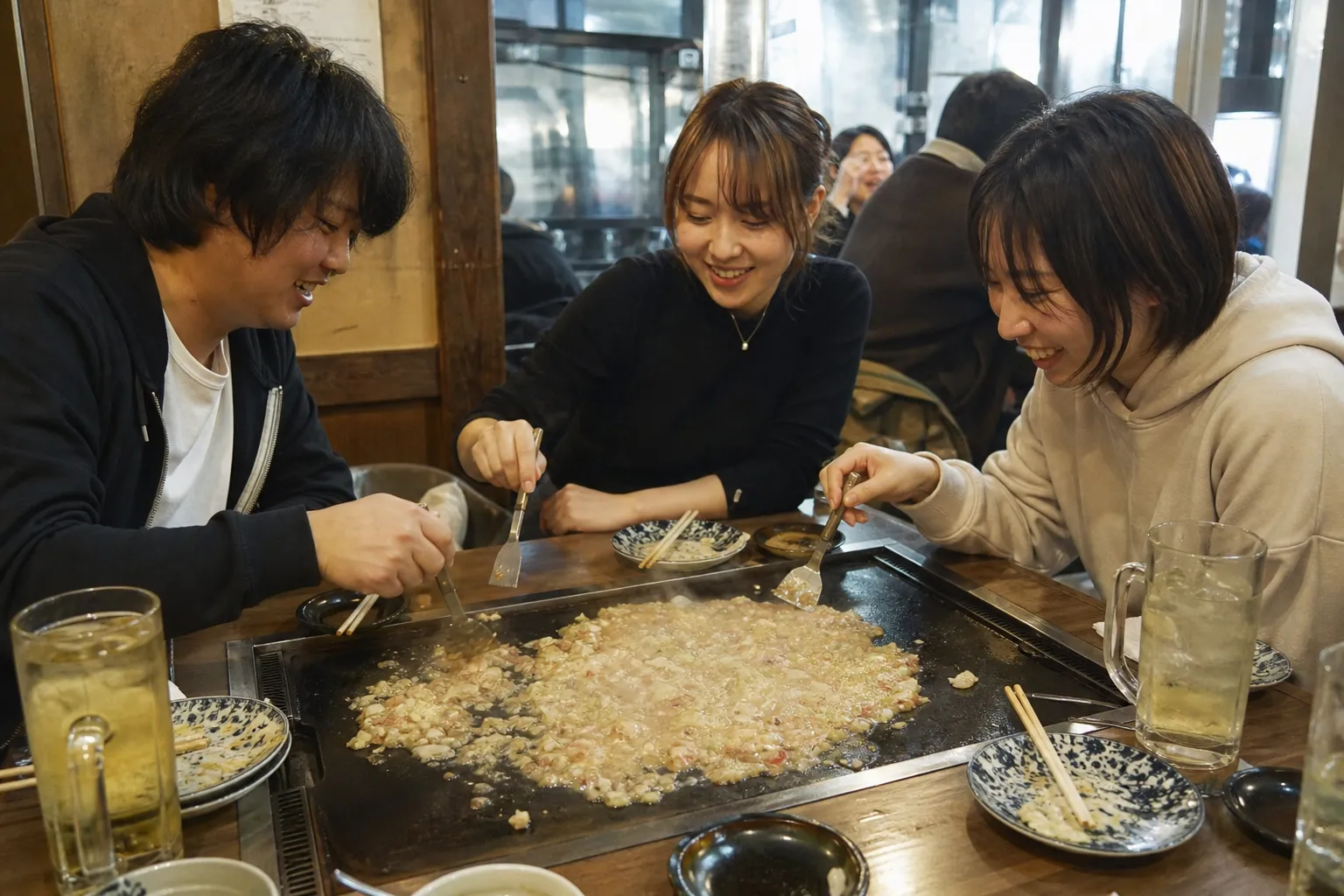
Monjayaki's ancestor wasn't dinner at all — it was moji-yaki, a thin sweet batter that kids in candy shops would pour onto a griddle and literally draw letters (moji) with, back in the late Edo and early Showa years, before eating their own doodles. I find that origin story disproportionately charming for a dish that now shows up on menus next to beer and yakitori.
It grew up fast through leaner decades — flour and water stretched further with cabbage, dried squid, tempura scraps, whatever was on hand — and by the postwar years it had become the savory, sit-down, cook-it-yourself griddle dish you'll find today, especially strong in and around Tokyo. It's humble food with a candy-shop's DNA still rattling around inside it, and once you know that, the whole "why is this so runny" question kind of answers itself.
How it's different from okonomiyaki (and why that matters)
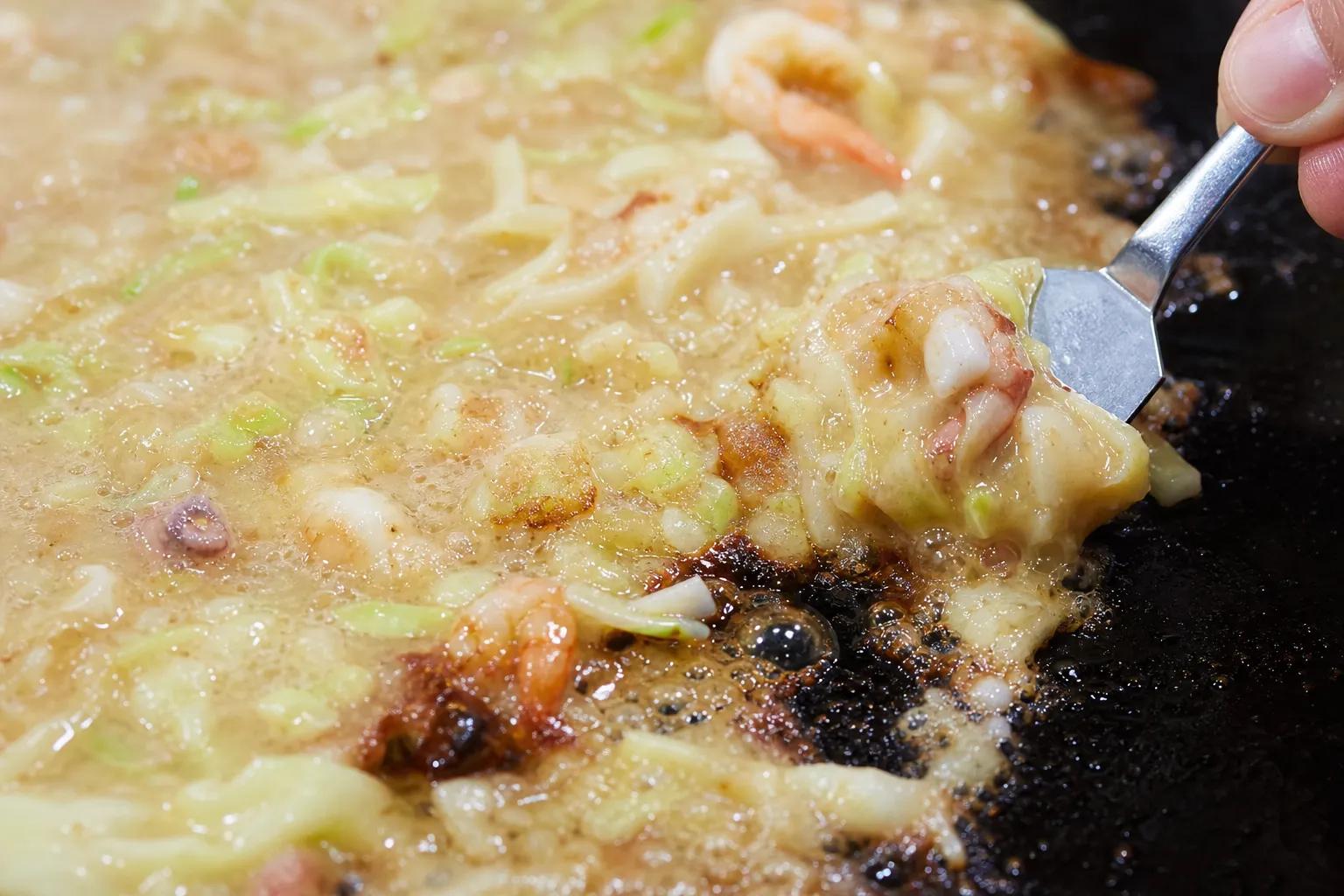
If you've had okonomiyaki, forget most of what you know about it — the two get lumped together constantly and they are not the same experience. Okonomiyaki is a firm, held-together pancake you flip with a spatula and cut into wedges. Monjayaki is deliberately loose, closer to a savory soup with solids floating in it, and it never really "sets" the way a pancake does. You don't flip it. You don't slice it. You spread it thin, let a crust form against the hot metal, and scrape that crust up in small savory bites, over and over, until the whole thing is gone.
Texture-wise, that means monja is about contrast within a single bite: a molten, gooey center still bubbling on the griddle, and thin crispy edges (okoge) that taste almost like the last burnt bit of a good stir-fry — in the best way. It's less "eating a dish" and more "grazing a tiny, delicious construction site," and I mean that as high praise.
How it's made (and eaten — same process, really)
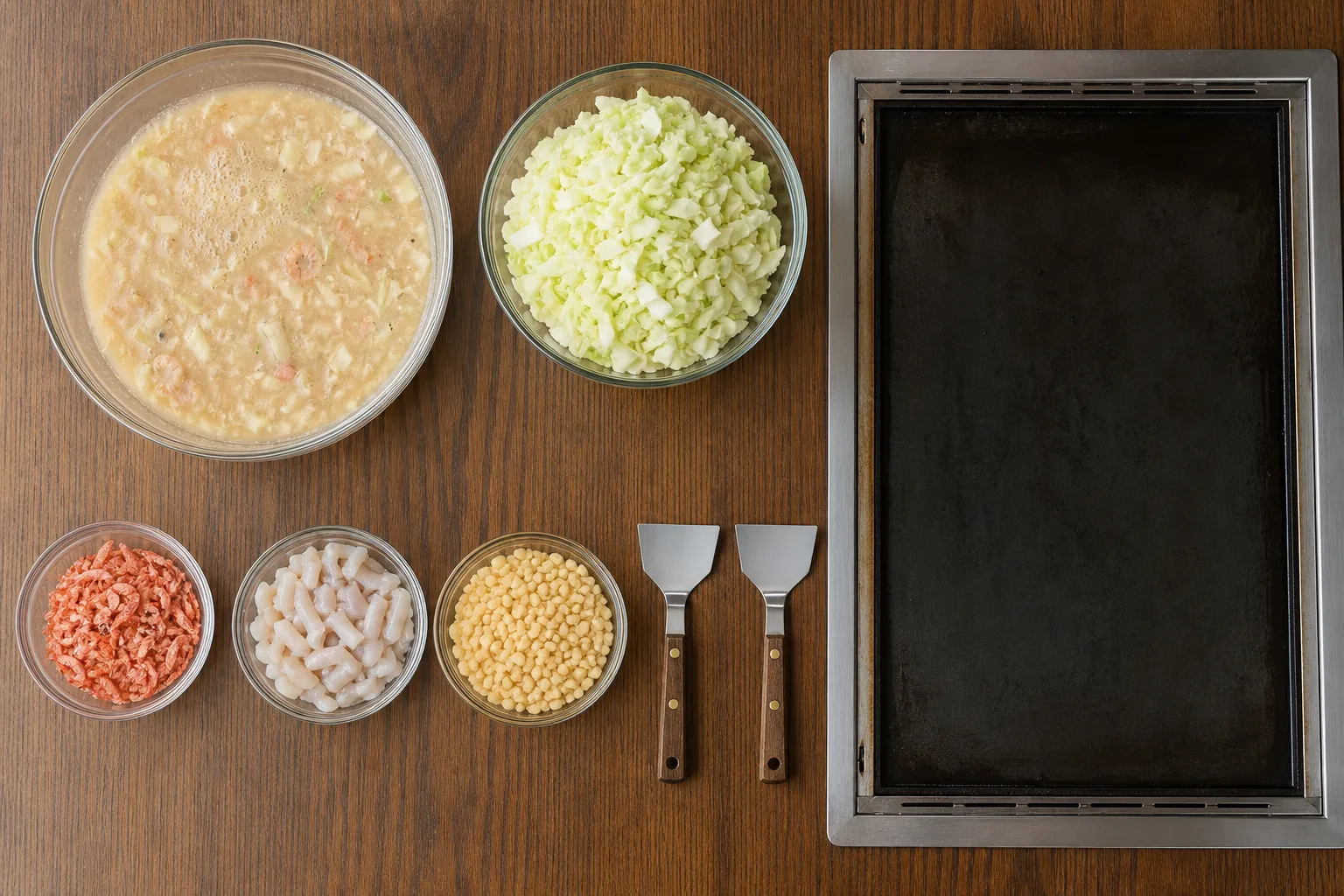
- A thin batter of flour, dashi, and Worcestershire-style sauce gets mixed at the table
- Solid ingredients — cabbage, dried shrimp, cheese, corn, mochi, seafood — are stir-fried on the hot teppan and pushed into a ring, like a little dam
- The runny batter gets poured into the center of that ring and left to bubble
- Once it starts thickening, everything gets folded together and spread thin across the griddle
- The edges are left alone just long enough to crisp into okoge
- You scrape up small bites with your hera, straight off the metal, and eat immediately — no plate needed
Popular fillings run from classic (cabbage and dried shrimp) to genuinely decadent — mentaiko, mochi, and melted cheese together is the order I never talk anyone out of. Seafood versions with squid, shrimp, and scallop are common too, and mochi on its own turns stretchy and almost caramelized where it touches the griddle. I have burned my tongue on that stretchy mochi more than once. I regret nothing.
Before you go — how not to panic at your first monja
Your questions, answered honestly
"Do I really cook this myself?" — Usually, yes, and it's genuinely half the fun — but you don't have to. Just tell the staff you're new to it and they will happily start it for you or walk you through step by step. Nobody will judge you; half the locals ask for help too.
"Is it supposed to look like that?" — Yes. The runny, half-liquid stage in the middle of cooking looks alarming if you're expecting a pancake. That's normal. Let it be ugly for a minute. It turns into food.
"What do I actually eat it with?" — The tiny metal spatula (hera), full stop. No chopsticks, no fork, no spoon. Small bites, straight off the griddle.
"Is this good for a total first-timer to Japanese food?" — Very. It's mild, customizable, communal, and cheap — the main hurdle is technique, not flavor. If you like savory pancake-adjacent food at all, you'll like this.
"What's the single best filling to order if I only try one?" — Mentaiko-mochi-cheese. Spicy cod roe, stretchy mochi, melted cheese, all folded into the batter. It's the order that made me a believer.
What the staff will ask you
| You'll hear | Romaji | Meaning | Just say |
|---|---|---|---|
| 焼きましょうか? | Yakimashō ka? | "Shall I cook it for you?" | Onegaishimasu (yes please) / Jibun de yattemimasu (I'll try myself) |
| 具は何にしますか? | Gu wa nani ni shimasu ka? | "Which fillings would you like?" | Mentai mochi chiizu de (mentaiko-mochi-cheese, please) |
| ヘラの使い方わかりますか? | Hera no tsukaikata wakarimasu ka? | "Do you know how to use the spatula?" | Oshiete kudasai (please show me) |
To order, just say "Monja, osusume de" (もんじゃ、おすすめで) — "Monja, whatever you recommend."
Where to eat it
Monjayaki restaurants exist across Japan, but they cluster hardest in and around Tokyo, where the dish is treated as a proper night-out food rather than a snack.
- Neighborhood teppan/monja restaurants across Tokyo — many casual izakaya-style spots in Tokyo and beyond have a monja section on the menu even if it isn't their main draw.
- Tsukishima, Tokyo — the country's single most famous monja destination, an entire street lined with dedicated monja shops. If you want the full deep-dive local experience — not just the dish, but the whole Tokyo neighborhood built around it — see Tsukishima's Monja Street in Tokyo.
Menus and available fillings vary shop to shop, so don't be afraid to ask staff what's popular that day.
Soul Score
Local Roots4/5
First-Timer Friendly4/5
Adventure Level4/5
Comfort Level4/5
Travel Worthy3/5
These scores are one obsessed eater's gut feeling — not a verdict. A low number isn't a bad mark, just a different kind of adventure.
Know someone planning Japan?
← All Articles
Japanese Food · Nationwide
Still hungry?
You might also like
Japanese FoodNationwide
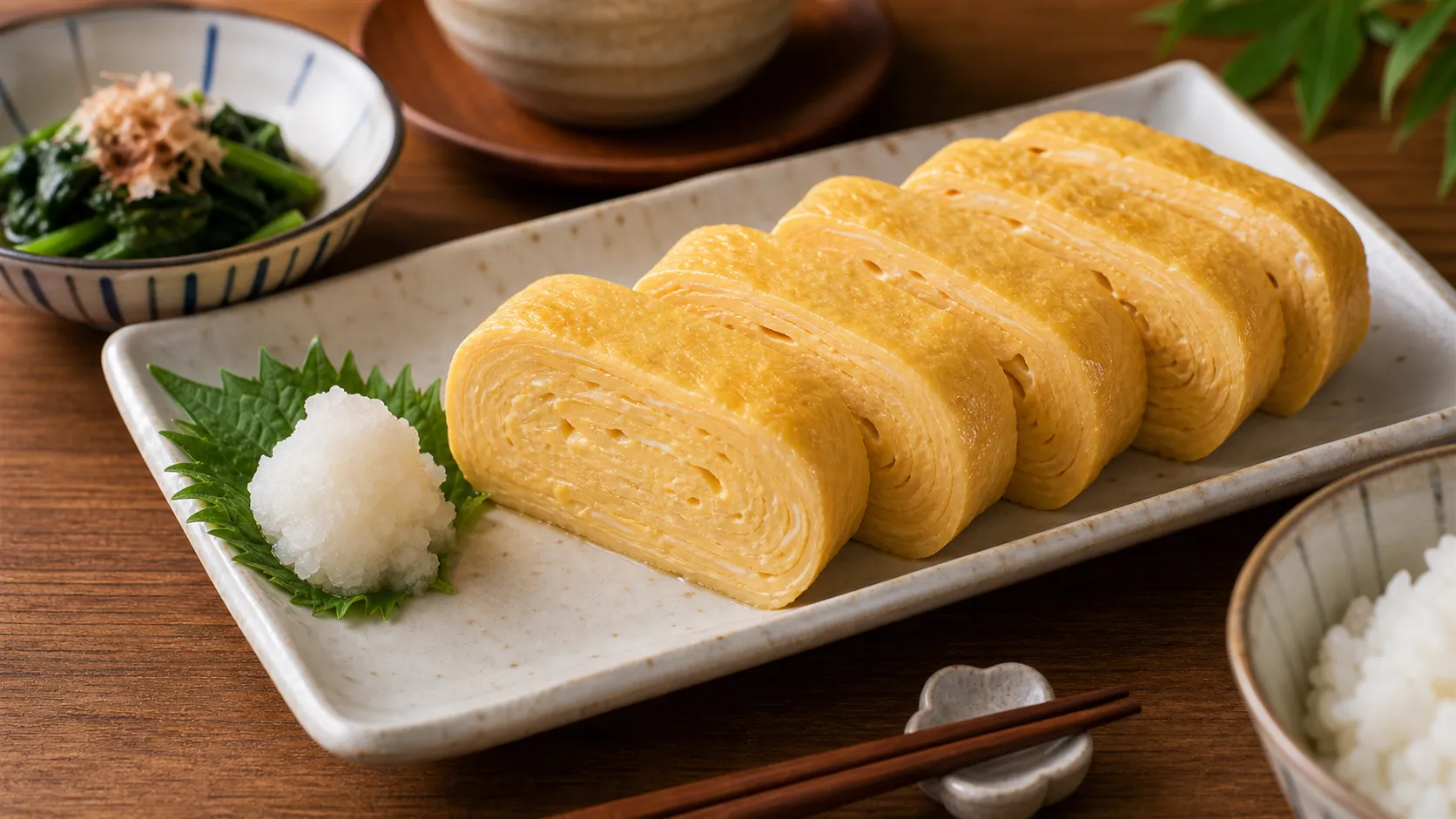
Dashimaki-tamago (だし巻き卵)
A rolled omelette so soft it almost trembles, layered fold over fold and soaked with dashi so that biting in releases a little warm rush of savory broth — the deceptively simple egg dish that Japanese chefs spend years perfecting.
July 11, 2026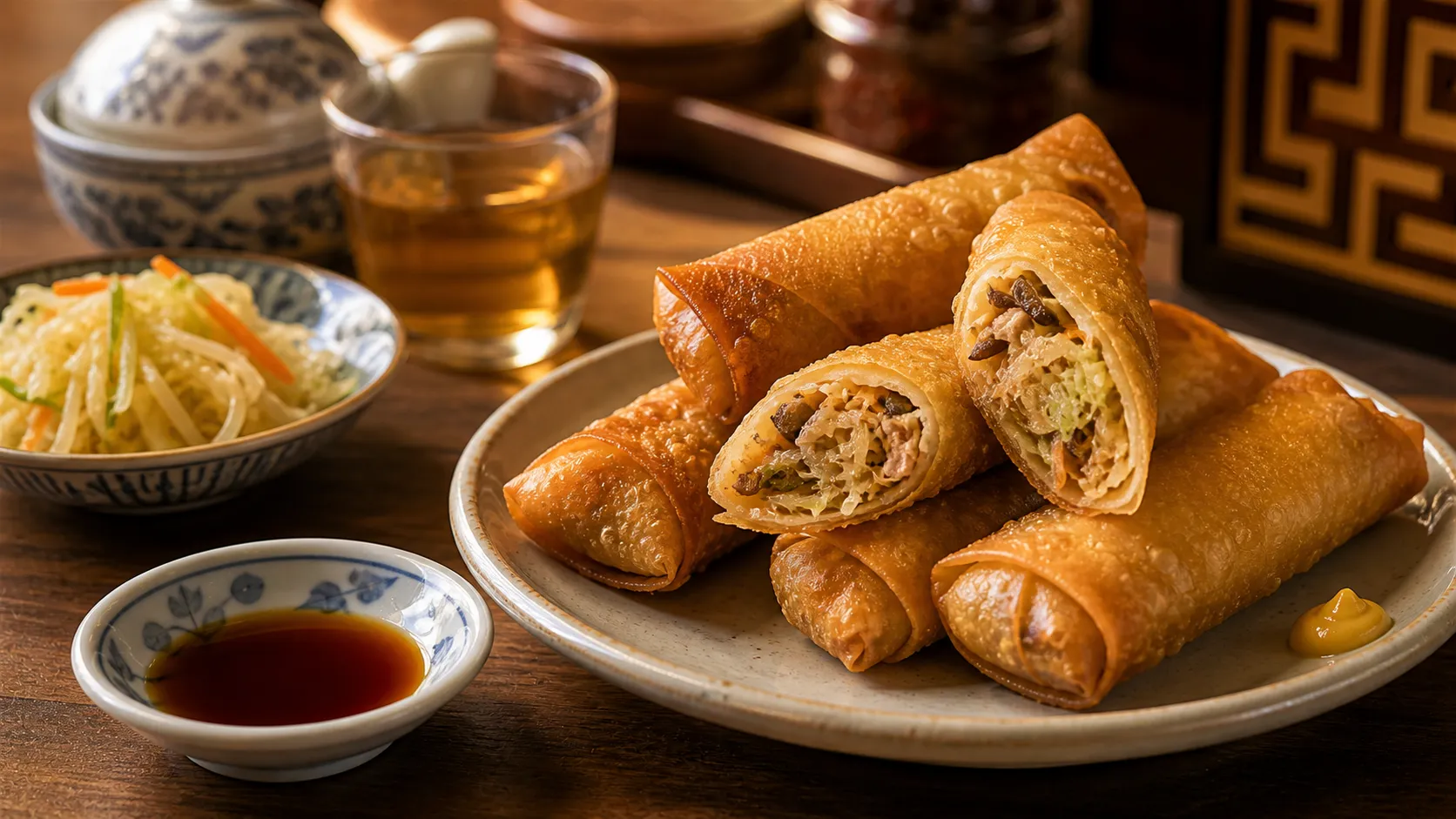
Japanese FoodNationwide
Harumaki (春巻き)
The Japanese spring roll — a shatteringly crisp golden tube that gives way to a hot, savory tangle of pork, cabbage and bamboo shoot, best eaten the second it's cool enough not to burn your mouth (you will not wait that long).
July 11, 2026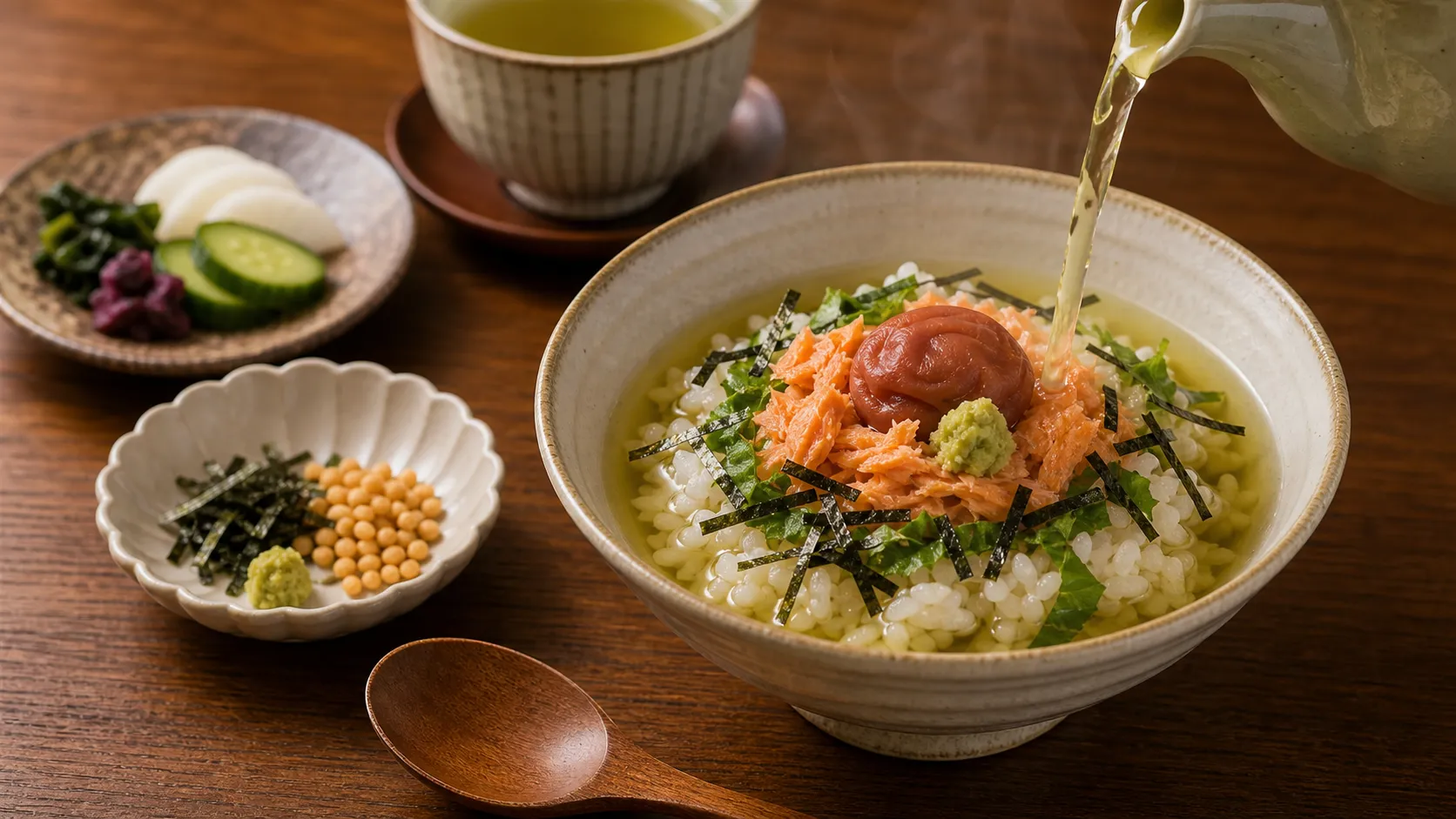
Japanese FoodNationwide
Ochazuke (お茶漬け)
Pour hot green tea or dashi over a bowl of rice, scatter something savory on top, and eat — the gentlest, most quietly restorative dish in Japan, the one you reach for late at night when you just need a warm bowl to make everything okay.
July 11, 2026