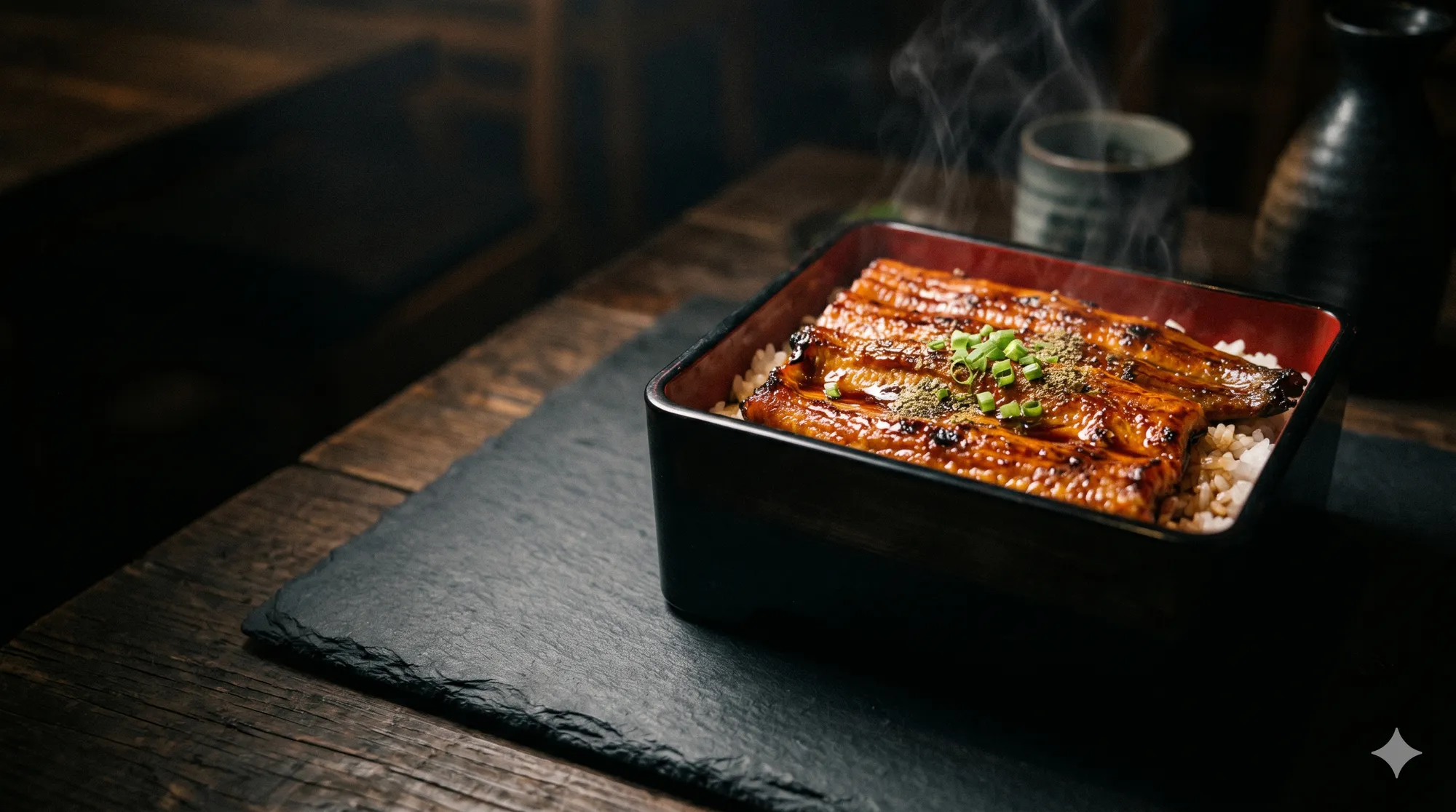
I know "eel" makes some people hesitate. Get over it immediately, because unagi is one of the most luxurious, melt-in-your-mouth things you will ever eat. Freshwater eel is butterflied, steamed and grilled over charcoal, and repeatedly brushed with a glossy sweet-savory tare until the outside caramelizes and the inside turns impossibly tender and rich. Laid over a box of rice as unadon or unaju, it's pure indulgence.
Share this dish


Freshwater eel, butterflied, grilled over charcoal, and lacquered in a sweet-savory glaze until it's smoky, rich, and falling apart. A splurge worth every yen — and Japan's favorite way to survive the summer.
There's nothing fishy or slimy about it — properly prepared unagi is smoky, sweet, fatty, and delicate, with crisp glazed edges and flesh so soft it barely needs chewing. It's a special-occasion food, priced accordingly, and absolutely worth it at least once.
A summer ritual centuries deep
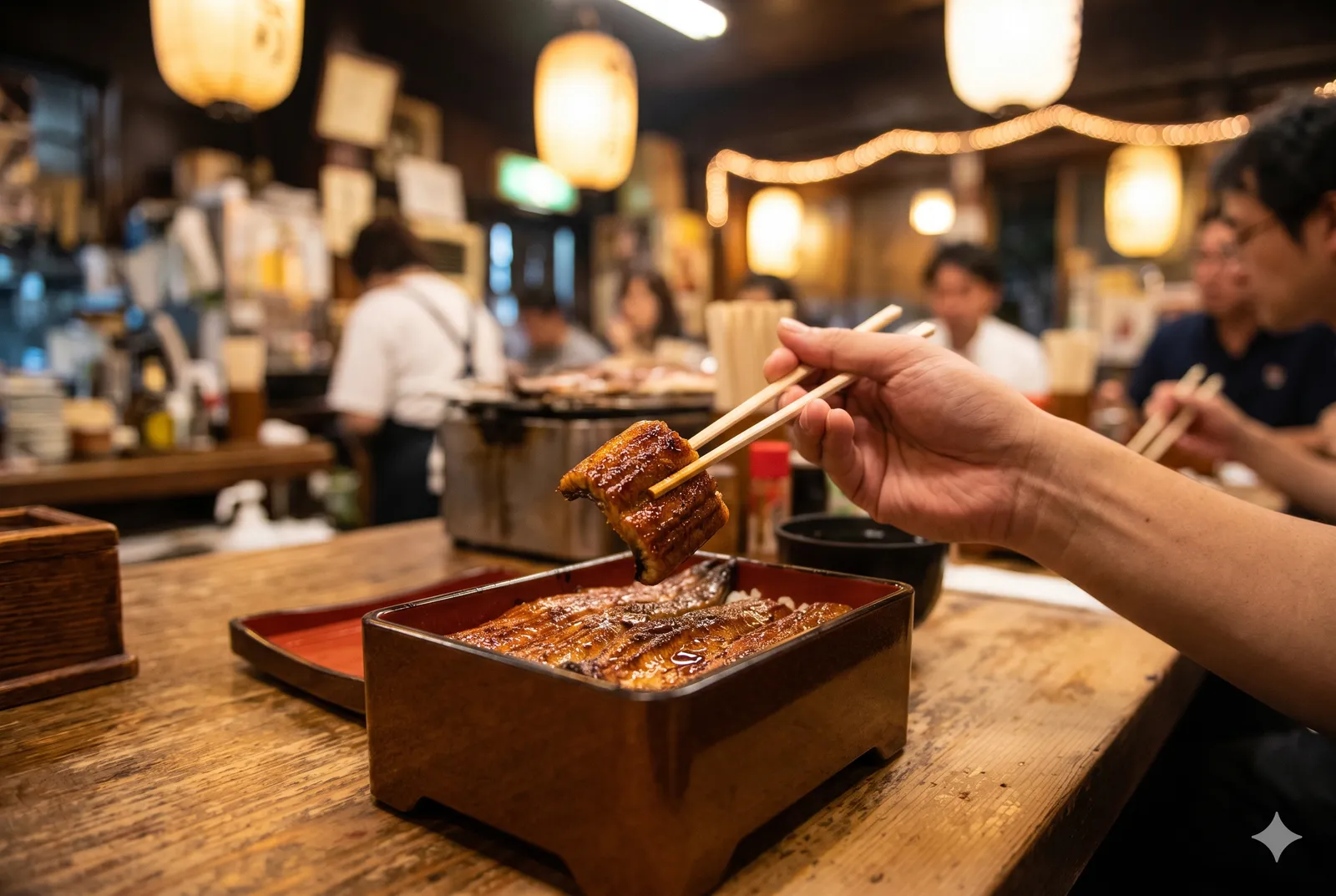
Japan has eaten eel for over a thousand years, prized as a stamina food. The big tradition is Doyo no Ushi no Hi — the "midsummer day of the ox" — when, by custom, you eat unagi to beat the brutal heat and fatigue of Japanese summer. (Legend says an Edo-era scholar invented the marketing to help a struggling eel shop. It worked spectacularly, and the custom stuck.)
Two regional styles split the country: Kanto (Tokyo) style steams the eel before grilling, making it feather-soft; Kansai (Osaka) style skips the steam and grills it straight, for a crispier, richer bite. Both are glorious.
Why the tare and the char make it
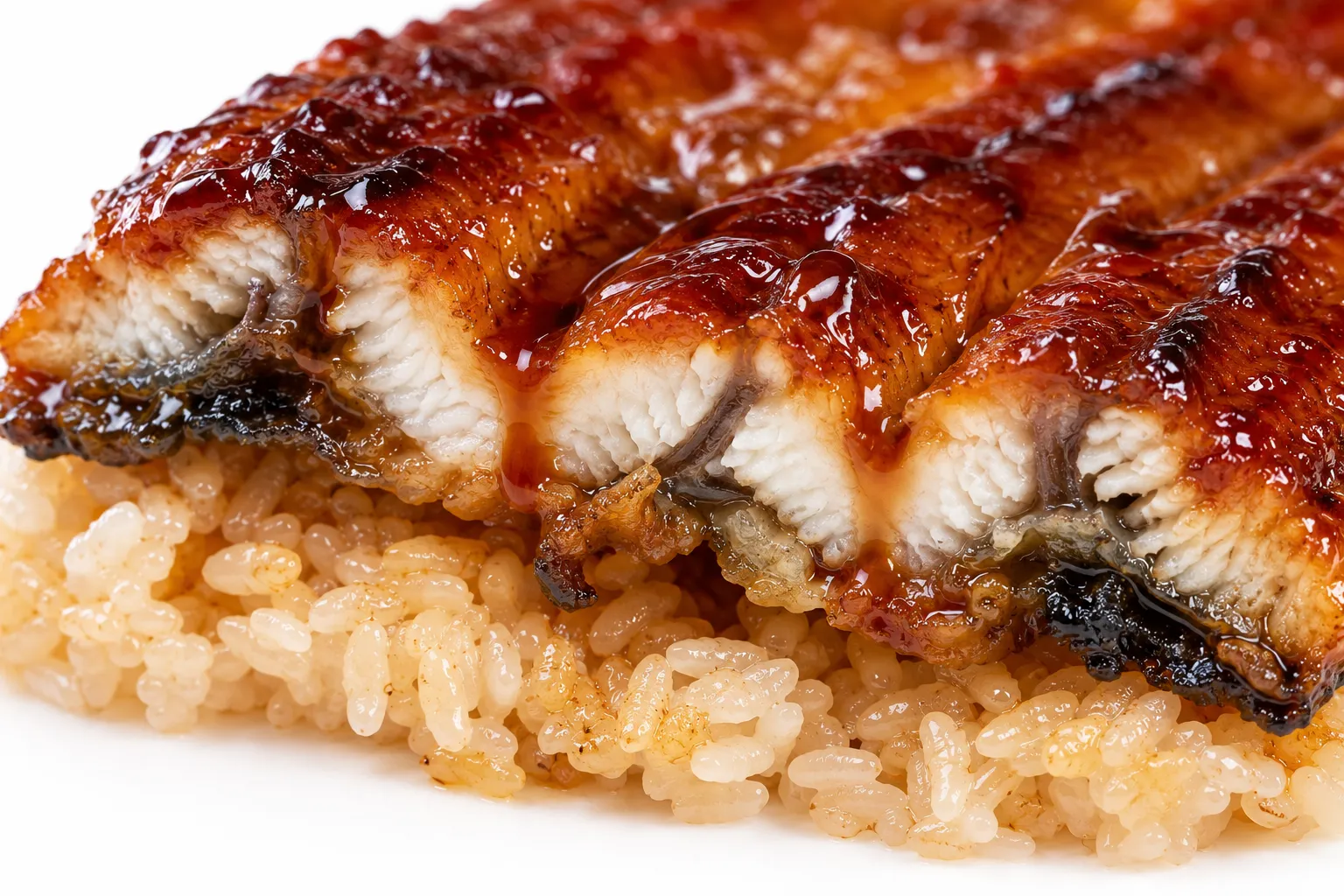
The soul of unagi is that glossy lacquer of tare — a sweet-savory glaze of soy, mirin, sake, and sugar, often from a "master sauce" a shop has topped up for decades. The eel is dipped and grilled, dipped and grilled, building layer after caramelized layer until it gleams.
The charcoal does the rest: smoky aroma, crisp edges, rendered fat. Sprinkle a little sansho (Japanese pepper) on top and its citrusy, tongue-tingling kick cuts the richness perfectly.
How it's made
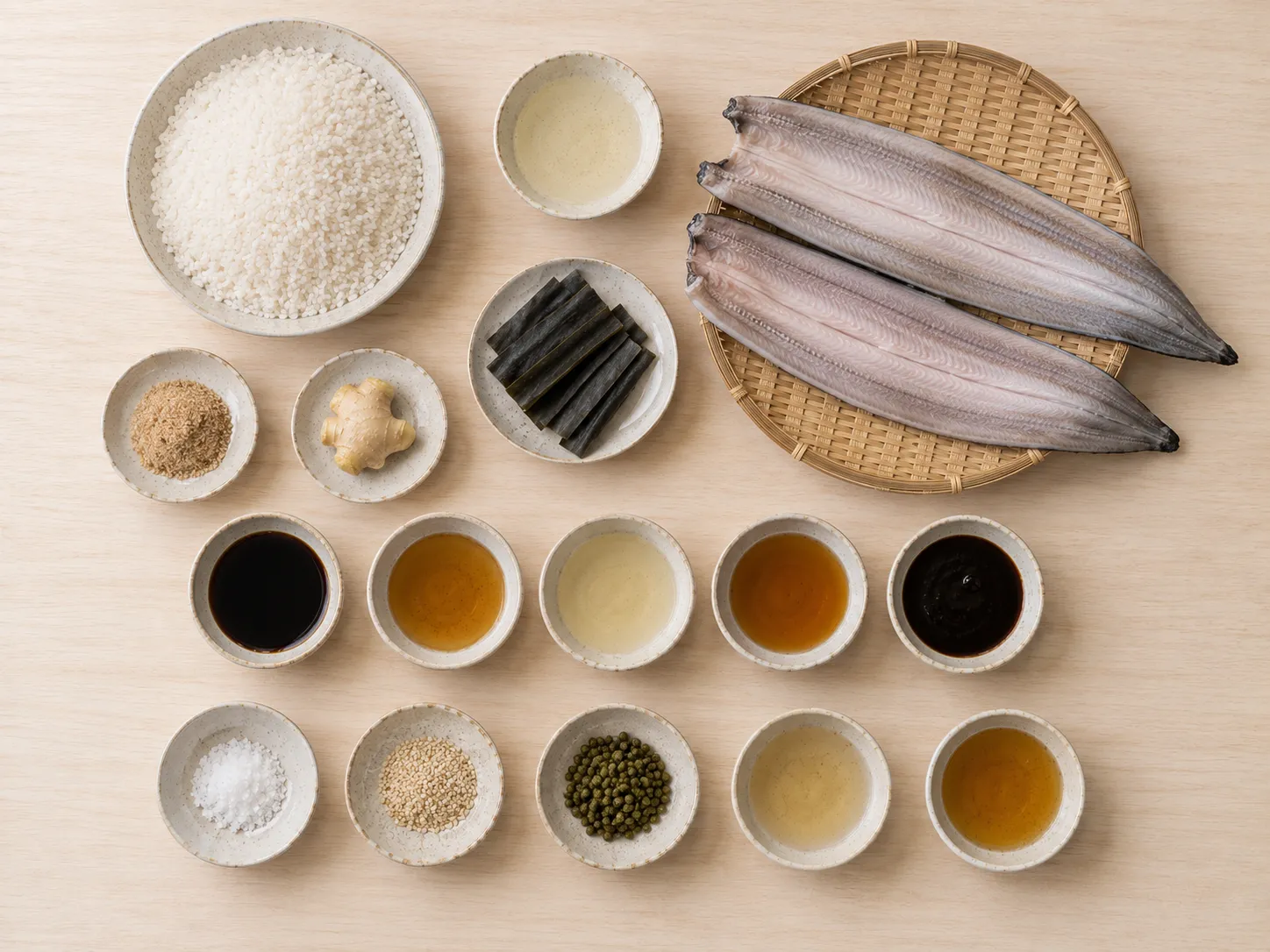
- Butterfly and debone fresh eel
- (Kanto style) Steam to render fat and tenderize; (Kansai style) skip straight to grilling
- Grill over charcoal, repeatedly brushing with sweet-savory tare
- Build up layers of glaze until glossy and caramelized
- Serve over rice (unadon/unaju), with sansho pepper on the side
Before you go — splurge wisely
Your questions, answered honestly
"Is it expensive?" — Yes — unagi is a splurge (often ¥2,500–5,000+), partly because wild eel is increasingly scarce. Treat it as a special meal, not a casual lunch.
"Unadon vs unaju?" — Same dish, different box. Unadon comes in a round bowl, unaju in a lacquered square box (usually a slightly fancier, larger serving). Both are eel over rice.
"What's hitsumabushi?" — A famous Nagoya style: the eel is chopped over rice and eaten in thirds — first plain, then with condiments (wasabi, nori, negi), then with dashi poured over like ochazuke. A fantastic way to experience it.
"What's the green powder?" — Sansho, Japanese pepper. Sprinkle a little on the eel — its bright, numbing citrus kick balances the richness. Don't skip it.
"Liver soup?" — Many shops offer kimosui, a clear soup with eel liver. It's a delicacy — try it if you're curious.
What the staff will ask you
| You'll hear | Romaji | Meaning | Just say |
|---|---|---|---|
| サイズはどうしますか? | Saizu wa dō shimasu ka? | "Which size?" | Nami de (regular) / Jō de (premium) |
| 山椒はかけますか? | Sanshō wa kakemasu ka? | "Sansho pepper?" | Hai, sukoshi (yes, a little) |
| 肝吸いは付けますか? | Kimosui wa tsukemasu ka? | "Add liver soup?" | Hai, onegaishimasu (yes please) |
To order, just say "Unadon hitotsu kudasai" (うな丼一つください) — "one eel bowl, please."
Where to eat it
- Nagoya — for hitsumabushi, the chopped-eel-three-ways style. A destination dish.
- Specialist unagi shops (unagi-ya) — long-running restaurants, often with a master tare aged for generations. Worth booking.
- Hamamatsu (Shizuoka) — a famous eel-farming region with great local shops.
Top shops are busy on Doyo no Ushi no Hi (midsummer) and often need reservations — and the dish takes time to prepare, so don't go in a rush.
Soul Score
Local Roots4/5
First-Timer Friendly4/5
Adventure Level3/5
Comfort Level5/5
Travel Worthy4/5
These scores are one obsessed eater's gut feeling — not a verdict. A low number isn't a bad mark, just a different kind of adventure.
Know someone planning Japan?
← All Articles
Japanese Food · Nationwide
Still hungry?
You might also like
Japanese FoodNationwide
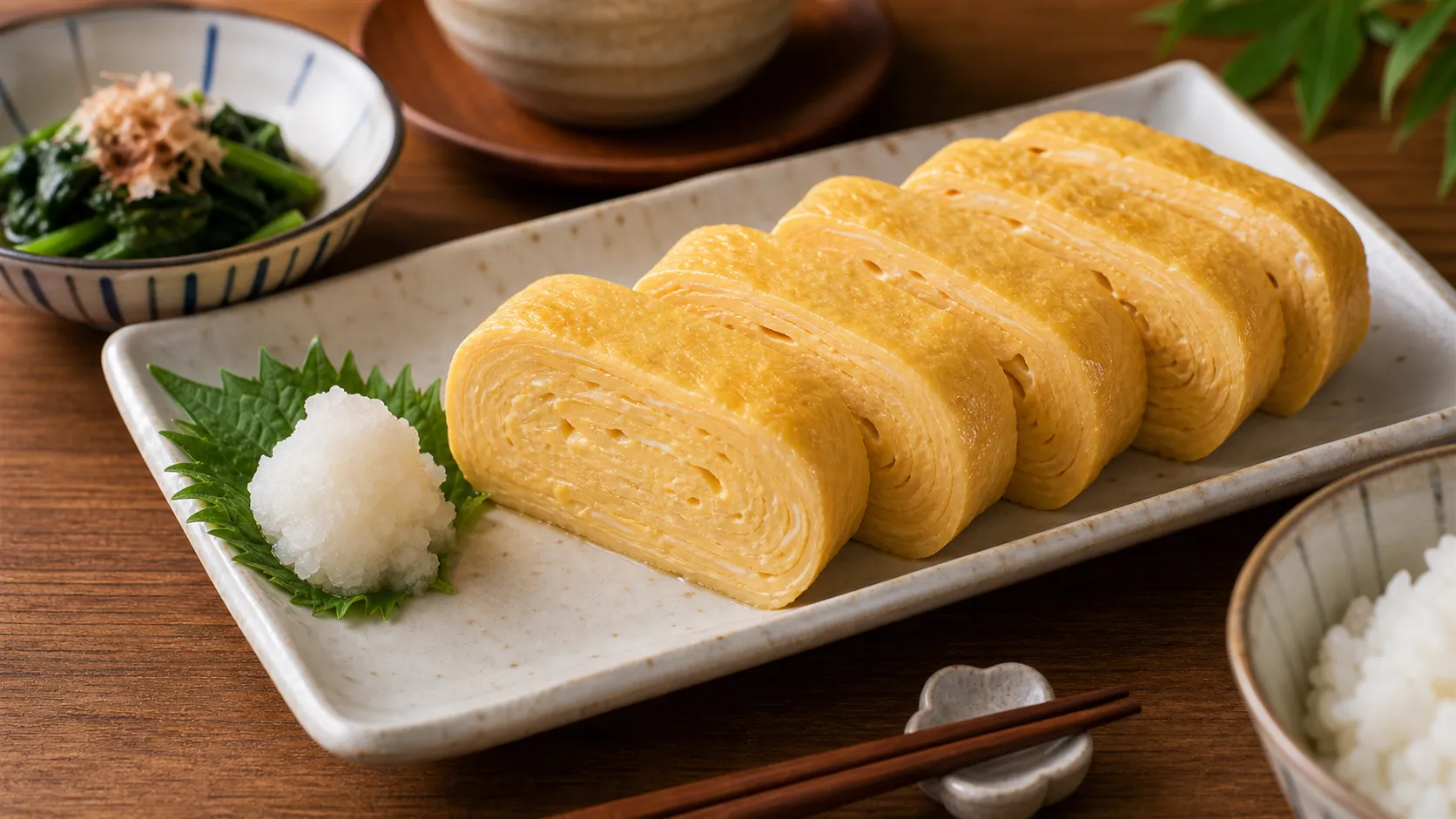
Dashimaki-tamago (だし巻き卵)
A rolled omelette so soft it almost trembles, layered fold over fold and soaked with dashi so that biting in releases a little warm rush of savory broth — the deceptively simple egg dish that Japanese chefs spend years perfecting.
July 11, 2026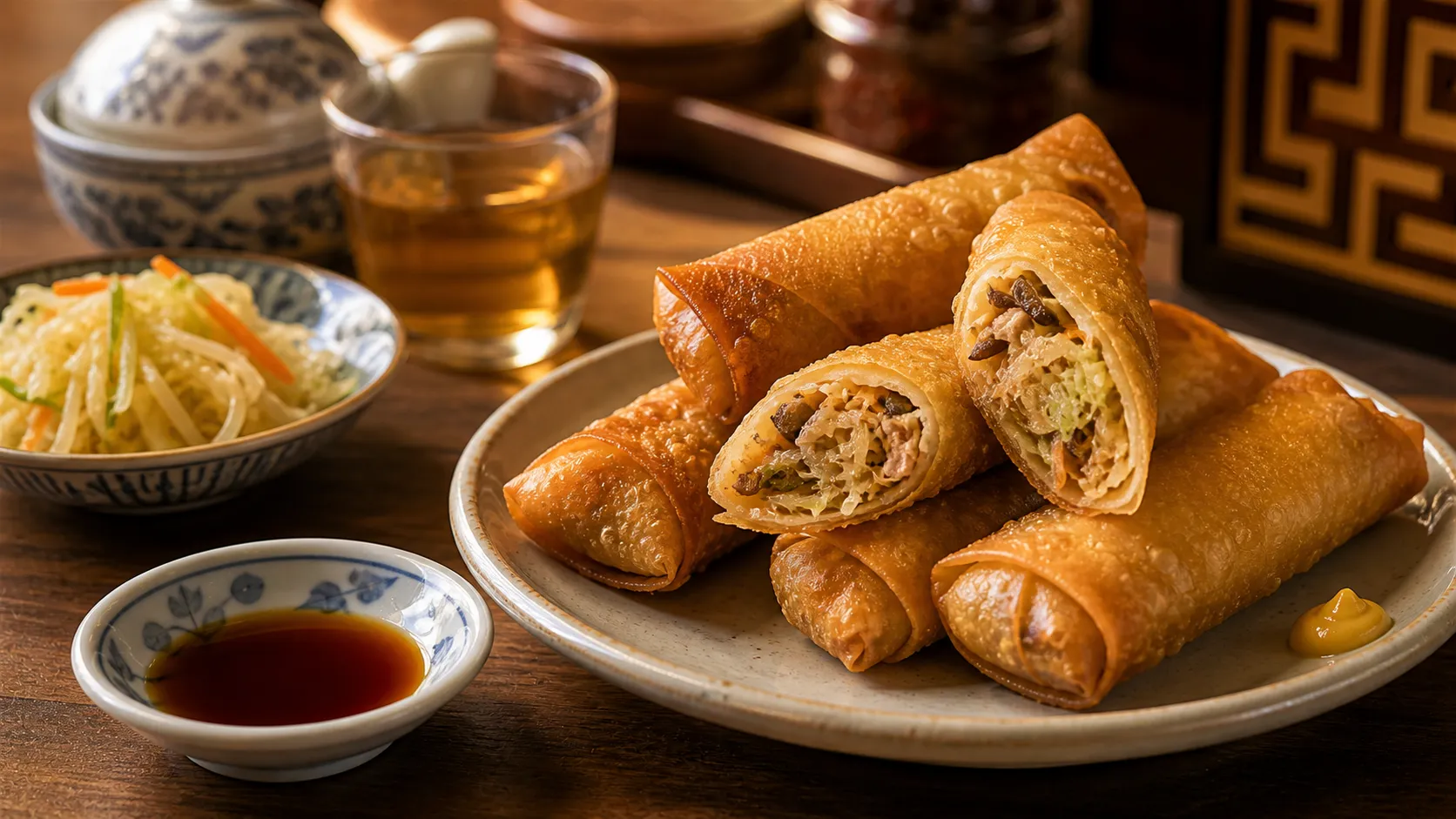
Japanese FoodNationwide
Harumaki (春巻き)
The Japanese spring roll — a shatteringly crisp golden tube that gives way to a hot, savory tangle of pork, cabbage and bamboo shoot, best eaten the second it's cool enough not to burn your mouth (you will not wait that long).
July 11, 2026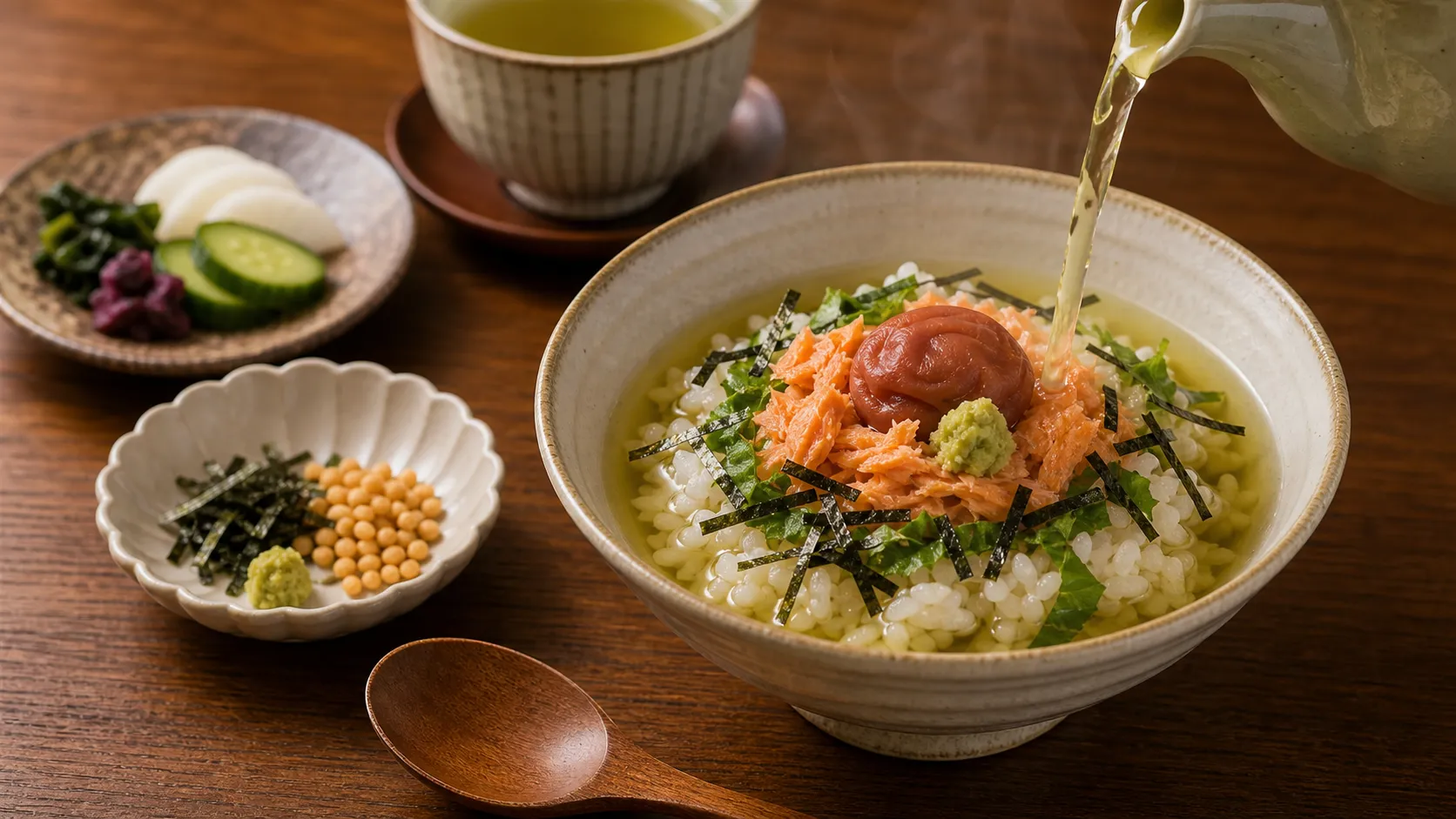
Japanese FoodNationwide
Ochazuke (お茶漬け)
Pour hot green tea or dashi over a bowl of rice, scatter something savory on top, and eat — the gentlest, most quietly restorative dish in Japan, the one you reach for late at night when you just need a warm bowl to make everything okay.
July 11, 2026