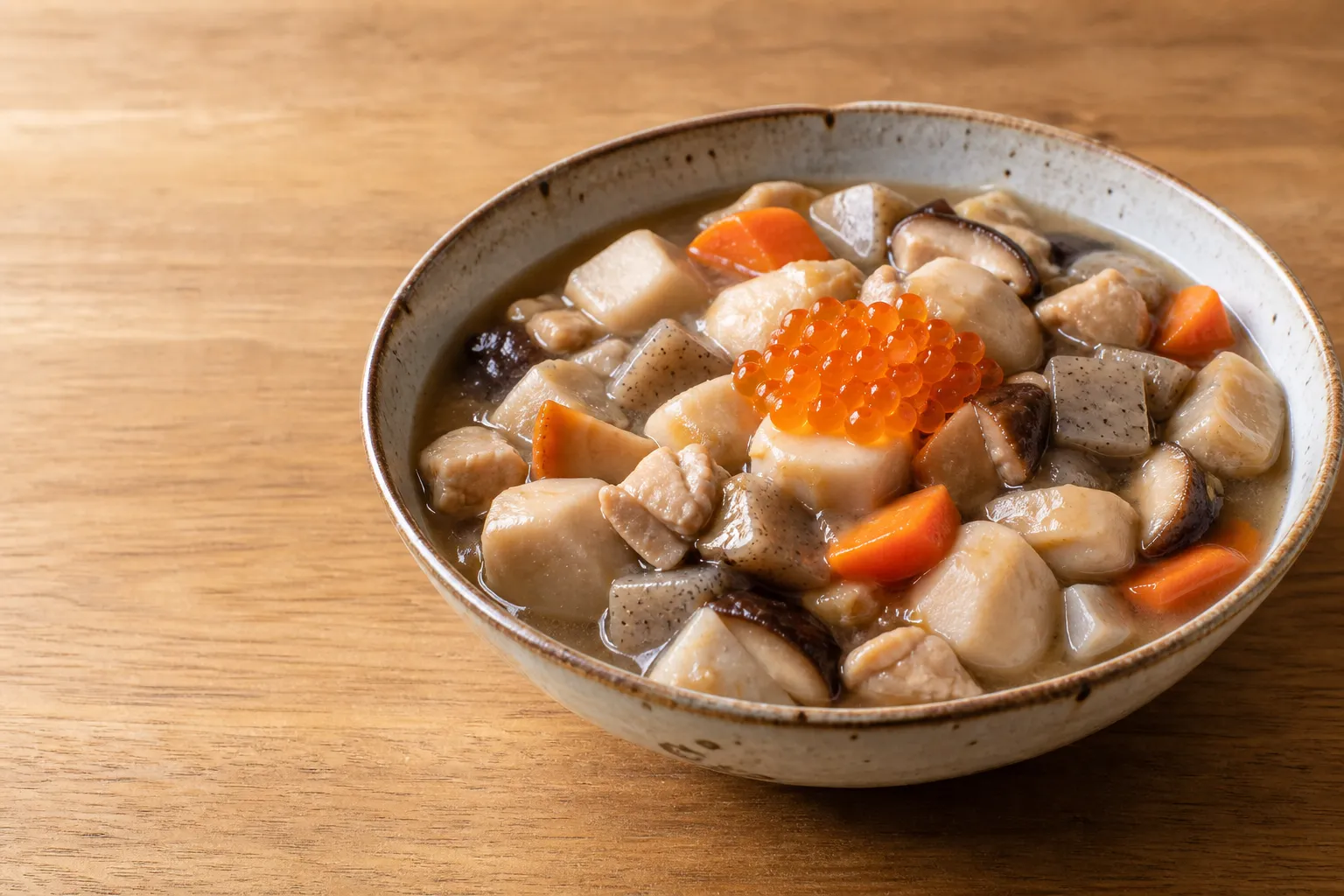
I dipped my spoon in expecting soup and pulled out something with body. Not thick like a curry, not clear like a dashi broth — something in between, silky, faintly starchy, clinging to the spoon on the way up like it wanted one more second in the bowl before letting go. I sat with that texture for a full minute before I even tasted it.
Share this dish


A spoon goes into the bowl and comes out coated, silky, clinging — like the broth itself has opinions about leaving. Niigata's grandmother stew doesn't announce itself, and that's exactly why it wins.
🍜 Planning a food trip to Niigata?Add this dish to my Food Trip →
 Add this dish to my Food Trip →
Then I tasted it, and it was warm and savory and deeply, unfussily good, in the specific way that only a dish somebody's grandmother has been making for forty years can be good.
Noppe (のっぺ) is Niigata's home-style simmered stew — taro, carrot, konnyaku, shiitake, and usually chicken or salmon, gently cooked down in a savory dashi broth that gets lightly thickened by nothing more than the taro's own natural starch releasing into the liquid as it cooks. No cornstarch, no cheating. It's not miso soup. It's not a clear soup at all, really. It's something quieter and heartier than both, and once you've had it, you start noticing how few dishes actually get that particular silky-thick texture right.
A New Year's dish that never left the table
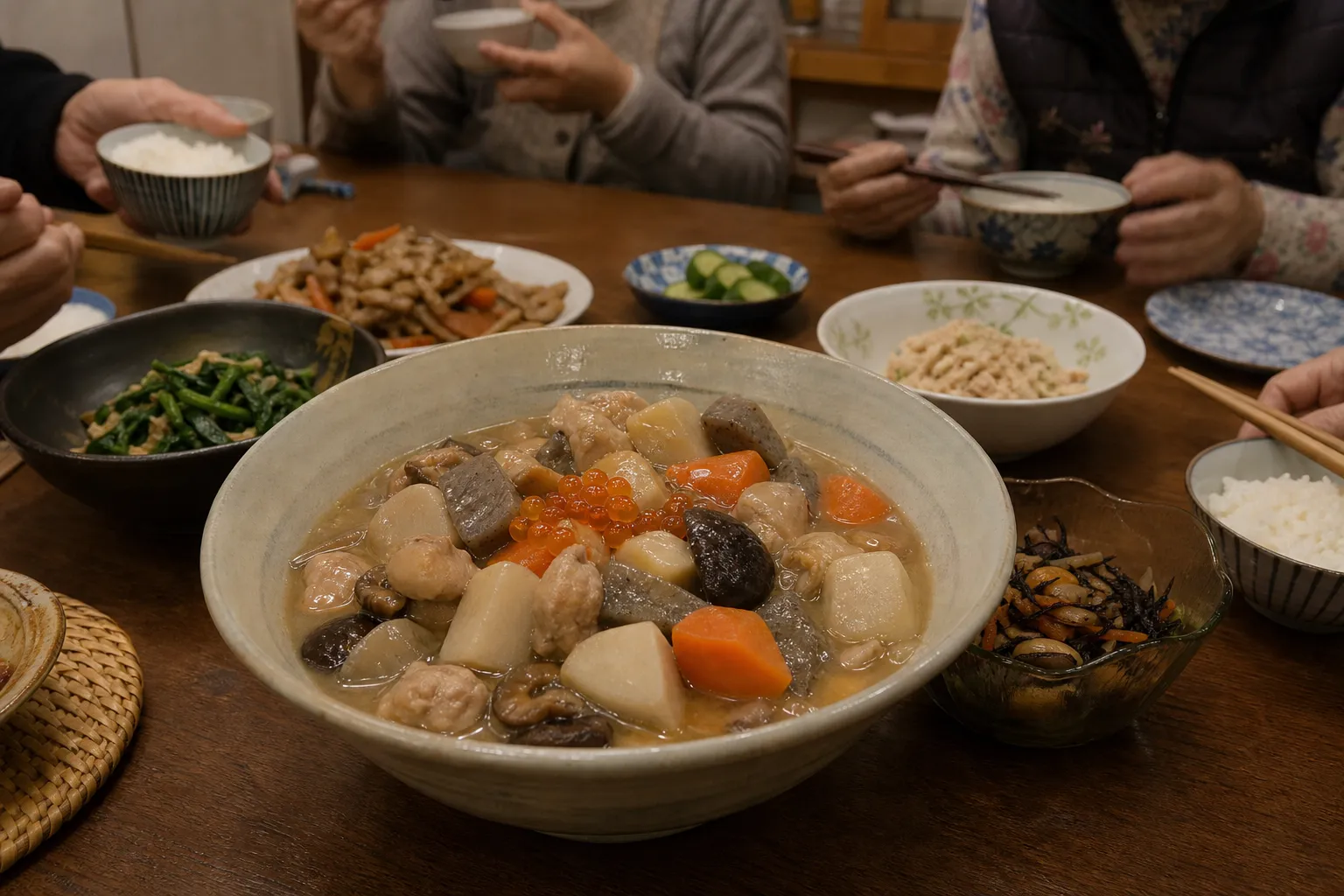
Noppe has deep roots in Niigata's home cooking and its New Year's osechi tradition, where a big pot of it gets made to feed a whole gathered family across several days — the kind of dish built for large batches and reheating, not restaurant plating. Some food historians trace an early version back through temple cuisine (shōjin ryōri), where a thick vegetable-forward stew made sense on meat-free fasting days; over time, home cooks in Niigata folded in chicken or, near the coast, salmon and salmon roe, and it became something distinctly regional rather than purely ascetic.
What moves me about noppe is how unbothered it is by its own reputation. It never became a tourist spectacle or a festival food with a mascot and a rivalry. It just kept being what it always was — the dish an aunt makes a giant pot of, that everyone eats a bowl of without really discussing it, because discussing it would be like discussing whether you need to breathe. I ate it at a small Niigata restaurant and the owner shrugged when I asked about the "recipe," like the question itself was slightly beside the point. That's the whole soul of the dish, honestly.
The taro is doing more work than you think
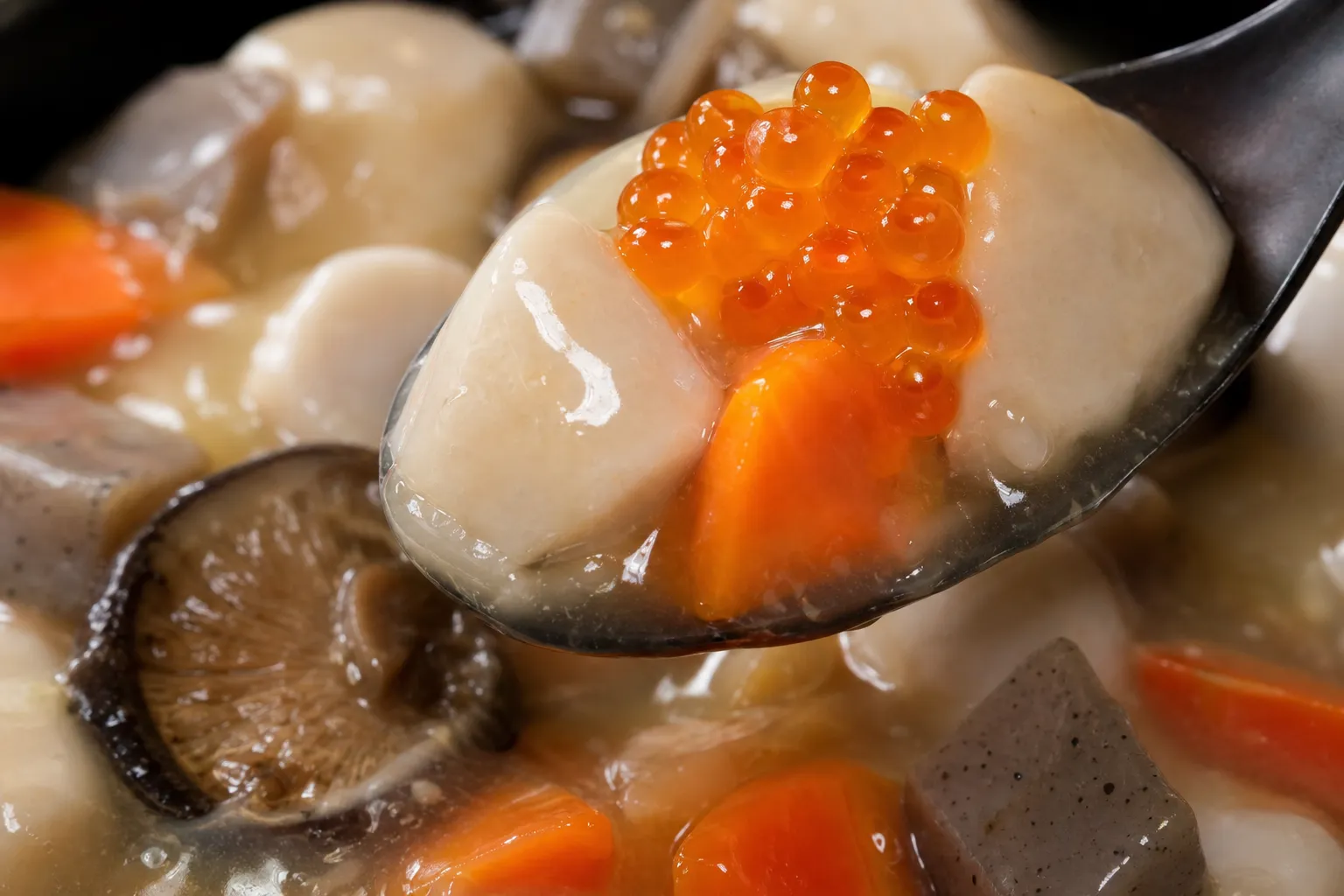
The signature texture — that silky, slightly clinging broth — comes entirely from satoimo (taro root) breaking down slightly as it simmers and releasing its natural starch into the dashi. It's a much gentler thickening than a roux or a slurry gives you: the broth stays translucent and light, just with a little more body and a little more shine, so it coats the vegetables and the spoon instead of running straight through.
Around the taro sits a genuinely lovely mix of textures — soft-but-still-holding-shape carrot, chewy-springy konnyaku, earthy shiitake, tender ginkgo nuts in the fancier versions, and either shredded chicken or flaked salmon depending on the household and the season. Coastal families sometimes finish it with a few beads of salmon roe (ikura) on top, which turns a homey stew into something that looks — and tastes — a little celebratory. And here's the twist that surprises most first-timers: in summer, noppe is often served chilled instead of hot, and the same silky broth turns into something closer to a savory, refreshing jelly-adjacent soup. Same dish, completely different mood, both completely correct.
How it's made
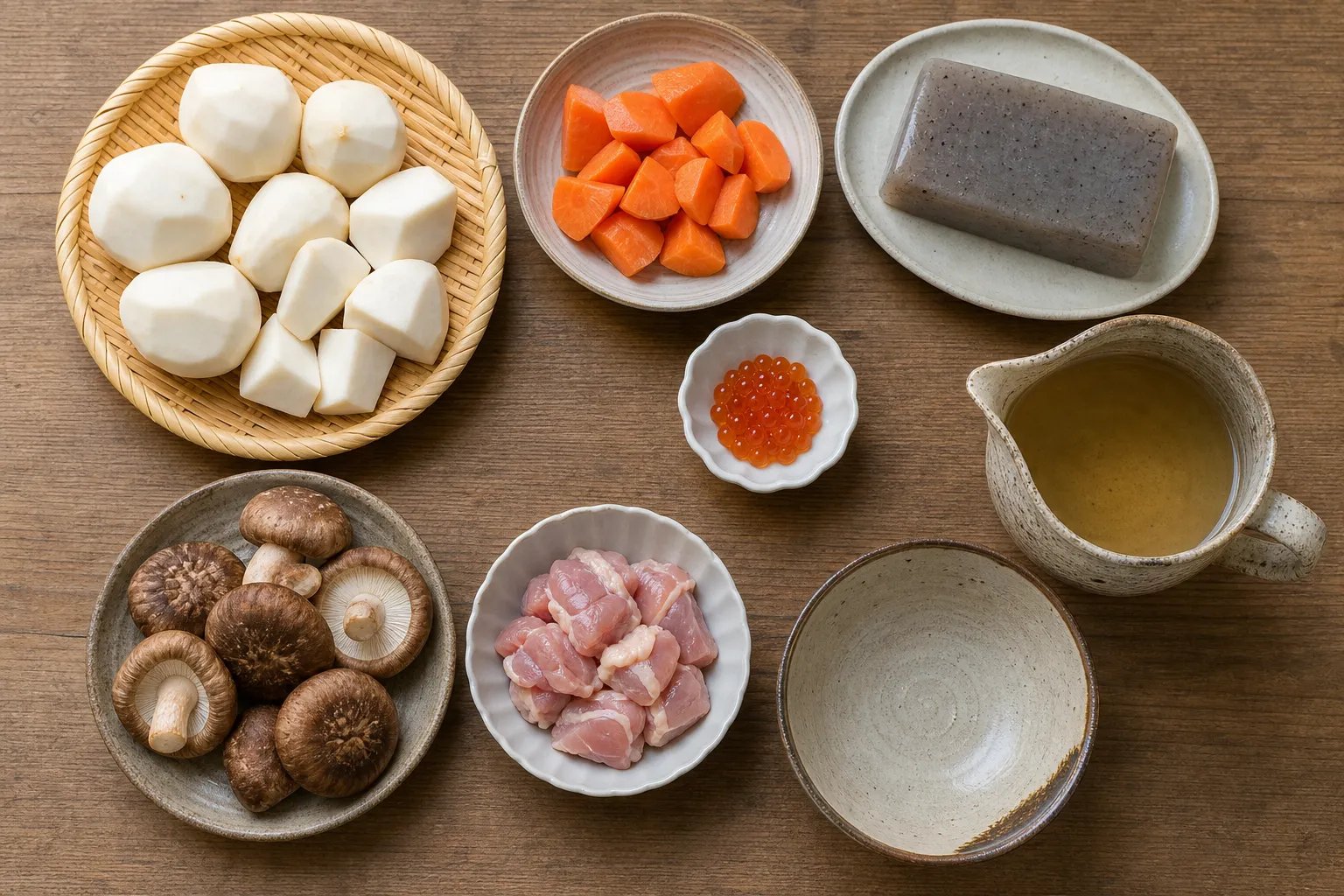
- Peel and cube satoimo (taro), carrot, and konnyaku into similar bite-sized pieces
- Simmer the vegetables in dashi with soy sauce, sake, and a little sugar until tender — the taro will start releasing starch and lightly thickening the broth as it cooks
- Add shiitake mushroom and diced chicken (or flaked salmon), and simmer until everything is cooked through
- Add ginkgo nuts or snap peas near the end for color and bite, if using
- Serve warm as-is, or chill it fully for a cold summer version — sometimes topped with a few salmon roe for a festive finish
Before you go — the stuff that actually matters
Your questions, answered honestly
"Is it soup or a stew?" — Somewhere in between, and that's the whole point. It's thicker and heartier than a clear soup, but it's not a thick curry-style stew either. Come in without a strict category in your head and just let the texture surprise you.
"Warm or cold — which do I want?" — Depends on the season. Winter noppe is warm and deeply comforting; summer noppe is often served chilled and feels lighter and more refreshing. If you're not sure which is coming, just ask — it changes the whole experience.
"What's that shiny gel-like quality in the broth?" — That's the taro's natural starch, not a thickener added separately. It's a sign of a properly made noppe, not something to be wary of.
"Is this a special-occasion-only dish?" — It's strongly associated with New Year's in Niigata, but you'll find it year-round at home-style restaurants and izakayas in the prefecture. You don't need to time your trip around a holiday to try it.
"Meat or fish version — which is more traditional?" — Both are traditional; it varies by household and by how close you are to the coast. Coastal Niigata leans salmon, inland areas lean chicken. Neither is the "wrong" one.
What the staff will ask you
| You'll hear | Romaji | Meaning | Just say |
|---|---|---|---|
| 温かいのと冷たいの、どちらにしますか? | Atatakai no to tsumetai no, dochira ni shimasu ka? | "Warm or cold?" | Atatakai no de (warm) / Tsumetai no de (cold) |
| 鮭と鶏肉、どちらが入っていますか? | Sake to toriniku, dochira ga haitte imasu ka? | "Is it salmon or chicken?" | (just listen — then decide if you want to try it) |
| いくらを乗せますか? | Ikura o nosemasu ka? | "Add salmon roe on top?" | Hai, onegaishimasu — yes please |
To order, just say "Noppe kudasai" (のっぺください) — "Noppe, please."
Where to eat it
- Niigata City — home-style and local-cuisine restaurants throughout the city serve noppe as a standard side or starter; it often shows up unannounced as part of a set meal.
- Furumachi and downtown izakaya districts, Niigata — good places to find noppe alongside other Niigata specialties like hegi-soba in one sitting.
- New Year's season, prefecture-wide — if you're in Niigata around New Year's, noppe is nearly guaranteed to appear on any home-style or traditional menu.
Menus and seasonal availability vary by restaurant, so check what's on offer before you go — and if a bowl shows up as a side dish you didn't order, that's not a mistake. Eat it anyway.
Soul Score
Local Roots5/5
First-Timer Friendly4/5
Adventure Level3/5
Comfort Level5/5
Travel Worthy3/5
These scores are one obsessed eater's gut feeling — not a verdict. A low number isn't a bad mark, just a different kind of adventure.
Know someone planning Japan?
← All Articles
Local Food · Niigata
Still hungry?
Eat more from Niigata
Local FoodNiigata, Niigata
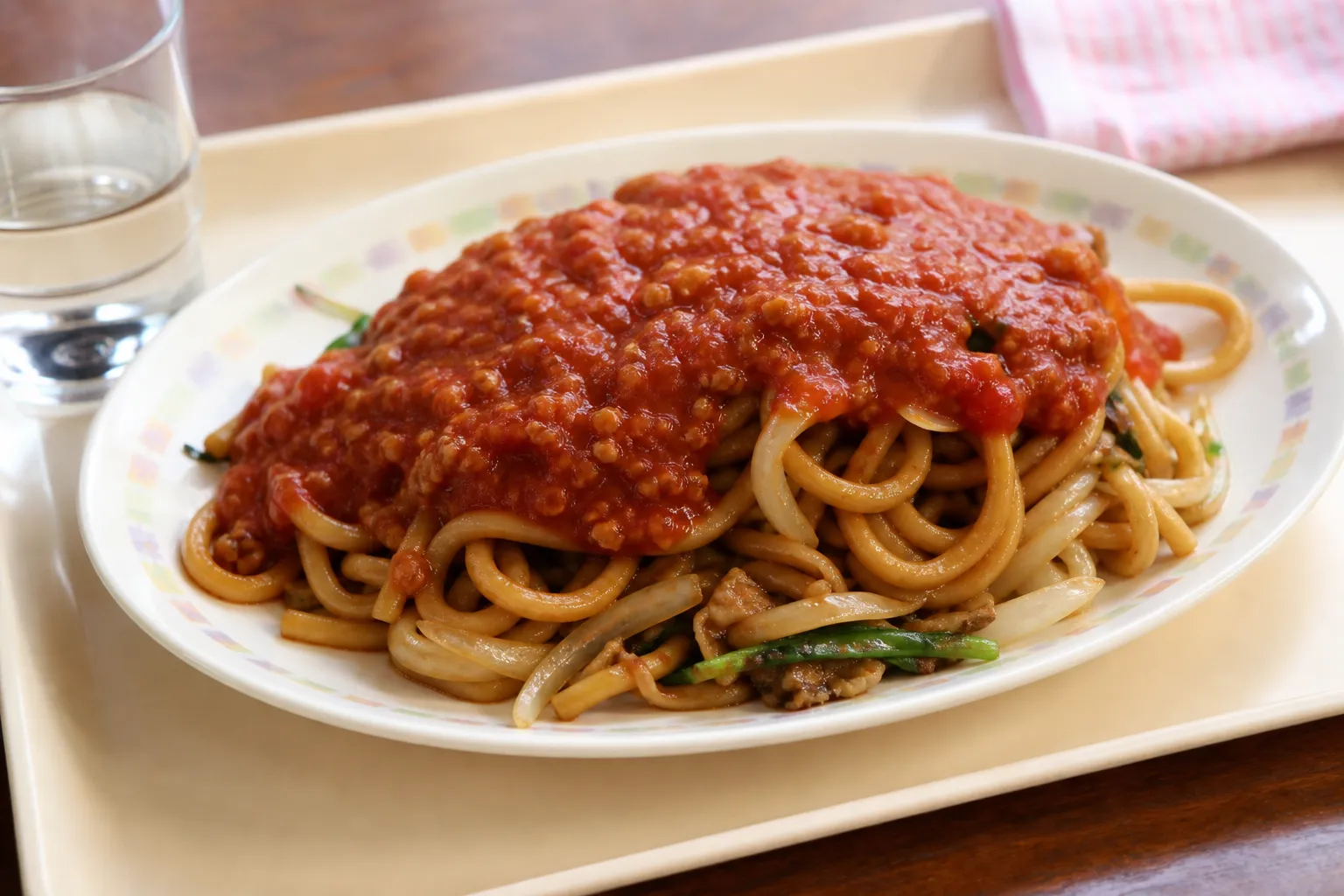
Niigata Italian (イタリアン)
Thick, griddled chow-mein noodles crowned with a ladle of tomato meat sauce, served in a tray for pocket change — a local fast-food obsession that answers to the name 'Italian' and looks nothing like Italy.
July 12, 2026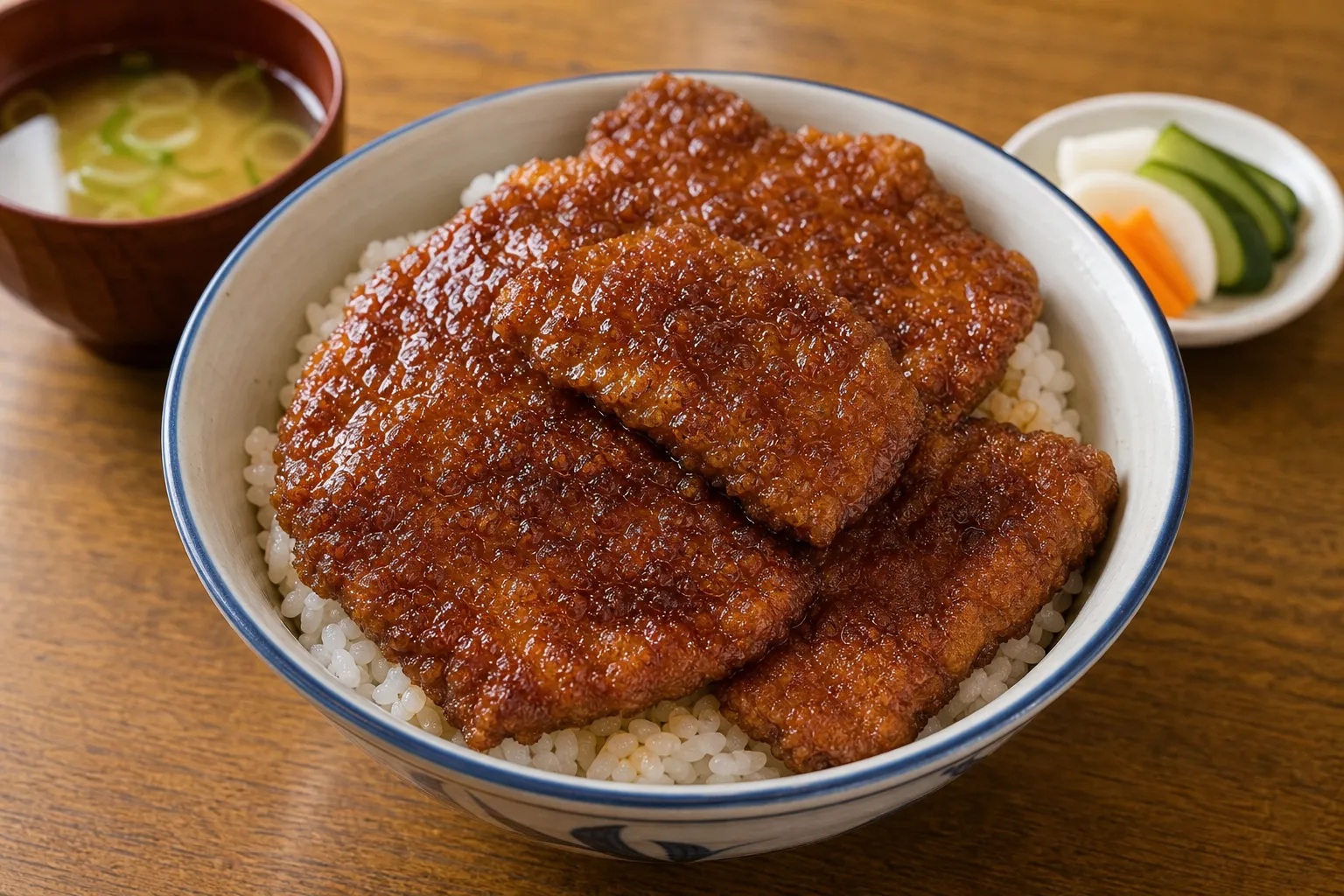
Local FoodNiigata, Niigata
Tarekatsu-don (たれかつ丼)
No egg, no fuss, no soggy simmering — just crisp thin cutlets flash-dunked in sweet soy tare and stacked on rice. Niigata took katsudon and stripped it down to the good part.
July 12, 2026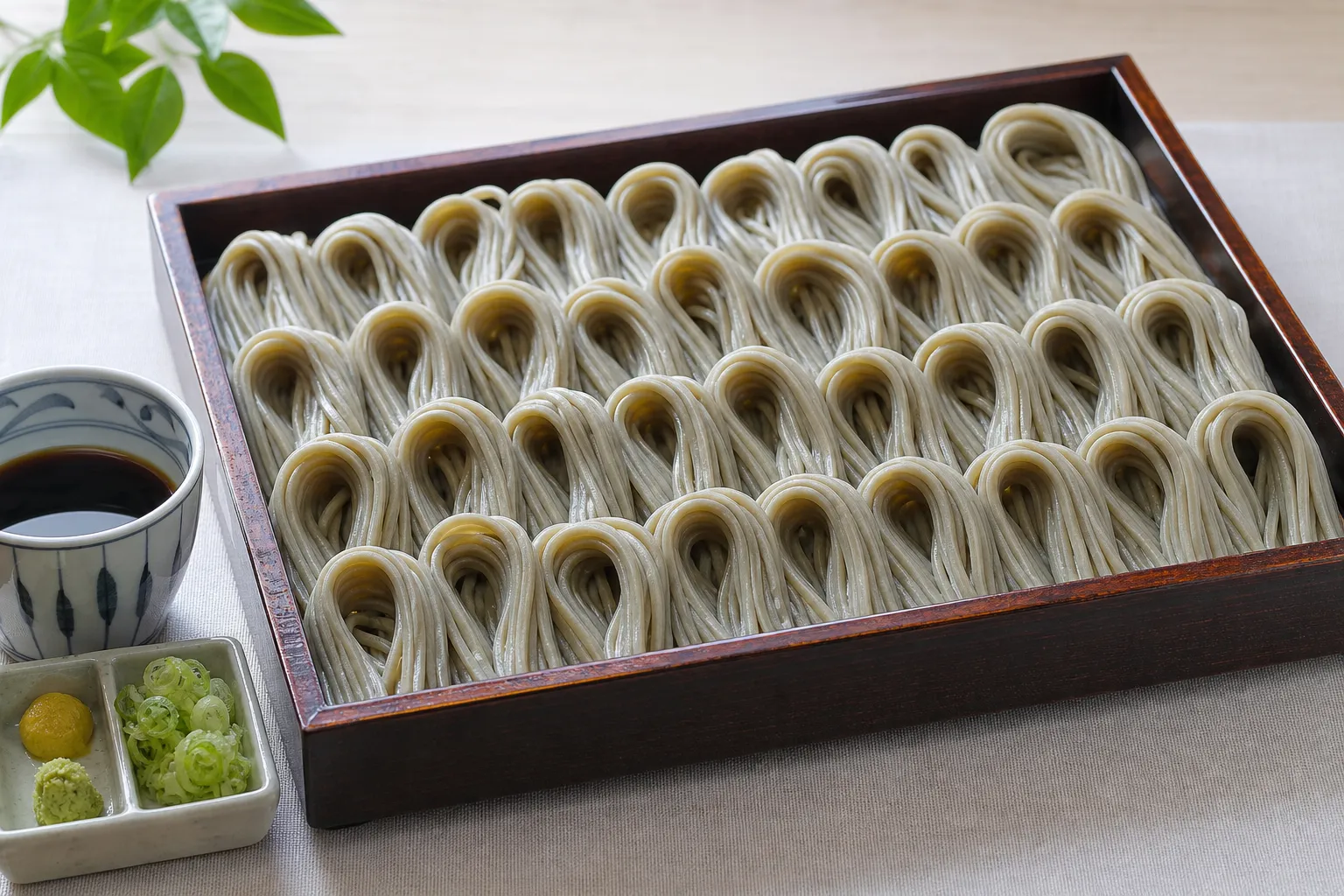
Local FoodTokamachi, Niigata
Hegi Soba (へぎそば)
Soba bound with seaweed, served in neat one-bite coils on a long wooden tray — silky, slippery, impossibly springy. Niigata's textile country turned noodles into something you've never quite chewed before.
June 27, 2026