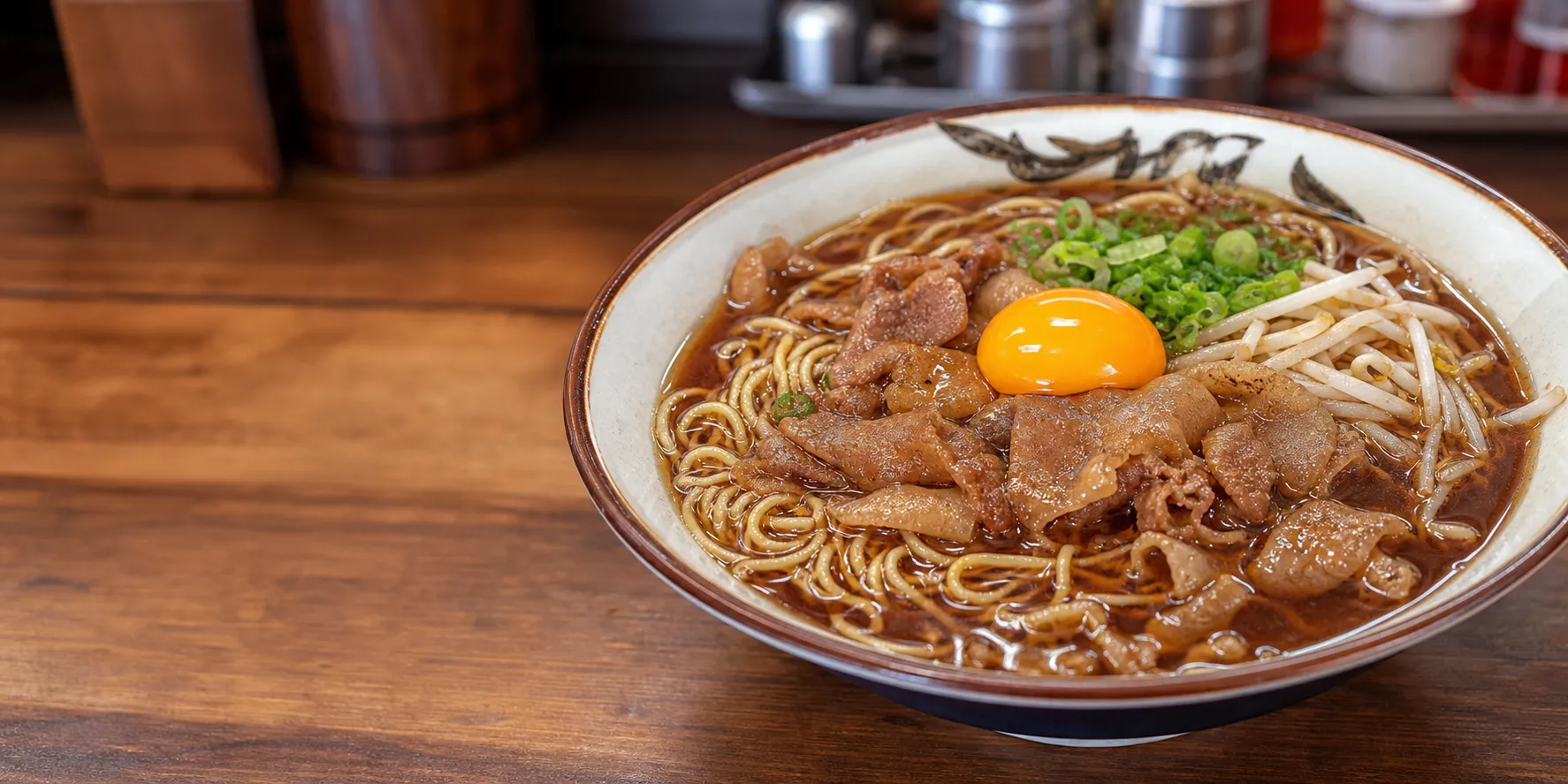
The bowl came out dark — broth the color of strong soy, sweet-savory pork belly piled on top instead of normal chashu — and then the cook reached over and cracked a raw egg right onto it. I stirred it in, the yolk going silky through that salty-sweet broth, took a bite, and immediately reached for a bowl of plain white rice like my body already knew what to do.
Share this dish


Dark, sweet-salty pork-soy broth, sticky-sweet simmered pork belly instead of chashu, and a raw egg cracked right on top. A ramen that eats like a meal over rice — because it kind of is.
🍜 Planning a food trip to Tokushima?Add this dish to my Food Trip →
 Add this dish to my Food Trip →
This is Tokushima ramen, and it doesn't play by the usual ramen rules. Dark pork-and-soy broth, sweet simmered pork belly, a raw egg, and — crucially — rice on the side, because here ramen is treated as okazu, a savory dish you eat with rice. It's the most distinctive, least imitated of Shikoku's bowls, and once you get it, you really get it.
A working town's bowl
Tokushima ramen took shape in the postwar years in Tokushima City, and you can taste the practicality in it. The story usually told ties it to the local pork industry — Tokushima had pork and pork bones and the by-products of a big ham and sausage trade — so the broth went rich with pork, deepened dark with soy tare, and the topping became thin sweet-savory simmered pork belly rather than the usual sliced chashu. Cheap, filling, deeply flavored: fuel for working people.
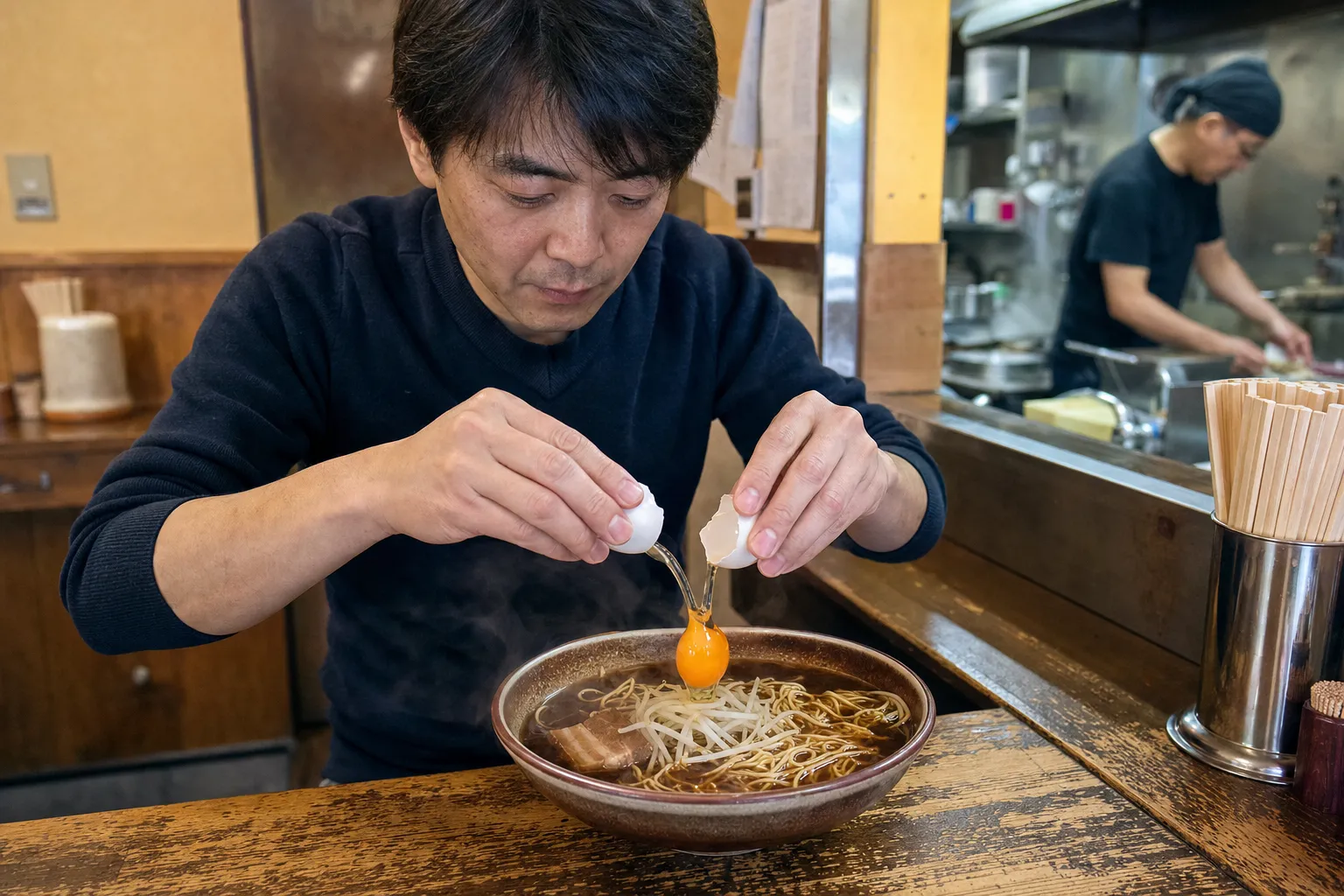
That's also why the rice thing makes sense. The broth is salty and sweet and intense — too much to drink down like a delicate tonkotsu — so locals eat the ramen as a side to a bowl of rice, even cracking the raw egg over the noodles and spooning broth-soaked everything onto the rice. I love how unpretentious that is. It's not trying to be refined. It's trying to feed you, hard, and it succeeds.
Dark broth, sweet pork, raw egg
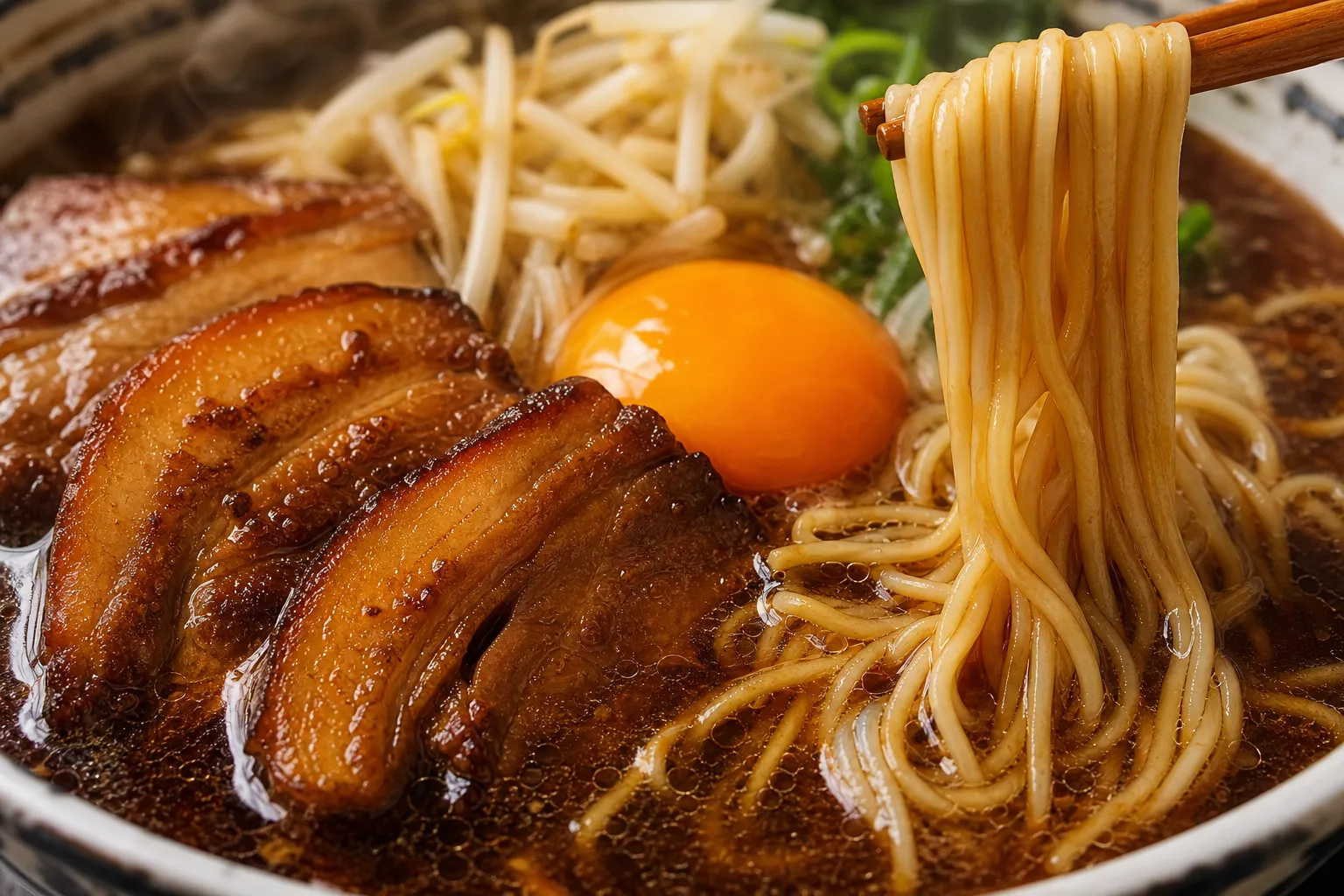
The broth is the signature: a tonkotsu-shōyu base — pork bones plus a dark soy tare — landing somewhere between rich and salty-sweet, brown and glossy rather than the creamy white of Hakata tonkotsu. The noodles are medium-thin and straight, made to carry that heavy broth. On top: thin slices of pork belly simmered in sweet soy until sticky and almost caramelized, bean sprouts, green onion.
And the egg. A raw egg cracked over the hot noodles, stirred in to go glossy and rich and to round off the saltiness — like a Tokushima twist on sukiyaki's egg dip. The contrast of sweet pork, salty broth, and that silky yolk is the whole identity of the bowl. I cracked the egg, mixed it through, ordered the rice, and understood. Then I ordered a second rice. No regrets, as usual.
How it's made
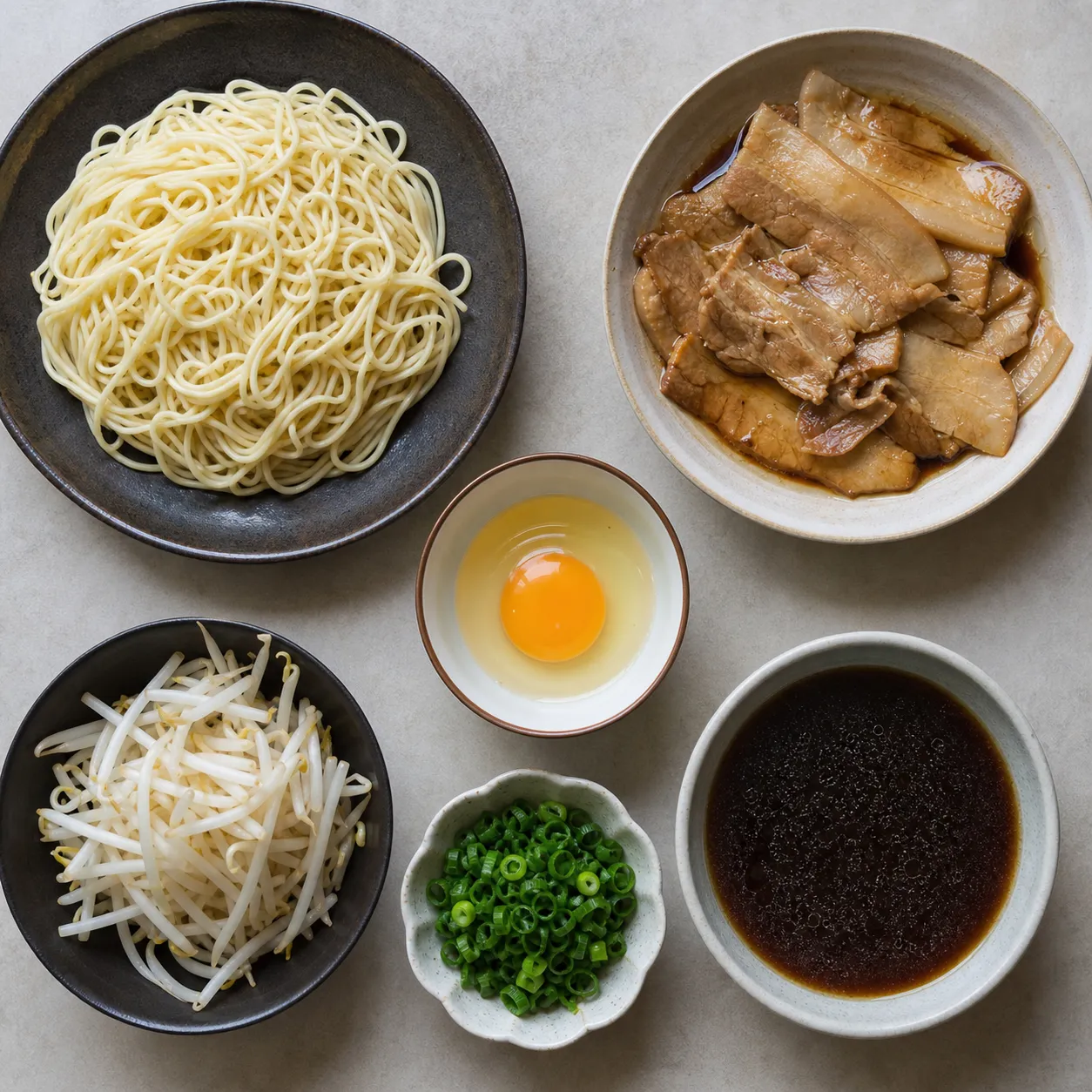
- Simmer pork bones for a rich base, then deepen and darken it with a soy-sauce tare into a sweet-salty brown broth
- Simmer thin-sliced pork belly in sweet soy (sugar + soy) until sticky and savory-sweet — this replaces normal chashu
- Boil medium-thin straight noodles
- Assemble: noodles in the dark broth, topped with the sweet pork belly, bean sprouts, and green onion
- Crack a raw egg over the top to stir in
- Serve with a bowl of plain white rice on the side — that's how locals eat it
Before you go — eat it the local way
Your questions, answered honestly
"Why is there rice with my ramen?" — Because in Tokushima, ramen is treated as a savory dish to eat with rice, not a standalone soup. The broth is intense and salty-sweet by design. Get the rice — spoon broth and pork over it, or just alternate. It's the authentic move.
"A raw egg, really?" — Yes, and it's great. Stir it into the hot noodles; it goes silky and mellows the salty broth, sukiyaki-style. Japanese eggs are safe to eat raw. If you'd rather, ask for it cooked or skip it — but try it once.
"Is it spicy?" — No. It's salty, sweet, and deeply savory, not chili-hot. The intensity is in the soy-and-pork depth, which is very approachable.
"How is this different from normal ramen?" — Darker pork-soy broth (not creamy-white tonkotsu, not clear shoyu), sweet simmered pork belly instead of chashu, a raw egg, and rice on the side. It's its own thing.
What the staff will ask you
| You'll hear | Romaji | Meaning | Just say |
|---|---|---|---|
| 生卵は入れますか? | Nama-tamago wa iremasu ka? | "Add a raw egg?" | Hai, onegaishimasu — yes please |
| ライスはお付けしますか? | Raisu wa otsuke shimasu ka? | "Add a bowl of rice?" | Onegaishimasu (yes) — eat it the local way |
| 麺の硬さはどうしますか? | Men no katasa wa dō shimasu ka? | "How firm do you want the noodles?" | Futsū de (normal) or katame de (firm) |
To order, just say "Tokushima ramen kudasai" (徳島ラーメンください) — "Tokushima ramen, please."
Where to eat it
- Tokushima City — the home of the bowl; long-running specialist shops across the city serve the dark sweet-soy style, many with rice and raw egg as standard. Some famous spots keep short hours or sell out, so check before you go.
- Around Tokushima Station — convenient ramen shops near the station make it easy for travelers passing through to try it. Confirm current opening times.
- Tokushima-style ramen shops nationwide — the style has spread to specialist shops in big cities; a reliable taste if you can't reach Shikoku, though eating it with rice in Tokushima is the full experience.
Soul Score
Local Roots4/5
First-Timer Friendly4/5
Adventure Level3/5
Comfort Level5/5
Travel Worthy4/5
These scores are one obsessed eater's gut feeling — not a verdict. A low number isn't a bad mark, just a different kind of adventure.
Know someone planning Japan?
← All Articles
Local Food · Tokushima, Tokushima
Still hungry?
Eat more from Tokushima
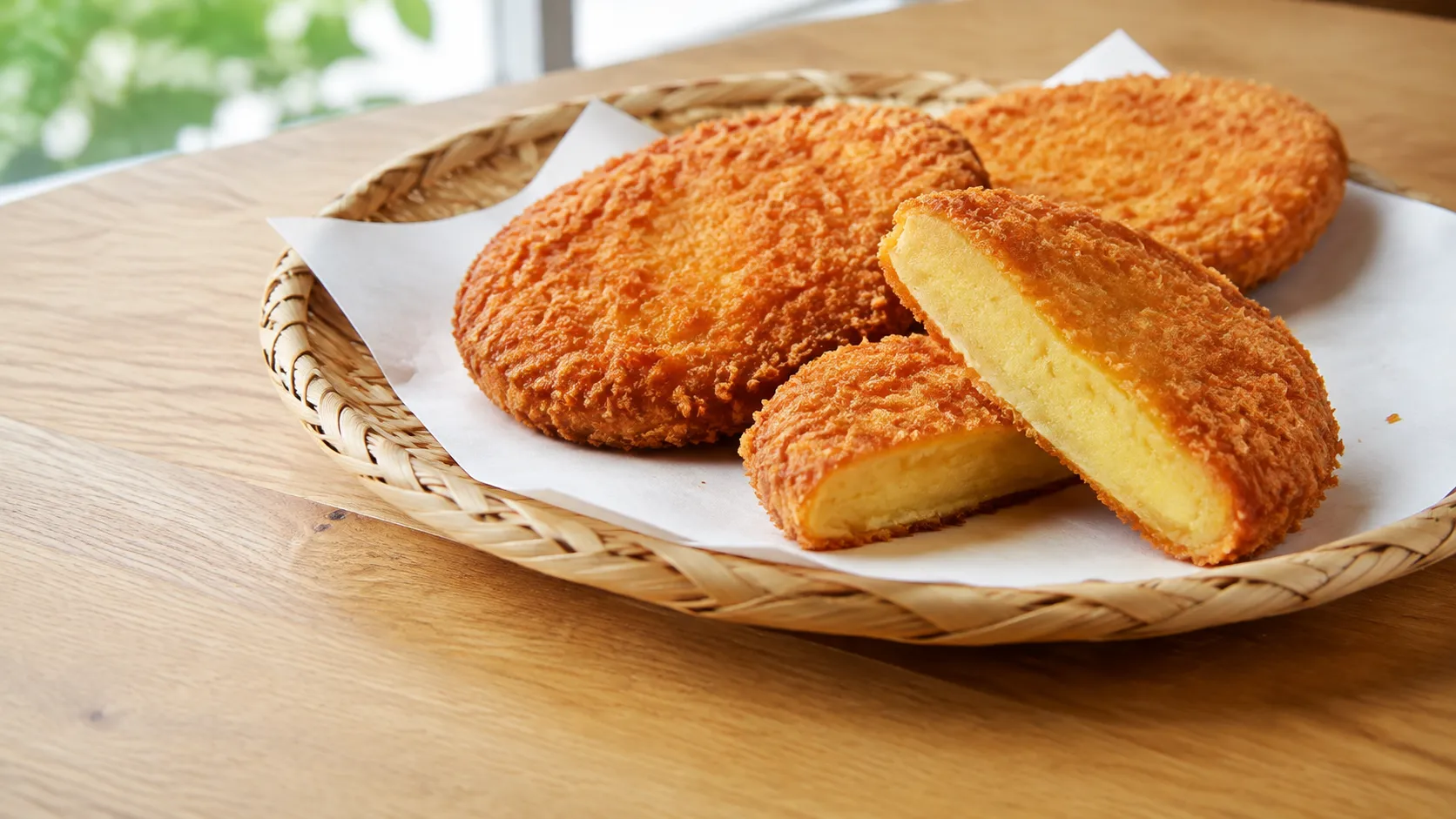
Local FoodTokushima
Fish Katsu (フィッシュカツ)
In Tokushima, saying "katsu" does not get you a pork cutlet. It gets you this — and the moment I understood that, a whole prefecture rearranged itself in my head.
September 2, 2026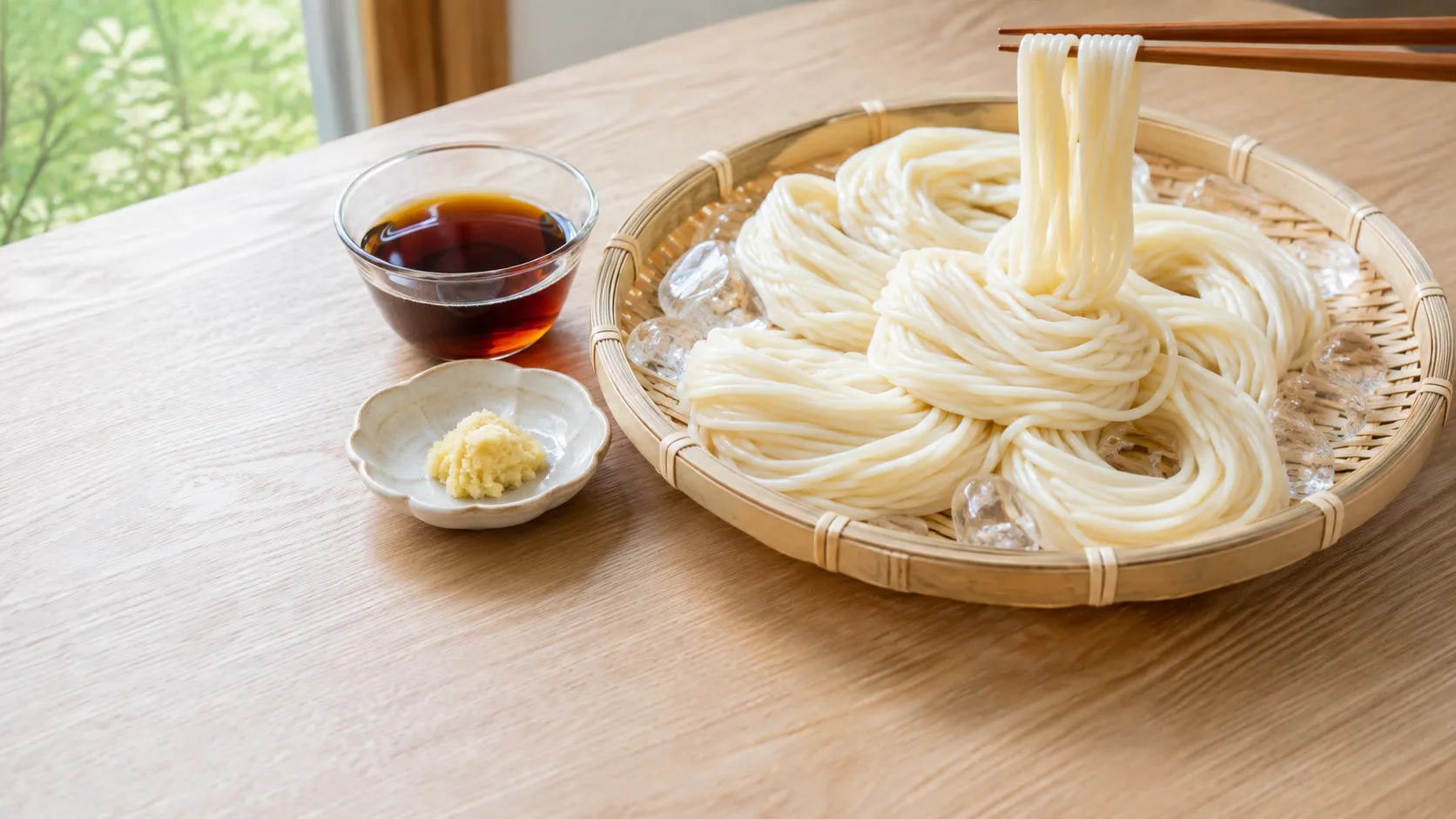
Local FoodTsurugi, Tokushima
Handa Somen (半田そうめん)
I lifted a bundle out of the ice water and stopped, because somen is supposed to be delicate and this was chewing back at me before I'd even started.
September 2, 2026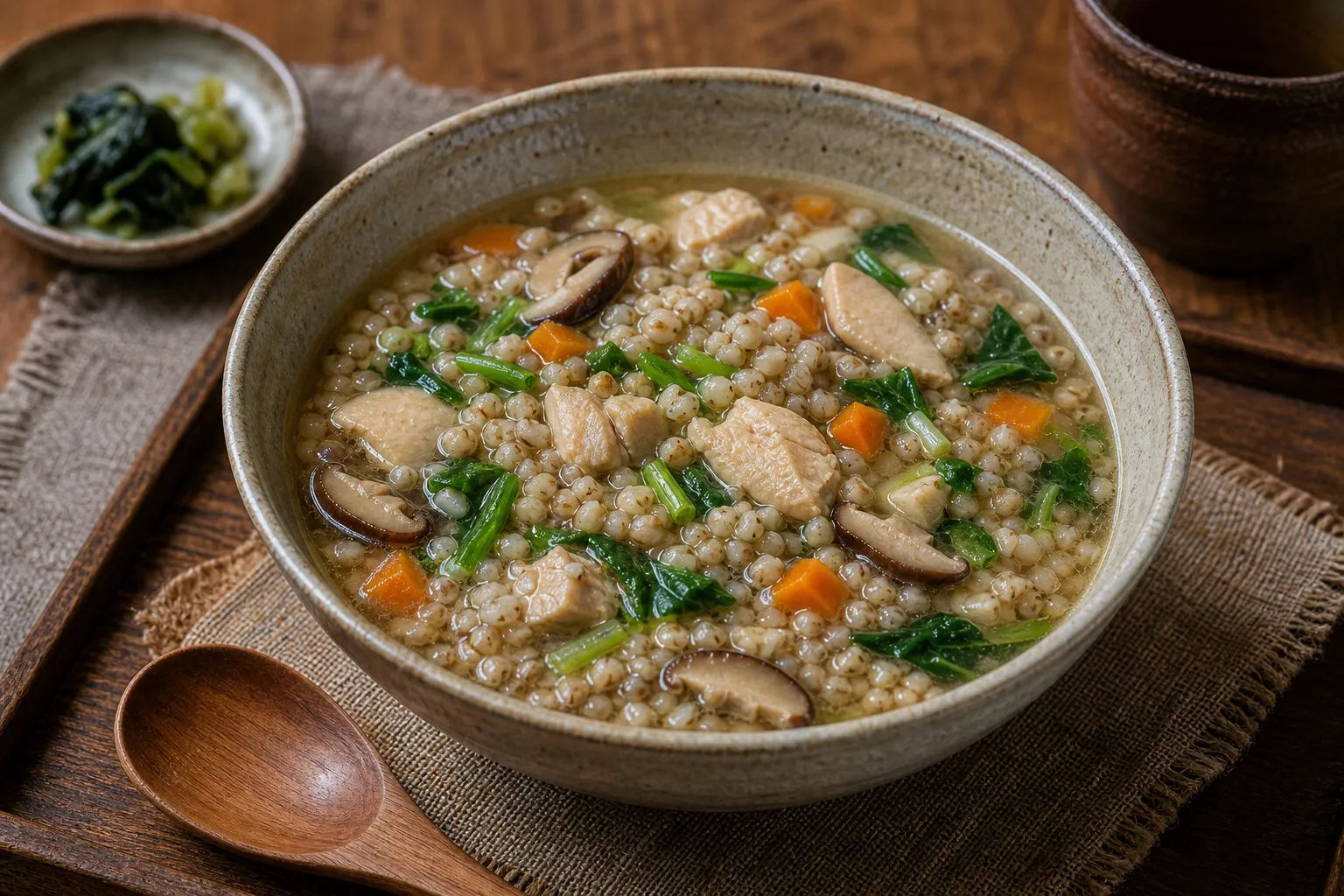
Local FoodTokushima
Sobagome Zosui (そば米雑炊)
Not soba noodles — whole buckwheat grains, plump and nutty, simmered into a warm chicken-and-vegetable soup deep in the Iya Valley. Refugee food that became one of Japan's most quietly comforting bowls.
July 12, 2026Keep slurping the ramen trail
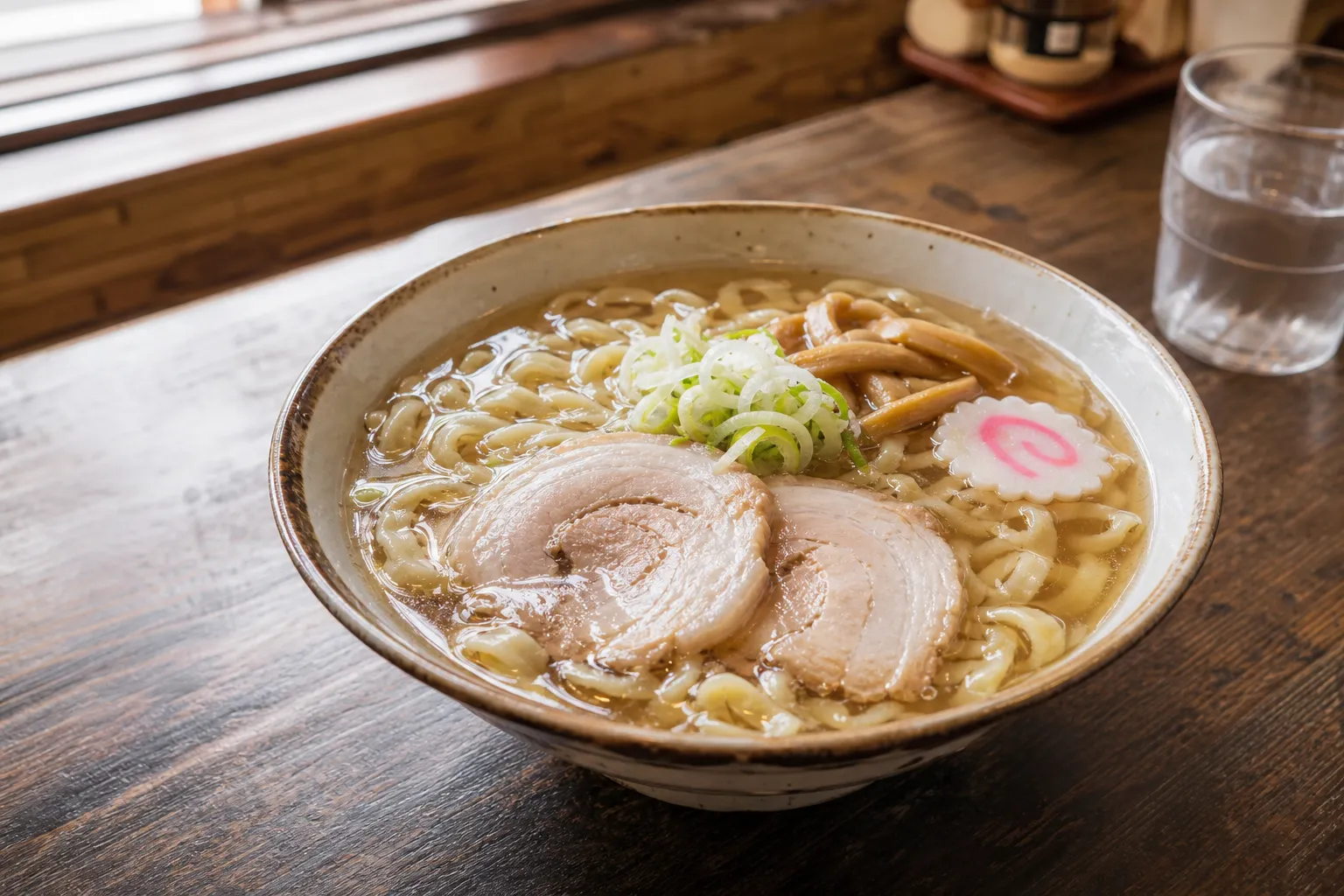
Local FoodKitakata, Fukushima
Kitakata Ramen (喜多方ラーメン)
Flat, wide, curly noodles in a clear soy broth so clean you can see the bottom of the bowl — and a town so obsessed it eats ramen for breakfast. This is comfort with the volume turned down, on purpose.
June 26, 2026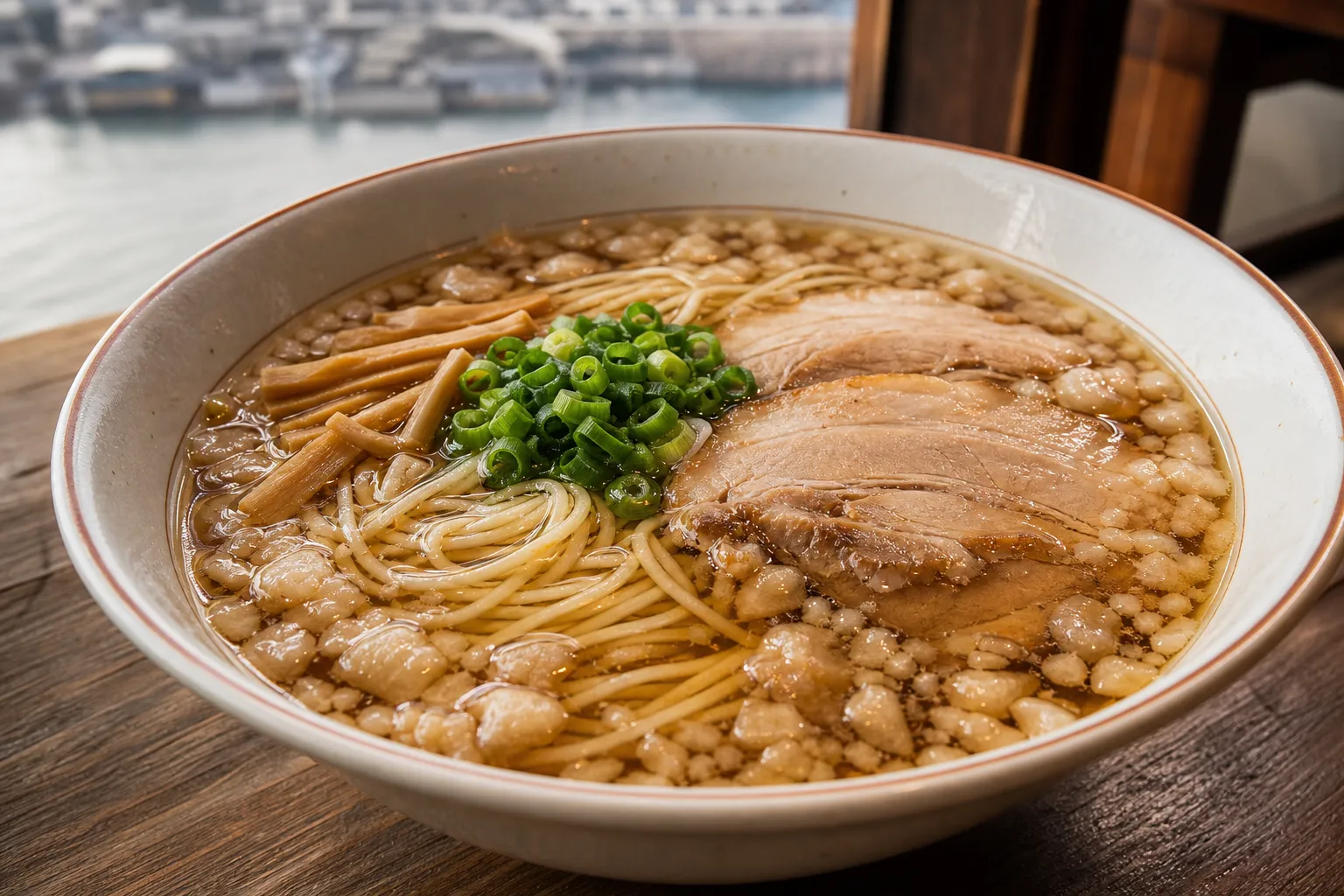
Local FoodOnomichi, Hiroshima
Onomichi Ramen (尾道ラーメン)
Clear soy broth from the Seto Inland Sea, studded with little pillows of melting pork fat that change everything. A hillside port town's bowl — light and deep at the same time, which shouldn't be possible.
June 26, 2026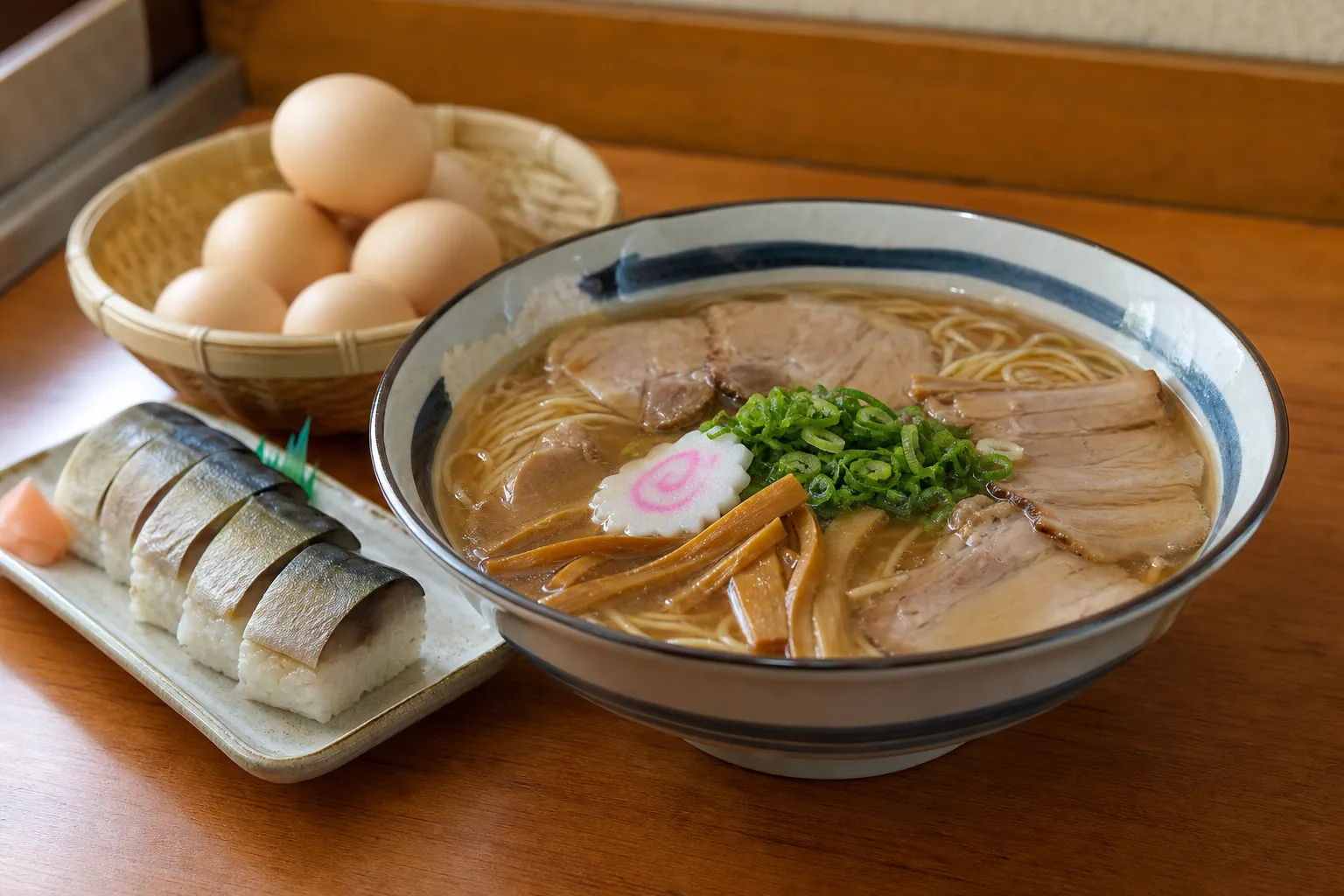
Local FoodWakayama, Wakayama
Wakayama Ramen (和歌山ラーメン)
Pork-bone-meets-soy broth, thin springy noodles — and a self-serve table loaded with pressed mackerel sushi and boiled eggs you grab while you wait. Locals don't even call it ramen. They call it the good stuff.
June 26, 2026