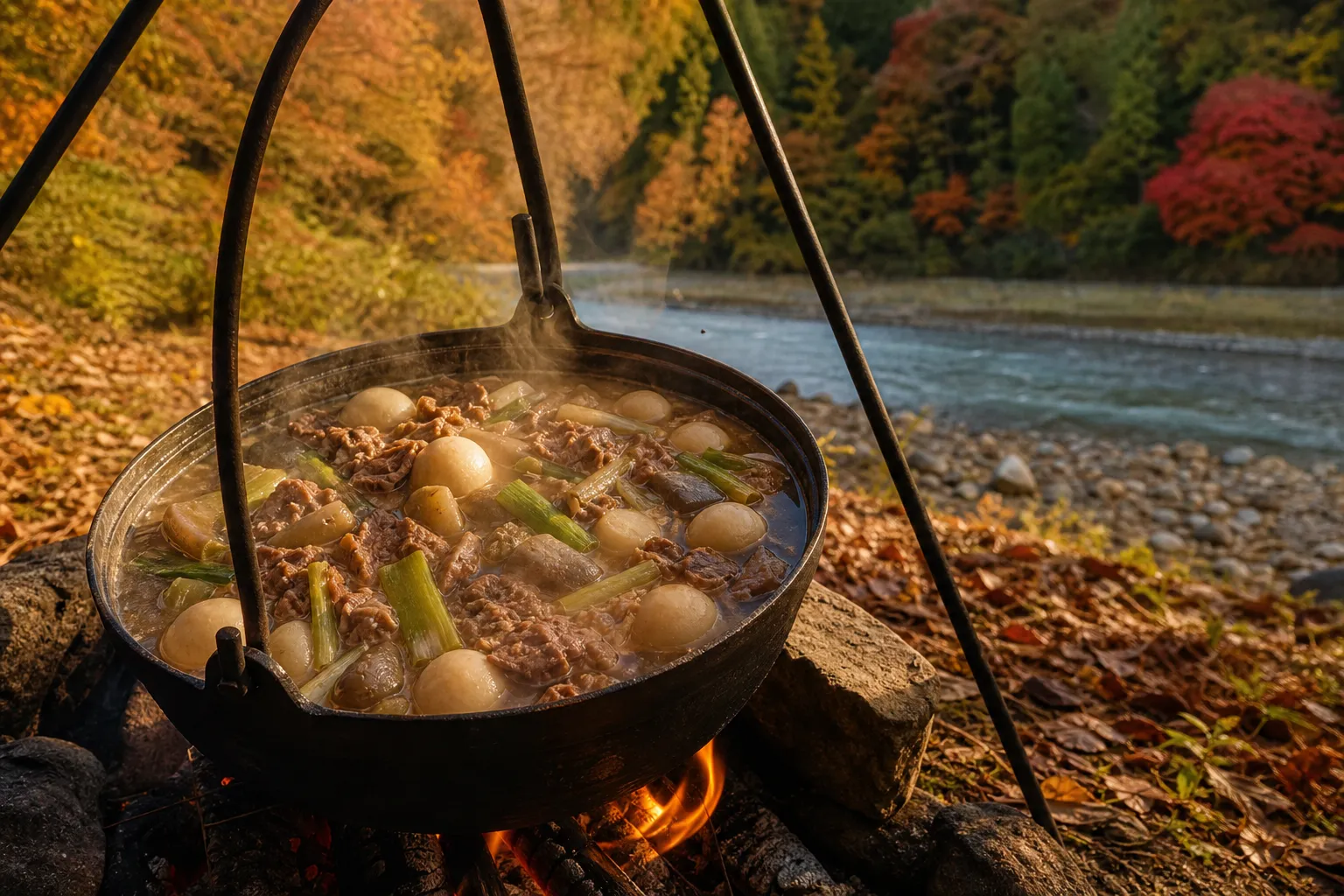
The first cold snap hits Yamagata and the whole prefecture, I am not exaggerating, goes to the river. Tarps, firewood, giant iron pots, crates of taro, coolers of beer, your coworkers, your grandmother, that one uncle who insists he makes the best broth. Smoke and steam come off the water, the leaves are going red and gold, and somebody hands you a bowl of imoni before you've even taken your coat off.
Share this dish


A bubbling pot of taro and beef in sweet soy broth, cooked on a riverbank under autumn leaves with everyone you know. It's not just a stew — it's a season, and a reason to gather.
🍜 Planning a food trip to Yamagata?Add this dish to my Food Trip →
 Add this dish to my Food Trip →
I took my first spoonful standing on a riverbank and the taro had gone soft and silky and a little sticky, the beef was tender, the broth was sweet-savory soy, and the cold air made every mouthful taste twice as good. Imoni is a taro-and-beef stew — but calling it a stew misses the point. It's an outdoor autumn ritual called imonikai, and the stew is just the excuse.
A harvest pot that became a festival
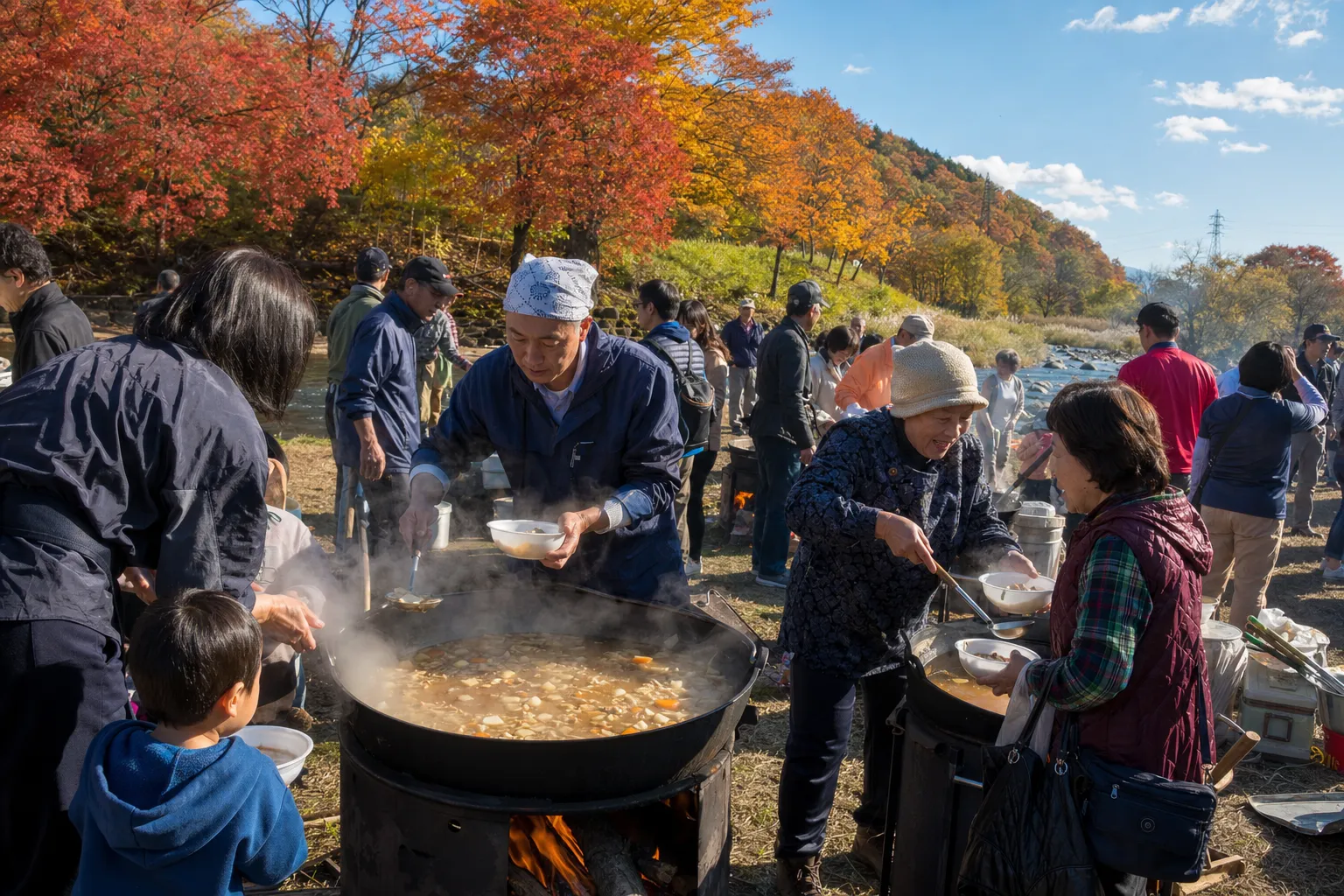
Imoni grew out of the taro harvest in the Tōhoku region, with Yamagata as its loudest, proudest home. When the satoimo (taro) comes up in autumn, you cook it — outdoors, in a big pot, with whoever's around. Over generations the imonikai (imoni party) became a full-blown seasonal institution: schools, companies, neighborhoods, families all stake out a riverbank spot, build a fire, and share a pot.
The most spectacular expression is Yamagata City's Nihon-ichi Imonikai, where a crane lifts a three-meter cast-iron cauldron and they cook imoni for tens of thousands of people, stirring it with what are basically construction tools. I find the whole thing genuinely beautiful — a region that turned "we have a lot of taro" into a once-a-year reason for an entire population to sit by the water together before winter. That's not a recipe. That's a culture.
Know your broth — this is sacred ground
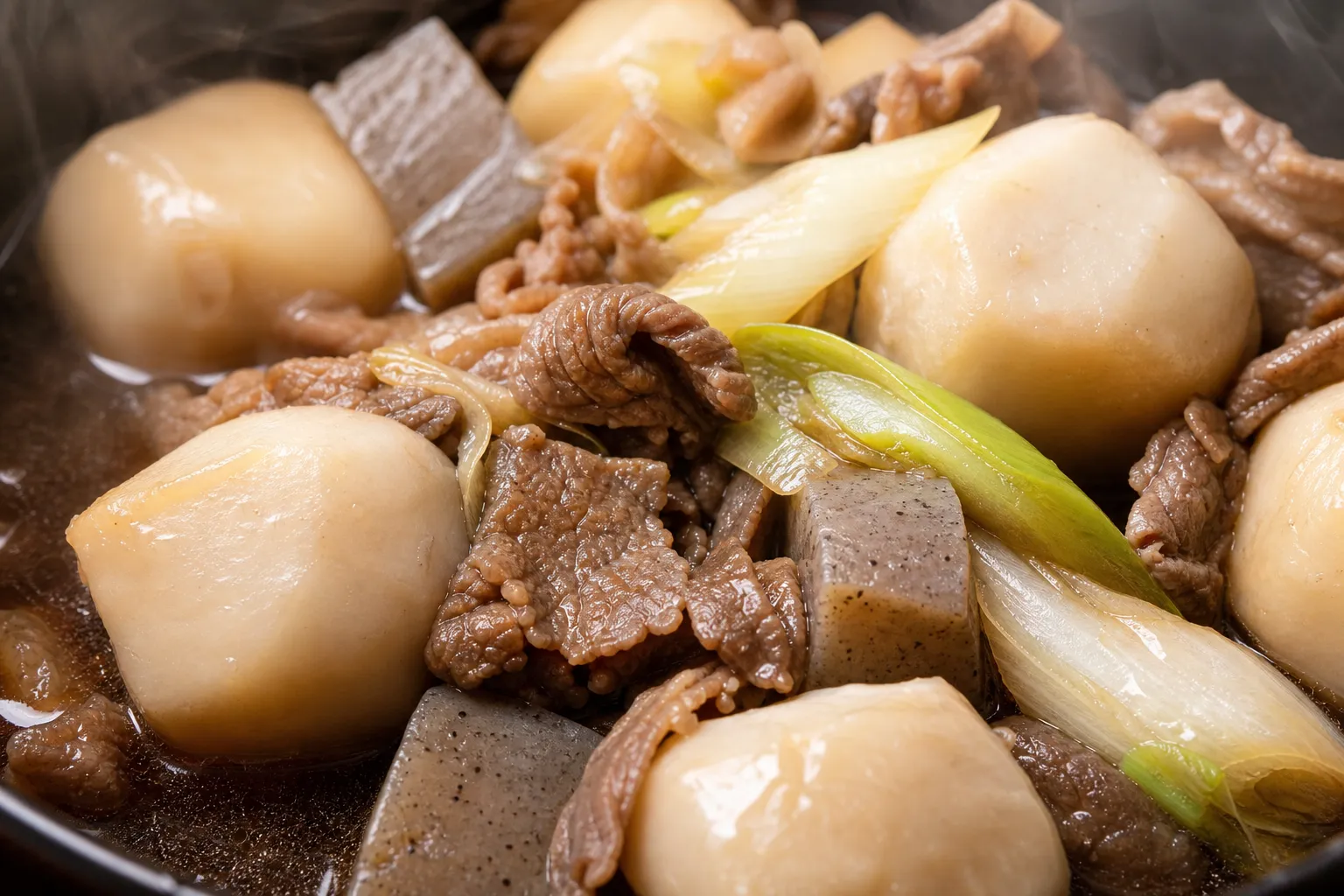
Here's where you must tread carefully, because imoni has factions. The Yamagata (Murayama) style is soy sauce + beef — sweet-savory, glossy, a little like sukiyaki's countryside cousin. Cross into Miyagi and it flips to miso + pork. People will defend their version with their lives, half-joking, fully serious. Don't pick a fight; just know which one you're eating.
Whichever camp, the heart is the taro: simmered until it's soft and faintly sticky-slippery, drinking up the broth. Around it go beef (or pork), konnyaku, long green onion, sometimes mushrooms. The broth is the star supporting actor — sweet, deep, autumn in liquid form. And the best-kept secret: when the pot's nearly empty, you throw in udon or curry roux and make a second dish out of the leftover broth (the shime). I had the broth, then the udon-in-broth, then sat down on the grass feeling like I'd been hugged from the inside.
How it's made (Yamagata soy-and-beef style)
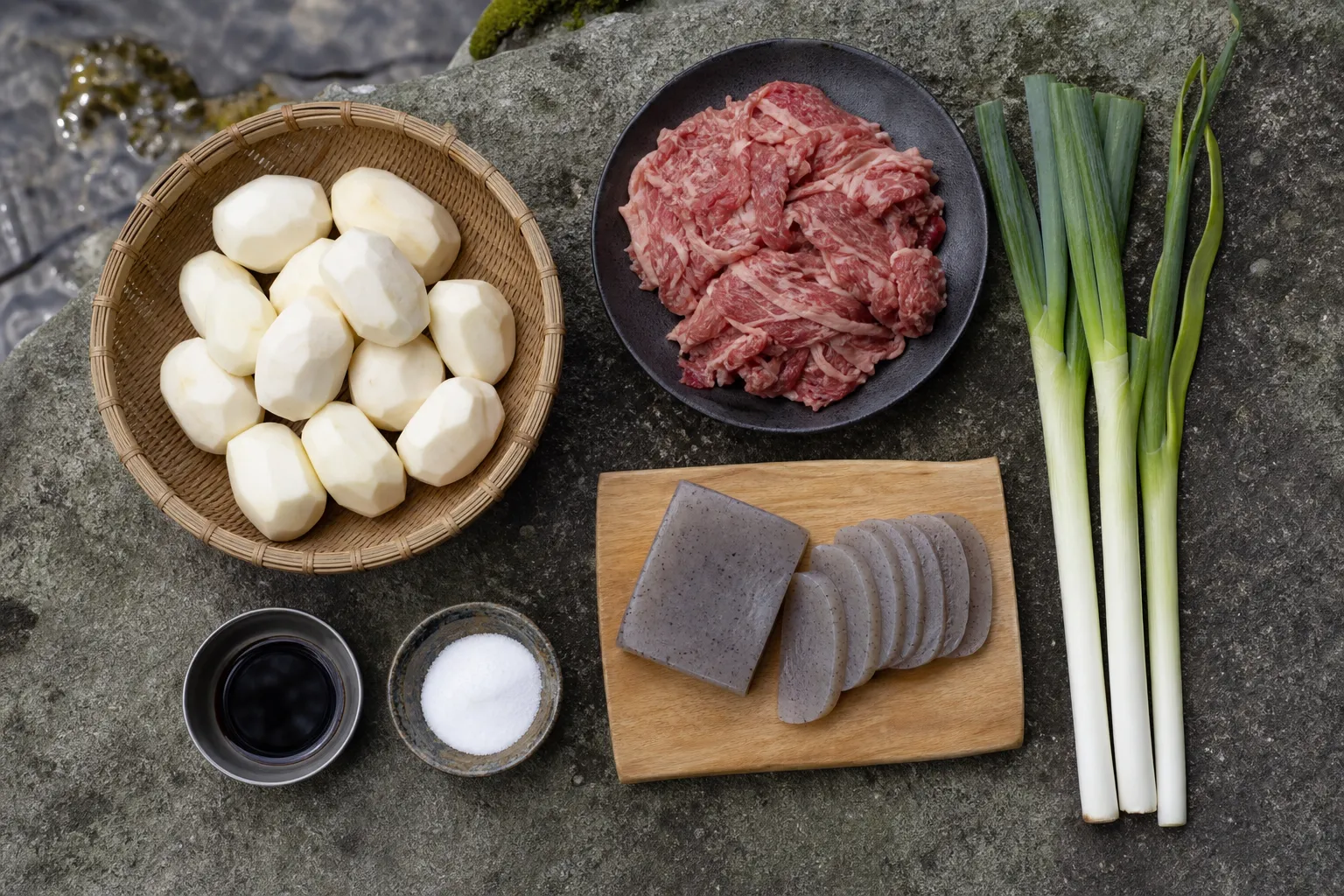
- Peel taro (satoimo) and parboil if needed to take off some of the slipperiness
- Build a broth with dashi, soy sauce, sake, and sugar — sweet-savory, leaning rich
- Simmer the taro in the broth until soft and beginning to drink up the flavor
- Add konnyaku (torn, not cut, so it grabs more broth) and thinly sliced beef
- Add long green onion near the end and simmer until everything's tender
- Shime (the finale): once the pot is low, stir in udon — or curry roux — to soak up the remaining broth and make a second course
Before you go — eat it where it lives
Your questions, answered honestly
"Soy-beef or miso-pork — which is 'real' imoni?" — Both are real; it's regional. Yamagata = soy + beef, Miyagi = miso + pork. If you're in Yamagata, get the soy-beef version. Saying one is "correct" out loud is how you start an argument, so just enjoy the one in front of you.
"Is it spicy?" — No. It's sweet-savory and comforting. Very approachable — the taro texture (soft, slightly sticky) is the only thing that might be new to you, and it's lovely.
"Can I try it without going to a riverbank party?" — Yes. Local restaurants and izakayas in Yamagata serve imoni in autumn, and you'll find it at autumn festivals. The riverbank imonikai is the soul of it, but the bowl is great anywhere.
"What's that thing about adding udon at the end?" — The shime — you finish the leftover broth by cooking udon (or making curry) in it. If you're at a party, hang around for it. It might be the best part.
What the staff will ask you
| You'll hear | Romaji | Meaning | Just say |
|---|---|---|---|
| 牛肉と豚肉、どちらにしますか? | Gyūniku to butaniku, dochira ni shimasu ka? | "Beef or pork?" | Gyūniku de (beef) — the Yamagata classic |
| 〆のうどん、入れますか? | Shime no udon, iremasu ka? | "Add udon to finish?" | Hai, onegaishimasu — yes please |
| 取り分けますか? | Toriwakemasu ka? | "Shall I portion it out?" | Onegaishimasu — please do |
To order, just say "Imoni kudasai" (芋煮ください) — "Imoni, please."
Where to eat it
- Yamagata City — the heartland of soy-and-beef imoni; local-cuisine restaurants and izakayas serve it through autumn, and the Nihon-ichi Imonikai mega-cauldron festival happens by the Mamigasaki River in September (check the year's date).
- Murayama region, Yamagata — riverbank imonikai season runs through autumn; if you're invited to one, go.
- Sendai & Miyagi — for the miso-and-pork version, so you can taste the rivalry for yourself. Autumn is the season everywhere; confirm seasonal availability before you go.
Soul Score
Local Roots5/5
First-Timer Friendly4/5
Adventure Level3/5
Comfort Level5/5
Travel Worthy4/5
These scores are one obsessed eater's gut feeling — not a verdict. A low number isn't a bad mark, just a different kind of adventure.
Know someone planning Japan?
← All Articles
Local Food · Yamagata, Yamagata
Still hungry?
Eat more from Yamagata
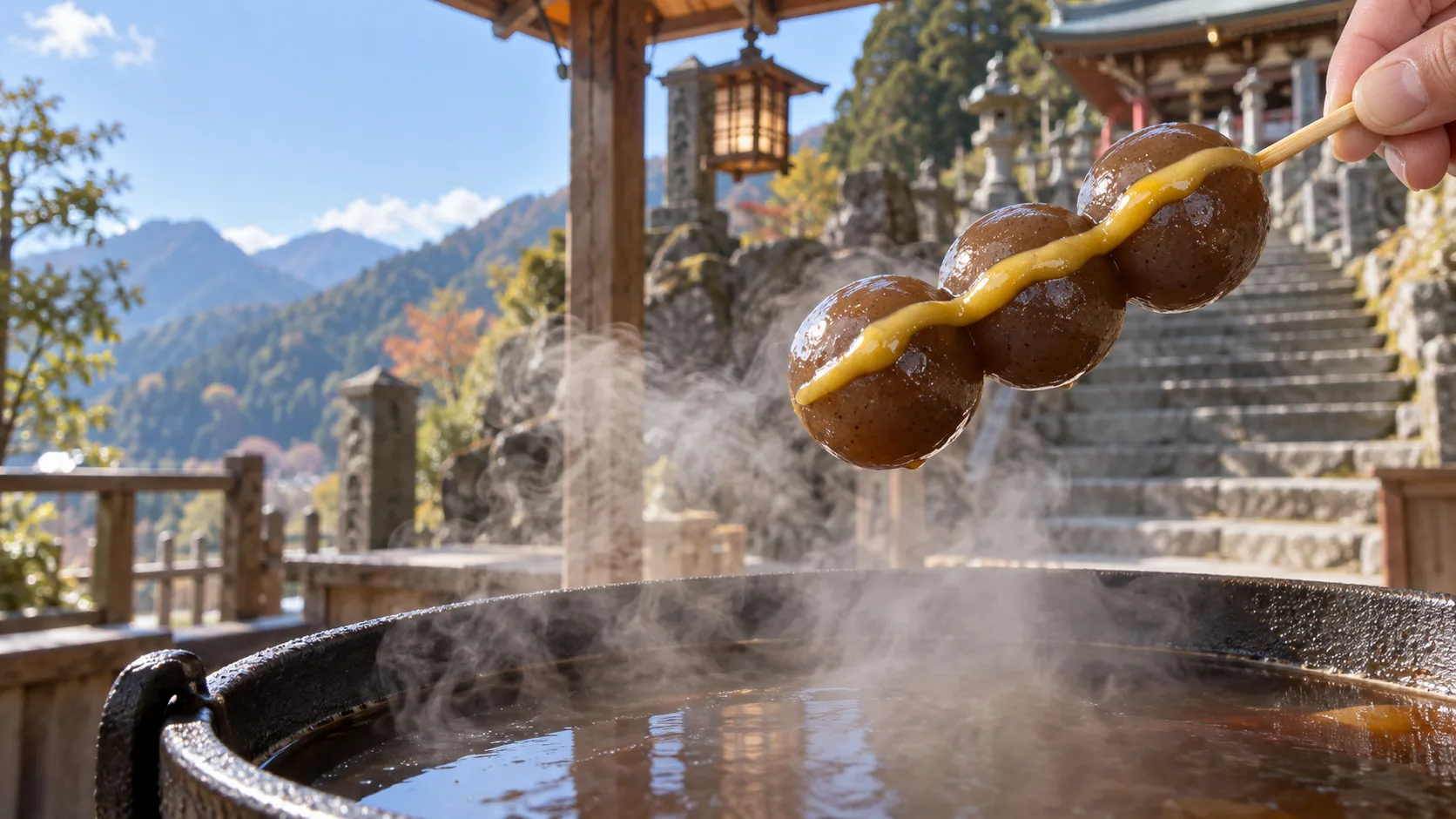
Local FoodYamagata
Tama Konnyaku (玉こんにゃく)
In Yamagata, tama konnyaku is a simple local snack that comes into its own when served hot from the skewer.
September 26, 2026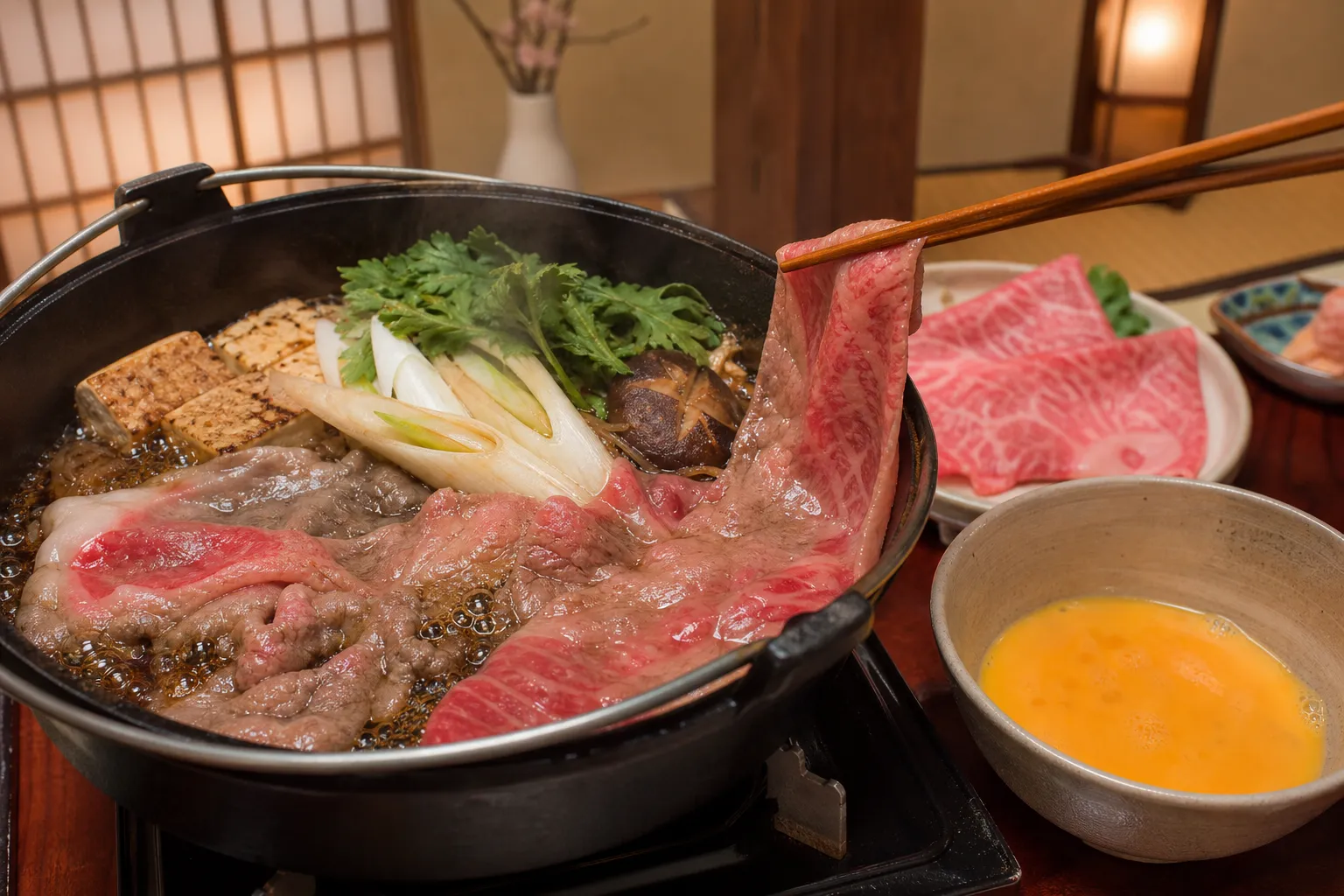
Local FoodYamagata
Yonezawa Beef (米沢牛)
A paper-thin slice of marbled beef goes into the sukiyaki pot pink and comes out translucent, and somewhere between the pot and the raw egg dip I stopped talking mid-sentence.
July 22, 2026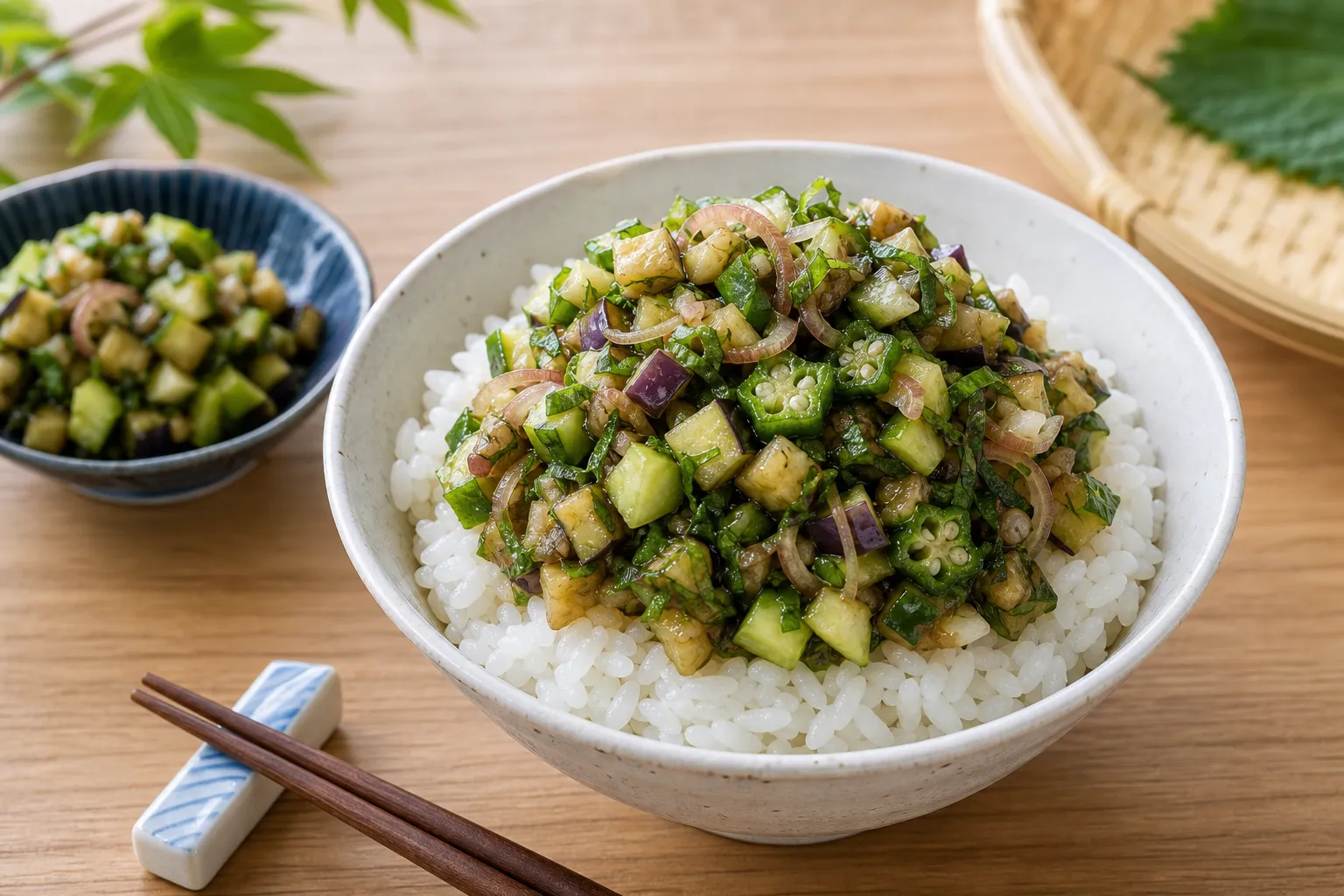
Local FoodYamagata
Yamagata Dashi (山形のだし)
A cold, glistening pile of chopped summer vegetables — sticky, herby, salty — landing on hot white rice on a day too hot to want to eat anything. Somehow you clear three bowls.
July 12, 2026