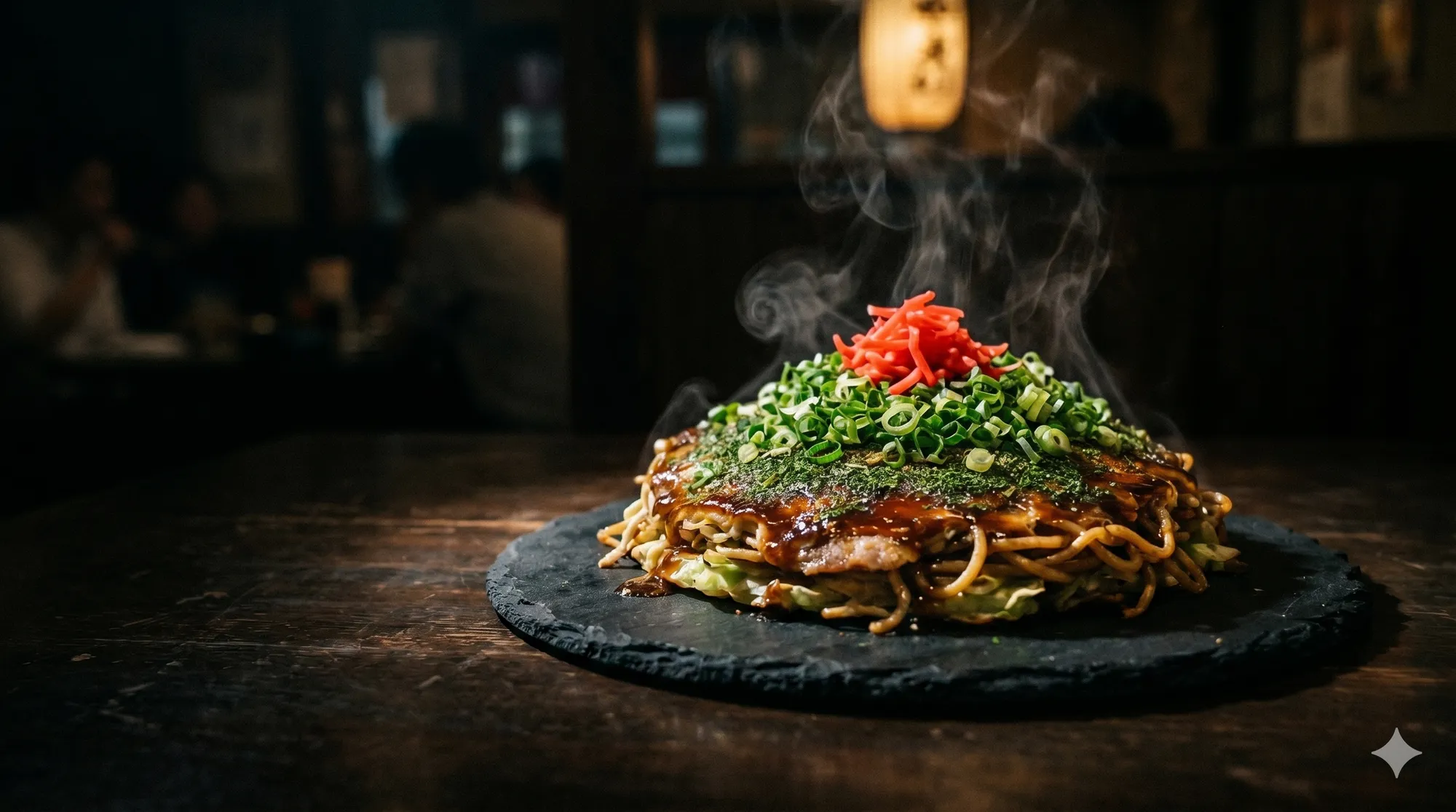
Osaka, I'm sorry. But I like the Hiroshima one better. It's just tastier, okay? (…personal opinion, obviously. Please don't hunt me down.)
Share this dish


Not mixed — layered. A towering stack of crêpe, a mountain of cabbage, pork, a nest of noodles, and an egg, all pressed into one glorious skyscraper. And do NOT call it Hiroshima-yaki.
🍜 Planning a food trip to Hiroshima?Add this dish to my Food Trip →
 Add this dish to my Food Trip →
First, a warning that will save you from a frosty look: in Hiroshima, you do not call this "Hiroshima-yaki." It's okonomiyaki. Their okonomiyaki. The Osaka one is the variation, thank you very much. Get that straight and the whole city will adopt you.
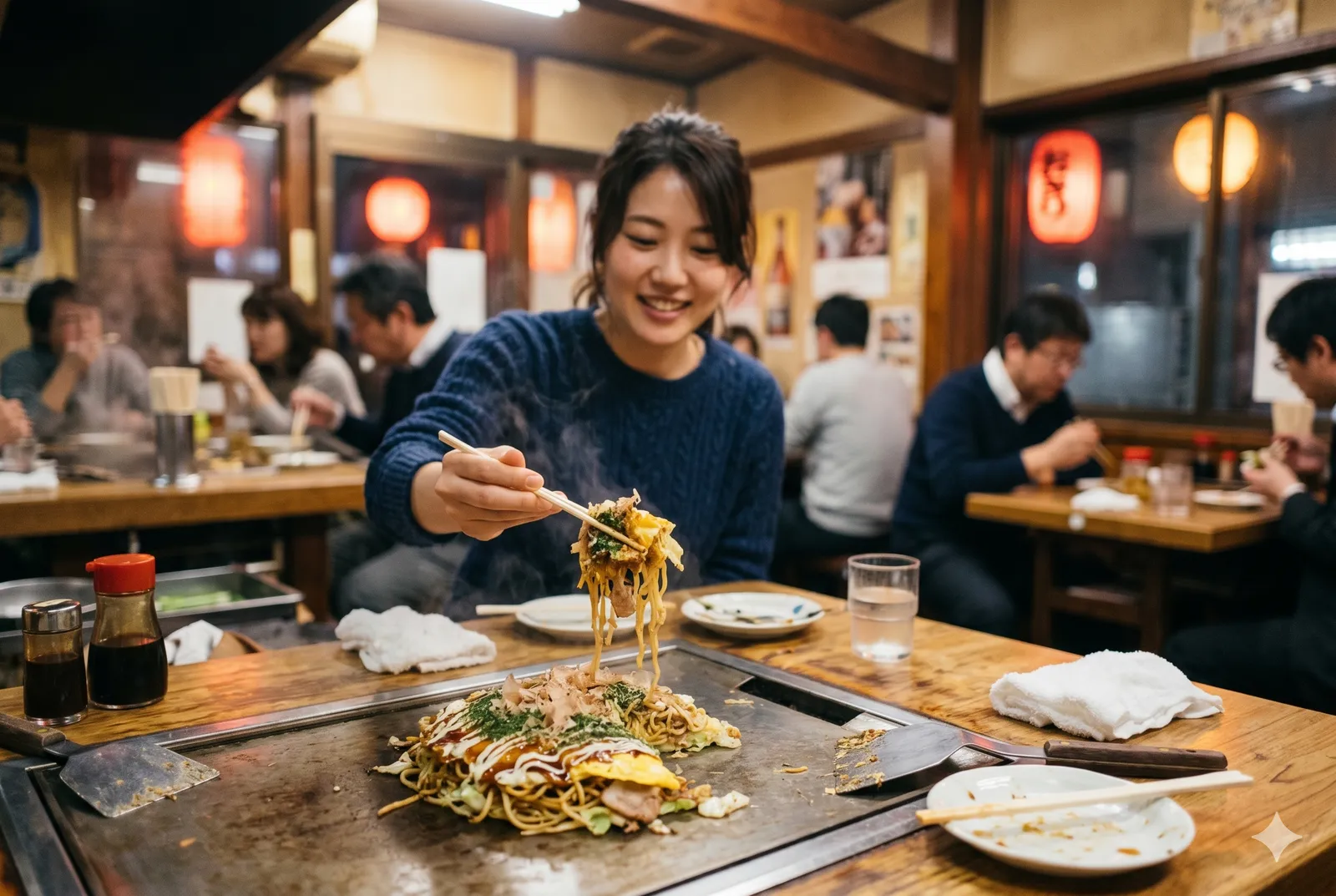
Because Hiroshima-style is genuinely its own beast — not a pancake with stuff mixed in, but a towering, layered skyscraper: a thin crêpe on the bottom, then an absurd mountain of cabbage and bean sprouts, then pork, then a whole nest of fried noodles, then an egg, all pressed and flipped into one dense, crunchy, satisfying stack. You sit at the counter, the chef builds it on the griddle right in front of you, and you eat it hot off the metal. It's a city's identity in food form, and it's spectacular.
The food of rebuilding
Hiroshima okonomiyaki carries real weight. It grew out of the post-war reconstruction era, evolving from a thin pre-war street snack called issen yoshoku into something layered, filling, and cheap — the food a recovering city needed. Many of the early shops were run by women feeding workers as Hiroshima rebuilt itself, and locals haven't forgotten that history. There's pride and memory pressed into every layer.
Why the layering changes everything
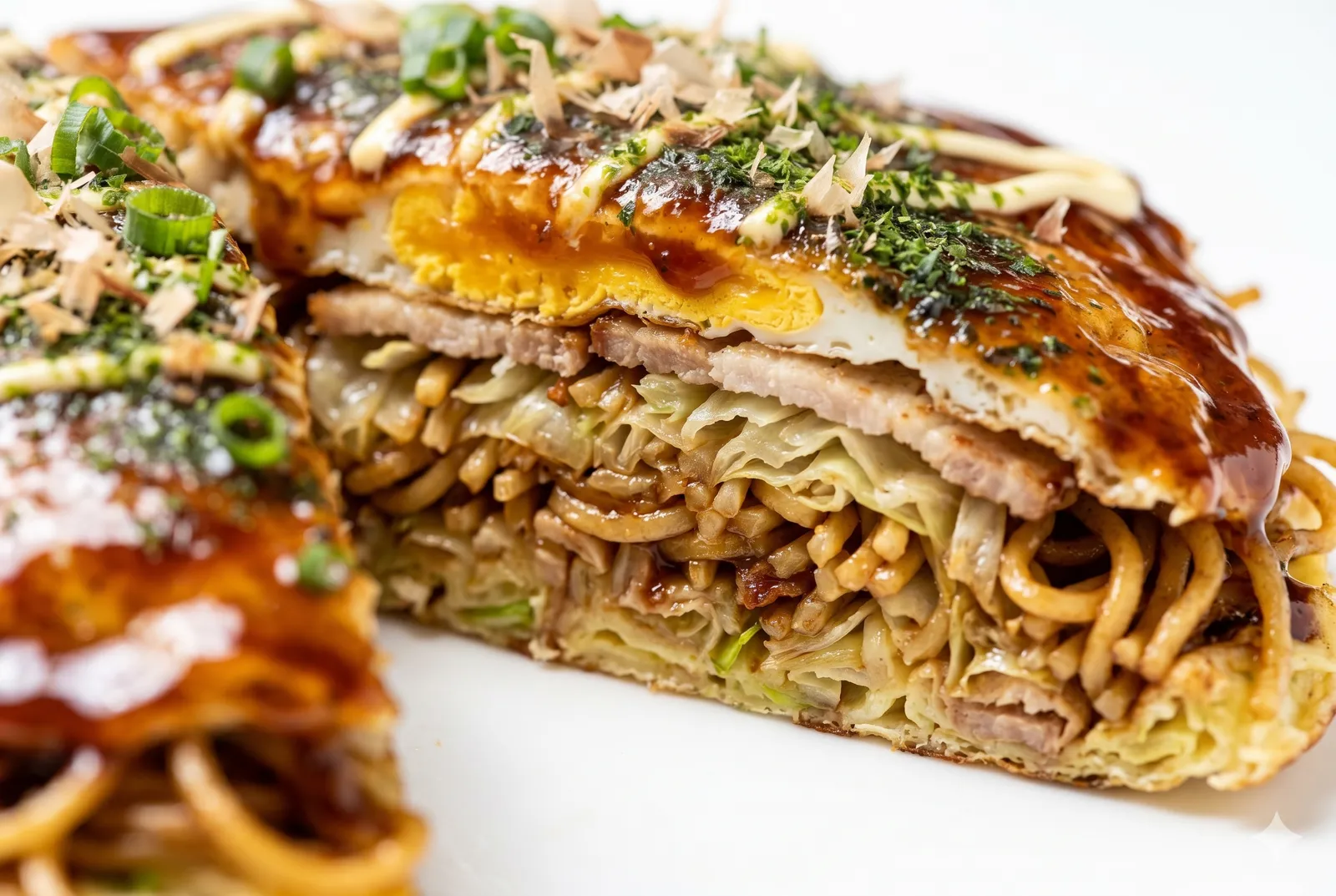
The defining difference from Osaka: nothing is mixed into the batter. Each component is cooked in sequence and stacked — crêpe, then a towering pile of cabbage and sprouts, pork, soba or udon noodles, and egg — then flipped and pressed together. The result is denser, crunchier, and far more substantial than the mixed version, with that nest of noodles giving it real heft. The noodle choice — soba or udon — is your call, and it matters.
How it's made
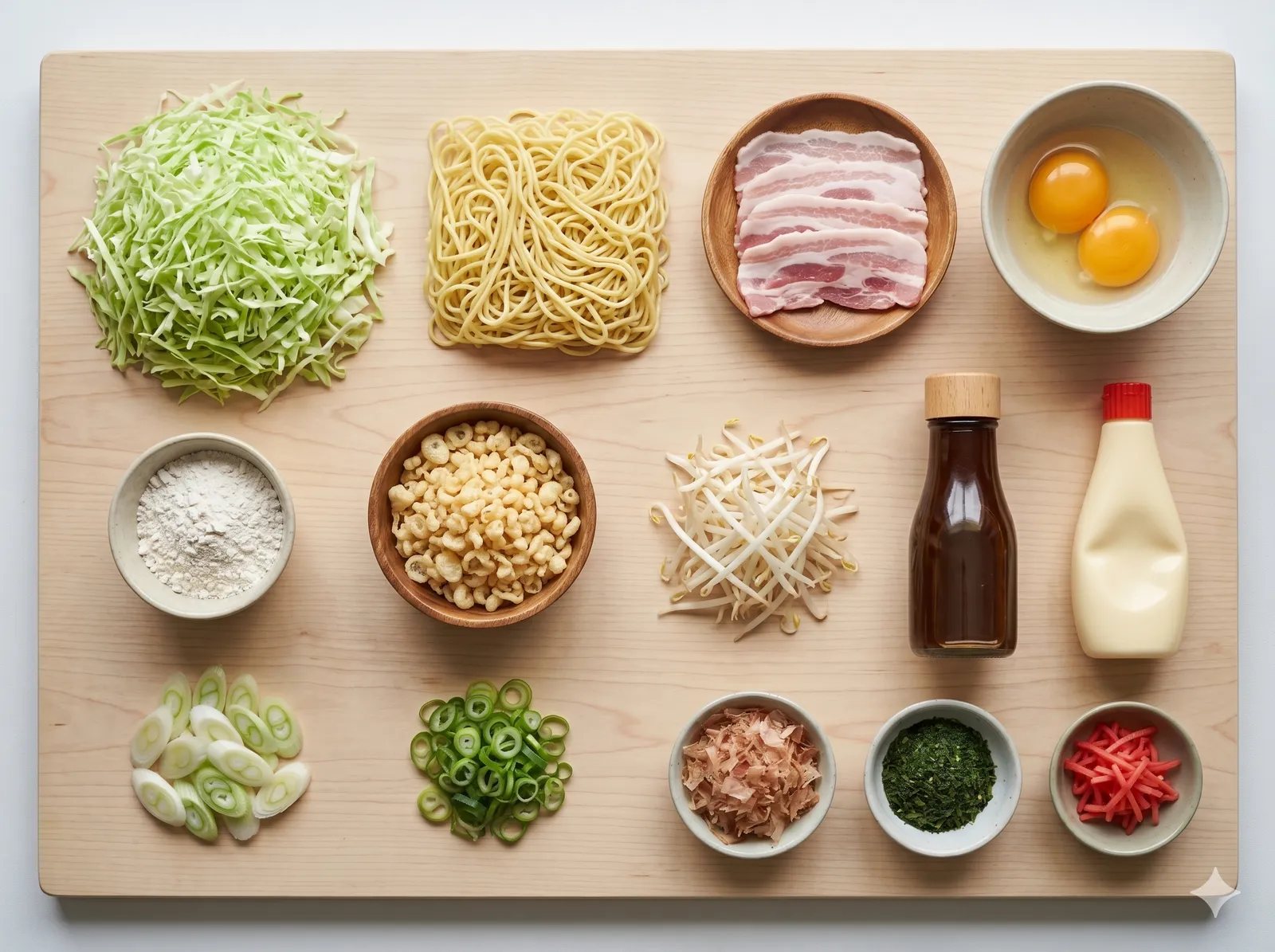
- Spread a thin circle of batter on the griddle
- Pile on cabbage and bean sprouts — an alarming amount; it cooks down
- Add pork slices on top
- Cook the noodles separately, then layer them onto the stack
- Crack an egg on the griddle, set the whole stack on it, and press
- Flip and cook until the egg sets and everything's golden
- Finish with okonomiyaki sauce, mayo, aonori, and katsuobushi
Before you go — order at the counter like a regular
Your questions, answered honestly
"Soba or udon?" — The big Hiroshima decision. Soba (thin, fried, slightly chewy) is the classic and most popular; udon is thicker, softer, more filling. First time, go soba — but you can't lose.
"Do I eat it off the griddle?" — Often, yes. Many counters serve it straight on the hot teppan in front of you, and you eat with a small spatula (hera) or chopsticks right off the metal. Eating it hot is the whole point.
"Why is there so much cabbage?!" — Don't panic — it steams down dramatically under all those layers into something sweet and tender. The volume is the magic, not a mistake.
"What do I add?" — Negi (lots of green onion) and extra cheese are popular upgrades. And put oyster on it if it's in season — Hiroshima is oyster country.
What the staff will ask you
| You'll hear | Romaji | Meaning | Just say |
|---|---|---|---|
| そばとうどん、どちらに? | Soba to udon, dochira ni? | "Soba or udon noodles?" | Soba de (soba) / Udon de (udon) |
| 肉玉そばでいいですか? | Niku-tama soba de ii desu ka? | "Pork-egg-soba okay?" | Hai, onegaishimasu (yes please) |
| ネギ、追加しますか? | Negi, tsuika shimasu ka? | "Add extra green onion?" | Onegaishimasu (yes) |
To order, just say "Niku-tama soba kudasai" (肉玉そばください) — "Pork, egg, and soba okonomiyaki, please." The standard, and a great one.
Where to eat it
- Okonomi-mura (お好み村) — Hiroshima. A legendary building stacked with floors of okonomiyaki stalls, each with regulars. Pick one and dive in.
- Hiroshima city counters — they're everywhere; look for a busy one with locals at the teppan.
Hours and locations change, so check before you go — and remember: it's okonomiyaki. Just okonomiyaki.
Soul Score
Local Roots5/5
First-Timer Friendly4/5
Adventure Level4/5
Comfort Level4/5
Travel Worthy5/5
These scores are one obsessed eater's gut feeling — not a verdict. A low number isn't a bad mark, just a different kind of adventure.
Know someone planning Japan?
← All Articles
Local Food · Hiroshima
Still hungry?
Eat more from Hiroshima
Local FoodHiroshima
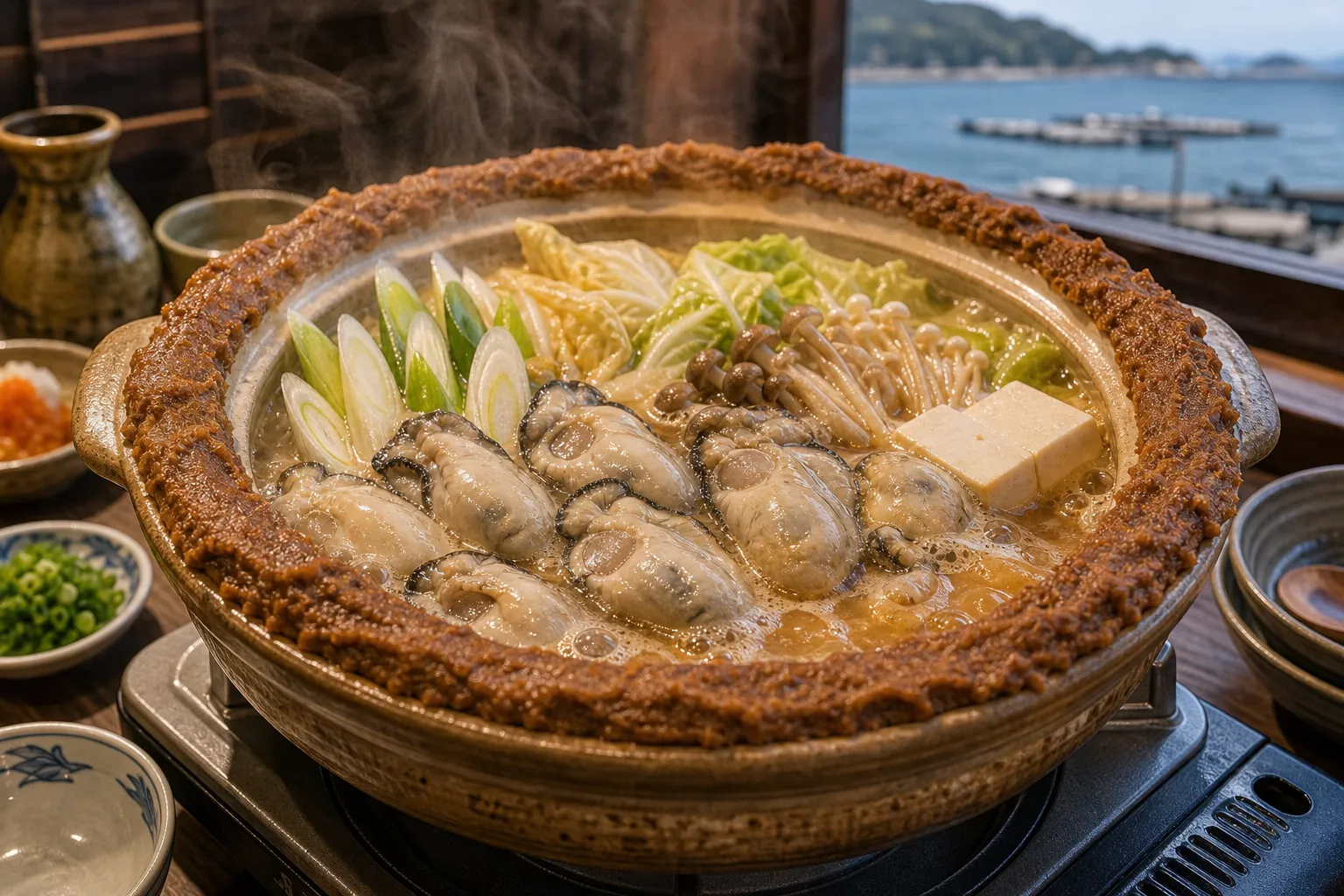
Kaki no Dotenabe (牡蠣の土手鍋)
Hiroshima's plump winter oysters, simmered in a pot ringed with a 'dyke' of sweet miso that you scrape into the broth as you go — a hot pot you literally build the flavor of, one swipe at a time.
July 10, 2026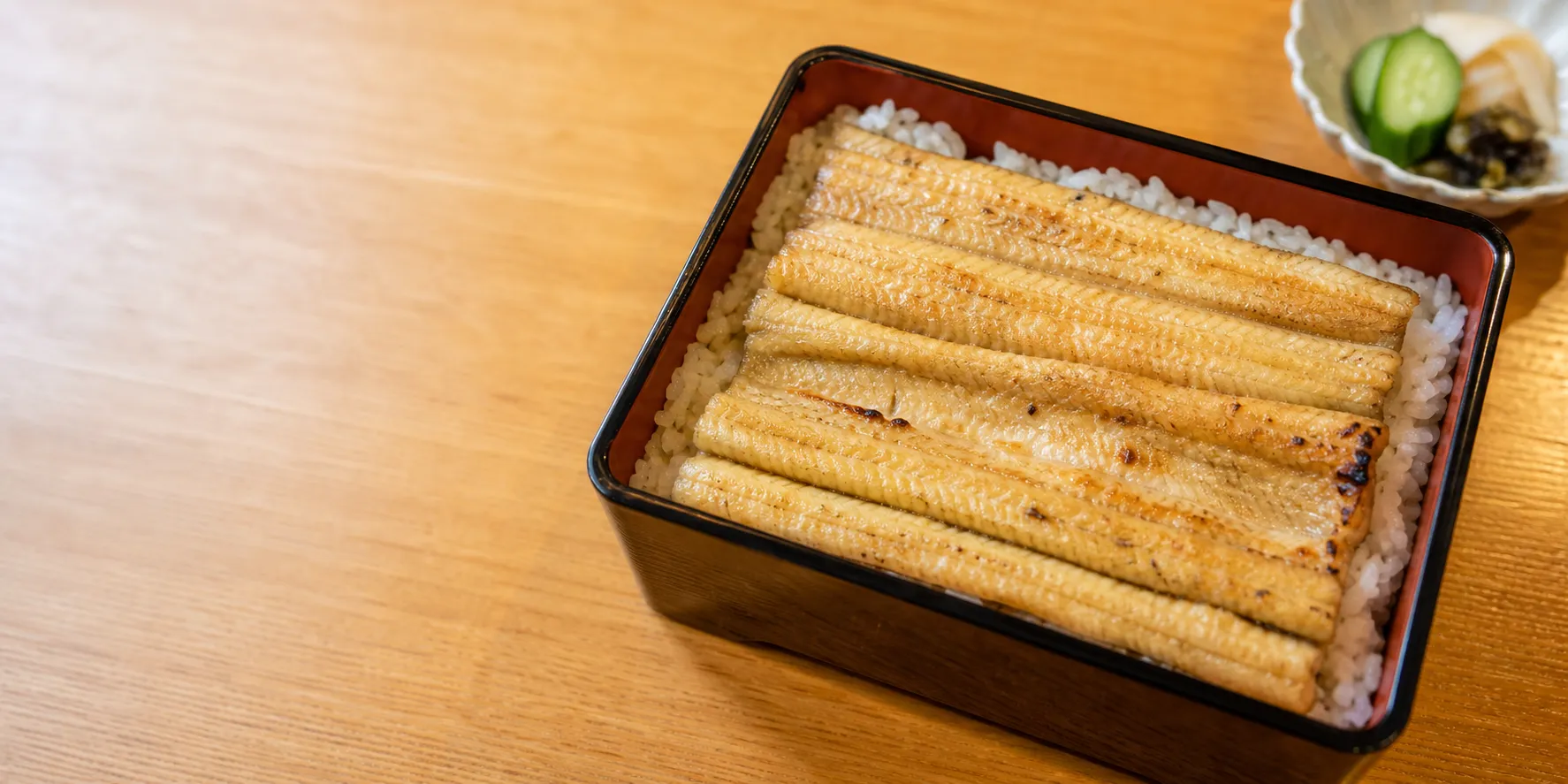
Local FoodMiyajima / Hiroshima
Anago Meshi (あなご飯)
It fell apart under my chopsticks before I'd even applied pressure — no bite required, just a soft collapse into something between fish and silk.
July 5, 2026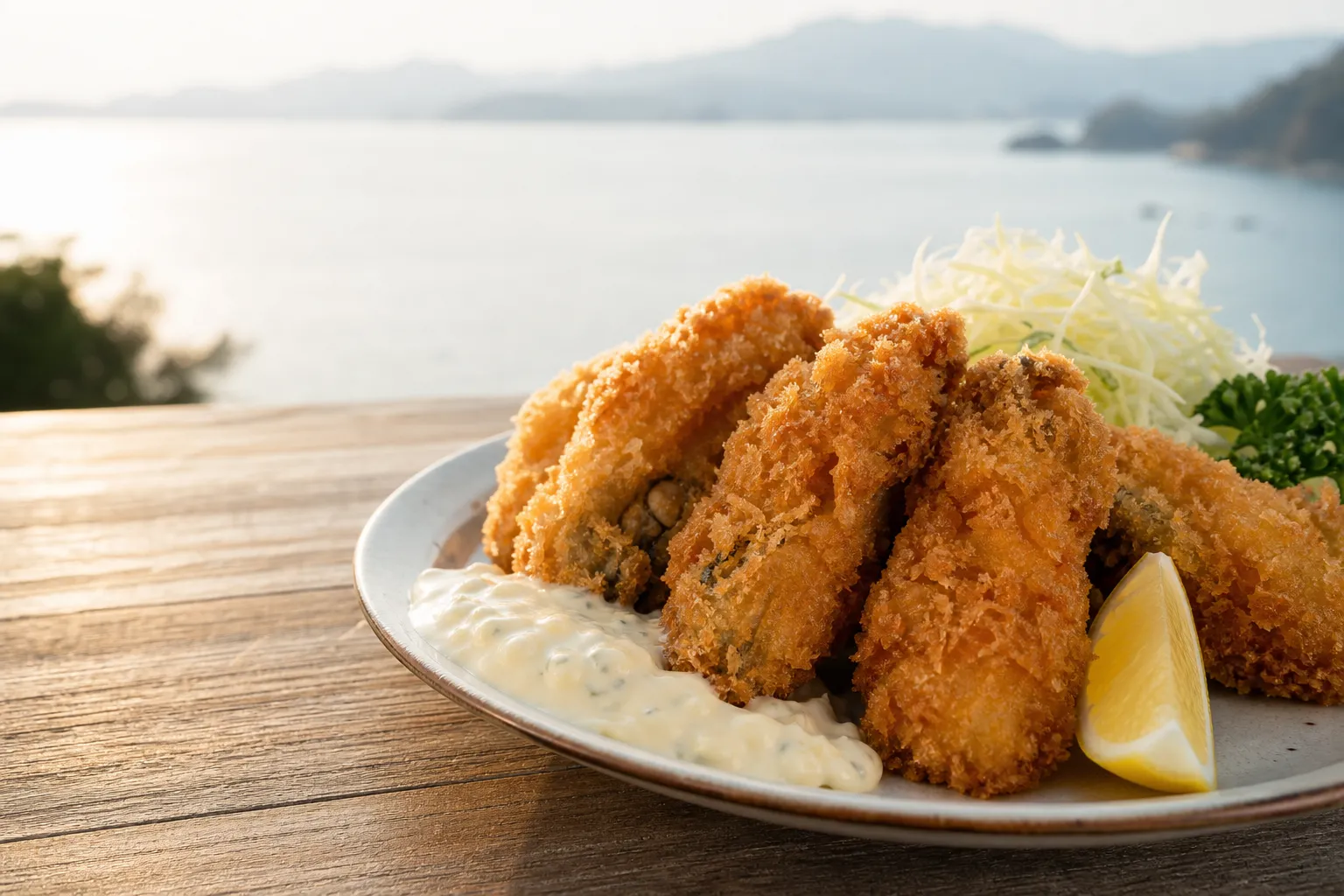
Local FoodHiroshima
Hiroshima Kaki Fry (広島かきフライ)
Crack the golden crust and the oyster inside is still plump and full of the sea — the fried food that finally made me understand why people drive to Hiroshima in winter.
July 5, 2026