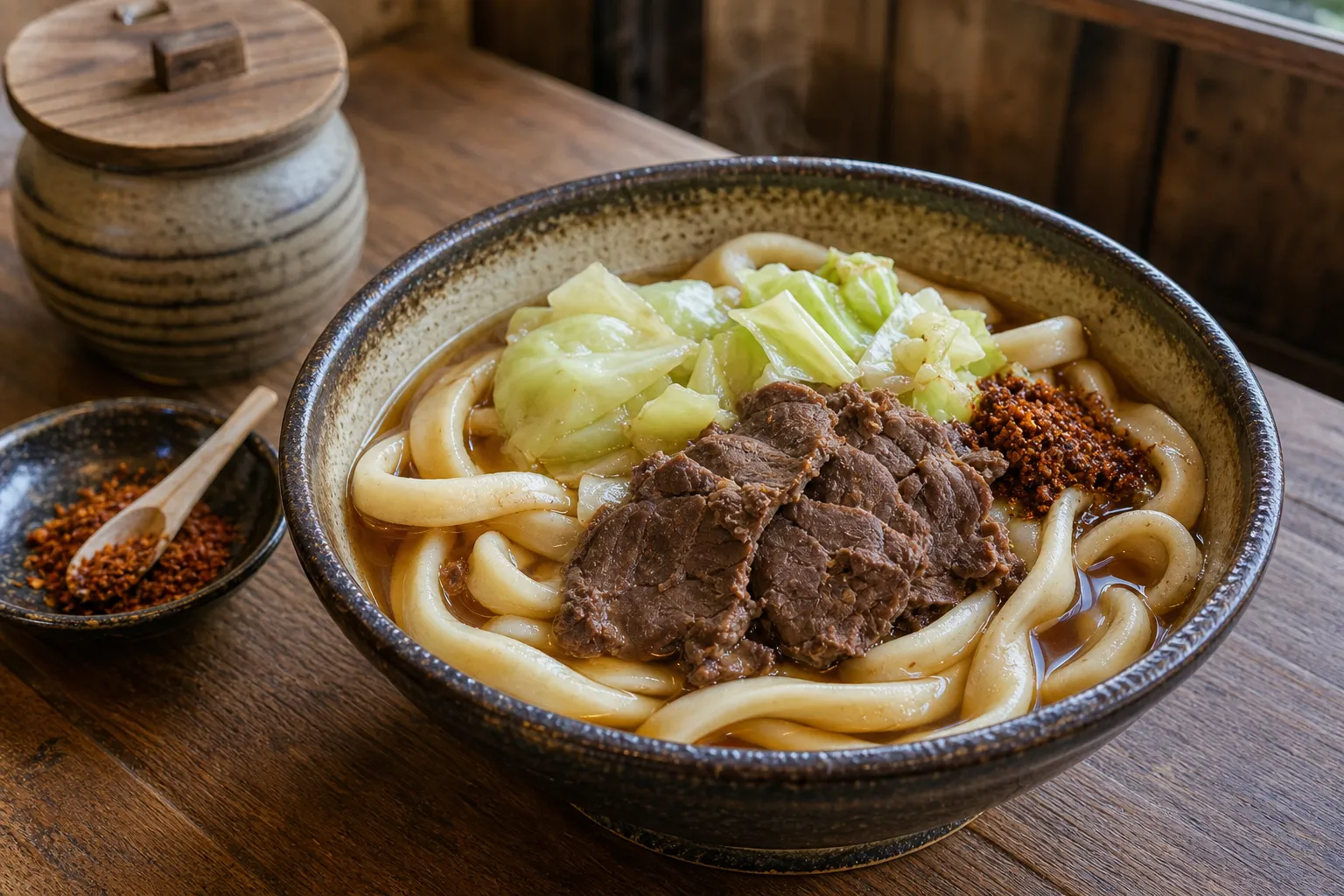
My jaw is still sore and I mean that as the highest compliment. I lifted the first strand of Yoshida udon expecting the usual soft, slippery slurp — and instead met a noodle with opinions, a thick chewy rope that pushed back against my teeth like it had somewhere better to be. I actually laughed out loud at the counter. Ten minutes of honest chewing later, warm broth, sweet cabbage, a dab of that red condiment burning pleasantly on my tongue, and I got it completely: this is udon as a workout, and I would do it again tomorrow.
Share this dish


The udon that fights back. Fujiyoshida's noodles are so thick and stubbornly chewy your jaw gets a workout — served in a soy-miso broth under a fiery red condiment you won't find anywhere else.
🍜 Planning a food trip to Yamanashi?Add this dish to my Food Trip →
 Add this dish to my Food Trip →
Here's what it is: Yoshida udon (吉田うどん) is the local udon of Fujiyoshida, at the foot of Mt. Fuji — extremely firm, thick, and chewy noodles in a broth blending soy and miso, topped with boiled cabbage, often simmered horse meat (nikuten), and a fiery homemade chili condiment called suridane. The defining trait is the sheer hardness — these are famously the toughest, chewiest udon in Japan. That's what separates it from soft, delicate udon and from Yamanashi's other noodle star, hoto (flat noodles simmered in a miso-pumpkin stew) — Yoshida udon is round, firm, and comes in a proper broth.
Weavers' fuel at the foot of Fuji
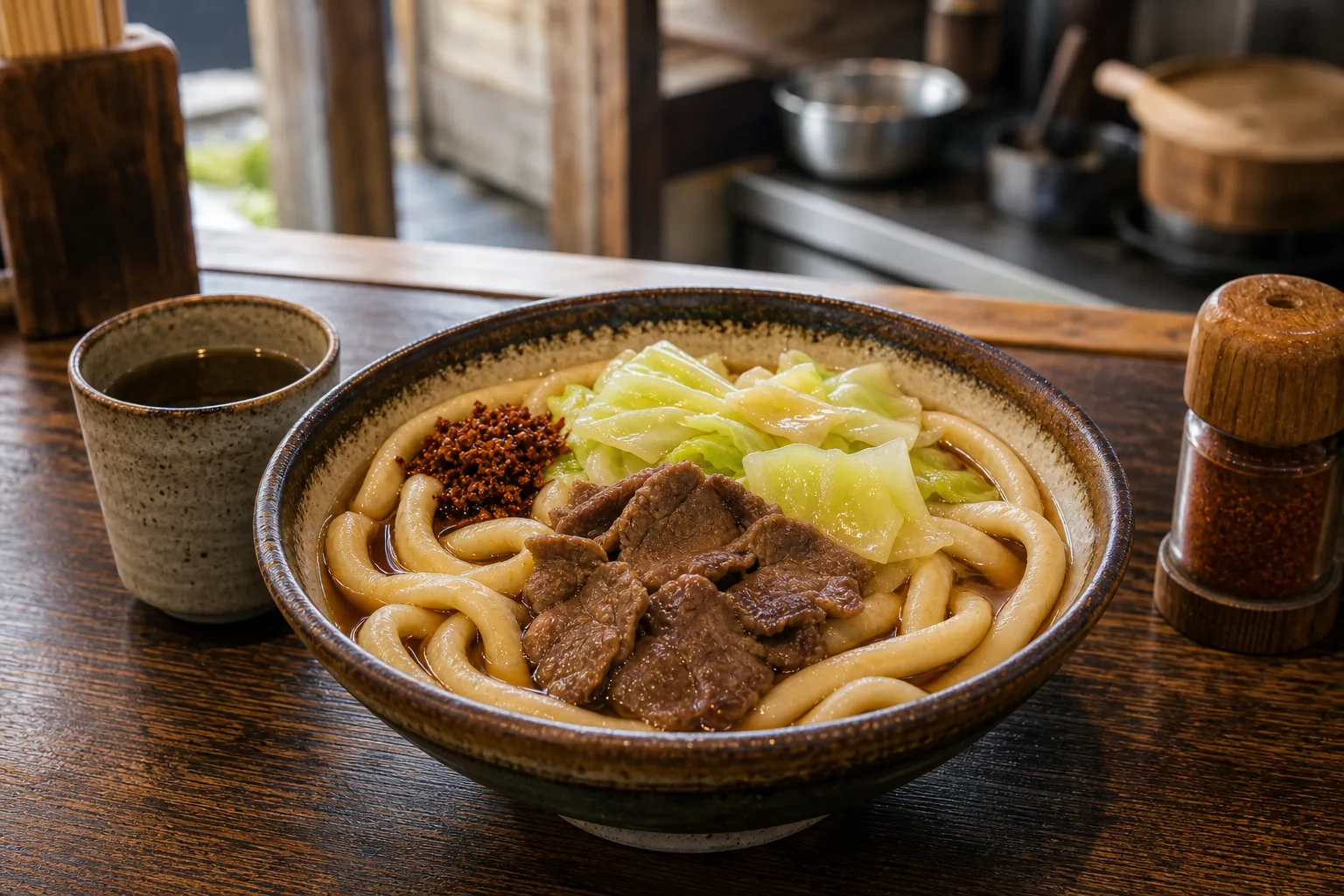
Fujiyoshida was a textile town for centuries — a place of looms and hard work in the cold shadow of Mt. Fuji, where rice didn't grow easily but wheat did. The story goes that the men often ran the households while the women worked the weaving, and udon that could be made cheaply, filled you up, and held together forever became the everyday meal. The famously firm texture, so the telling goes, is exactly what a busy household wanted: noodles that didn't turn to mush, that took time to eat, that lasted.
I love that the hardness isn't a quirk or an accident — it's the whole philosophy, baked into the town's history. Many Yoshida udon shops are still run out of people's homes, open only at lunch, sometimes just a few tables in a converted living room where you slide open a door and someone's grandmother is standing over the pot. That domestic, unpolished, deeply local feel is half the joy. You're not eating at a restaurant so much as eating in Fujiyoshida, and every household's broth balance and suridane recipe is a little different. I ordered horse meat on top without hesitation, and I have no regrets.
What makes the eating experience different
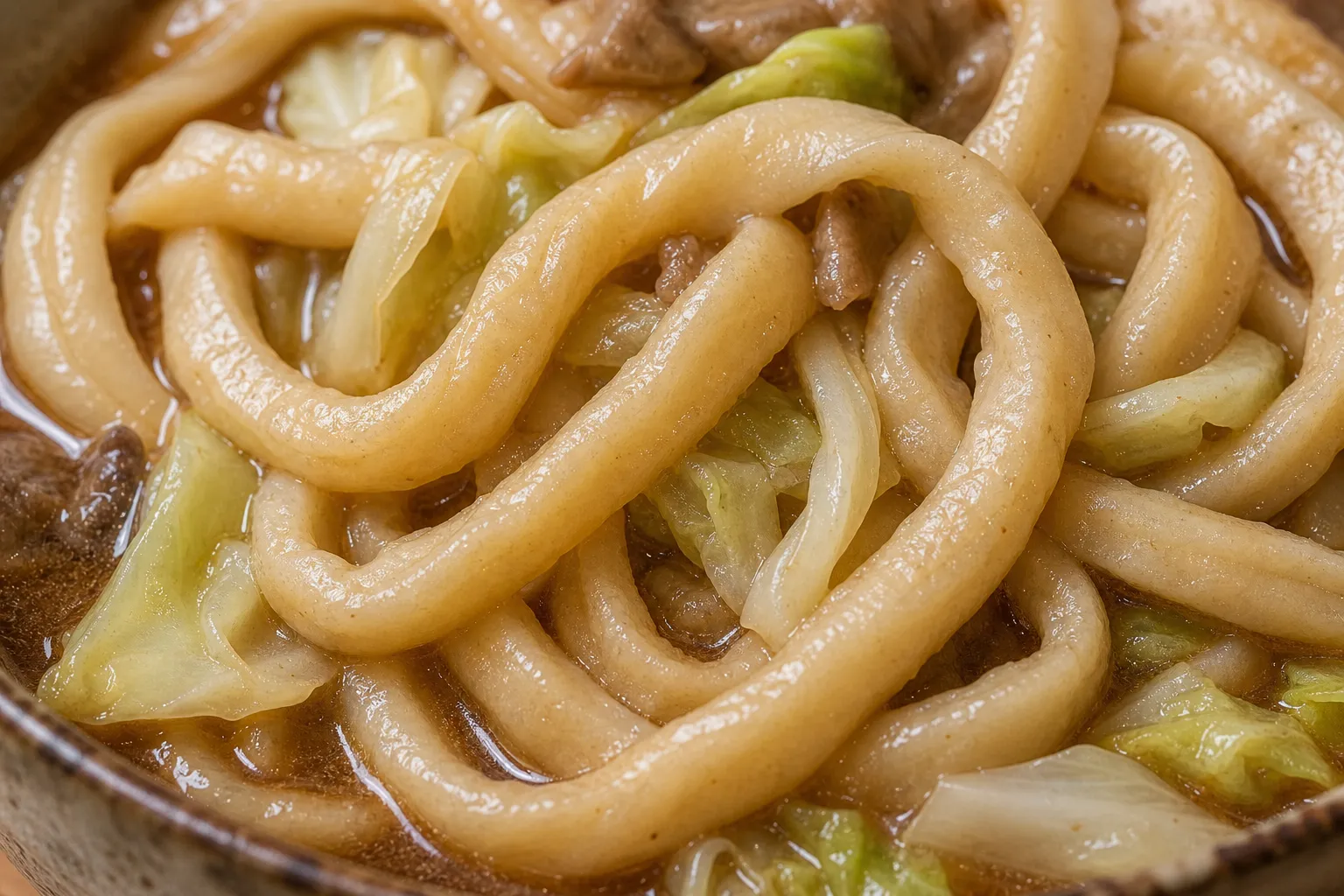
- The noodles are ferociously firm. Thick, dense, and genuinely chewy — this is the hardest udon in Japan on purpose. Your jaw will notice, and that's the appeal.
- The broth is soy-and-miso. A savory blend that's a little deeper and earthier than a standard clear udon dashi, built to stand up to those heavyweight noodles.
- Boiled cabbage is standard. Sweet, soft cabbage is a signature topping — the tender counterpoint to the punishing chew of the noodles.
- Horse meat shows up on top. Sweet-simmered horse (nikuten) is a classic Fujiyoshida topping, a nod to Yamanashi's horse-eating tradition.
- Suridane brings the fire. A homemade condiment — ground chili, sesame, sometimes sansho and other aromatics — that you stir in to taste. It's unique to this udon, and it transforms the bowl.
How it's made
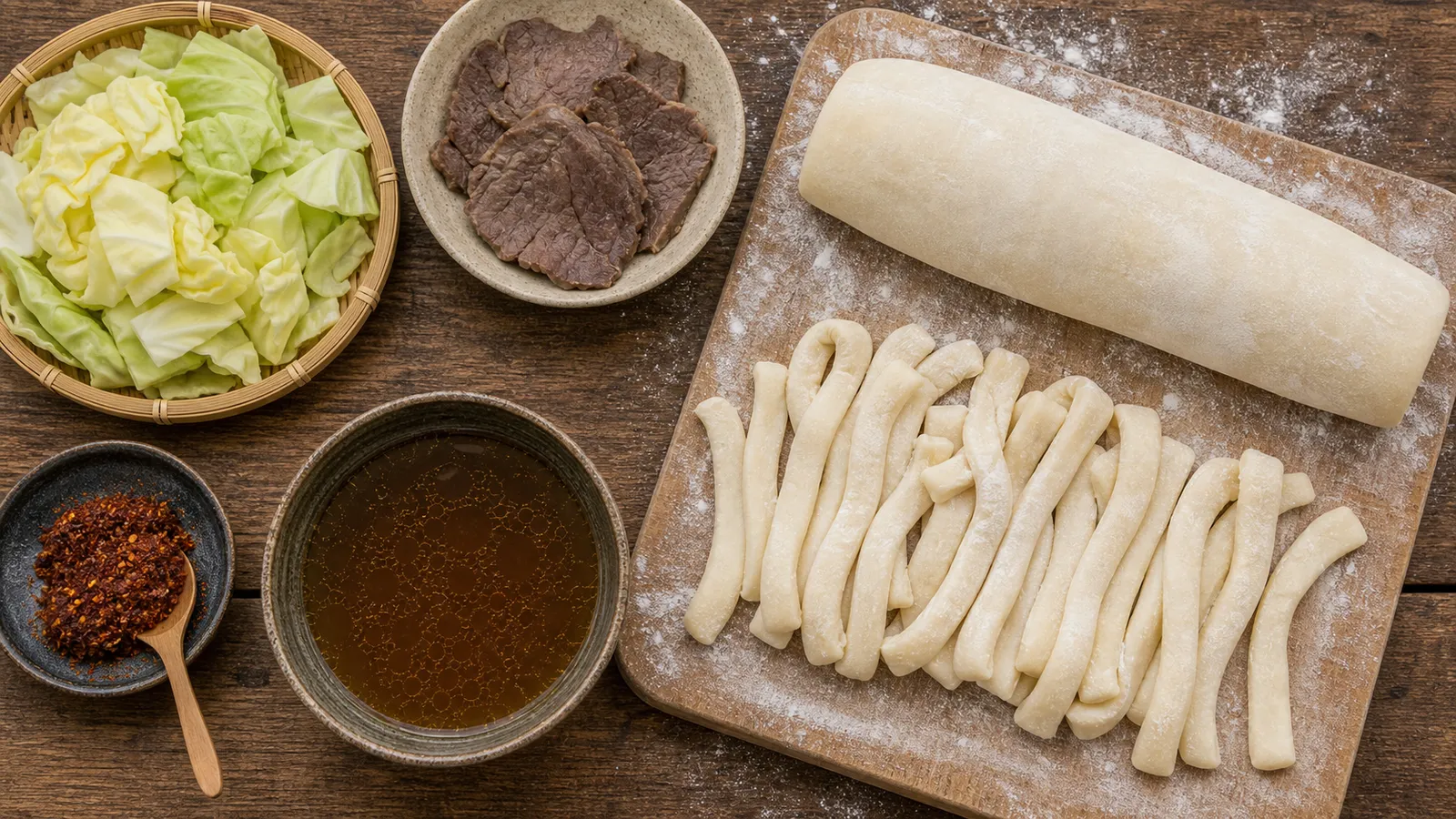
- Make a very stiff dough. Wheat flour is kneaded with less water and a firm hand — often worked hard (traditionally even trodden by foot) to build the dense, muscular gluten that gives the noodles their legendary chew.
- Rest, roll and cut thick. The dough rests, then is rolled out and cut into thick, sturdy strands — noticeably heftier than ordinary udon.
- Boil firm. The noodles are boiled but kept resolutely al dente, so they arrive with maximum bite rather than softening out.
- Build the broth. A stock is seasoned with a blend of soy sauce and miso — each shop guards its own ratio.
- Assemble and top. Noodles go in the hot broth, then boiled cabbage, simmered horse meat or other toppings, with the fiery suridane offered on the side to add to taste.
The craft is in the dough — hard water content and hard kneading, done to make noodles that fight you. Get that right, ladle on the soy-miso broth, add cabbage and a spoon of suridane, and you have Fujiyoshida in a bowl.
Before you go — bring an appetite and a working jaw
Your questions, answered honestly
"Why is it so hard? Is my bowl a mistake?" — Not at all — the extreme firmness is the whole identity of Yoshida udon. It's engineered to be the chewiest udon in Japan. Lean in and enjoy the chew; that's the local point of pride.
"How is this different from hoto?" — Completely different dish, same prefecture. Hoto is flat, wide noodles simmered soft in a thick miso-and-pumpkin stew. Yoshida udon is round, thick, aggressively firm noodles in a soy-miso broth. If you want soft and stewy, that's hoto; if you want a chewy workout, this is it.
"What is suridane, and will it destroy me?" — It's the signature spicy condiment — ground chili with sesame and aromatics, mixed fresh by each shop. It's genuinely spicy, so add a little, taste, and add more. Start small; you can always spoon in more heat.
"Do I have to eat the horse meat?" — No. Horse (nikuten) is a classic topping and worth trying if you're game — sweet-simmered and mild — but plenty of bowls come with cabbage, tempura bits, or other toppings instead. Recipes and toppings vary by shop, so check if you have concerns.
What the staff will ask you
| You'll hear | Romaji | Meaning | Just say |
|---|---|---|---|
| 温かいのと冷たいの、どちらにしますか? | Atatakai no to tsumetai no, dochira ni shimasu ka? | "Hot or cold?" | Atatakai de (hot, please) |
| 肉は入れますか? | Niku wa iremasu ka? | "Add the (horse) meat?" | Onegai shimasu (yes, please) |
| すりだねはお好みで | Suridane wa o-konomi de | "Add the spicy suridane to taste" | Sukoshi dake (just a little) |
To order, just say "Yoshida udon o kudasai" (吉田うどんをください) — "Yoshida udon, please."
Where to eat it
- Fujiyoshida City, Yamanashi — the one and only home of the dish, at the northern foot of Mt. Fuji. The town has dozens of Yoshida udon shops, many run out of family homes and open only for lunch.
- Around Mt. Fuji Station / Shimoyoshida — the central Fujiyoshida area is thick with udon shops within walking or short-drive distance, making it easy to try one (or two) on a Fuji trip.
- Fujiyoshida's home-based udon houses — the most atmospheric bowls come from the family-run places tucked into residential streets; the local tourism office publishes an udon map worth grabbing.
Many Yoshida udon shops are tiny, home-run, cash-only and open only for a few midday hours — hours and days off vary a lot, so check before you go and aim for lunchtime.
Soul Score
Local Roots5/5
First-Timer Friendly3/5
Adventure Level4/5
Comfort Level4/5
Travel Worthy4/5
These scores are one obsessed eater's gut feeling — not a verdict. A low number isn't a bad mark, just a different kind of adventure.
Know someone planning Japan?
← All Articles
Local Food · Fujiyoshida, Yamanashi
Still hungry?
Eat more from Yamanashi
Local FoodFujikawa, Yamanashi
Mimi (みみ)
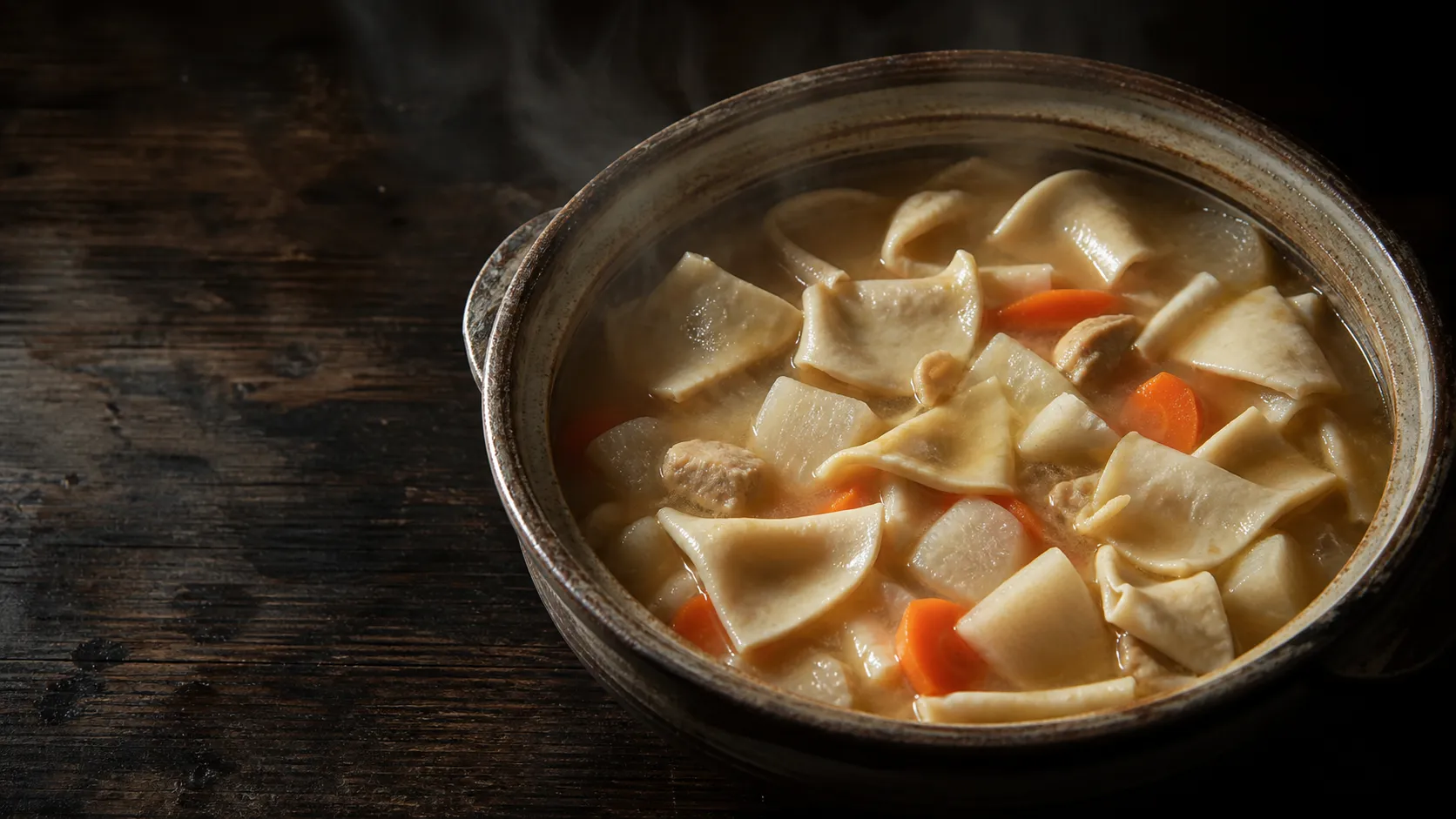
A grandmother in Fujikawa told me the little dough shapes in my soup were designed to scoop up good fortune, and then watched to make sure I ate every one of them.
September 2, 2026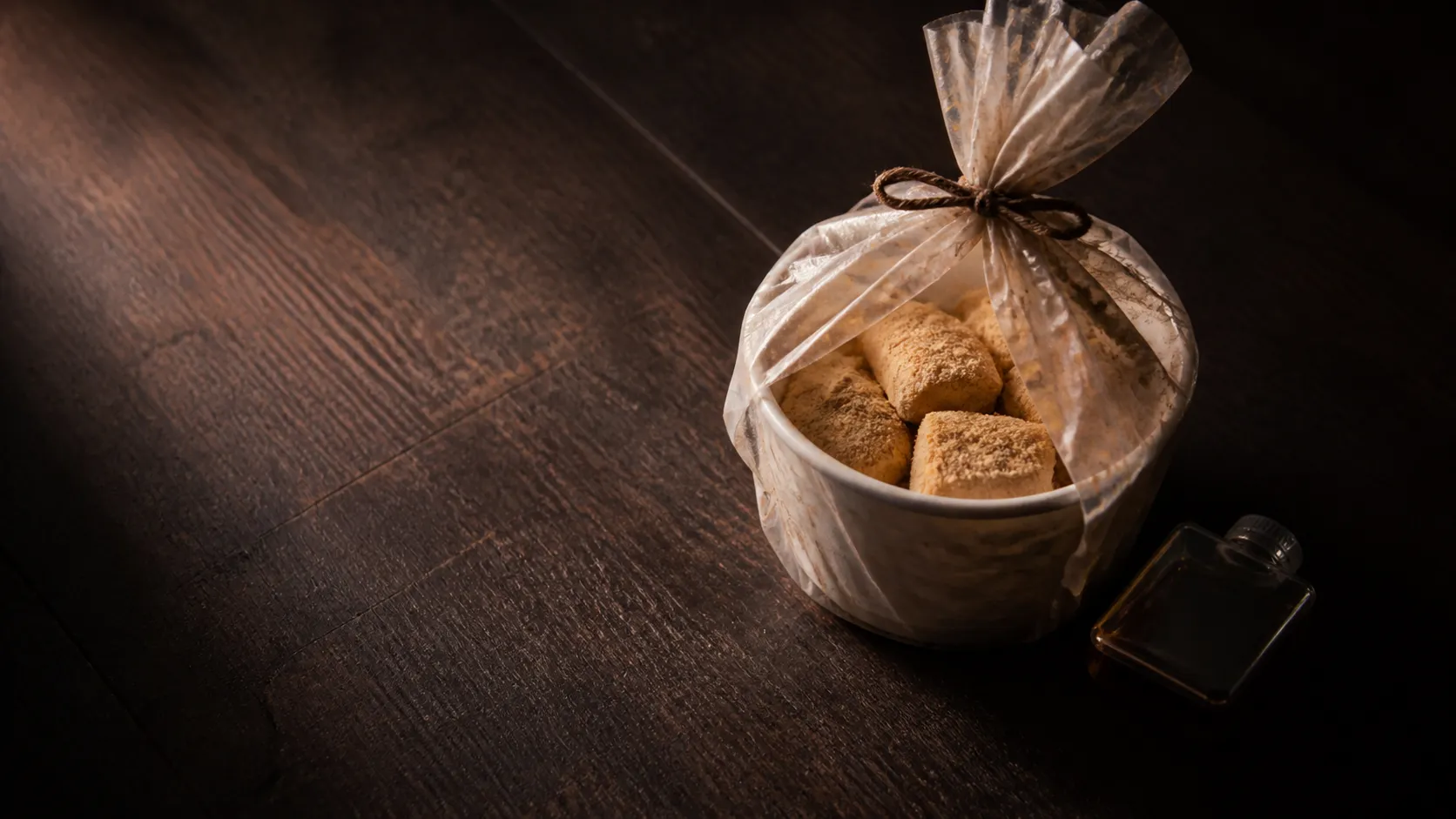
Sweets & SnacksYamanashi
Shingen Mochi (信玄餅)
There is a correct way to eat this and I did not know it, so I made a mess in front of several Yamanashi locals who were extremely kind about it and absolutely watching.
September 2, 2026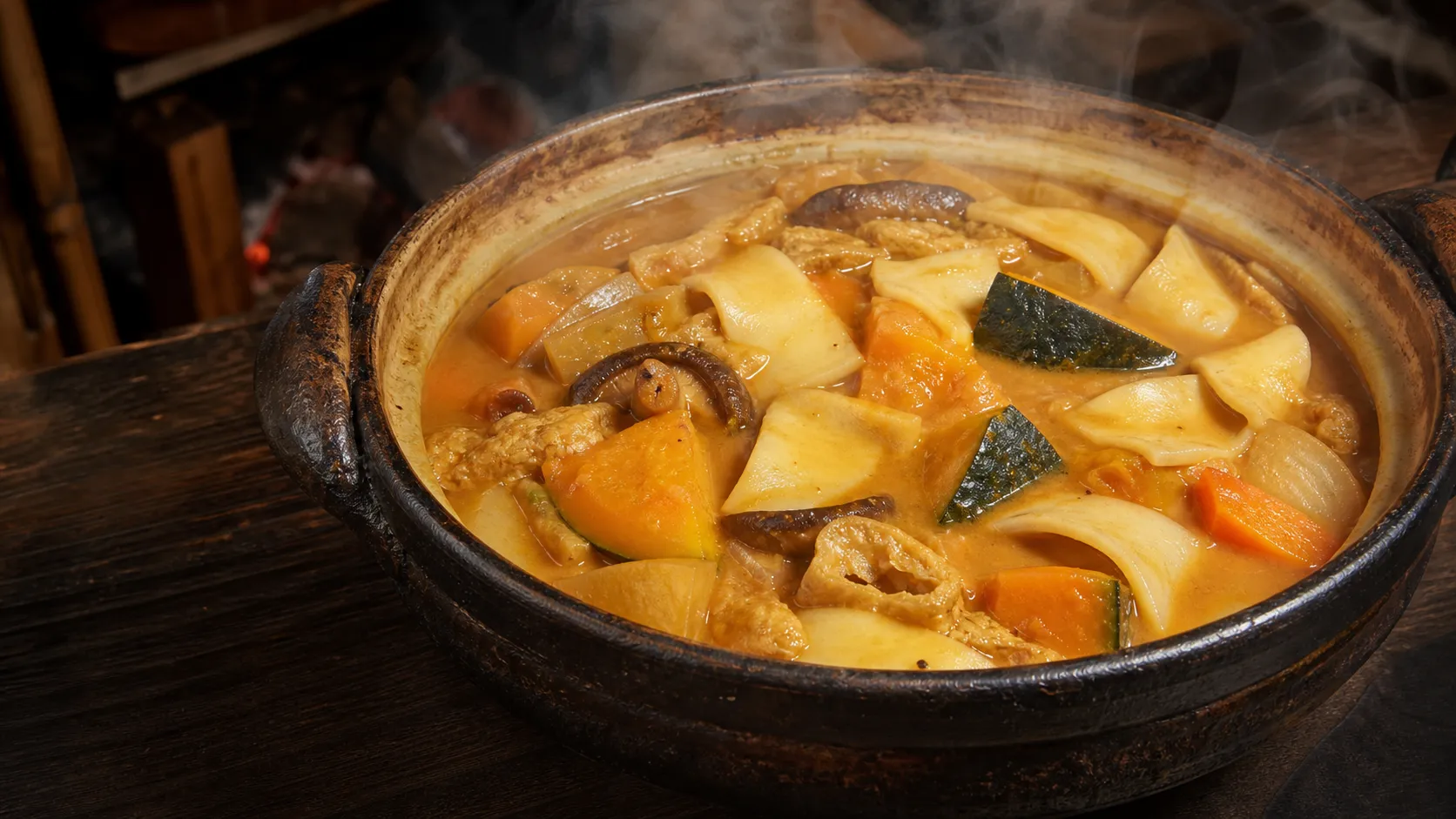
Local FoodKofu, Yamanashi
Hoto (ほうとう)
Yamanashi's ancient mountain stew: wide flat noodles made without salt, simmered directly in miso broth with pumpkin until everything thickens into something halfway between soup and casserole. Cold outside. Hot in the pot.
June 25, 2026