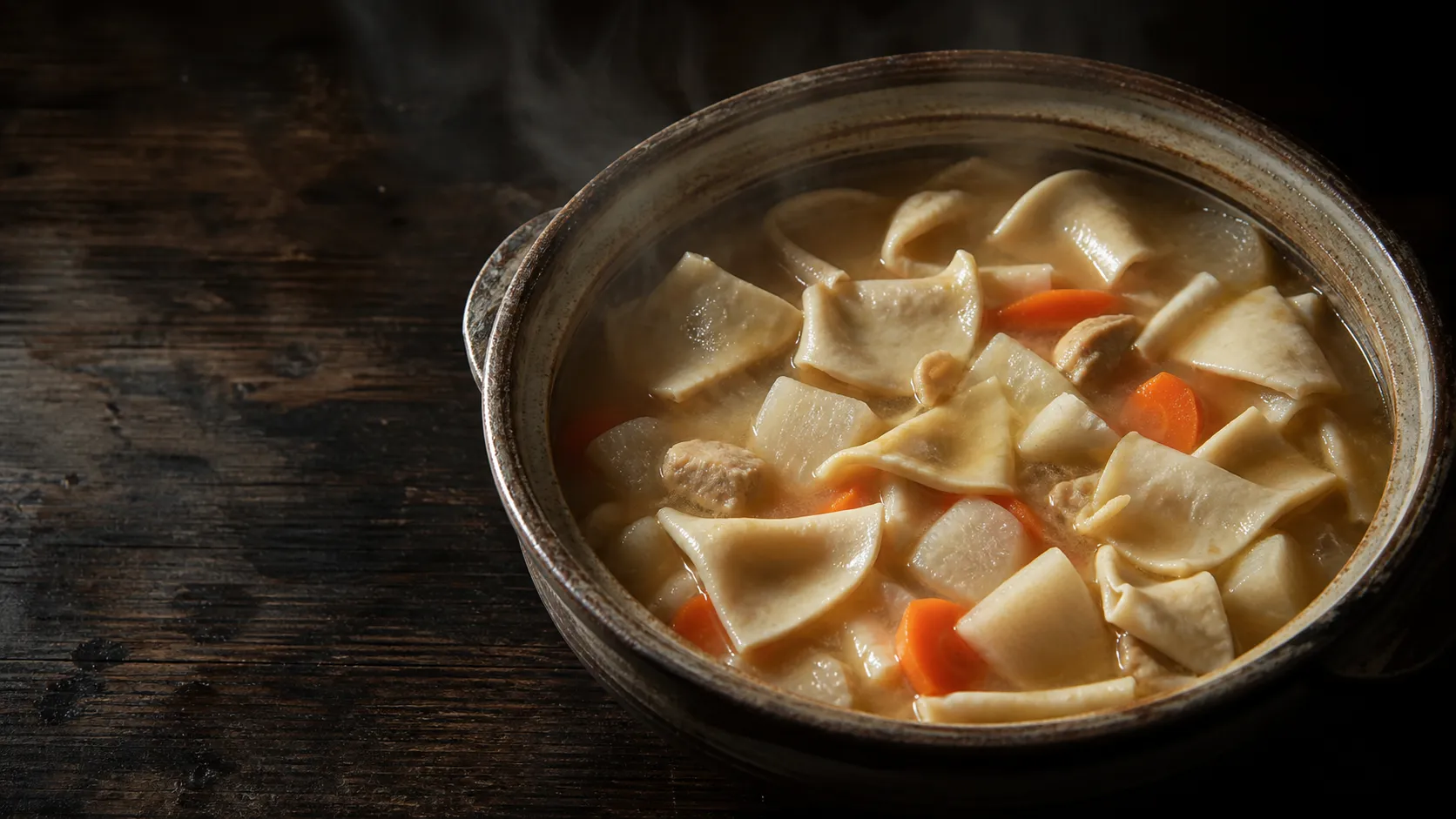
"Fortune," she said, and mimed scooping something out of the air with both hands. "It catches fortune."
Share this dish


A grandmother in Fujikawa told me the little dough shapes in my soup were designed to scoop up good fortune, and then watched to make sure I ate every one of them.
🍜 Planning a food trip to Yamanashi?Add this dish to my Food Trip →
 Add this dish to my Food Trip →
I was sitting in a small room in the hills southwest of Kofu holding a bowl of hot miso soup full of pale, floppy, hand-pinched pieces of dough, each one folded at one corner into a little cupped shape, and I had just asked the least sophisticated question available to me — why is it that shape? The answer involved a farming tool, a New Year's wish, and a grandmother's hands moving through the steam, and I understood approximately forty percent of the words and one hundred percent of the point.
Then she watched me eat. All of them. Every single piece, because the whole idea falls apart if you leave the fortune in the bowl.
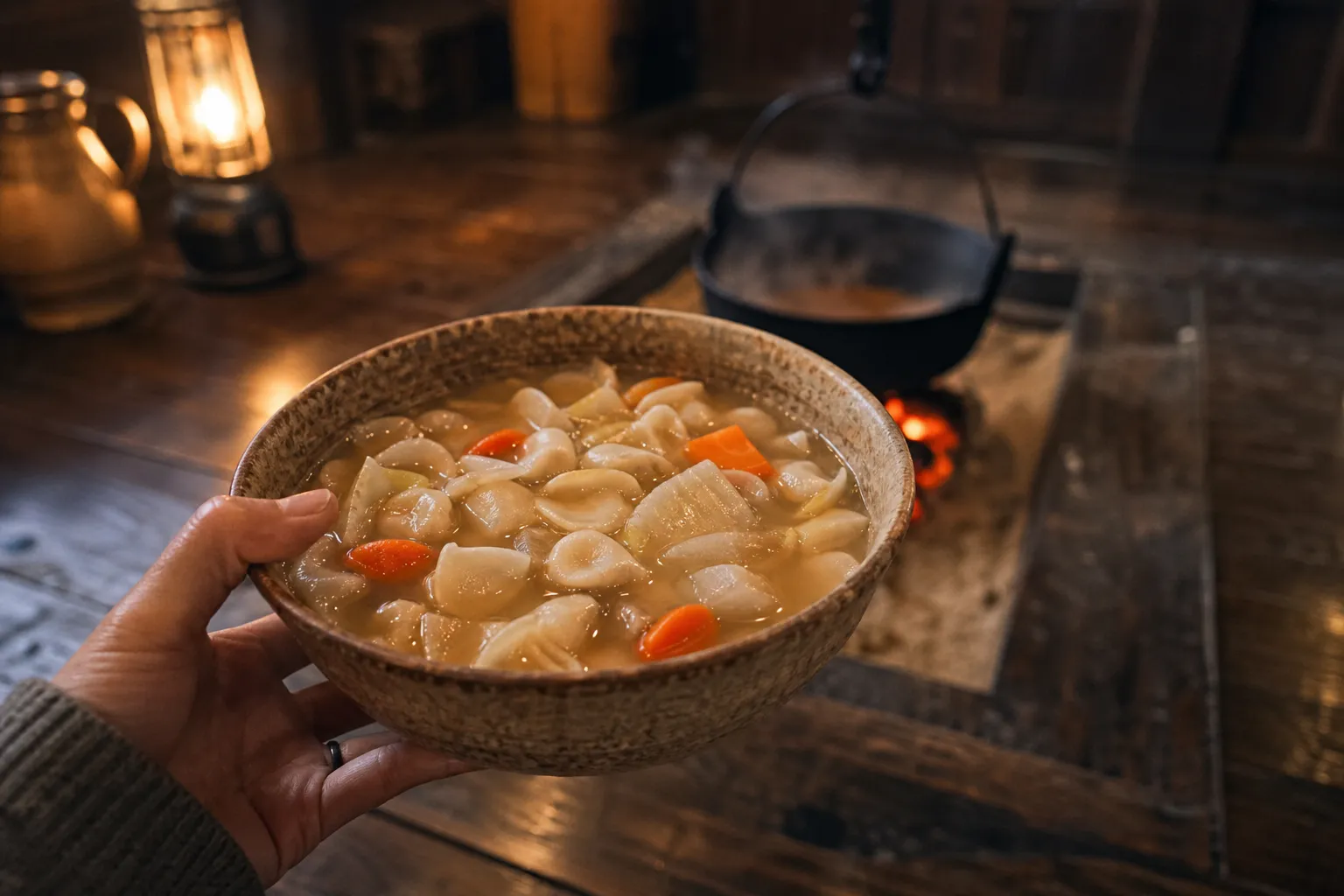
Mimi is a Yamanashi mountain soup: flat scraps of wheat dough, pinched at one corner into a shape somewhere between an ear and a farmer's winnowing basket, simmered with daikon, carrot, taro and whatever else the household has, in a miso broth. It comes from the Fujikawa area, it's traditionally eaten at New Year, and it's one of the few dishes I've had in Japan where the shape is the meaning.
A wish you can eat
This is wheat country, not rice country. The steep, cold, water-poor slopes of southwestern Yamanashi were never generous to rice paddies, so households ground wheat and made noodles and dough out of it — the same agricultural logic that gave Yamanashi its famous hoto. Mimi comes from that same kitchen and that same shortage.
The name is where it gets good. Mimi means ear, and yes, the shapes look like little ears. But the story locals tell is that the shape is really a mi — a winnowing basket, the wide flat scoop a farmer uses to toss grain and separate it from the chaff. Make your New Year's soup full of tiny winnowing baskets, the reasoning goes, and you spend the year scooping up good fortune. Some tellings add that you eat them so the luck can't escape.
I find that almost unbearably lovely. This is a dish invented by people who did not have enough, in a place that made farming hard, and their response was not to make something rich — it was to make something hopeful, and then shape the hope by hand, one piece at a time, at the start of every year.
It was never restaurant food. It was what your family made, in a specific valley, on specific days. That's exactly why it's difficult to find now, and exactly why it's worth the trouble.
Why the shape actually matters in the bowl
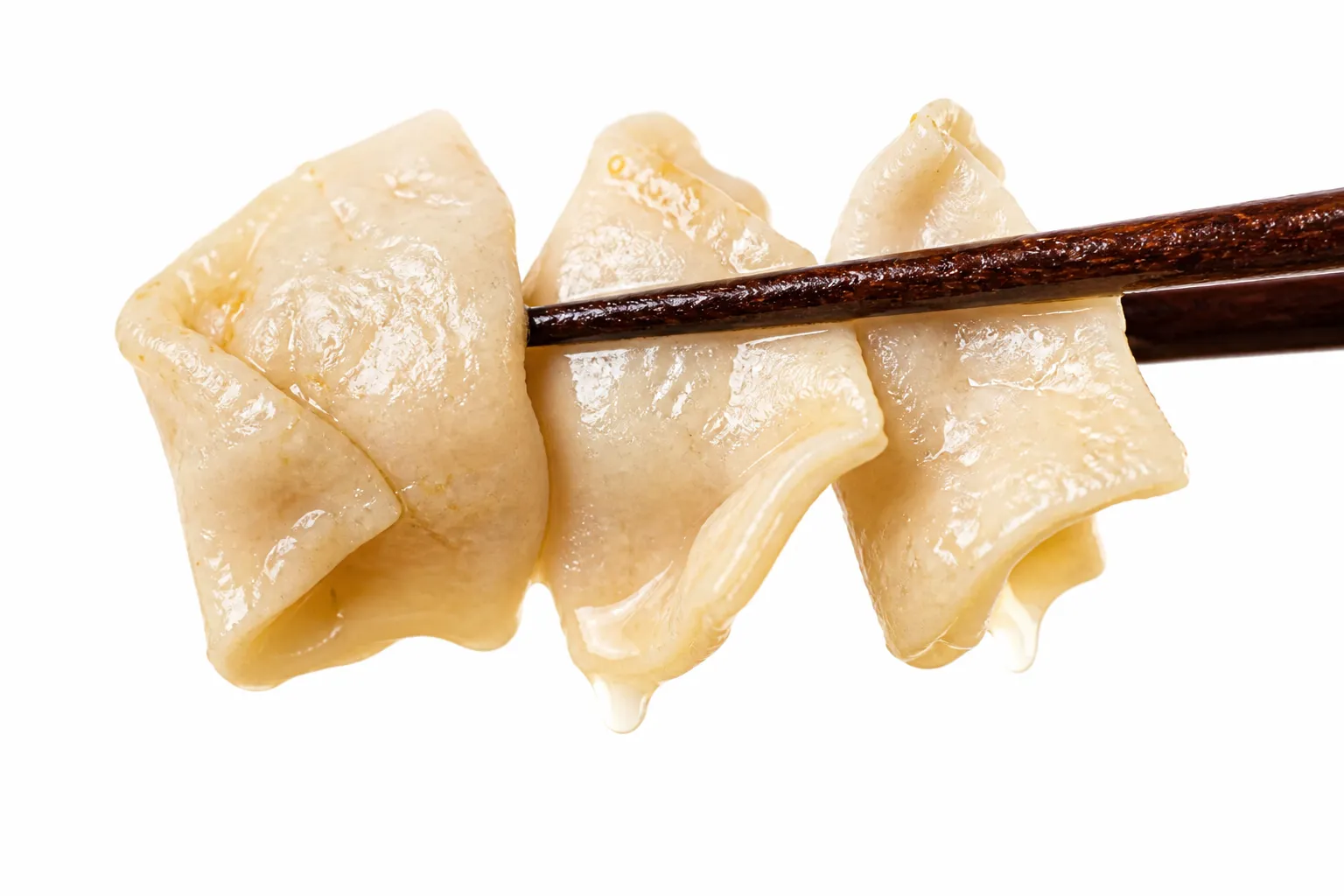
Here's the thing I didn't expect: the shape isn't only symbolic. It cooks differently.
A round dumpling — a suiton ball — cooks from the outside in, and the middle stays dense and doughy. A long flat noodle cooks evenly but slides. These pinched flat pieces are thin at the edges and thicker at the pinch, so a single piece gives you two textures at once: a soft, almost silky rim that's absorbed the broth, and a firm chewy knot in the middle that hasn't. And the cupped shape genuinely does trap broth, so each one arrives carrying a small load of soup with it.
The broth itself is unglamorous in the best way — miso, root vegetables, whatever was in the house. Daikon goes translucent and sweet. Taro leaks a little starch and thickens everything slightly. Carrot is doing color duty and not much else, and that's fine, that's allowed.
It tastes like the inside of a house in winter. I don't have a better way to put it. It is not exciting food and it is not trying to be. It is deeply, structurally comforting in a way that made me want to sit still afterwards.
How it comes together
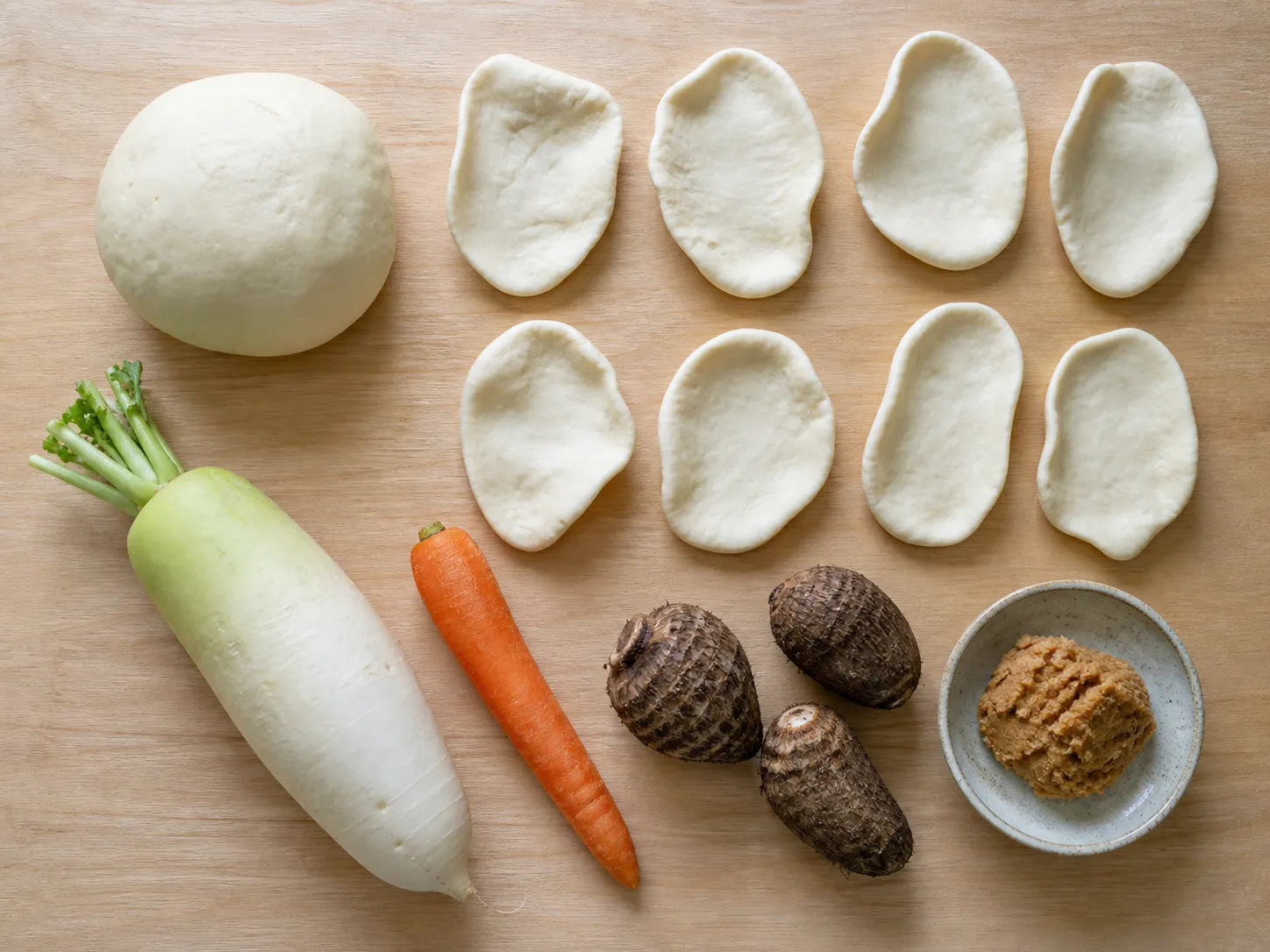
- Mix wheat flour with water into a firm dough and let it rest until it stretches without tearing
- Roll it thin, cut it into small squares, and pinch each square at one corner so it cups — this is the part done by hand, usually by several people at once, usually while talking
- Simmer daikon, carrot, taro and other root vegetables in dashi until they start to soften
- Drop the dough pieces in and cook them through — they'll firm up and float
- Dissolve miso in at the end, off a hard boil, and serve immediately
Step 2 is the entire tradition. It's slow, it's repetitive, and it's done in a group — which is precisely why it's a New Year dish. Nobody makes mimi alone for one person. The labor is the ritual, and the shape only exists because someone's hands made it that way.
Before you go — the stuff that actually matters
Your questions, answered honestly
"Is this just hoto with different noodles?" — Related, not the same. Hoto uses long, wide, flat noodles cooked directly in a thick miso-pumpkin broth, and it's on menus all over Yamanashi. Mimi uses small hand-pinched pieces, is lighter, and is far more local and far rarer. If you've had hoto, mimi will feel like meeting its quieter cousin.
"How hard is it actually to find?" — Genuinely hard, and I'd rather say so. This is a household and community dish, not a tourist staple. Your realistic options are local restaurants and roadside stations in the Fujikawa and Masuho area, community events, and inns that serve local home cooking. Don't build a Tokyo day trip around eating this specific bowl.
"Is it vegetarian?" — Often close, but rarely guaranteed. The broth is usually built on dashi made with bonito, and some versions include pork or chicken. Ask — and if the answer is a hesitant one, believe the hesitation.
"What time of year?" — Traditionally New Year and cold months, and that's still when you're most likely to find it. Some places serve it year-round, but a hot miso soup full of dough in August is a hard sell even in Yamanashi.
"Do I eat it with chopsticks or a spoon?" — Chopsticks for the dough and vegetables, and lift the bowl to drink the broth, exactly like miso soup. There's no spoon and you don't need one.
"What should I pair it with if I'm already in Yamanashi?" — Honestly, this and a bottle of Koshu wine from the valleys nearby is a very strange and very good combination. Yamanashi is Japan's wine prefecture, and nobody will stop you.
What the staff will ask you
| You'll hear | Romaji | Meaning | Just say |
|---|---|---|---|
| みみ、ご存じですか? | Mimi, gozonji desu ka? | "Do you know what mimi is?" | Hajimete desu (it's my first time) |
| 温かいうちにどうぞ | Atatakai uchi ni dōzo | "Please, while it's hot" | Itadakimasu (thank you, I'll eat) |
| 味噌の味、濃くないですか? | Miso no aji, koku nai desu ka? | "Is the miso too strong for you?" | Chōdo ii desu (it's just right) |
| おかわりいかがですか? | Okawari ikaga desu ka? | "Would you like a second helping?" | Onegaishimasu (yes, please) |
| 今日はやってないんです | Kyō wa yattenai n desu | "We're not serving it today" | Wakarimashita (understood) |
To order, just say "Mimi kudasai" (みみください) — "Mimi, please."
Where to eat it
- Roadside stations (michi no eki) and local restaurants in Fujikawa town and the surrounding Masuho area — the heart of where this dish comes from, and the most realistic place to find it on a menu.
- Inns and guesthouses in southwestern Yamanashi that serve local home cooking — often the best version, because it'll be somebody's family recipe rather than a menu item.
- Local food events and New Year gatherings in the area — where it's genuinely at home, if your timing happens to line up.
This is a rare, seasonal, community-rooted dish and availability is unreliable in a way I don't want to paper over — always confirm directly before traveling for it, and treat finding it as a lucky day rather than a plan.
Soul Score
Local Roots5/5
First-Timer Friendly4/5
Adventure Level3/5
Comfort Level5/5
Travel Worthy3/5
These scores are one obsessed eater's gut feeling — not a verdict. A low number isn't a bad mark, just a different kind of adventure.
Know someone planning Japan?
← All Articles
Local Food · Fujikawa, Yamanashi
Still hungry?
Eat more from Yamanashi
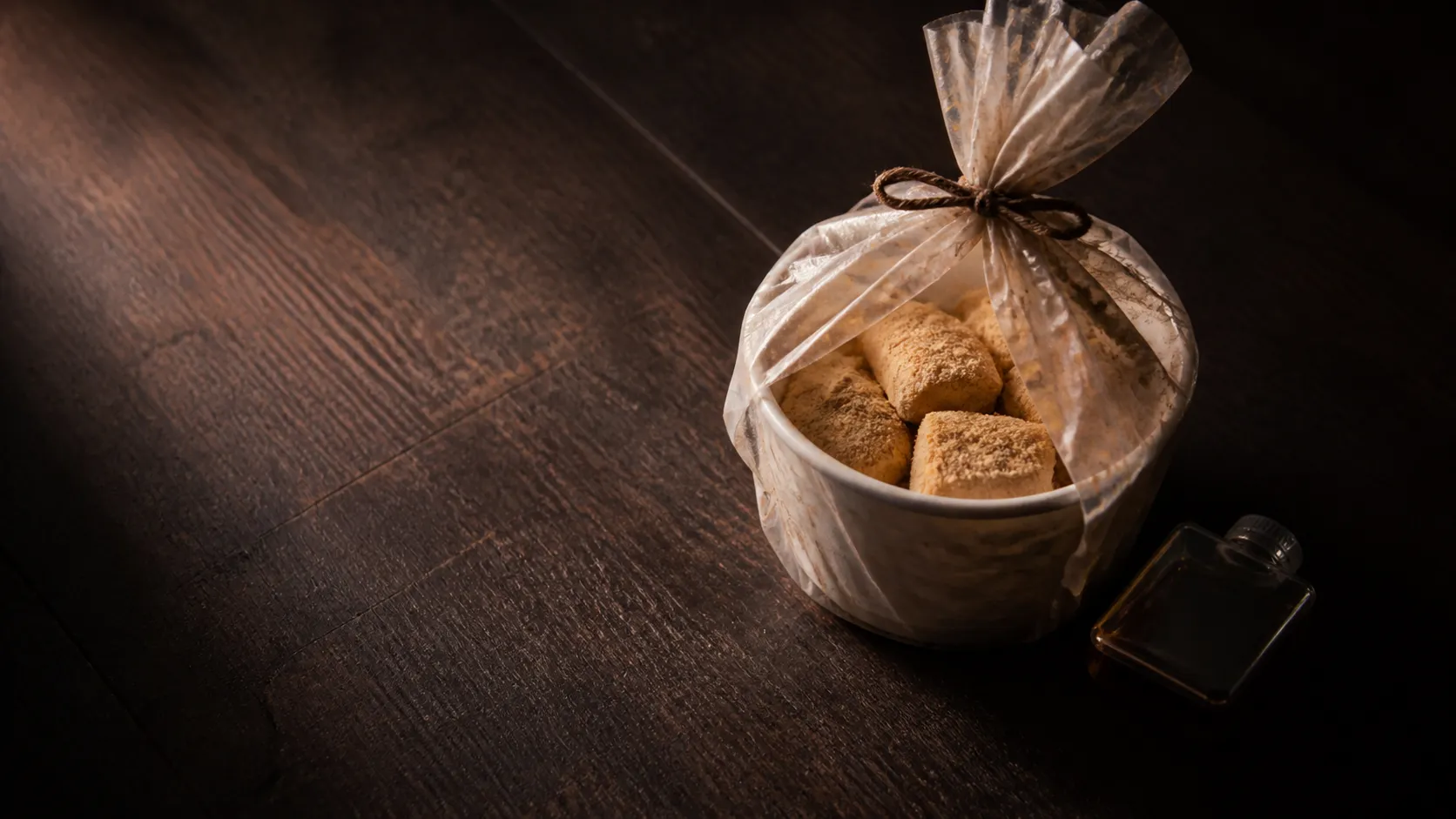
Sweets & SnacksYamanashi
Shingen Mochi (信玄餅)
There is a correct way to eat this and I did not know it, so I made a mess in front of several Yamanashi locals who were extremely kind about it and absolutely watching.
September 2, 2026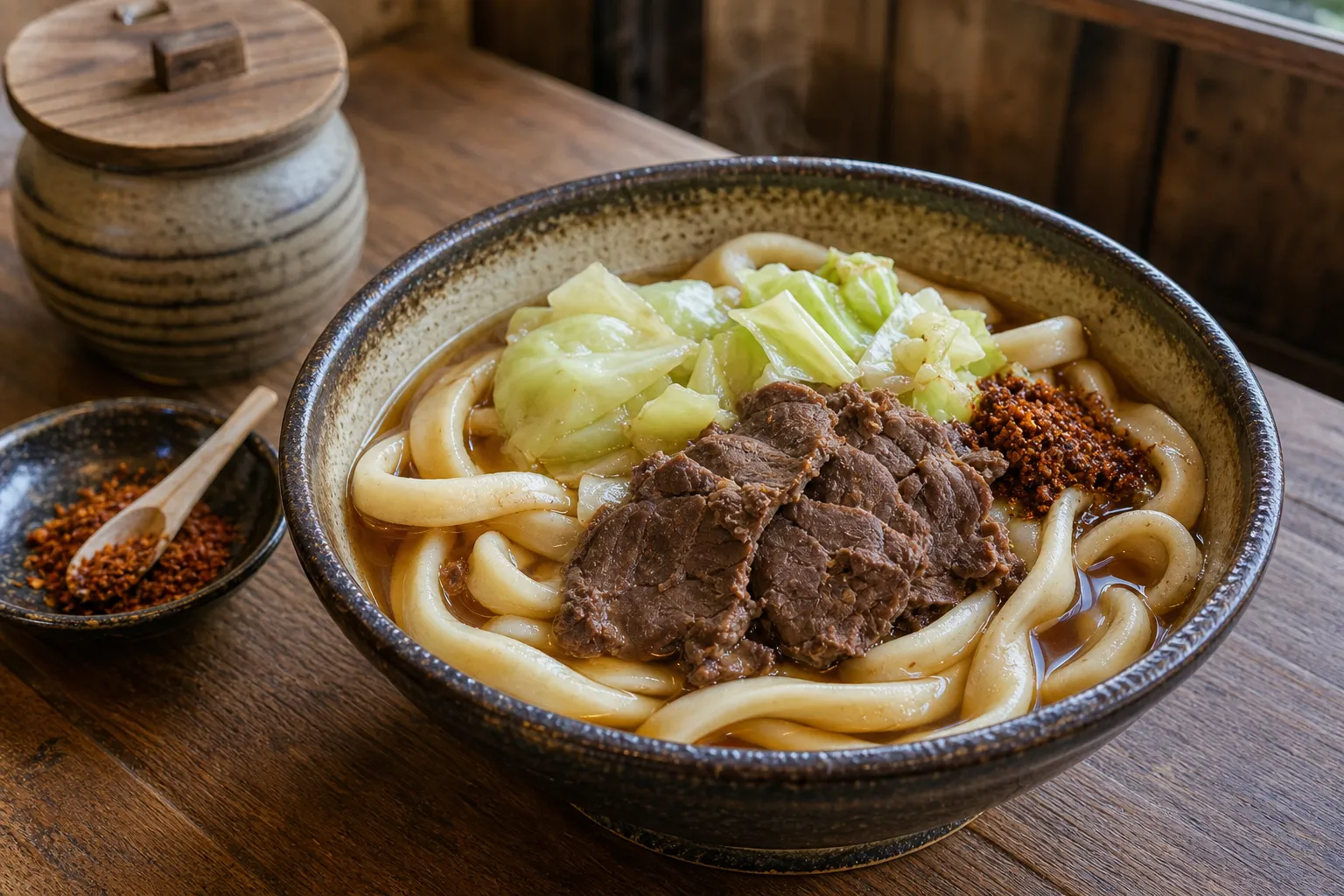
Local FoodFujiyoshida, Yamanashi
Yoshida Udon (吉田うどん)
The udon that fights back. Fujiyoshida's noodles are so thick and stubbornly chewy your jaw gets a workout — served in a soy-miso broth under a fiery red condiment you won't find anywhere else.
July 12, 2026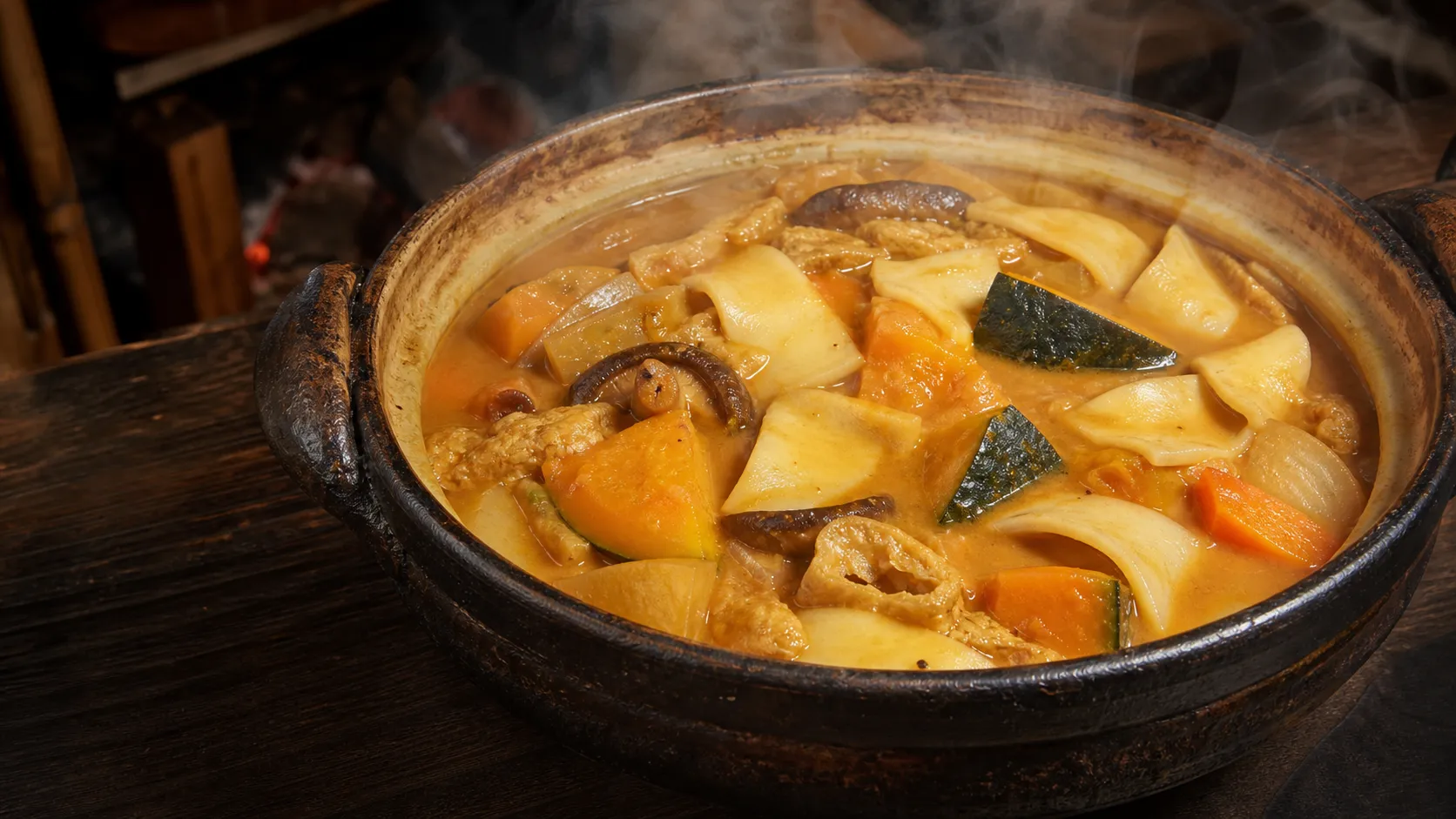
Local FoodKofu, Yamanashi
Hoto (ほうとう)
Yamanashi's ancient mountain stew: wide flat noodles made without salt, simmered directly in miso broth with pumpkin until everything thickens into something halfway between soup and casserole. Cold outside. Hot in the pot.
June 25, 2026