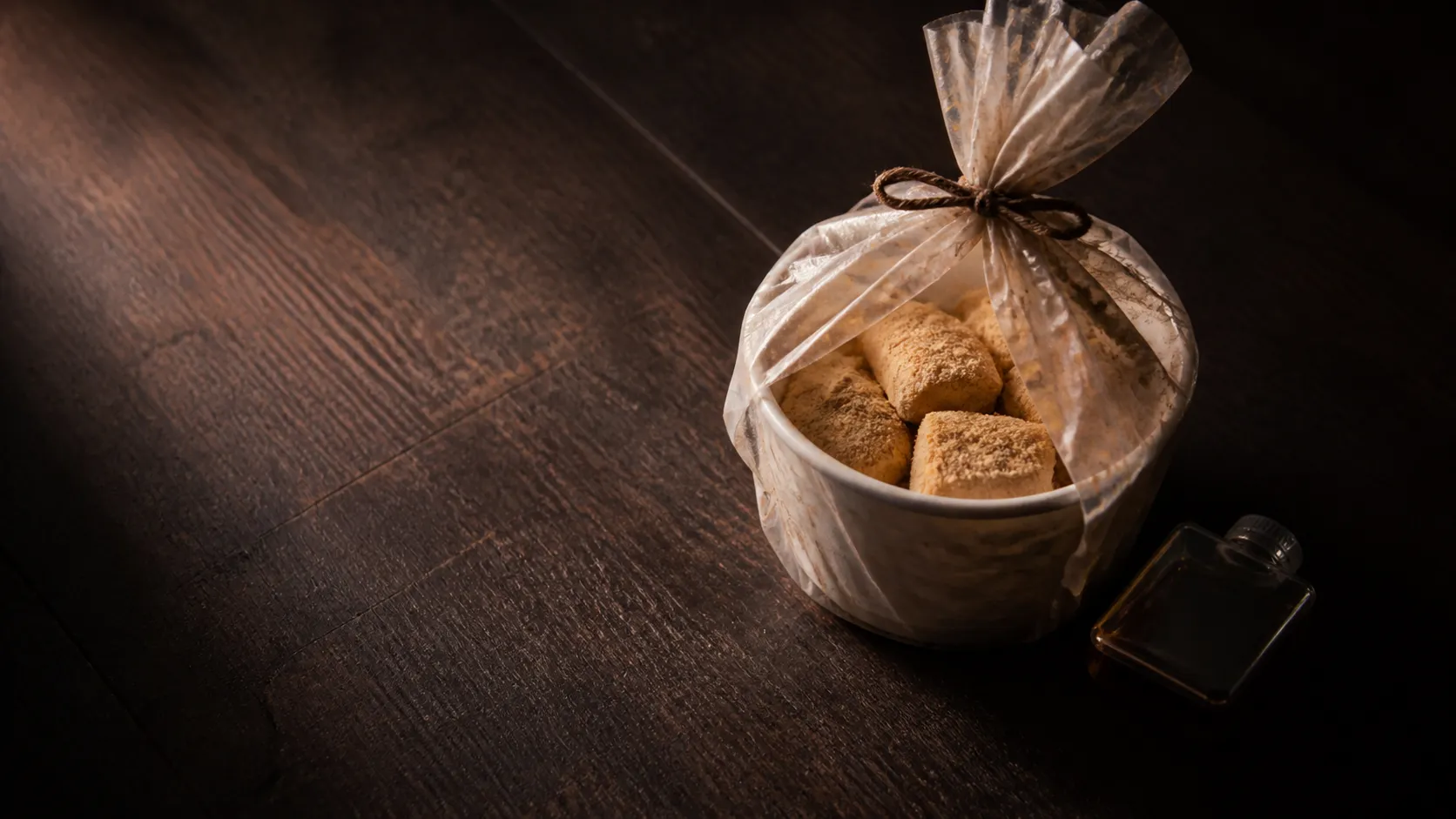
I untied the little wrapper, poured the black syrup straight into the cup, took one bite, and inhaled at exactly the wrong moment.
Share this dish


There is a correct way to eat this and I did not know it, so I made a mess in front of several Yamanashi locals who were extremely kind about it and absolutely watching.
🍜 Planning a food trip to Yamanashi?Add this dish to my Food Trip →
 Add this dish to my Food Trip →
What happens next is that you cough. And when you cough with a mouthful of roasted soybean flour, a small beige cloud leaves your body and enters the world, and everyone within two meters of you at that highway rest stop turns around. A woman handed me a tissue without making eye contact, which I've decided was the single most merciful act of my trip.
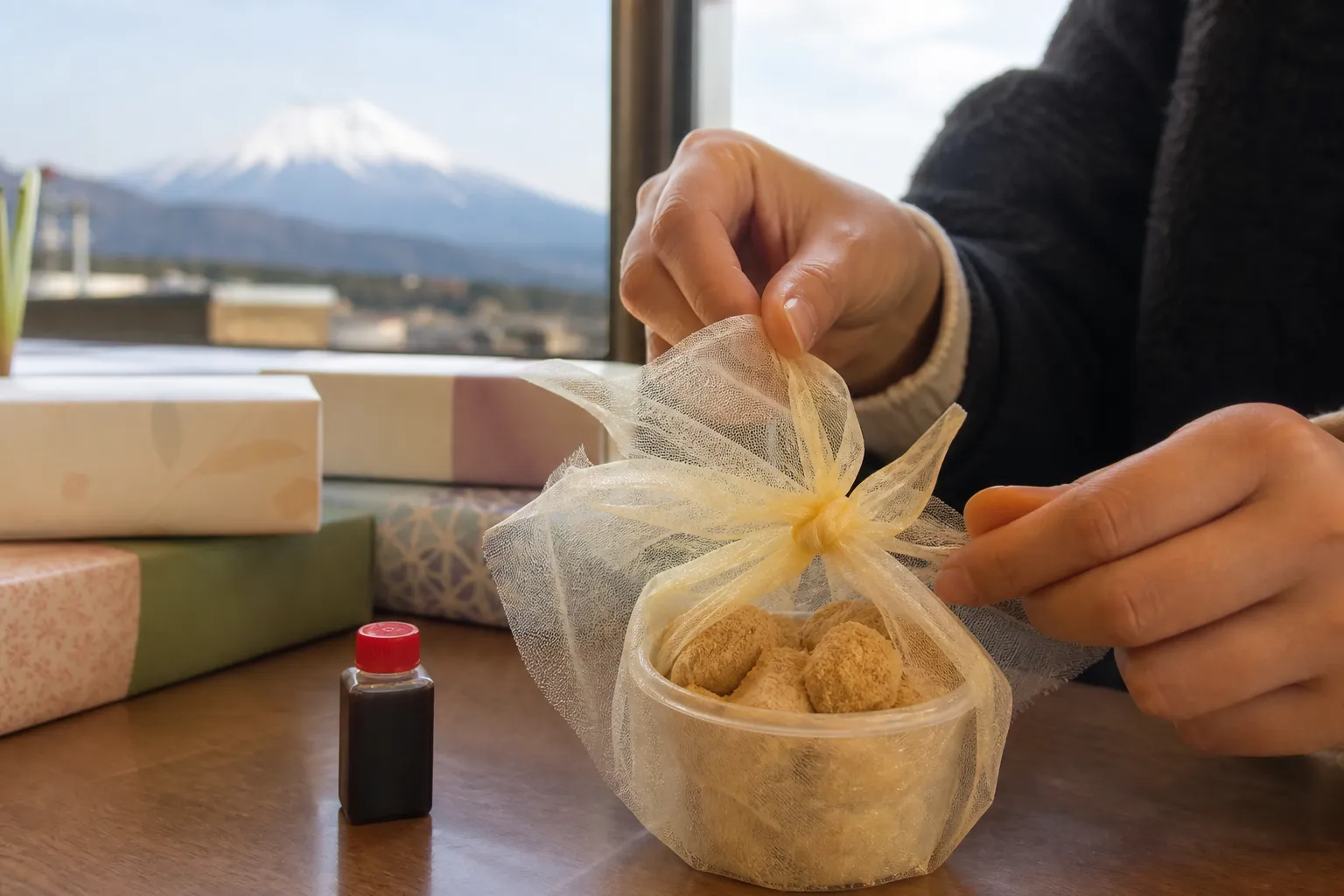
She also, gently, showed me the right way. And the right way is unhinged — you don't eat it out of the cup at all. You open the wrapper flat, tip the whole thing out onto it, pour the syrup over the pile, gather the corners, and mash it around inside the wrapper until it's one gluey, powdery, glossy mess. Then you eat it out of the wrapper like a small edible hobo bundle.
Shingen mochi is three little cubes of soft mochi buried in kinako — roasted soybean flour — sealed in a cup, knotted into a printed film wrapper, and packaged with a tiny container of kuromitsu, dark unrefined sugar syrup. It is Yamanashi's signature souvenir sweet, it is named after a sixteenth-century warlord, and it comes with a technique nobody tells you about in advance.
Named for a warlord, invented by a candy company
Takeda Shingen ran Kai Province — modern Yamanashi — in the 1500s, and he is the local hero, the kind of historical figure whose face is still on things five hundred years later. The story attached to this sweet is that his armies carried cut mochi with sugar as field rations, which is the sort of origin tale that is much too neat to be fully true and much too good to give up.
The version you actually buy is far younger than that. It's a postwar confectionery product, born in the 1960s from Yamanashi sweet makers, and it borrowed the warlord's name for exactly the reason you'd expect. Two Yamanashi companies make well-known versions and there is a long-running, extremely polite disagreement about who did what first, which locals will happily explain to you at length.
And you know what? I don't mind at all that it's a modern invention wearing a samurai's name. It became genuinely, deeply local — the thing people bring back for their coworkers, the thing that means "I was in Yamanashi." One maker's factory shop runs a fill-your-own-bag event that draws people who queue before dawn for the right to cram as many as physically possible into a bag. Nobody queues at dawn for a marketing exercise. At some point a product stops being a product and becomes a regional habit, and this one crossed that line decades ago.
Why the powder and the syrup need each other
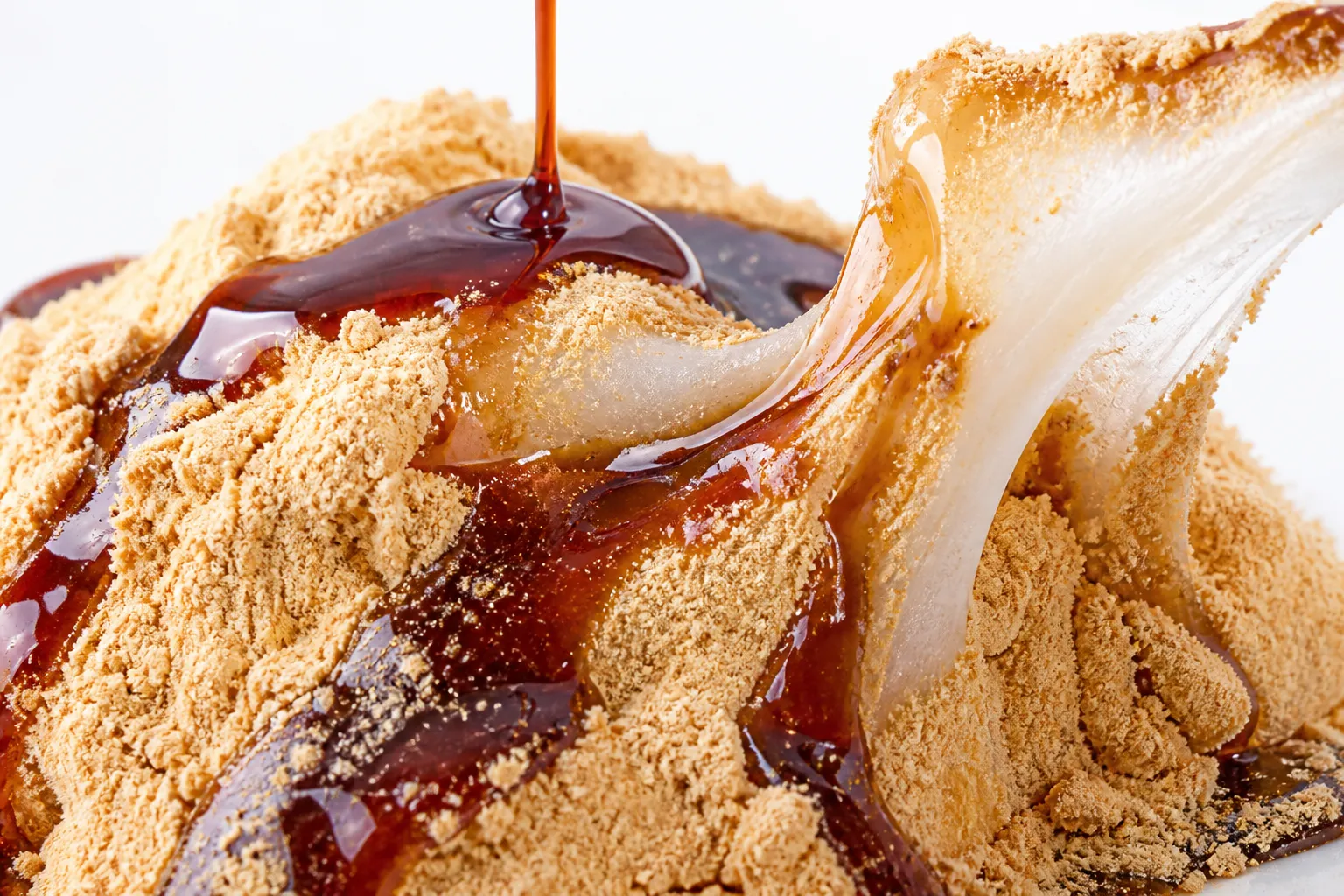
Kinako on its own is dry. Genuinely, aggressively dry — toasted, nutty, faintly bitter, and it will absorb every bit of moisture in your mouth and ask for more. Kuromitsu on its own is almost too much in the other direction: dark, molasses-deep, slightly mineral, sweet in a way that's closer to burnt caramel than to sugar.
Put them together over soft mochi and they cancel each other's worst habits. The syrup wets the powder into something like a thin, nutty caramel paste that clings to the mochi. The powder mutes the syrup's sweetness into something rounder and toastier. And the mochi in the middle contributes almost no flavor at all — it's there for the chew, that slow, elastic, faintly resistant pull that mochi does and nothing else quite replicates.
That's the whole architecture: dry, wet, chewy. Three ingredients, none of which is impressive alone, arranged so that each one fixes the other two.
The mess is structural, by the way. You cannot mix syrup into loose powder without making a mess. Yamanashi's answer to that engineering problem was to give you a wrapper big enough to make the mess inside, which I think is the single most quietly brilliant thing about it.
How it comes together
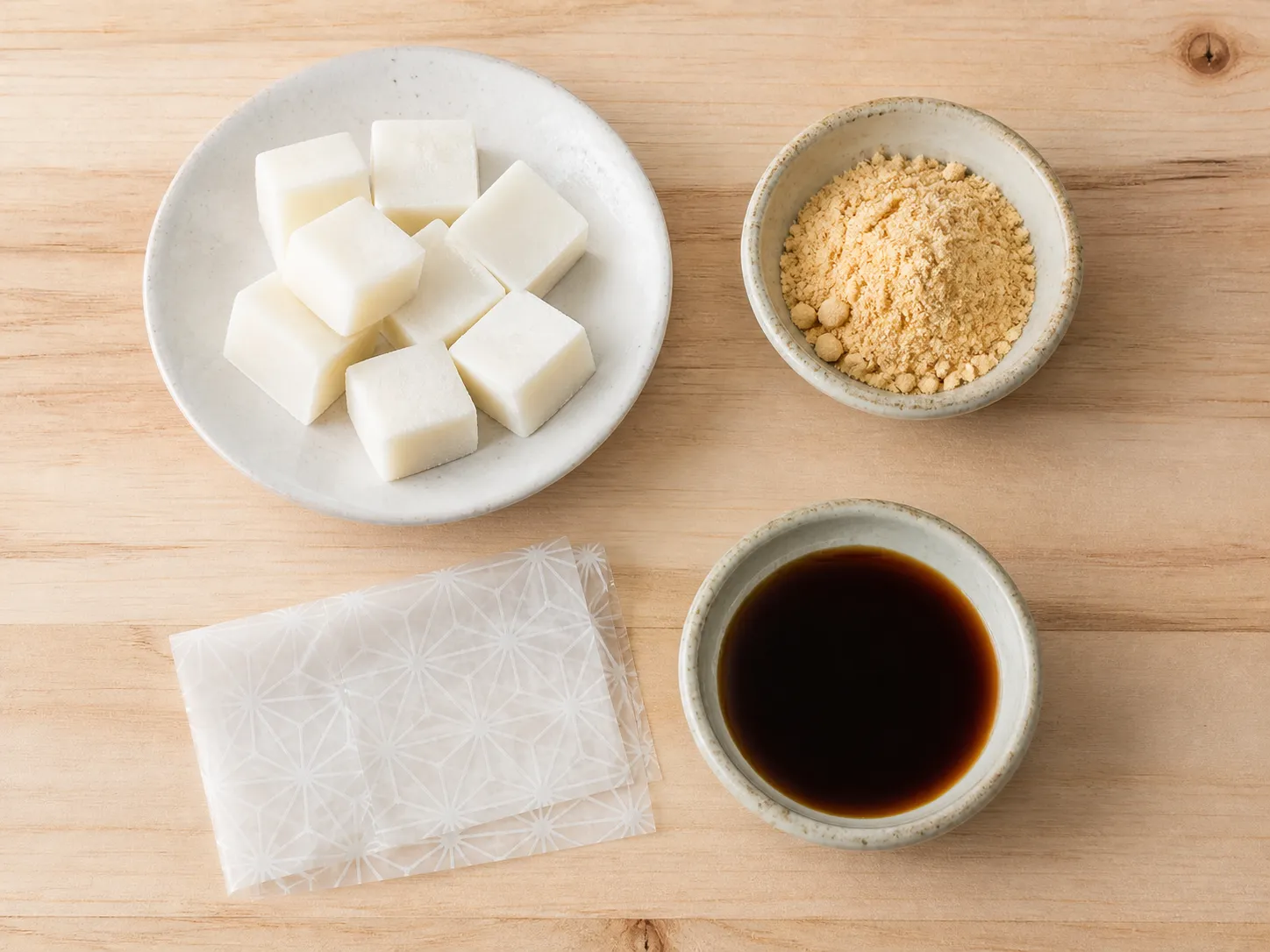
- Steam and pound glutinous rice into mochi, then cut it into small cubes
- Roll the cubes thoroughly in roasted soybean flour so no surface is left bare and they can't fuse together
- Pack three cubes into a small cup, buried under more kinako than seems reasonable
- Boil dark unrefined sugar down into a pourable syrup and seal it into its own tiny container
- Set the cup on a square of printed film, gather the corners, and knot it closed like a furoshiki bundle
Step 2 isn't decoration. The kinako is a release agent — it's the reason three pieces of mochi can sit against each other in a sealed cup for days without becoming one piece of mochi. The flavor is a bonus on top of a structural job.
Before you go — the stuff that actually matters
Your questions, answered honestly
"Okay, seriously — how do I eat it without embarrassing myself?" — Untie the wrapper and spread it flat like a small tablecloth. Tip the mochi and all the powder out of the cup onto it. Pour the syrup over the pile. Gather the corners of the wrapper back up and squeeze and mix it around inside. Then eat it out of the bundle with the little pick. There's a printed guide inside many packs, and yes, it's essentially instructions for controlled chaos.
"Can I just eat it out of the cup?" — You can, and plenty of people do. But there isn't room in the cup for the syrup to reach everything, so you end up with syrup-drowned pieces and bone-dry powder. The wrapper method exists because the cup method doesn't quite work.
"What does kinako taste like if I've never had it?" — Think roasted peanut without the oiliness, or the toasted note of good sesame. It's nutty and dry rather than sweet. If you like Japanese sweets at all, you already like this.
"Is the syrup necessary?" — Yes. Without it you're eating chewy rice in dry flour, which is a texture experience rather than a dessert. Use all of it.
"Will it survive in my luggage?" — This is its actual purpose in life. Boxed sets are made to be carried home and typically keep for a couple of weeks unopened. Check the date on the box, keep it out of direct heat, and don't put it at the bottom of a bag — the cups are sealed but the boxes crush.
"Is there a version I can eat sitting down like a normal person?" — Yes, and I recommend it: shops around Yamanashi serve shingen mochi soft-serve and parfaits built on the same kinako-and-kuromitsu idea. Same flavors, zero coughing risk.
What the staff will ask you
| You'll hear | Romaji | Meaning | Just say |
|---|---|---|---|
| 何個入りにしますか? | Nan-ko iri ni shimasu ka? | "How many pieces in the box?" | Hachi-ko iri de (the eight-piece, please) |
| 贈答用ですか? | Zōtōyō desu ka? | "Is this a gift?" | Hai (yes) / Jibunyō desu (it's for me) |
| 紙袋はいりますか? | Kamibukuro wa irimasu ka? | "Do you need a paper bag?" | Onegaishimasu (yes, please) |
| 賞味期限は◯日です | Shōmikigen wa ◯-nichi desu | "Best before the ◯th" | Wakarimashita (understood) |
| 保冷剤をお入れしますか? | Horeizai o o-ire shimasu ka? | "Shall I add an ice pack?" | Hai, onegaishimasu (yes, please) |
To order, just say "Shingen mochi kudasai" (信玄餅ください) — "Shingen mochi, please."
Where to eat it
- Kofu Station and major Yamanashi station shops — the default, and completely fine. Boxed sets, single cups, and usually a few seasonal spin-offs.
- Highway rest stops (service areas) on the Chuo Expressway through Yamanashi — where most Japanese travelers actually buy it, and where I made my scene.
- The makers' own factory shops in the Fuefuki and Hokuto areas — the real pilgrimage. Factory tours, outlet pricing on cosmetically imperfect pieces, and the famous fill-your-own-bag events, which draw serious crowds and often require arriving very early or entering a lottery.
Factory shop events, tour bookings, and opening days change with the season and can fill up well in advance, so check the makers' current information before planning a trip around one — and don't underestimate the queue.
Soul Score
Local Roots4/5
First-Timer Friendly5/5
Adventure Level3/5
Comfort Level5/5
Travel Worthy4/5
These scores are one obsessed eater's gut feeling — not a verdict. A low number isn't a bad mark, just a different kind of adventure.
Know someone planning Japan?
← All Articles
Sweets & Snacks · Yamanashi
Still hungry?
Eat more from Yamanashi
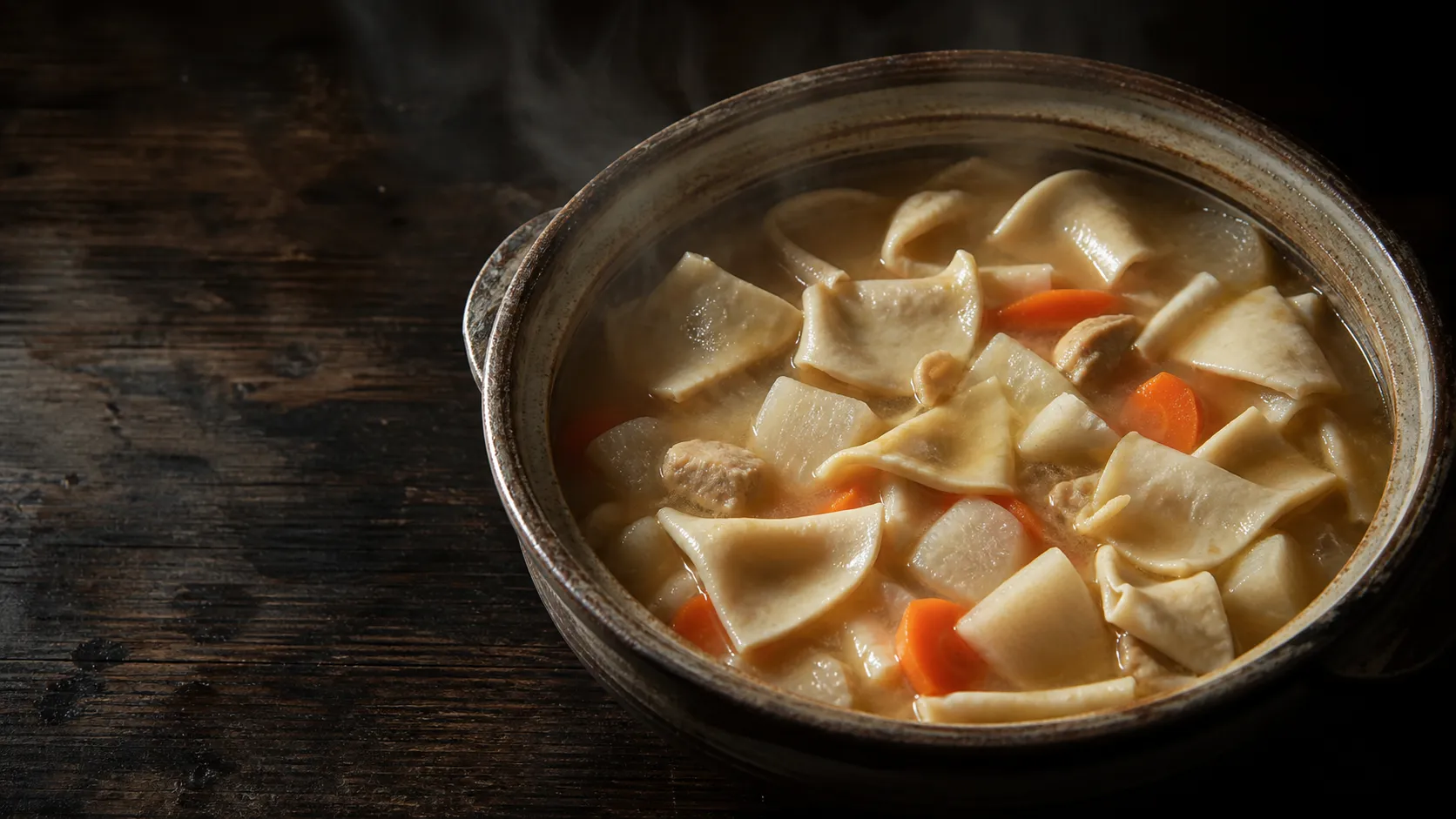
Local FoodFujikawa, Yamanashi
Mimi (みみ)
A grandmother in Fujikawa told me the little dough shapes in my soup were designed to scoop up good fortune, and then watched to make sure I ate every one of them.
September 2, 2026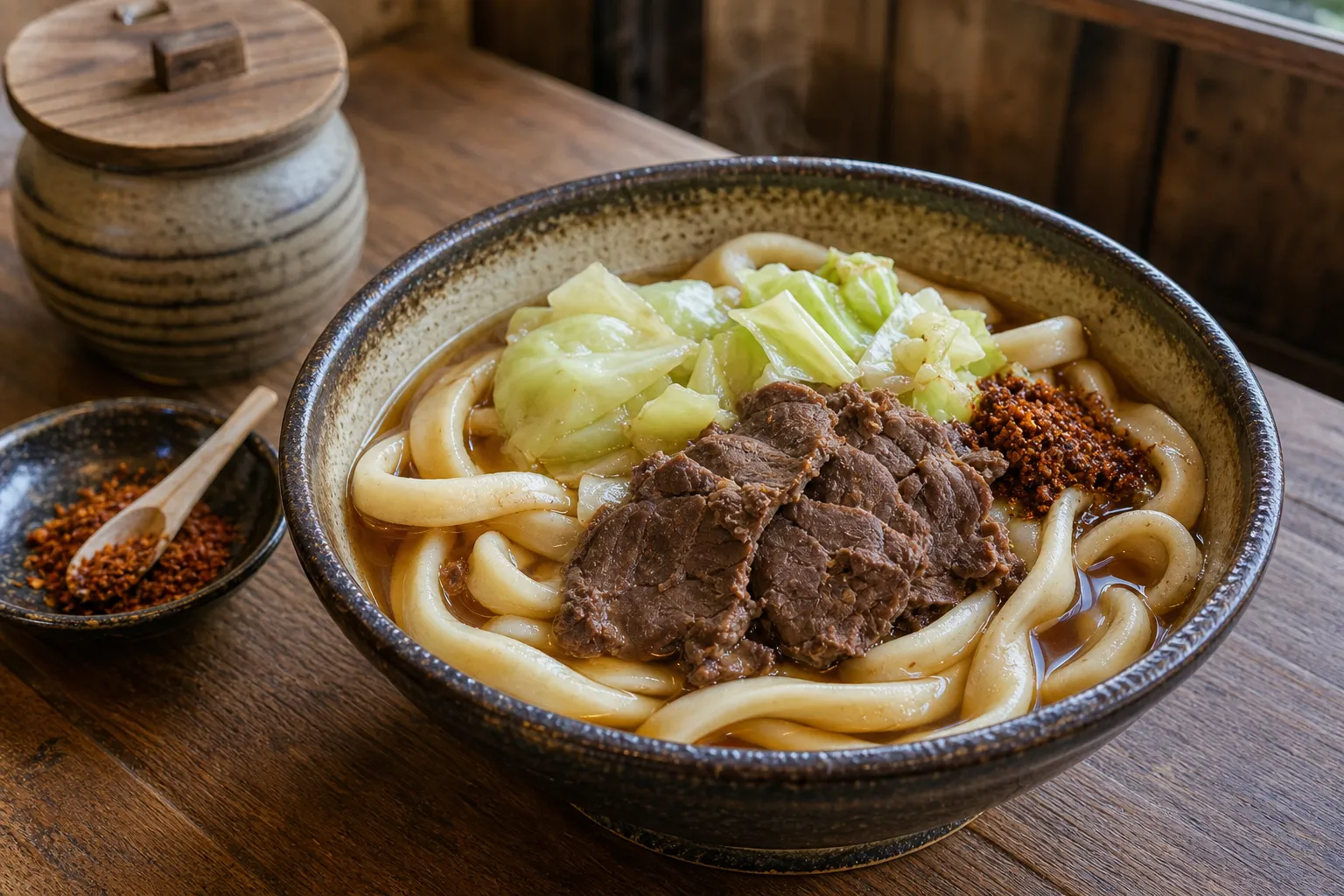
Local FoodFujiyoshida, Yamanashi
Yoshida Udon (吉田うどん)
The udon that fights back. Fujiyoshida's noodles are so thick and stubbornly chewy your jaw gets a workout — served in a soy-miso broth under a fiery red condiment you won't find anywhere else.
July 12, 2026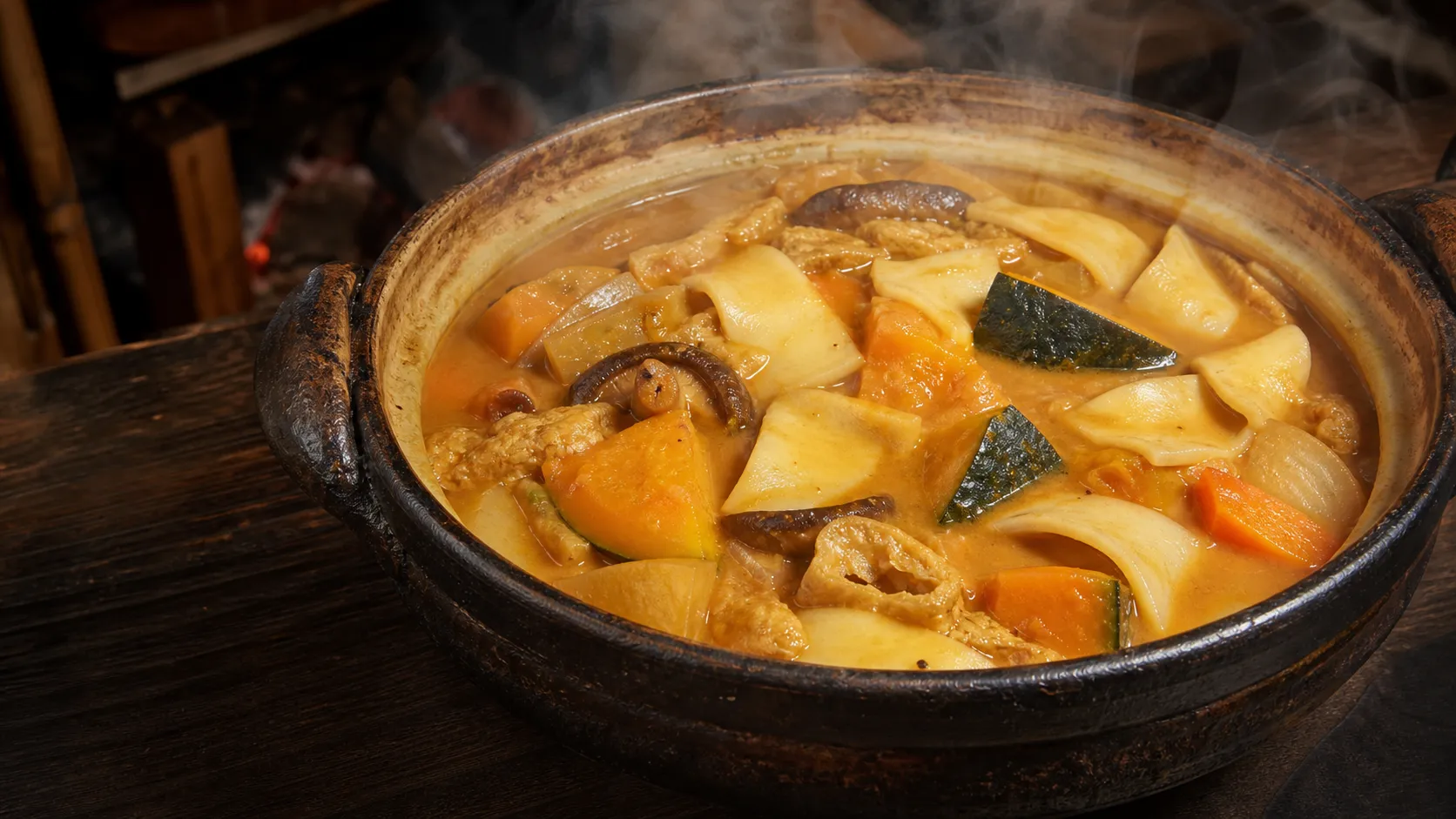
Local FoodKofu, Yamanashi
Hoto (ほうとう)
Yamanashi's ancient mountain stew: wide flat noodles made without salt, simmered directly in miso broth with pumpkin until everything thickens into something halfway between soup and casserole. Cold outside. Hot in the pot.
June 25, 2026