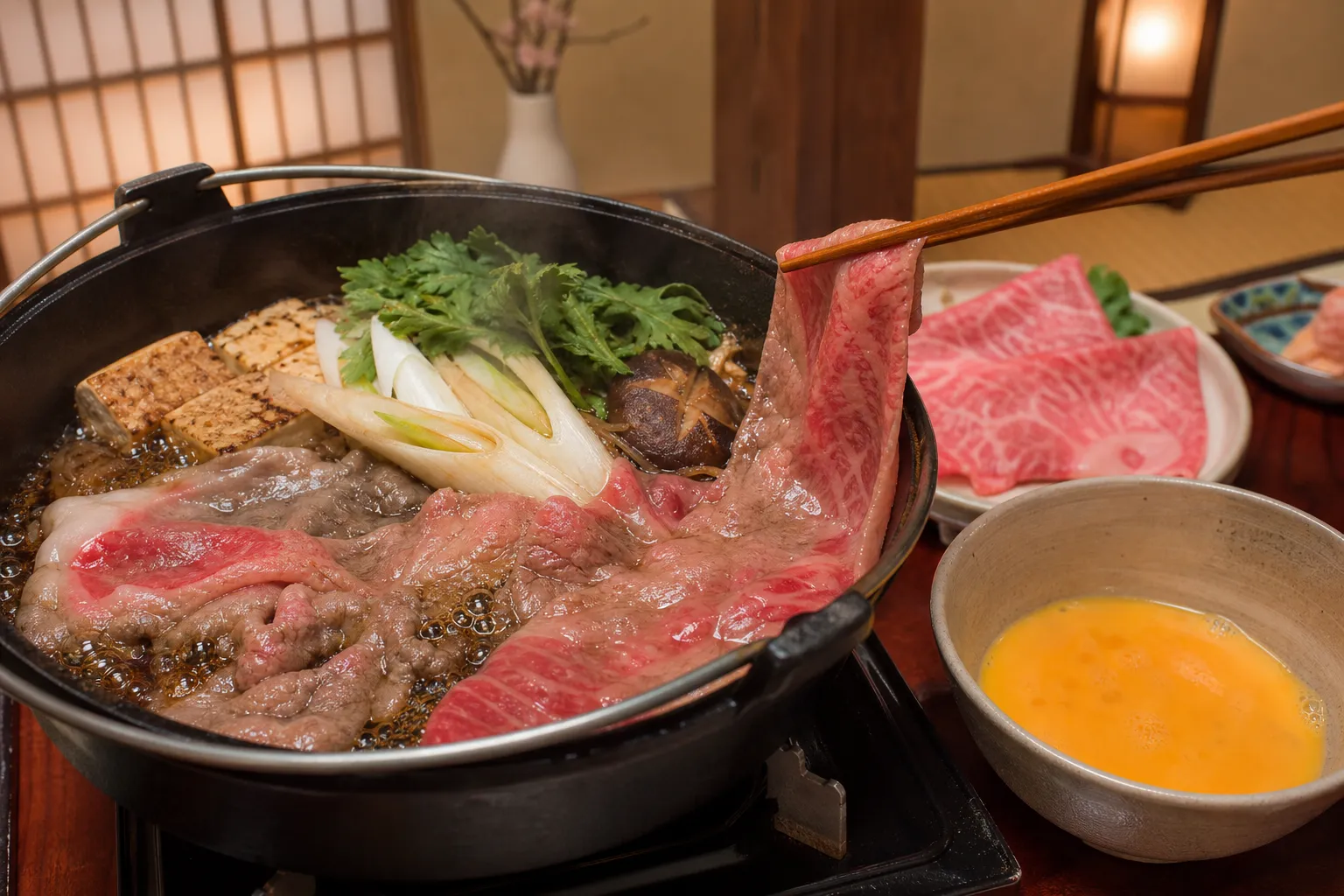
I watched the slice go in still pink, still solid, and about four seconds later it wasn't really beef anymore — it was this glossy, half-dissolved ribbon curling in the broth, and when I fished it out and dragged it through raw egg and put it in my mouth I just... stopped. Didn't say anything. My travel companion asked if I was okay. I was not okay, I was having a religious experience over dinner in a converted merchant house in Yonezawa, and I have never recovered.
Share this dish


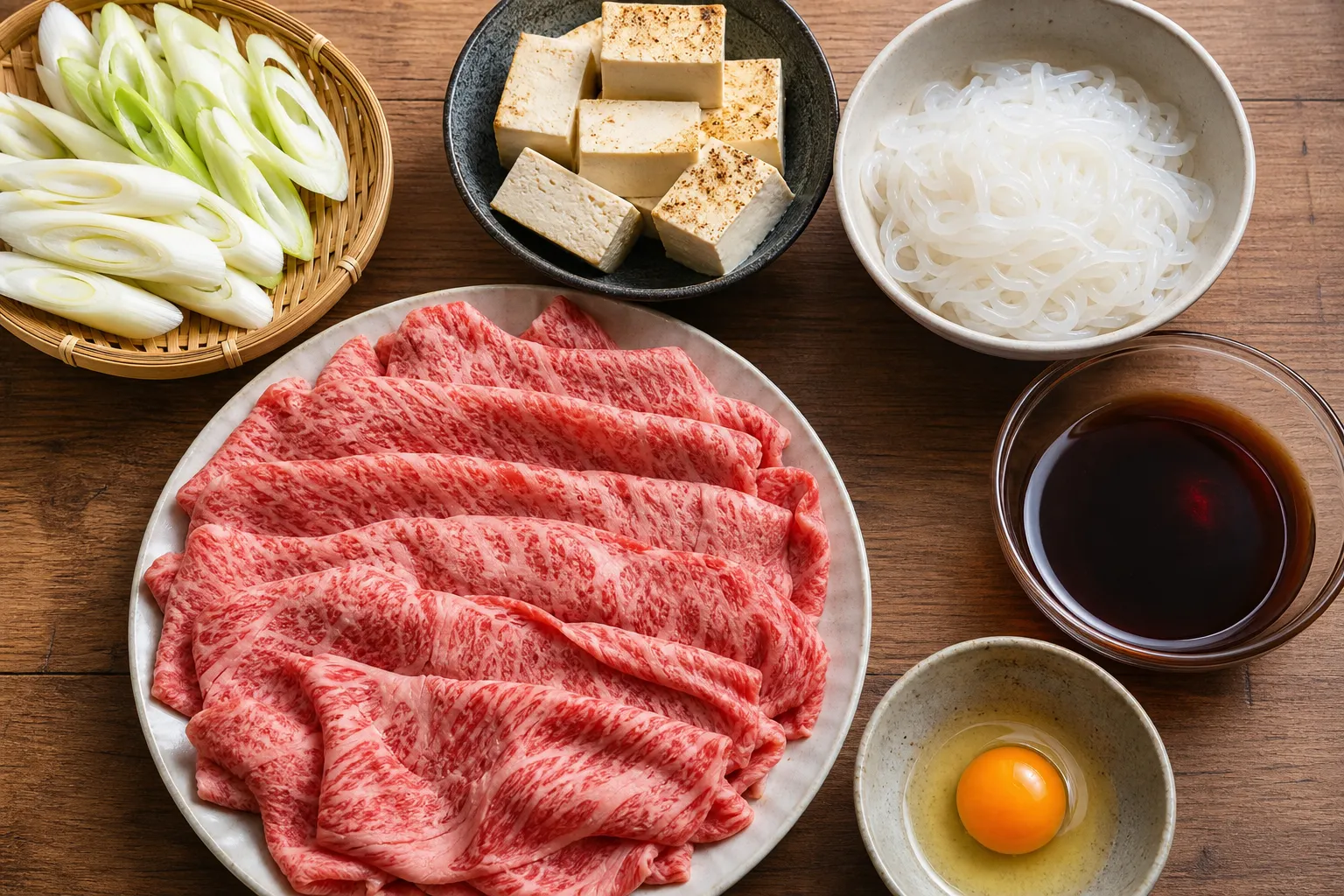
A paper-thin slice of marbled beef goes into the sukiyaki pot pink and comes out translucent, and somewhere between the pot and the raw egg dip I stopped talking mid-sentence.
🍜 Planning a food trip to Yamagata?Add this dish to my Food Trip →
 Add this dish to my Food Trip →
Here's what it is: Yonezawa beef (米沢牛, Yonezawa-gyū) is one of Japan's oldest and most decorated wagyu brands, raised in and around Yonezawa City in Yamagata Prefecture. It's prized for dense, fine marbling and fat that turns almost impossibly sweet and soft when cooked briefly. The classic way to eat it is sukiyaki — thin slices simmered for seconds in a sweet-savory soy broth, then dipped in raw beaten egg — though steak, shabu-shabu and yakiniku versions all exist too. This is not everyday grilling beef; it's the kind of thing a whole trip gets built around.
Beef bred in the old domain of silk and swords
Yonezawa's beef story starts, oddly, with foreigners. In the late 1800s, a British teacher working at a local school introduced beef to his diet and reportedly praised the local cattle so highly that word spread beyond the region — an unusually early export of hype for a beef brand. That was enough to put Yonezawa on the map decades before "wagyu" was a word anyone outside Japan knew. I find that genuinely charming: one homesick teacher's dinner order quietly kickstarting a national culinary legend.
The region itself helps. Yonezawa sits in a mountain basin in Yamagata, once the seat of the powerful Uesugi samurai clan, with harsh winters and clean water — conditions that, generations later, turned out to be ideal for raising cattle slowly and carefully. Sitting in a Yonezawa restaurant that's been serving this beef for decades, in a city that also happens to be famous for its heavy snowfall and its samurai history, it's hard not to feel like you're eating something the whole town has quietly perfected.
Why the fat practically evaporates
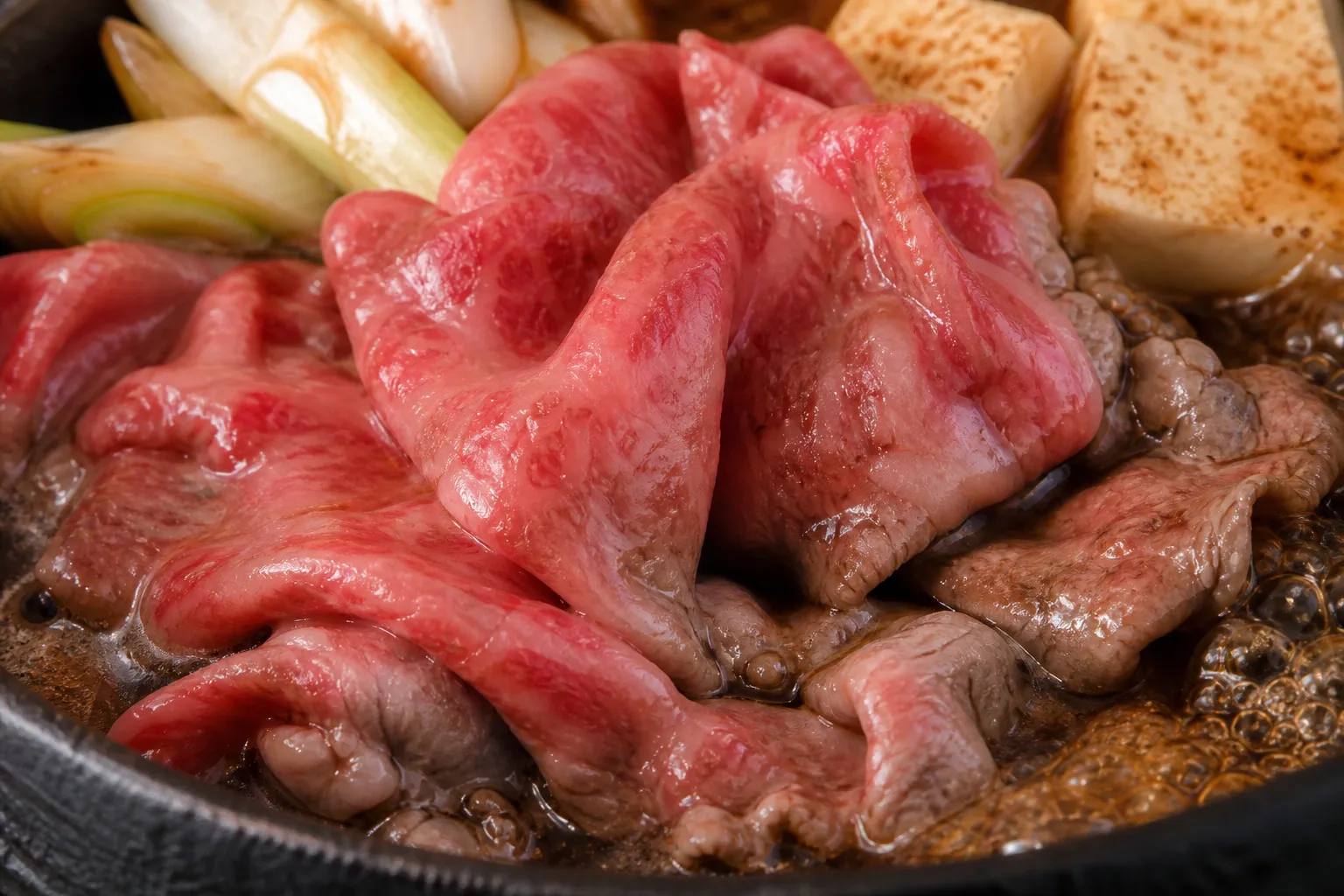
- The marbling is fine, even, and everywhere — you're rarely looking at a lean patch, it's threaded through the whole slice
- That fat has a low melting point, so a few seconds in a hot broth is genuinely enough to turn it soft
- The flavor is sweet rather than heavy — it doesn't sit on your tongue like grease, it just kind of disappears
- Sukiyaki brings out the best of it: the sweet-savory broth plus the raw egg dip cools and coats each slice at the exact right moment
- Because the fat is so rich, restaurants serve it in thin, wide sheets — a small plate of slices is a full, satisfying meal, not an appetizer
I have tried to eat it slowly, the way you're supposed to savor something this special. I have failed every single time.
How it's made (and how it's served)
- Cattle are raised locally and slowly, following strict standards for pedigree, feeding period, and origin within the Yonezawa area before they can carry the brand name.
- Graded on marbling and quality by Japan's official beef grading system — only the highest grades reach the Yonezawa-gyū label at top restaurants.
- Sliced paper-thin for sukiyaki and shabu-shabu, so the marbling is visible edge to edge and the fat can render instantly.
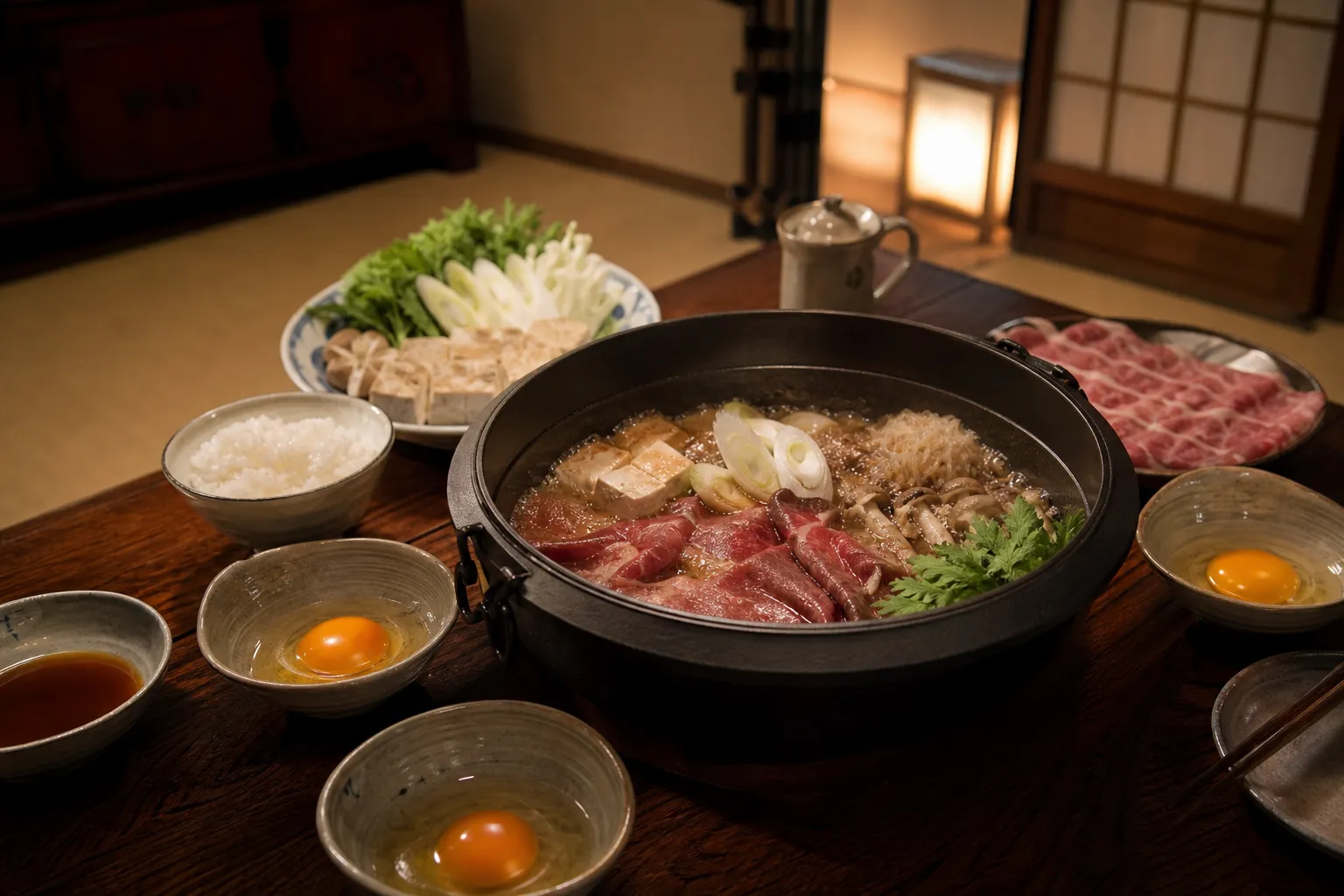
- Simmered briefly in a sukiyaki pot with a soy-sugar-mirin broth called warishita, alongside tofu, negi, and mushrooms.
- Dipped in raw beaten egg the moment it's cooked, which cools the beef and adds a silky coating — you eat each piece the second it's ready.
The whole ritual runs on restraint: a few seconds too long in the broth and you boil the magic right out of it. The server, the pot, and the raw egg are just there to get out of the beef's way.
Before you go — thin slices, a bubbling pot, and a bowl of raw egg
Your questions, answered honestly
"Isn't Yonezawa less famous than Kobe or Matsusaka beef?" — Outside Japan, maybe, but inside Japan it's routinely named in the same breath as those two as one of the country's great historic wagyu brands. If anything, going out of your way to Yonezawa for it feels more like a pilgrimage than ordering Kobe beef in a Tokyo tourist restaurant.
"Do I really have to eat it with raw egg?" — No — it's the classic sukiyaki pairing and I'd encourage you to try it at least once, but plenty of people skip it or ask for it on the side, and staff are used to the question.
"Is a small course actually enough food?" — Yes. Because the fat is so rich, a modest-looking plate of thin slices fills you up faster than you'd expect. Order a bit less than your instinct tells you to.
"Steak or sukiyaki — which should I choose?" — For the classic Yonezawa experience, sukiyaki. Steak is excellent too and shows off the meat itself more directly, but the pot-and-egg ritual is the dish this beef is actually famous for.
What the staff will ask you
| You'll hear | Romaji | Meaning | Just say |
|---|---|---|---|
| すき焼きとステーキ、どちらになさいますか? | Sukiyaki to sutēki, dochira ni nasaimasu ka? | "Sukiyaki or steak?" | Sukiyaki de onegaishimasu (sukiyaki, please) |
| 生卵はご利用になりますか? | Nama-tamago wa go-riyō ni narimasu ka? | "Will you use the raw egg?" | Hai, onegaishimasu (yes, please) |
| コースにされますか? | Kōsu ni saremasu ka? | "Would you like the set course?" | Osusume de (whatever you recommend) |
To order, just say "Yonezawa-gyū o kudasai" (米沢牛をください) — "Yonezawa beef, please."
Where to eat it
- Yonezawa City, Yamagata — the source, with long-established sukiyaki and steak restaurants throughout the city, many housed in older buildings with real history.
- Yamagata's wider Tohoku region — some restaurants in neighboring cities also serve certified Yonezawa beef; look for the brand certification on the menu.
- Department store restaurant floors in major cities — occasionally carry certified Yonezawa beef courses, though nothing replaces eating it in Yonezawa itself.
Menus, courses and prices vary by restaurant and popular places can be busy at peak times, so check current hours and consider a reservation before you go.
Soul Score
Local Roots5/5
First-Timer Friendly4/5
Adventure Level3/5
Comfort Level5/5
Travel Worthy4/5
These scores are one obsessed eater's gut feeling — not a verdict. A low number isn't a bad mark, just a different kind of adventure.
Know someone planning Japan?
← All Articles
Local Food · Yamagata
Still hungry?
Eat more from Yamagata
Local FoodYamagata
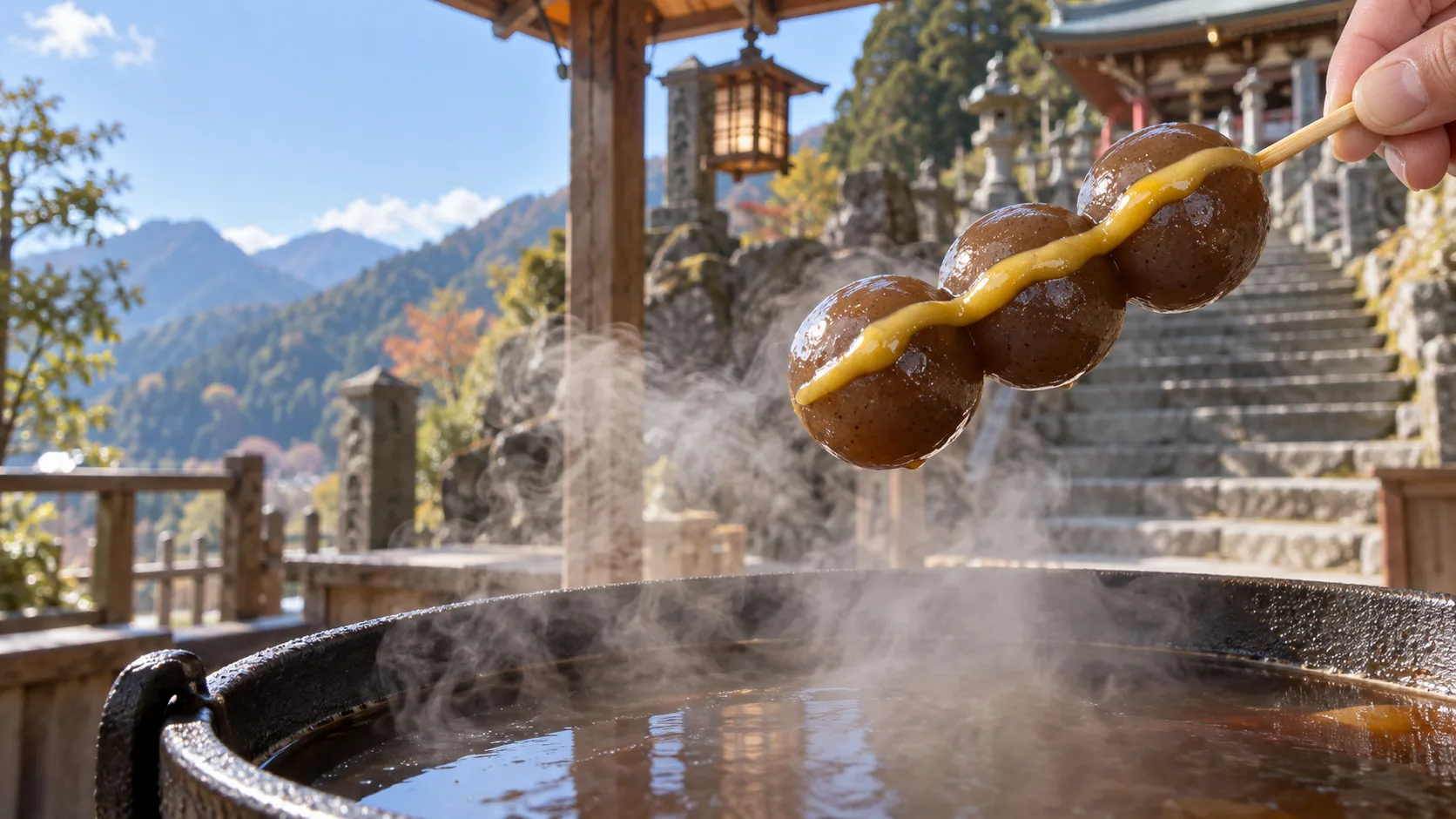
Tama Konnyaku (玉こんにゃく)
In Yamagata, tama konnyaku is a simple local snack that comes into its own when served hot from the skewer.
September 26, 2026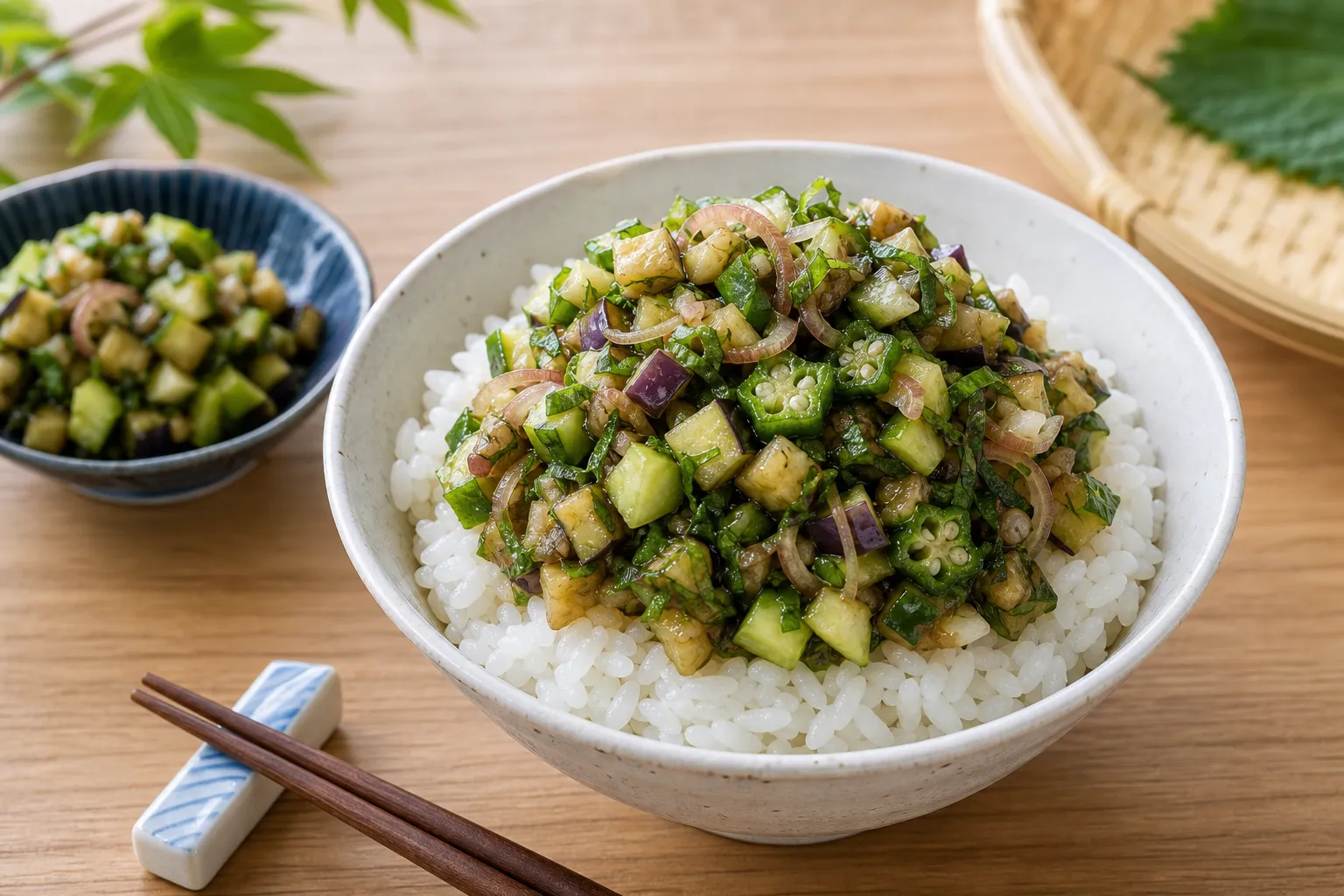
Local FoodYamagata
Yamagata Dashi (山形のだし)
A cold, glistening pile of chopped summer vegetables — sticky, herby, salty — landing on hot white rice on a day too hot to want to eat anything. Somehow you clear three bowls.
July 12, 2026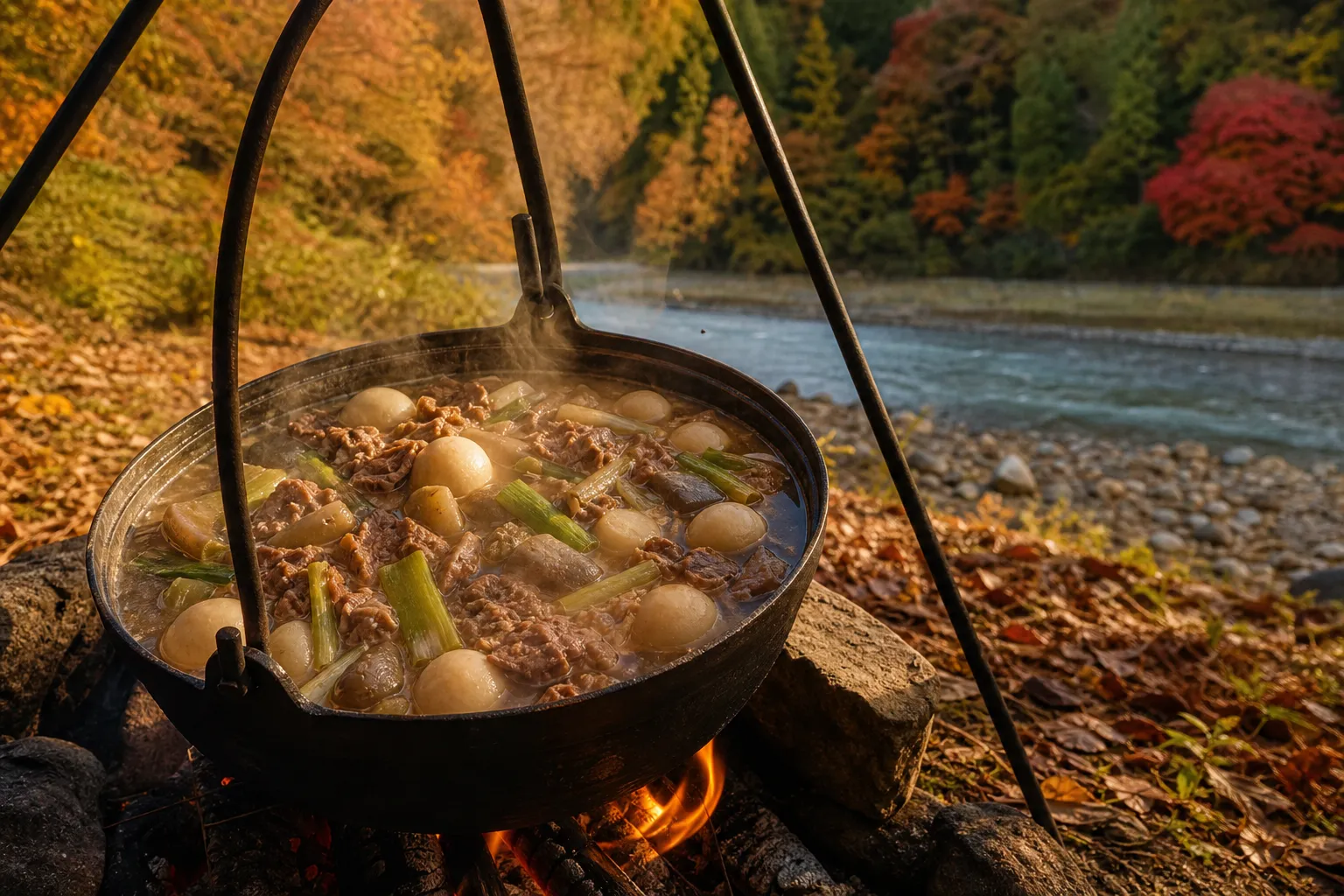
Local FoodYamagata, Yamagata
Imoni (芋煮)
A bubbling pot of taro and beef in sweet soy broth, cooked on a riverbank under autumn leaves with everyone you know. It's not just a stew — it's a season, and a reason to gather.
June 27, 2026