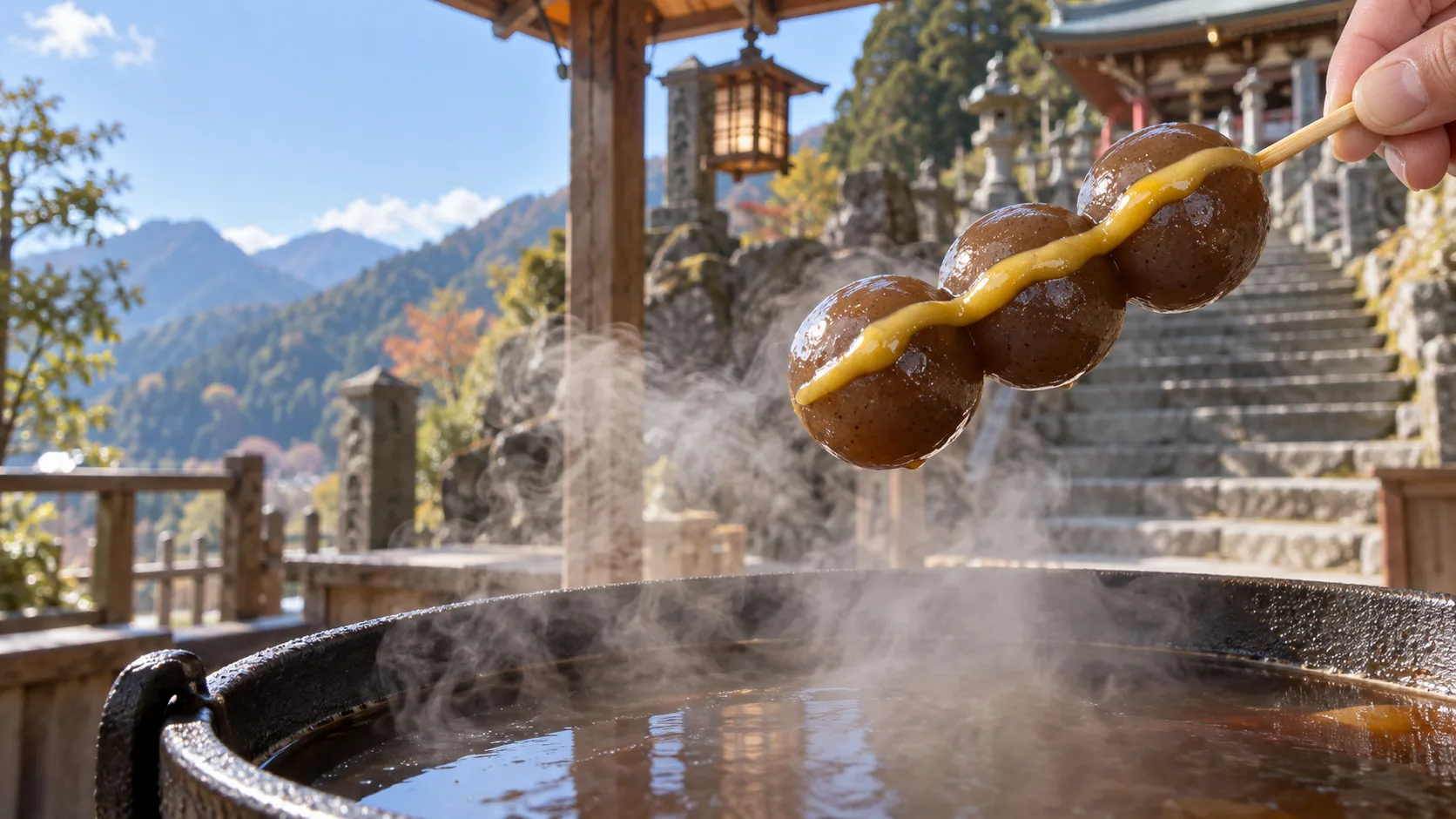
I was four hundred steps up a mountain temple staircase when I decided I needed food, and what I got was three grey-brown spheres on a wooden stick.
Share this dish


In Yamagata, tama konnyaku is a simple local snack that comes into its own when served hot from the skewer.
Would you try this dish?
Rate how much you would like to try it.
🍜 Build your Yamagata food trip around Tama Konnyaku.Add to Food Planner →
 Add to Food Planner →
Not a snack I would have chosen. Not a snack I would have recognised. The woman at the stall asked me something, I said yes to it without understanding, and she painted a stripe of yellow mustard across the top.
And then I bit one, and it resisted.
That's the part nobody warns you about. This thing has a bounce to it — you press your teeth in and it presses back, and you have to commit, and when it finally gives way it releases a mouthful of hot dark broth that tastes of soy and the sea. Then the mustard arrives, sharp and sinus-clearing, exactly when you need something to cut through. I ate all three in about ninety seconds. I bought another stick. I climbed the remaining six hundred steps in a considerably better mood.
Tama konnyaku is konjac rolled into balls and simmered for hours in a soy broth with dried squid, sold on skewers for about a hundred yen wherever people in Yamagata are walking somewhere. It has almost no calories and almost no nutritional point. It is one of the most purely satisfying things I have eaten in Japan, and I have thought about it more than I have thought about some genuinely expensive meals.
Why a prefecture decided it loved this
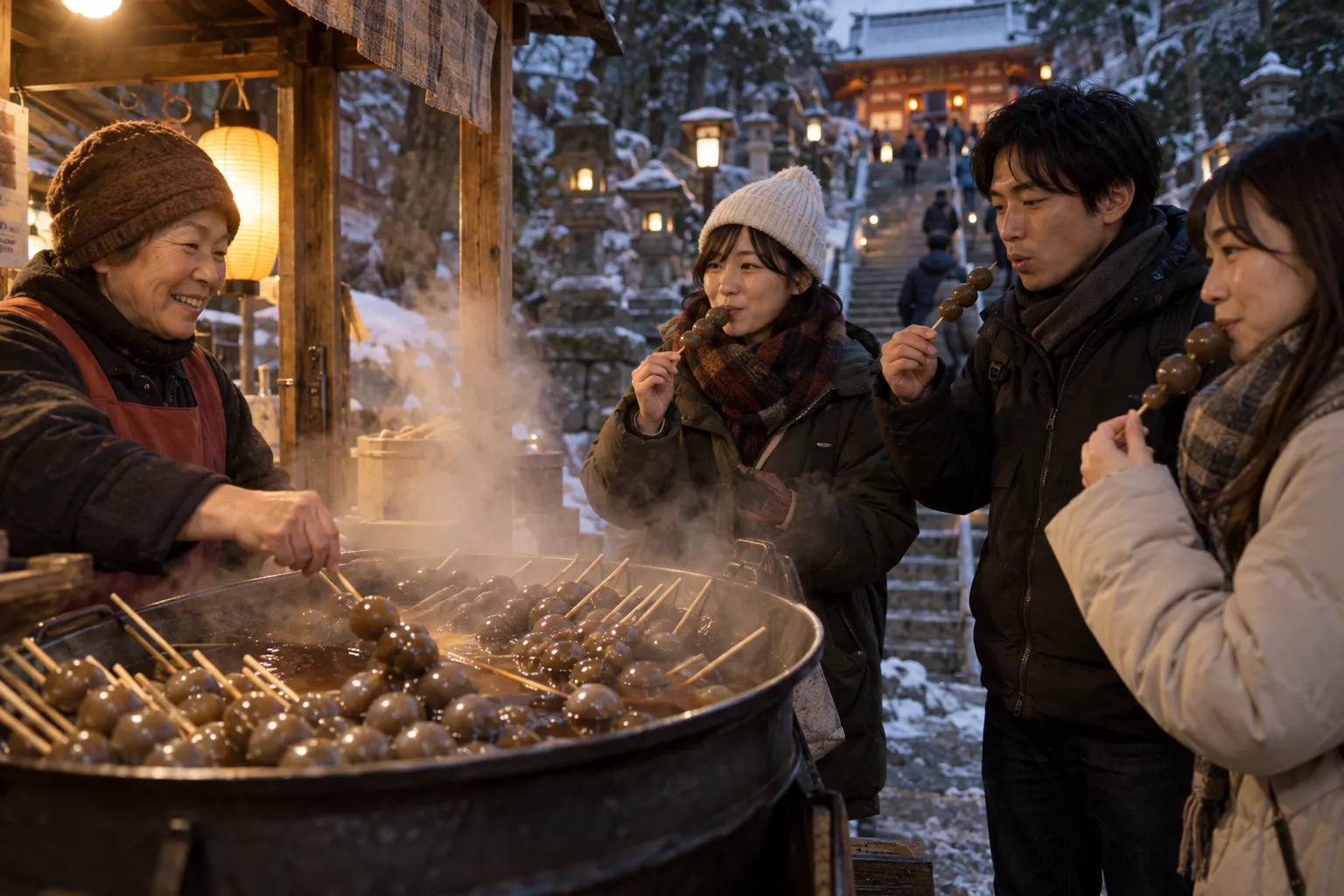
Konjac is a strange food to build an attachment to. It's made from the corm of a plant, it's most of the way to being water, and left to itself it tastes of essentially nothing. Most of the country treats it as a supporting ingredient — a few slices in oden, a bundle of noodles in sukiyaki, the thing you add for texture and virtue.
Yamagata took a different view. Here it gets cut into balls, simmered until it has absorbed everything the pot has to give, and sold as a thing in its own right, by itself, on a stick, at the exact moments a person needs one.
That placement is the genius of it. You find these at the foot of mountain temples, in hot spring towns, at festivals, at roadside stations, at the top of a climb and the bottom of one. Snowbound winters and long walks and a food that is hot, cheap, and takes a satisfying amount of chewing — it fits the shape of the place so well that it stops looking like a coincidence.
I find that genuinely moving, in a way I can't entirely justify. Somebody looked at the most nothing-ish ingredient available and decided it deserved hours of attention, and then an entire prefecture agreed with them.
The texture is the entire argument
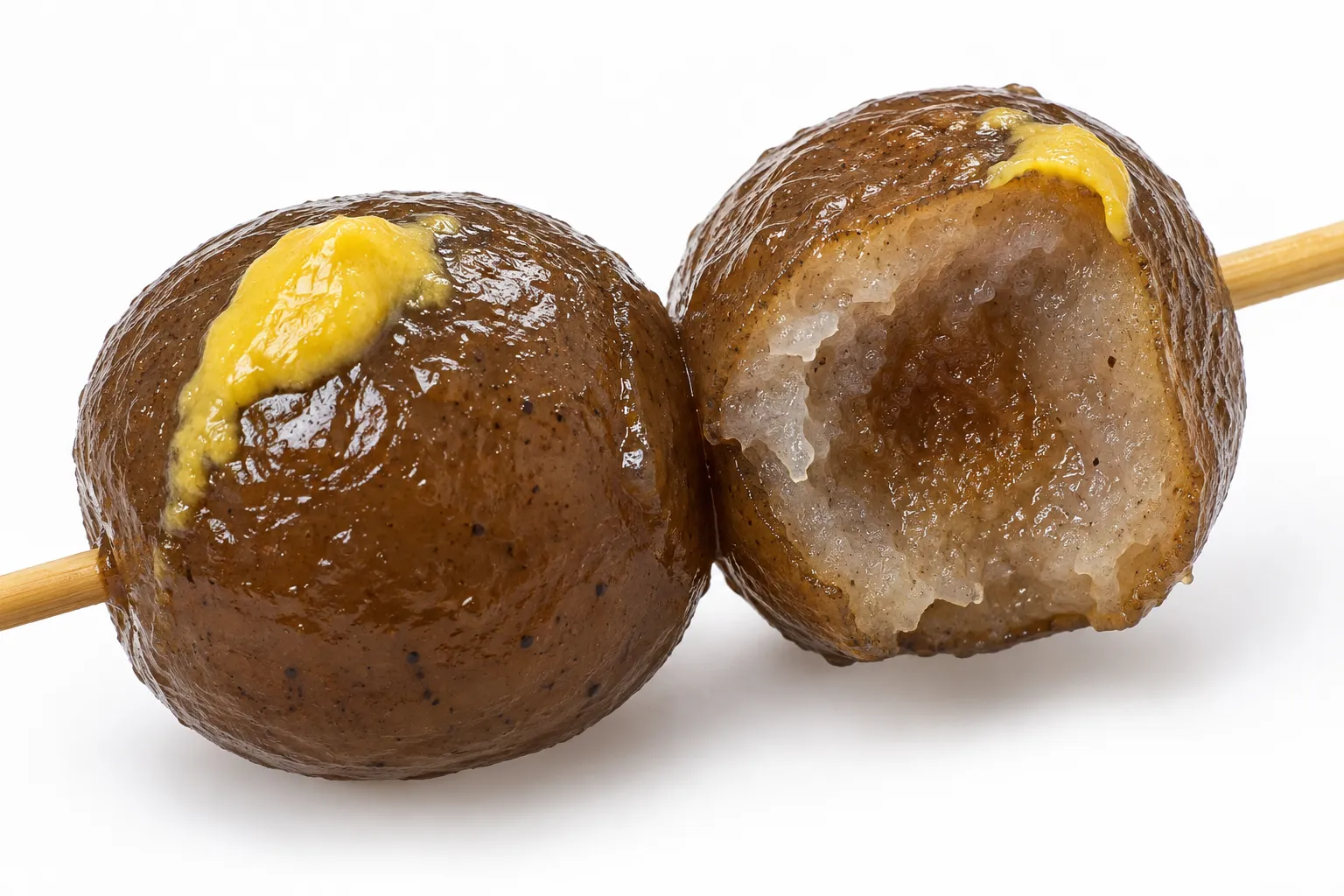
Let's be honest about what konjac is doing. It has no fat, no real protein, almost no flavour of its own. Everything you taste is borrowed.
So the whole craft here is absorption, and the balls are the answer to it — round, dense, no edges to go soggy, small enough to take on broth all the way through, big enough to demand a real bite. After a long simmer they turn from pale grey to deep brown, and the colour goes right to the middle rather than staining the surface.
The bounce is the point, not a flaw. It's springy and slightly rubbery and faintly squeaky against your teeth, and you either enjoy that or you spend the whole skewer wishing it were something else. I enjoy it enormously. There's a specific pleasure in food that makes you work slightly harder than you expected.
And the broth is doing more than seasoning. Dried squid goes into the pot and slowly gives up its umami, so what you get isn't just salty — it's deep, marine, faintly sweet, the kind of savouriness that makes you want the next one immediately. The mustard sits on top of all that as pure contrast, hot and volatile and gone in seconds.
Then there's the completely unserious fact that you can eat six of these for the calories of a biscuit. Nobody in Yamagata is selling it to you on that basis. But it does mean that "just one more skewer" is a decision with no consequences, which is dangerous information to hand a person.
How it gets made
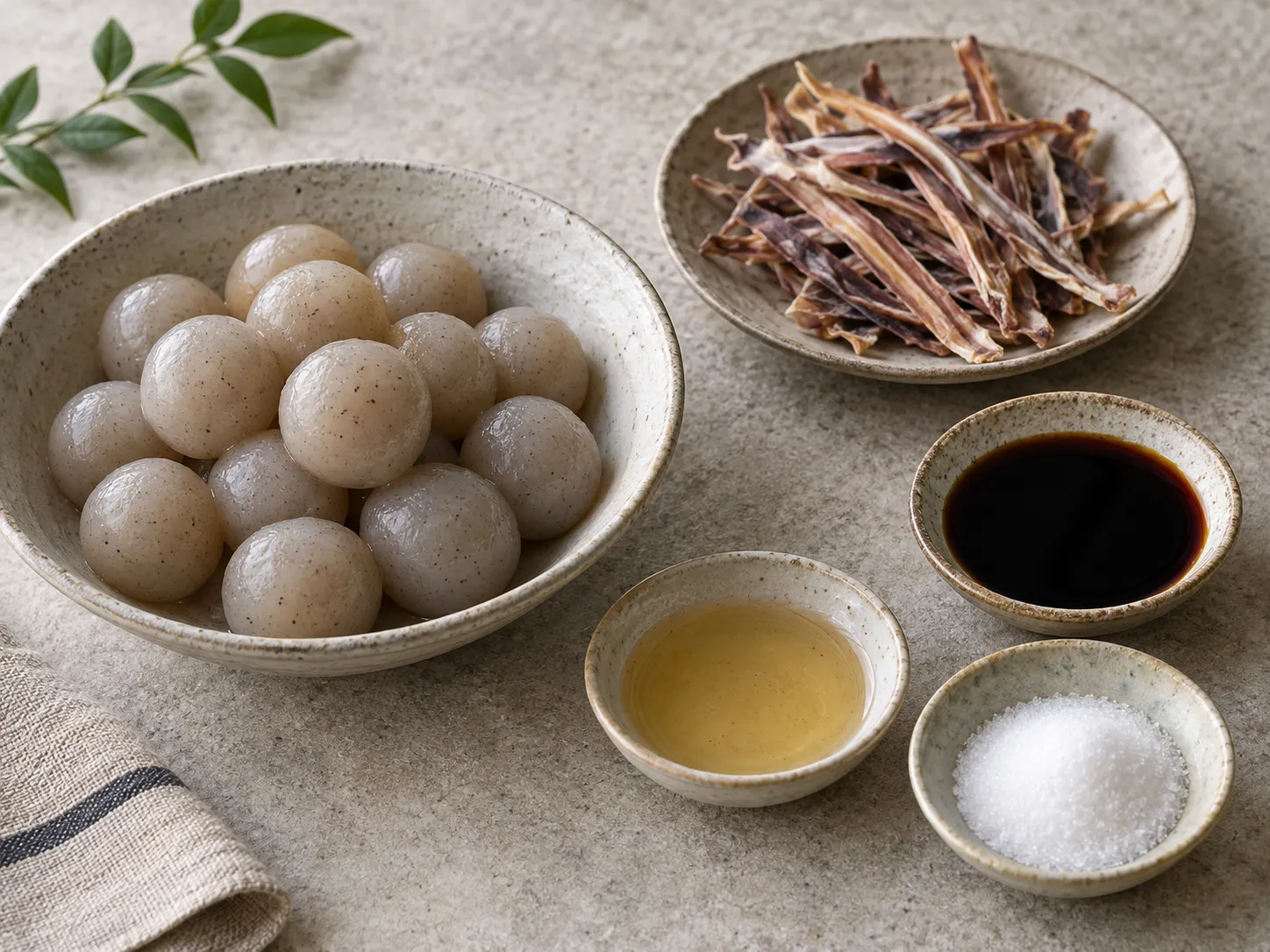
The process is simple and the patience is the skill:
- Konjac is formed into small balls rather than the usual blocks or slices — roughly bite-sized, with no flat faces.
- They're boiled first in plain water to drive off the faint lime smell that raw konjac carries from how it's set.
- A broth is built from soy sauce, mirin, sugar and dried squid, sometimes with a little dashi — dark, salty, and more sweet-savoury than a soup would be.
- The balls go in and stay in, simmering low for a long time. This is not a ten-minute job. The colour has to reach the centre.
- They rest in the pot — often kept warm all day at a stall, deepening as they go, which is why a stick bought in the afternoon can taste stronger than one bought at opening.
- Two or three go on a skewer, and you're asked whether you want mustard.
You can make it at home and it works fine. It does not taste the same as one handed to you steaming at the bottom of a staircase, and I don't think that gap is entirely about the cooking.
Before you go — what you actually need to know
Your questions, answered honestly
"What does it taste like?" — Soy sauce, dried squid, and a faint sweetness, all soaked into something with essentially no flavour of its own. Think of the broth as the dish and the konjac as the delivery system. It's savoury and clean rather than rich.
"Is the texture going to be a problem?" — Possibly, and I'd rather tell you now. It is springy, bouncy and slightly rubbery, and it does not soften the way you expect food to soften. If you disliked konjac in oden, this won't convert you. If you've never had it, there's a decent chance you'll find it oddly addictive.
"Do I say yes to the mustard?" — Yes. It's karashi, Japanese hot mustard, and it's sharper and more volatile than the European kind — it hits your nose rather than your tongue and then vanishes. Without it the skewer is one-note. With it there's a reason to keep eating. If you're genuinely mustard-averse, say karashi nashi de.
"Is it vegetarian?" — Usually not, and this catches people out. The broth almost always includes dried squid, and often dashi. The konjac itself is plant-based; the thing it has spent all day absorbing is not. Ask before assuming.
"How do I eat it without embarrassing myself?" — Bite each ball in half rather than putting a whole one in your mouth. It's chewier than it looks and a whole one is genuinely awkward. Eat it standing at the stall, hand the stick back or bin it there, and don't walk off down the street with it if the stall has a bin — most people eat on the spot.
"Is it filling?" — No. It's essentially water and fibre. It is enormously satisfying, which is a different thing, and you will be hungry again sooner than the chewing led you to believe.
"Can I take some home?" — Vacuum-packed versions turn up in Yamagata souvenir shops and roadside stations and travel fine within Japan. They're decent. They are not the same as one out of a simmering pot, and I'd eat it there rather than plan around carrying it.
What the staff will ask you
| You'll hear | Romaji | Meaning | Just say |
|---|---|---|---|
| 何本にしますか? | Nan-bon ni shimasu ka? | "How many skewers?" | Ippon kudasai (one, please) |
| からしつけますか? | Karashi tsukemasu ka? | "Mustard on it?" | Onegaishimasu (yes, please) |
| 熱いので気をつけて | Atsui node ki o tsukete | "Careful, it's hot" | Hai, arigatō (yes, thanks) |
| 串はこちらへ | Kushi wa kochira e | "Skewers go in here" | Hai (yes) — and put it in the bin shown |
| ここで召し上がりますか? | Koko de meshiagarimasu ka? | "Eating here?" | Hai, koko de (yes, here) |
To order, just say "Tama konnyaku kudasai" (玉こんにゃくください) — "Tama konnyaku, please."
Where to eat it
- Yamadera (Risshaku-ji), Yamagata City — the temple with the very long stone staircase, and the single most famous place in Japan to eat this. Stalls sit along the approach at the bottom. Buy one before you climb and one after; the second tastes better and you'll know why.
- Zao Onsen — the hot spring town in the mountains, where skewers appear along the streets and taste correct in cold weather in a way that's hard to argue with.
- Roadside stations (michi-no-eki) across Yamagata — reliable, unglamorous, often cooked on the spot, and a good fallback if you're driving rather than temple-climbing.
- Festivals and markets anywhere in the prefecture — where a big pot and a queue is the usual arrangement.
Stalls at temple approaches and hot spring towns follow the seasons and the weather — some close in deep winter, and hours shorten off-season. Check locally before making a special trip.
Soul Score
Local Roots5/5
First-Timer Friendly4/5
Adventure Level3/5
Comfort Level4/5
Travel Worthy3/5
These scores are one obsessed eater's gut feeling — not a verdict. A low number isn't a bad mark, just a different kind of adventure.
Know someone planning Japan?
← All Articles
Local Food · Yamagata
Still hungry?
Eat more from Yamagata
Local FoodYamagata
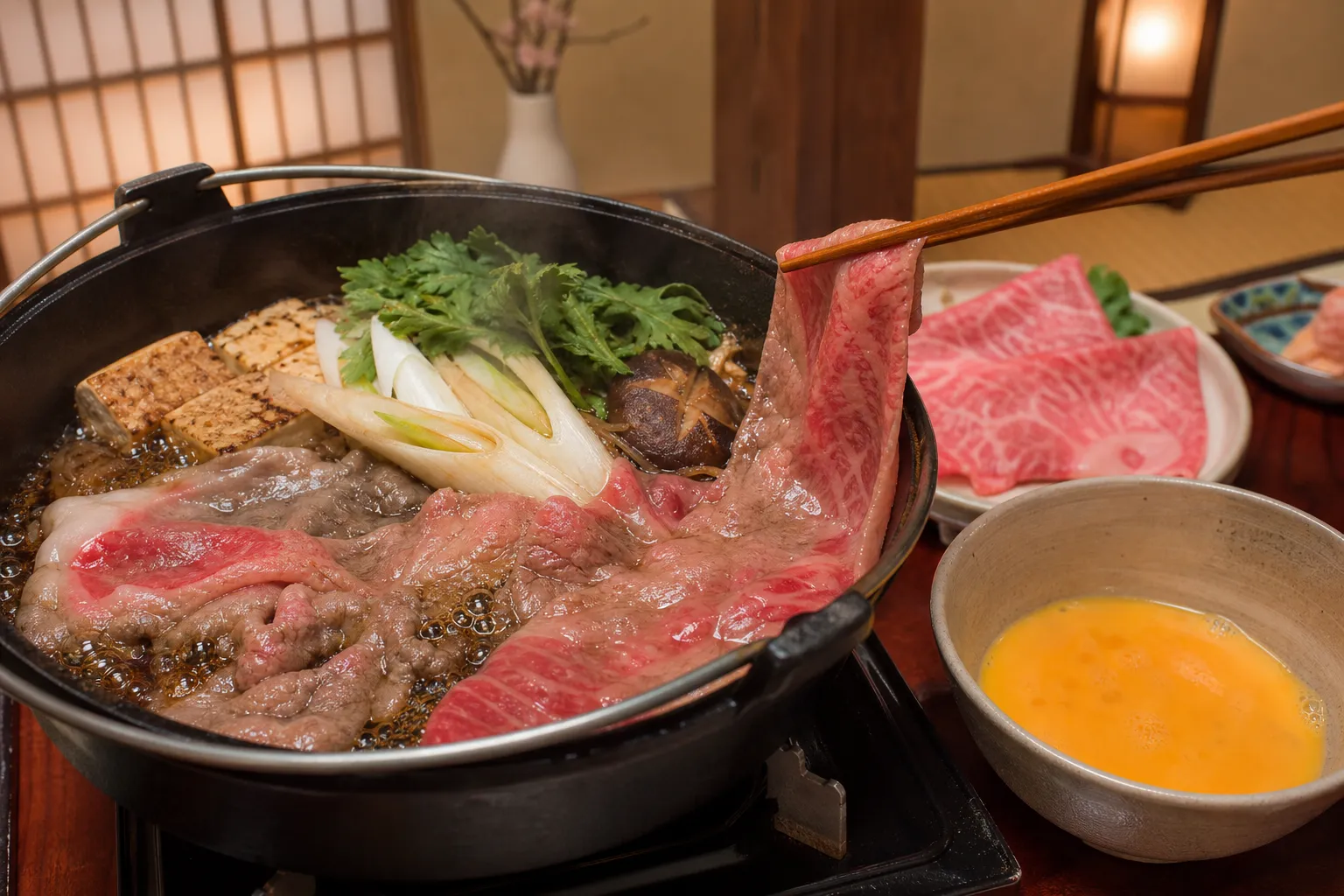
Yonezawa Beef (米沢牛)
A paper-thin slice of marbled beef goes into the sukiyaki pot pink and comes out translucent, and somewhere between the pot and the raw egg dip I stopped talking mid-sentence.
July 22, 2026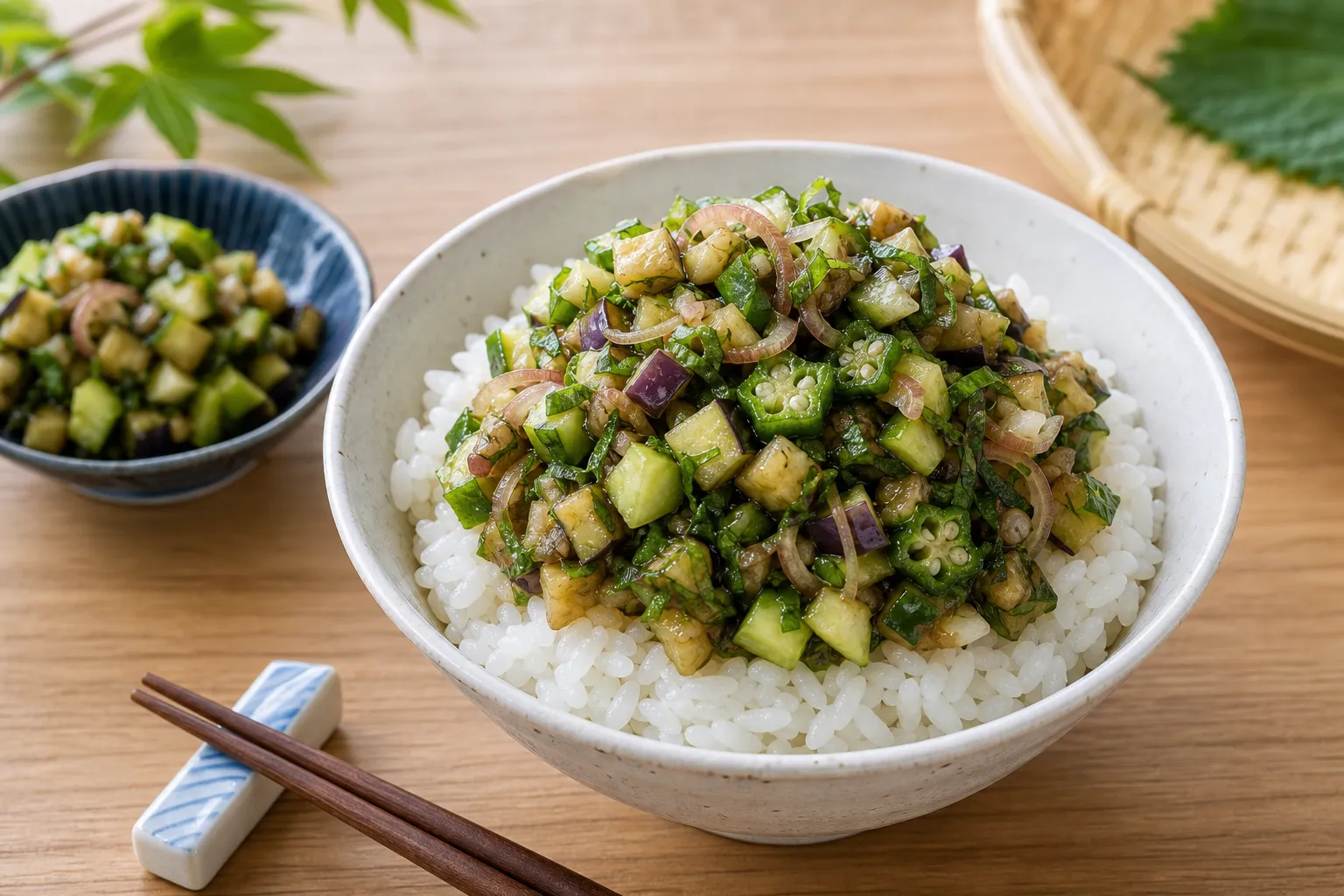
Local FoodYamagata
Yamagata Dashi (山形のだし)
A cold, glistening pile of chopped summer vegetables — sticky, herby, salty — landing on hot white rice on a day too hot to want to eat anything. Somehow you clear three bowls.
July 12, 2026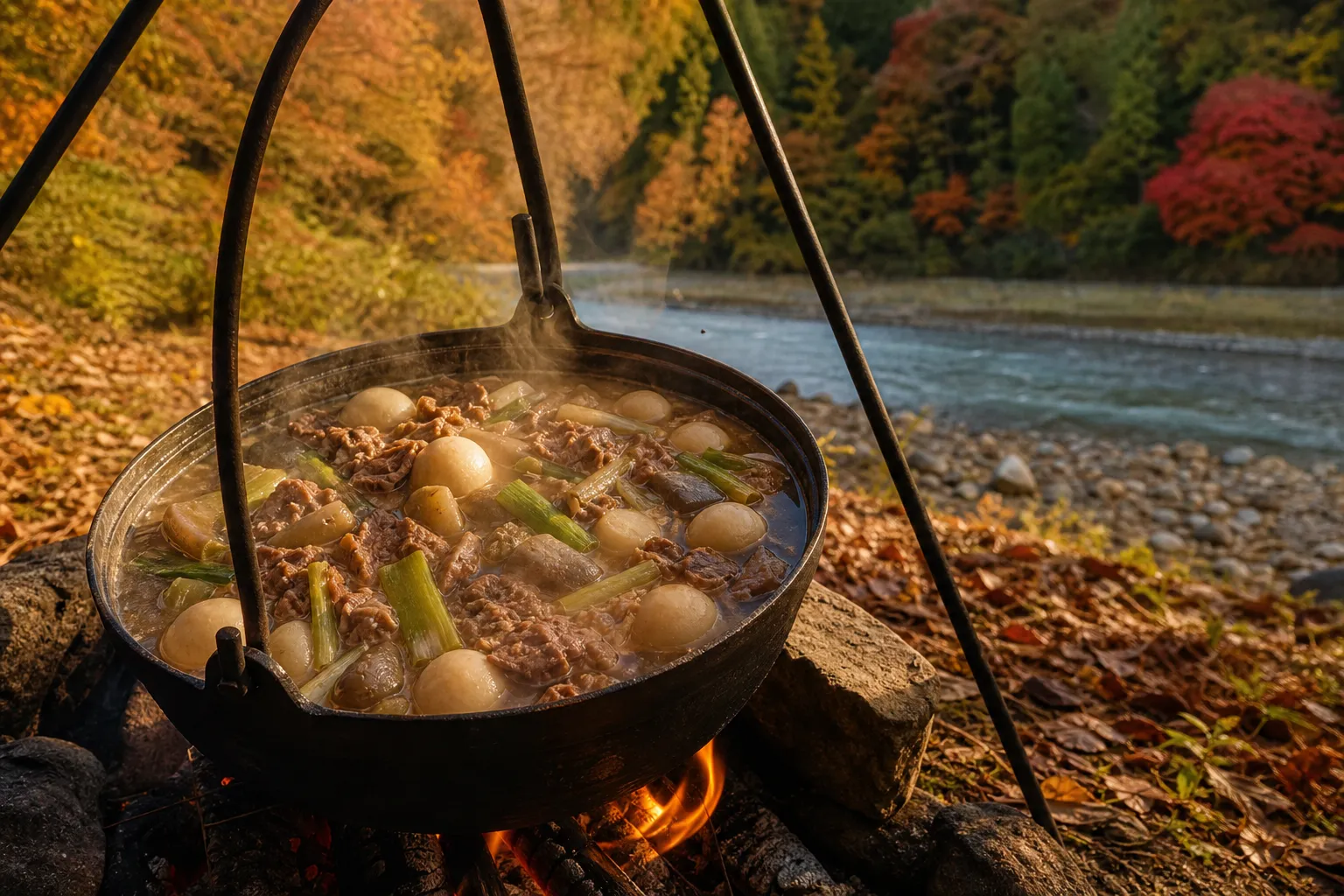
Local FoodYamagata, Yamagata
Imoni (芋煮)
A bubbling pot of taro and beef in sweet soy broth, cooked on a riverbank under autumn leaves with everyone you know. It's not just a stew — it's a season, and a reason to gather.
June 27, 2026