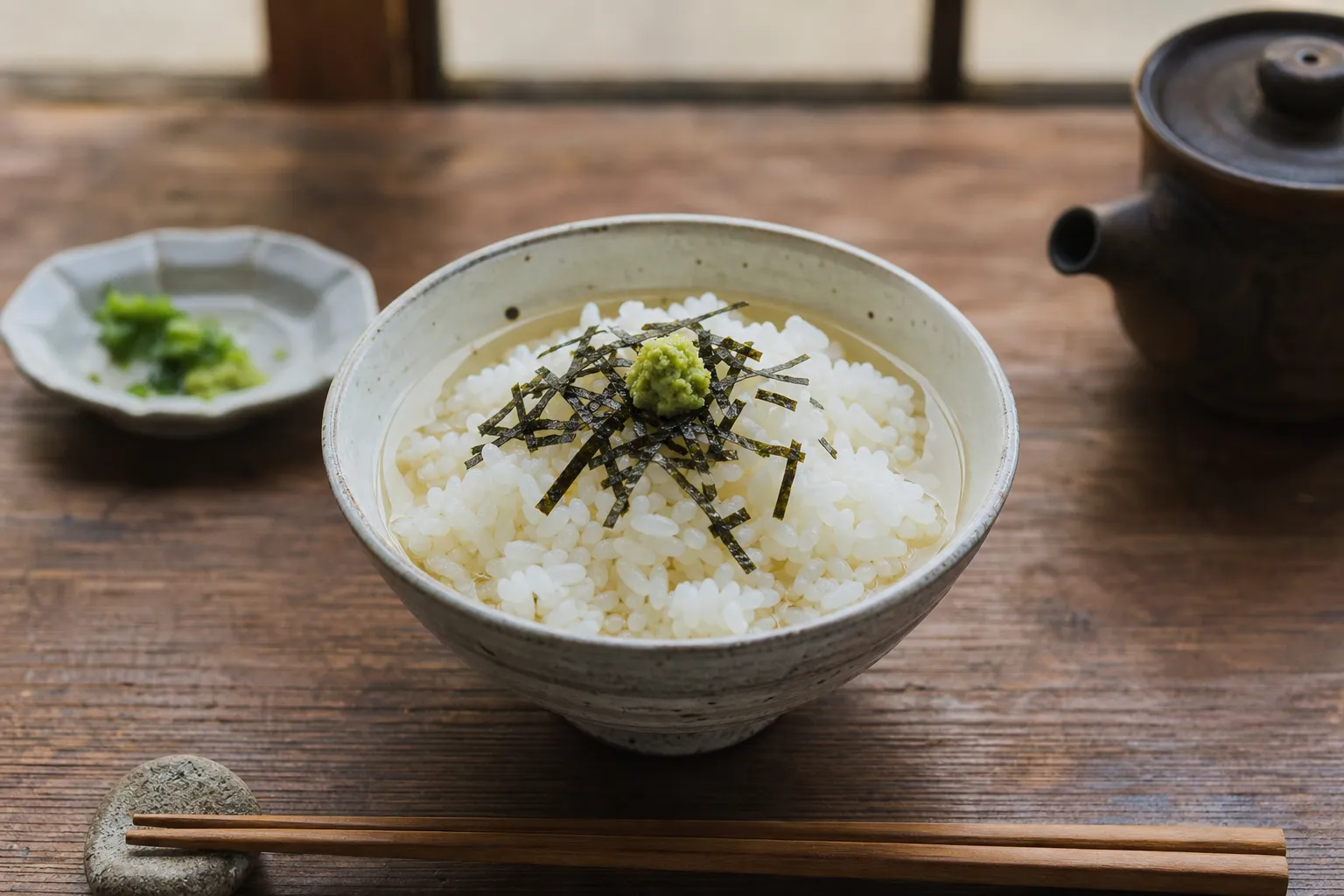
I'll be honest: when the bowl arrived I felt a little cheated. Plain white rice, a smear of green wasabi, some torn nori, a splash of clear dashi over the top. That's it? And then I pushed my chopsticks in — and hit something. Simmered mushrooms. A cube of tofu. Carrot, taro, a flake of fish. The whole bowl was hiding a stew under the rice, and every scoop came up loaded with a different buried treasure. I laughed. It's an edible magic trick, and it completely won me over.
Share this dish


It looks like a sad little bowl of plain rice with a dab of wasabi — and then your chopsticks hit the treasure buried underneath. A humble mountain town's edible magic trick, and one of Japan's three great rice dishes.
🍜 Planning a food trip to Shimane?Add this dish to my Food Trip →
 Add this dish to my Food Trip →
Here's what it is: uzumemeshi (うずめ飯) is a bowl that looks like humble rice topped with wasabi, nori and a little dashi — but the real dish is buried underneath. The name comes from uzumeru, "to bury": simmered vegetables, tofu and small pieces of fish are hidden at the bottom of the bowl and covered over with rice. It's a specialty of the little castle town of Tsuwano in Shimane, and it's counted among Japan's "three great rice dishes." This is not a chirashi bowl showing off its toppings, and it's not an obvious chazuke — it's a dish built around a secret.
The humble town that hid its feast
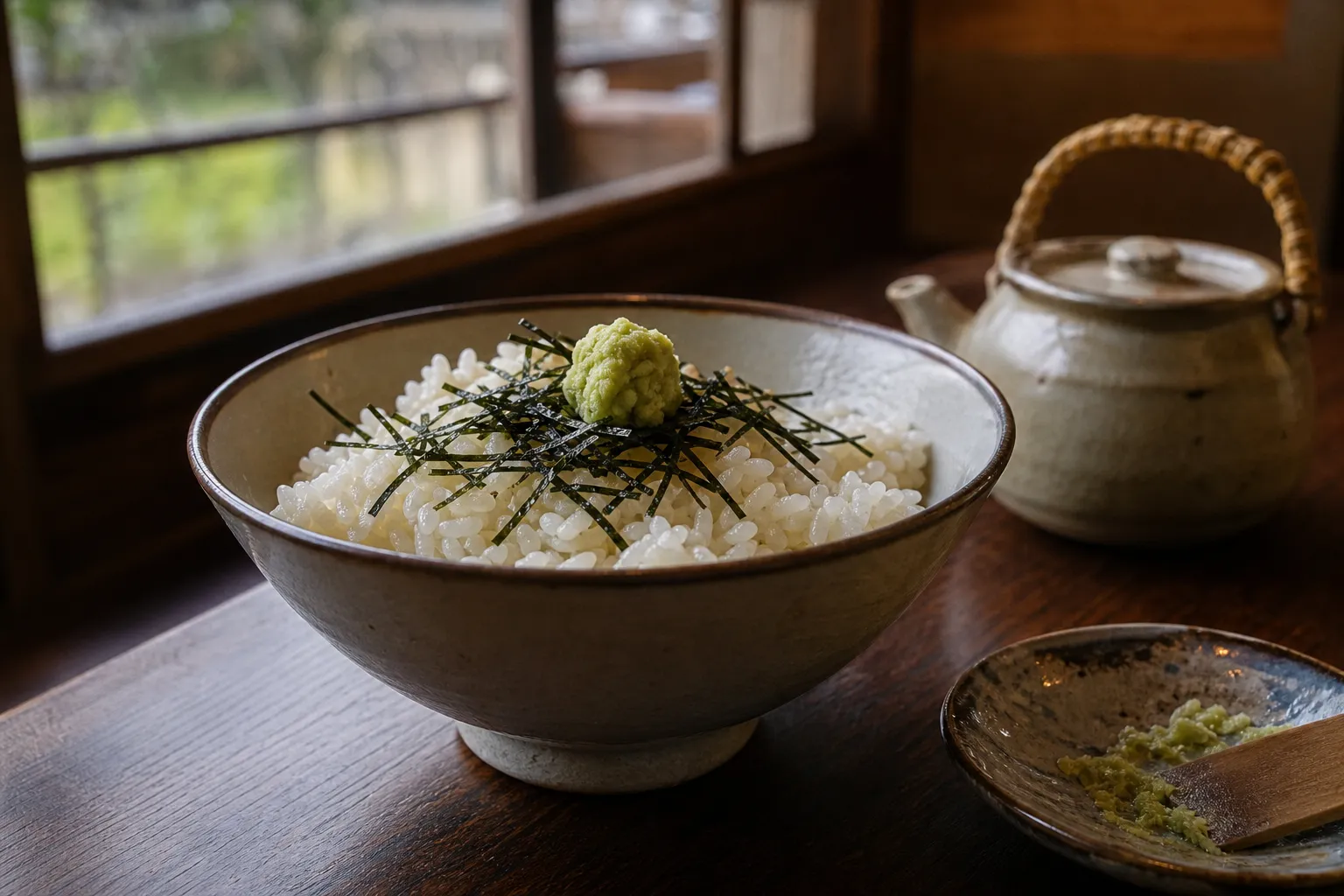
There are a few charming stories about why the good stuff got buried, and they all say something lovely about Tsuwano, a small, beautiful castle town tucked in the mountains of western Shimane. One version: in frugal times, ordinary people weren't supposed to eat lavishly, so they hid their vegetables and fish under the rice to make a rich meal look like a plain one — modesty you could eat. Another: it was a thrifty way to use up odds and ends, dressed up to feel like a treat. Either way, it's a dish born of humility and cleverness, and I find that genuinely moving — a whole town's quiet, resourceful dignity in a single bowl.
That humble little bowl earned serious respect: uzumemeshi is often named alongside Fukagawa-meshi (Tokyo) and Sayori-meshi (or other regional bowls) as one of Japan's "three great rice dishes" (Nihon san-dai meshi). Not bad for a dish whose entire concept is pretending to be plain. Eat it in Tsuwano — a town of white walls, a clear canal full of carp, and old samurai streets — and the modesty of it feels exactly right.
What makes the eating experience different
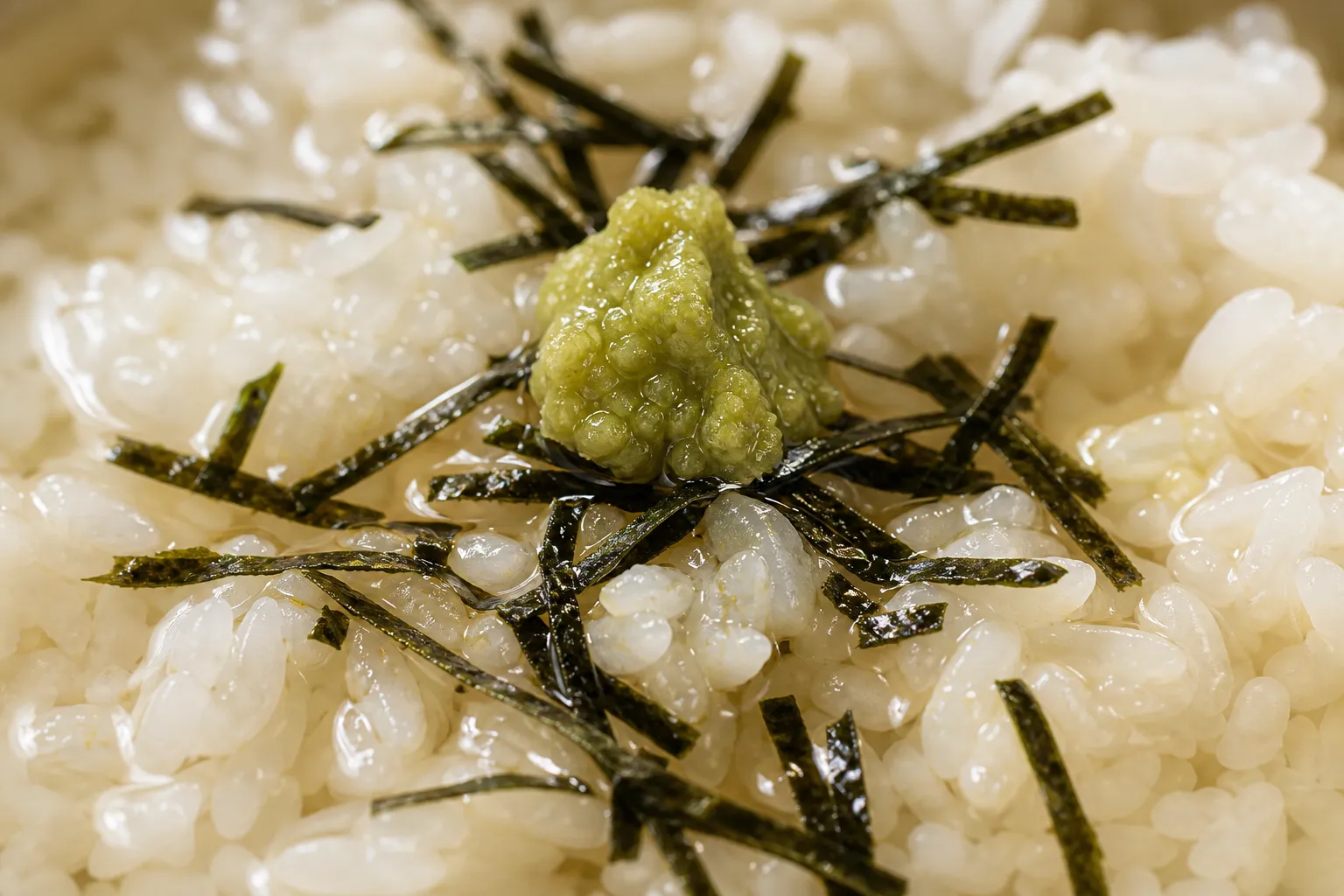
- The reveal. The top is deliberately plain; the joy is digging down and discovering the simmered vegetables, tofu and fish buried underneath. Every dish should surprise you at least once — this one's built to.
- Every scoop is different. Because the filling is hidden and mixed as you dig, no two bites are the same — mushroom here, taro there, a flake of fish, a bit of carrot.
- The wasabi and nori on top wake everything up — a little sharp, a little fragrant — against the gentle simmered filling below.
- It's light but layered — clean dashi, soft rice, tender vegetables — comforting without being heavy, a bit like a chazuke that's been given a secret double life.
- The fillings vary by shop and season, so Tsuwano's uzumemeshi is never quite the same twice — part of the fun is finding out what a given place buries.
How it's made
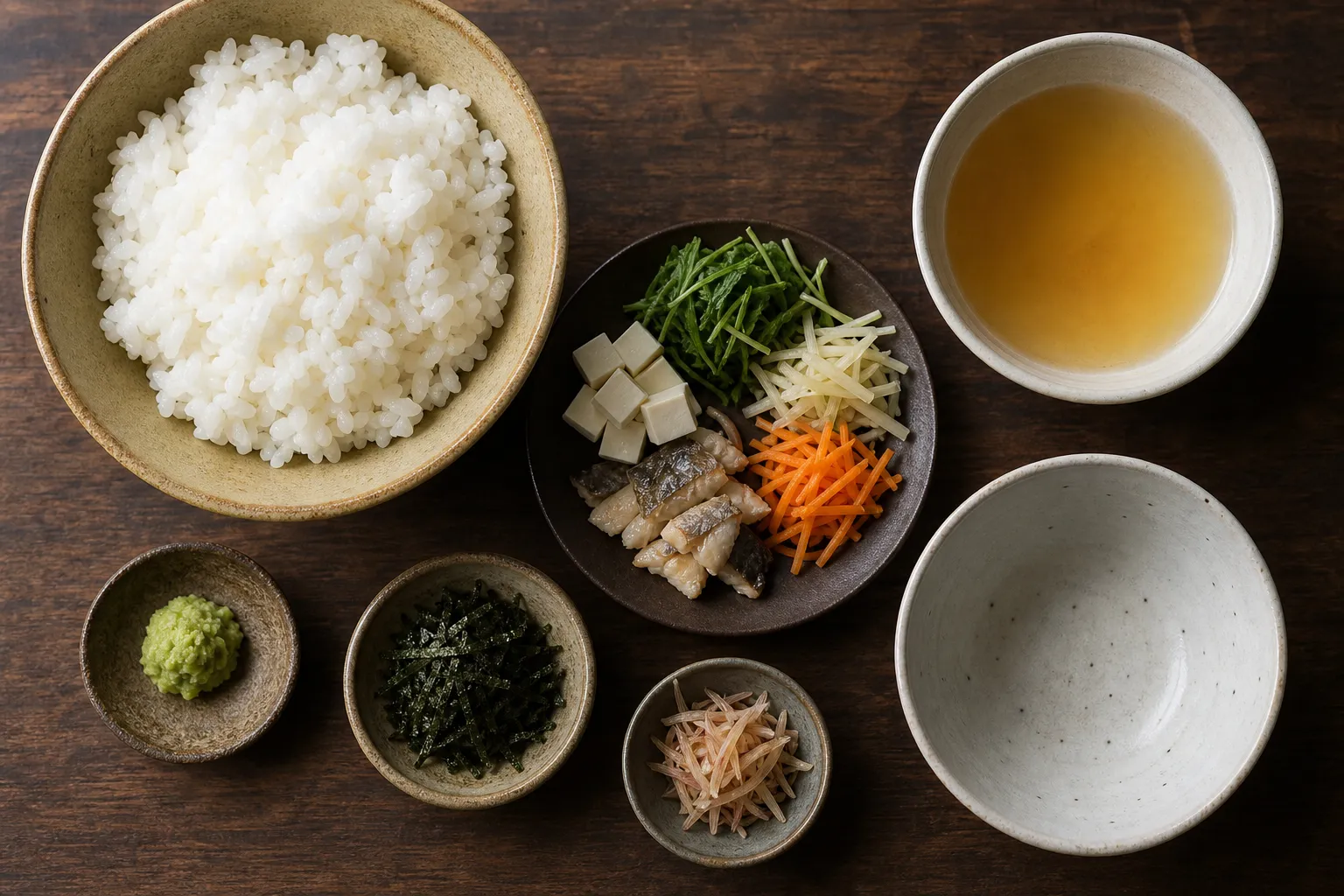
- Simmer the fillings. Small pieces of vegetables (often mushrooms, taro, carrot, burdock), tofu and a little fish are gently simmered in a light dashi until tender.
- Place them in the bowl first. The simmered filling goes into the bottom of the bowl — this is the treasure to be hidden.
- Bury it with rice. Hot rice is mounded on top to completely cover the filling, so the bowl looks like nothing but plain rice.
- Dress the top. A dab of grated wasabi and some torn nori (and sometimes other simple garnishes) go on top.
- Pour the dashi. A little warm dashi is poured over just before eating — then you dig in and unearth what's below.
The craft is in the balance: the top has to look genuinely plain, the filling has to be well-simmered and generous, and the dashi and wasabi have to tie the plain rice to the hidden feast. Simple to eat, quietly thoughtful to make.
Before you go — dig, and be surprised
Your questions, answered honestly
"Is it really just plain rice?" — No — that's the whole joke. What you see on top (rice, wasabi, nori, dashi) is a disguise. The real dish — simmered vegetables, tofu and fish — is buried at the bottom. Push your chopsticks down and mix it up; that's how you're meant to eat it.
"How is it different from chirashi or a rice bowl with toppings?" — Chirashi shows off its toppings on top; uzumemeshi hides them underneath. It's the opposite philosophy — modest on the surface, generous below. The surprise of the reveal is the point.
"Is it just chazuke (tea/dashi over rice)?" — It's a cousin, but not the same. Chazuke is rice with toppings on top, flooded with tea or dashi. Uzumemeshi has its filling buried below the rice, with only a little dashi over the top — so it eats drier and more layered, and the digging is half the fun.
"What's actually buried in there?" — It varies by shop and season, but expect simmered mushrooms, taro, carrot, burdock, tofu and small bits of fish in a light dashi. Recipes differ, so ask or just enjoy the surprise.
What the staff will ask you
| You'll hear | Romaji | Meaning | Just say |
|---|---|---|---|
| わさびはお好みで | Wasabi wa o-konomi de | "Add wasabi to taste" | Hai, arigatō (okay, thanks) |
| 混ぜて召し上がってください | Mazete meshiagatte kudasai | "Please mix it up and eat" | Wakarimashita (got it) |
| お茶をおつけしますか? | O-cha o o-tsuke shimasu ka? | "Would you like tea with it?" | Onegai shimasu (yes, please) |
To order, just say "Uzumemeshi o kudasai" (うずめ飯をください) — "Uzumemeshi, please."
Where to eat it
- Tsuwano, Shimane — the small castle town where uzumemeshi is the local specialty; look for it at traditional restaurants and set-meal spots in and around the old town center.
- Tsuwano's old samurai district and canal streets — several long-running local eateries in the historic quarter serve uzumemeshi as part of a regional set meal.
- Regional restaurants across western Shimane — some restaurants in the wider area feature uzumemeshi as a local dish, especially those focused on Iwami-region cooking.
Uzumemeshi is a specialty of a small town, so serving restaurants can be limited and hours vary — check before you go, and consider calling ahead for set meals.
Soul Score
Local Roots5/5
First-Timer Friendly4/5
Adventure Level3/5
Comfort Level5/5
Travel Worthy4/5
These scores are one obsessed eater's gut feeling — not a verdict. A low number isn't a bad mark, just a different kind of adventure.
Know someone planning Japan?
← All Articles
Local Food · Tsuwano, Shimane
Still hungry?
Eat more from Shimane
Local FoodIzumo, Shimane
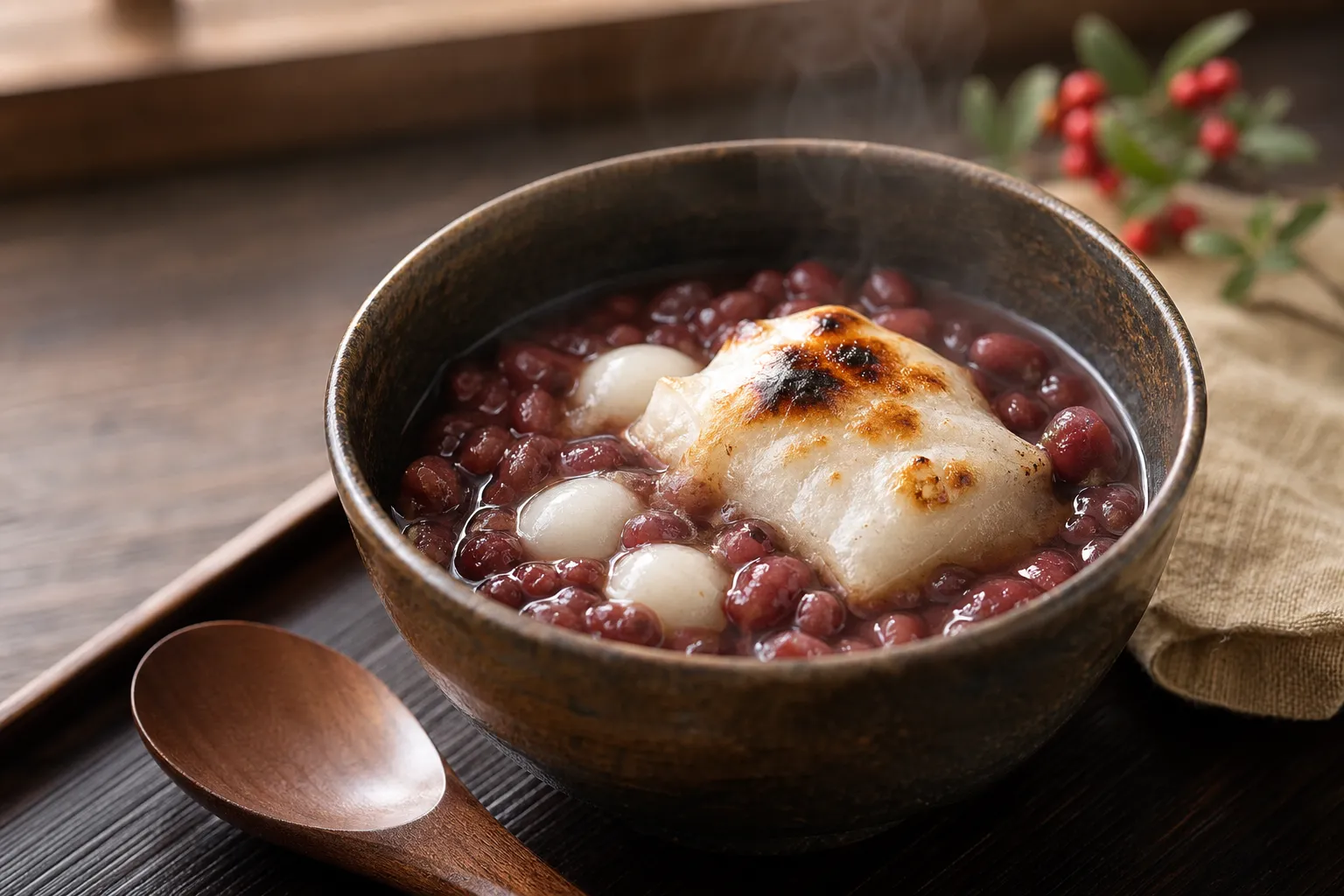
Izumo Zenzai (出雲ぜんざい)
Whole red beans, still holding their shape, in a warm sweet broth with a soft chewy mochi hiding at the bottom — and the town says this is where the whole dish was born.
July 5, 2026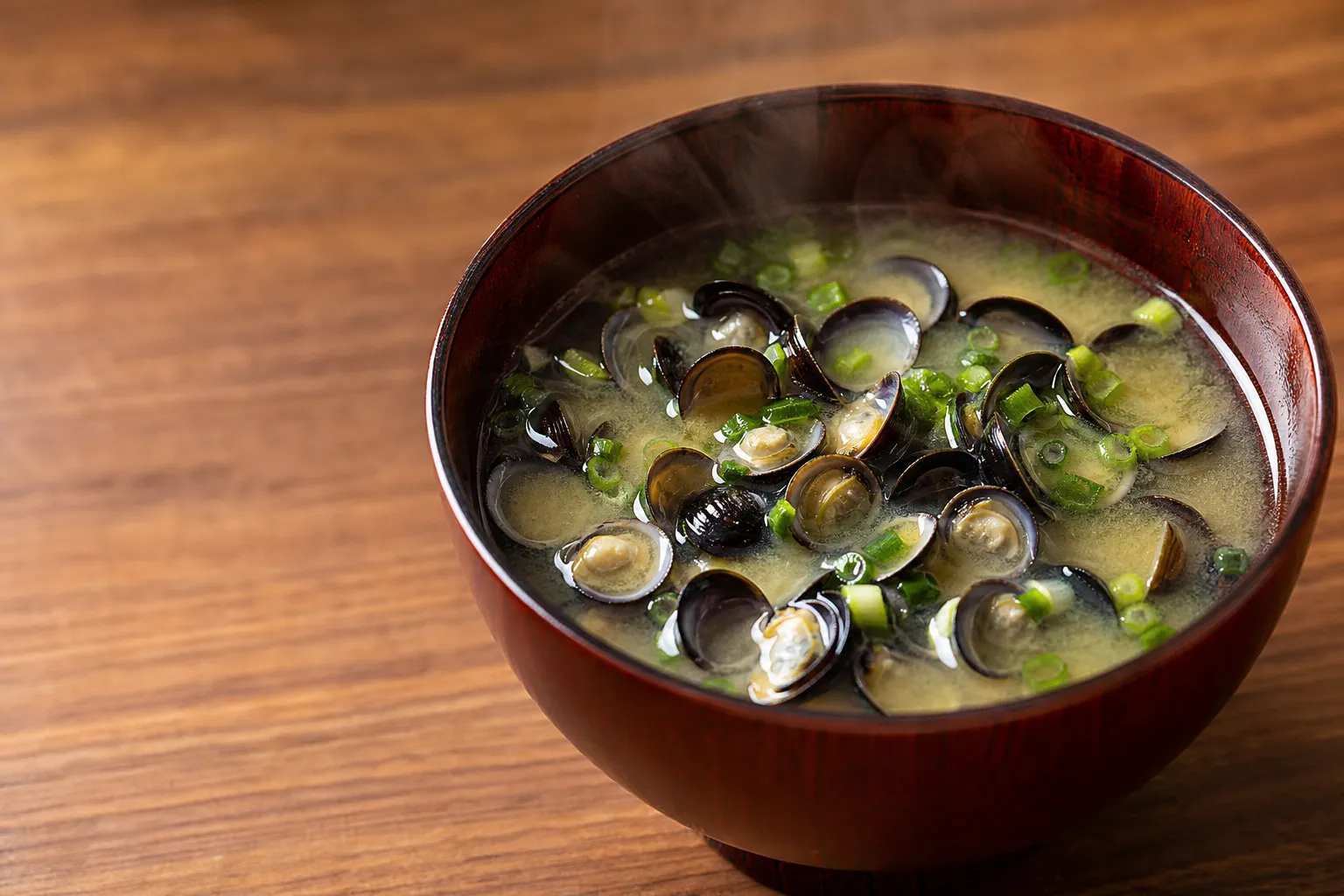
Local FoodLake Shinji, Shimane
Shijimi Soup (しじみ汁)
Tiny black clams the size of a fingernail, and somehow they make a miso soup deep enough to fix a rough morning — this is the bowl Shimane wakes up to.
July 5, 2026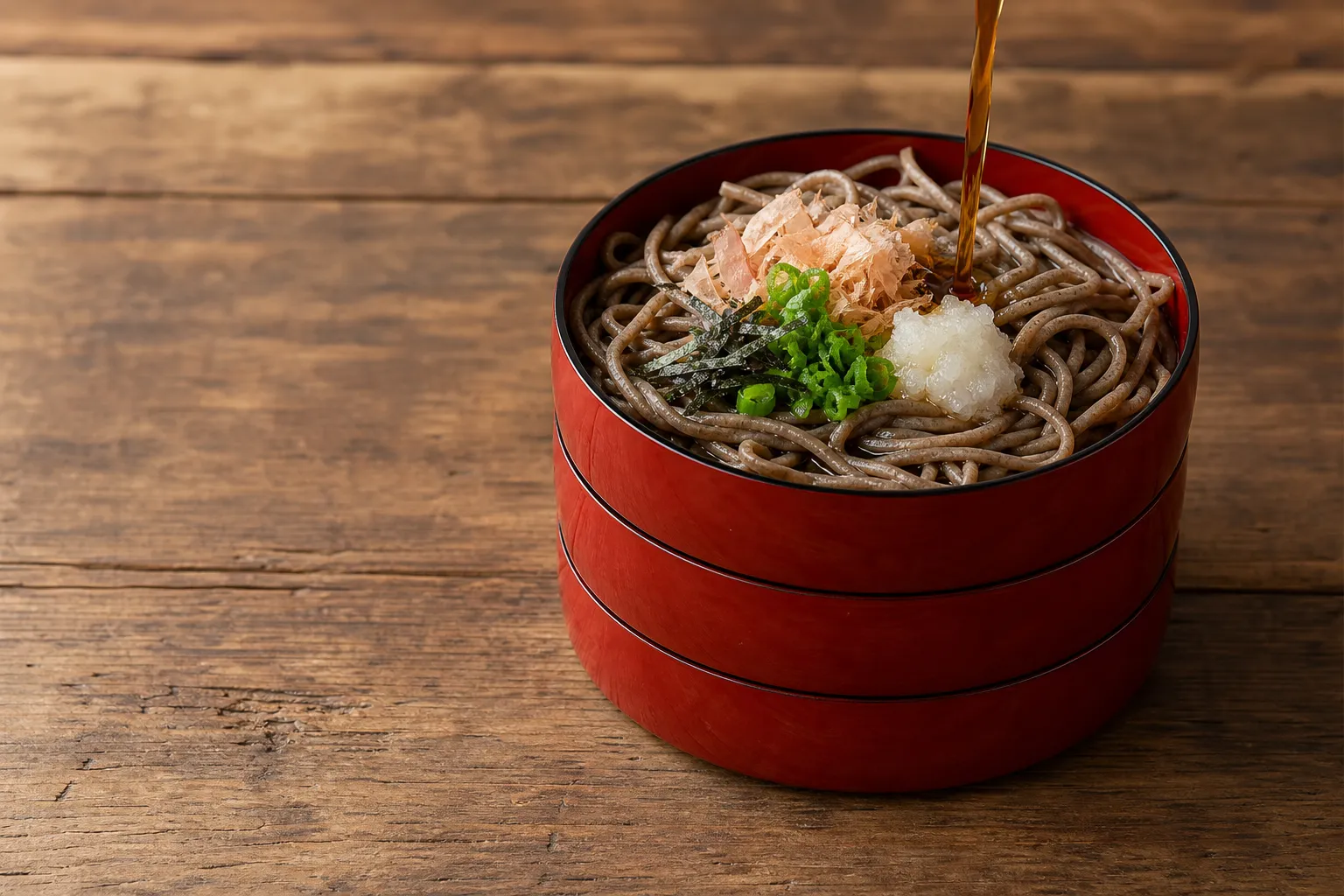
Local FoodIzumo, Shimane
Izumo Soba (出雲そば)
Three little lacquered tiers of dark, husk-and-all buckwheat, eaten in the shadow of Japan's oldest great shrine. You pour the broth straight on, stack the dishes down, and taste soba the way the gods' country has done it for centuries.
June 27, 2026