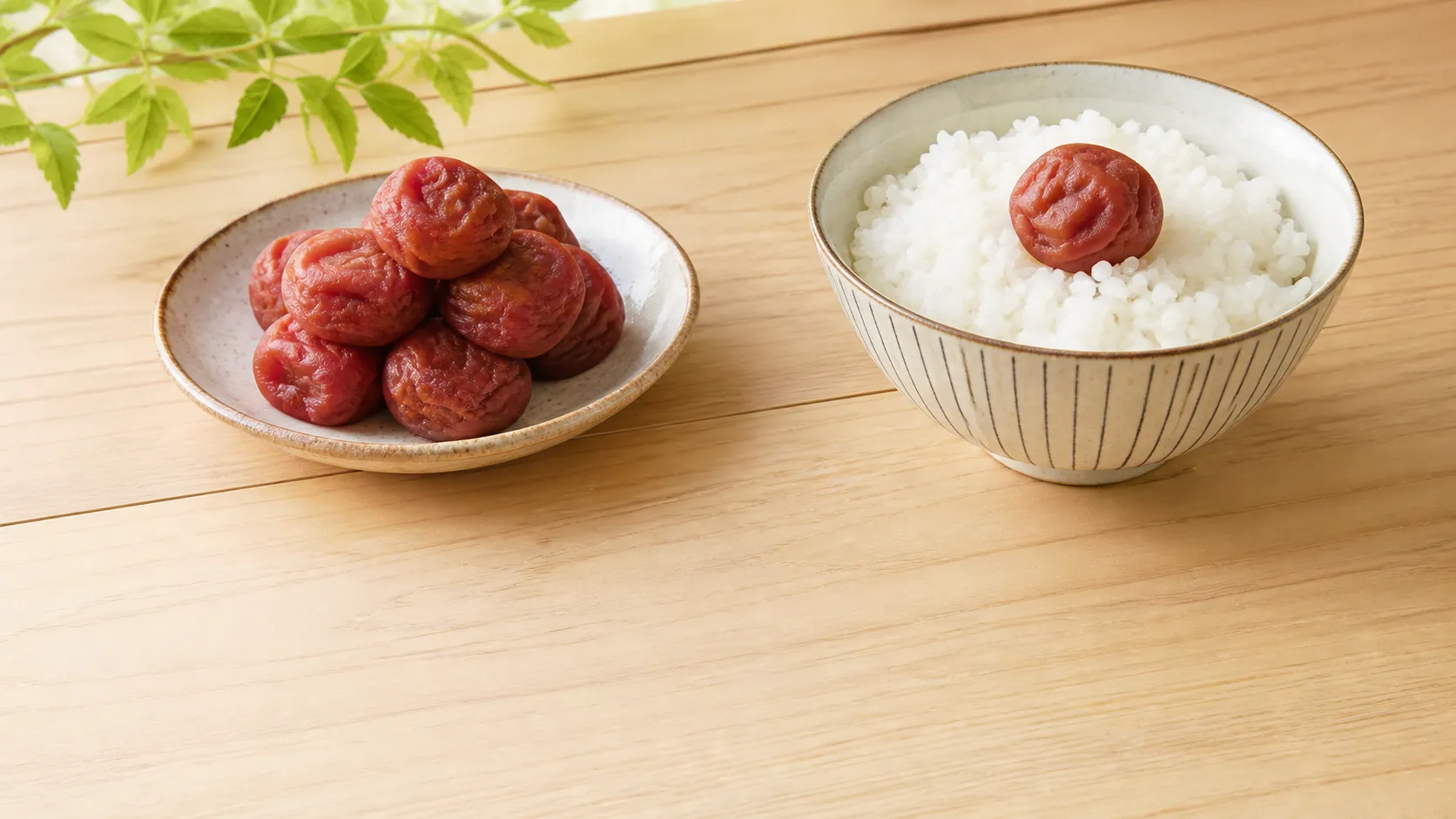
My entire face folded in on itself. Eyes shut, cheeks pulled in, a full-body flinch I had absolutely no control over — and a shudder that started at my jaw and went all the way down.
Share this dish


My whole face folded inward. A man on the next stool laughed so hard he had to put his tea down. Ten minutes later I bought a bag of them, because apparently I'm like this.
🍜 Planning a food trip to Wakayama?Add this dish to my Food Trip →
 Add this dish to my Food Trip →
The man on the next stool laughed so hard he had to set his tea down. He'd known. He'd watched me pick up a whole one, put the whole thing in my mouth like a grape, and he had said nothing, because this is a rite of passage in Japan and he was not going to rob me of it.
And then, once my nervous system rebooted, something strange happened. The sourness receded into salt, and the salt receded into something almost fruity and deep, and my mouth was watering, and I wanted rice — urgently, physically wanted rice — in a way I hadn't three minutes earlier. That's the trick. That's the whole thousand-year-old trick.
I bought a bag on the way out. I'm aware of how that sounds.
Umeboshi is ume fruit — a cousin of the apricot, usually mistranslated as plum — salted, weighted until it gives up its own juice, and dried in the sun until it wrinkles into something intensely sour and salty. Wakayama grows the best of them, and Wakayama's Nanko-ume is the name that makes Japanese people at a supermarket shelf stop and look.
A thousand years of not letting food go bad
Start with the practical problem. Japan is hot and humid in summer, rice is the staple, and for most of history nobody had refrigeration. Rice spoils. Lunch carried into a field spoils. Food for an army on the move spoils.
Umeboshi is one of the oldest answers. Salt and acidity together make a genuinely hostile environment for spoilage, so a single preserved plum sitting in the middle of a box of rice does real work — which is where the hinomaru bento comes from, one red plum on a bed of white rice, looking exactly like the Japanese flag. Samurai carried them. Soldiers carried them. Schoolchildren carried them, in an era when that flag imagery meant something rather more pointed.
They've been medicine, too, for about as long. Recovering from a cold, hungover, carsick, no appetite, too hot to eat — the answer in a Japanese household has been an umeboshi and a cup of tea for centuries. Some of that is folklore and some of it is citric acid doing genuinely useful things, and I've stopped trying to separate the two.
Wakayama's role is more recent and completely dominant. The warm coastal hills around Minabe and Tanabe turned out to be extraordinary ume country, the region developed the plump, thin-skinned, soft-fleshed Nanko variety in the twentieth century, and today this small stretch of Wakayama produces the majority of Japan's ume. Drive through Minabe in February and the hills are white with plum blossom in every direction. It's staggering, and it's also just somebody's crop.
Why it hurts, and why people keep doing it
The sourness is citric acid, and the level is not comparable to a lemon — it's higher, and it arrives with salt behind it, so you're getting two aggressive signals at once. A traditional high-salt umeboshi can be twenty percent salt. That is not a seasoning. That is a preservation strategy that you happen to be eating.
What it does in your mouth is a chemical hijacking: your salivary glands fire, hard, and keep firing. Which is exactly why it works with rice. Plain white rice is mild and slightly sweet and can go monotonous over a bowl; a tiny fleck of umeboshi resets your palate every few bites and makes the rice taste like more than it is. The two are a system. Eating an umeboshi alone, as I did, is using half of a tool.
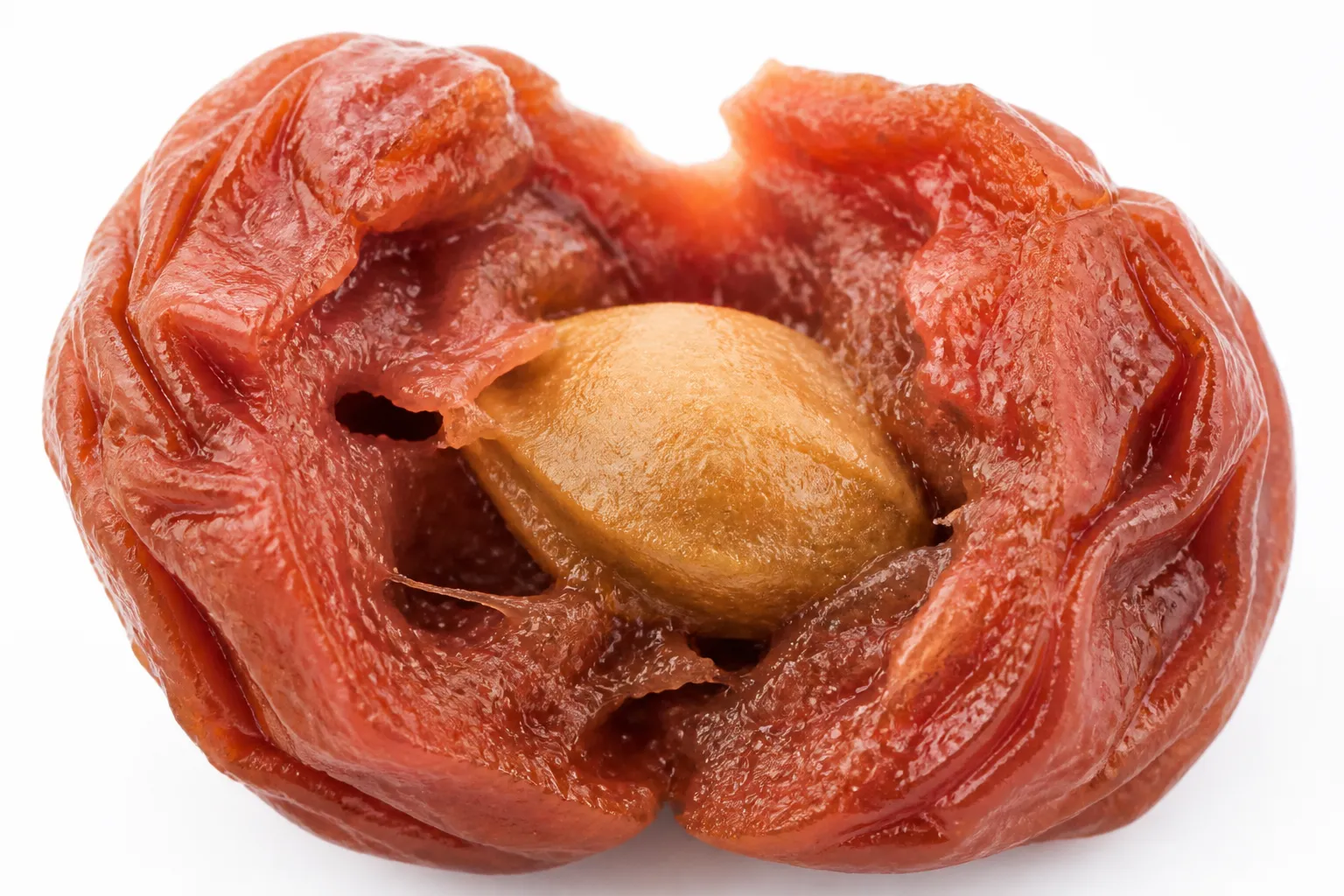
Texture matters more than people expect. A good Nanko-ume has thin skin and thick, soft, almost jammy flesh that comes away from the pit easily. A cheap one is tough and stringy and mostly pit. This is where the price difference lives, and it's real.
And modern versions have gotten kinder. Low-salt umeboshi, honey-cured umeboshi, katsuo-flavoured ones with bonito — many sit around five to eight percent salt and read as pleasantly tart rather than as an assault. Purists grumble. Purists can grumble; the honey ones are excellent and I will not be taking questions.
How it comes together
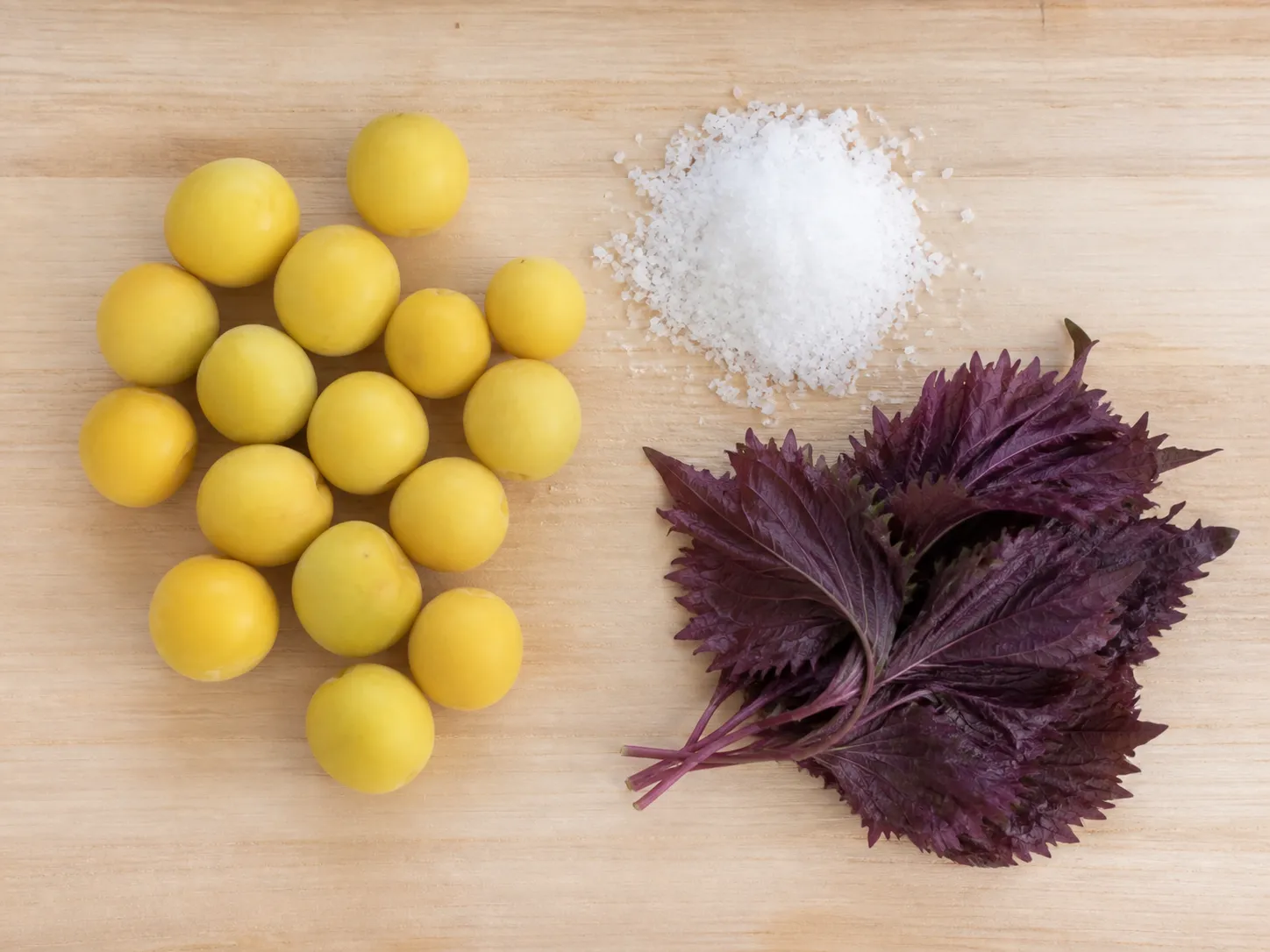
- Harvest ume in June, when they've ripened from hard green to a yellowish blush and give slightly under a thumb
- Wash, remove the stem ends, and layer them in a vat with coarse salt, then weight the whole thing down
- Leave them for weeks as the salt draws the juice out — the plums end up submerged in their own liquid, called umezu, plum vinegar
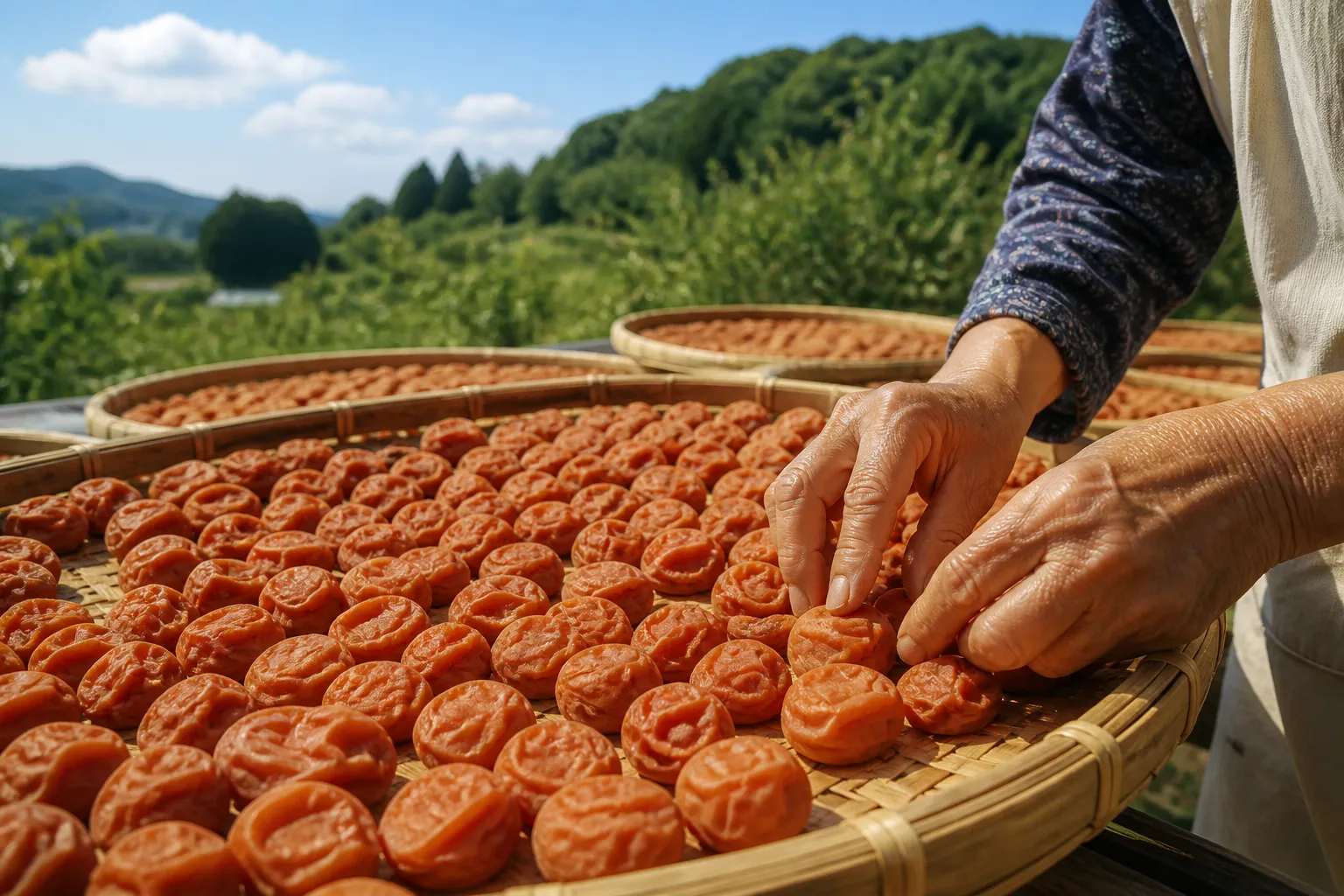
- In midsummer, lay them out on flat trays and sun-dry them for around three days and nights, bringing them in each evening
- Optionally pack them back with salted red shiso leaves, which is where the deep red colour comes from — without shiso they stay pale amber and are called shiraboshi
Step 4 has a name — doyō-boshi, the drying done during the hottest stretch of summer — and it's the step that turns a salted plum into an umeboshi. The sun softens the flesh, concentrates everything, and gives the surface those characteristic wrinkles. Rain during drying is a small disaster, and every ume farmer in Wakayama watches the forecast in late July like it's personal, because it is.
Before you go — the stuff that actually matters
Your questions, answered honestly
"How do I eat my first one without the face?" — Don't eat it alone. Take a small bite — a quarter of one — with a mouthful of plain rice. That's the intended ratio, and it's a completely different and much better experience. Save the eat-a-whole-one-neat move for when someone's filming.
"There's a pit, right?" — Yes, hard and roughly the size of an olive stone, and biting down on it with confidence is the actual injury risk here. Eat the flesh off it and set the pit aside on your plate. Japanese people do this without thinking and nobody warns you.
"Which one should I buy if I only buy one?" — A Nanko-ume from Wakayama, and if you're new to it, a low-salt or honey-cured one. Traditional twenty-percent-salt umeboshi is the real thing and also a lot to meet cold. Start gentle, work up. Or don't work up. That's allowed.
"Is it healthy?" — It's genuinely rich in citric acid and has real antibacterial credentials, and it's been used as a folk remedy forever. It's also, in traditional form, extremely high in sodium. Treat it as a condiment rather than a snack food and both things can be true.
"How long does it keep?" — Traditional high-salt umeboshi keeps for years — families keep decades-old jars and consider them improved. Modern low-salt and honey versions are much more perishable and want refrigeration. Read the label, because these two products behave nothing alike.
"Can I take it home?" — Usually the easiest souvenir on this list — sealed packs, light, stable, widely sold. Check your own country's rules on importing preserved fruit before you commit to a suitcase full.
"When should I visit Wakayama's plum country?" — February for the blossom, when the Minabe hills go white and the groves open to visitors. June for harvest. Late July if you want to see the trays of plums out drying in the sun, which is the photograph you actually want.
What the staff will ask you
| You'll hear | Romaji | Meaning | Just say |
|---|---|---|---|
| 塩分はどれくらいがいいですか? | Enbun wa dorekurai ga ii desu ka? | "How salty would you like them?" | Hikaeme de (low-salt, please) |
| 試食できますよ | Shishoku dekimasu yo | "You can try a sample" | Onegaishimasu (yes, please) |
| はちみつ梅と白干し、どちらにしますか? | Hachimitsu-ume to shiraboshi, dochira ni shimasu ka? | "Honey-cured or traditional salt-only?" | Hachimitsu-ume de (honey, please) |
| 南高梅ですか? | Nankō-ume desu ka? | "Are you looking for Nanko-ume?" | Hai, sore de (yes, that one) |
| 贈答用に包みますか? | Zōtōyō ni tsutsumimasu ka? | "Shall I wrap it as a gift?" | Jibun-yō desu (it's for me) |
To order, just say "Umeboshi kudasai" (梅干しください) — "Umeboshi, please."
Where to eat it
- Minabe town and Tanabe city in Wakayama — the centre of Japanese ume production, with maker's shops, tasting counters, and roadside stations selling grades you simply won't see elsewhere.
- The Nanbu Bairin plum groves in Minabe — the famous hillside plum orchards, open to visitors when the blossom comes in February, which is one of the genuinely great sights of western Japan.
- Roadside stations (michi no eki) across southern Wakayama — the practical option, with a wide range of salt levels and flavours, usually with samples out.
- Anywhere in Japan, honestly — every supermarket sells them, and the Wakayama-grown Nanko-ume packs are on the shelf next to the cheap ones. Look for 南高梅 on the label.
Blossom timing shifts with the weather each year and the groves have a defined viewing season, so check current dates before travelling for it — and note that many small makers' shops in Minabe keep short weekday hours.
Soul Score
Local Roots5/5
First-Timer Friendly2/5
Adventure Level5/5
Comfort Level3/5
Travel Worthy4/5
These scores are one obsessed eater's gut feeling — not a verdict. A low number isn't a bad mark, just a different kind of adventure.
Know someone planning Japan?
← All Articles
Local Food · Minabe, Wakayama
Still hungry?
Eat more from Wakayama
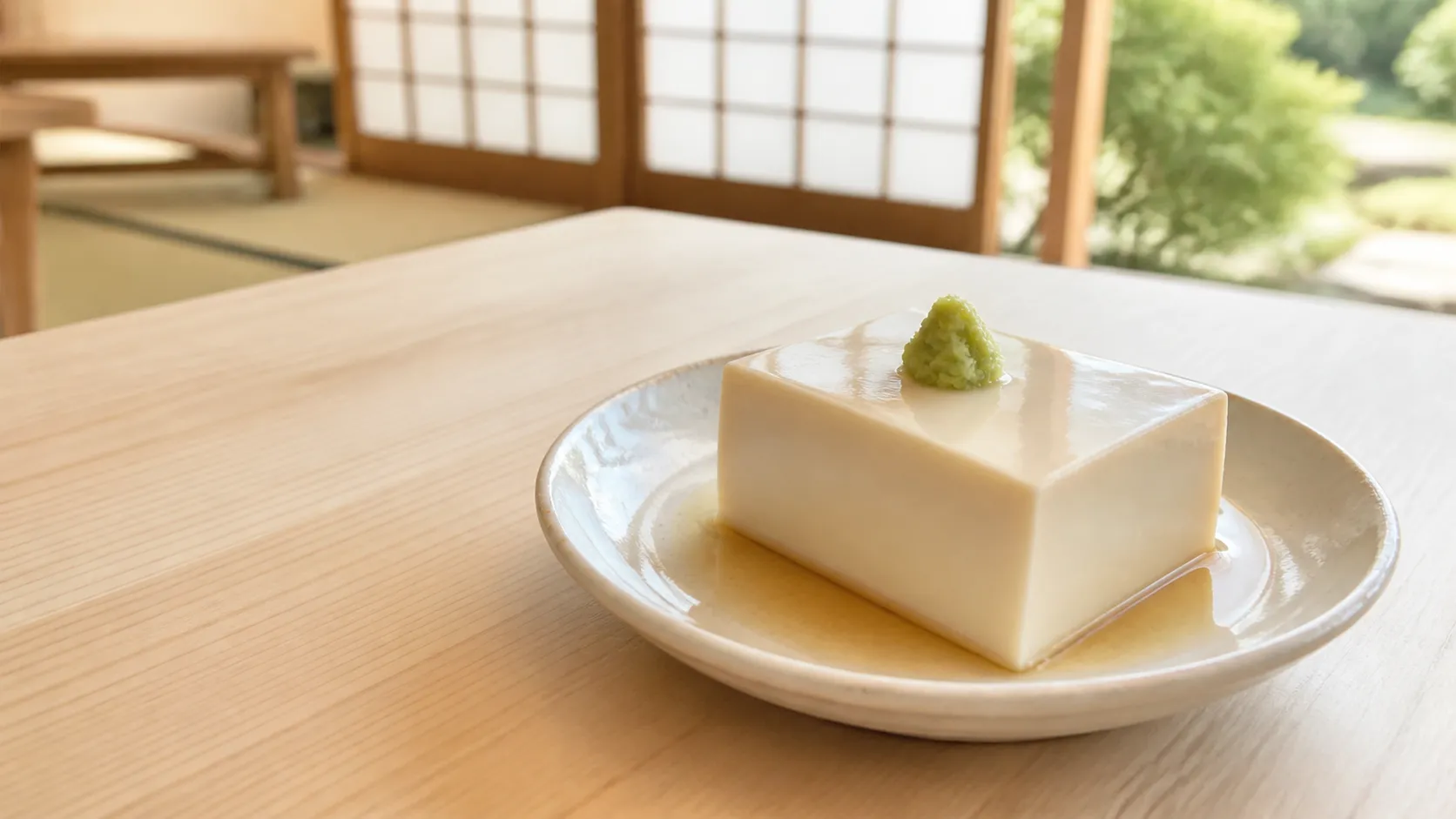
Local FoodKoyasan, Wakayama
Goma-dofu (ごま豆腐)
It has no soybeans in it, no coagulant, and no business being called tofu — and it was the best single thing I ate on a mountain full of monks.
September 2, 2026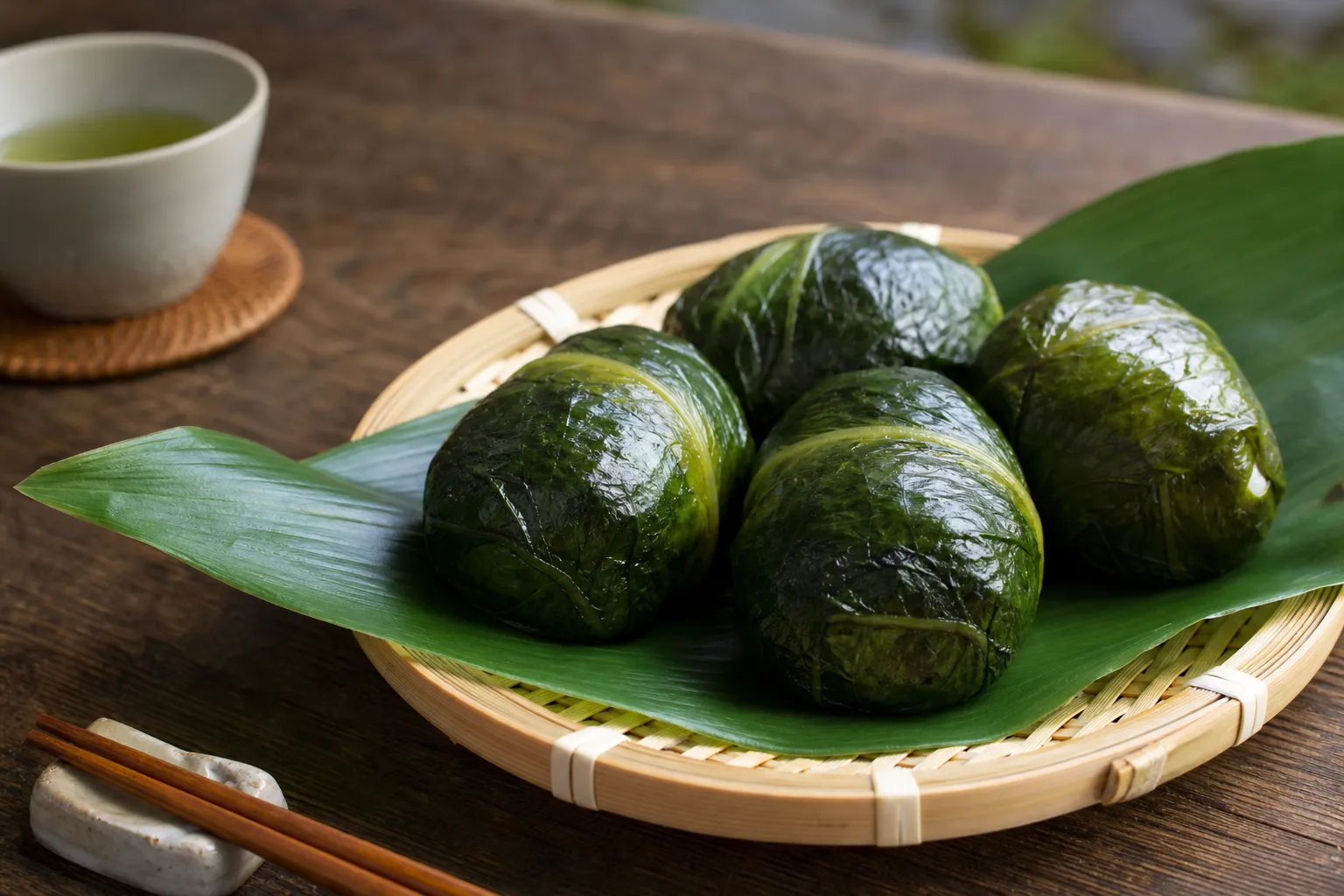
Local FoodKumano, Wakayama
Mehari-zushi (めはり寿司)
A rice ball wrapped head-to-toe in tangy pickled mustard greens, so big and good that the old story says your eyes go wide just to fit it in your mouth.
July 12, 2026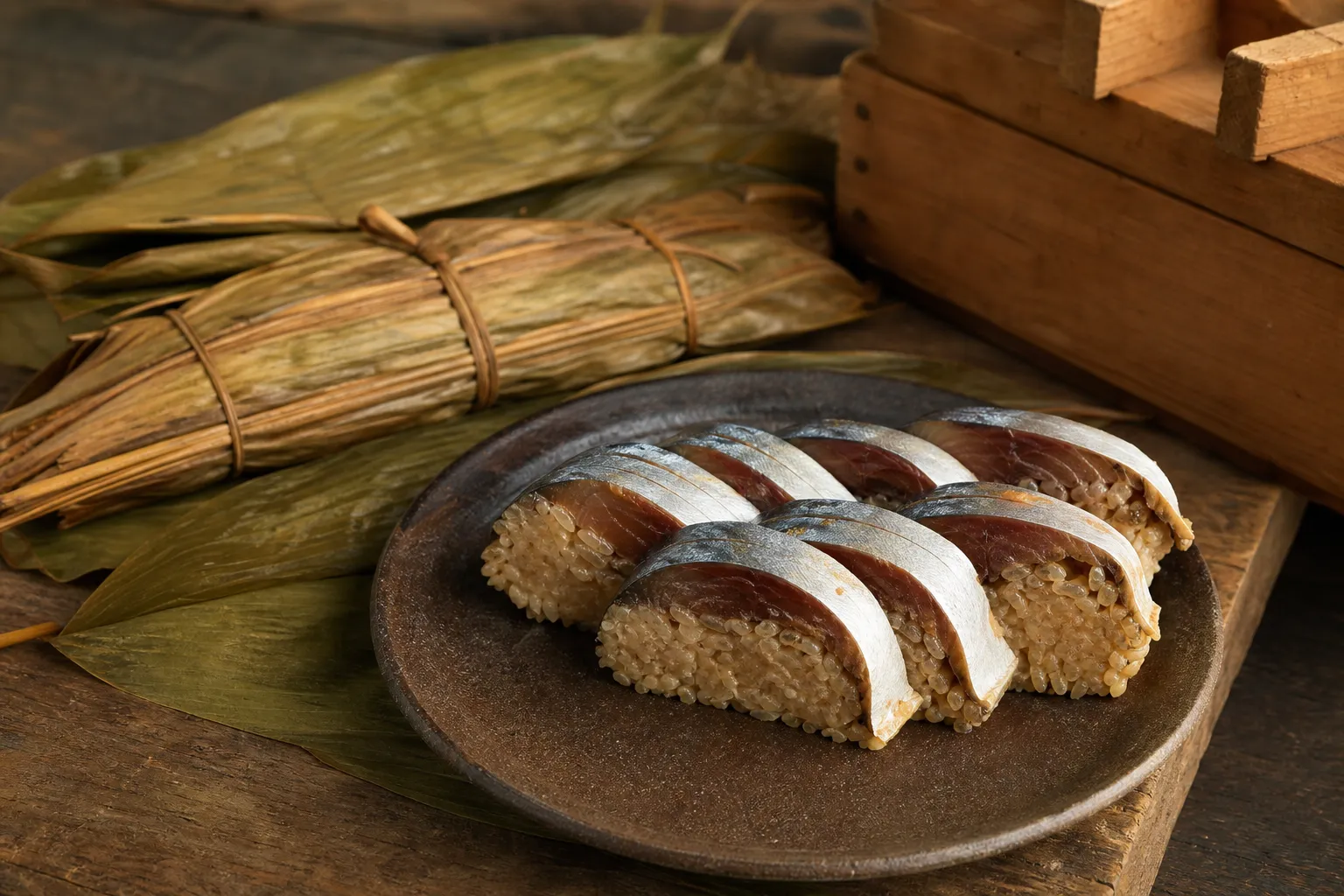
Local FoodKumano, Wakayama
Saba Narezushi (さばのなれずし)
Salted mackerel pressed onto rice and left to ferment for weeks, tangy and funky and alive — the ancient pilgrim sushi of the Kumano mountains, from before sushi meant fresh fish at all.
July 12, 2026