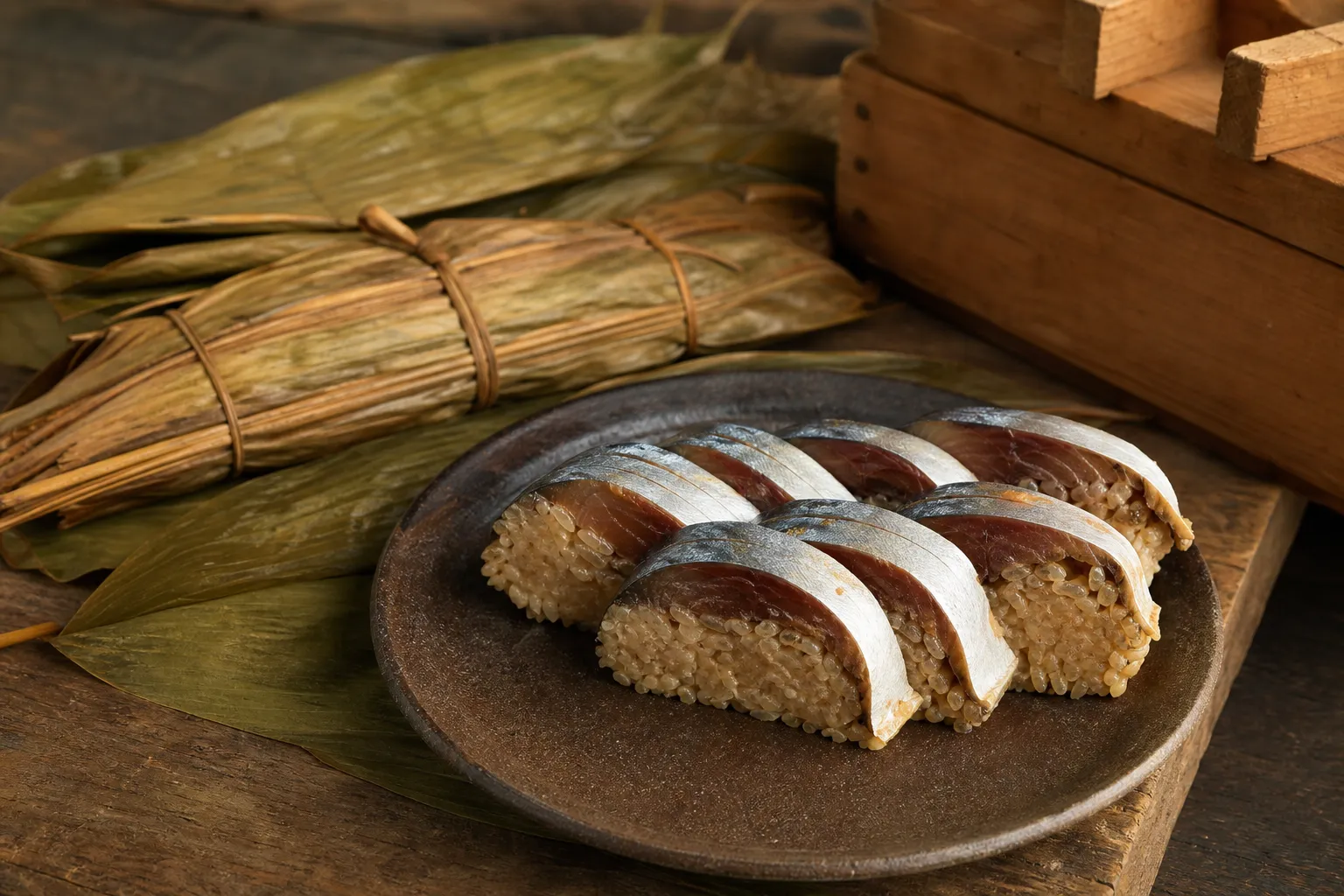
The smell hit first — sharp, sour, a little cheesy, unmistakably fermented — and I'll admit I hesitated with the piece halfway to my mouth. Then I bit in, and the whole thing rearranged itself: tangy, salty, savory, the rice gone soft and almost yogurty, the mackerel dense and rich and completely transformed. My eyes watered a little. And then, against all reason, I reached for a second piece. That's saba narezushi, and it is sushi from before sushi meant what you think it means.
Share this dish


Salted mackerel pressed onto rice and left to ferment for weeks, tangy and funky and alive — the ancient pilgrim sushi of the Kumano mountains, from before sushi meant fresh fish at all.
🍜 Planning a food trip to Wakayama?Add this dish to my Food Trip →
 Add this dish to my Food Trip →
Here's what it is: saba narezushi (さばのなれずし) is fermented mackerel sushi — mackerel salted, then pressed onto rice and left to ferment for days or weeks, so lactic acid builds up and preserves the fish while turning it tangy and funky. It ranges from haya-nare (quick-fermented, milder) to fully nare (long-aged, intense). This is the ancient form of sushi, from the era when "sushi" meant fish preserved in fermenting rice, not fresh fish on top of it. It's a Kumano tradition tied to the region's shrine festivals — and it is absolutely not fresh pressed battera saba, and not grilled mackerel. It's something older and wilder.
Sushi from before sushi — pilgrim food of the Kumano mountains
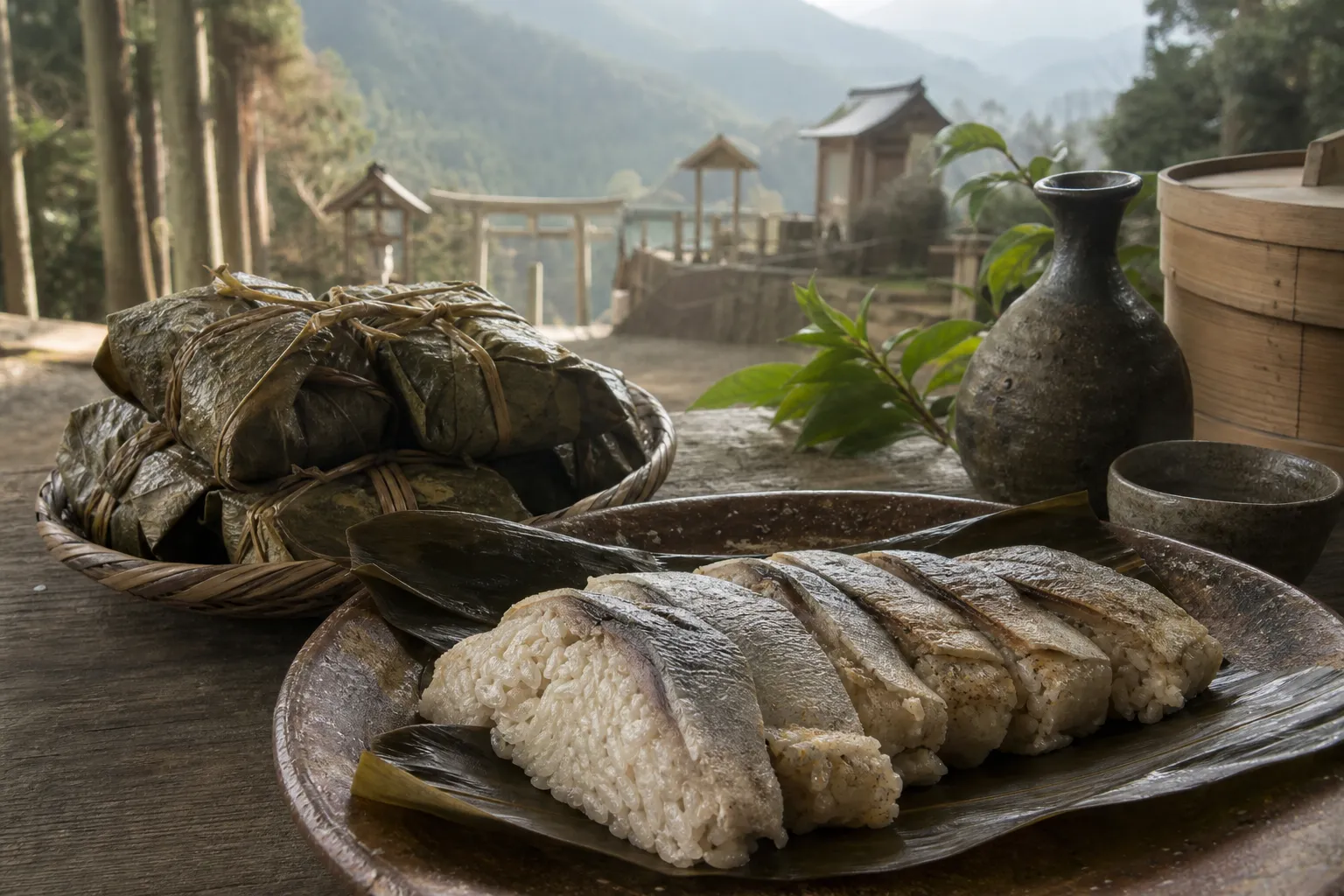
To eat narezushi is to taste the original sushi. Long before Edo-style nigiri with its fresh fish, sushi was a preservation method: pack fish in salt and rice, let the rice ferment, and the acid keeps the fish edible for months. Narezushi is the living survivor of that ancient technique, and the Kumano region of southern Wakayama — deep mountains, sacred rivers, the great Kumano pilgrimage shrines — is one of its strongholds. In a land of steep valleys far from easy fresh fish, fermented mackerel was how you kept the sea's bounty and how you fed a festival.
That's the part that gets me: this is festival and pilgrimage food. Households in the Kumano area make narezushi for shrine celebrations and New Year, each family with its own timing and its own funk, passed down for generations. Eating it in the Kii Peninsula, you're not just trying a local snack — you're tasting a technique that predates the whole modern idea of sushi, kept alive in the mountains by people who never stopped making it. I find that genuinely awe-inspiring. It tastes like time.
What makes the eating experience different
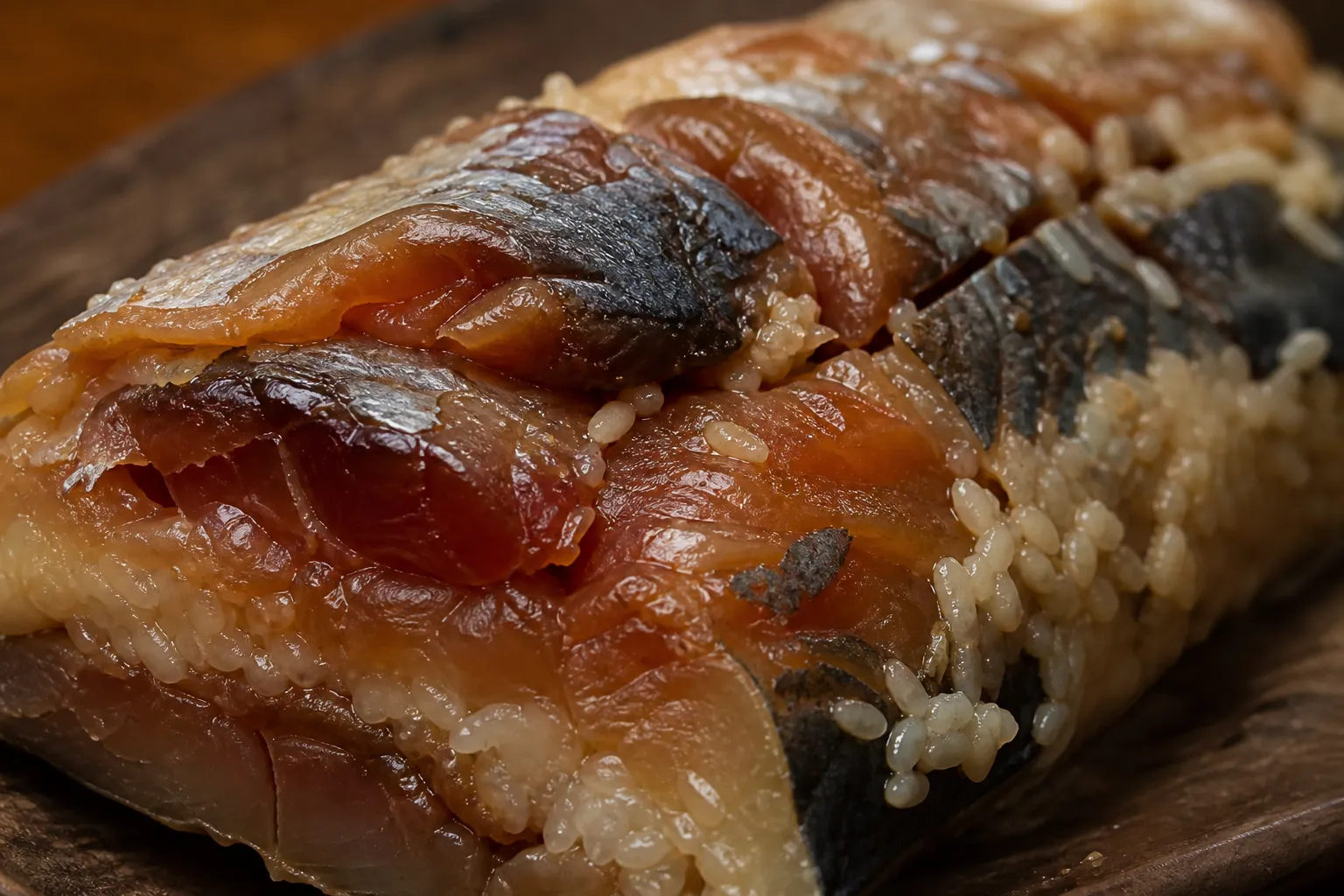
- It's fermented, not fresh — lactic-acid fermentation makes it sour and tangy, closer to a pickle or a cheese than to sashimi
- The degree of aging changes everything — haya-nare is bright and mildly sour and approachable; long-aged nare is deep, pungent and intense
- The rice transforms: instead of the seasoned firm rice of modern sushi, the rice goes soft, sour and almost creamy from fermenting
- The mackerel becomes dense and rich, its oily flesh cured and concentrated, savory in a way fresh saba never is
- It's a preserved food with real funk — a genuine acquired taste that fermentation-lovers adore and first-timers should approach slowly
How it's made
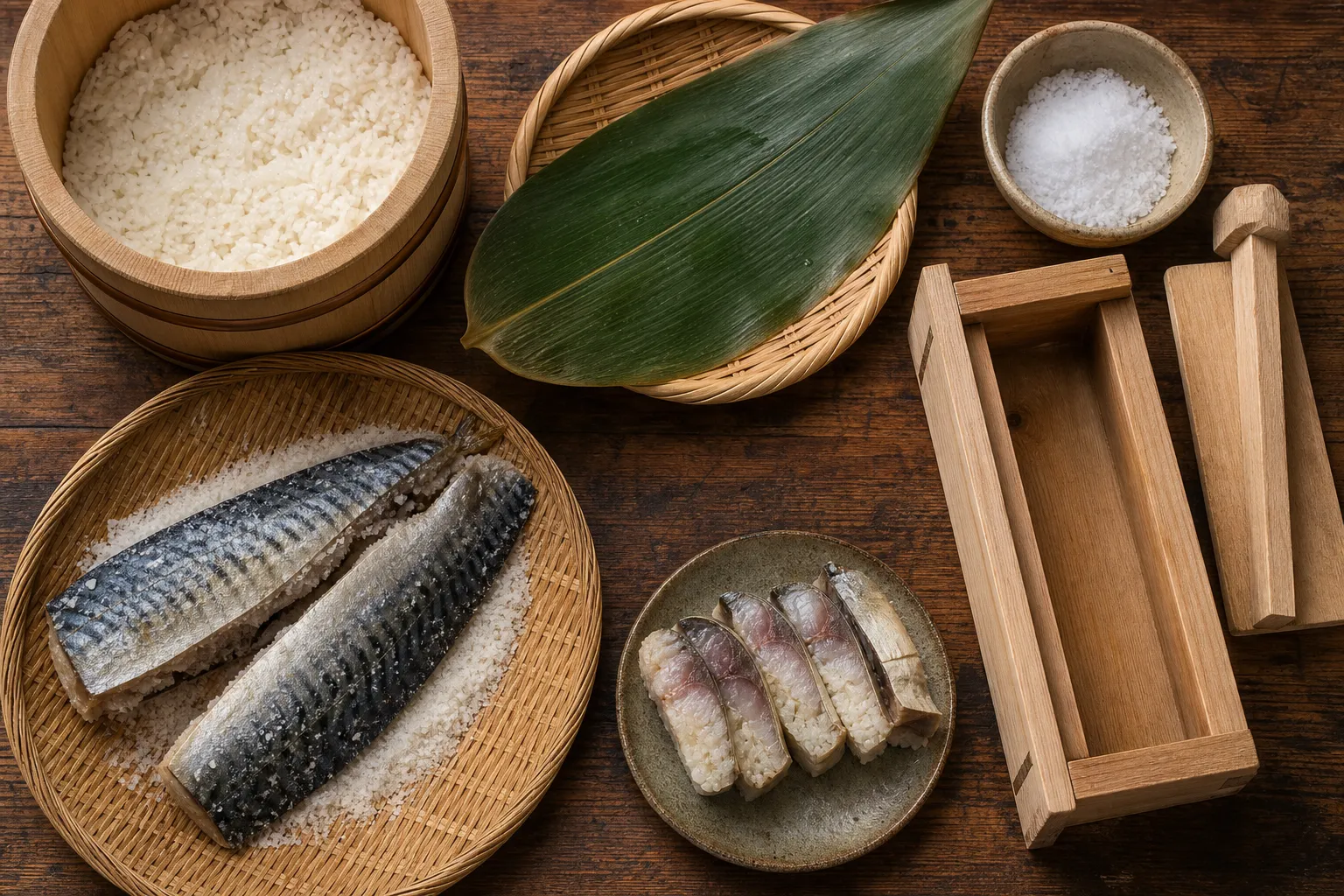
- Salt the mackerel. Fresh mackerel is filleted and packed in salt, sometimes for a good while, to cure and firm the flesh.
- Prepare the rice. Rice is cooked and cooled; it will become the fermenting bed, not a seasoned sushi rice.
- Press fish and rice together. The salted mackerel is combined with rice and packed tightly — pressed into tubs or wrapped and weighted so it stays compact.
- Ferment under weight. The packed sushi is left to ferment under a weight for anywhere from a few days (haya-nare) to several weeks or more (fully nare), while lactic acid develops.
- Check and cut. Once it's reached the desired sourness, it's unpacked and sliced into portions.
- Serve as-is. It's eaten cold, sliced — the fermentation is the seasoning, so it needs little else.
The whole craft is in the salt and the waiting. Too little fermentation and it's barely nare; too long or too warm and it turns harsh. Every Kumano household reads it by smell and feel, and that judgment is exactly what makes one family's narezushi different from the next.
Before you go — meet fermentation on its own terms
Your questions, answered honestly
"How is this different from normal saba sushi like battera?" — Completely different animal. Battera and shime-saba use vinegar-cured mackerel on fresh seasoned rice — clean, bright, ready to eat. Narezushi is actually fermented over days or weeks, so it's sour, funky and preserved. Battera is a pressed-sushi lunch; narezushi is an ancient, living ferment. Don't expect one when you order the other.
"Is it going to be really strong?" — Depends on the aging. Ask for haya-nare (quick-fermented) if you're new — it's tangy and much gentler. Fully aged nare is pungent, cheesy and intense; that's the deep end, for fermentation fans. Either way, the smell is stronger than the taste, so don't let the aroma scare you off.
"Is it safe / can everyone eat it?" — It's a traditional preserved fish food and it contains fish and a lot of salt; recipes and fermentation vary by household and maker, so if you have allergies or dietary limits, check exactly how a given batch was made rather than assuming.
"How should I eat it?" — Cold, in small slices, on its own. Some people love it with a little tea or sake. Start with one piece, let the sourness settle, and see if the second piece pulls you in — it often does.
What the staff will ask you
| You'll hear | Romaji | Meaning | Just say |
|---|---|---|---|
| なれずし、初めてですか? | Narezushi, hajimete desu ka? | "Is this your first time with narezushi?" | Hai, hayanare ga ii desu (yes — I'd like the milder one) |
| よく効いたのと浅いの、どちらにしますか? | Yoku kiita no to asai no, dochira ni shimasu ka? | "Strongly fermented or lightly fermented?" | Asame de (the lighter one, please) |
| 一人前でいいですか? | Ichinin-mae de ii desu ka? | "One portion okay?" | Hai, onegai shimasu (yes please) |
To order, just say "Saba no narezushi o kudasai" (さばのなれずしをください) — "Fermented mackerel sushi, please."
Where to eat it
- The Kumano region of southern Wakayama — the heart of the tradition; look for it at local shops, roadside stations (michi-no-eki) and specialty makers around the Kumano shrine and river area.
- Across the Kii Peninsula — narezushi and related fermented sushi appear in the mountainous parts of Wakayama and neighboring areas, often tied to local festivals and seasons.
- Kumano shrine festivals and New Year — it's traditional celebration food, so festival times are a natural chance to find it; availability is seasonal and maker-dependent, so check locally before you go.
Saba narezushi is a traditional, often small-batch fermented food tied to the Kumano region and its festivals — availability and fermentation style vary by maker and season, so ask locally and check before you travel for it.
Soul Score
Local Roots5/5
First-Timer Friendly2/5
Adventure Level5/5
Comfort Level3/5
Travel Worthy4/5
These scores are one obsessed eater's gut feeling — not a verdict. A low number isn't a bad mark, just a different kind of adventure.
Know someone planning Japan?
← All Articles
Local Food · Kumano, Wakayama
Still hungry?
Eat more from Wakayama
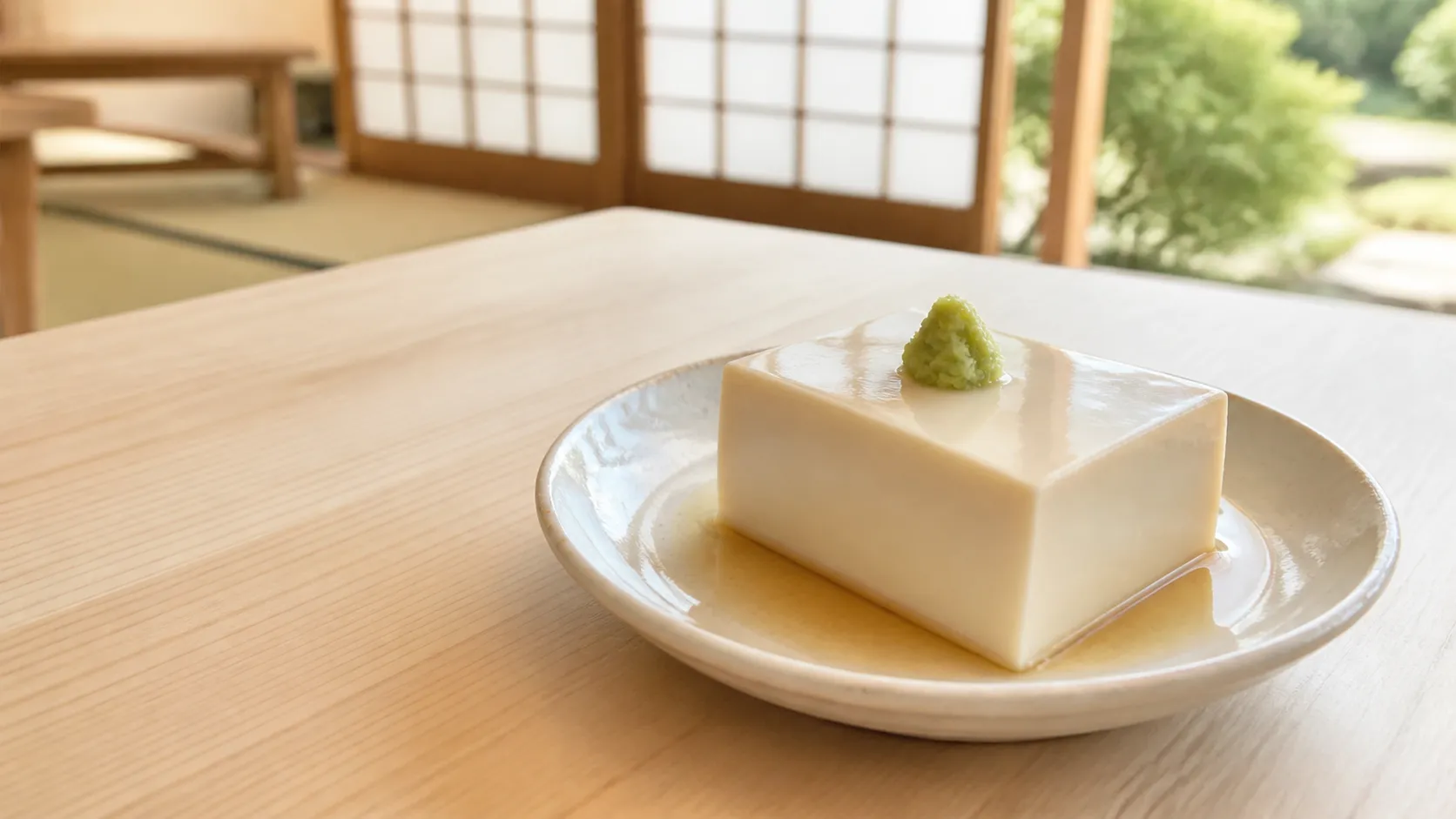
Local FoodKoyasan, Wakayama
Goma-dofu (ごま豆腐)
It has no soybeans in it, no coagulant, and no business being called tofu — and it was the best single thing I ate on a mountain full of monks.
September 2, 2026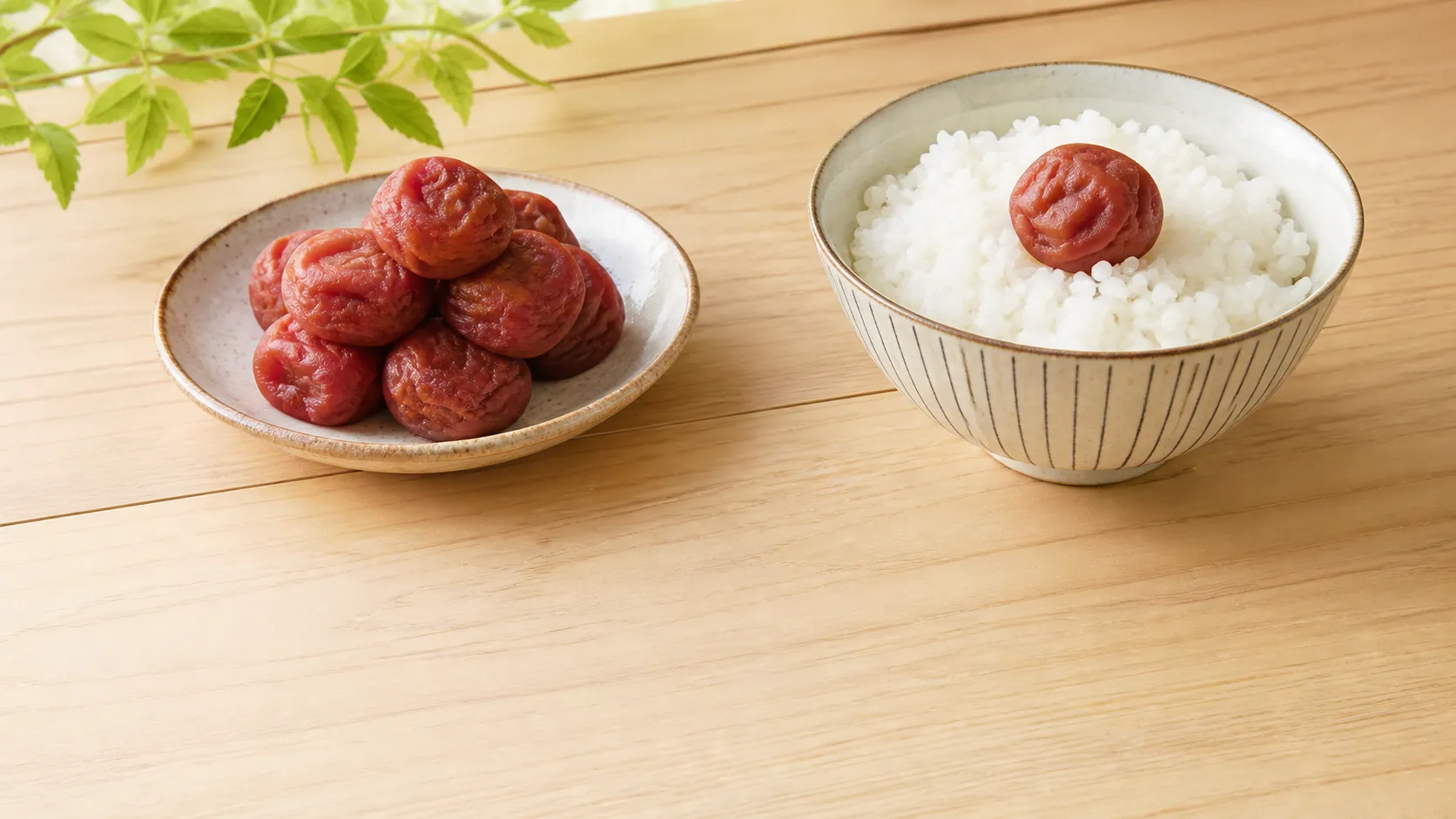
Local FoodMinabe, Wakayama
Umeboshi (梅干し)
My whole face folded inward. A man on the next stool laughed so hard he had to put his tea down. Ten minutes later I bought a bag of them, because apparently I'm like this.
September 2, 2026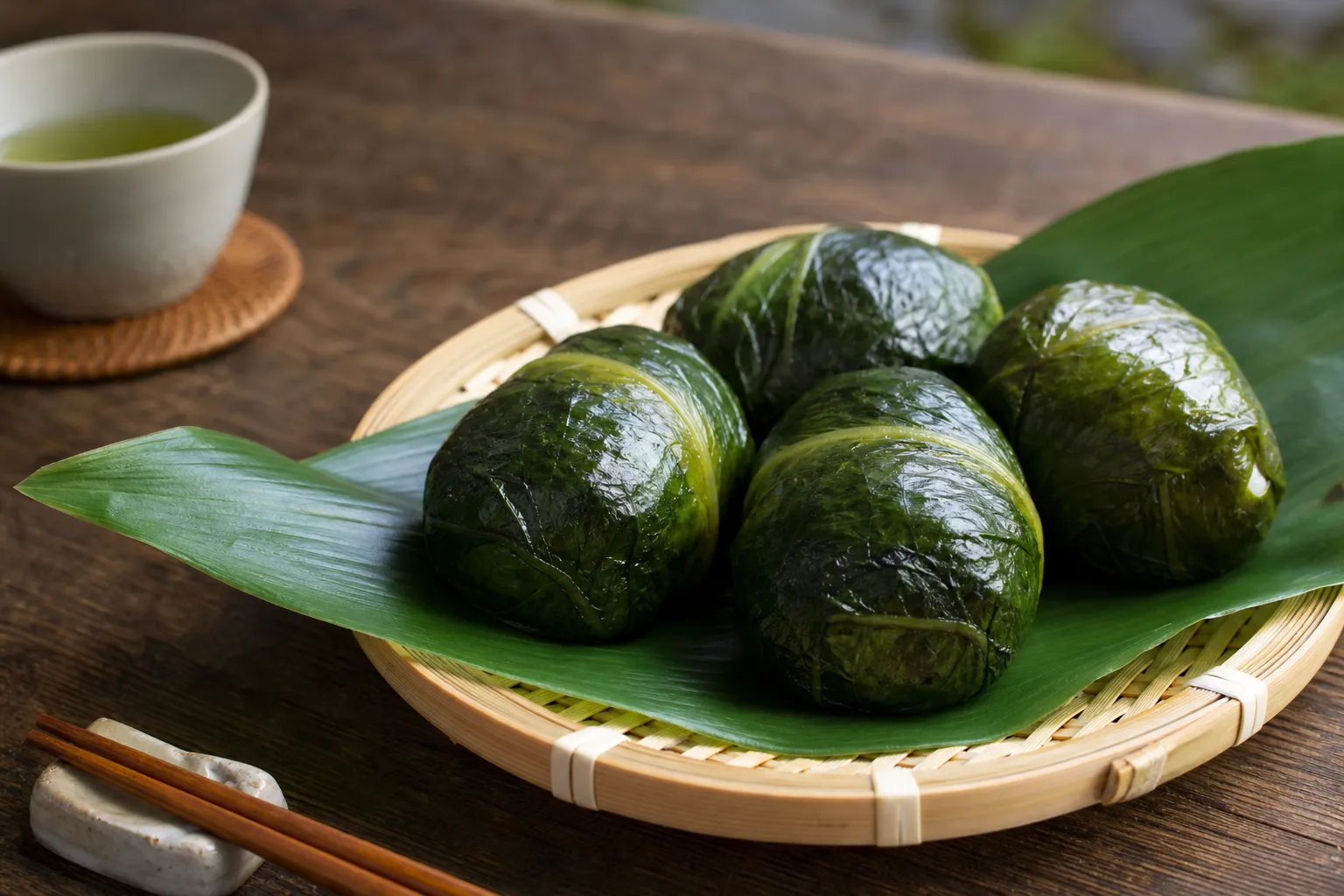
Local FoodKumano, Wakayama
Mehari-zushi (めはり寿司)
A rice ball wrapped head-to-toe in tangy pickled mustard greens, so big and good that the old story says your eyes go wide just to fit it in your mouth.
July 12, 2026