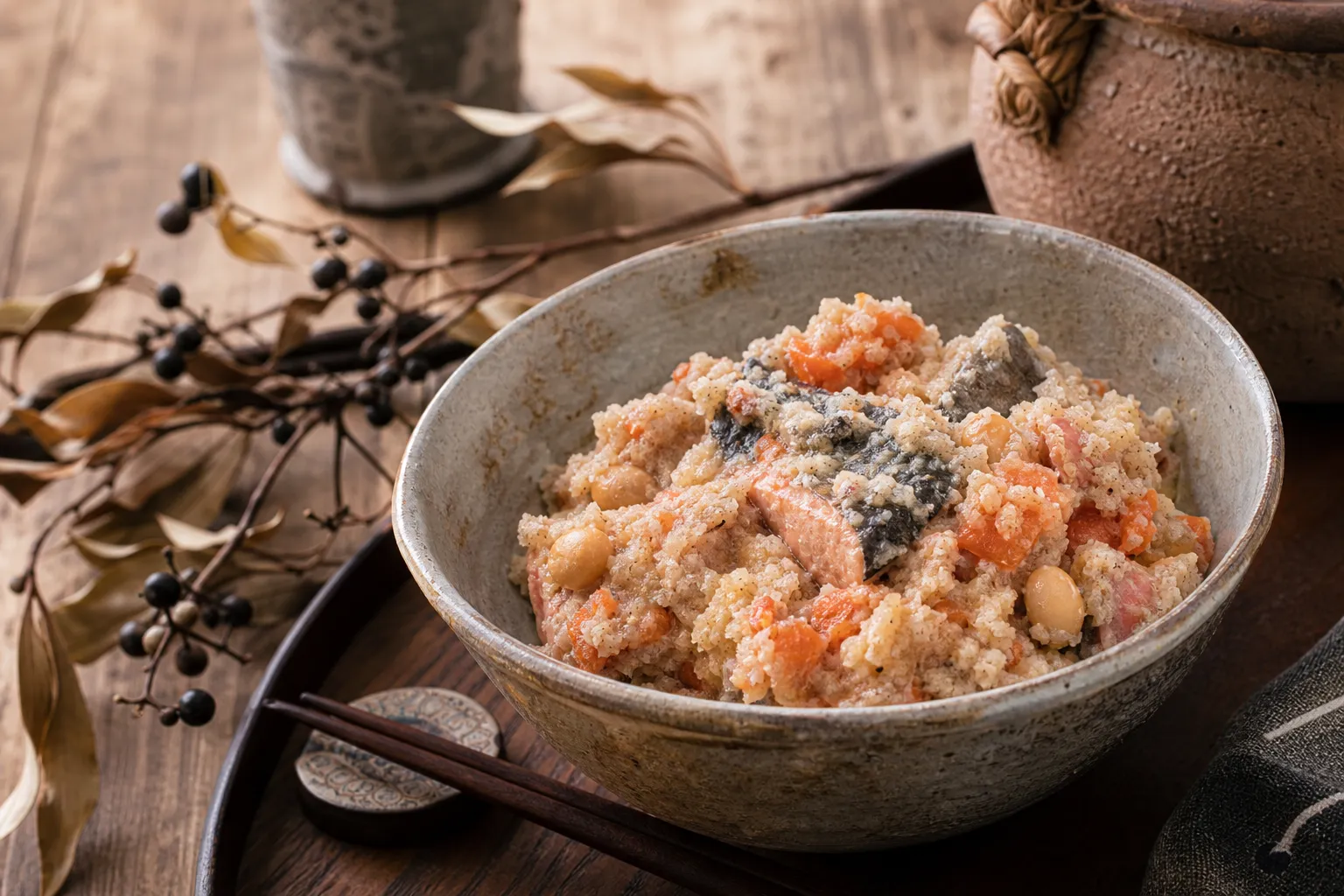
Grey. It's grey. Pinkish-grey, chunky, cold, and it smells like radish and fish and fermented rice all at once, and every instinct I have is telling me to put the spoon down. I did not put the spoon down. I took a bite — and there's this rough, funky, faintly sweet, deeply savory thing happening, the shredded radish sharp and watery, the soybeans soft, the salmon collapsing into it, and I understood in one mouthful why Tochigi grandmothers get genuinely emotional about this. This is shimotsukare, and it might be the most misunderstood bowl in Japan.
Share this dish


Grated daikon, soybeans, a salmon head and sake lees, simmered into a pinkish-grey rustic mess that Tochigi grandmothers swear by — the most polarizing bowl in Japan, and I ate the whole thing.
🍜 Planning a food trip to Tochigi?Add this dish to my Food Trip →
 Add this dish to my Food Trip →
Here's what it is: shimotsukare (しもつかれ) is a rustic simmered dish of daikon and carrot coarsely grated on a spiky grater called an oni-oroshi, cooked down with soybeans, a leftover salmon head, and sake lees (sake-kasu), plus a little fried tofu and sometimes vinegar. It's chunky, rough, pinkish-grey, and served cold or room-temperature — a hatsu-uma festival food offered to the fox god Inari in early February. Grated radish, soybeans, salmon head, sake lees: that's what makes it shimotsukare and not a tidy soup, not nikujaga, and absolutely not curry. It's humble, frugal, ancient, and famously polarizing.
A festival dish born from leftovers and thrift
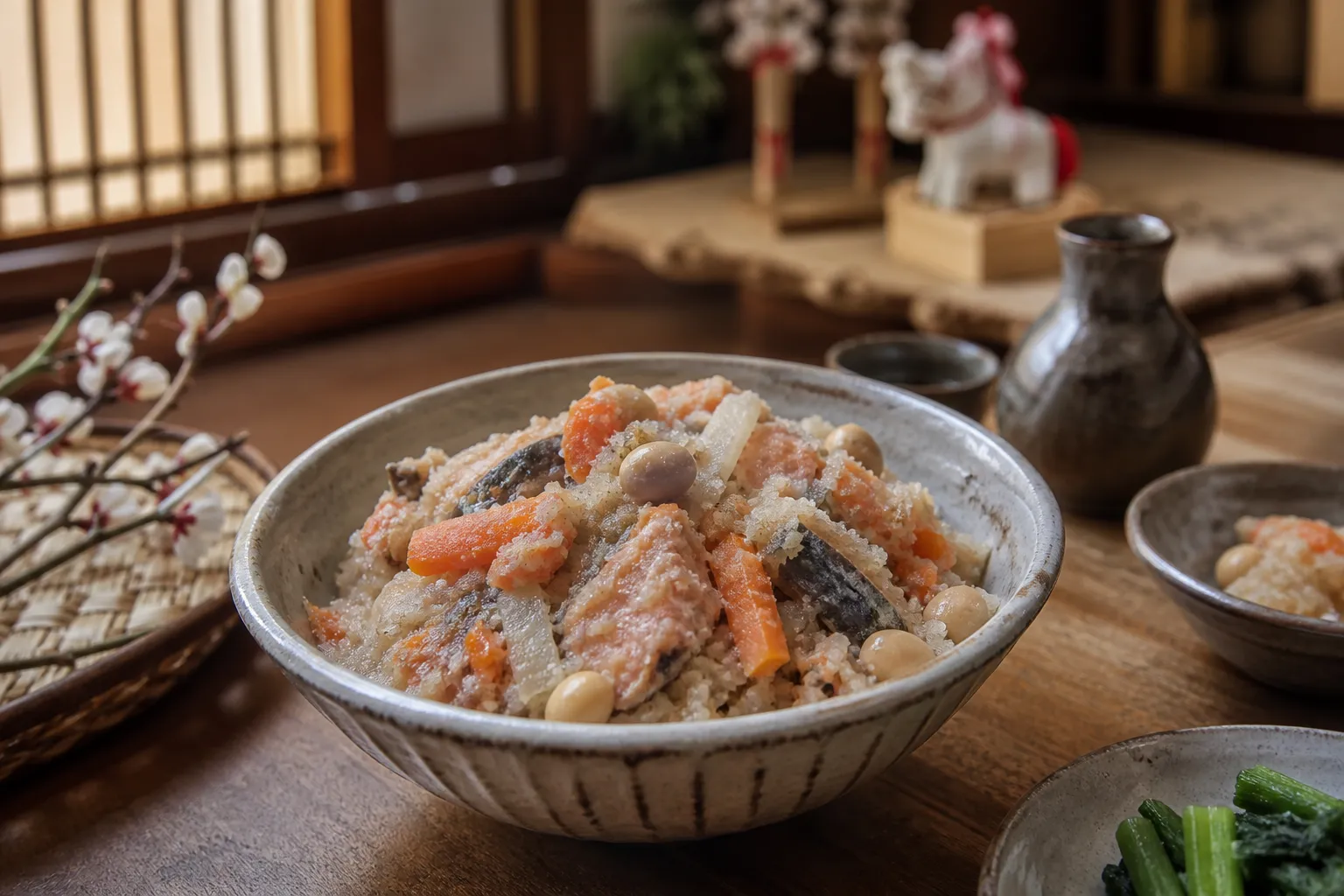
Shimotsukare comes from hatsu-uma, the first "day of the horse" in February, when people across northern Kanto make offerings at the little Inari shrines that dot farmyards and roadsides. It was born from pure thrift: the salmon head left over from New Year's, the soybeans left from Setsubun bean-throwing, the sake lees left from brewing, the radish from the winter store — nothing wasted, everything simmered together into one big pot for the gods and the neighbors. I find this genuinely moving. It's a dish that exists because nothing was thrown away.
And then there's the sharing. Traditionally you make a huge batch and pass it around — and there's an old saying that shimotsukare from seven different houses will keep you healthy all year. So people trade bowls, and every house's version tastes different: more vinegar here, more sake lees there, sweeter, funkier, softer. I love that it's a dish measured in neighbors rather than recipes. It's not restaurant food. It's grandmother food, offering food, February food — the taste of a cold farming village looking after itself.
What makes the eating experience different
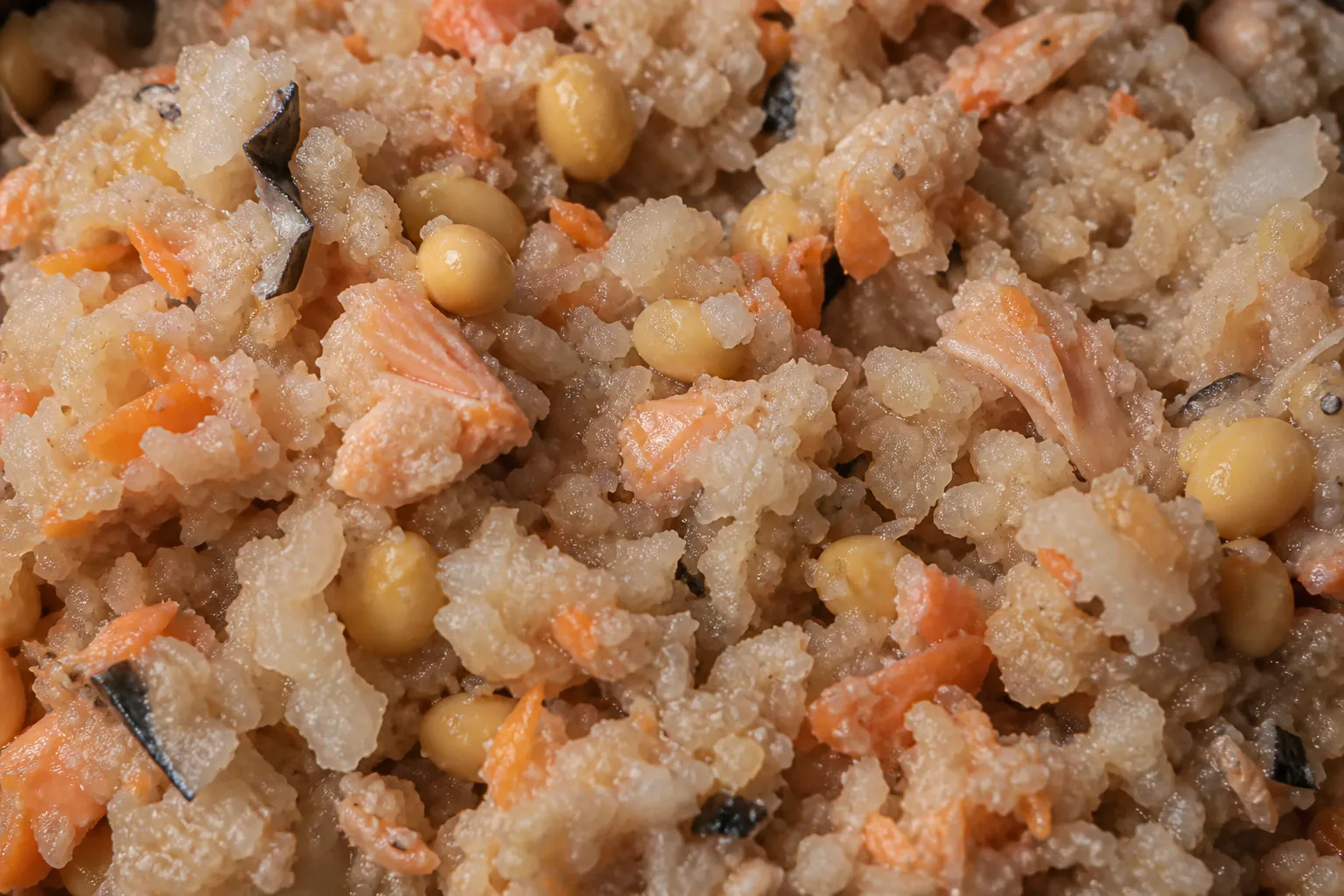
- It's coarsely grated, not chopped — the oni-oroshi grater leaves the daikon and carrot in rough, watery shreds, so the texture is loose and chunky, never smooth
- The sake lees give it a gentle sweetness and a fermented, faintly boozy funk that's the whole personality of the dish
- The salmon head melts into it — soft flakes, collagen-rich richness, a savory depth you can't fake
- It's usually eaten cold or at room temperature, which surprises people and makes the flavors read sharper and funkier
- Every household's is different, so tasting several is part of the ritual — this is a dish that rewards an open mind more than almost any food in Japan
How it's made
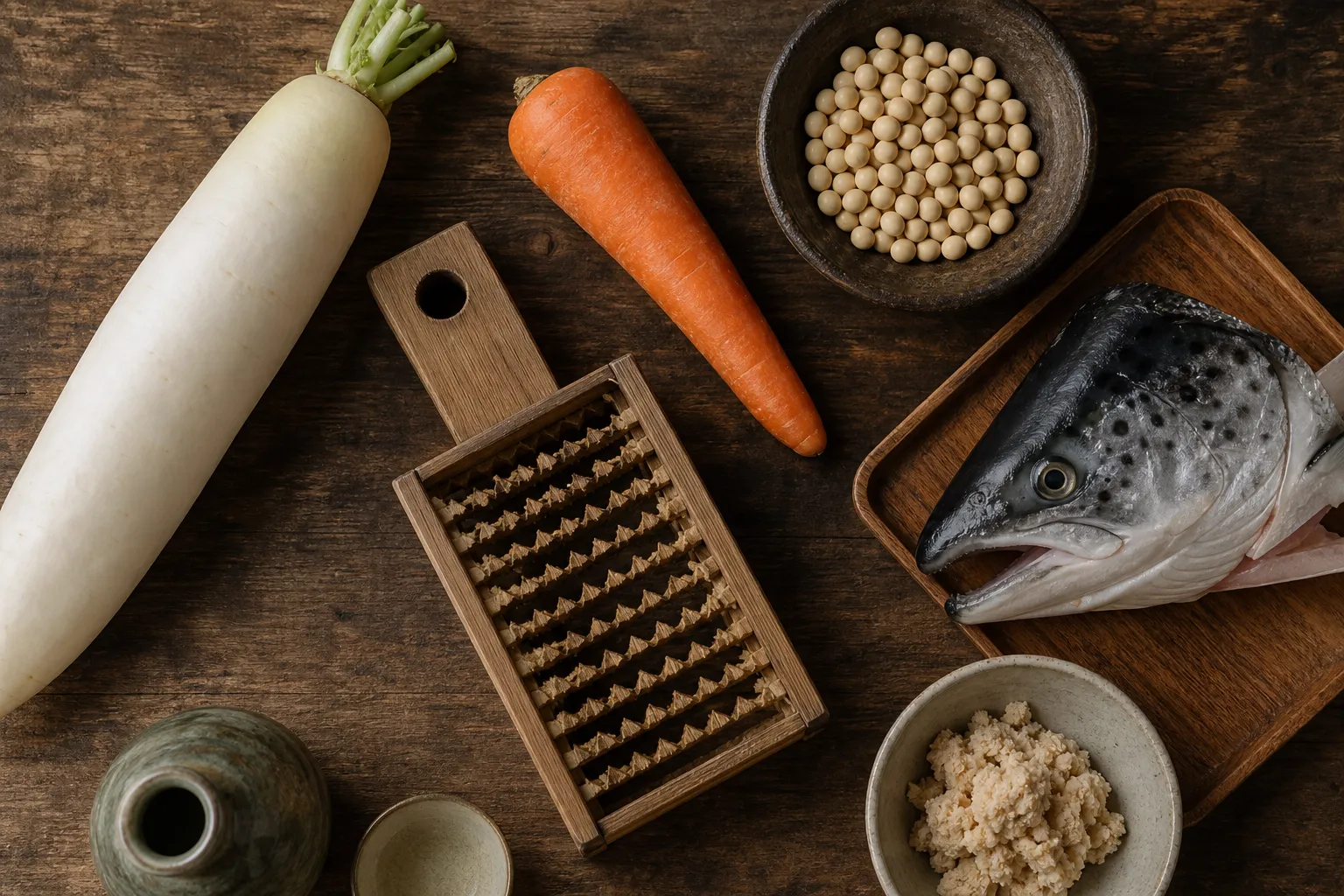
- Grate the radish and carrot. Daikon and carrot are ground on an oni-oroshi — a coarse, toothy grater — into rough, wet shreds (not fine pulp).
- Prep the salmon head. A leftover salted salmon head is grilled or blanched, then broken up and added, bones and all in the old style.
- Add soybeans and tofu. Roasted or soaked soybeans (often the Setsubun leftovers) and fried tofu (abura-age) go into the pot.
- Simmer it all down. Everything cooks together slowly until soft and melded, seasoned simply — the radish releases its water into a rough stew.
- Fold in the sake lees. Sake-kasu is stirred in near the end for sweetness, body and that signature fermented aroma; some cooks add a splash of vinegar.
- Cool and serve. It's cooled and eaten cold or at room temperature, often offered at the Inari shrine first.
The oni-oroshi is the non-negotiable craft here — grate too fine and it turns to mush, grate too coarse and it won't meld. And the sake lees has to be judged by feel. Get both right and the grey mess becomes something surprisingly, stubbornly delicious.
Before you go — go in February, and go in with an open mouth
Your questions, answered honestly
"Is it really as strange as it looks?" — Honestly? A little, yes — and I say that with love. It's cold, grey, chunky, and funky from the sake lees, and it does not photograph well. But "strange-looking" and "bad" are not the same thing. Taste it before you judge it. Plenty of people who brace themselves end up going back for a second spoon.
"What does it actually taste like?" — Savory and radish-sharp, with a soft fermented sweetness from the sake lees and a rich, melting salmon depth. It's rustic and rough, not refined — think country stew, not clean broth. If you like funky, fermented, umami-heavy food, you'll get it fast.
"Can everyone eat it?" — It contains sake lees (alcohol) and fish, so it's not for everyone — recipes vary house to house, so if you avoid alcohol or have allergies, ask exactly what's in that batch and check the ingredients rather than assuming.
"Where and when do I even find it?" — This is the hard part: shimotsukare is mostly homemade, made around hatsu-uma in early February, and rarely sold in restaurants. Your best shots are seasonal markets, roadside stations (michi-no-eki) and local events in Tochigi in winter — and check ahead, because it's very time-of-year specific.
What the staff will ask you
| You'll hear | Romaji | Meaning | Just say |
|---|---|---|---|
| 初めてですか? | Hajimete desu ka? | "Is this your first time?" | Hai, tabete mitai desu (yes, I'd like to try it) |
| 少なめにしますか? | Sukuname ni shimasu ka? | "Shall I give you a small amount?" | Onegai shimasu (yes please) |
| お酒粕、大丈夫ですか? | O-sakekasu, daijōbu desu ka? | "Are you okay with sake lees?" | Daijōbu desu (I'm fine with it) |
To order, just say "Shimotsukare o kudasai" (しもつかれをください) — "Shimotsukare, please."
Where to eat it
- Tochigi Prefecture in early February — around the hatsu-uma festival is the one time of year it's genuinely everywhere; look for it at local shrines' festival days, community events, and homes.
- Roadside stations (michi-no-eki) and local markets in Tochigi and northern Kanto — some sell homemade-style batches in winter; availability is seasonal and limited, so check before you go.
- Inari shrines during hatsu-uma — the dish is an offering food, so shrine festivals around northern Kanto are its true home; times and dates shift each year, so confirm the local hatsu-uma schedule ahead.
Shimotsukare is a seasonal, largely homemade festival food — it's not on most restaurant menus, so plan around early February and check local event and michi-no-eki listings before you travel for it.
Soul Score
Local Roots5/5
First-Timer Friendly1/5
Adventure Level5/5
Comfort Level3/5
Travel Worthy4/5
These scores are one obsessed eater's gut feeling — not a verdict. A low number isn't a bad mark, just a different kind of adventure.
Know someone planning Japan?
← All Articles
Local Food · Tochigi
Still hungry?
Eat more from Tochigi
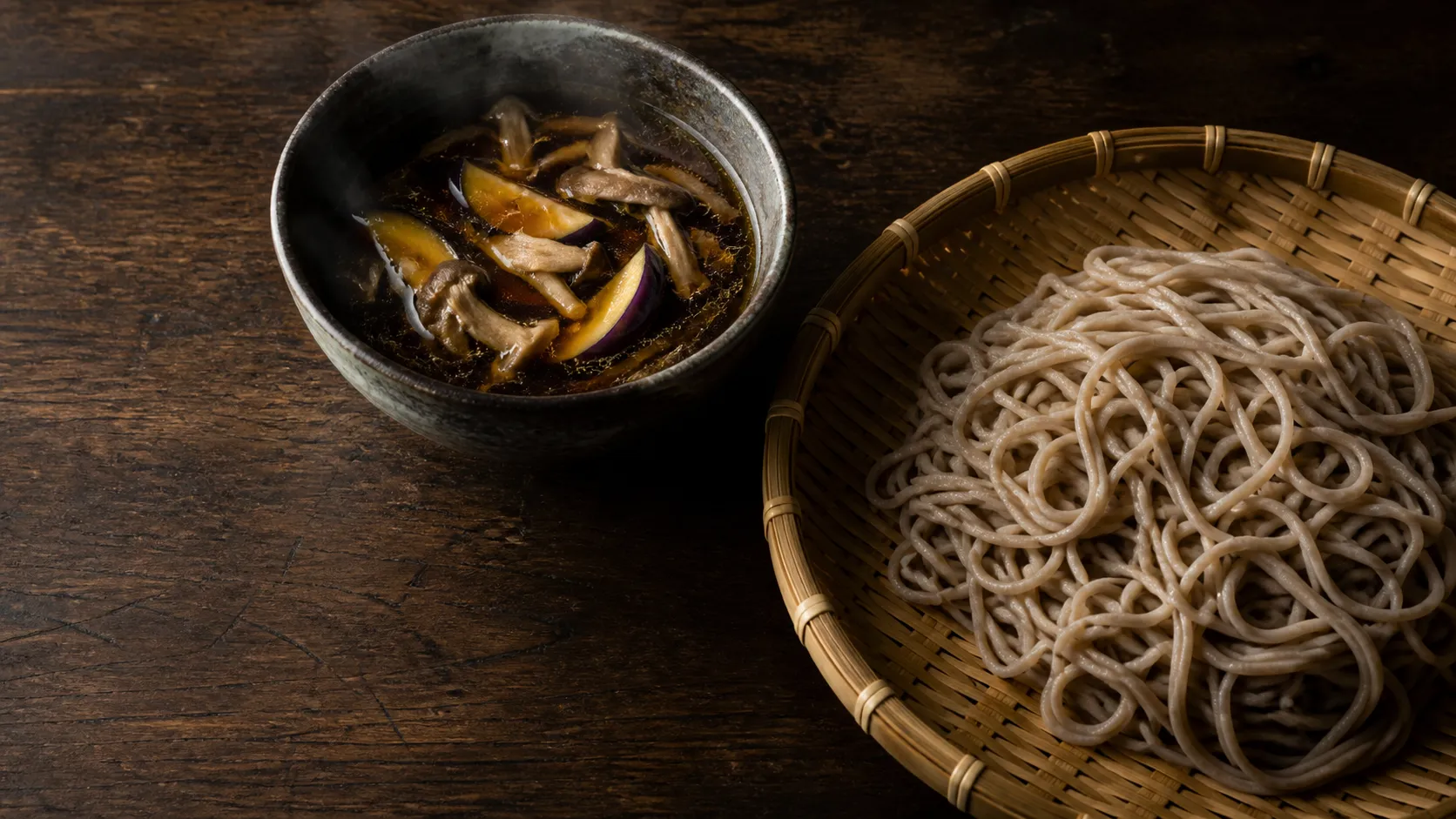
Local FoodTochigi
Chitake Soba (ちたけそば)
The mushroom itself is chewy and honestly a bit gritty. Nobody in Tochigi cares. They want what it leaks into the broth, and after one dip I understood the whole obsession.
September 2, 2026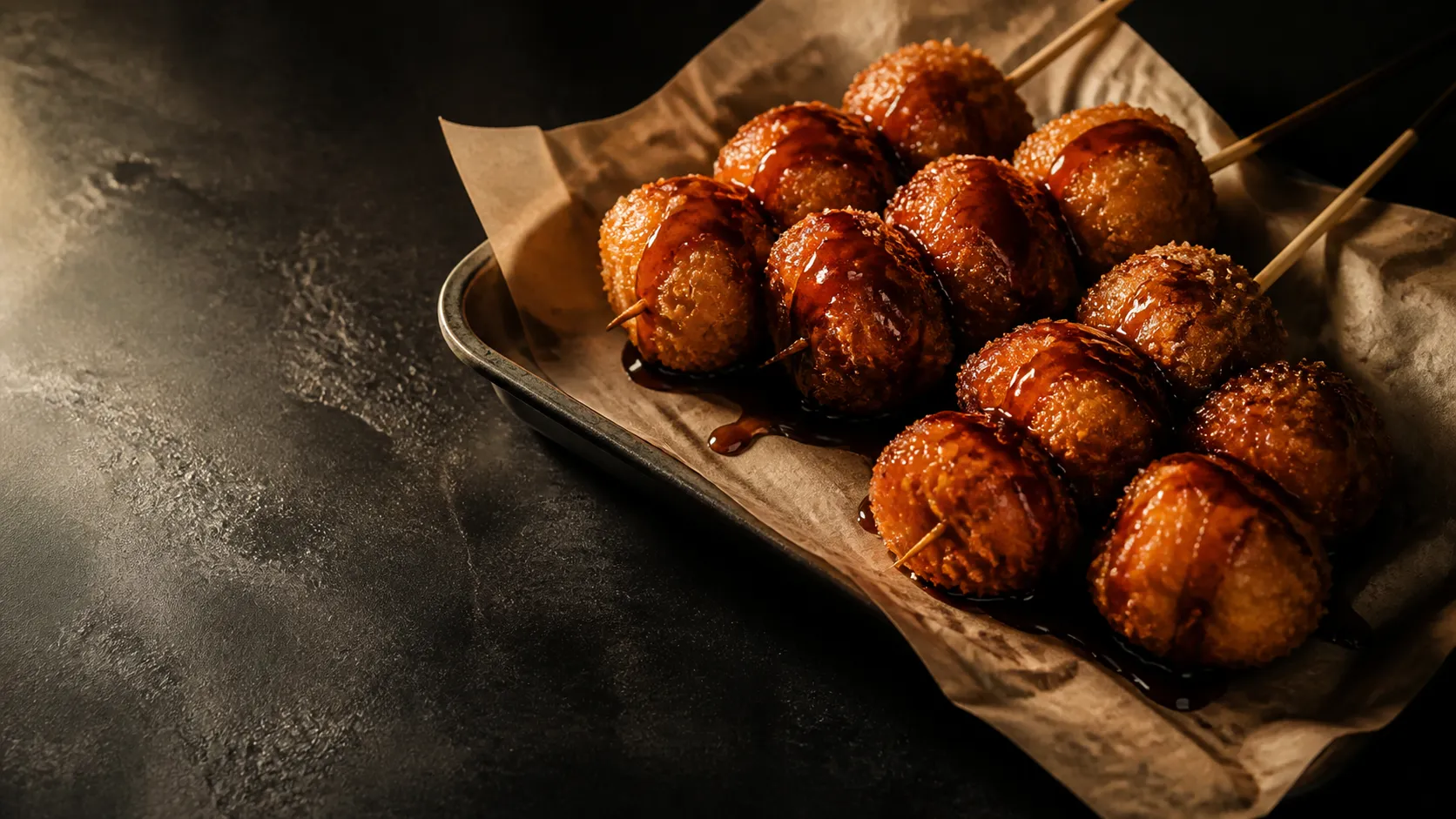
Local FoodSano, Tochigi
Imo-furai (いもフライ)
A hundred yen. One skewer. Potato, panko, and a slap of dark sauce — and I stood on the street eating four of them like I had somewhere to be and had decided not to go.
September 2, 2026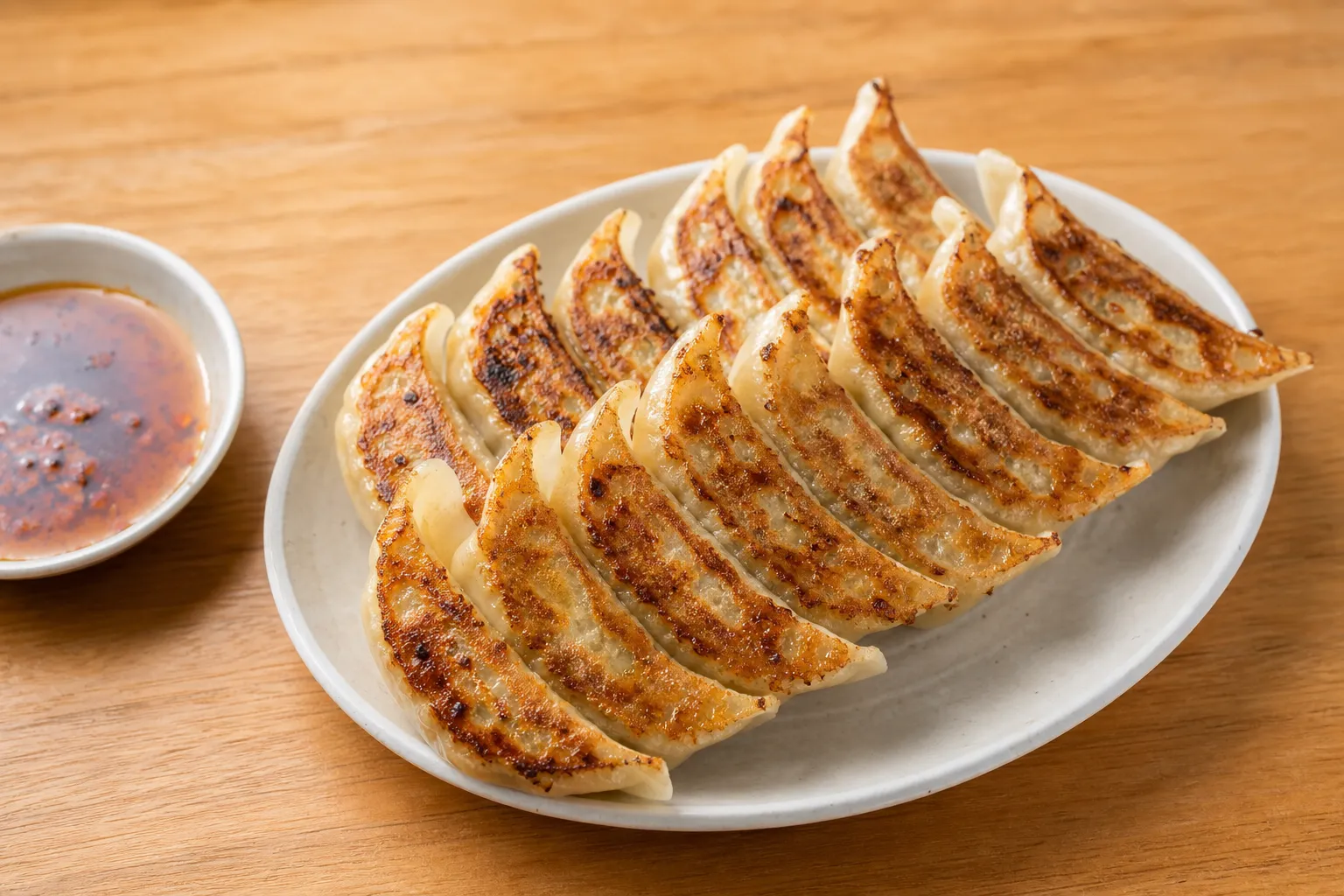
Local FoodUtsunomiya, Tochigi
Utsunomiya Gyoza (宇都宮餃子)
A whole plate of pan-fried dumplings with lacquered, crackle-crisp bottoms — in the city that eats more gyoza than anywhere else in Japan and has zero shame about it.
July 12, 2026