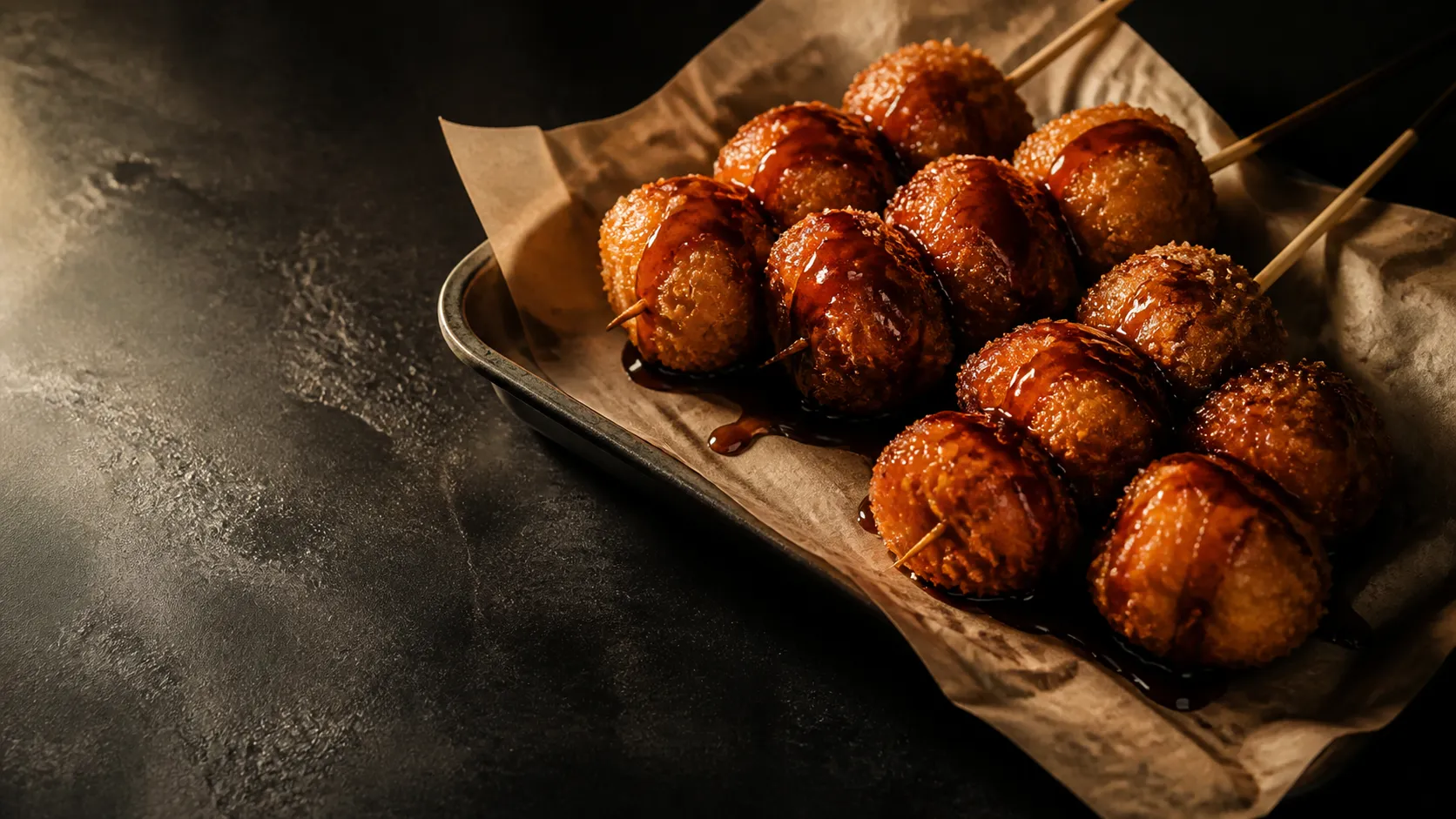
One hundred yen. That's what this cost me. I want that on the record before I say anything else, because I'm about to get emotional about a potato on a stick and you deserve to know the stakes.
Share this dish


A hundred yen. One skewer. Potato, panko, and a slap of dark sauce — and I stood on the street eating four of them like I had somewhere to be and had decided not to go.
🍜 Planning a food trip to Tochigi?Add this dish to my Food Trip →
 Add this dish to my Food Trip →
The woman handed it over, still dripping sauce, wrapped in a scrap of paper thin enough that I could feel the heat straight through it. I bit down and the panko went off like a small firework — crunch — and then it was just soft, steamy, faintly sweet potato and that dark, tangy, slightly fruity sauce, and I made a noise in the middle of the street that I will not be transcribing here.
Then I bought three more. I ate them standing up, in a row, without moving.
Imo-furai is exactly what it sounds like once you know that imo means potato and furai means fry: chunks of boiled potato threaded onto a bamboo skewer, coated in panko, deep-fried, and brushed generously with a dark Worcestershire-style sauce. That's it. That's the whole thing. It's the local street snack of Sano in Tochigi, it costs about as much as a vending machine coffee, and it has no business being as good as it is.
The snack a factory town built for itself
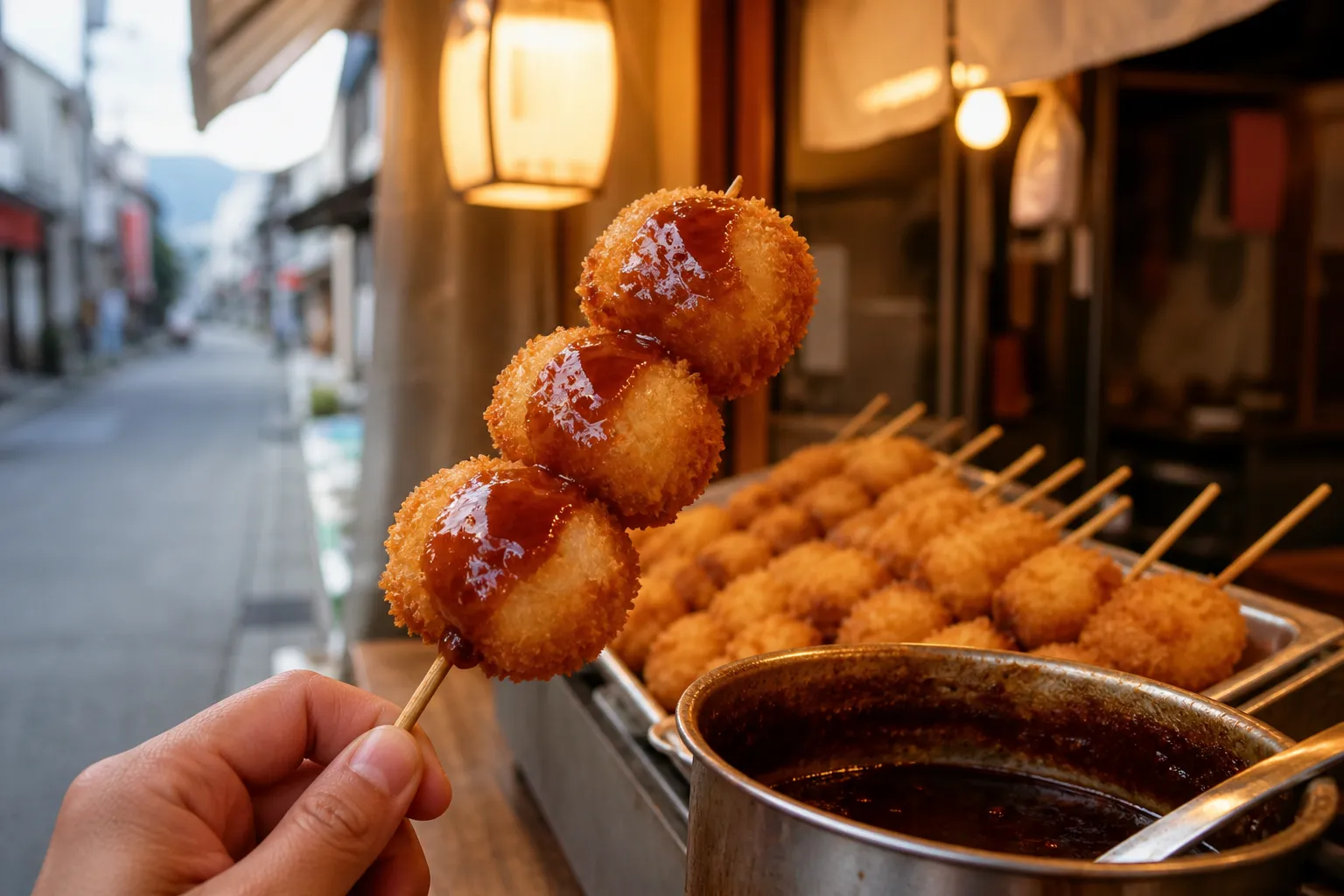
Sano is a working town in southern Tochigi — textiles, small factories, the kind of place where people historically finished a shift and wanted something hot, filling, and cheap on the walk home. Potatoes were cheap. Panko was cheap. Frying oil was already going. Sauce was on every table in Japan by then. Somebody put those four facts together, stuck it all on a skewer so you could eat it with one hand, and never really stopped.
It stayed local in the most complete way. Not "regional specialty marketed to tourists" local — actually local, sold from butcher shops and tiny corner stands and neighborhood snack counters to people who grew up eating it after school and never thought of it as special. Sano has become better known nationally for its ramen, and I understand why, but I'd argue the potato skewer is the more honest portrait of the town.
I find something genuinely moving in a food this humble surviving unchanged for generations purely because the people who live there refuse to stop wanting it. Nobody is preserving imo-furai. They're just eating it.
Why a potato on a stick works this well
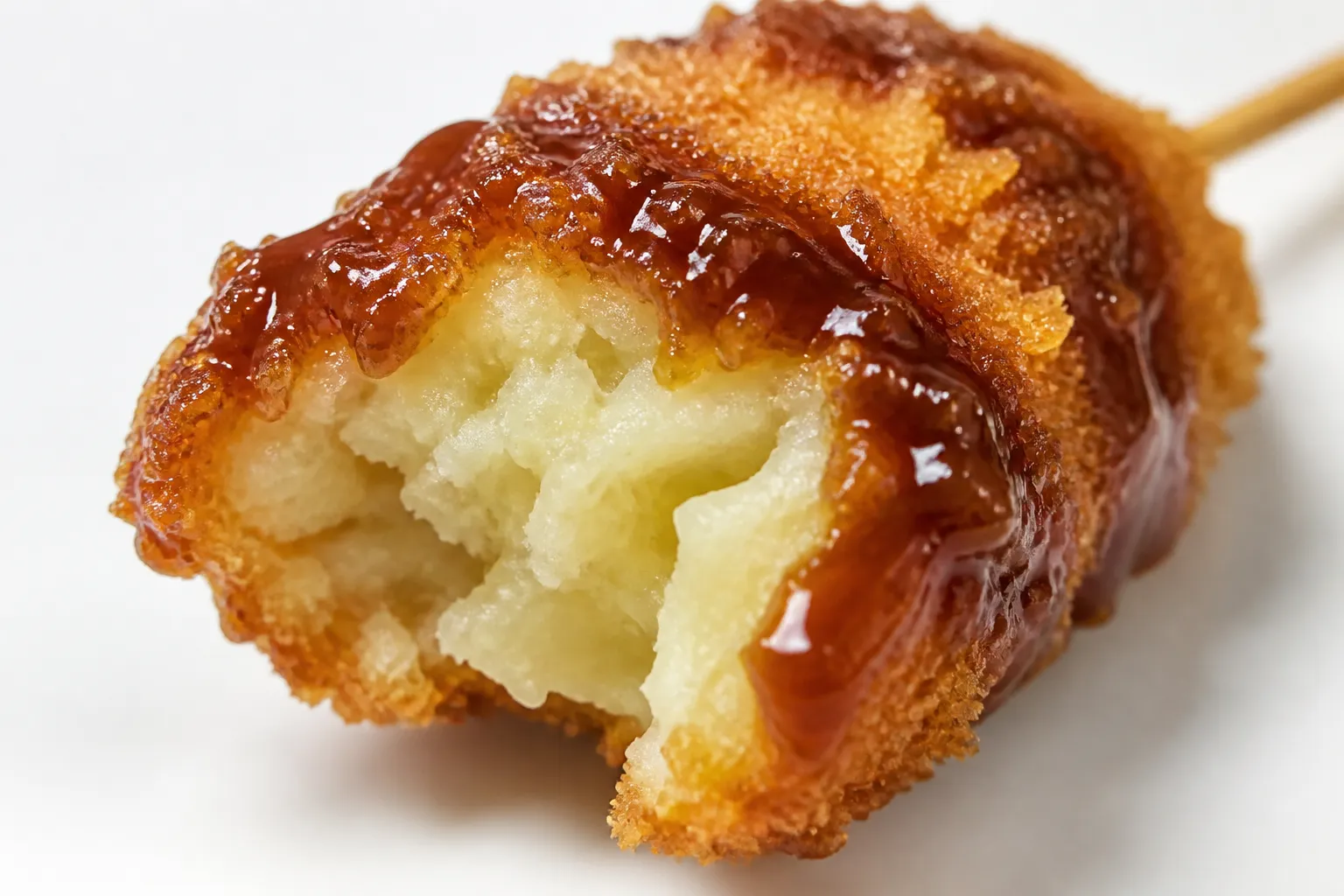
Here's the trick, and it's a good one: the potato is boiled first. Fully cooked, soft, almost creamy. So when it goes into the oil, the frying isn't cooking anything — it's purely building a crust. You get this violent, jagged panko shell wrapped around something that has the texture of the inside of a good mashed potato. Two completely opposite textures, one bite, no transition.
Then the sauce hits. Japanese Worcestershire-style sauce is darker, thicker, and fruitier than what you might be picturing — sweet, tangy, a little vegetal, with that fermented depth that makes it taste like it's been thinking about you. It soaks into the panko just enough at the edges while staying glossy on top. The whole thing runs sweet-salty-sour in about that order.
And it's warm and starchy and completely uncomplicated, which is the actual point. This is a food designed to be eaten in cold weather with your other hand in your pocket.
Eat it fast. I mean it. The crust starts surrendering to the sauce almost immediately, and while a soft one is still nice, a fresh one is a different food entirely. Nobody takes imo-furai home. That's not what it's for.
How it comes together
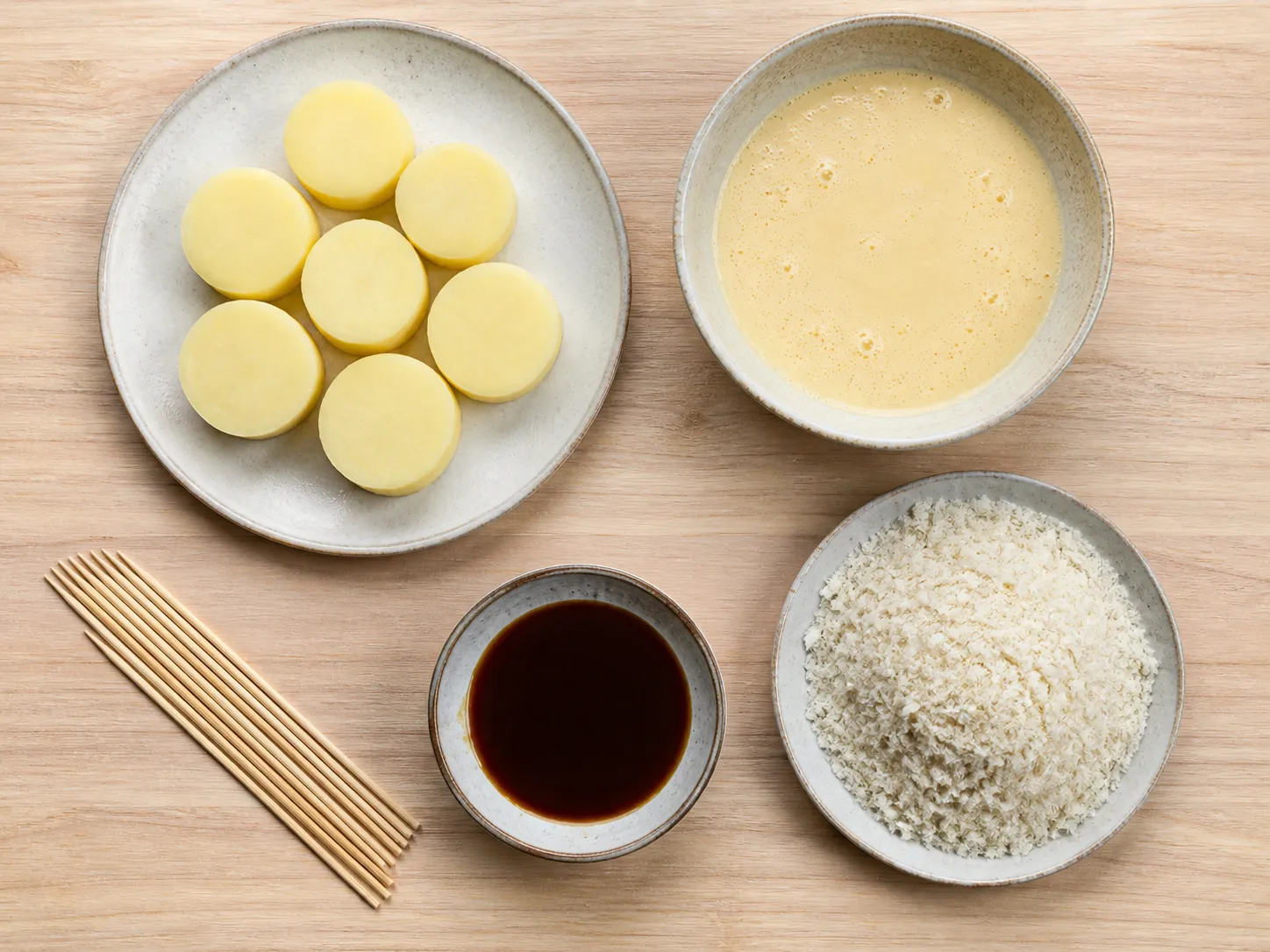
- Boil potatoes until fully soft, then cool and cut them into thick rounds
- Thread two to four rounds onto a bamboo skewer
- Dip in a loose flour batter, then press into panko breadcrumbs
- Deep-fry until the crust is an even golden-brown — the potato inside is already cooked, so this is short
- Brush or dunk generously in dark Worcestershire-style sauce and hand it over immediately
Step 1 is where a bad imo-furai gets ruined before it starts. Under-boil the potato and you get a firm, dry chunk; over-boil it and it collapses off the skewer in the fryer. The good stands have this calibrated to a degree that they will absolutely not explain to you.
Before you go — the stuff that actually matters
Your questions, answered honestly
"Is this just a croquette on a stick?" — No, and the difference matters. A korokke is mashed potato mixed with other things, formed into a patty, breaded, and fried. Imo-furai leaves the potato in whole chunks with its shape intact. You bite through crust into an actual piece of potato, not into a smooth filling.
"How many should I order?" — More than you think. One skewer is a taste, not a snack. Locals routinely buy three to five. At around a hundred yen each, hesitating is the only real mistake available to you.
"Do I need to ask for sauce?" — Usually no — it comes sauced. Some stands have a communal sauce pot for re-dipping, in which case there's one rule: dip once. Same etiquette as Osaka's kushikatsu. Double-dipping in a shared pot is a genuine faux pas.
"Is it vegetarian?" — The skewer itself is potato, flour, breadcrumbs, and sauce, so on paper yes. But it's fried in shared oil with meat items at most stands, and some sauces contain fish-derived ingredients. If that matters to you, it's worth asking, and worth accepting that the answer might be uncertain.
"Can I eat it while walking?" — This is one of the few Japanese foods where eating on the street is completely normal, because it's sold from stands with nowhere to sit. Just keep the paper under it — the sauce drips, and it does not come out of a shirt.
"Worth a trip from Tokyo?" — Honestly? Not on its own — it's about 90 minutes out. But Sano also gives you Sano ramen and a famous temple, and eating four potato skewers between those two things makes for a genuinely great cheap day trip. Go for the town, not the skewer, and let the skewer ambush you.
What the staff will ask you
| You'll hear | Romaji | Meaning | Just say |
|---|---|---|---|
| 何本にしますか? | Nanbon ni shimasu ka? | "How many skewers?" | Sanbon kudasai (three, please) |
| ソースかけますか? | Sōsu kakemasu ka? | "Shall I put sauce on it?" | Hai, onegaishimasu (yes, please) |
| 熱いので気をつけて | Atsui node ki o tsukete | "It's hot, be careful" | Hai, arigatō gozaimasu (yes, thank you) |
| ここで食べますか? | Koko de tabemasu ka? | "Eating here?" | Hai (yes) / Mochikaeri de (to take away) |
| 袋いりますか? | Fukuro irimasu ka? | "Do you need a bag?" | Daijōbu desu (I'm fine, thanks) |
To order, just say "Imo-furai kudasai" (いもフライください) — "Imo-furai, please."
Where to eat it
- Sano's old shopping streets and the area around Sano Yakuyoke Daishi temple — small stands, butcher shops, and snack counters here are the traditional home of it. Many are tiny, family-run, and keep short or irregular hours.
- Local butcher shops (nikuya) around Sano and Ashikaga — an easy one to miss. Plenty of neighborhood butchers fry imo-furai alongside croquettes and menchi-katsu in a case by the register.
- Sano roadside stations and local event stalls — the most reliable option if you're passing through rather than exploring on foot.
Hours at the small stands are genuinely unpredictable, some close when they sell out, and many are shut one weekday a week — check before you build a day around a specific shop, and have a backup. In a town like this, the backup is usually a hundred meters away.
Soul Score
Local Roots4/5
First-Timer Friendly5/5
Adventure Level3/5
Comfort Level5/5
Travel Worthy3/5
These scores are one obsessed eater's gut feeling — not a verdict. A low number isn't a bad mark, just a different kind of adventure.
Know someone planning Japan?
← All Articles
Local Food · Sano, Tochigi
Still hungry?
Eat more from Tochigi
Local FoodTochigi
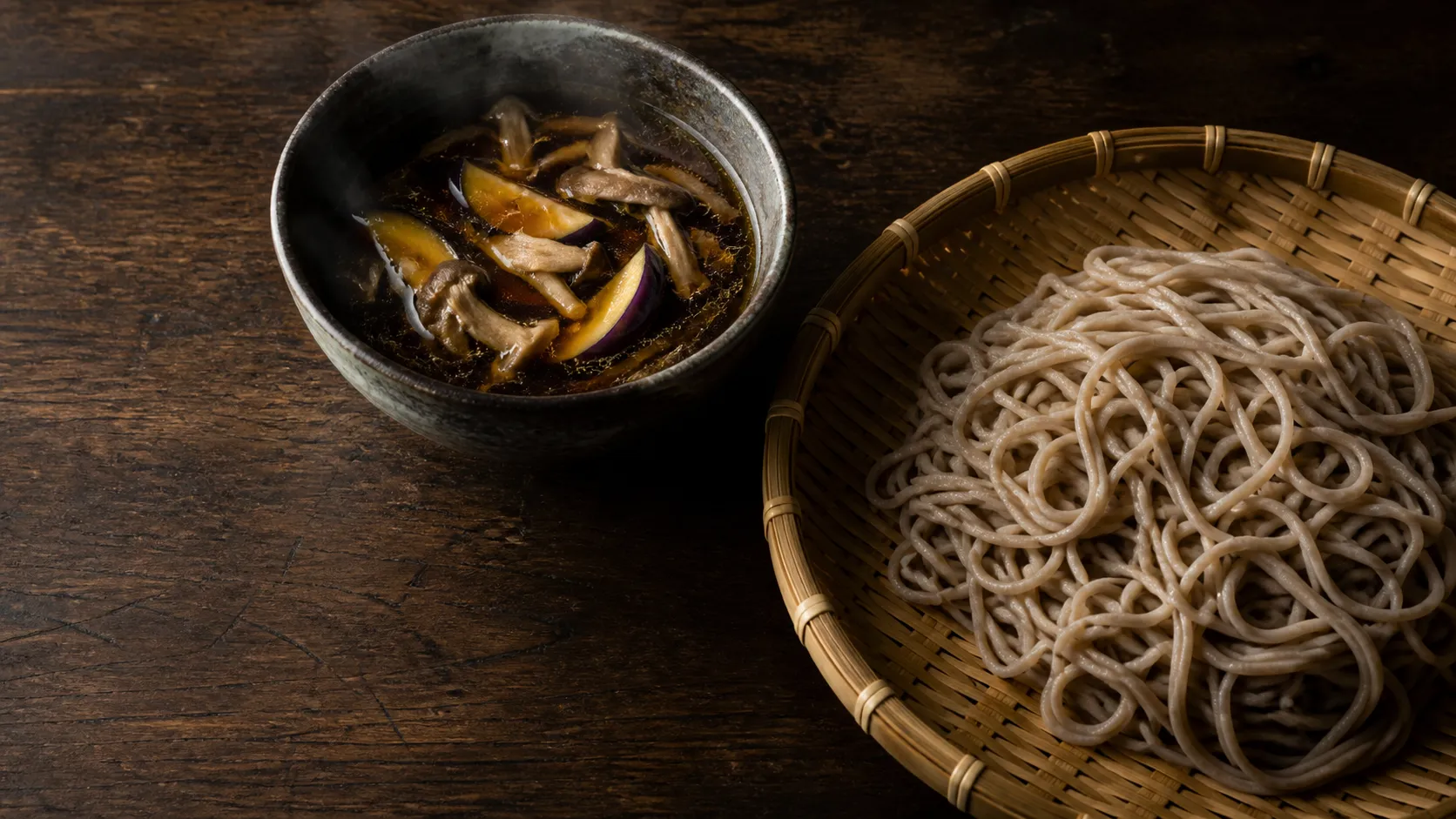
Chitake Soba (ちたけそば)
The mushroom itself is chewy and honestly a bit gritty. Nobody in Tochigi cares. They want what it leaks into the broth, and after one dip I understood the whole obsession.
September 2, 2026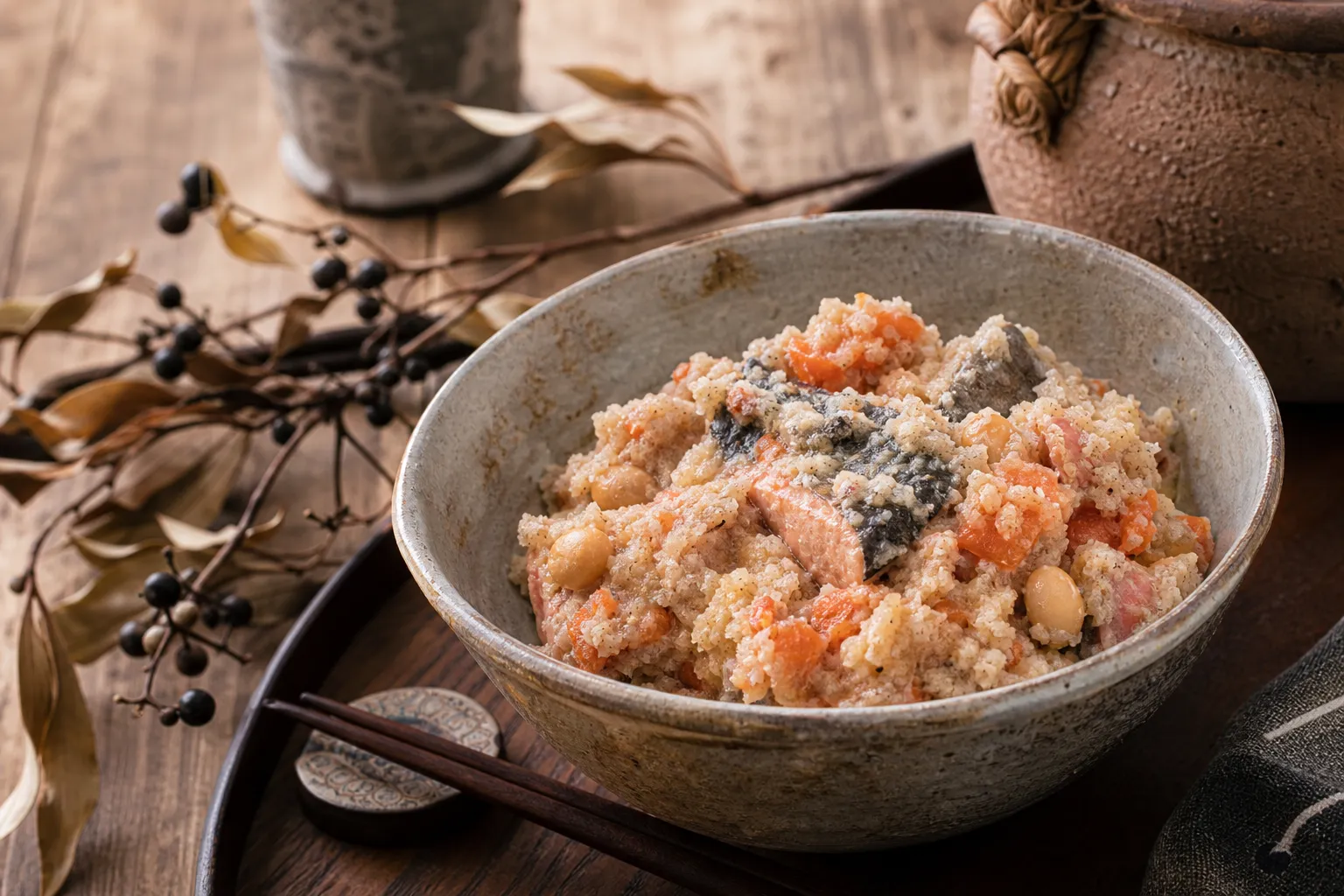
Local FoodTochigi
Shimotsukare (しもつかれ)
Grated daikon, soybeans, a salmon head and sake lees, simmered into a pinkish-grey rustic mess that Tochigi grandmothers swear by — the most polarizing bowl in Japan, and I ate the whole thing.
July 12, 2026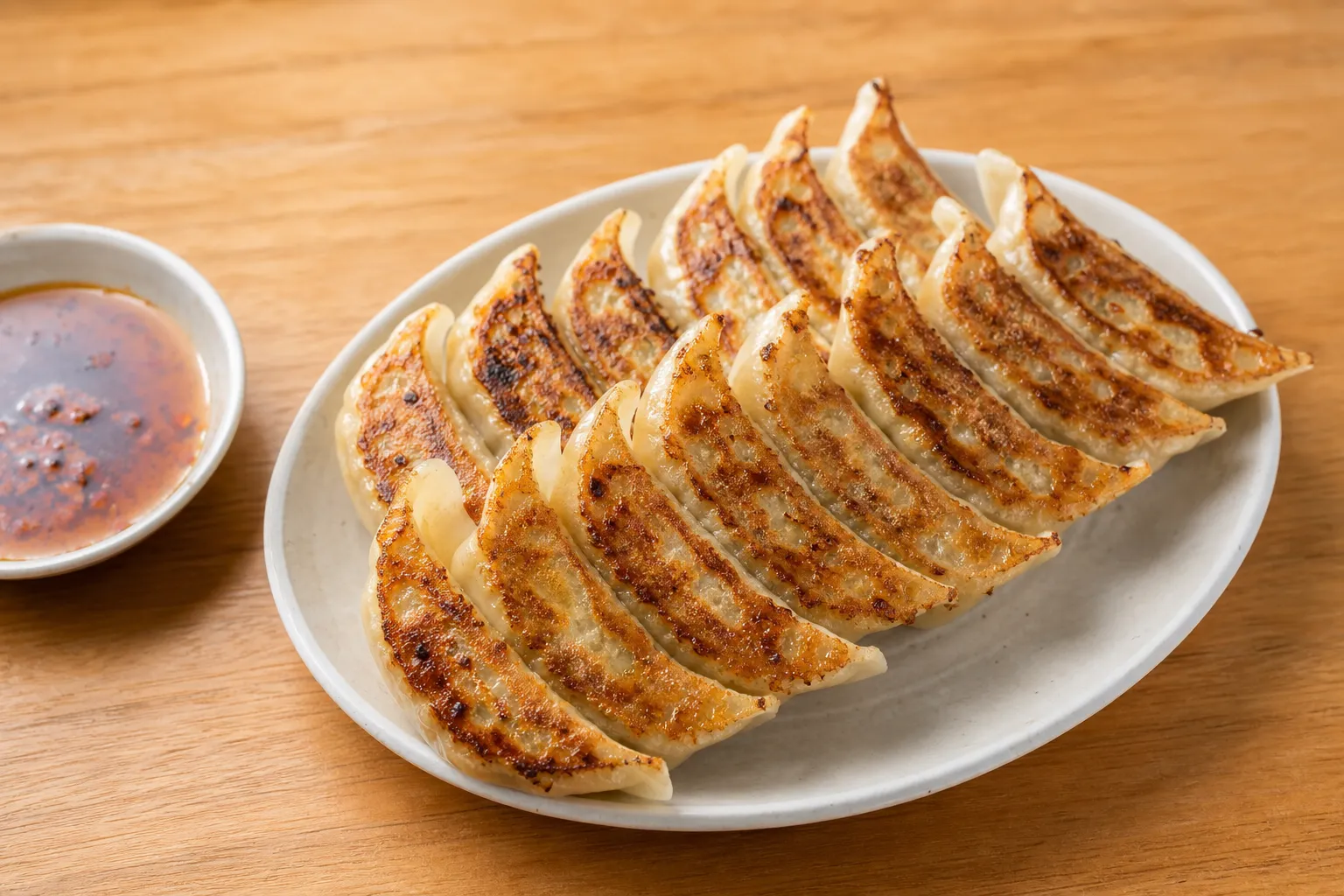
Local FoodUtsunomiya, Tochigi
Utsunomiya Gyoza (宇都宮餃子)
A whole plate of pan-fried dumplings with lacquered, crackle-crisp bottoms — in the city that eats more gyoza than anywhere else in Japan and has zero shame about it.
July 12, 2026