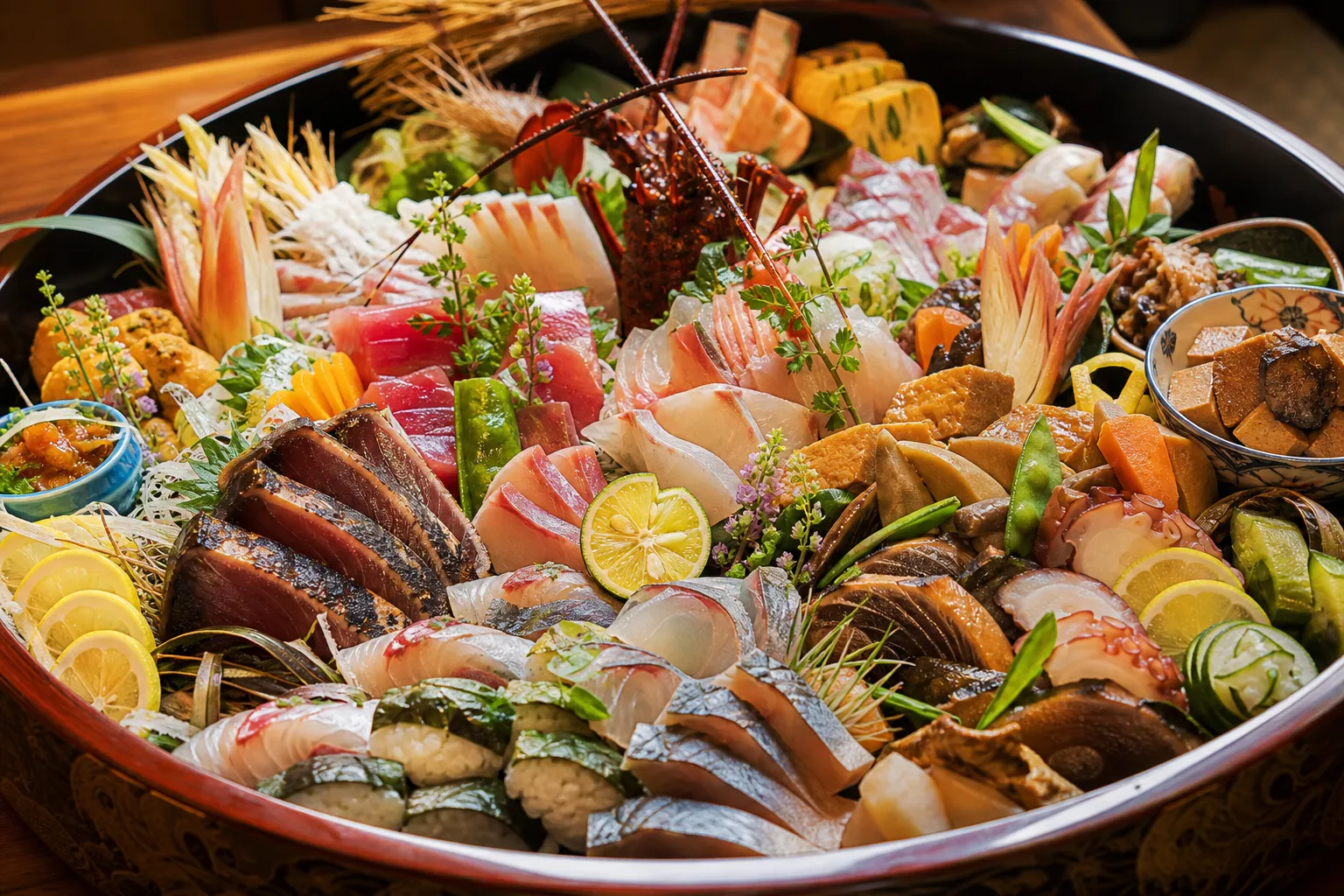
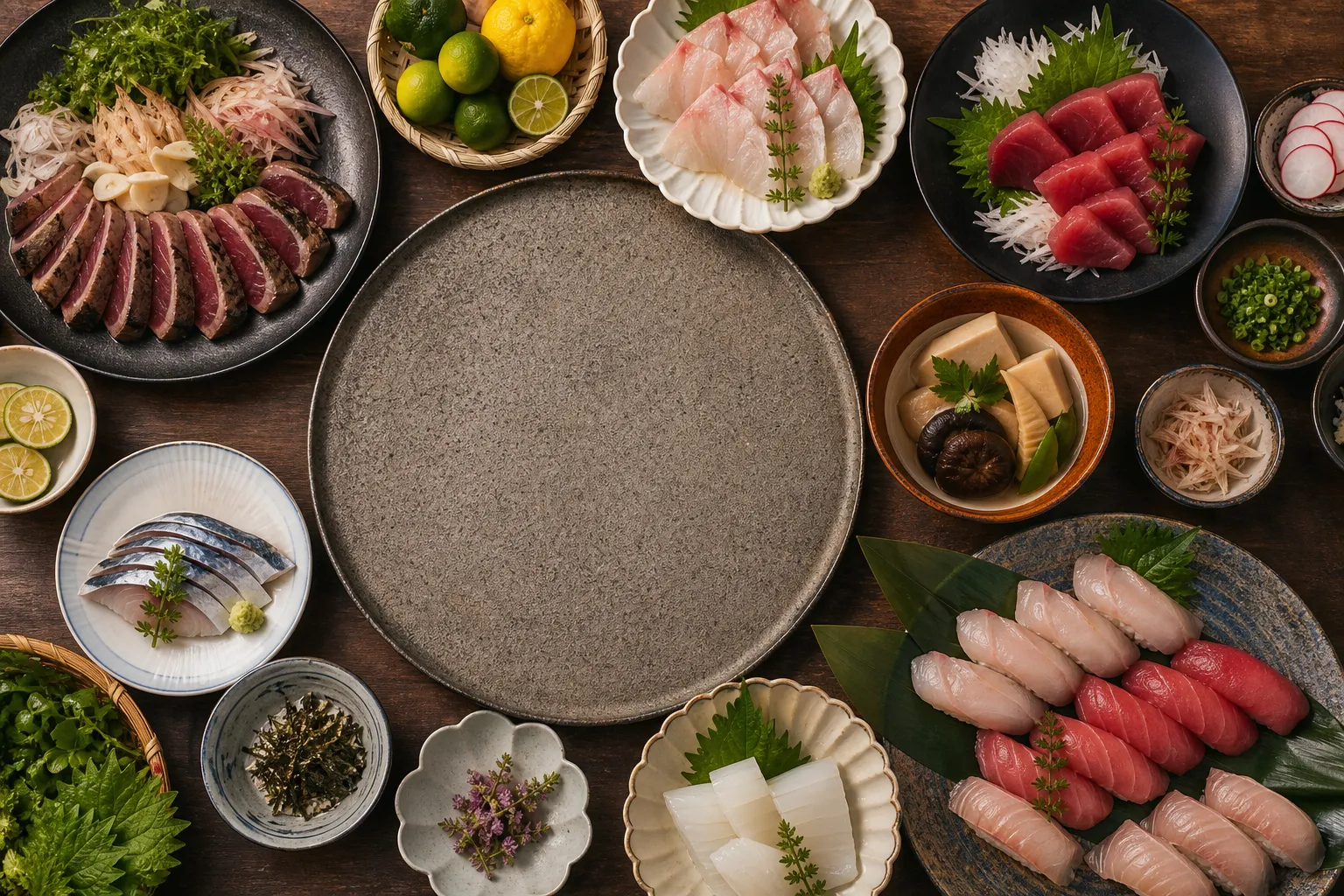
The plate arrived and I actually laughed out loud. It was enormous — a shallow lacquered lake of a platter, and heaped on it: sashimi fanned into a fish shape, glossy sushi, a tower of seared bonito, simmered vegetables, and — wait — fruit? Cake?? All on one dish, in the middle of the table, with no plan and no rules except reach in. Nobody plated anything for me. Nobody was going to. This is Kochi, and in Kochi the party comes on one giant platter.
Share this dish


One enormous platter, piled sky-high with sashimi, sushi, seared bonito, simmered dishes and fruit — Kochi's answer to the party, where nobody serves you and everybody digs in.
🍜 Planning a food trip to Kochi?Add this dish to my Food Trip →
 Add this dish to my Food Trip →
Here's what it is: sawachi-ryori (皿鉢料理) is a big communal platter heaped with an assortment of everything — sashimi, sushi, seared bonito tataki, simmered dishes, even fruit and sweets — set in the middle of the table for everyone to share. It's the centerpiece of Kochi's legendary okyaku banquet culture. Crucially, it's not a single dish and not a bento — it's a lavish, abundant, all-at-once spread designed to keep a boozy party going for hours.
Born from Kochi's love of a good party
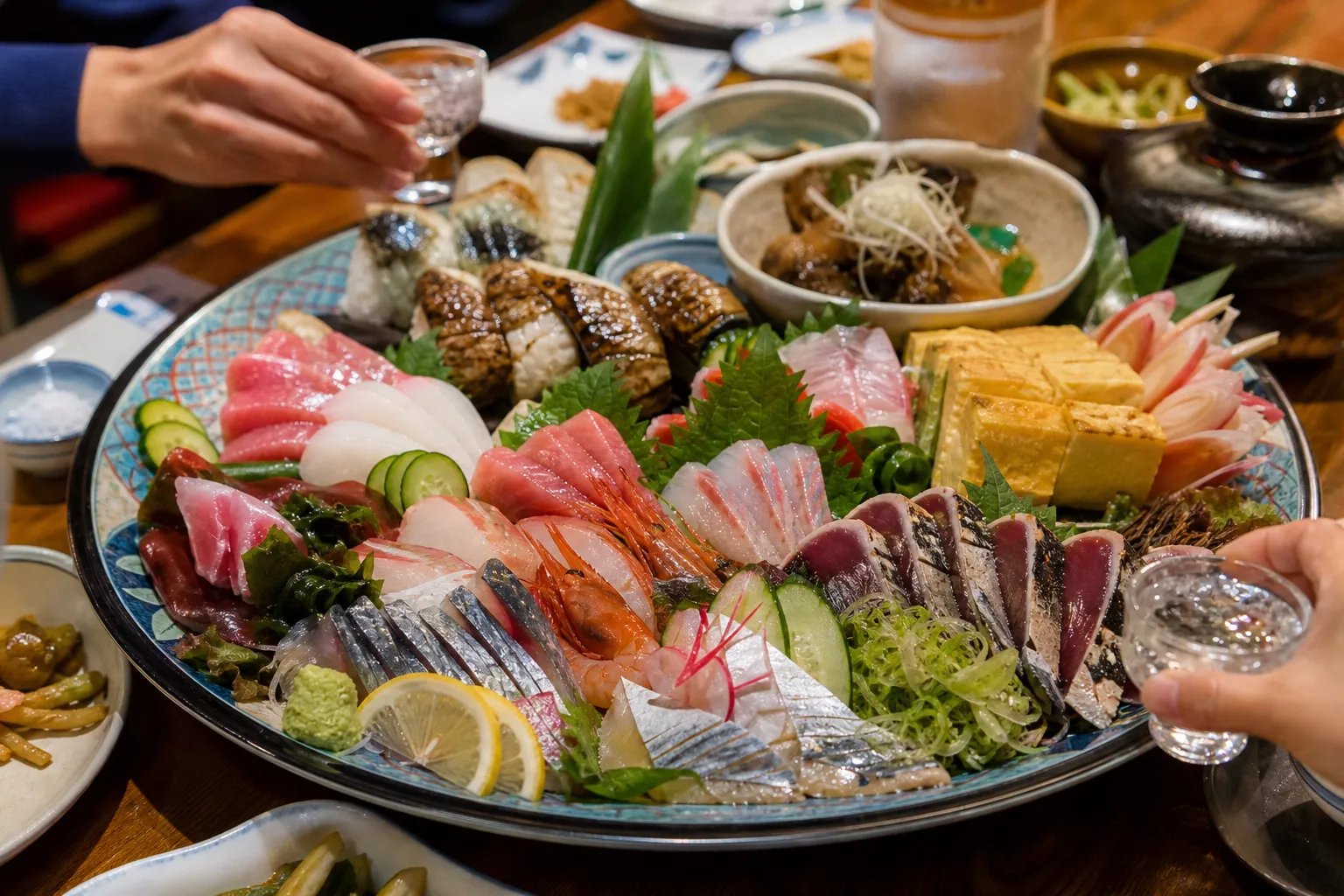
Kochi people are famously, gloriously fond of drinking and gathering, and okyaku — the local word for a big open house party — is a genuine institution here. Sawachi-ryori is the food built for exactly that: pile everything a host wants to show off onto one huge platter, set it out, and let guests graze and drink and talk for as long as the sake keeps flowing. No fussy course timing, no one running back and forth from the kitchen — just abundance, in the open, shared. I love the whole philosophy of it. It's hospitality with the ego turned down and the generosity turned all the way up.
There's real cleverage in that one-platter idea: it frees the host to sit and drink with everyone instead of serving, which in Kochi is basically the point. The assortment on the plate isn't random either — it's a deliberate flex of the region's bounty, land and sea together, savory and sweet together, because why choose? You'll even find a famous "combination" style with a whole seared bonito or a spread of sushi as the anchor. Come to Kochi, get invited to an okyaku, and you'll understand this prefecture in about ten minutes.
What makes the eating experience different
- It's communal by design — one platter in the middle, everyone reaching in; the sharing is the meal
- The variety on one plate is the thrill: raw, seared, simmered, and sweet all at once, no menu, no order
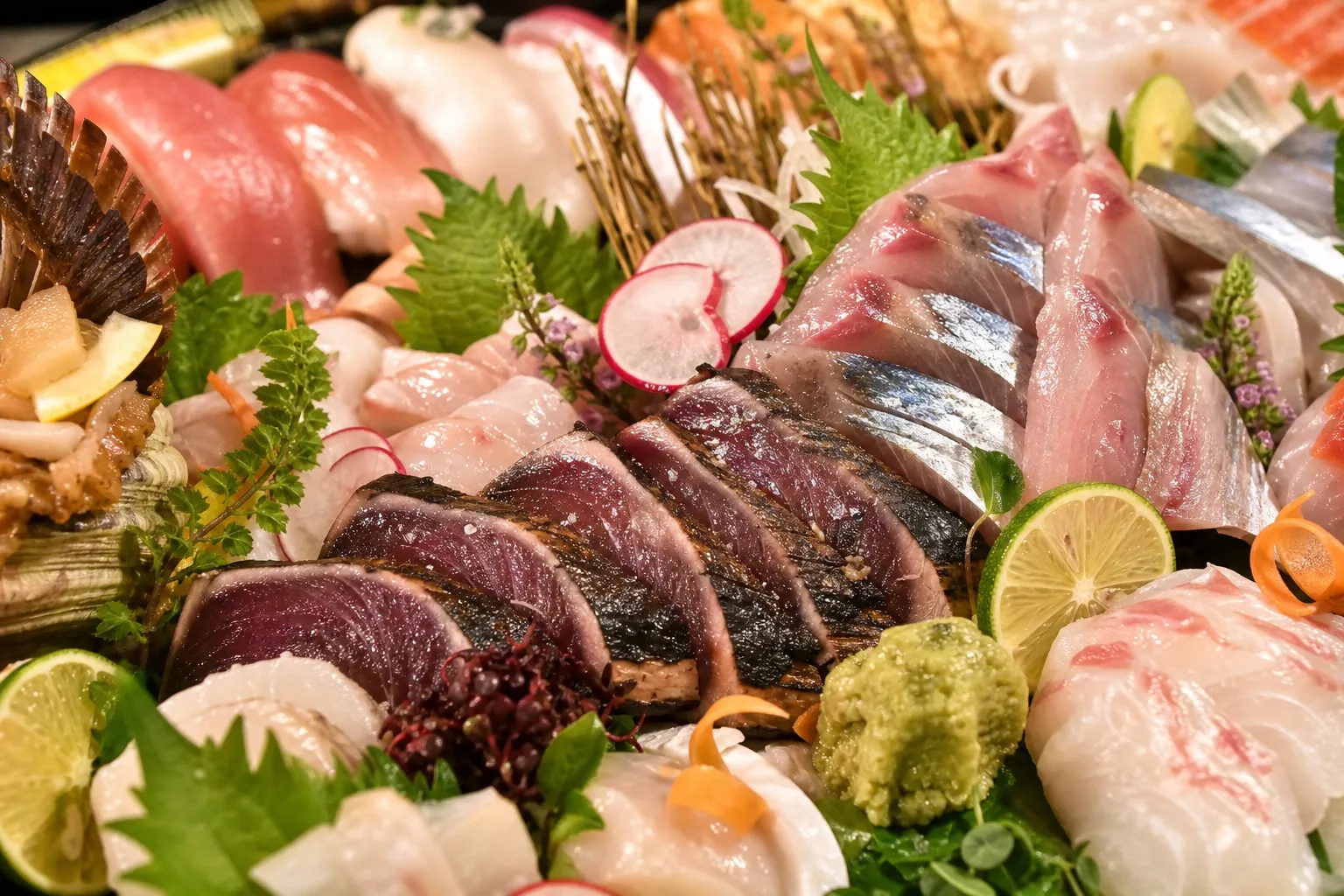
- The star is often katsuo tataki — Kochi's seared skipjack bonito, smoky outside, ruby-raw inside
- It's built for long, slow grazing alongside plenty of local sake — this is party food, paced for hours
- The presentation is half the joy: sashimi arranged into shapes, height, color, abundance — a plate meant to make the table gasp
How it's made
- Choose the platter. A large, shallow sawachi dish (often lacquer or porcelain) is the canvas — the bigger the gathering, the bigger the plate.
- Prep the assortment. The cook readies a spread: sashimi, sushi, seared katsuo tataki, simmered dishes (nimono), fried bits, and fruit or sweets.
- Sear the bonito. Skipjack is flame-seared skin-side over straw or flame for the classic tataki, then sliced thick.
- Compose the mountain. Everything is arranged on the one platter with height and color — sashimi shaped into fans or fish, sushi and sides tucked around, sweets often included.
- Set it in the middle. The platter goes to the center of the table for everyone to share, and the okyaku begins.
The craft is in the composition and abundance — balancing raw, seared, simmered and sweet so one platter can carry a whole long party.
Before you go — bring friends and pace yourself
Your questions, answered honestly
"Is this one dish I order for myself?" — No — it's a shared platter for a group. Sawachi-ryori is meant to feed a table, so it shines when you're with others. Some restaurants do smaller versions or set courses that include it, but the spirit is communal.
"What's actually on it?" — An assortment, and it varies: sashimi, sushi (Kochi loves its sabazushi and stuffed sushi), seared katsuo tataki, simmered vegetables, fried items, and often fruit or sweets on the very same plate. Savory-to-sweet, all together.
"Is it just raw fish?" — Not at all. Yes there's sashimi, but there's also seared, simmered, and sweet — so even if raw fish isn't your whole thing, there's plenty on the platter for you.
"How do I eat it politely?" — Reach in and share, but use the serving chopsticks (toribashi) if they're provided to move food to your own plate. Beyond that, relax — the whole point is a loose, generous, un-fussy party.
What the staff will ask you
| You'll hear | Romaji | Meaning | Just say |
|---|---|---|---|
| 何名様ですか? | Nan-mei sama desu ka? | "How many people?" | San-nin desu (three of us) |
| 取り分けますか? | Toriwakemasu ka? | "Shall I portion it out?" | Jibun de torimasu (we'll help ourselves) |
| お飲み物はいかがですか? | Onomimono wa ikaga desu ka? | "Something to drink?" | Nihonshu o onegaishimasu (sake, please) |
To order, just say "Sawachi-ryori o kudasai" (皿鉢料理をください) — "The sawachi platter, please."
Where to eat it
- Kochi city — the heart of okyaku culture. Izakaya and traditional restaurants around the city, especially near the famous Hirome Market area, serve sawachi-style spreads and Kochi's signature katsuo tataki.
- Hirome Market, Kochi — a lively food hall where you can graze Kochi specialties; a great low-commitment way to taste the components of a sawachi spread.
- Local banquets and events — sawachi-ryori truly lives at okyaku parties, weddings and festivals; some restaurants offer it as a course, best arranged in advance for a group.
Sawachi-ryori is party food for groups, often arranged ahead — menus, portions and prices vary widely, so check with the restaurant before you go, and ideally bring company.
Soul Score
Local Roots5/5
First-Timer Friendly4/5
Adventure Level4/5
Comfort Level4/5
Travel Worthy5/5
These scores are one obsessed eater's gut feeling — not a verdict. A low number isn't a bad mark, just a different kind of adventure.
Know someone planning Japan?
← All Articles
Local Food · Kochi
Still hungry?
Eat more from Kochi
Local FoodKochi
Inaka Zushi (田舎寿司)
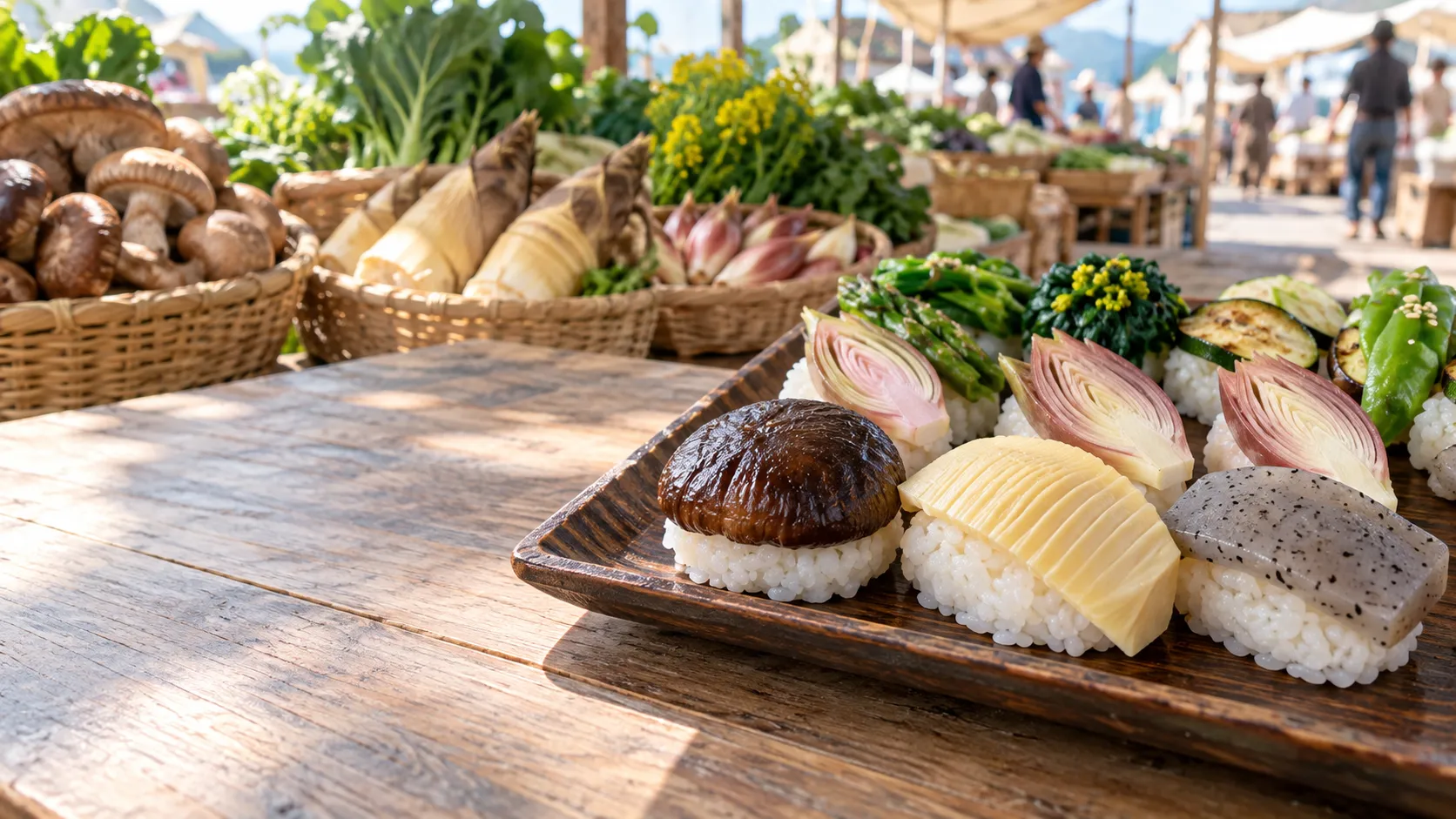
I bought what I thought was a box of ordinary sushi at a street market in Kochi. There was no fish in it anywhere, and that turned out to be the best thing about it.
September 26, 2026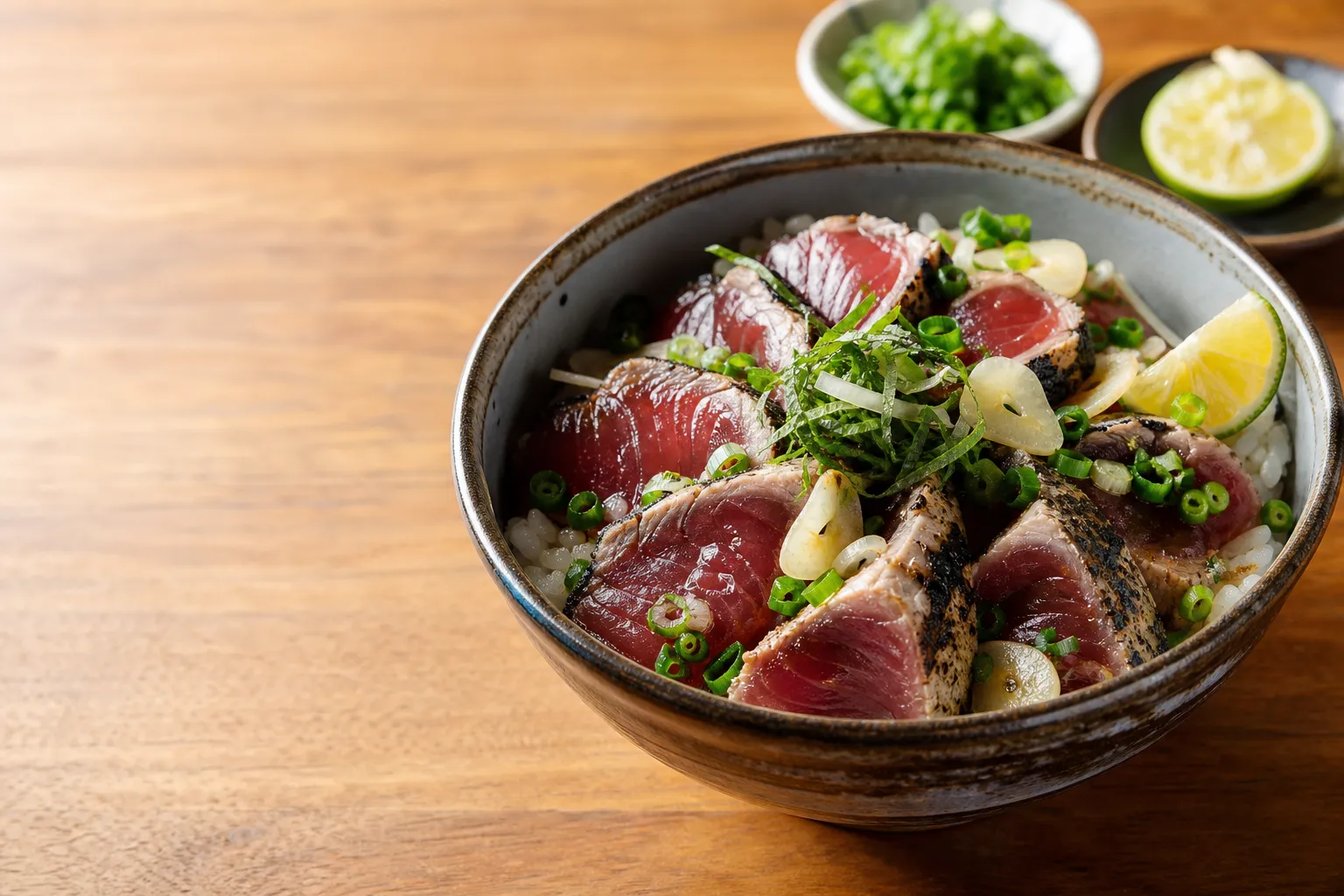
Local FoodKochi
Katsuo-meshi (かつおめし)
Straw fire, three feet high, a slab of fish blackening in the flames — and then somehow that same fish is on my rice, smoky-edged and ruby-red in the middle, and I forget how to talk for a second.
July 5, 2026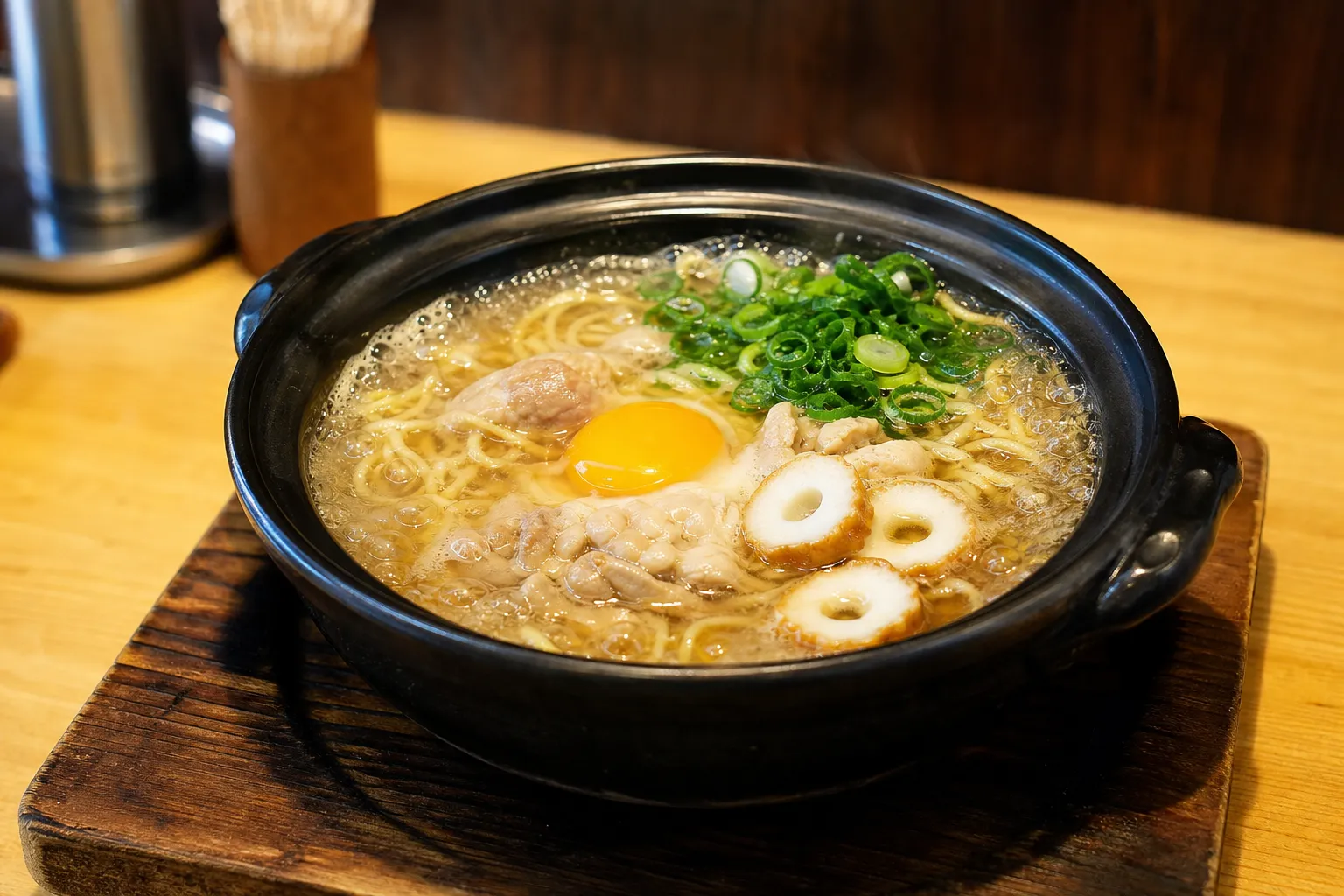
Local FoodSusaki, Kochi
Nabeyaki Ramen (鍋焼きラーメン)
It arrives still boiling, in the clay pot it was cooked in, an egg cracked on top going from raw to soft-set right in front of you — this is not a bowl of ramen, it's a tiny pot of lava with noodles in it.
July 4, 2026