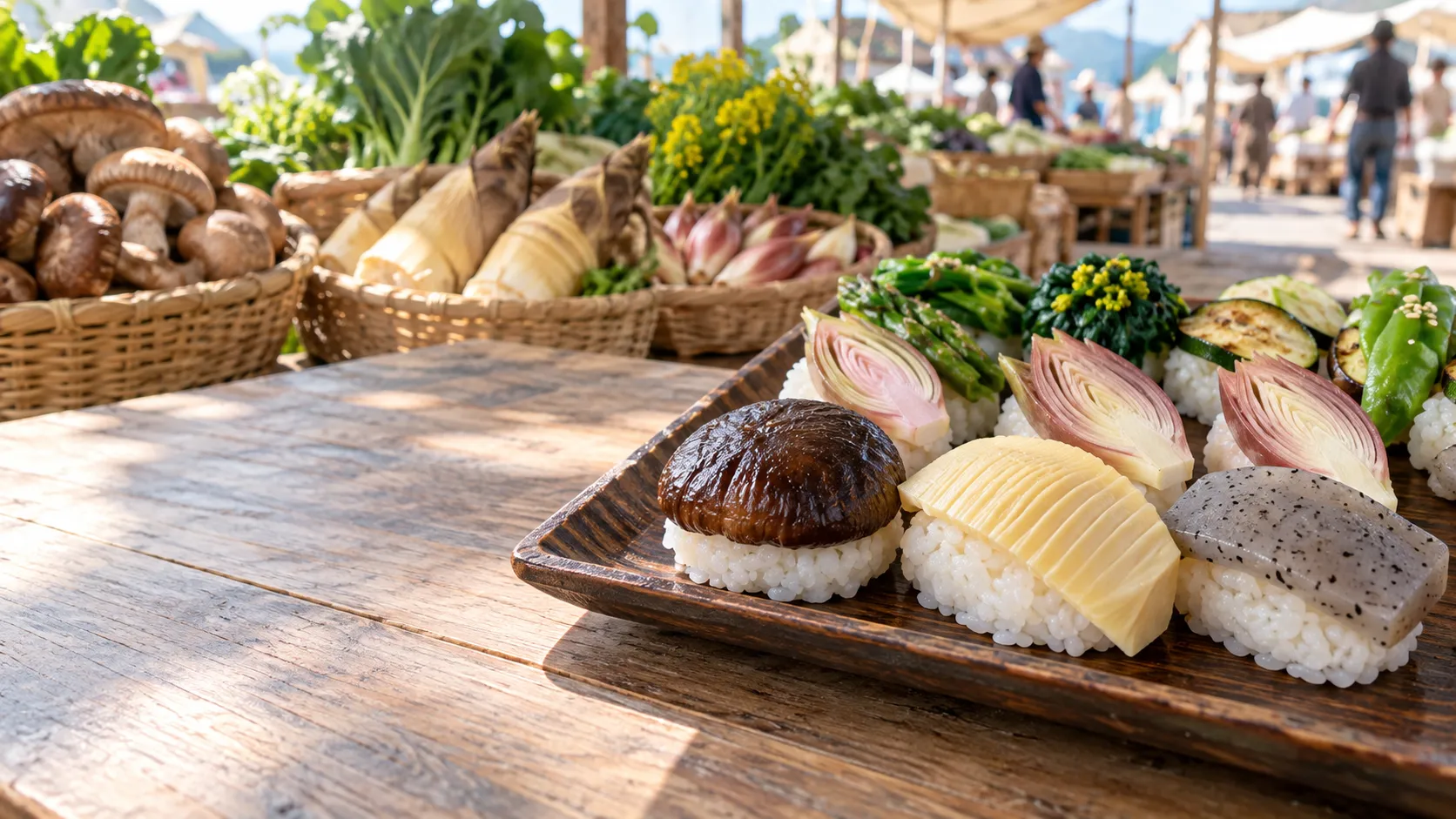
I picked up the box because it was cheap and the colours were wrong.
Share this dish


I bought what I thought was a box of ordinary sushi at a street market in Kochi. There was no fish in it anywhere, and that turned out to be the best thing about it.
Would you try this dish?
Rate how much you would like to try it.
🍜 Build your Kochi food trip around Inaka Zushi.Add to Food Planner →
 Add to Food Planner →
Pale pink slices that weren't fish. Something brown and ridged that wasn't eel. A pale bamboo-coloured wedge. It was unmistakably sushi — the rice, the shapes, the neat rows in a plastic tray — and there was nothing in it that had ever been in the sea.
The woman at the stall said something cheerful that I didn't catch. I ate one standing at the edge of the market, and the first thing that happened was citrus.
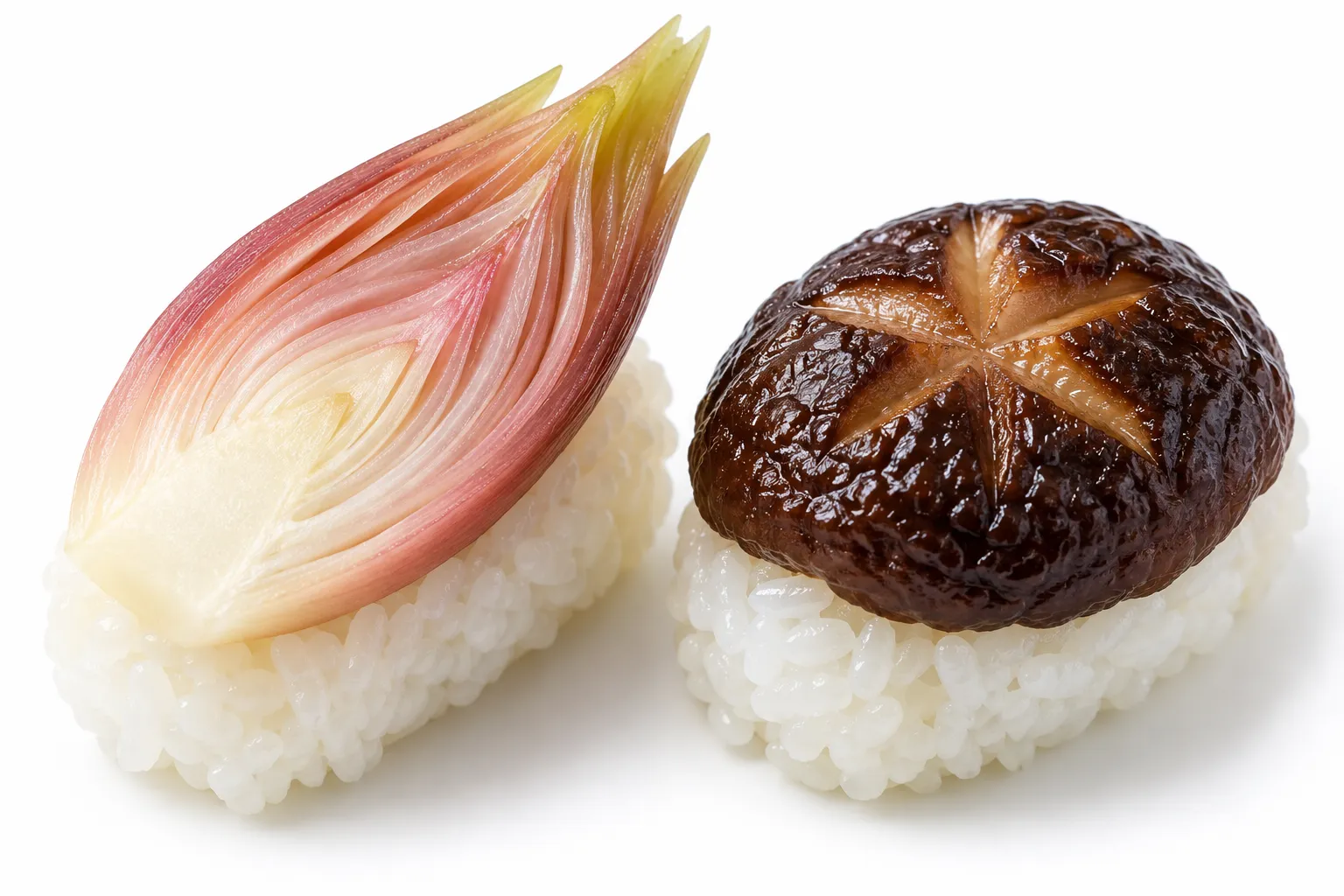
Not vinegar. Citrus. The rice hit sharp and bright and faintly floral, and then came the thing on top — myoga ginger, as it turned out, crunchy and aromatic and a bit wild-tasting, like ginger that had gone off into the woods and come back with opinions. I stood there holding the box and rearranging my definition of a word I thought I understood.
Inaka-zushi is Kochi's mountain-village sushi: no fish, vegetables instead, and rice seasoned with the juice of local citrus rather than plain rice vinegar. It costs almost nothing, it's sold at street markets and roadside stations, and it's one of the few genuinely traditional Japanese foods a vegetarian traveller can usually eat.
Sushi from the part of Kochi that isn't the coast
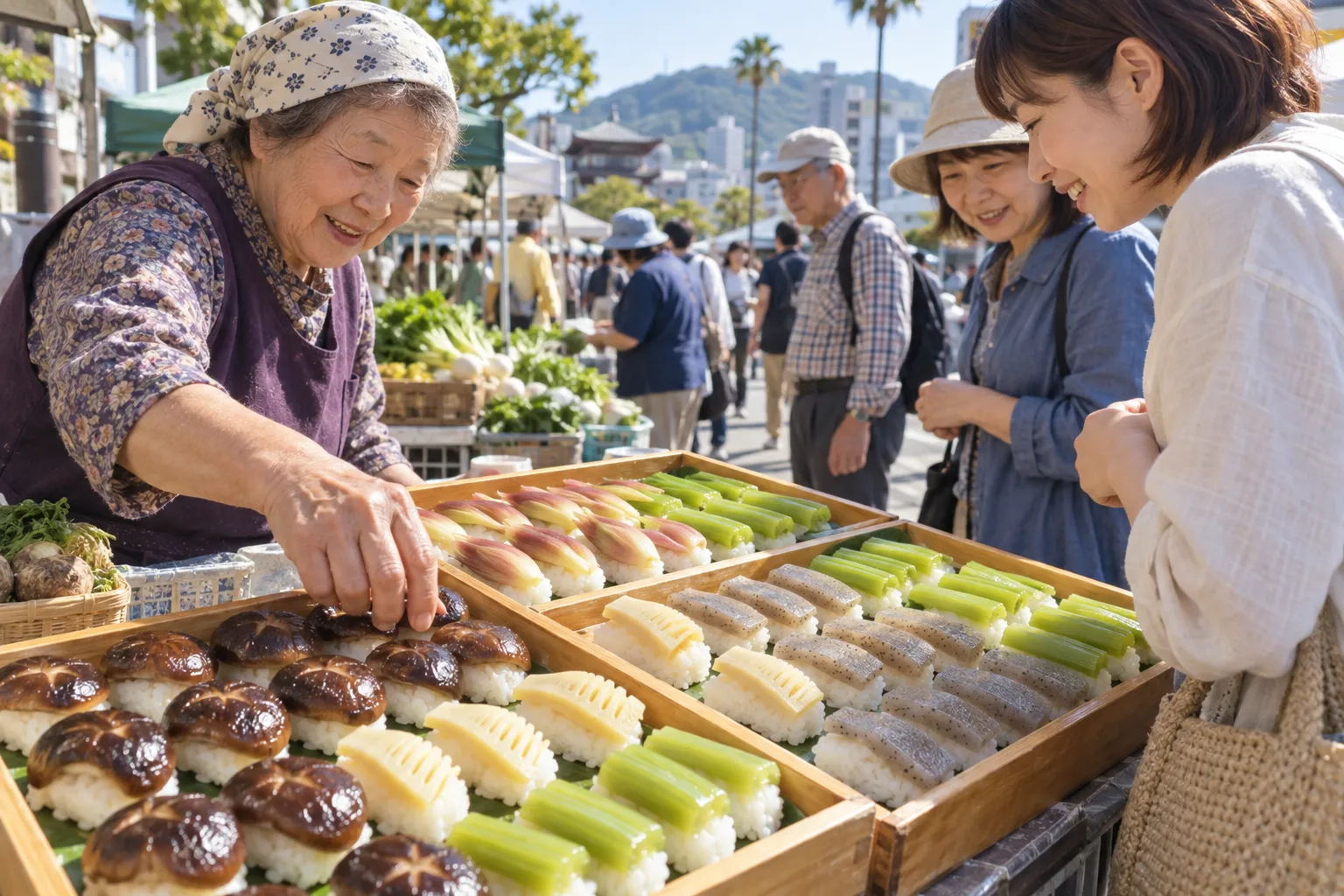
Kochi faces the Pacific and is famous for seared bonito, so it's easy to forget that most of the prefecture is mountain. Steep, forested, folded, with villages up valleys that were a long way from anywhere and a very long way from fresh fish.
So the mountains made sushi out of what the mountains had. Bamboo shoots in spring. Shiitake. Konjac. Myoga ginger. Ryukyu — the pale crisp stem of a taro plant, which Kochi eats and much of Japan doesn't. Whatever the season handed over, sliced and simmered and laid on rice.
And then there's the citrus, which is the detail that makes this Kochi's and nobody else's. This is a prefecture full of sour citrus — yuzu above all — and when you have trees dropping fruit in the valley, you don't buy rice vinegar. You squeeze what you have. The rice ends up brighter and more perfumed than vinegared rice, with a rounder sourness.
This was festival food and gathering food and taking-something-to-the-neighbours food. It wasn't invented to be interesting; it was what you made when guests came and the shop was an hour away. That it now reads as fashionable — seasonal, vegetable-led, local — is an accident of the rest of the world catching up.
The flavours are louder than they look
If you're expecting the clean restraint of a good nigiri counter, adjust. This is country food and it is seasoned like country food.
The toppings are mostly simmered — soy, sugar, sometimes mirin — so they arrive sweet-savoury and quite firm rather than delicate. Shiitake in particular goes dense and deeply umami, almost meaty. Konjac stays bouncy and squeaky and carries the sauce. Bamboo shoot keeps a faint fibrous crunch right through the middle.
Then myoga, which is the piece people remember. It's a ginger relative grown for its flower buds rather than its root, it's pale pink and crisp and layered like a tiny shallot, and it tastes sharp and perfumed and slightly medicinal in a way that is genuinely unlike anything in a Western kitchen. Pickled, it goes brighter pink and even sharper. Some people fall for it immediately. Some people need a second attempt. I was firmly in the first group and I'd eat a whole tray of just that.
And under all of it, the rice: looser and lighter than restaurant sushi rice, more citrus than acid, so the sourness reads as fruit rather than as vinegar. It's the thing that ties a box of quite different vegetables into one dish.
The pieces are usually larger and rougher than city sushi, too — cut for feeding people rather than for a photograph, which I say entirely as a compliment.
How it's made
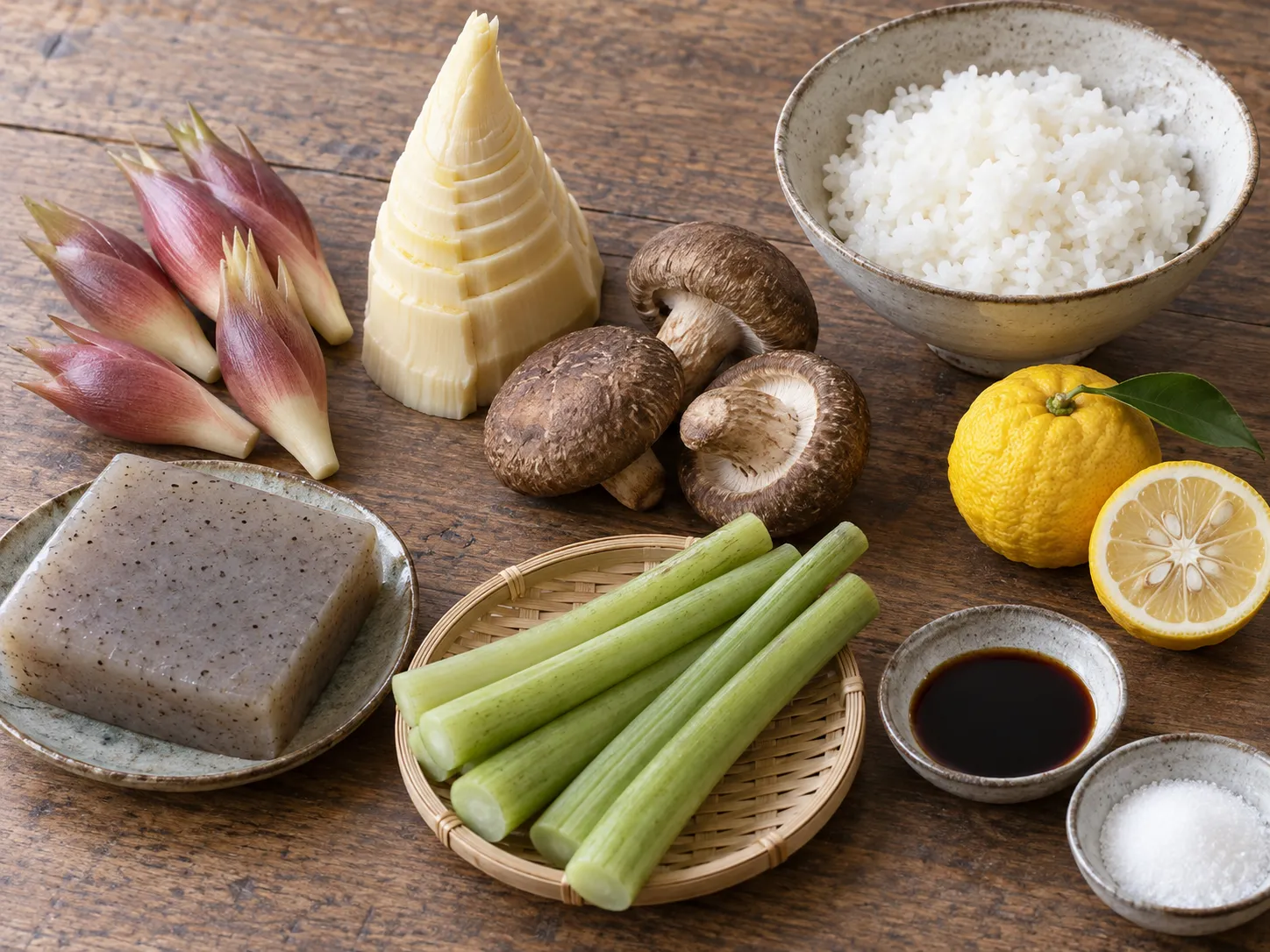
Every household does it slightly differently, but the shape of it is consistent:
- The rice is seasoned with citrus juice — yuzu is classic, along with other local sour citrus — plus salt and sugar, in place of some or all of the rice vinegar.
- Vegetables are prepared by type. Bamboo shoot, shiitake and konjac are simmered in soy and sugar until seasoned through. Myoga is usually blanched and pickled, which sets that pink colour.
- Ryukyu (taro stem) is salted and squeezed to soften it and take out the raw sharpness, then dressed.
- Everything is cut to fit — sliced flat for laying over rice, hollowed or split where a piece needs to hold rice inside.
- The pieces are shaped by hand, pressed rather than fussed over, and larger than you'd expect.
- It's laid out in trays and eaten at room temperature, which is how it was always meant to be eaten — this is food designed to be carried somewhere.
Nobody is aiming for perfection of form here. The aim is a tray with five colours on it that people will keep reaching into.
Before you go — the stuff that actually matters
Your questions, answered honestly
"Is it actually vegetarian?" — Usually, and it's one of the better bets in traditional Japanese food. But not guaranteed: some makers use dashi in the simmering liquid, and dashi normally means bonito. At a market stall, ask katsuo-dashi wa haitte imasu ka? If it matters to you, ask rather than assume — pieces vary within the same tray.
"What's the pink one?" — Myoga ginger, almost certainly. Crisp, aromatic, sharper than you expect, and the flavour most likely to be new to you. Eat it in one bite rather than nibbling the edge; it makes more sense whole.
"What's the pale crunchy stem?" — Ryukyu, the leaf stem of a taro plant. Spongy, light, very absorbent, and a Kochi speciality you'll struggle to meet elsewhere in Japan. Nothing alarming about it — it mostly tastes of the dressing it soaked up.
"Do I need soy sauce?" — No. It's seasoned already, and adding soy will flatten the citrus in the rice, which is the whole point of the dish. Try at least the first few pieces plain.
"Is it cold? Is that right?" — Room temperature, and yes, that's correct and intentional. It was made to travel to a festival or a neighbour's house. Don't microwave it.
"How long does it keep?" — It's made to be eaten the day you buy it. Market stalls sell out by early afternoon for a reason. Don't buy a tray planning to eat it tomorrow.
"Will I like it if I don't like sushi?" — Quite possibly, actually. If your issue with sushi is raw fish, this removes that entirely. If your issue is vinegared rice, the citrus version is softer and fruitier, and worth one attempt before you write it off.
What the staff will ask you
| You'll hear | Romaji | Meaning | Just say |
|---|---|---|---|
| どれにしますか? | Dore ni shimasu ka? | "Which ones would you like?" | Kore o kudasai (this one, please) — and point |
| 何パックにしますか? | Nan-pakku ni shimasu ka? | "How many packs?" | Hito-pakku kudasai (one pack, please) |
| 今日中に食べてくださいね | Kyō-jū ni tabete kudasai ne | "Please eat it today" | Hai, wakarimashita (yes, understood) |
| お箸はいりますか? | O-hashi wa irimasu ka? | "Do you need chopsticks?" | Onegaishimasu (yes, please) |
| 袋にお入れしますか? | Fukuro ni o-ire shimasu ka? | "Shall I bag it?" | Daijōbu desu (I'm fine, thanks) |
To order, just say "Inaka-zushi kudasai" (田舎寿司ください) — "Inaka-zushi, please."
Where to eat it
- The Sunday market (Nichiyō-ichi), Kochi City — a street market that has run along the road to Kochi Castle for centuries, and the single best place to meet this. Several stalls, several styles, sold by the people who made it that morning. Go early; it winds down in the afternoon.
- Roadside stations (michi-no-eki) across Kochi — reliably stocked with locally made trays, and often the mountain versions rather than the city ones. Good if you're driving the valleys.
- Supermarkets and department store food floors in Kochi City — the everyday fallback, available all week when the market isn't running.
- Mountain villages and local food facilities inland — where it's still made as household food, and where you'll find seasonal toppings that never reach the city.
The Sunday market runs on Sundays and can be affected by weather and New Year holidays, and stalls sell out through the morning — check locally and go early rather than late.
Soul Score
Local Roots5/5
First-Timer Friendly4/5
Adventure Level4/5
Comfort Level4/5
Travel Worthy4/5
These scores are one obsessed eater's gut feeling — not a verdict. A low number isn't a bad mark, just a different kind of adventure.
Know someone planning Japan?
← All Articles
Local Food · Kochi
Still hungry?
Eat more from Kochi
Local FoodKochi
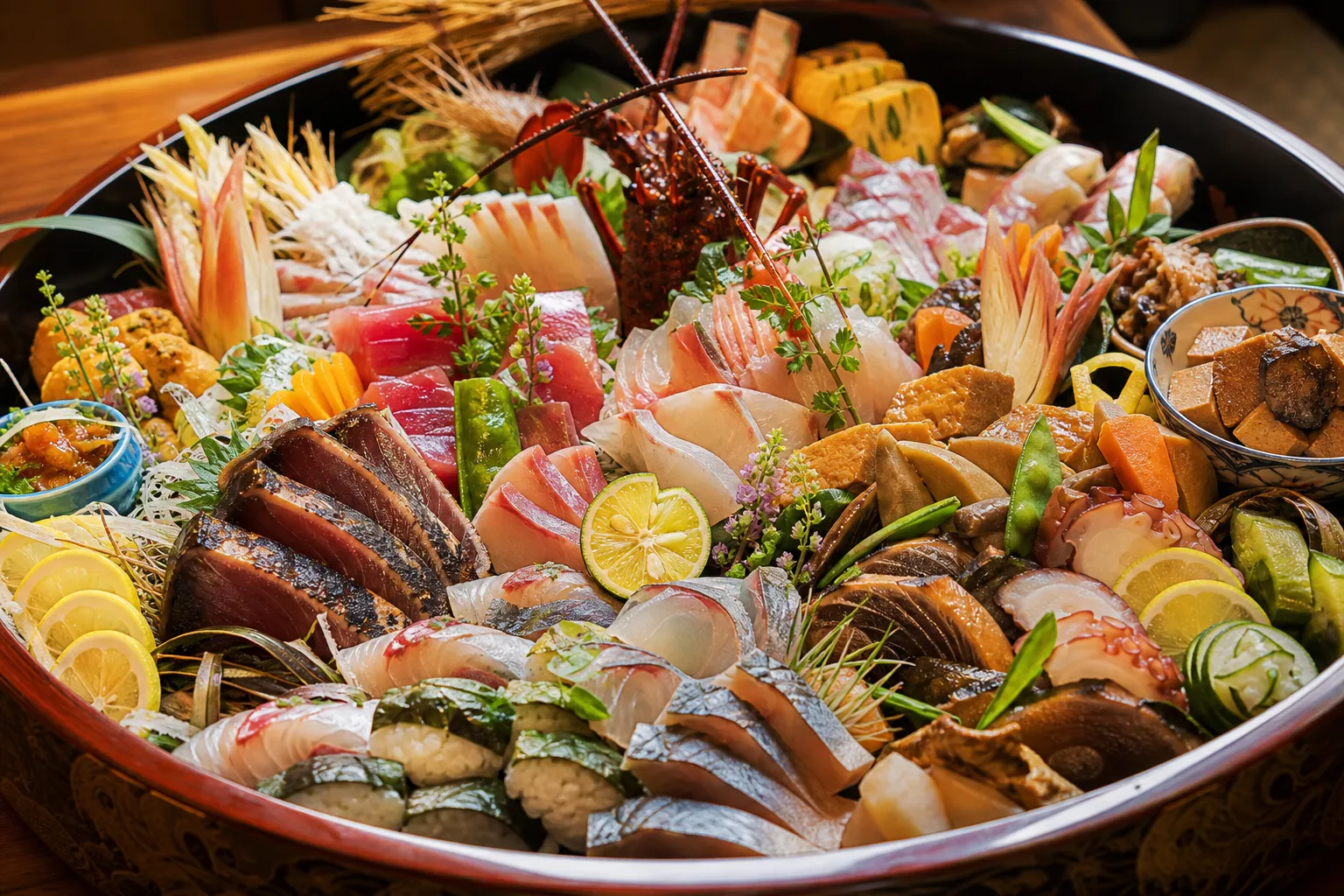
Sawachi-ryori (皿鉢料理)
One enormous platter, piled sky-high with sashimi, sushi, seared bonito, simmered dishes and fruit — Kochi's answer to the party, where nobody serves you and everybody digs in.
July 12, 2026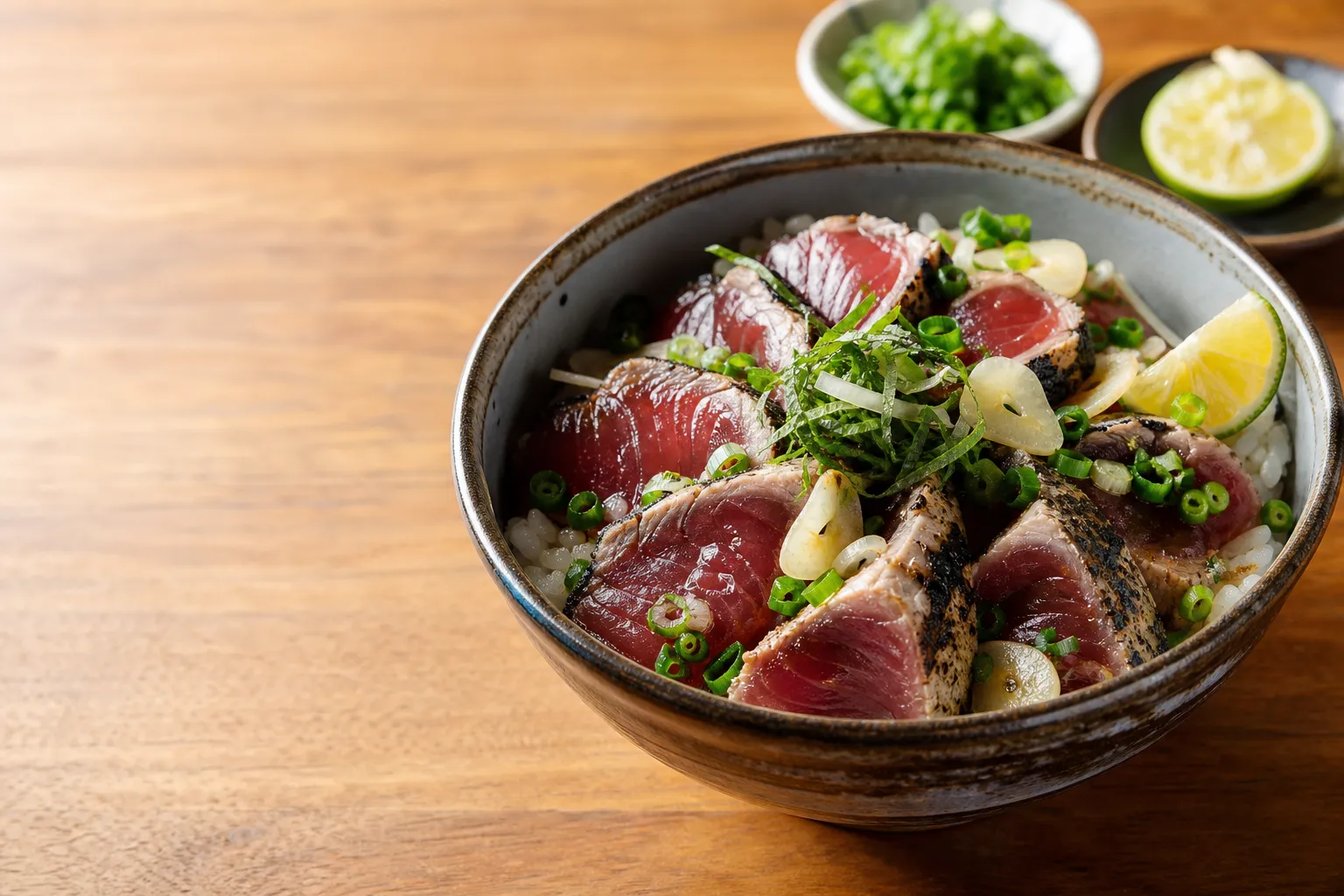
Local FoodKochi
Katsuo-meshi (かつおめし)
Straw fire, three feet high, a slab of fish blackening in the flames — and then somehow that same fish is on my rice, smoky-edged and ruby-red in the middle, and I forget how to talk for a second.
July 5, 2026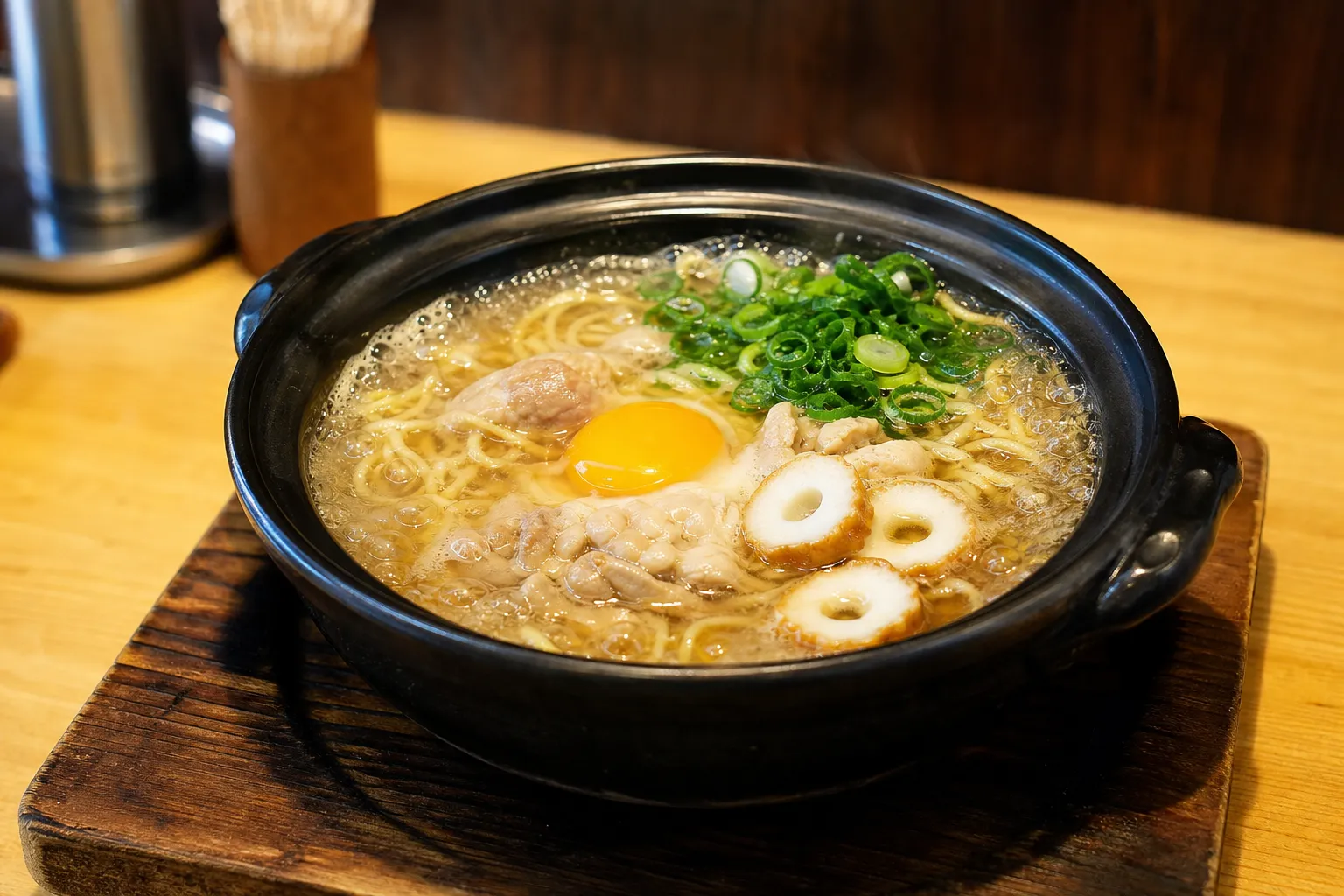
Local FoodSusaki, Kochi
Nabeyaki Ramen (鍋焼きラーメン)
It arrives still boiling, in the clay pot it was cooked in, an egg cracked on top going from raw to soft-set right in front of you — this is not a bowl of ramen, it's a tiny pot of lava with noodles in it.
July 4, 2026