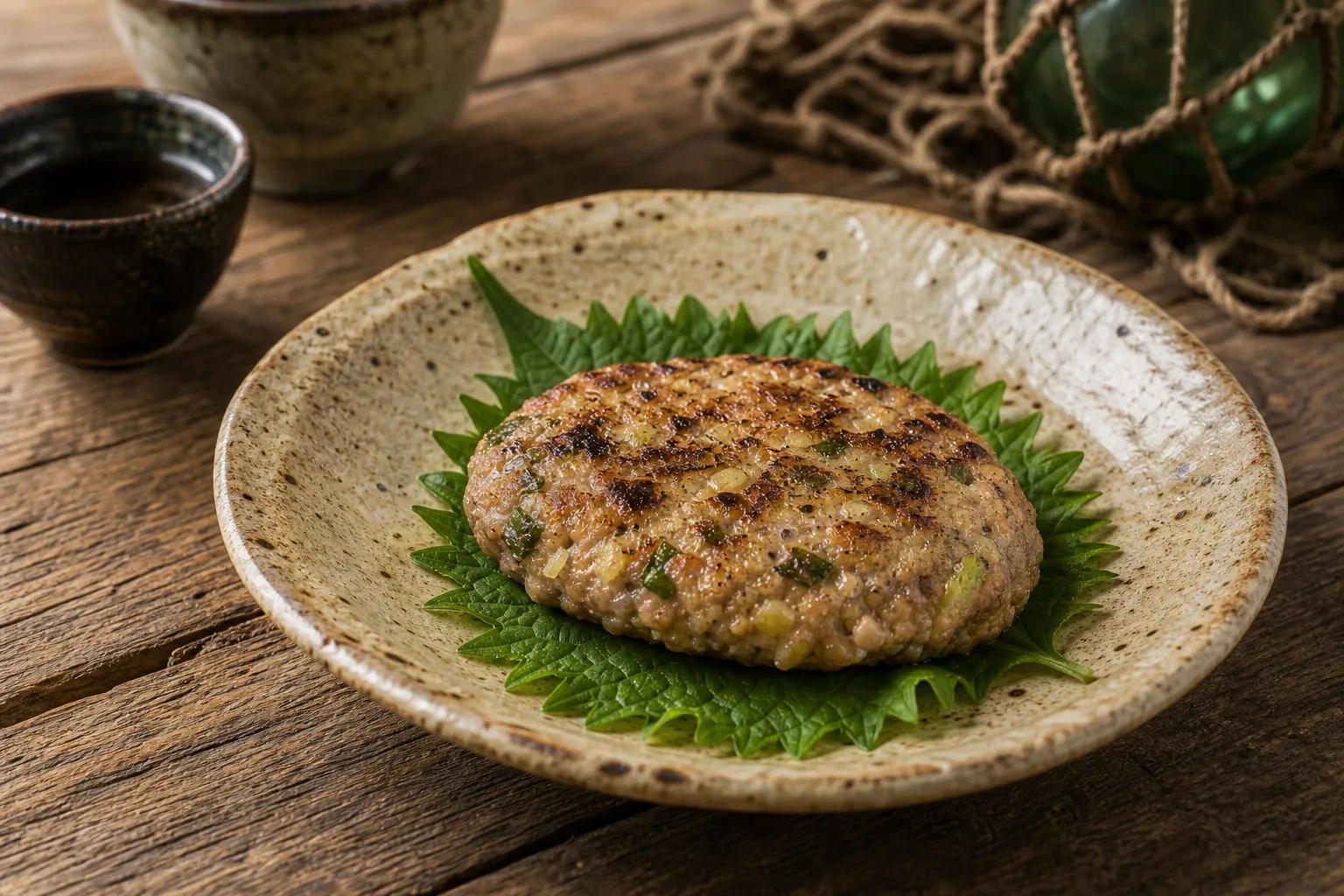
Somewhere on a boat off the Boso coast, generations ago, a fisherman took the day's catch, dropped it on a board with a spoonful of miso, and beat it into paste with the back of his knife. That could have been the meal right there — raw, sharp, gingery. But he patted it onto a shiso leaf, laid it against the heat, and let the edges brown and the miso caramelize until the whole thing smelled like the best kind of dinner. I ate one still warm, the shiso crisping underneath, the fish savory and gingery and deeply satisfying, and I understood immediately why fishermen have been making this for hundreds of years. This is comfort food from the sea, and it's called sanga-yaki.
Share this dish


Fresh fish, pounded on a board with miso and ginger until it turns to paste, patted into a little patty on a shiso leaf, and seared until the edges go brown and the whole boat smells like dinner.
🍜 Planning a food trip to Chiba?Add this dish to my Food Trip →
 Add this dish to my Food Trip →
Here's what it is: sanga-yaki (さんが焼き) starts as namero — fresh fish (often horse mackerel, sardine or other oily coastal fish) pounded on a cutting board with miso, ginger and scallion until it becomes a sticky, seasoned paste. For sanga-yaki, that paste is shaped into a small oval patty, laid on a shiso leaf, and grilled until browned. So it's the cooked sibling of raw namero. Three quick corrections: it's not raw namero tartare (this one's cooked through), not a Western-style hamburger, and not a processed fish cake like kamaboko. It's hand-pounded fresh fish, seasoned bold, and seared — a fisherman's patty with a soul.
A dish born on fishing boats
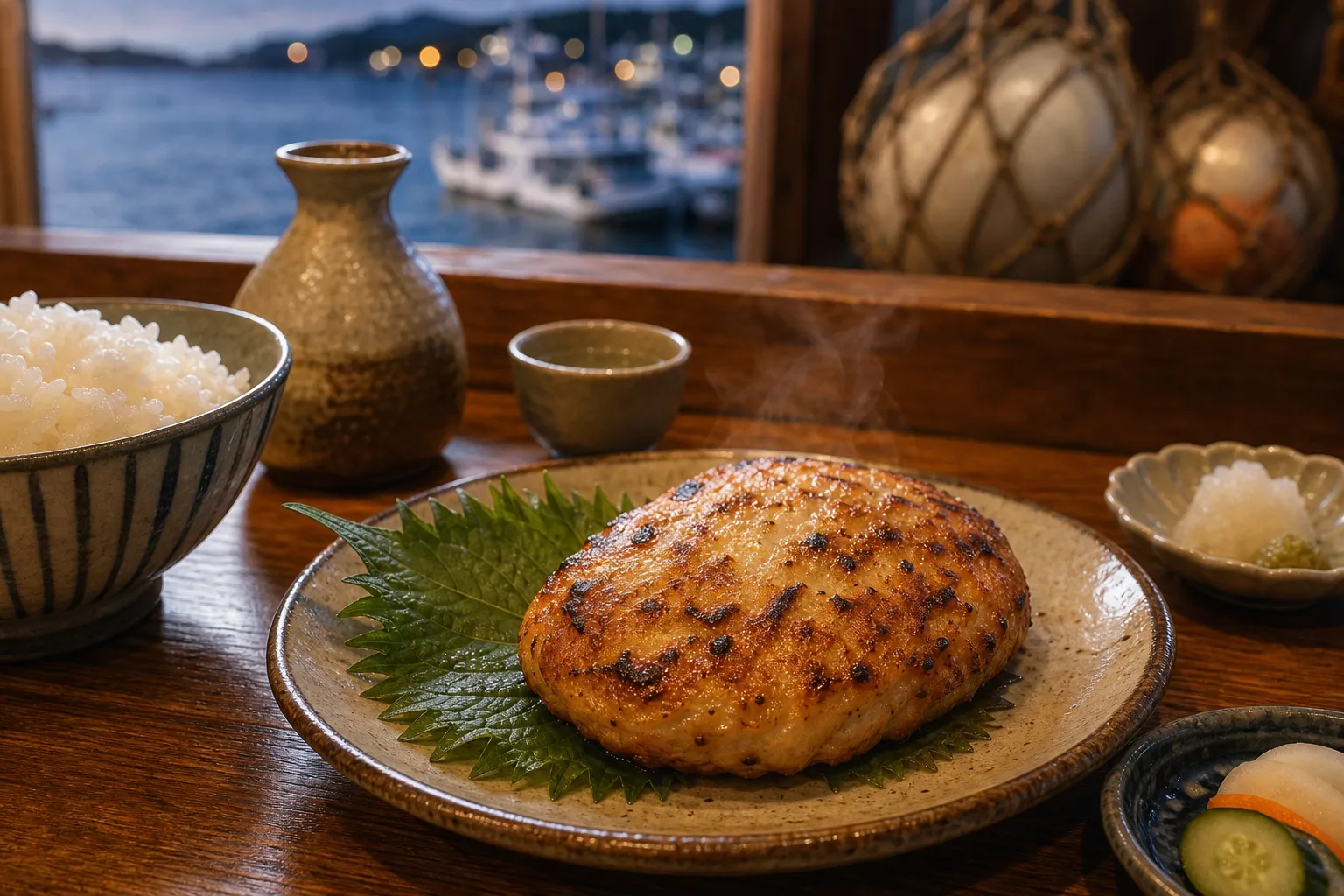
Sanga-yaki is fishermen's food from the Boso Peninsula, Chiba's long sea-facing arm, and its whole logic comes from life on the water. Out at sea, fishermen would make namero by chopping and pounding part of the catch with miso and ginger right on the board — a quick, punchy raw dish (the name is said to come from how you'd lick the plate clean). But raw fish doesn't keep, and there wasn't always a chance to eat it all fresh. So they'd take the leftover namero back, shape it, and grill it — cooking it through so it lasted longer and could be carried up into the mountain fields as a meal. Namero for the boat; sanga-yaki for later. That's said to be the split, and it's such an honest, practical origin that it makes me like the dish even more.
There's a whole hierarchy here that Boso locals know by heart — raw namero, then grilled sanga-yaki, and other cooked forms folded into soup or wrapped in leaves. It's all the same seasoned fish paste taking different shapes depending on the day, the catch and the need. I love food like this: nothing wasted, everything made delicious, a coastline's entire relationship with its fish captured in one humble patty. Eating it on the Boso coast, near the boats it came from, it tastes exactly like what it is — the sea, made warm and homey.
What makes the eating experience different
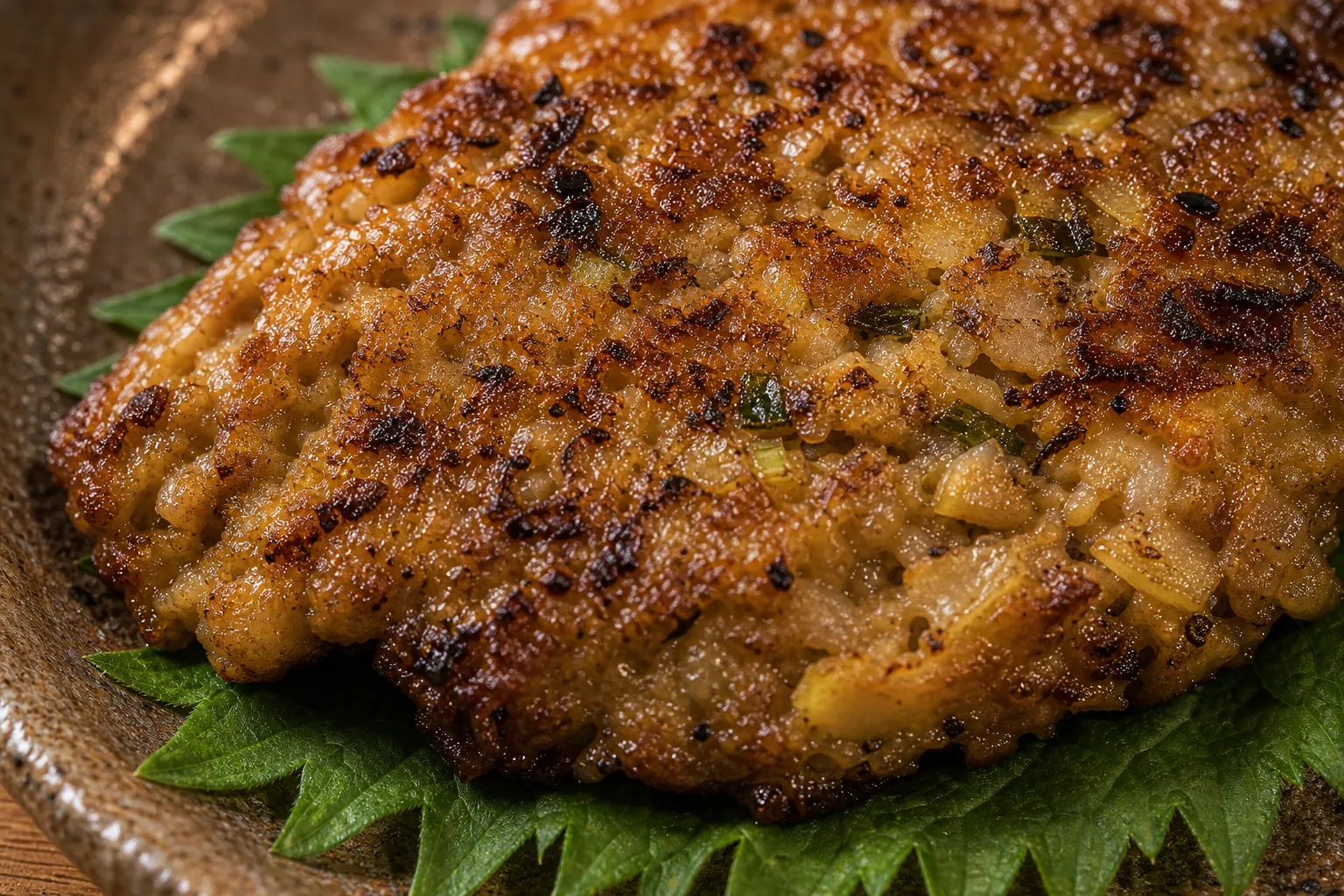
- It's hand-pounded, not ground — beaten on a board with a knife, so the texture is rustic and cohesive, part-smooth part-chunky, nothing like a machine-processed cake
- The miso and ginger are folded right into the paste, so the seasoning runs all the way through, not just on the surface
- The shiso leaf underneath crisps against the heat and lends a bright, herbal fragrance that cuts the richness of oily fish
- Grilling browns the edges and caramelizes the miso, adding a savory, toasty depth raw namero doesn't have
- It's the cooked half of a pair — try it beside raw namero and you taste one seasoning become two completely different dishes
How it's made
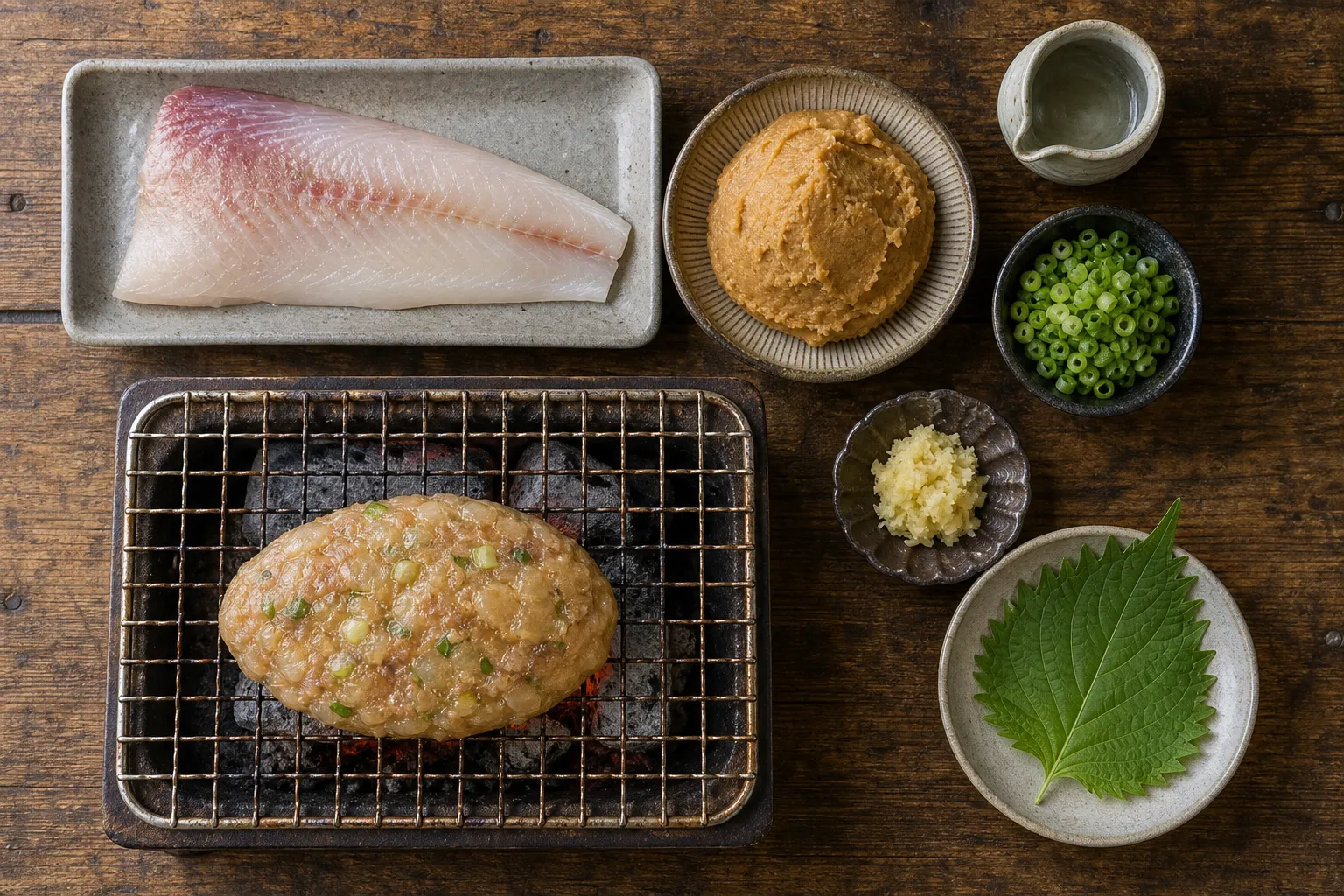
- Start with fresh fish. Oily coastal fish — horse mackerel (aji), sardine (iwashi), sometimes saury or others — is filleted and skinned.
- Pound it into namero. On a cutting board, the fish is chopped and pounded with miso, grated ginger and chopped scallion (sometimes shiso) until it becomes a sticky, well-seasoned paste.
- Shape into patties. The paste is formed into small oval patties by hand.
- Set on a shiso leaf. Each patty is laid on a shiso leaf (which perfumes it and keeps it from sticking).
- Grill until browned. The patties are grilled — on a pan, grill or in an oven — until cooked through and browned at the edges, with the miso caramelizing.
The craft is in the pounding: enough to bind the paste and marry the miso and ginger through it, without turning it into a smooth mush. It should still feel like fish.
Before you go — eat it where the boats come in
Your questions, answered honestly
"Is this raw or cooked?" — Cooked. Raw is namero; sanga-yaki is the grilled version, seared through until browned. If you're nervous about raw fish, this is the friendly entry point — same bold flavor, fully cooked.
"So what's the difference between namero and sanga-yaki?" — Same seasoned fish paste, two treatments. Namero is eaten raw, like a tartare. Sanga-yaki takes that paste, shapes it into a patty on a shiso leaf, and grills it. Order both together if you can — it's a great side-by-side.
"Is it like a fish burger or a fish cake?" — Not really. It's hand-pounded fresh fish, not ground meat and not a smooth processed cake (kamaboko/satsuma-age). It's rustic, gingery, miso-seasoned and coarse-textured — much closer to a savory fish patty made from scratch.
"Will it taste really fishy?" — It's made from oily fish, so it has a rich savoriness, but the miso, ginger and shiso are there precisely to balance and lift it. It reads as deeply savory and aromatic rather than harsh. Fans of aji and iwashi will be very happy.
What the staff will ask you
| You'll hear | Romaji | Meaning | Just say |
|---|---|---|---|
| なめろうと、さんが焼き、どちらにしますか? | Namerō to sanga-yaki, dochira ni shimasu ka? | "Raw namero or grilled sanga-yaki?" | Sanga-yaki de (the grilled one) |
| ご飯とご一緒にどうぞ | Gohan to go-issho ni dōzo | "Great with rice" | Ja, gohan mo (rice too, then) |
| 焼きたてをお持ちします | Yakitate o o-mochi shimasu | "I'll bring it fresh off the grill" | Arigatō (thank you) |
To order, just say "Sanga-yaki o kudasai" (さんが焼きをください) — "Sanga-yaki, please."
Where to eat it
- Fishing towns along the Boso Peninsula, Chiba — coastal areas around southern Boso are the dish's home; local izakaya and seafood restaurants serve it made from the day's catch.
- Michi-no-eki roadside stations and fish markets in Chiba — good places to find sanga-yaki and namero as local specialties, often alongside other Boso seafood.
- Chiba seafood izakaya generally — as a signature local dish, it turns up on menus around the prefecture; ask for it grilled (sanga-yaki) rather than raw if you want it cooked.
Sanga-yaki is best where the fish is freshest — the Boso coast — and the fish used varies with the day's catch; shop hours and availability change, so check before you go if you're traveling specifically to try it.
Soul Score
Local Roots5/5
First-Timer Friendly4/5
Adventure Level3/5
Comfort Level5/5
Travel Worthy3/5
These scores are one obsessed eater's gut feeling — not a verdict. A low number isn't a bad mark, just a different kind of adventure.
Know someone planning Japan?
← All Articles
Local Food · Boso Peninsula, Chiba
Still hungry?
Eat more from Chiba
Local FoodChiba
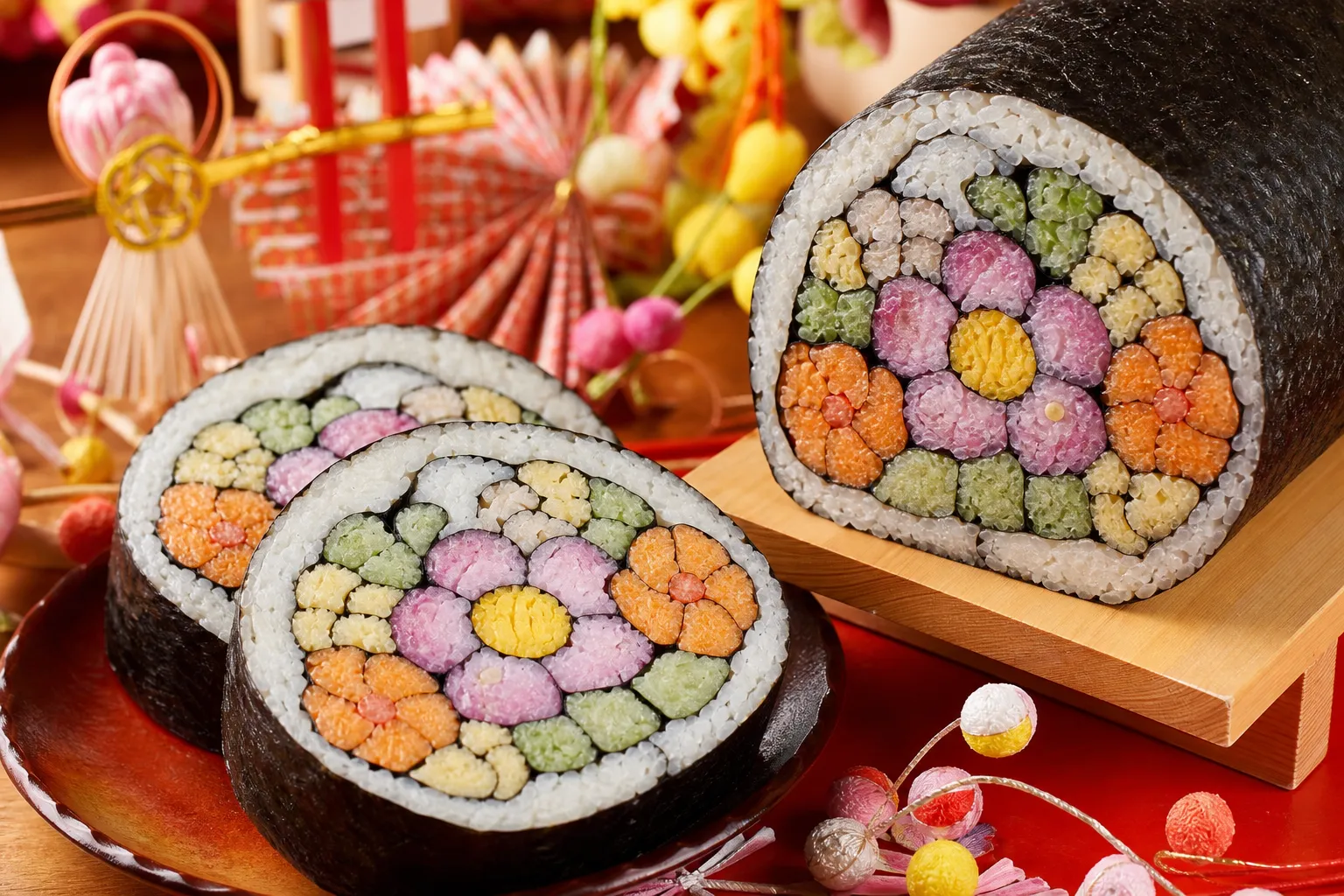
Futomaki Matsuri-zushi (太巻き祭り寿司)
Someone slices a fat sushi roll in front of you and a full-color flower blooms out of the cut face — this is edible pixel art from the rice paddies of Chiba, and it is absurd and glorious.
July 12, 2026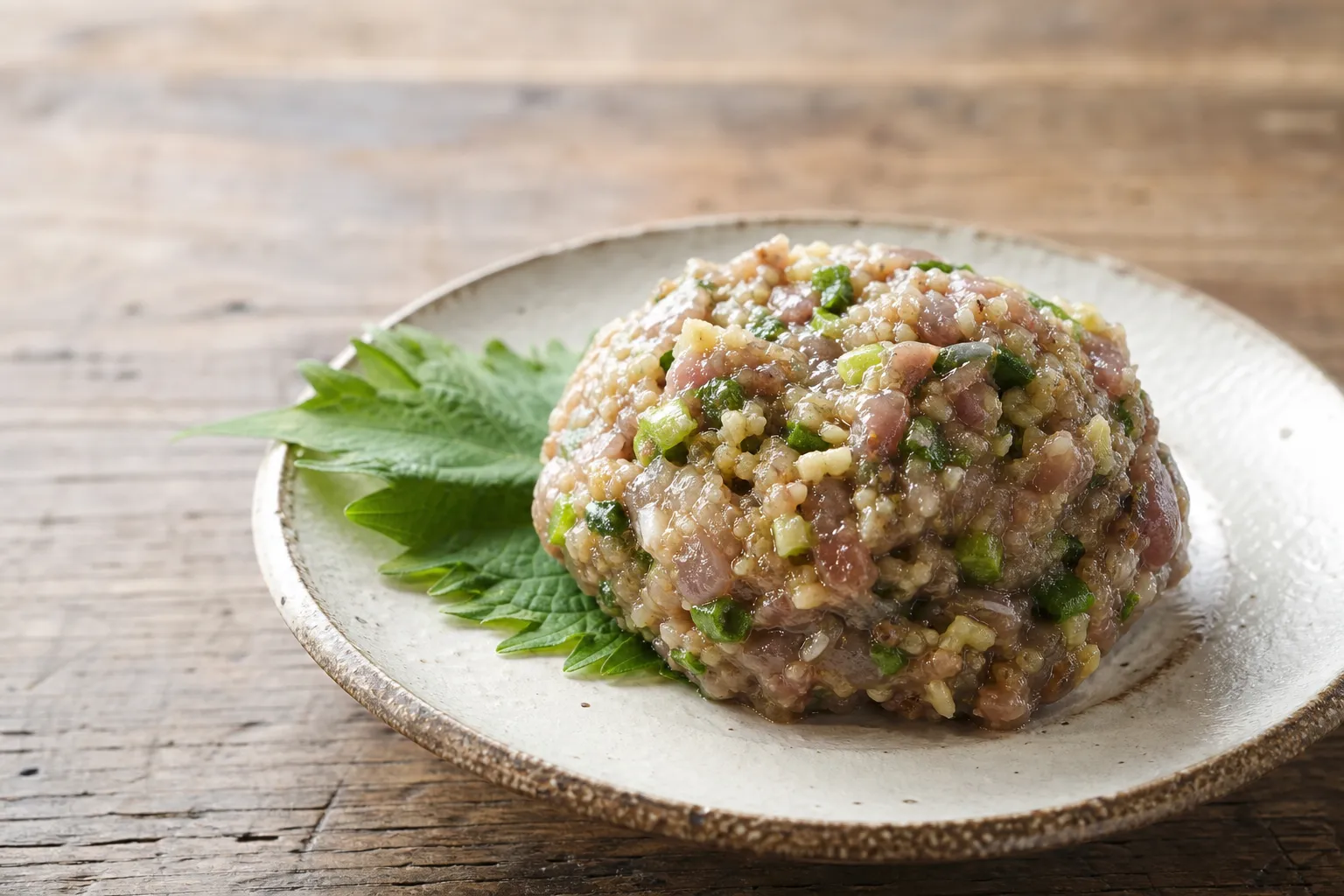
Local FoodChiba
Namero (なめろう)
Fishermen chopped their catch with a blob of miso until it turned into a sticky, savory paste — and refused to wait for a kitchen to do it properly.
July 5, 2026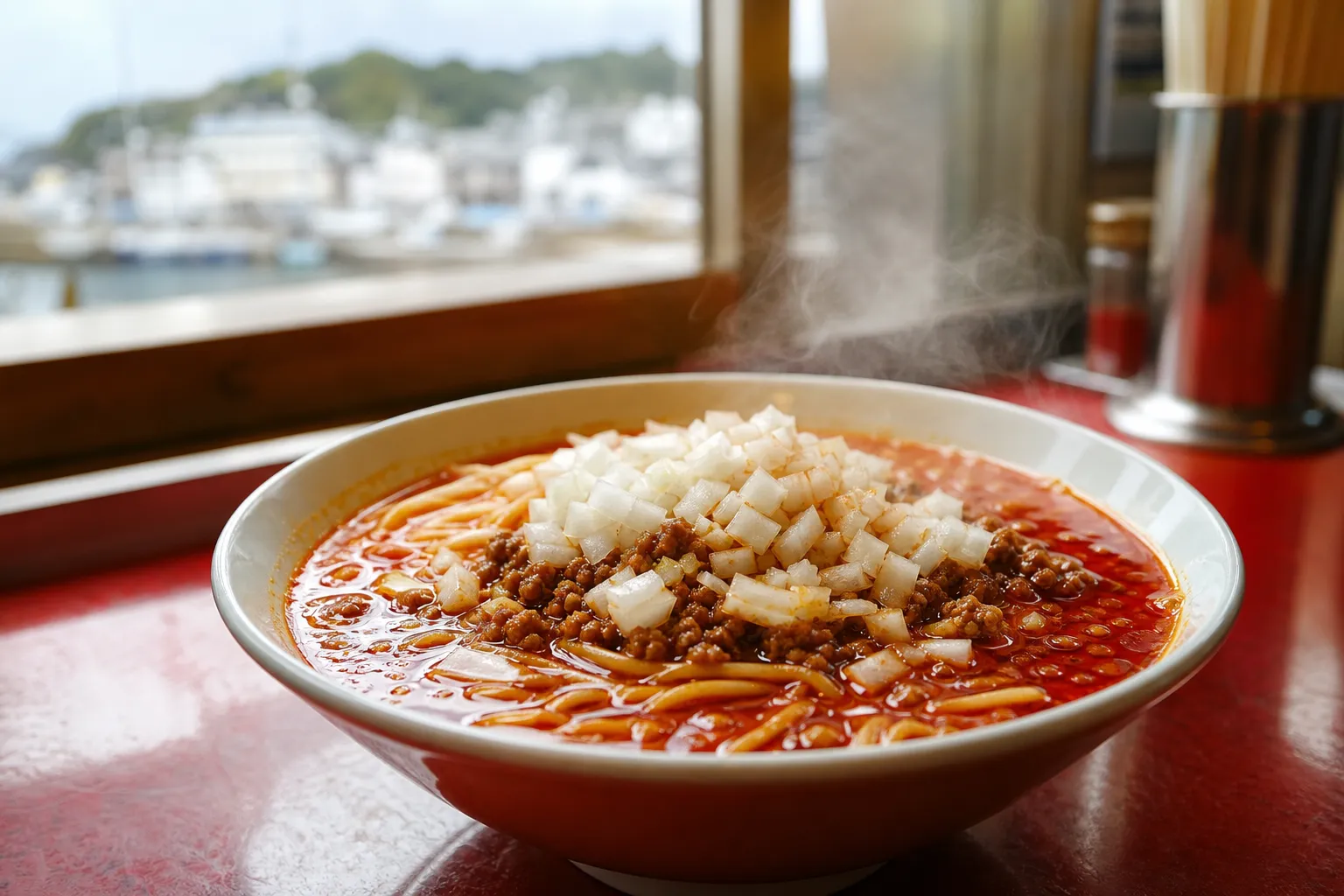
Local FoodKatsuura, Chiba
Katsuura Tantanmen (勝浦タンタンメン)
Not the creamy sesame tantanmen you know. This is a bowl of fire-red chili oil, minced pork and raw onion, invented by fishermen to thaw out after a freezing morning at sea. It bites back.
June 28, 2026