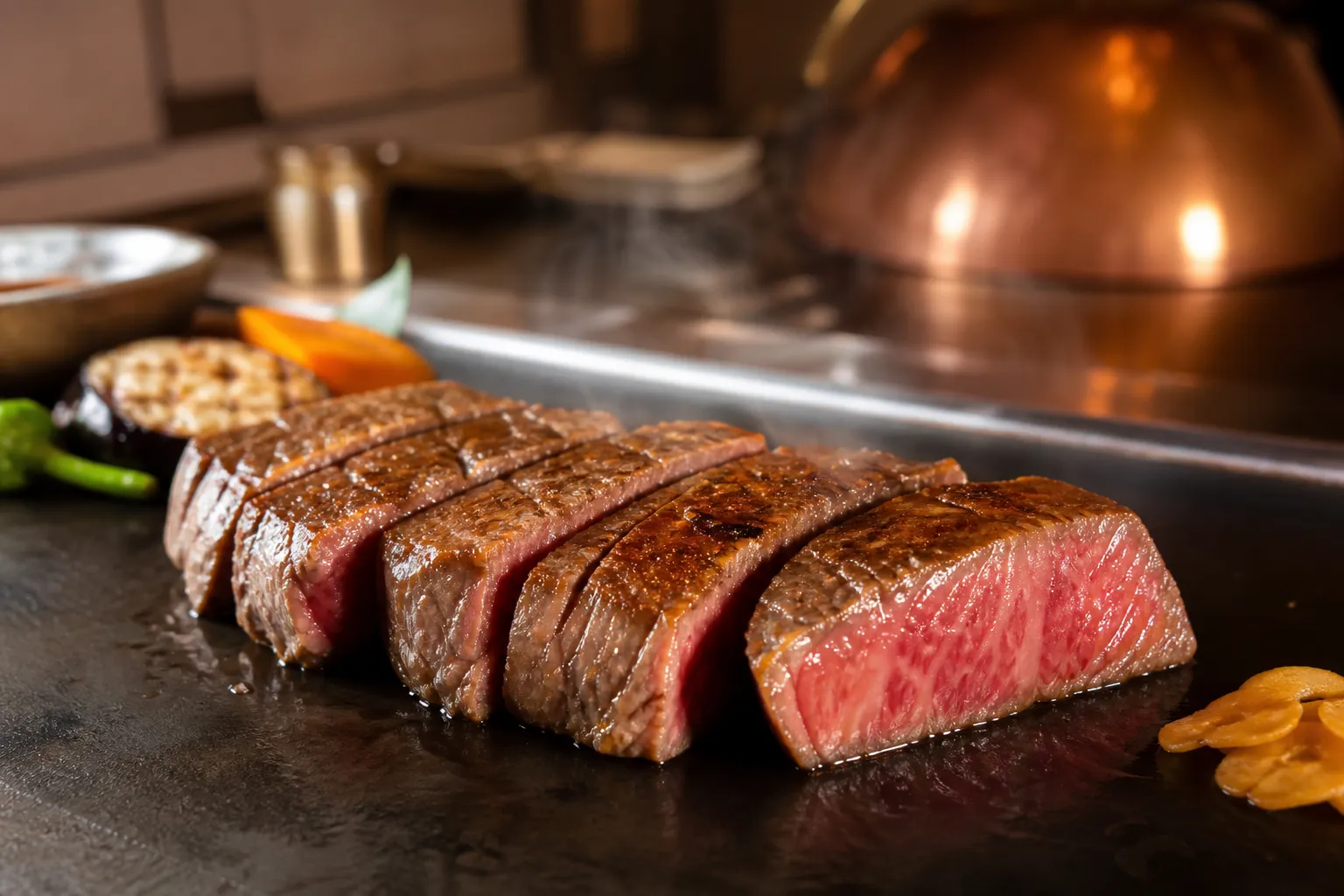
The plate was so hot I heard the steak before I tasted it — that violent sizzle as the marbled cube hit the iron, fat spitting, a brown crust forming in seconds while the inside stayed barely-warm pink. The chef cut it in front of me, I picked up a piece with a little salt, and it gave way like the fat was butter that happened to taste of beef. Warm, savory, sweet at the edges, gone too fast. I ordered more. That's Saga beef off a hot iron plate, and it is the single best reason to stop in Japan's quietest prefecture.
Share this dish


Marbled Kyushu wagyu seared on a screaming-hot iron plate until the fat crackles and the crust goes brown — Saga's strictly-graded beef, and the best steak reason to stop in Japan's quietest prefecture.
🍜 Planning a food trip to Saga?Add this dish to my Food Trip →
 Add this dish to my Food Trip →
Here's what it is: Saga beef (佐賀牛, Saga-gyū) is a strictly-graded premium wagyu brand from Saga in Kyushu — only beef hitting high marbling and quality grades is allowed to carry the name, which makes it one of Japan's more tightly controlled brands. It's known for rich, fine marbling and a clean, sweet fat, and it shines when seared as a steak on a hot iron plate (teppan), where that crust and that melting fat get to show off. This is not ordinary beef, and it's a world away from the thin simmered slices in a gyudon bowl — this is a proper, marbled, seared-to-order steak.
Kyushu's strictly-graded beef
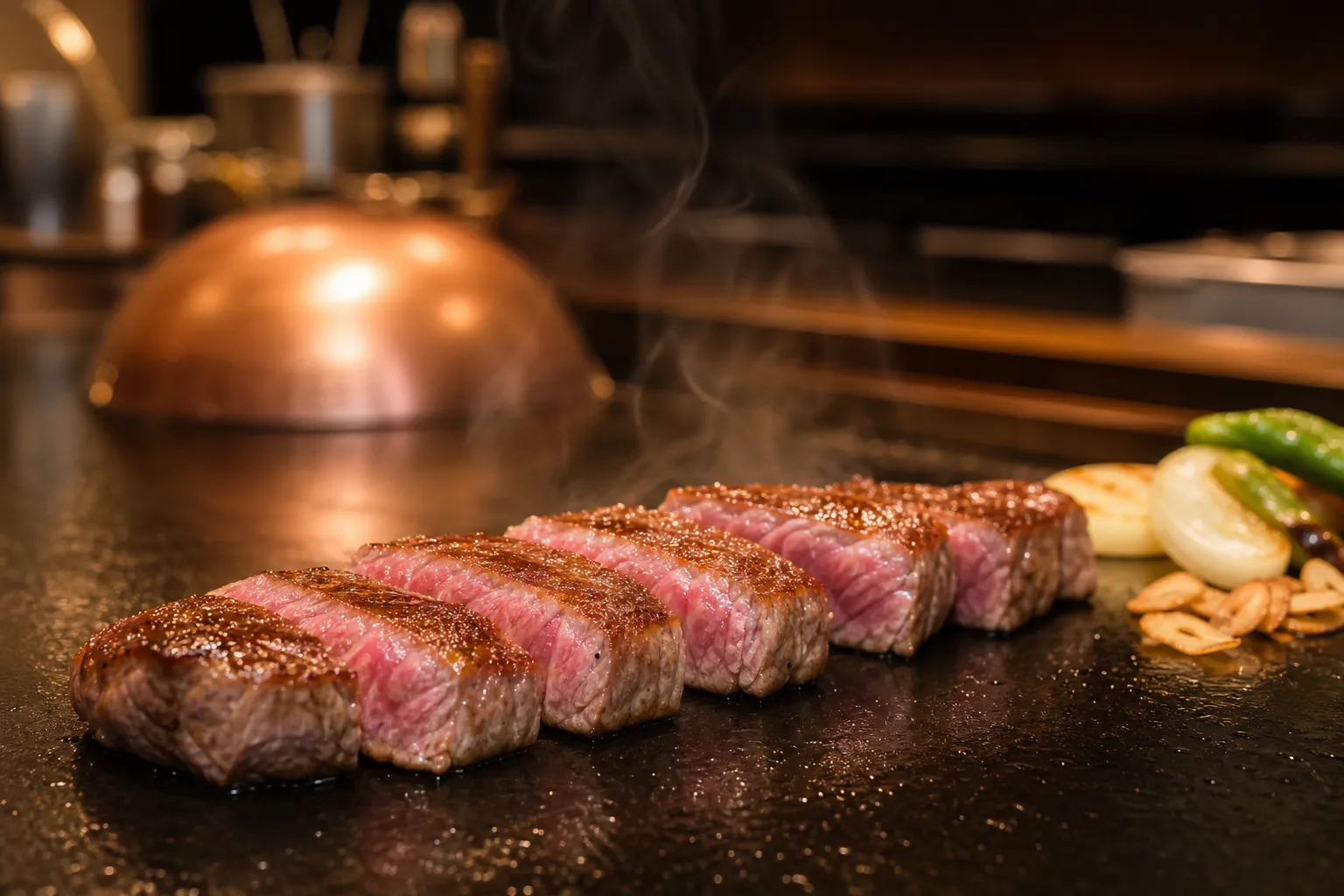
Saga is a small, quiet prefecture on Kyushu that most travelers blow straight past on the way to Fukuoka or Nagasaki — which is exactly why its beef feels like a secret. Saga beef earned its reputation the modern way: not on centuries of legend, but on a strict grading standard. Only Japanese Black cattle raised in the prefecture whose meat reaches the top marbling and quality grades are allowed to be sold as "Saga beef" — anything below the bar simply doesn't get the name. That discipline is the whole brand identity, and it means when you see the words Saga-gyū, you're getting beef that cleared a high bar.
The raising helps: Saga's mild climate, clean water and careful feeding on Kyushu's farmland produce that fine, even marbling and a fat people describe as sweet and clean. What I love is how unshowy the whole thing is. There's no tourist circus around it — just serious teppan and steak restaurants, often family-run, quietly cooking some of Japan's best beef for people who bothered to stop in Saga. It rewards curiosity. Come for the beef, and you get a whole underrated prefecture thrown in.
What makes the eating experience different
- It's strictly graded — only high-marbling, high-quality beef carries the Saga name, so the baseline is consistently excellent
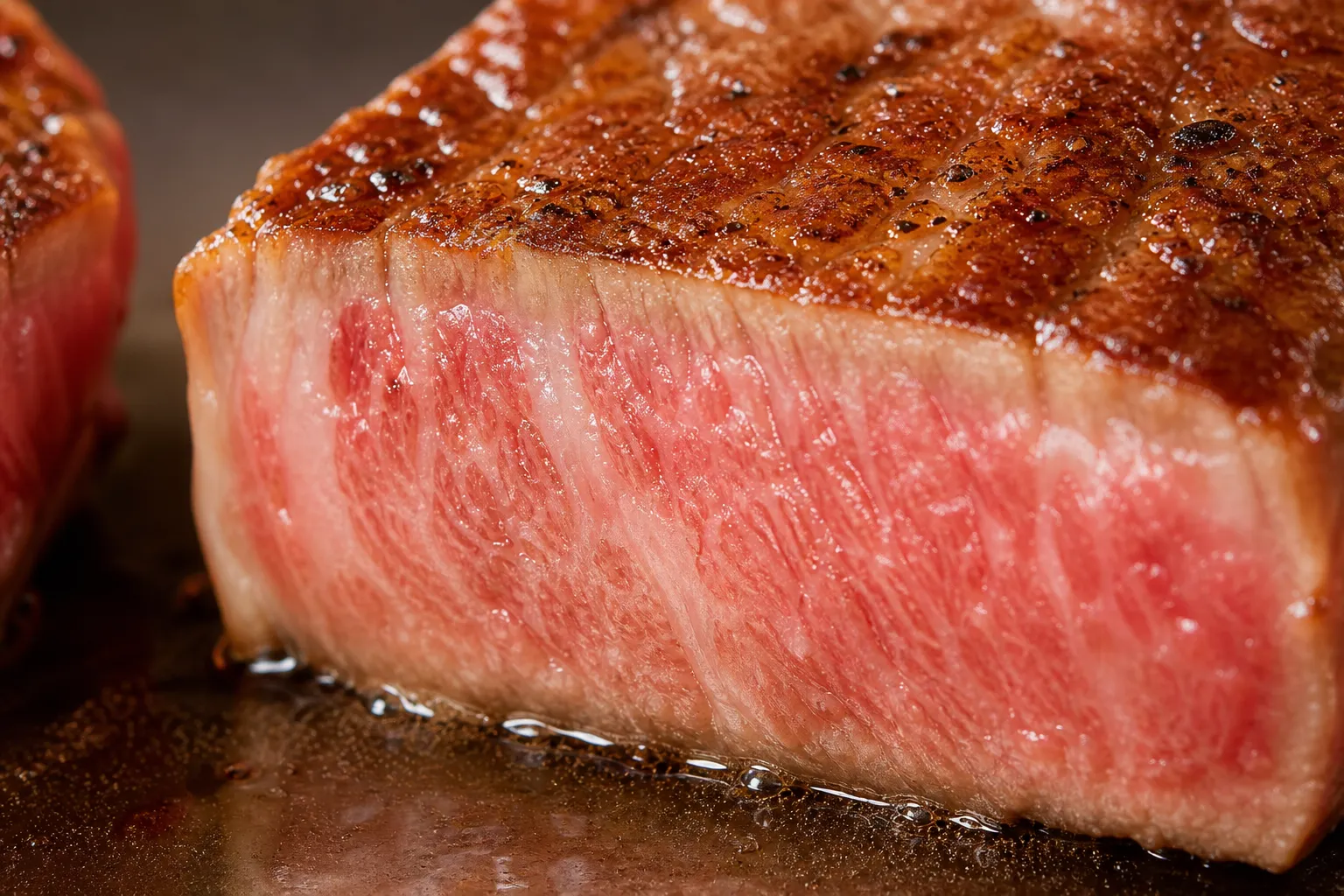
- The fat is fine and clean-tasting, sweet rather than heavy, melting smoothly instead of coating your mouth
- Teppan searing is its element: a screaming-hot iron plate builds a browned, savory crust while keeping the inside tender and pink — the contrast is the joy
- It's usually served simply — salt, wasabi, a little garlic or a light sauce — because the beef itself is the show
- Because it's so rich, a modest steak satisfies — this is quality-over-quantity beef, meant to be savored a few perfect bites at a time
How it's made (and how it's served)
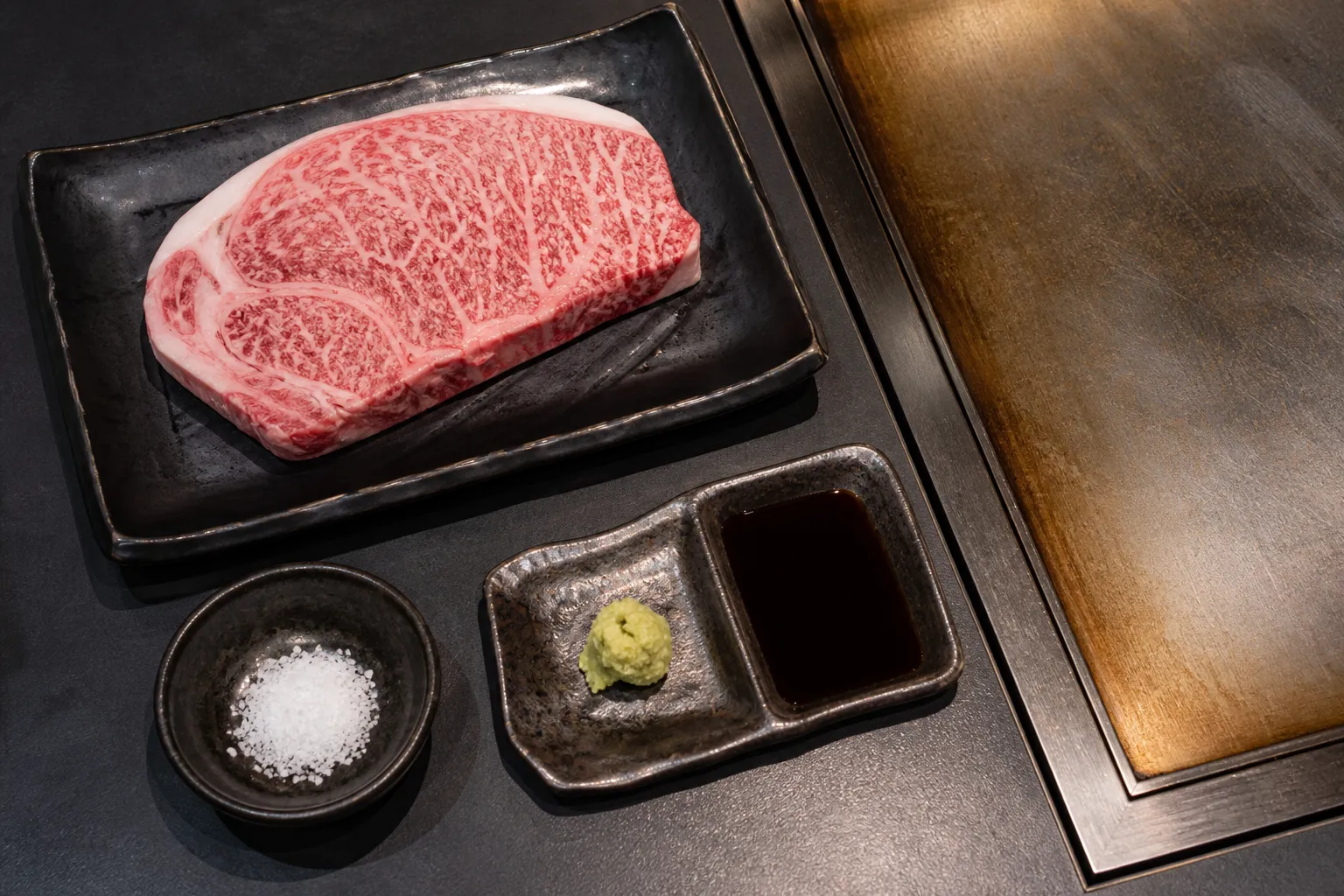
- The cattle are raised to strict standards. Japanese Black cattle are raised in Saga with careful feeding, developing the fine marbling the brand demands.
- Graded and certified. Only carcasses meeting the high marbling and meat-quality grades are certified and sold as Saga beef — the grade is the gatekeeper.
- Cut to order. For steak and teppanyaki, the certified beef is portioned into steaks or cubes, with the marbling on full display.
- Seared on a screaming-hot iron plate. At a teppan counter the chef sears the beef hard on the hot plate, building a browned crust while keeping the center tender.
- Rested and cut in front of you. The steak is briefly rested, then sliced or cubed at the counter so you eat it at its juiciest.
- Served simply. It comes with salt, wasabi, garlic chips or a light sauce — seasonings that support the beef rather than mask it.
The craft is all about heat and timing: a plate hot enough to crust the outside fast, and the judgment to pull it while the inside is still tender and the fat is just melting. Overcook this and you lose everything the grading bought you — so a good teppan chef treats it with real respect.
Before you go — hot plate, good crust, keep it simple
Your questions, answered honestly
"How is this different from Omi beef or other wagyu?" — They're all premium Japanese wagyu, so all are rich and marbled. The difference is the classic style: Omi beef leans into sukiyaki and thin marbled slices in a sweet broth, while Saga beef is at its best seared as a steak on a hot iron plate — crust, char, and a knife. If you want the melting-slice experience go Omi; if you want a proper seared steak, Saga is your answer.
"How should I have it cooked?" — Let the chef guide you, but medium-rare is the classic for marbled wagyu — enough heat to crust the outside while the fat inside just melts. Say osusume de ("your recommendation") and you're in good hands at a teppan counter.
"Salt, wasabi, or sauce?" — Try it with salt first — it's the purest way to taste that sweet fat. Then play with wasabi or a little sauce. Good Saga beef needs very little; the seasonings are there to accent it, not drown it.
"Is it worth the price?" — Yes, for a treat. Strictly-graded wagyu is expensive everywhere, but a well-seared Saga steak is a real occasion, and a modest portion goes a long way because it's so rich. Lunch sets can be a gentler way in than a full dinner course.
What the staff will ask you
| You'll hear | Romaji | Meaning | Just say |
|---|---|---|---|
| 焼き加減はいかがしますか? | Yaki-kagen wa ikaga shimasu ka? | "How would you like it cooked?" | Midiamu rea de (medium-rare, please) |
| 塩とソース、どちらにしますか? | Shio to sōsu, dochira ni shimasu ka? | "Salt or sauce?" | Mazu shio de (salt first, please) |
| ステーキとコース、どちらになさいますか? | Sutēki to kōsu, dochira ni nasaimasu ka? | "Steak alone or a course?" | Osusume de (whatever you recommend) |
To order, just say "Saga-gyū o kudasai" (佐賀牛をください) — "Saga beef, please."
Where to eat it
- Saga city and around the prefecture — teppanyaki and steak restaurants across Saga serve certified Saga beef; look for the brand certification on the menu or at the door.
- Ureshino and the onsen towns — Saga's hot-spring areas are a relaxing place to pair a beef dinner with a soak; many ryokan and local restaurants feature Saga beef courses.
- Fukuoka and nearby Kyushu cities — because Saga borders Fukuoka, some restaurants there also serve certified Saga beef; confirm it's the genuine brand and check current menus and hours before you go, as good teppan places often take reservations.
Saga beef is a strictly-graded premium brand best enjoyed at teppanyaki and steak restaurants; menus, prices and opening hours vary and popular places may require reservations, so check before you go.
Soul Score
Local Roots4/5
First-Timer Friendly5/5
Adventure Level3/5
Comfort Level5/5
Travel Worthy4/5
These scores are one obsessed eater's gut feeling — not a verdict. A low number isn't a bad mark, just a different kind of adventure.
Know someone planning Japan?
← All Articles
Local Food · Saga
Still hungry?
Eat more from Saga
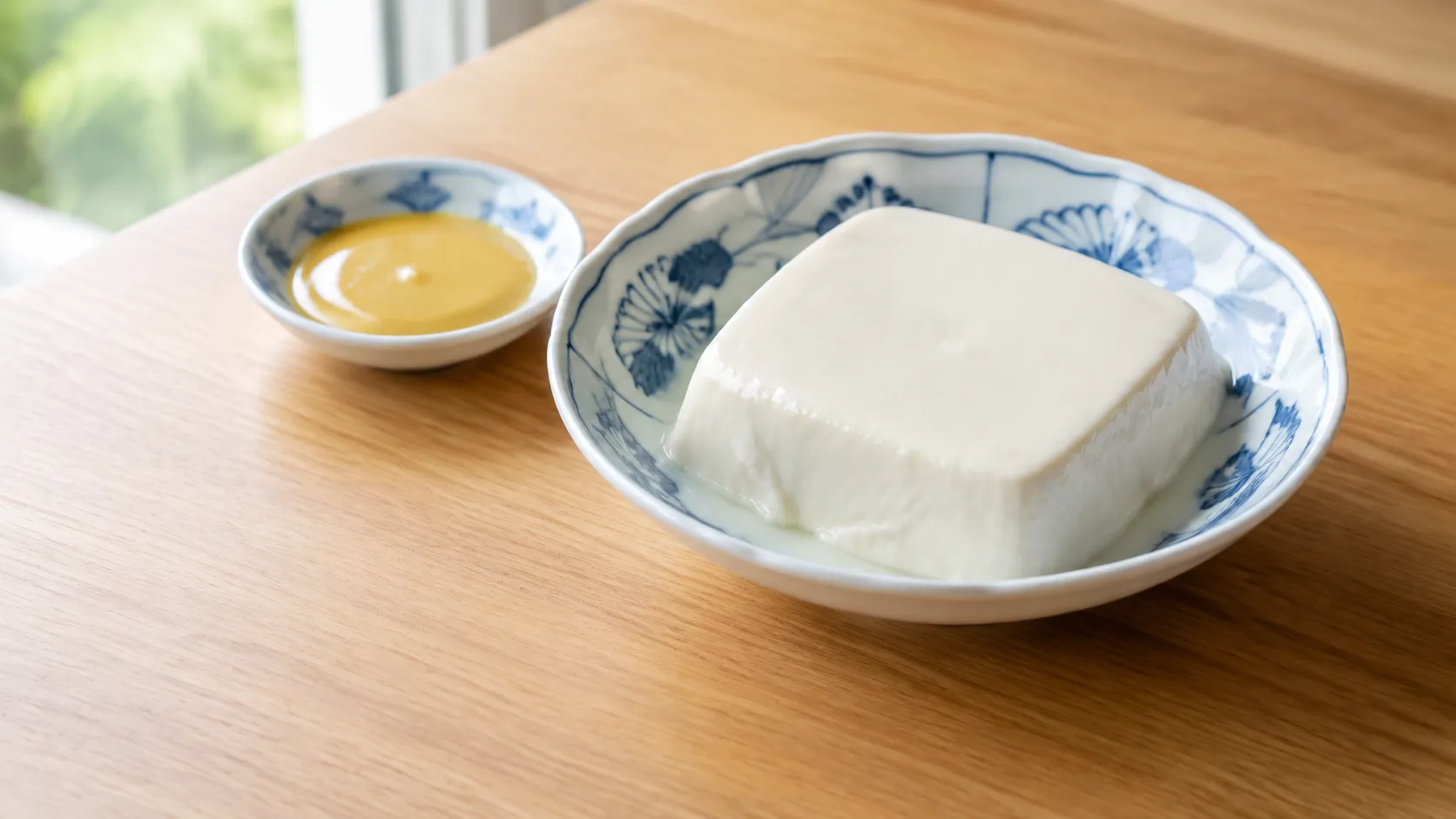
Local FoodArita, Saga
Godofu (ごどうふ)
I tried to pick it up with chopsticks and it sagged, stretched, and very nearly escaped — which is when the shop owner started laughing at me from behind the counter.
September 2, 2026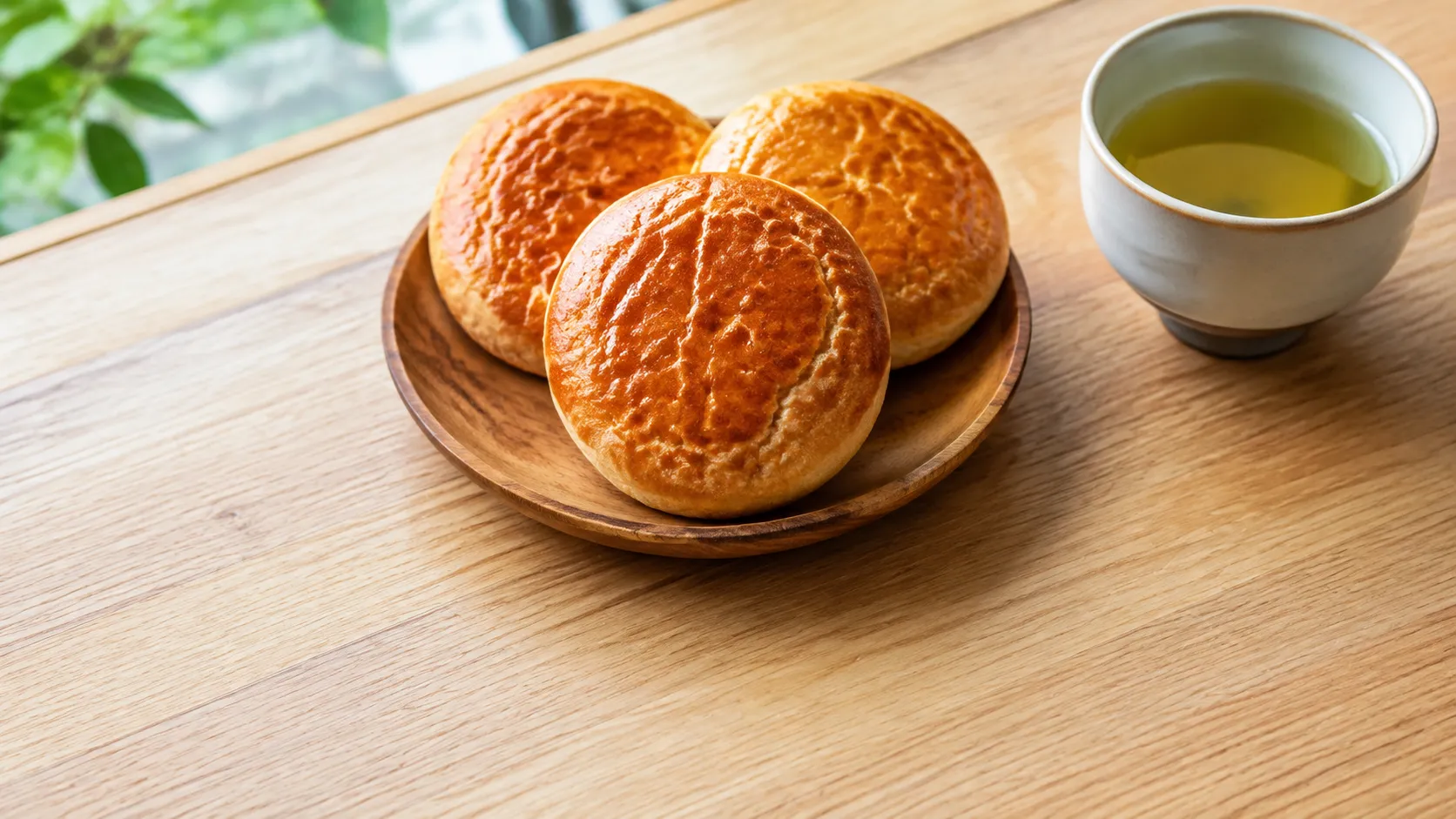
Sweets & SnacksSaga
Maruboro (丸ぼうろ)
It looks like the most boring biscuit in Japan. Then you bite it and it's soft, and honey-warm, and about four hundred years of Portuguese sailors arrive all at once.
September 2, 2026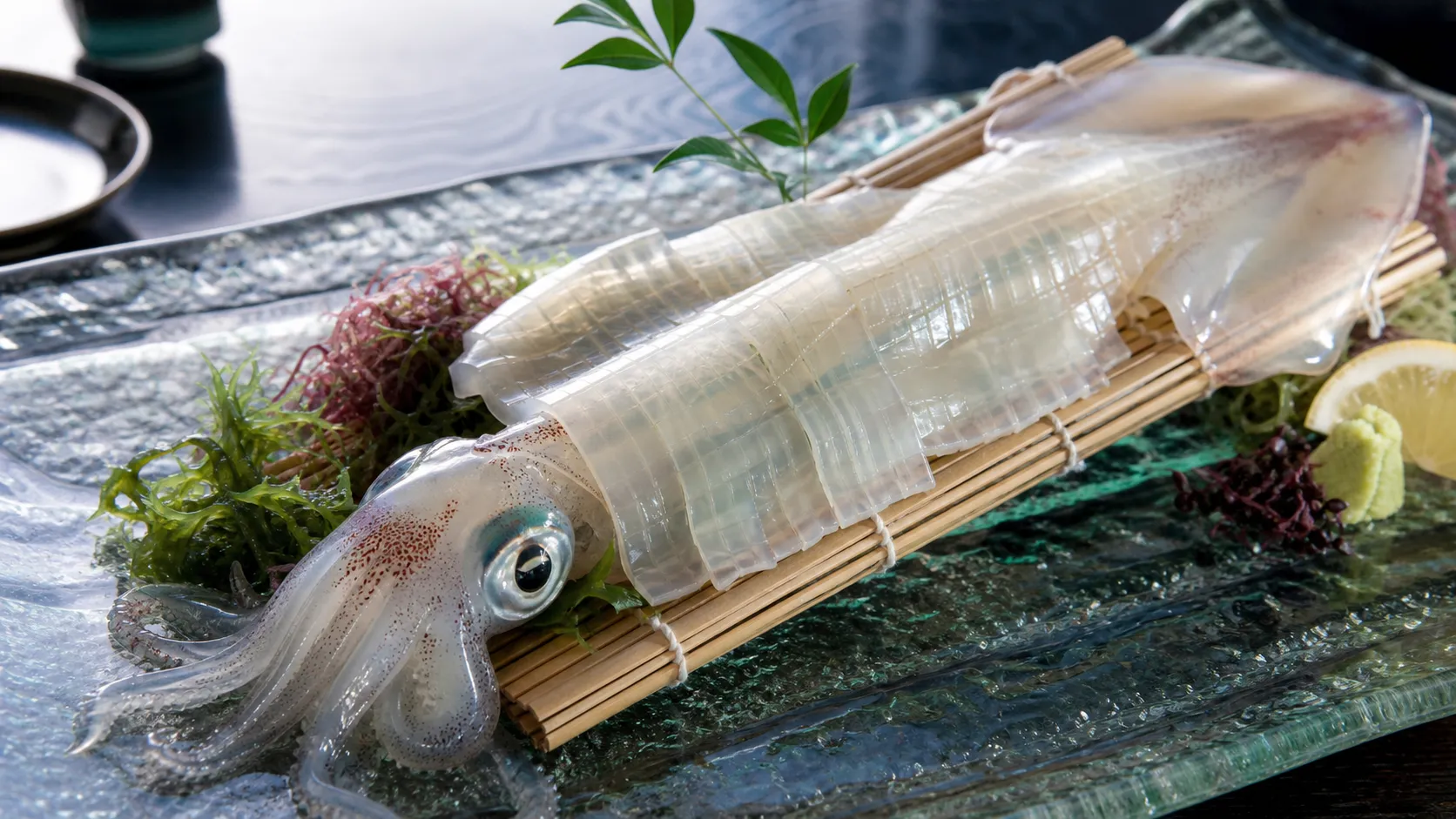
Local FoodYobuko, Saga
Yobuko Squid, Ika Ikizukuri (呼子のイカ活造り)
Squid so fresh the body is still glassy-clear and the legs are still moving when it reaches your table — sweeter and cleaner than any squid you thought you knew, at the little port that made it famous.
July 12, 2026