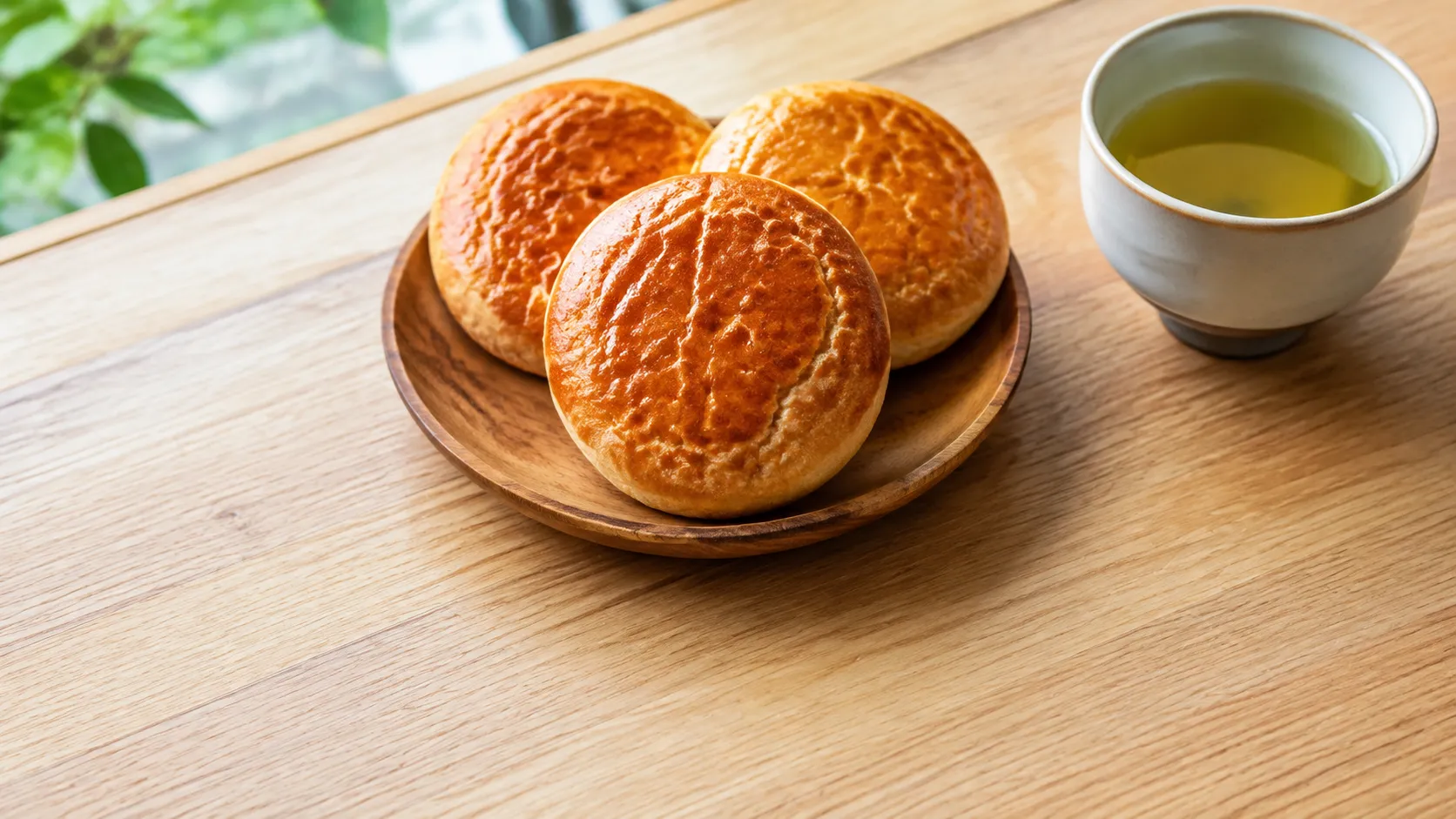
It looks like nothing. I want to be upfront about that. A flat brown disc, about the size of your palm, with some cracks on top. Sitting on a plate next to a cup of green tea in a shop in Saga, it looked like the least interesting thing anyone had ever offered me.
Share this dish


It looks like the most boring biscuit in Japan. Then you bite it and it's soft, and honey-warm, and about four hundred years of Portuguese sailors arrive all at once.
🍜 Planning a food trip to Saga?Add this dish to my Food Trip →
 Add this dish to my Food Trip →
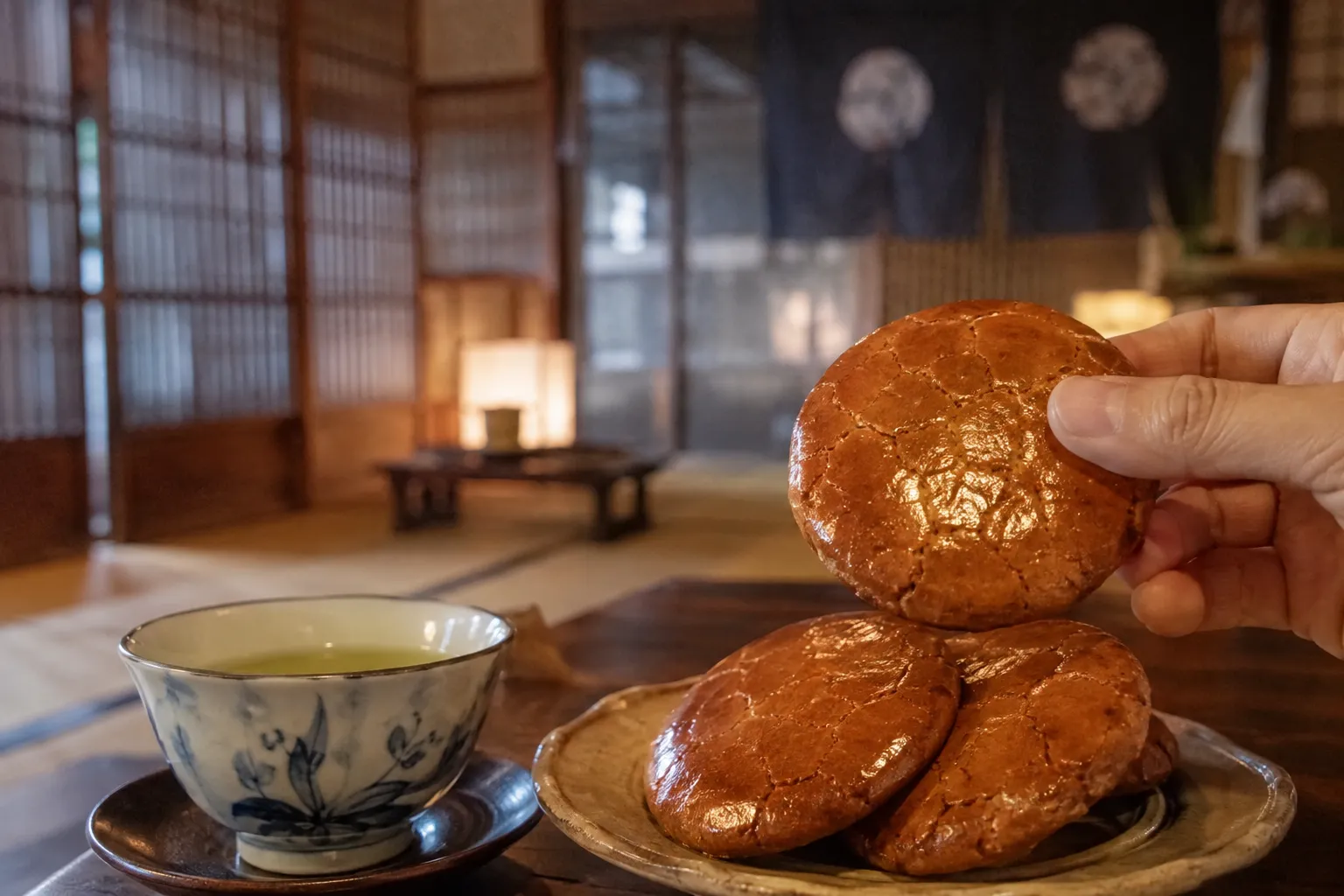
Then I bit it and it was soft. Not crisp — soft, and dense, and slightly chewy at the centre, with honey and egg coming through warm and round, and a faint toasty bitterness off the browned top. It tasted old. I don't have a better word. It tasted like something that had been made the same way for a very long time by people who saw no reason to improve it.
And then somebody told me where it came from and I put my tea down. Because this humble brown disc is a direct descendant of a Portuguese cake, carried into Japan on trading ships four hundred years ago, when this corner of Kyushu was the only door the country had left open.
Maruboro is Saga's everyday sweet: wheat flour, eggs, sugar and honey, baked into a round flat cake with a cracked glossy top. No butter, no milk, no leavening you'd recognise from European baking. It's what happened when a Portuguese recipe arrived in a country with no dairy tradition and had to be rebuilt from local parts.
What the Portuguese left behind
In the 1500s Portuguese ships reached Kyushu, and with them came guns, Christianity, and — the part I care about — sugar and baking. Bolo is simply Portuguese for cake. That word came ashore in Nagasaki and stuck, in a bundle of sweets Japan still calls nanban-gashi, "southern barbarian confections", a name that has never once been softened despite four centuries of opportunity.
Then Japan closed. For over two hundred years the country's contact with Europe ran through one artificial island in Nagasaki harbour, a couple of hours from Saga. The recipes that had landed didn't leave — they got adapted, over generations, by Japanese confectioners working with Japanese ingredients.
Butter and milk were essentially absent from the Japanese kitchen. So they went. Eggs, sugar, wheat and honey stayed, and Saga's confectioners built the cake back up from those four things. Castella, the famous sponge from Nagasaki, came out of the same encounter — maruboro is its blunter, rounder, more domestic cousin.
Saga has confectioners who date their maruboro back centuries and have been making it in the same city ever since. What strikes me is that it never became a delicacy. It stayed a hundred-yen thing you eat with tea in the afternoon. A luxury import from the age of sail turned into somebody's ordinary Tuesday, which is the most complete kind of naturalisation there is.
Why removing the butter made it better
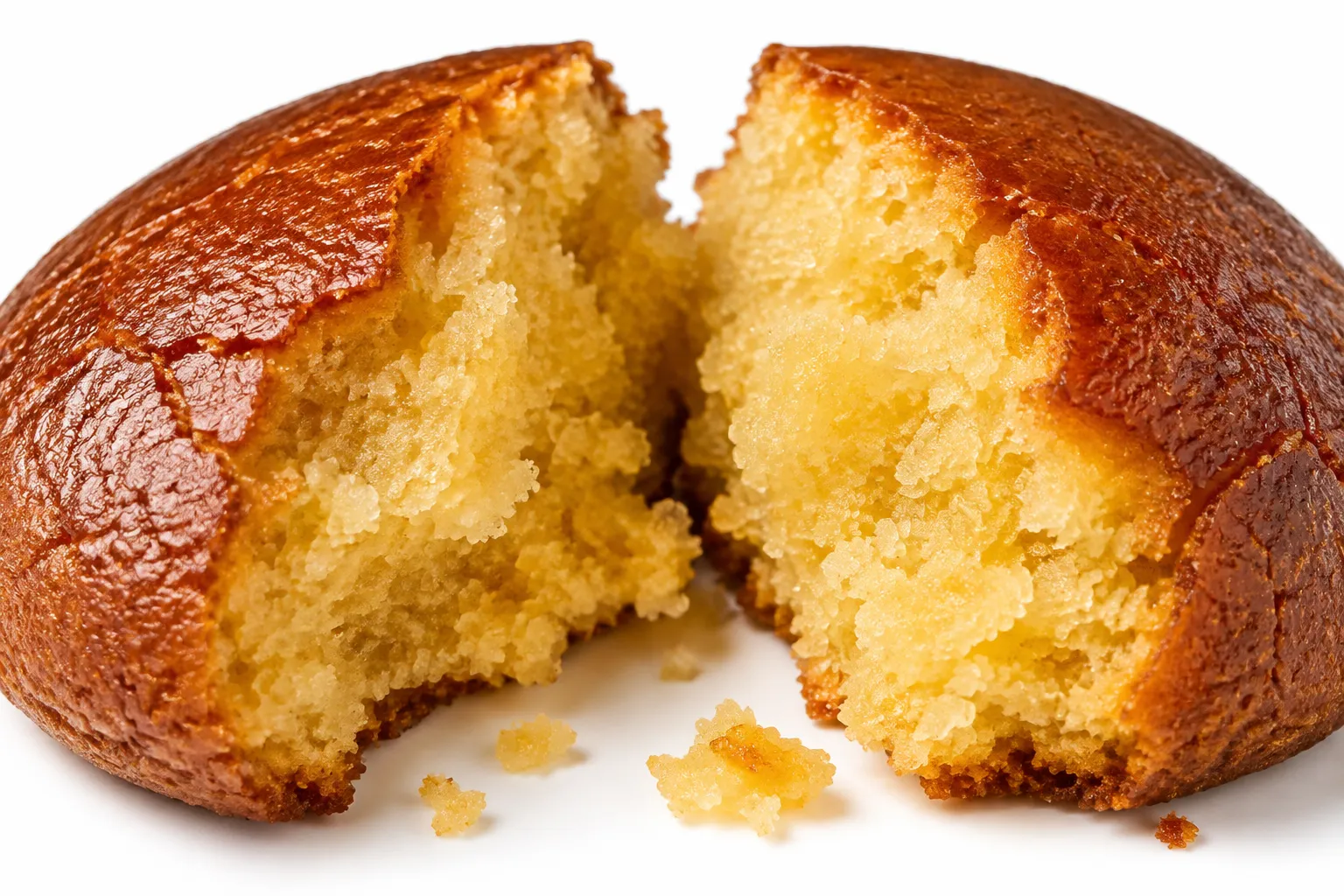
A European cake without fat sounds like a punishment. It isn't, because what replaced the fat was honey — and honey does something butter can't, which is hold water. That's why maruboro is dense and moist rather than dry and crumbly, and why it stays that way on a shelf.
Break one open and you'll see a tight, even, pale golden crumb with none of the airy holes of a sponge. It's closer to the inside of a soft cookie than to cake. The top is where the character lives: baked to a glossy brown and cracked all over, from the surface setting before the middle finished rising. Those cracks are the sign of a good one, and they're also just genuinely nice to look at.
The flavour is simple and needs to be. Egg-rich, honey-warm, faintly caramelised at the edges, with a wheat note underneath. There's no vanilla, no butter, no dairy fat — nothing rounding it off, so what you taste is exactly its four ingredients, which is a slightly exposing way to bake and demands the ingredients be good.
Green tea is the correct partner and it isn't close. The sweetness is substantial and slightly clinging, and the bitterness of matcha or sencha cuts straight through it. Coffee works too. Milk, oddly, does not — the cake has spent four hundred years without dairy and it shows.
How it comes together
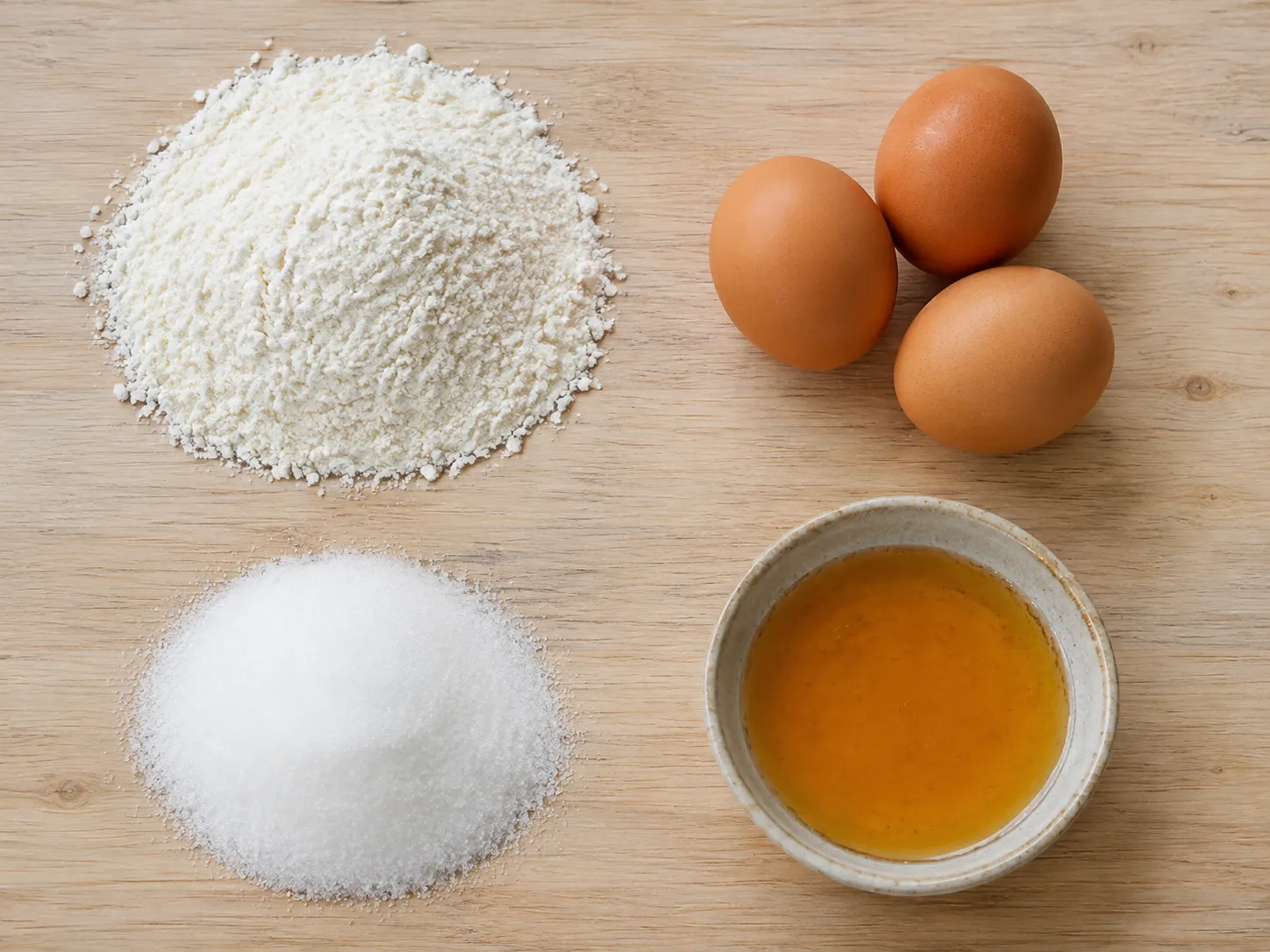
- Beat eggs with sugar until pale and thick — this is the only aeration the cake gets, so it isn't a step to rush
- Work in honey or a starch syrup, which is what keeps the finished cake moist
- Fold in wheat flour with a little baking soda to make a soft, sticky dough
- Rest the dough, then portion it into balls and flatten them into rounds on a tray
- Bake hot until the tops dome, brown, and crack open across the surface
Step 5 is where the look is decided. The oven needs to be hot enough that the surface sets while the inside is still expanding, which is what forces those cracks. Bake it gently and you get a smooth, pale, characterless disc that tastes fine and looks like nothing at all — which, given how plain it already looks, is a margin nobody in Saga can afford to lose.
Before you go — the stuff that actually matters
Your questions, answered honestly
"Is it a cookie or a cake?" — Neither, comfortably. Denser than cake, softer than a cookie, chewier than both. Think of the texture of a soft baked madeleine that's been pressed flat, and you're close.
"How is it different from castella?" — Castella is a tall rectangular sponge, light and airy, sold in slabs. Maruboro is a flat round disc, dense and chewy, sold by the piece. Same historical origin, opposite textures. Castella is the famous one; maruboro is the one people in Saga actually eat.
"Does it contain dairy?" — Traditionally no — flour, eggs, sugar, honey. That makes it dairy-free, though not vegan, and modern makers vary, so check the label if it matters.
"How long does it keep?" — A week or two, typically, and it's at its best in the first few days when the middle is still soft. Some people prefer it after a day or two when it firms up slightly. Both are defensible positions and Saga will argue about it if you let them.
"Is it good for taking home?" — Very. Boxed sets are made for exactly that, they're flat and stackable, and they survive a suitcase better than most Japanese sweets. It's a genuinely good gift for someone who doesn't like intensely sweet things.
"Where does it fit in a day?" — Mid-afternoon with green tea, the way you'd have a biscuit. It's not a dessert course and it's not breakfast. It's the three o'clock sweet.
"Should I go to Saga just for this?" — Honestly no, and I'd rather be straight with you. But Saga is a genuinely underrated prefecture — Arita's porcelain, Karatsu's coast, Yobuko's squid, and some of the best beef in Japan — and this is what you eat between all of those.
What the staff will ask you
| You'll hear | Romaji | Meaning | Just say |
|---|---|---|---|
| 何個入りにしますか? | Nan-ko iri ni shimasu ka? | "How many in the box?" | Roku-ko iri de (the six-piece, please) |
| ご贈答用ですか? | Go-zōtōyō desu ka? | "Is it a gift?" | Jibun-yō desu (it's for myself) |
| お茶をお出ししましょうか? | Ocha o o-dashi shimashō ka? | "Shall I bring you tea?" | Onegaishimasu (yes, please) |
| 賞味期限は◯日までです | Shōmikigen wa ◯-nichi made desu | "Best before the ◯th" | Wakarimashita (understood) |
| 一個から買えますよ | Ikko kara kaemasu yo | "You can buy just one" | Ja, ikko kudasai (one, then, please) |
To order, just say "Maruboro kudasai" (丸ぼうろください) — "Maruboro, please."
Where to eat it
- Long-established confectioners in Saga city, including well-known old houses such as Tsuruya and Kitajima — several have been making maruboro for generations and some will serve you one with tea on the spot.
- Saga Station and prefectural souvenir shops — boxed sets from multiple makers side by side, which is the easy way to compare.
- Supermarkets anywhere in Saga — genuinely where locals buy them, in packs, without ceremony. The cheapest and most honest introduction.
Individual shops keep their own hours and close on set weekdays, and freshly baked stock can go early in the day — check before making a specific shop the point of your trip.
Soul Score
Local Roots5/5
First-Timer Friendly5/5
Adventure Level3/5
Comfort Level5/5
Travel Worthy3/5
These scores are one obsessed eater's gut feeling — not a verdict. A low number isn't a bad mark, just a different kind of adventure.
Know someone planning Japan?
← All Articles
Sweets & Snacks · Saga
Still hungry?
Eat more from Saga
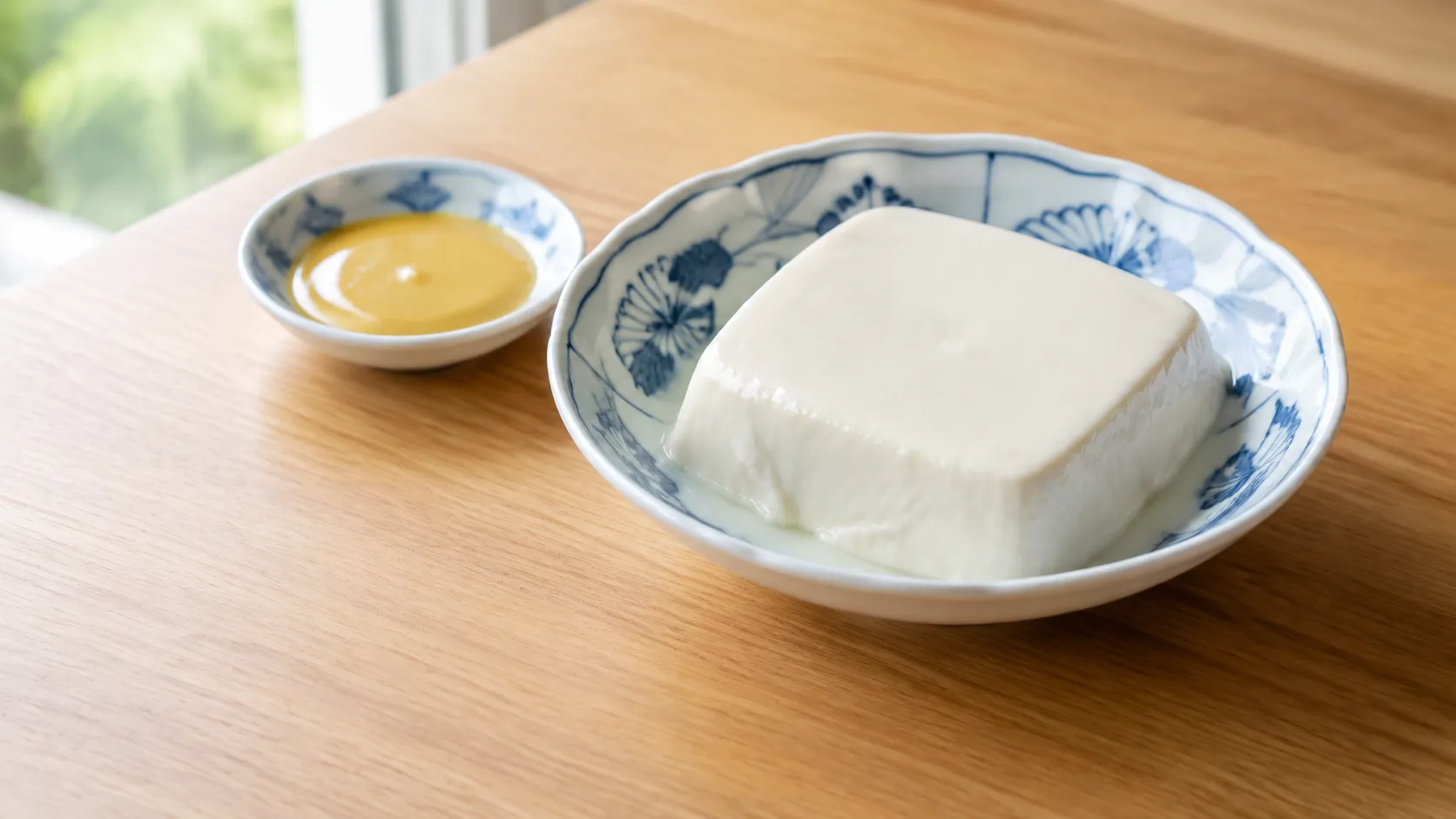
Local FoodArita, Saga
Godofu (ごどうふ)
I tried to pick it up with chopsticks and it sagged, stretched, and very nearly escaped — which is when the shop owner started laughing at me from behind the counter.
September 2, 2026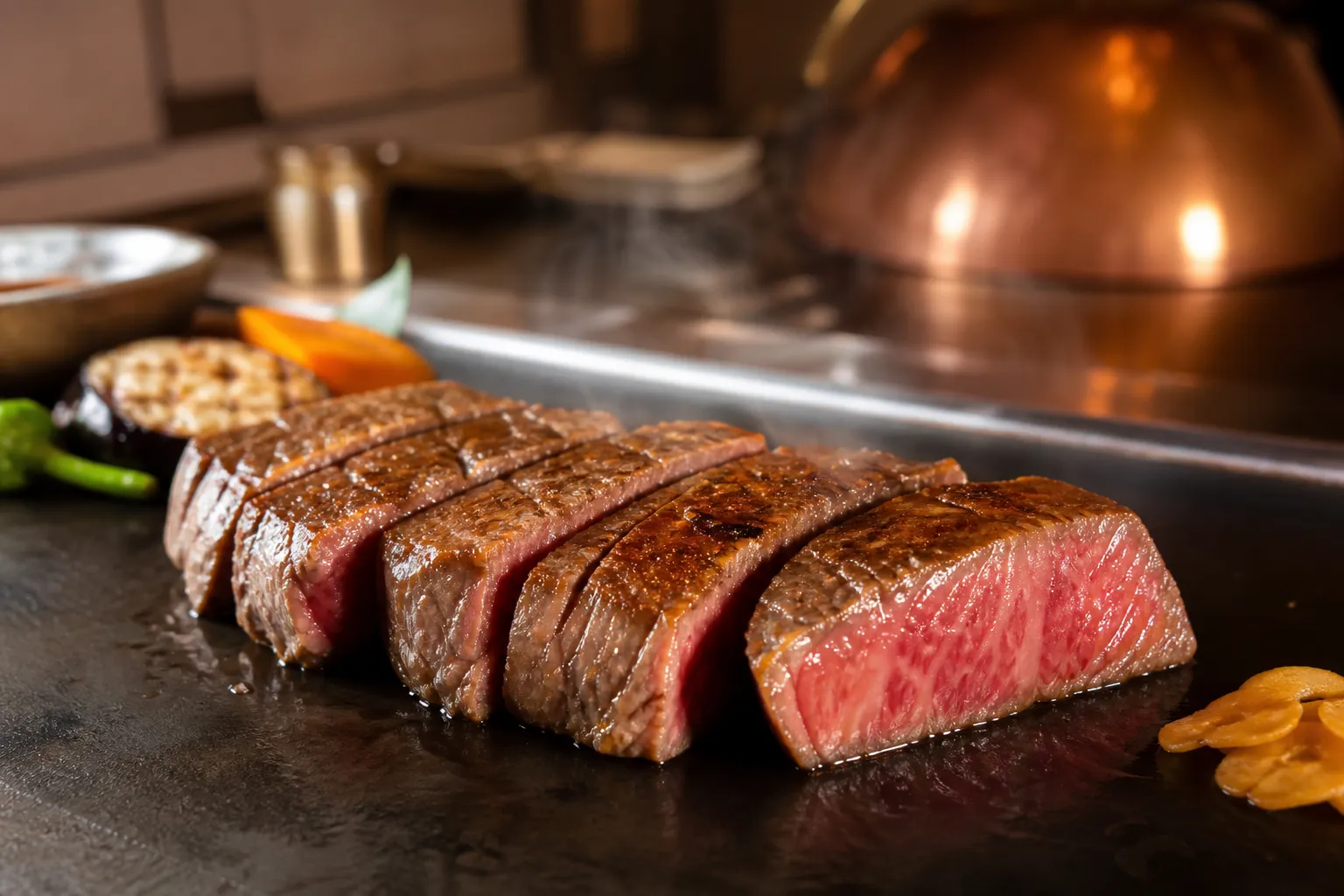
Local FoodSaga
Saga Beef (佐賀牛)
Marbled Kyushu wagyu seared on a screaming-hot iron plate until the fat crackles and the crust goes brown — Saga's strictly-graded beef, and the best steak reason to stop in Japan's quietest prefecture.
July 12, 2026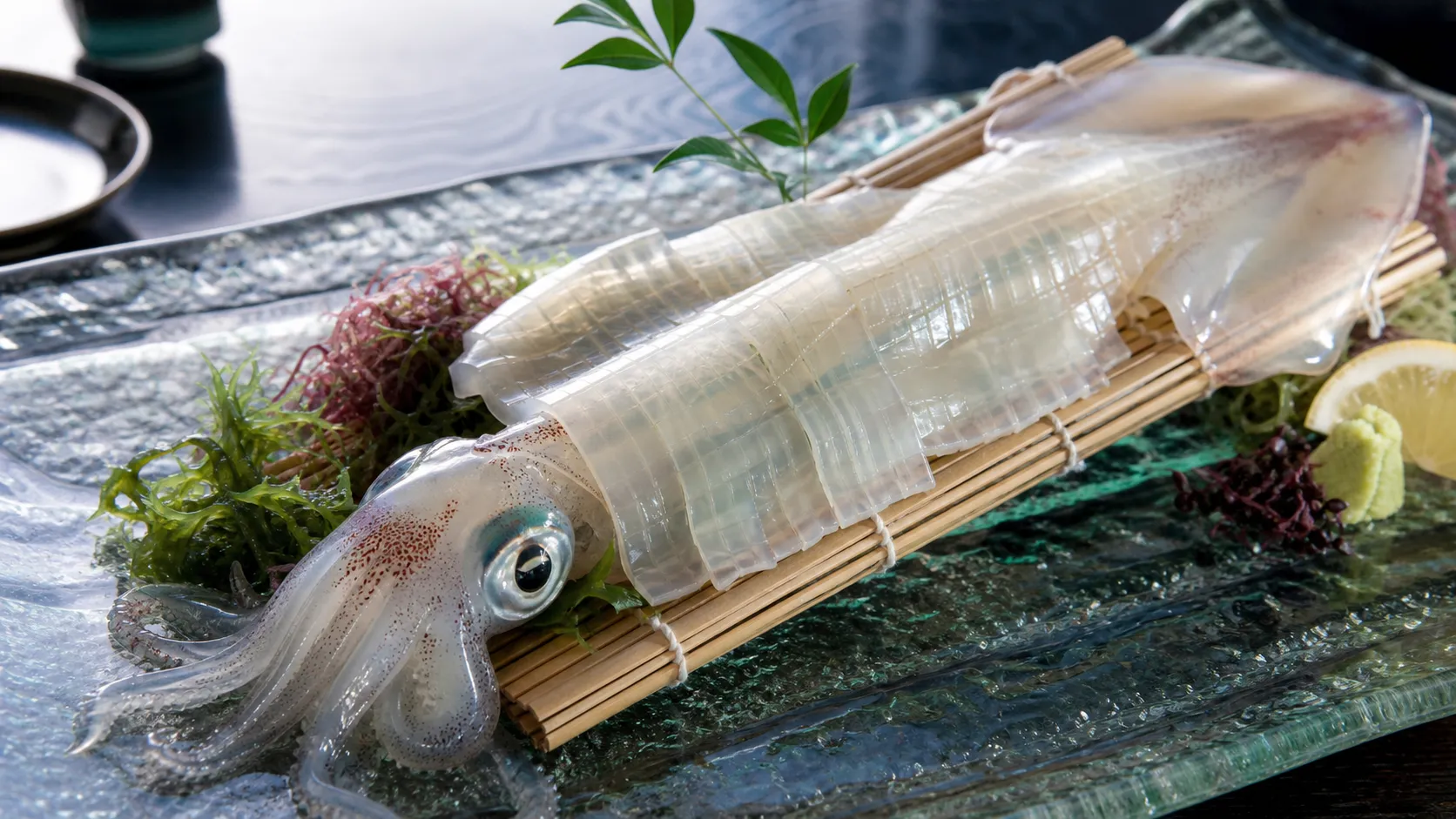
Local FoodYobuko, Saga
Yobuko Squid, Ika Ikizukuri (呼子のイカ活造り)
Squid so fresh the body is still glassy-clear and the legs are still moving when it reaches your table — sweeter and cleaner than any squid you thought you knew, at the little port that made it famous.
July 12, 2026