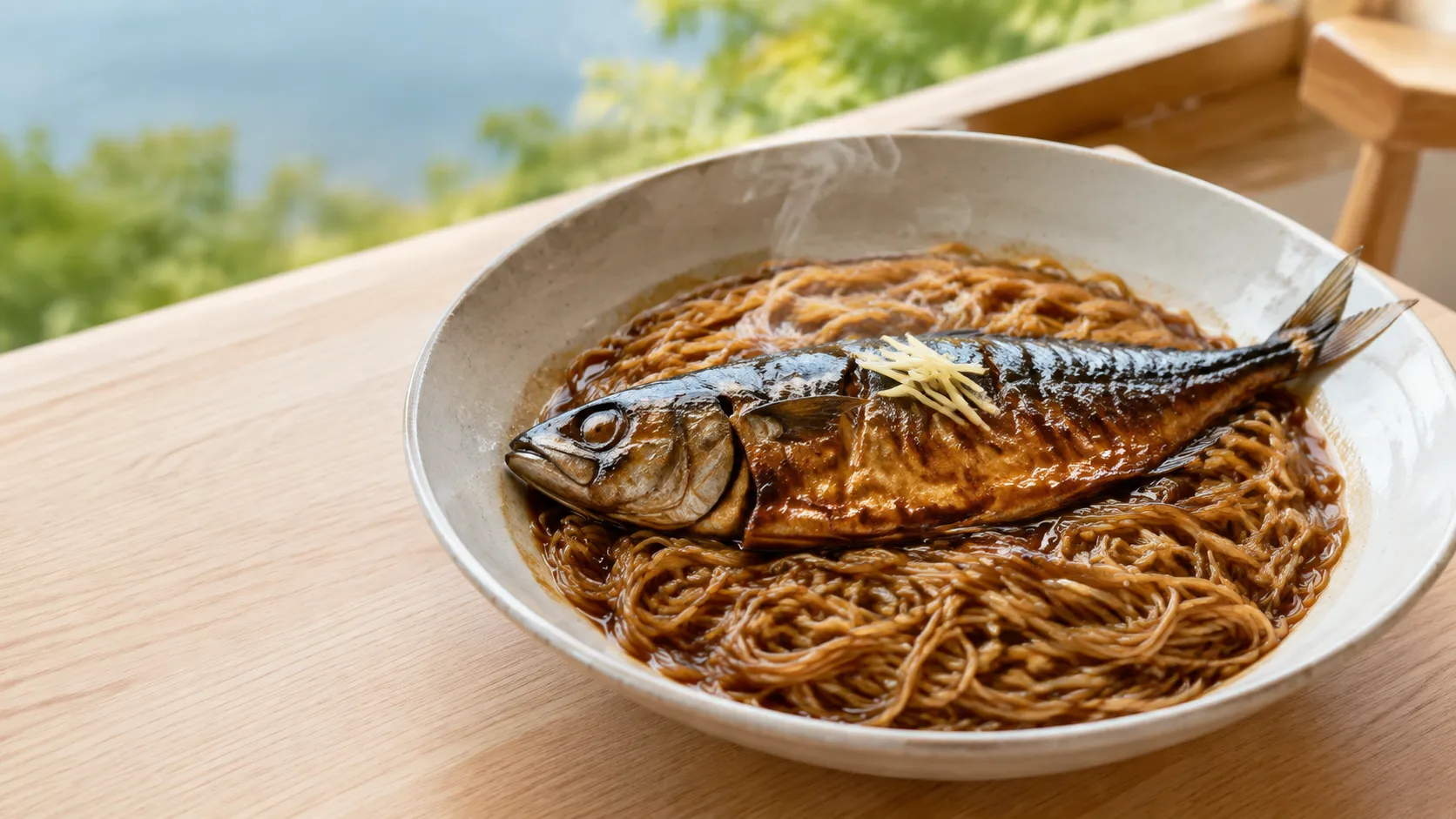
The noodles were brown. Not sauce-drizzled brown — brown all the way through, the color of strong tea, because they'd spent their entire short life absorbing what came off a mackerel.
Share this dish


Somen noodles the color of strong tea, because they've been sitting in mackerel braising liquid absorbing everything it had — and yes, I drank what was left in the bowl.
🍜 Planning a food trip to Shiga?Add this dish to my Food Trip →
 Add this dish to my Food Trip →
I'd walked into that Nagahama restaurant expecting somen, which in my head meant white, cold, delicate, dipped in something clean. What arrived was a whole fish lying across a nest of dark, glossy, warm noodles that smelled like soy and sugar and the sea, and I sat there recalibrating for a solid five seconds before I picked up my chopsticks.
Then I ate all of it. Then I lifted the bowl and drank what was pooled at the bottom, which I'm aware is not elegant, and which I would do again immediately.
Yaki-saba somen is Nagahama's dish: a whole grilled-then-simmered mackerel served over thin wheat somen noodles cooked in the fish's own sweet-soy braising liquid. It looks like a mistake if you know somen. It is, in fact, one of the most quietly perfect things Shiga does.
A fish sent to a daughter in a hard month
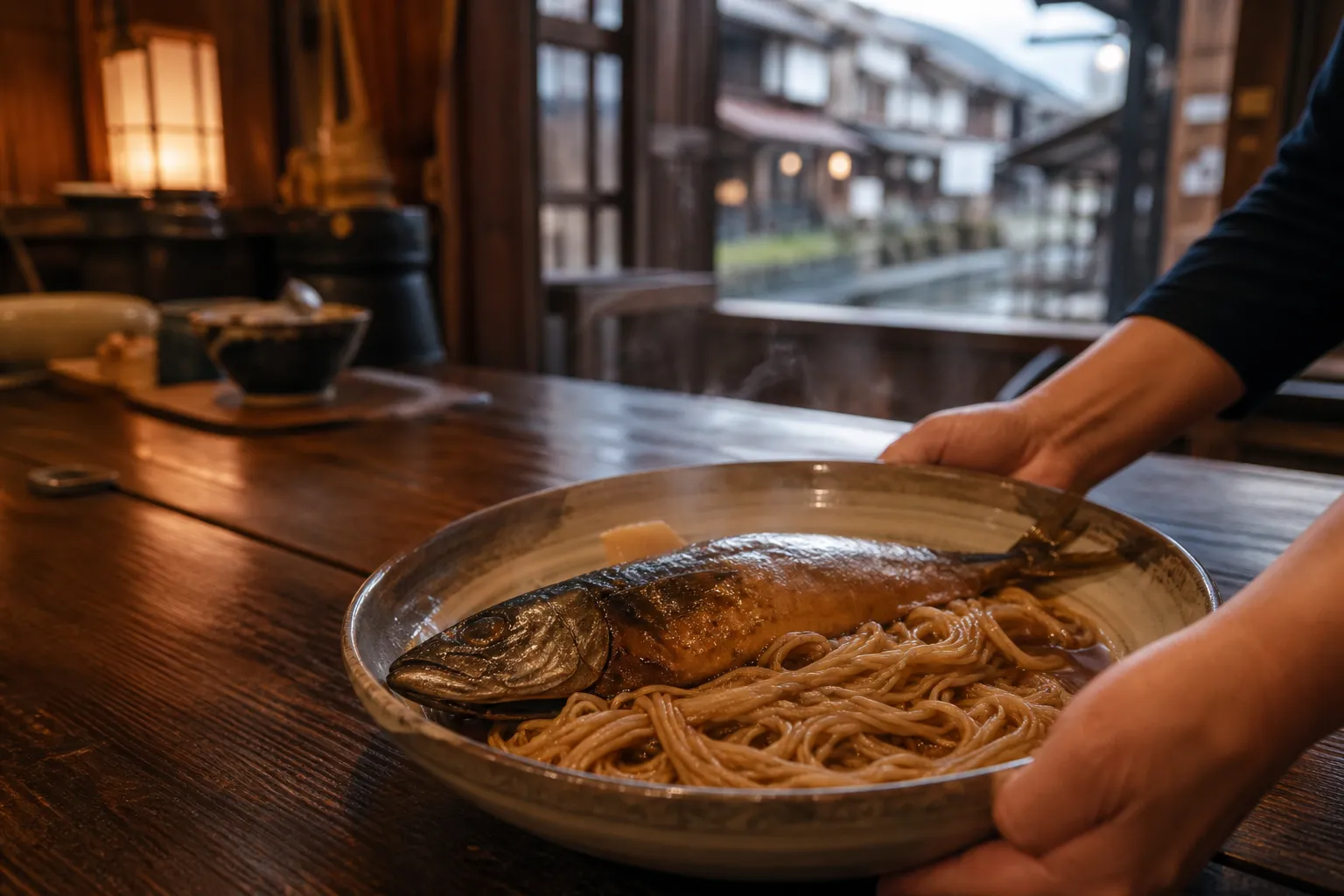
Nagahama sits at the top of Lake Biwa, deeply inland, nowhere near a sea. So the mackerel arrived the way everything arrived before refrigeration: salted, dried, grilled to survive the trip, carried over mountain roads from the Sea of Japan coast. By the time it reached here it was a preserved thing, hard and intense, that needed long simmering to come back to life.
And then there's the custom, which is the part that got me. In this region, during satsuki — the brutal rice-planting weeks of early summer, when farming families worked until they couldn't stand — a bride's parents would send a grilled mackerel to the household their daughter had married into. Not as a gift, exactly. As fuel. A fish rich enough to carry someone through the hardest work of the year, and a message that could be read two ways: feed her properly, and we're still watching.
The household would simmer that fish down and stretch it across everyone by serving it over somen. Which is how you get a dish where an expensive preserved fish feeds a whole table.
I find that genuinely moving. A parent worrying about a daughter from a distance, and the worry taking the shape of a mackerel. Every bowl of this in Nagahama is still, structurally, somebody's mother saying are you eating enough.
Why brown noodles are the entire point
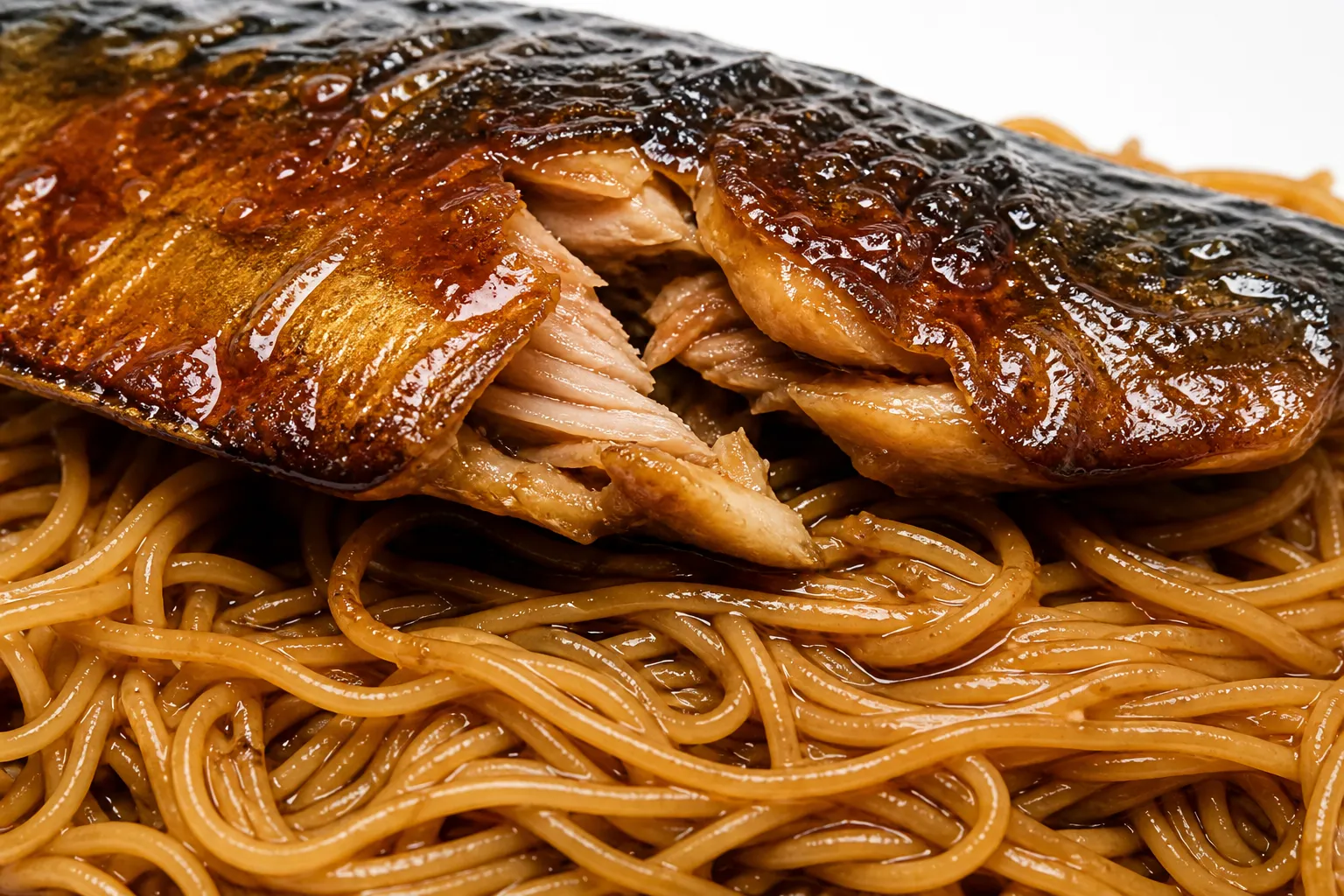
Somen is normally the blank canvas of Japanese noodles — thin, clean, almost neutral, existing to carry a dipping sauce. Here it does the opposite job. The noodles are cooked in the liquid the mackerel has been simmering in, so they don't carry the flavor, they are the flavor. They come out stained, glossy, slightly soft, and heavier than somen has any right to be.
The fish is the other half. Grilled first, so there's a smoky, slightly bitter edge under everything, then simmered long in soy, sugar, sake and ginger until the flesh gives way and the sweet-salty glaze has worked into it. Mackerel is an oily, assertive fish and this treatment doesn't hide that — the sugar just gives it somewhere to go. Ginger keeps the whole thing from turning heavy.
What surprises people is the temperature. This is a warm dish. Every instinct built by summer somen tells you it should be cold, and it isn't, and after two bites you stop thinking about it.
The bones, by the way, often go soft enough in a long-simmered version to eat. Not always. Pay attention rather than committing.
How it comes together
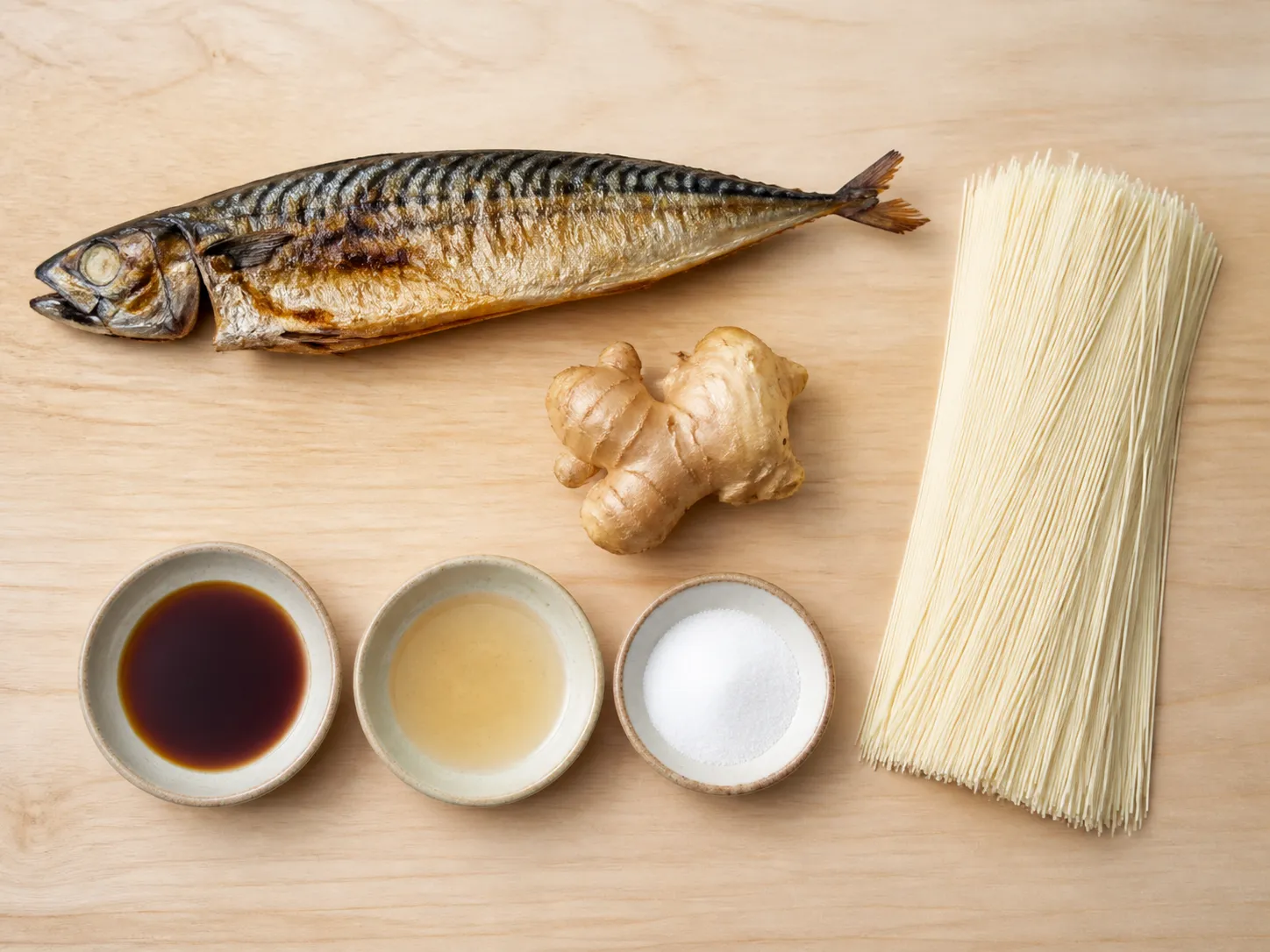
- Grill a whole mackerel until the skin blisters and the fat renders — traditionally this was a preserved, dried fish, and many shops still start from a grilled one
- Simmer it slowly in soy sauce, sugar, mirin, sake and plenty of sliced ginger until the flesh is tender and darkly glazed
- Lift the fish out and keep it warm — the liquid left behind is the whole dish now
- Boil the somen very briefly, drain, then finish it in that braising liquid so it drinks the color and flavor
- Nest the noodles in a bowl, lay the fish over the top, and spoon the remaining liquid across everything
Step 4 is where restraint kills it. Somen cooks in about ninety seconds and will turn to mush if you treat it like udon. The good versions get it out of the water early and let the braising liquid finish the job, so the noodle absorbs while it's still firm.
Before you go — the stuff that actually matters
Your questions, answered honestly
"Is this the cold somen I know?" — No, and this trips everyone up. Regular somen is chilled, white, and dipped in cold tsuyu. This is warm, brown, and the noodles are cooked in the sauce. Same noodle, completely different dish.
"Is it very fishy?" — Mackerel is a strong fish and this doesn't disguise it, but the grilling and the long sweet-soy simmer round it off a lot. If you eat and enjoy saba shioyaki or saba misoni, you're fine. If oily fish is a hard no for you, this won't convert you.
"Do I eat the whole fish, bones and all?" — Sometimes. Long simmering can soften small bones to the point of edibility, especially in a preserved-fish version. But don't assume — check as you go, and put aside anything that resists. Nobody will judge you for leaving the spine.
"How do I actually eat it — fish first or noodles first?" — Break pieces of fish off with your chopsticks and eat them together with the noodles. The noodles are seasoned, the fish is intense; alternating between them is the balance the dish is designed around.
"Is the portion big?" — Usually moderate. The fish makes it look larger than it eats. Many shops serve it as part of a set with rice and pickles, which is the version I'd go for if you want a full lunch.
"Should I drink the liquid at the bottom?" — I did. It's a braising liquid, so it's much saltier and sweeter than a soup, and a few spoonfuls is plenty. Nobody's going to stop you, and nobody's going to be surprised.
What the staff will ask you
| You'll hear | Romaji | Meaning | Just say |
|---|---|---|---|
| 単品にしますか、セットにしますか? | Tanpin ni shimasu ka, setto ni shimasu ka? | "Just the dish, or the set?" | Setto de (the set, please) |
| 骨に気をつけてくださいね | Hone ni ki o tsukete kudasai ne | "Please watch out for bones" | Hai, arigatō gozaimasu (yes, thank you) |
| ご飯はお付けしますか? | Gohan wa o-tsuke shimasu ka? | "Would you like rice with it?" | Onegaishimasu (yes, please) |
| 温かいお茶でよろしいですか? | Atatakai ocha de yoroshii desu ka? | "Is hot tea alright?" | Hai (yes) |
| お席はカウンターでもよろしいですか? | Oseki wa kauntā demo yoroshii desu ka? | "Is a counter seat okay?" | Daijōbu desu (that's fine) |
To order, just say "Yakisaba somen kudasai" (焼き鯖そうめんください) — "Grilled mackerel somen, please."
Where to eat it
- The Kurokabe Square district in central Nagahama — the restored merchant quarter of old townhouses, and the densest concentration of restaurants serving this dish. Several long-running specialists here are the reason people make the trip.
- Restaurants around Nagahama Station — walkable from the train, convenient if you're coming in from Kyoto or Maibara for the day.
- Local inns and set-meal restaurants around northern Lake Biwa — where you'll find home-style versions served as part of a larger meal.
Popular Nagahama specialists can have queues at lunch and some close irregularly or run out of the dish, so check current hours before traveling and aim to arrive early rather than late.
Soul Score
Local Roots5/5
First-Timer Friendly4/5
Adventure Level3/5
Comfort Level5/5
Travel Worthy4/5
These scores are one obsessed eater's gut feeling — not a verdict. A low number isn't a bad mark, just a different kind of adventure.
Know someone planning Japan?
← All Articles
Local Food · Nagahama, Shiga
Still hungry?
Eat more from Shiga
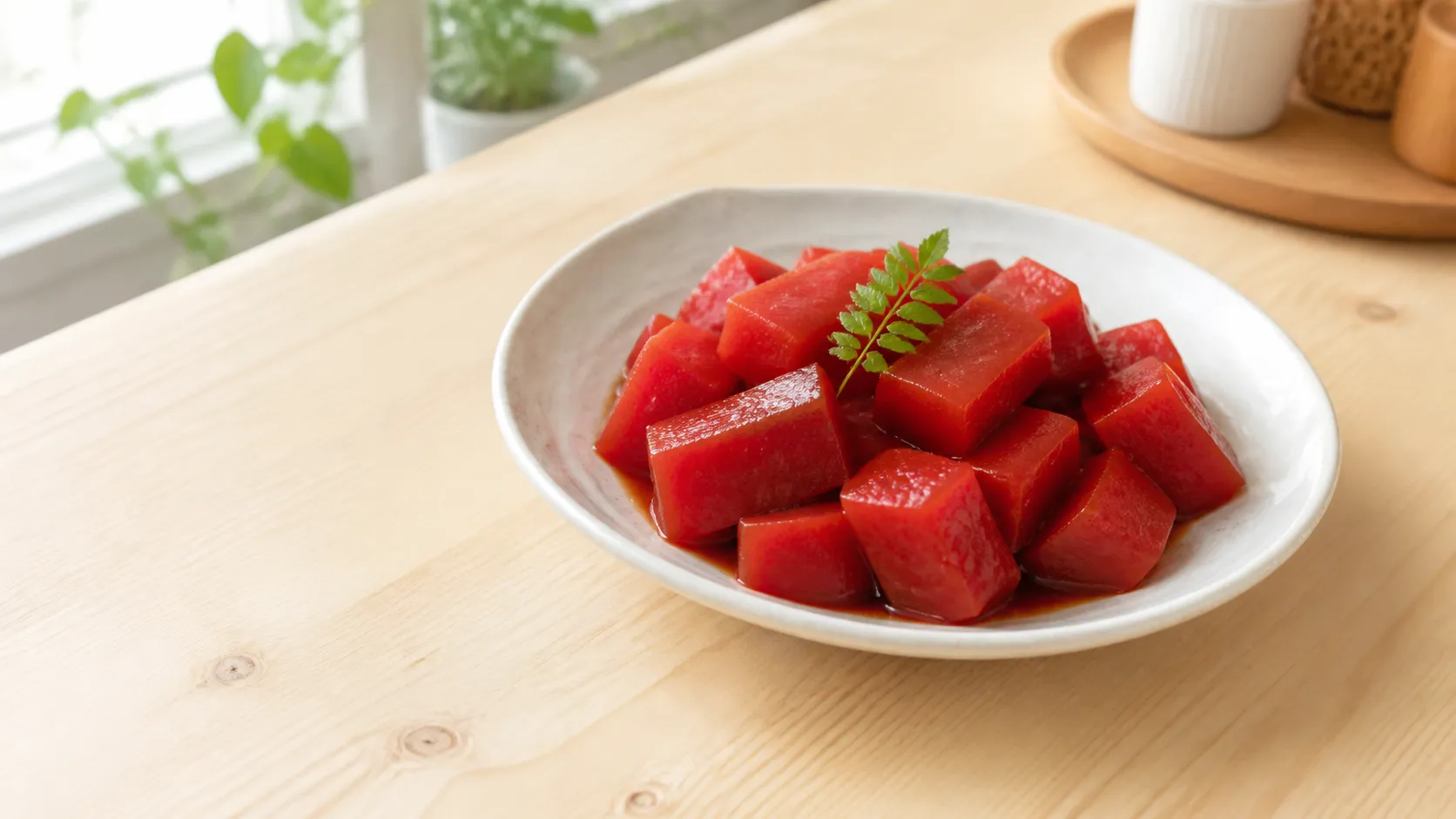
Local FoodOmihachiman, Shiga
Aka Konnyaku (赤こんにゃく)
I cut into it fully expecting the red to stop at the surface, and it didn't. It goes all the way through. That's the moment this stops being a novelty and starts being a question.
September 2, 2026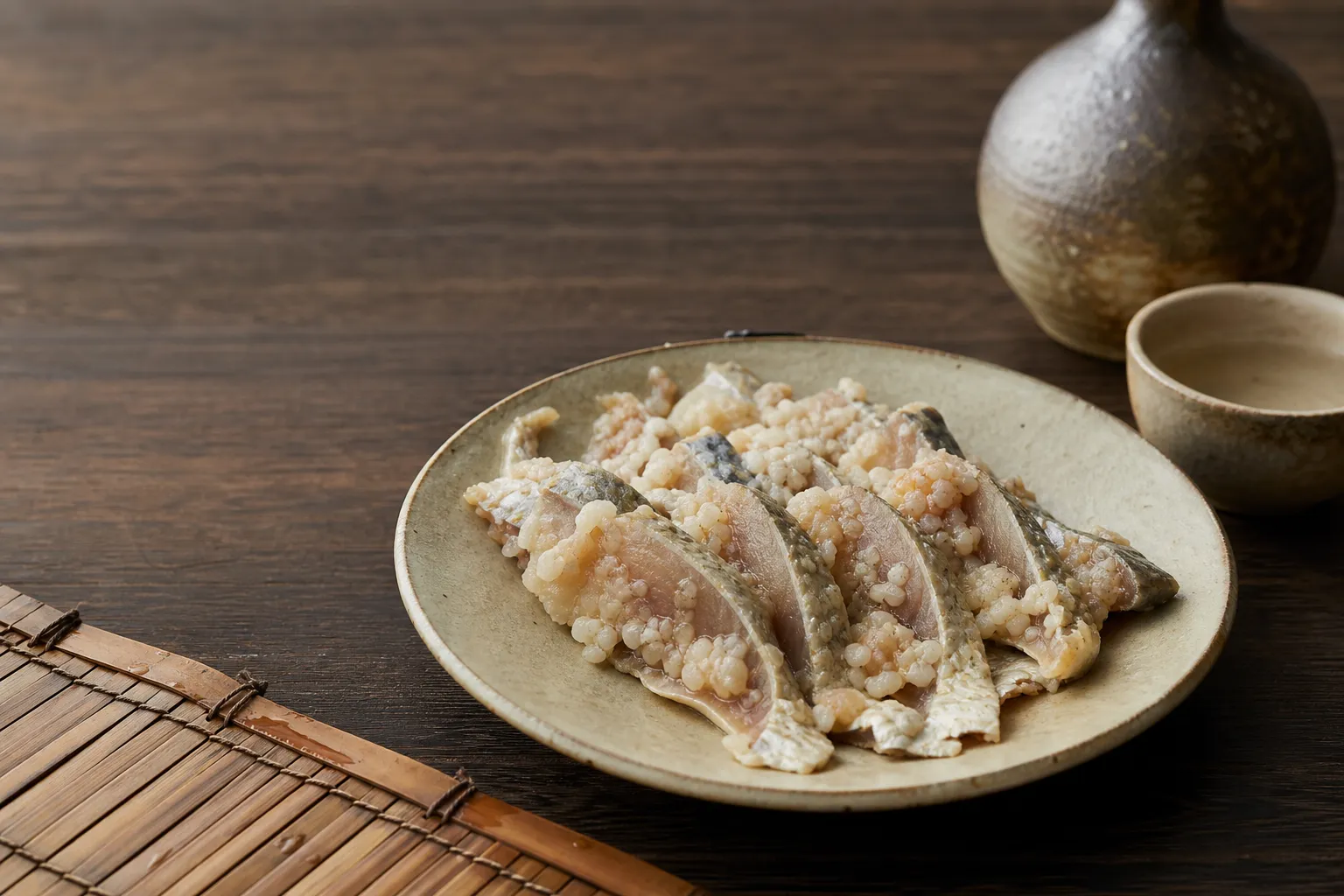
Local FoodLake Biwa, Shiga
Funazushi (鮒寿司)
Fermented lake carp aged in rice for a year or more — a sour, funky, cheese-and-sake bomb that turns out to be the great-grandparent of every piece of sushi you've ever eaten.
July 12, 2026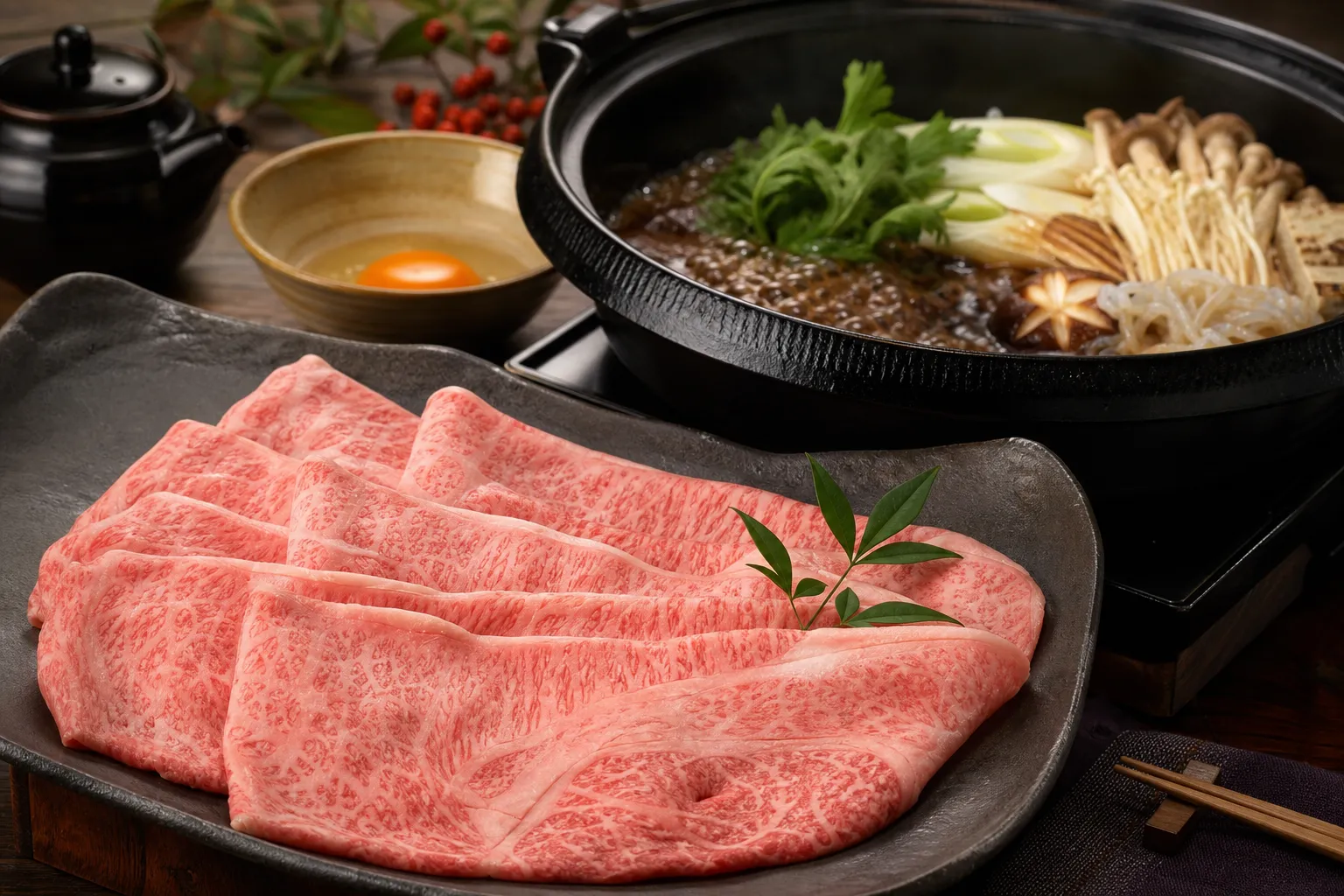
Local FoodShiga
Omi Beef (近江牛)
One of Japan's three oldest wagyu brands, its marbled fat melting into sweet nothing the second it hits the hot sukiyaki pan — Shiga's 400-year-old beef that samurai smuggled to the shogun.
July 12, 2026