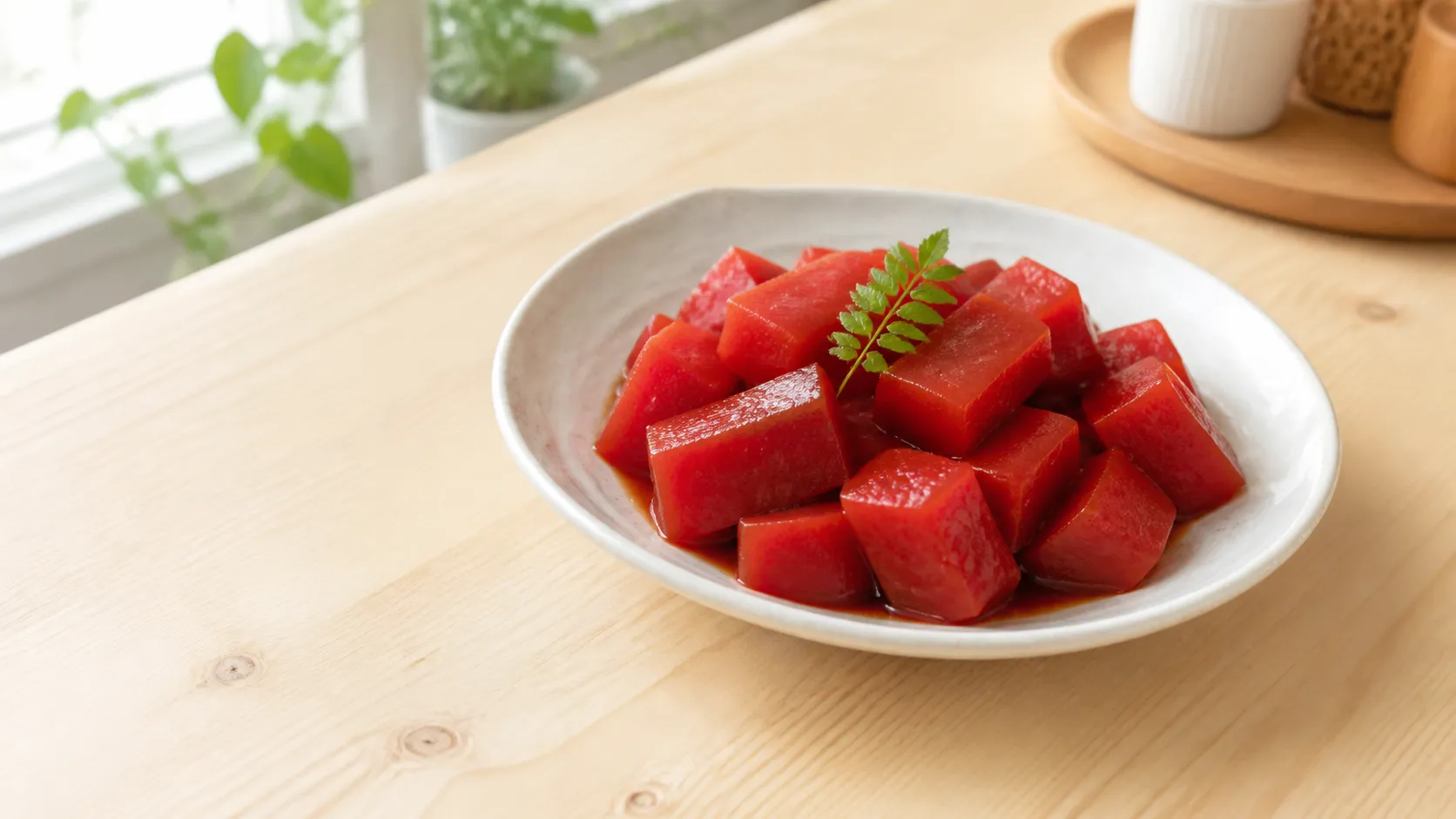
Red. Aggressively, unapologetically red — the red of a shrine gate, sitting in a plain little dish next to my rice like nothing unusual was happening.
Share this dish


I cut into it fully expecting the red to stop at the surface, and it didn't. It goes all the way through. That's the moment this stops being a novelty and starts being a question.
🍜 Planning a food trip to Shiga?Add this dish to my Food Trip →
 Add this dish to my Food Trip →
My first assumption was chili, and I braced for it. Wrong. My second assumption, one bite later, was that it must be some kind of tomato-simmered thing. Also wrong. My third assumption, and I'm slightly embarrassed by this one, was that the red must be a coating — so I cut a cube in half to check.
It goes all the way through. The interior is exactly as red as the outside. And it tastes like... konjac. Faintly earthy, springy, clean, mild. Which means someone in Shiga went to considerable trouble to make a nearly flavorless food look like it was on fire, and then changed nothing else about it. I sat there holding half a red cube, genuinely delighted, asking the only reasonable question: why?
Aka konnyaku is konjac — the wobbly, near-calorie-free jelly made from konjac corm — dyed a deep brick red the whole way through with iron oxide, and it is a completely normal everyday food in Shiga. Nowhere else in Japan does this. Shiga does not consider it strange.
Nobunaga, a festival, and the colour red
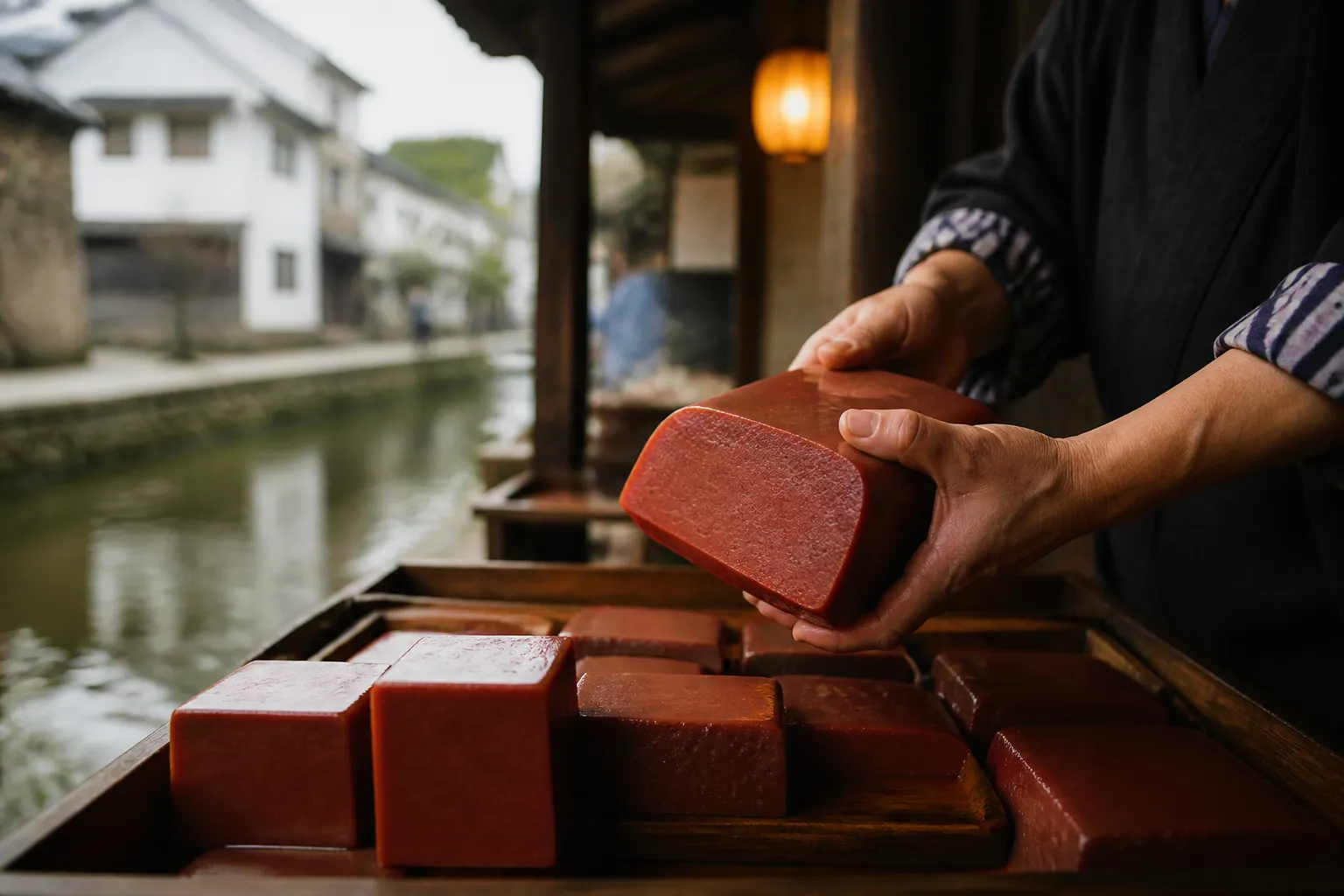
The story locals tell involves Oda Nobunaga, the warlord who ruled from Azuchi Castle right here on the shore of Lake Biwa in the 1570s — a man with a documented taste for spectacle, foreign fashion, and doing things nobody else did.
Omihachiman's Sagichō festival is a wild spring event where towering decorated floats are paraded and eventually burned, and Nobunaga is said to have thrown himself into it with enthusiasm, dressed in red, painting things red, generally treating restraint as somebody else's problem. One version of the story has him ordering the local konjac dyed red to match. Another says the red simply came from the festival's own aesthetic and stuck.
Historians are appropriately careful about all of this. Nobody can prove a warlord invented a food dye. But the festival is real, it's still burning floats every spring, and the konjac has been red for a very long time — long enough that in Shiga, grey konjac is the one that looks wrong.
What I love about this is how completely it failed to spread. It's fifteen minutes from Kyoto by the standards of anywhere else, and it just... stayed. One prefecture, one colour, four hundred years of everyone else declining to join in. That's not a marketing story. That's a place being stubborn about something that doesn't matter, which is my favourite kind of stubborn.
Why it tastes like nothing, on purpose
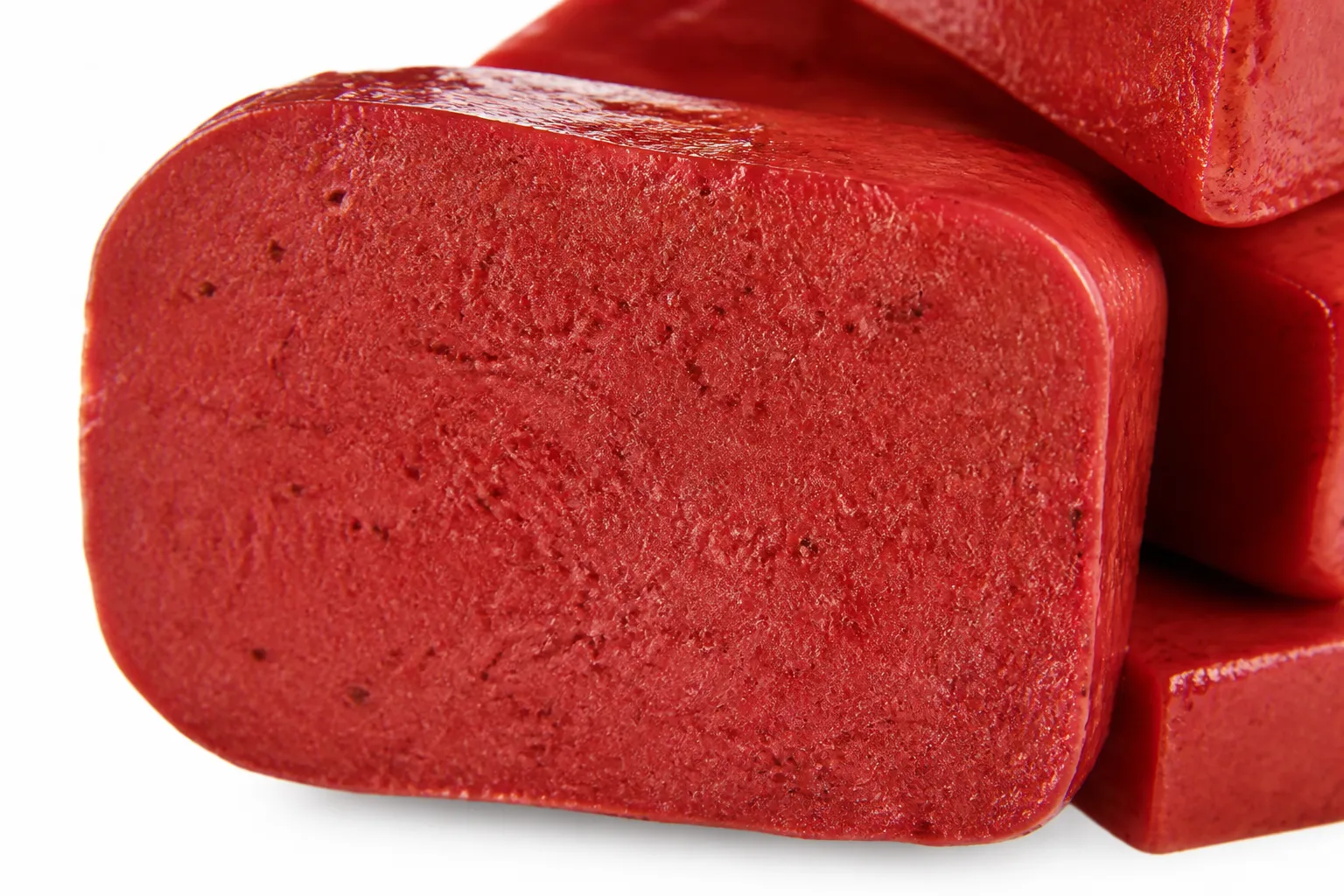
Let's be honest about konjac: it is a texture delivery system. Ninety-something percent water, held together by fiber from the konjac corm, with a faint earthy-mineral note and essentially no flavor of its own. What it has instead is bounce — that dense, springy, slightly squeaky resistance that pushes back against your teeth and then gives all at once.
Which makes it a perfect sponge. Simmer it in dashi with soy and mirin and it takes on all of that, holding seasoning inside a body that contributes nothing competing. In Shiga you'll get it as a simple simmered dish, skewered in oden, sliced into stir-fries, or cut small into festival and celebration food, and it plays the same role each time: bounce, plus whatever it's been sitting in.
The red does one genuine, non-symbolic thing — it makes an otherwise invisible food impossible to ignore on a plate. A dish of grey konjac disappears. A dish of red konjac announces itself from across the room. I don't think that's an accident, and I don't think Shiga would admit it either way.
And the calorie count is close to zero, which makes it the rare regional specialty you can eat a startling amount of without consequence. I tested this. Extensively.
How it comes together
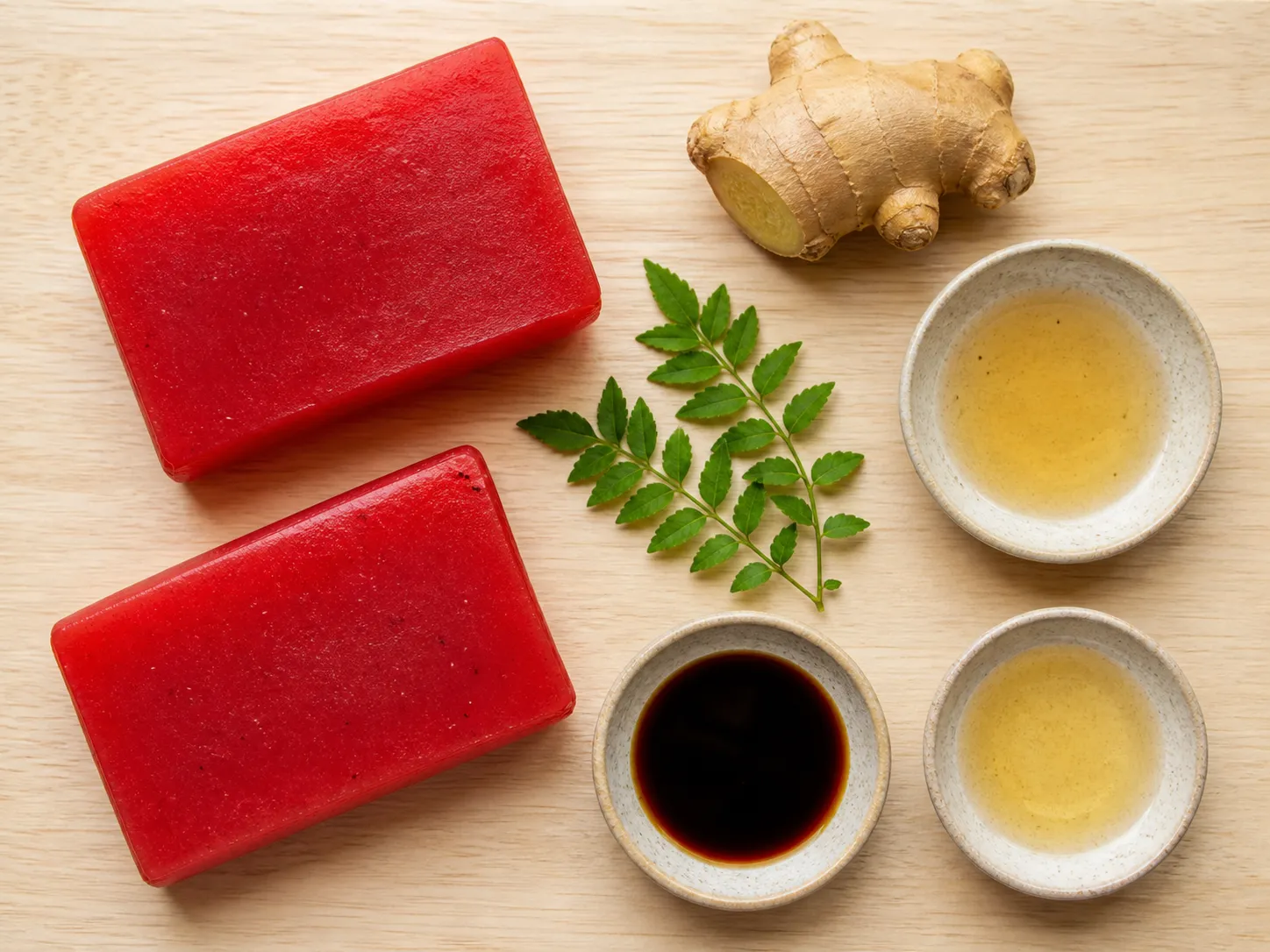
- Konjac corm is ground and mixed with water and a firming agent, then set into blocks — with iron oxide worked in during mixing, which is why the colour reaches the centre
- Blocks are firmed, cut, and sold as-is; this part is the maker's job, not the cook's
- At home or in a restaurant, the block is scored in a crosshatch on both faces so it can drink up seasoning, then cut into cubes or short rectangles
- Parboil briefly to remove any residual alkaline smell — skipping this is the most common home mistake
- Simmer gently in dashi, soy, mirin and a little sugar until the seasoning has worked in, then serve, often with a sprig of kinome leaf
Step 3 looks decorative and isn't. Konjac's surface is smooth and non-porous enough that unscored blocks come out seasoned only on the outside. The knife work is what lets the flavor in.
Before you go — the stuff that actually matters
Your questions, answered honestly
"What exactly is the red?" — Iron oxide, used as a food colouring. It's a permitted additive in Japan, it's the same family of compound that makes rust and red ochre pigment red, and it's used in tiny quantities. Some makers will tell you it adds a little iron to your diet, which is technically true and not really why anyone eats it.
"Is it spicy?" — Not remotely. I want to say this twice because everyone assumes it. There is no chili anywhere in this dish. The colour is a lie your brain tells you.
"What does konjac taste like if I've never had it?" — Very little, in the best sense. Slightly earthy, clean, faintly mineral. The experience is texture: firm, bouncy, a bit rubbery in a way that Japanese cooking treats as a virtue rather than a fault. If you've had konjac noodles or oden, you know it already.
"Is it vegan?" — The konjac block itself, yes. The simmering broth usually isn't — standard dashi is made with bonito flakes. Kombu-only versions exist, so it's worth asking.
"Can I take some home?" — Yes, this is one of the easiest edible souvenirs going. Vacuum-packed blocks are sold in supermarkets and souvenir shops all over Shiga, they're cheap, they're light, and they keep unopened for a long while. Check the date and check your own country's import rules.
"Where does it fit in a meal?" — It's a side, not a centrepiece. Expect it as one small dish among several, or as an item in oden. If a restaurant serves you a whole plate of it as a main course, something unusual is happening.
What the staff will ask you
| You'll hear | Romaji | Meaning | Just say |
|---|---|---|---|
| 赤いのは辛くないですよ | Akai no wa karakunai desu yo | "The red isn't spicy, don't worry" | Anshin shimashita (that's a relief) |
| 味付けはどうしますか? | Ajitsuke wa dō shimasu ka? | "How would you like it seasoned?" | Omakase de (chef's choice) |
| おみやげ用に包みますか? | Omiyage-yō ni tsutsumimasu ka? | "Shall I wrap it as a gift?" | Onegaishimasu (yes, please) |
| 何個にしますか? | Nan-ko ni shimasu ka? | "How many?" | Futatsu kudasai (two, please) |
| 冷蔵で保存してください | Reizō de hozon shite kudasai | "Keep it refrigerated" | Wakarimashita (understood) |
To order, just say "Aka konnyaku kudasai" (赤こんにゃくください) — "Red konjac, please."
Where to eat it
- The old canal and merchant district of Omihachiman — the historic heart of the dish, with shops selling blocks to take away and restaurants serving it simmered. The preserved waterway area is worth the walk on its own.
- Supermarkets anywhere in Shiga — genuinely the easiest way to encounter it. It sits in the refrigerated case next to ordinary konjac like nothing is happening, which is somehow the funniest place to meet it.
- Set-meal restaurants and inns around Lake Biwa — where it turns up as one small dish in a larger spread, which is how locals actually eat it.
Small shops in the old district keep short and sometimes irregular hours, and the Sagichō festival in March draws crowds that change everything about the town for a weekend — check dates and hours before planning around either.
Soul Score
Local Roots5/5
First-Timer Friendly4/5
Adventure Level4/5
Comfort Level4/5
Travel Worthy3/5
These scores are one obsessed eater's gut feeling — not a verdict. A low number isn't a bad mark, just a different kind of adventure.
Know someone planning Japan?
← All Articles
Local Food · Omihachiman, Shiga
Still hungry?
Eat more from Shiga
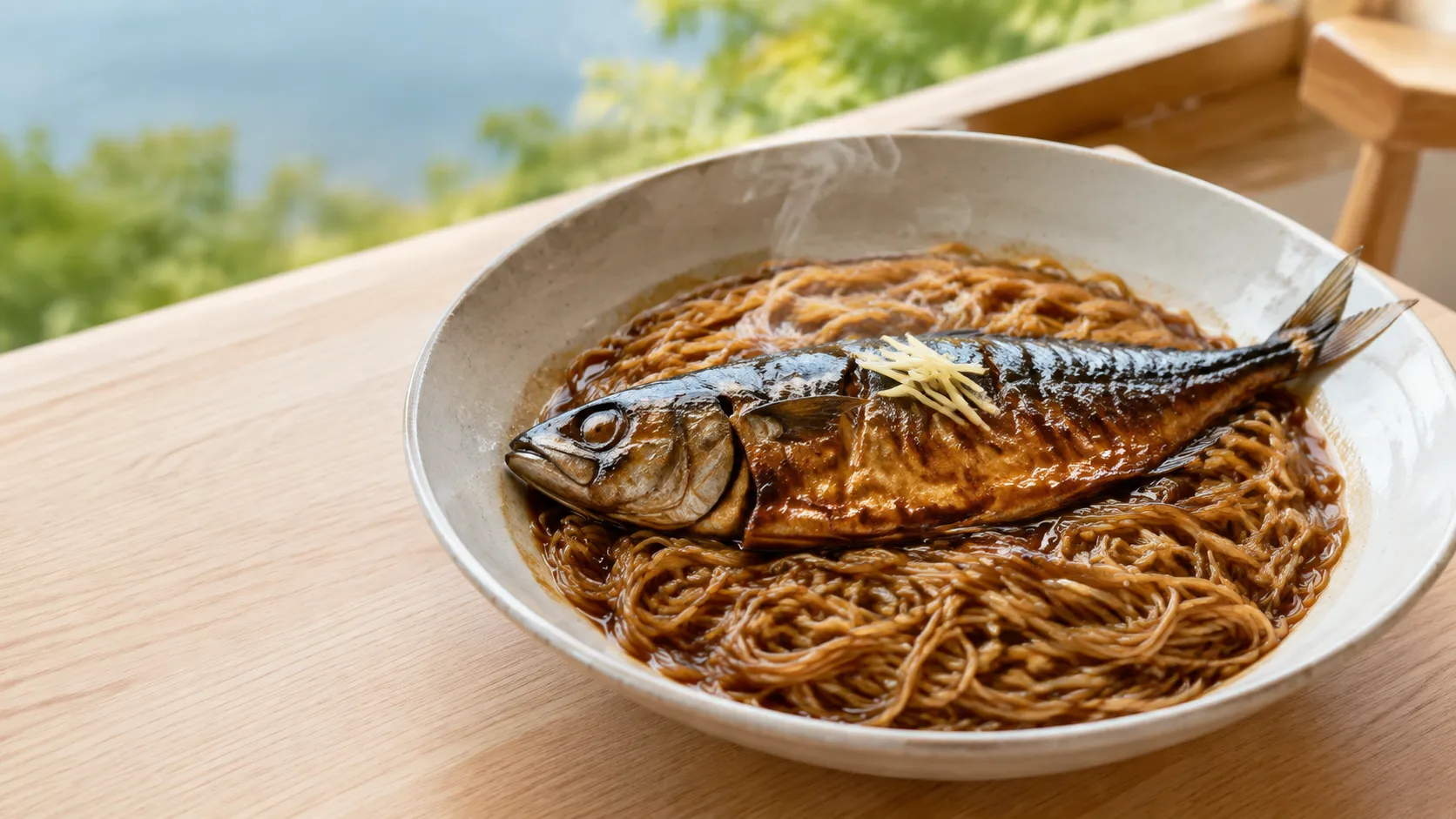
Local FoodNagahama, Shiga
Saba Somen (焼き鯖そうめん)
Somen noodles the color of strong tea, because they've been sitting in mackerel braising liquid absorbing everything it had — and yes, I drank what was left in the bowl.
September 2, 2026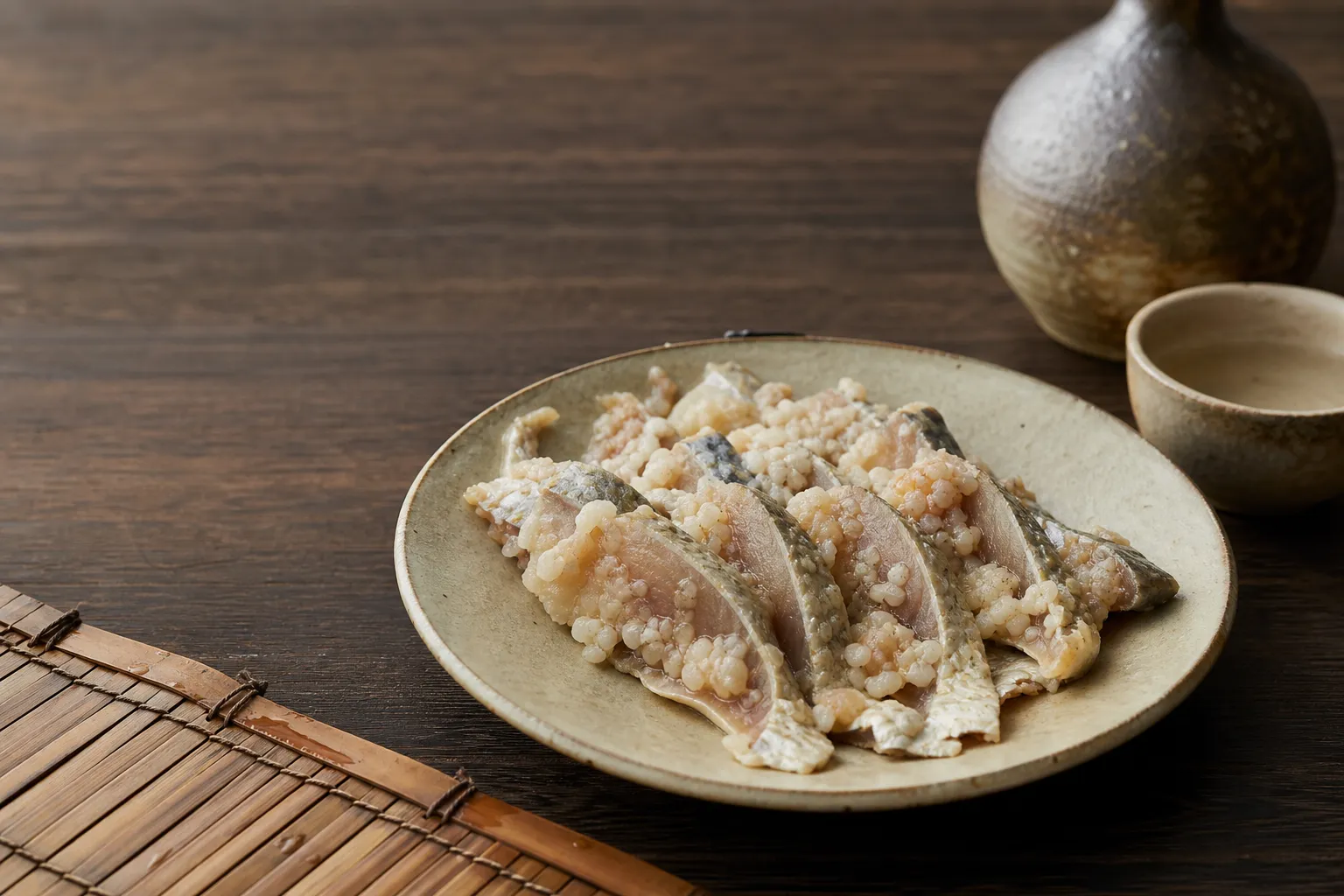
Local FoodLake Biwa, Shiga
Funazushi (鮒寿司)
Fermented lake carp aged in rice for a year or more — a sour, funky, cheese-and-sake bomb that turns out to be the great-grandparent of every piece of sushi you've ever eaten.
July 12, 2026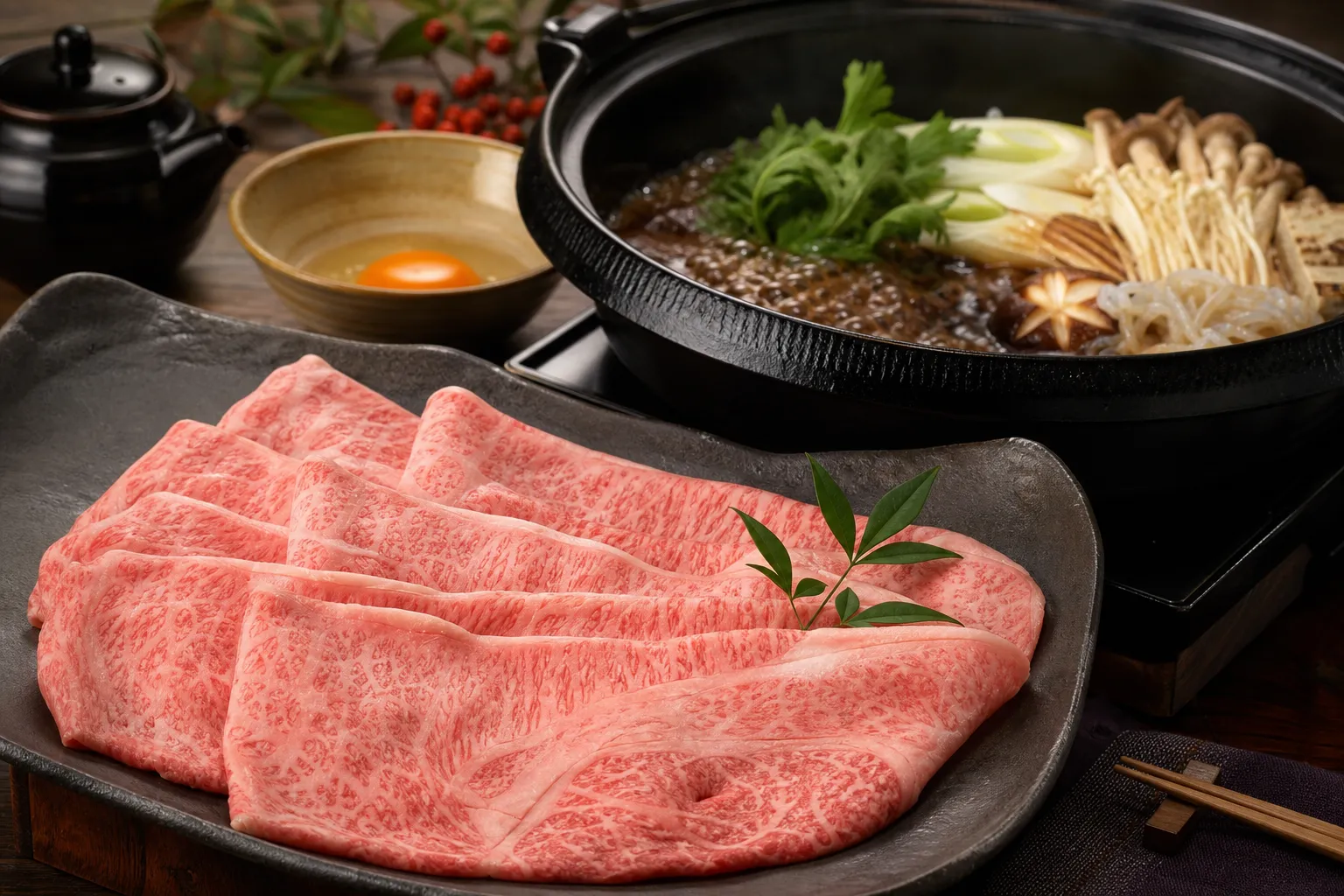
Local FoodShiga
Omi Beef (近江牛)
One of Japan's three oldest wagyu brands, its marbled fat melting into sweet nothing the second it hits the hot sukiyaki pan — Shiga's 400-year-old beef that samurai smuggled to the shogun.
July 12, 2026