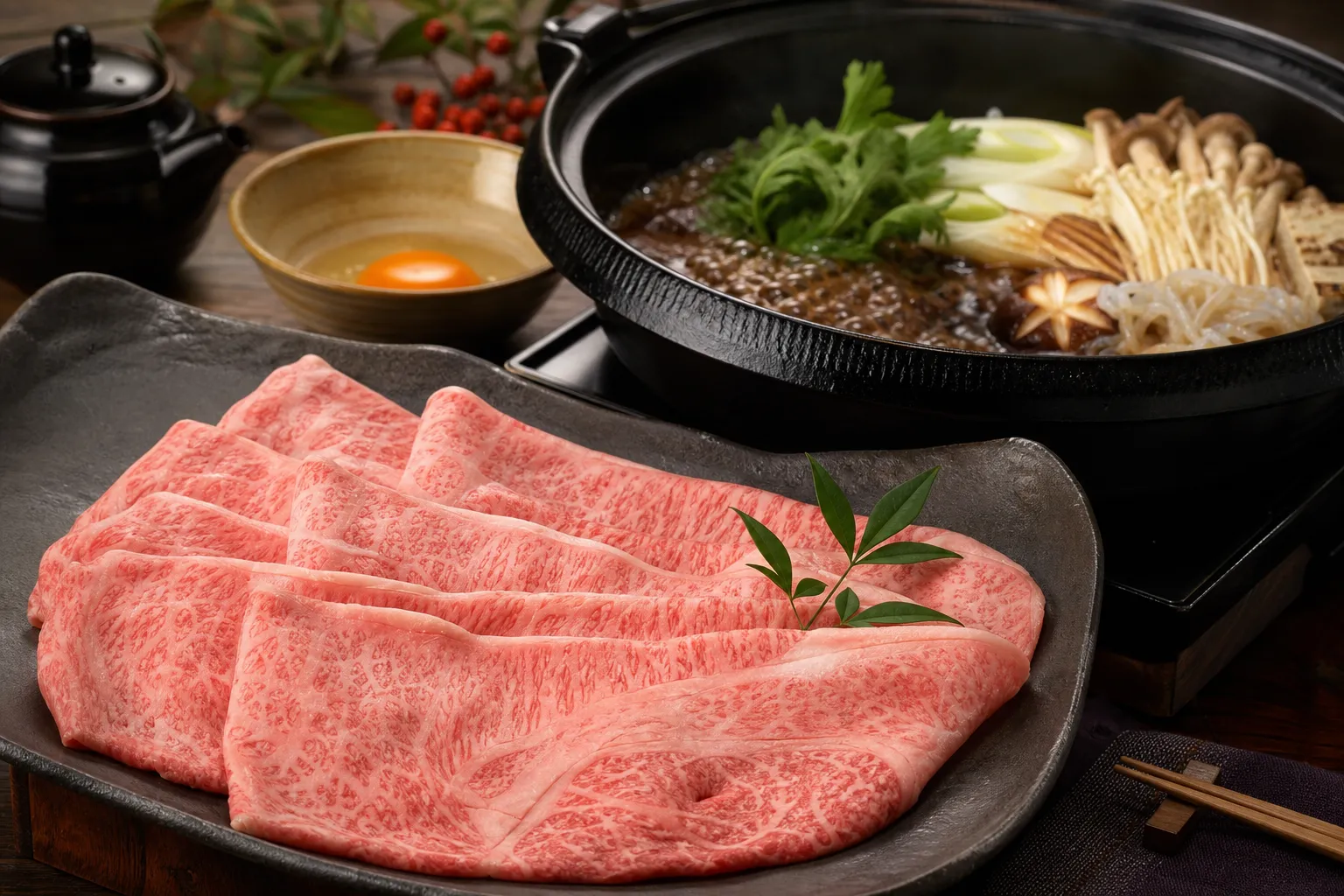
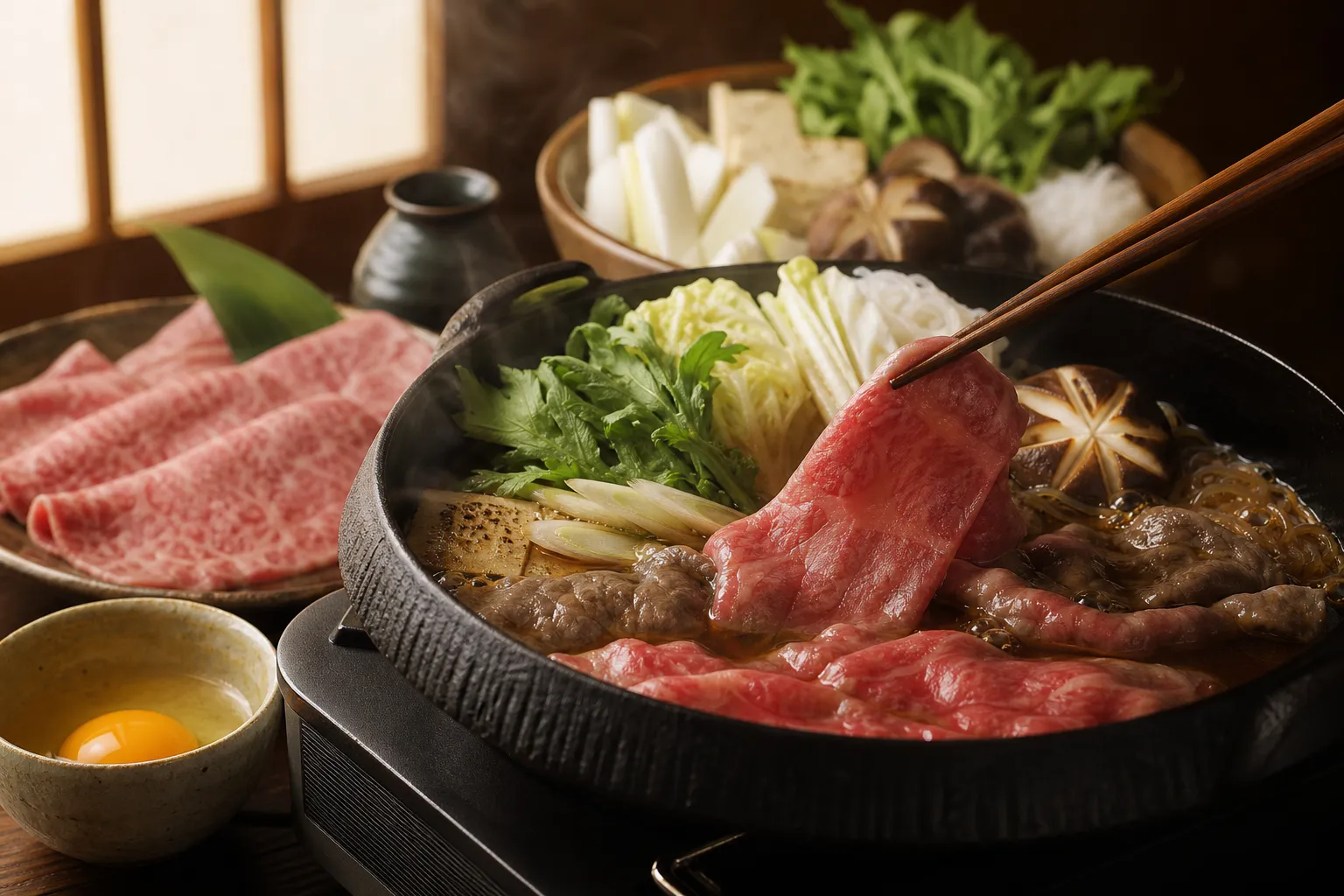
The slice barely touched the pan and it was already surrendering — the fat going translucent, the whole thin sheet of beef curling and softening in seconds, and when I lifted it out, dipped it in raw egg, and put it in my mouth, it did the thing everyone promises and almost nothing delivers: it melted. No chewing. Just a warm, sweet, beefy dissolve and a little involuntary noise I made in a quiet Shiga restaurant. That's Omi beef in a sukiyaki pan, and now I understand why people have obsessed over it for four hundred years.
Share this dish


One of Japan's three oldest wagyu brands, its marbled fat melting into sweet nothing the second it hits the hot sukiyaki pan — Shiga's 400-year-old beef that samurai smuggled to the shogun.
🍜 Planning a food trip to Shiga?Add this dish to my Food Trip →
 Add this dish to my Food Trip →
Here's what it is: Omi beef (近江牛, Ōmi-gyū) is one of Japan's oldest premium wagyu brands, raised around Lake Biwa in Shiga, and counted alongside Kobe and Matsusaka as one of the three great historic beefs. What sets it apart is the fineness of the marbling and the sweetness of the fat, which has a famously low melting point — it goes soft at near body temperature. It's classically eaten as sukiyaki or as thin, marbled slices (sukiyaki and shabu-shabu), where that delicate fat is the whole point. This is not lean steak beef and it is emphatically not the stuff in a cheap gyudon bowl — it's a slow, rich, melt-on-the-tongue experience.
The beef the samurai smuggled to the shogun
Omi beef's history goes back centuries, well into the Edo period, when eating meat was officially frowned upon in Buddhist Japan. There's a wonderful story that the beef from Ōmi was preserved in miso and sent as a "medicinal" gift to the shogun and even to the emperor — a loophole that kept a beef culture quietly alive when beef was supposed to be taboo. I love that this stuff has been prized since before Japan even admitted it liked beef. When the country finally opened up and meat-eating became fashionable in the Meiji era, Omi was already a name.
The land helps, too. Shiga wraps around Lake Biwa, Japan's largest lake, and the cattle are raised in that mild, water-rich basin with good grain and good water. Standing in a specialist Omi beef restaurant — often generations old — watching thin ribbons of marbled beef laid out like something precious, you feel the weight of that history. This isn't beef someone started marketing last decade. It's one of the founding legends of Japanese wagyu, and Shiga is quietly, deeply proud of it.
What makes the eating experience different
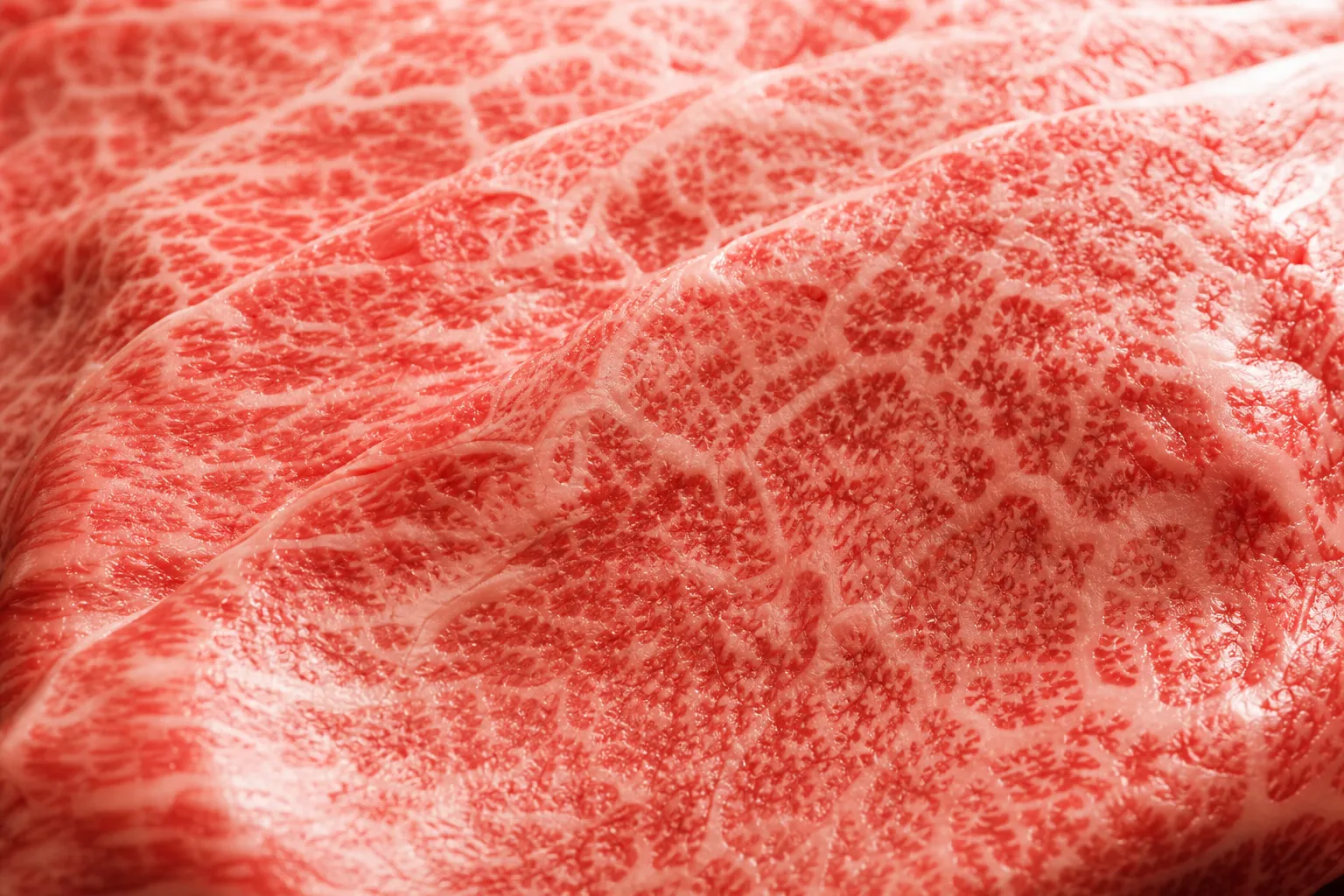
- The marbling is fine and even — not big blocks of fat, but a delicate web laced right through the muscle, so every slice is silky rather than greasy
- The fat melts at a low temperature, going soft almost at body heat, which is why it seems to dissolve on your tongue
- The fat tastes sweet, not heavy — a clean, buttery sweetness that's the signature of Omi over some other wagyu
- Sukiyaki is its natural home: thin slices cooked briefly in a sweet-savory soy-sugar broth and dipped in raw egg, so the fat and the sweetness play off each other perfectly
- Because it's so rich, thin marbled slices go a long way — this is beef you savor a few pieces of, not a slab you power through
How it's made (and how it's served)
- The cattle are raised slowly. Japanese Black cattle are raised around Lake Biwa to strict brand standards, developing that fine, even marbling over a long fattening period.
- Certified as Omi beef. Only beef meeting the brand's origin and quality criteria earns the Omi name, so grading and provenance matter.
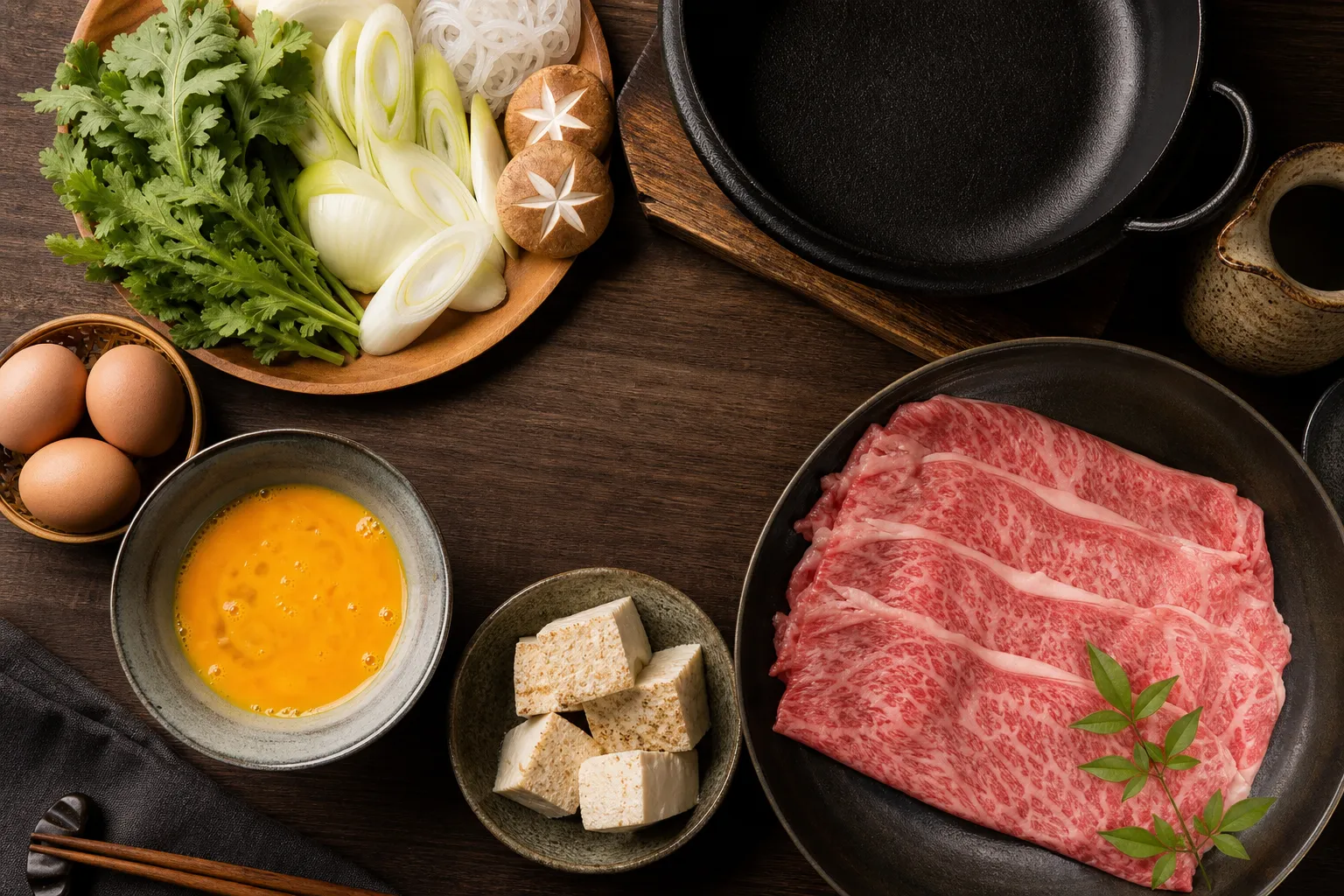
- Sliced thin for sukiyaki or shabu-shabu. For its classic uses the beef is cut into thin, wide marbled sheets — the fat needs to be visible and generous.
- Cooked briefly and gently. For sukiyaki, slices are swished in a hot pan with a sweet-savory warishita broth of soy, sugar and mirin; for shabu-shabu, dipped in hot dashi for just a few seconds.
- Dipped and eaten right away. Sukiyaki slices are dipped in beaten raw egg, which cools and coats them — you eat each piece the moment it's done, while the fat is at its silkiest.
The craft here is really restraint. Overcook a slice this marbled and you render the fat away and lose the magic. A few seconds, a dip, and straight into your mouth — that's the whole technique, and it's why the beef, not the cooking, is the star.
Before you go — thin slices, hot pan, raw egg
Your questions, answered honestly
"How is this different from other famous wagyu like Kobe or Matsusaka?" — Omi is one of the same historic top tier, and honestly the differences are subtle — but Omi is prized specifically for fine marbling and sweet, low-melting fat, and it leans classically into sukiyaki and thin-sliced dishes. If Saga beef says "seared steak," Omi says "melting slice in a sweet broth." Both are wagyu royalty.
"Should I get sukiyaki, shabu-shabu, or steak?" — For the true Omi experience, I'd steer you toward sukiyaki (or shabu-shabu): thin marbled slices are where its sweet fat shows off best. Steak is wonderful too, but the sukiyaki-and-raw-egg ritual is the classic Shiga way to eat it.
"Is the raw egg safe / do I have to?" — Japanese eggs are produced for raw eating and the dip is traditional, but recipes and comfort levels vary — if you'd rather skip raw egg, you can, and no one will mind. Ask the staff if you're unsure.
"Is it worth the price?" — For a special meal, yes. It's premium beef and it's priced like it, but a good sukiyaki course is a genuine occasion. Thin slices stretch further than a steak, so a smaller portion still delivers the full melt.
What the staff will ask you
| You'll hear | Romaji | Meaning | Just say |
|---|---|---|---|
| すき焼きにしますか、しゃぶしゃぶにしますか? | Sukiyaki ni shimasu ka, shabu-shabu ni shimasu ka? | "Sukiyaki or shabu-shabu?" | Sukiyaki de (sukiyaki, please) |
| 焼き加減はどうしますか? | Yaki-kagen wa dō shimasu ka? | "How do you want it cooked?" (for steak) | Osusume de (however you recommend) |
| 生卵はお使いになりますか? | Nama-tamago wa o-tsukai ni narimasu ka? | "Will you use the raw egg?" | Hai, onegai shimasu (yes please) |
To order, just say "Ōmi-gyū o kudasai" (近江牛をください) — "Omi beef, please."
Where to eat it
- Ōmi-Hachiman, Shiga — the historic heart of Omi beef, with long-established specialist restaurants and butcher-restaurants in and around the old town; a natural place to build a meal around it.
- Around Lake Biwa and the Ōmi region — beef restaurants across Shiga serve certified Omi beef as sukiyaki, shabu-shabu and steak; look for the Omi beef brand certification.
- Kyoto and nearby cities — because Shiga borders Kyoto, some Kyoto restaurants also serve certified Omi beef; confirm it's the genuine brand and check current menus and hours before you go, as premium beef restaurants often take reservations.
Omi beef is a premium brand best enjoyed at specialist restaurants; menus, prices and opening hours vary and popular places may require reservations, so check before you go.
Soul Score
Local Roots5/5
First-Timer Friendly5/5
Adventure Level3/5
Comfort Level5/5
Travel Worthy4/5
These scores are one obsessed eater's gut feeling — not a verdict. A low number isn't a bad mark, just a different kind of adventure.
Know someone planning Japan?
← All Articles
Local Food · Shiga
Still hungry?
Eat more from Shiga
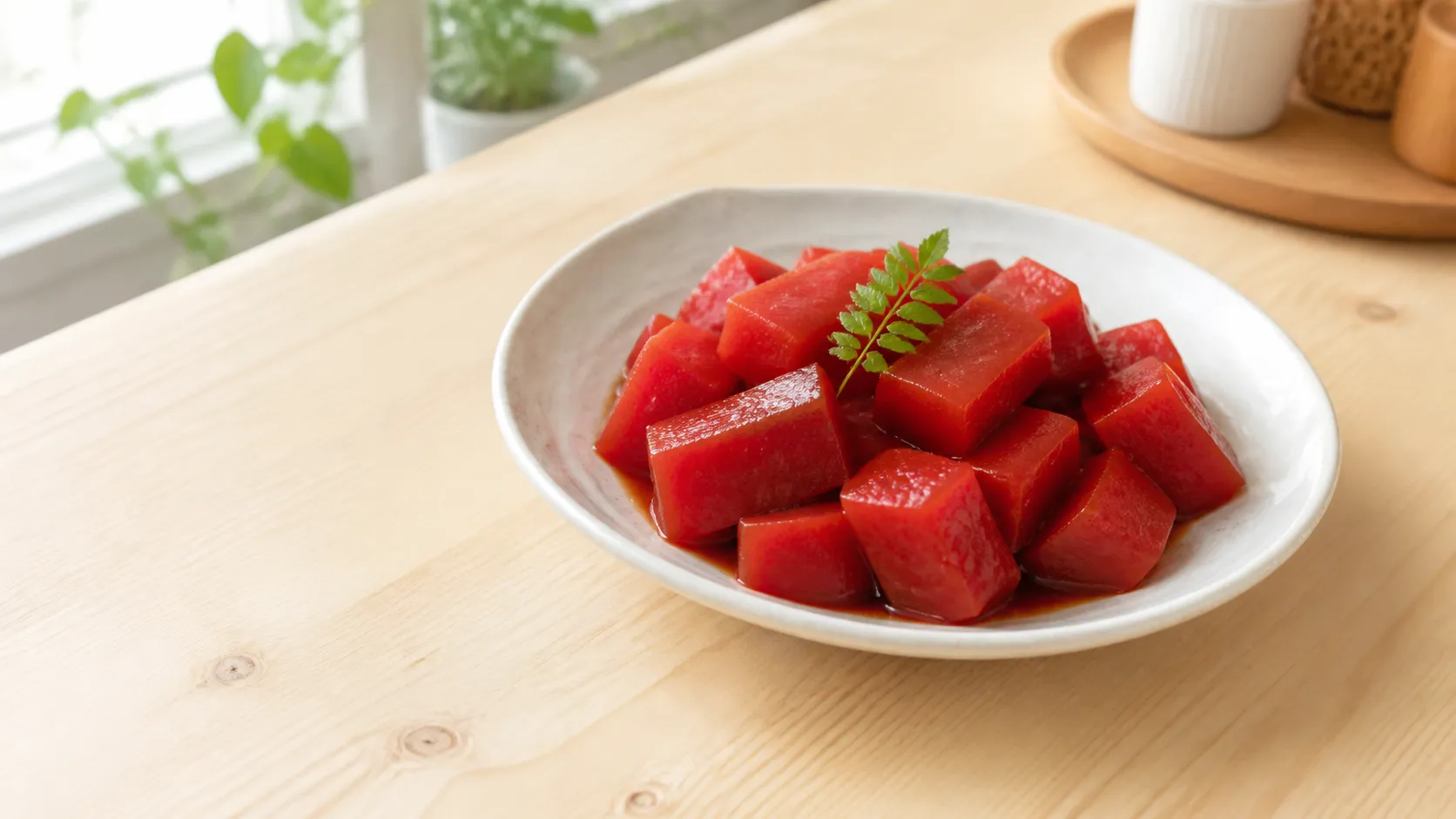
Local FoodOmihachiman, Shiga
Aka Konnyaku (赤こんにゃく)
I cut into it fully expecting the red to stop at the surface, and it didn't. It goes all the way through. That's the moment this stops being a novelty and starts being a question.
September 2, 2026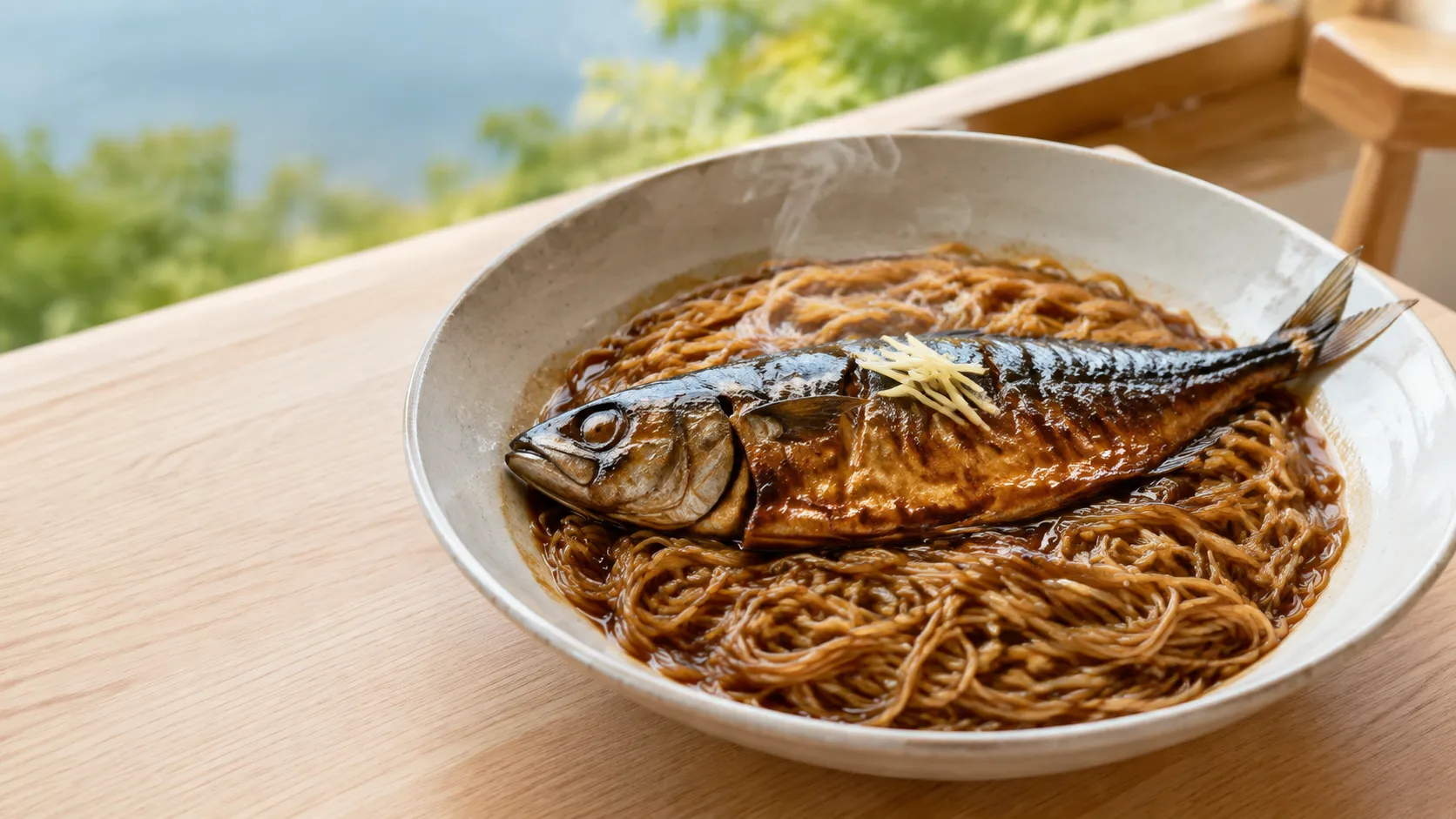
Local FoodNagahama, Shiga
Saba Somen (焼き鯖そうめん)
Somen noodles the color of strong tea, because they've been sitting in mackerel braising liquid absorbing everything it had — and yes, I drank what was left in the bowl.
September 2, 2026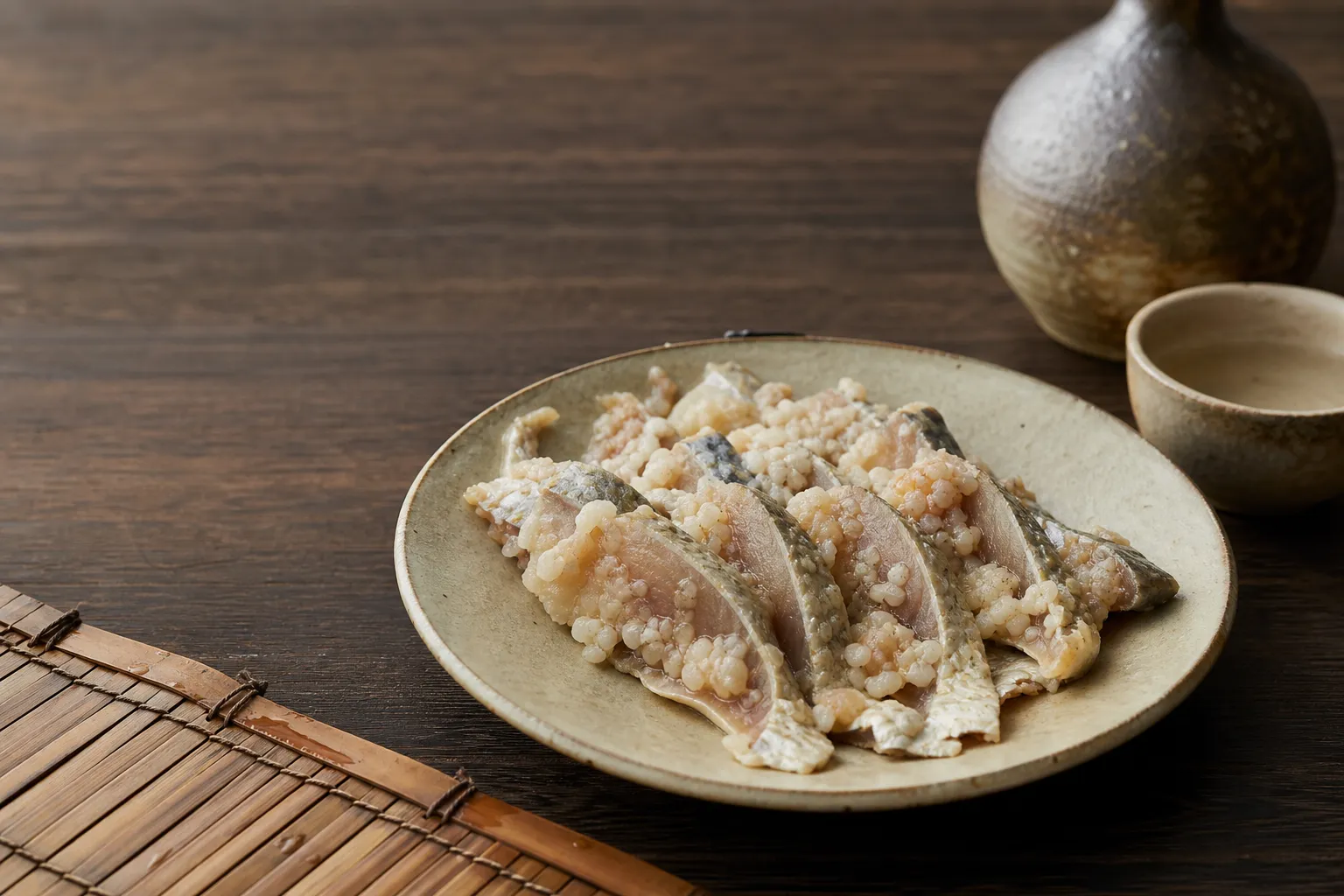
Local FoodLake Biwa, Shiga
Funazushi (鮒寿司)
Fermented lake carp aged in rice for a year or more — a sour, funky, cheese-and-sake bomb that turns out to be the great-grandparent of every piece of sushi you've ever eaten.
July 12, 2026