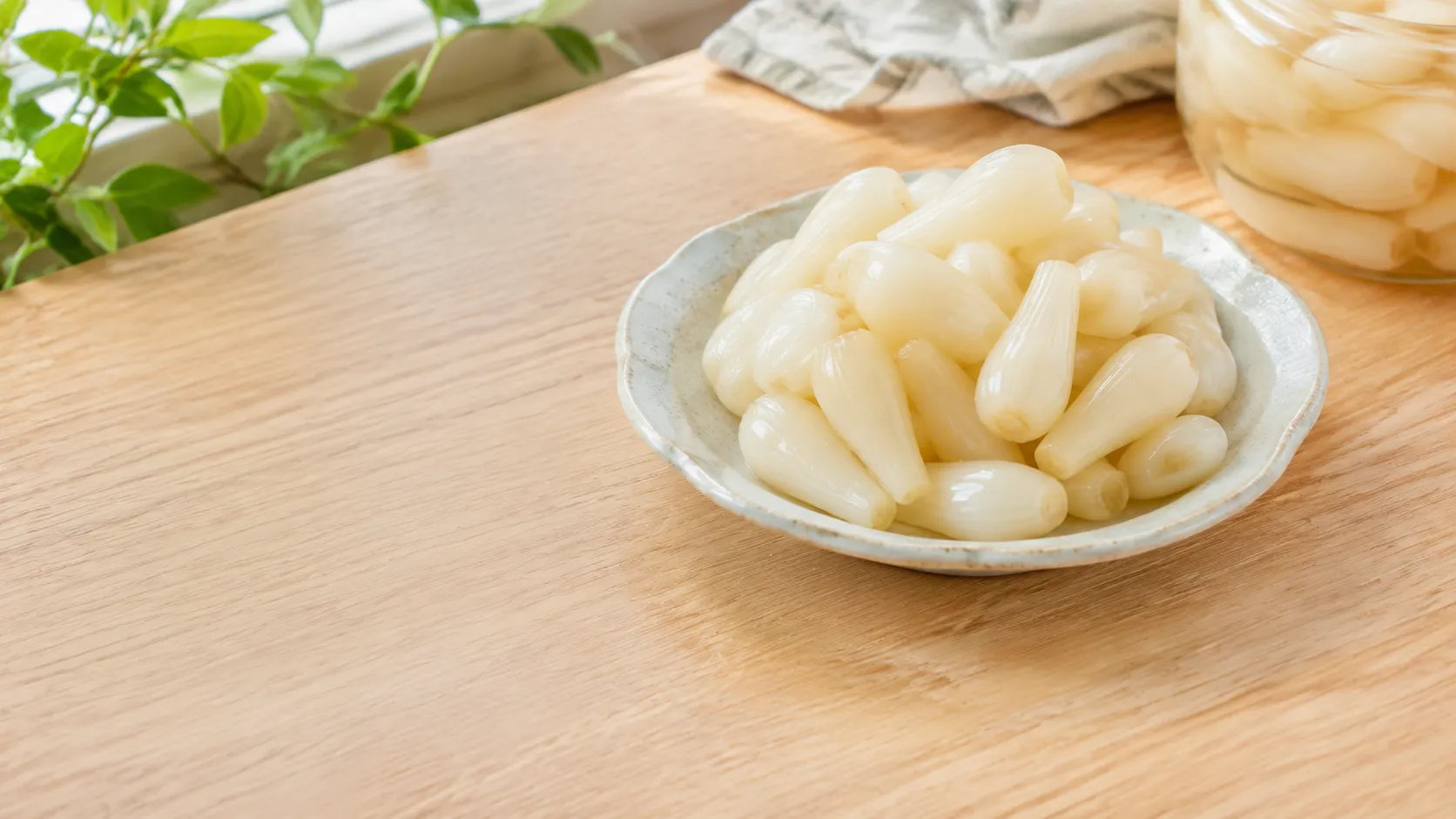
The crunch stopped me mid-sentence. Genuinely — I was saying something, I bit down, and there was a snap so loud and so clean that I lost my train of thought entirely and just stood there chewing with my eyebrows up.
Share this dish


The crunch is so loud I actually stopped talking mid-sentence. Then I ate five more and understood why they sit next to curry in every restaurant in Japan.
🍜 Planning a food trip to Tottori?Add this dish to my Food Trip →
 Add this dish to my Food Trip →
I'd been eating rakkyo my whole time in Japan without paying it the slightest attention. It's the small white thing that comes on the side of curry. You eat it, you don't think about it, you move on. And then in Tottori I ate one grown in sand fifteen minutes from where I was standing and discovered that I had never actually tasted the food I'd been eating for years, because the version I knew was soft and this one had a spine.
Sweet, sharp, faintly oniony, and that snap. I ate five more standing at the counter like a raccoon.
Rakkyo is a small bulb in the onion family, planted in autumn and pulled in early summer, pickled in sweet vinegar until it goes translucent and crisp. Tottori grows the most famous ones in the sand of its coastal dunes, and there is a real, immediately obvious difference between those and everything else.
Farming in a place that shouldn't grow anything
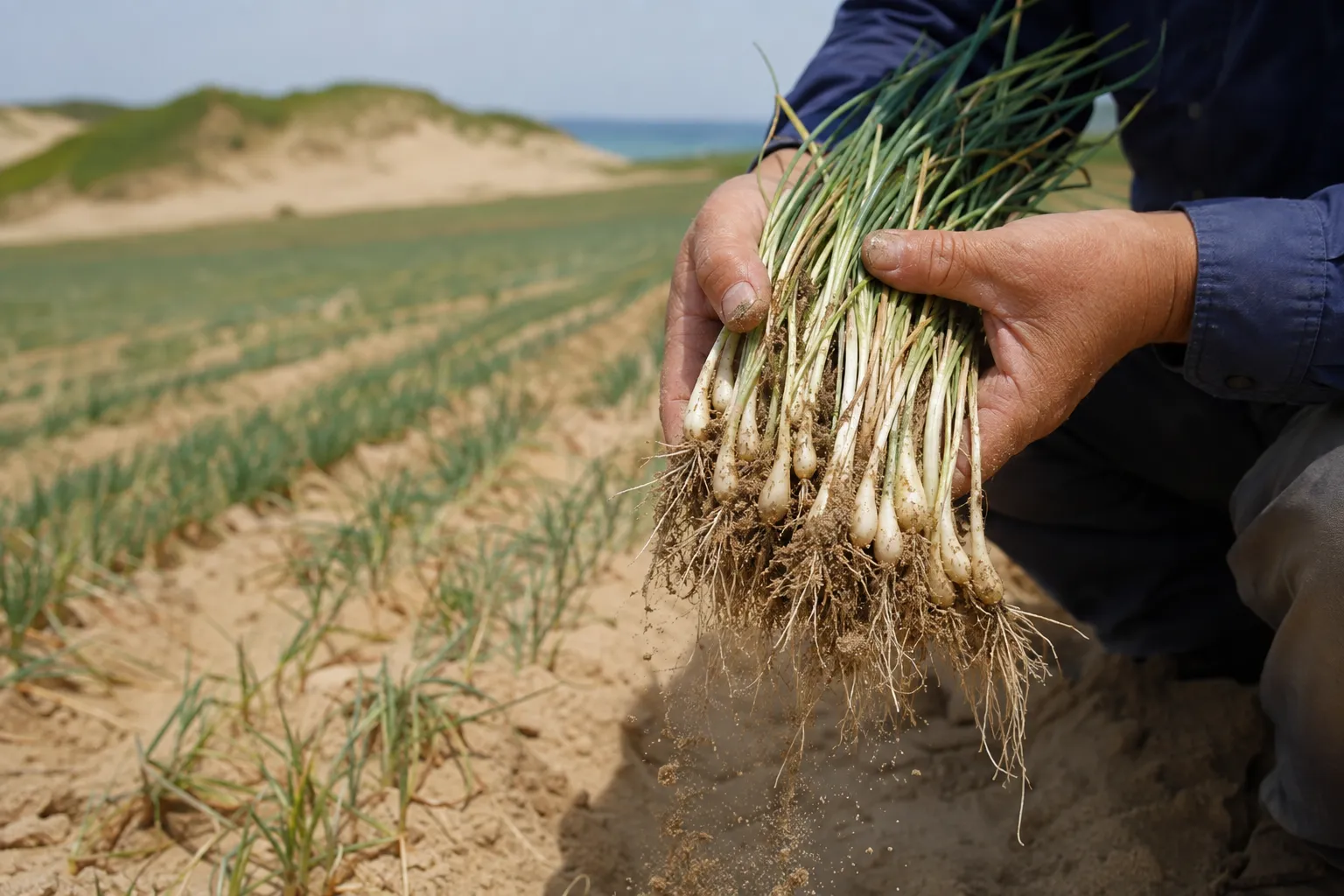
Tottori's coast has Japan's most famous sand dunes — genuinely vast, genuinely desert-looking, an unlikely landscape to find on this side of the world. And behind them are fields. Actual working farmland made of essentially the same sand.
Sand is a terrible medium for most crops. It doesn't hold water, it doesn't hold nutrients, and it moves. The response in Fukube, the dune-side district that became the centre of this, was to plant the one crop that finds those conditions agreeable — and to accept that rakkyo grown this way come out small.
Small turns out to be the point. Deprived of easy water and rich soil, dune rakkyo grow tight and dense rather than large and loose, which is precisely what produces that violent crunch. The constraint became the selling point, and Tottori built a regional industry out of the worst farmland it had.
There's a second thing about these fields I didn't expect. Around late October, before the harvest that comes the following early summer, the rakkyo fields flower — and they turn a hard, saturated purple, in long rows, right up against the beige of the dunes. People drive out specifically to look at them. Nobody tells you that a pickle crop has a viewing season.
I keep thinking about the person who first looked at a sand desert and thought, right, we'll farm that. That's Tottori in one image: the least populous prefecture in Japan, quietly deciding that sand counted as an opportunity.
Why the crunch matters so much
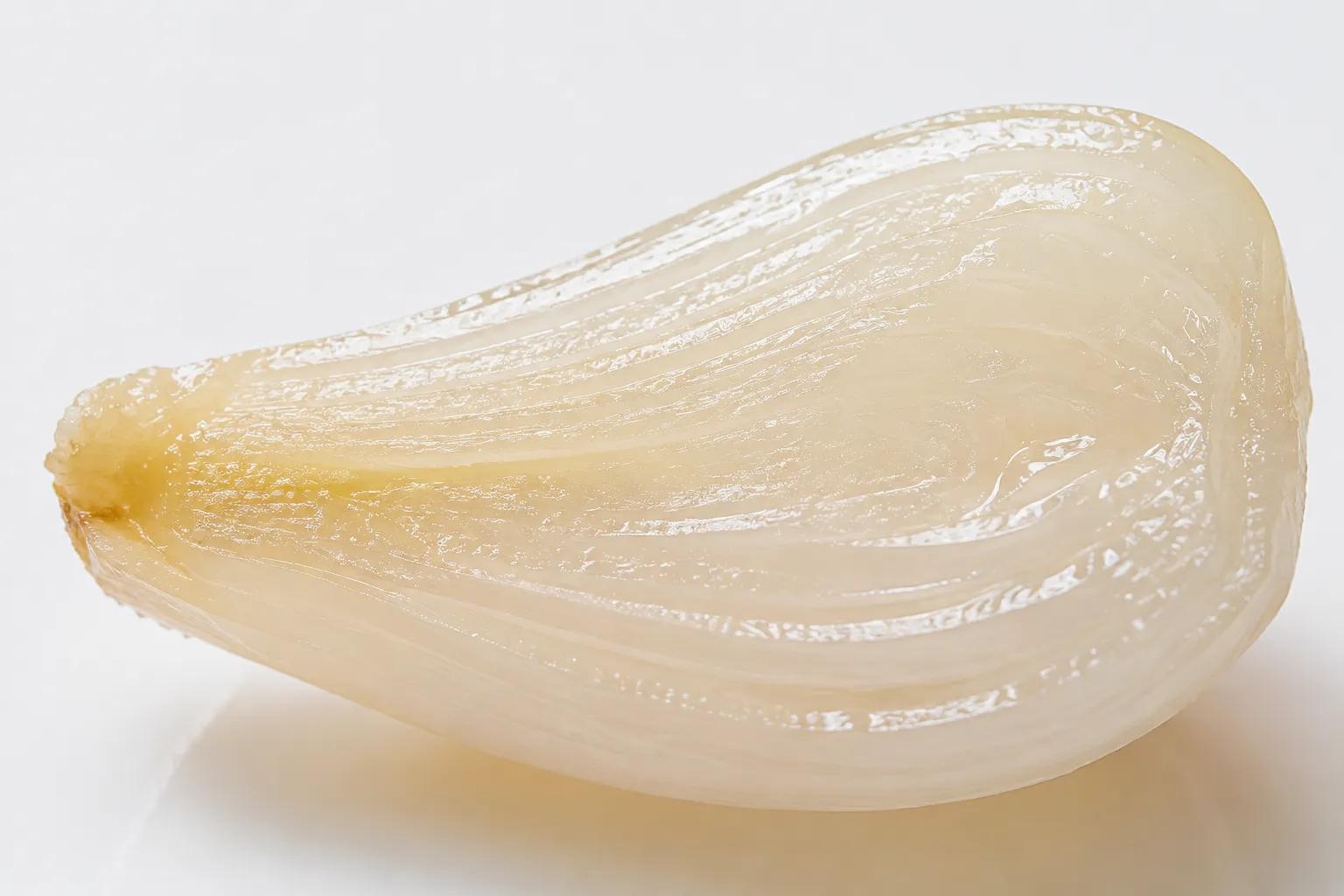
Cut one in half and you'll see tight concentric white layers, like a miniature onion drawn by someone with a very fine pen. That density is what survives the pickling.
The flavour is sharper than people expect from something so small — a clean allium pungency, closer to a raw shallot than to garlic, sitting inside a sweet-sour vinegar brine that softens the edges without taking the point off. Sweet first, sharp second, and a slight burn at the back that fades quickly.
Which explains its permanent job. Japanese curry is heavy, thick, gently sweet, and relentlessly uniform in texture — a wonderful thing that gives your mouth nothing to push against. Rakkyo interrupts. Acidity cuts the richness, the sharpness resets your palate, and the crunch provides the only structural contrast on the plate. It's placed next to curry for the same reason a pickle sits next to a sandwich, and it's better at the job than the pickle.
Beyond curry, it's a fine drinking snack, it goes into tartar sauce in some regional cooking, and locals eat it plain, which after Tottori I now also do.
There are two main styles worth knowing. Sweet-vinegar (amazu) is the common one, mild and approachable. Salt-cured (shio-rakkyo) is fermented rather than sweetened, much sharper, funkier, and a completely different proposition. Start with sweet.
How it comes together
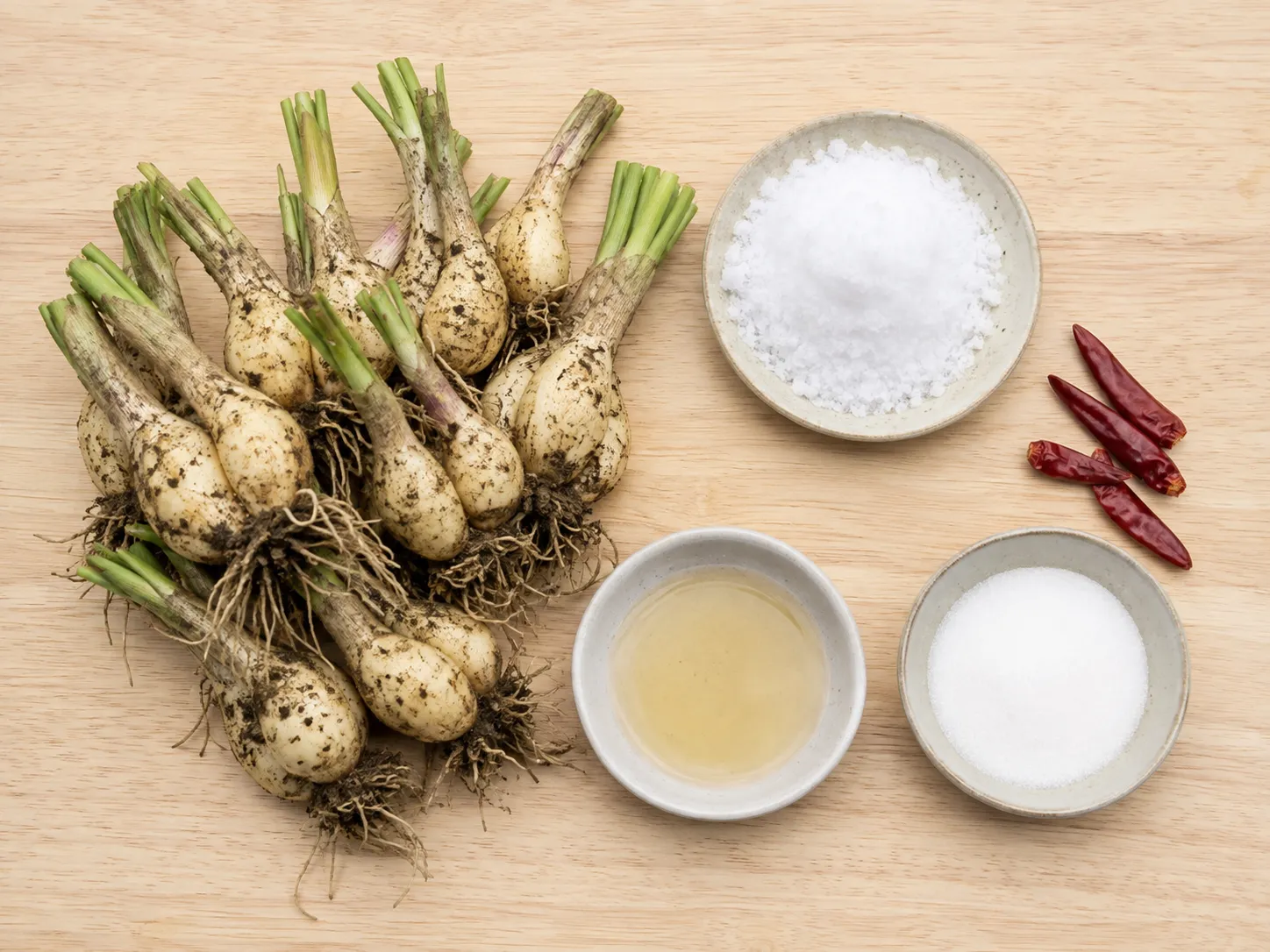
- Plant the bulbs in late summer and leave them through winter — the fields flower purple in late October and are harvested the following May and June
- Pull them from the sand, then trim the roots and green tops right back to the bulb
- Wash thoroughly and salt-cure them first, which draws out water and firms the texture
- Rinse off the salt cure, then pack the bulbs into a sweet vinegar brine with a little sugar and dried chilli
- Leave them to steep for weeks — they turn from opaque white to faintly translucent as they take on the brine
Step 3 is the step home cooks skip and regret. Going straight into vinegar without the salt cure gives you a bulb that's soggy within a month. The salt is what guarantees the crunch is still there in six months' time, and the crunch is the entire reason you're doing this.
Before you go — the stuff that actually matters
Your questions, answered honestly
"Is this the same as pickled garlic?" — No. Different plant, different flavour. Rakkyo is a distinct allium — sharper and cleaner than garlic, without garlic's heat or lingering finish. If you've had it and disliked it, there's a decent chance you had a soft, over-sweetened supermarket one.
"How many do I eat with curry?" — Three or four, one at a time, between bites of curry rather than all at the start. They're a palate reset, not a side dish. And they're usually free and refillable at curry restaurants, which is a fact worth knowing and abusing responsibly.
"Will they make my breath terrible?" — Yes, somewhat. It's an allium. Less brutal than raw garlic, more noticeable than an onion. Plan around meetings accordingly, as I failed to.
"What's the difference from what I'd buy in Tokyo?" — Size and crunch, mostly. Dune-grown Tottori rakkyo are smaller and much firmer. Look for 砂丘らっきょう on the label — that's the dune designation, and it's the one worth carrying home.
"Sweet or salt-cured for a first try?" — Sweet vinegar. The salt-cured ones are excellent but they're fermented and forward, and they've ended a few friendships with the food in front of me.
"When should I visit for the fields?" — Late October for the purple flowering, which is genuinely striking against the dunes, and May to June for the harvest. Both pair naturally with a trip to the sand dunes themselves, which are twenty minutes away and worth an afternoon.
"Can I take them home?" — Easily. Sealed packs and jars are stable, widely sold at roadside stations and station shops, and cheap. Check your own country's rules on pickled vegetables before packing them.
What the staff will ask you
| You'll hear | Romaji | Meaning | Just say |
|---|---|---|---|
| 甘酢と塩漬け、どちらがいいですか? | Amazu to shiozuke, dochira ga ii desu ka? | "Sweet vinegar or salt-cured?" | Amazu de (sweet vinegar, please) |
| 試食どうぞ | Shishoku dōzo | "Please try a sample" | Itadakimasu (thank you) |
| 砂丘らっきょうですよ | Sakyū rakkyō desu yo | "These are the dune-grown ones" | Sore o kudasai (I'll take those) |
| 何袋にしますか? | Nan-fukuro ni shimasu ka? | "How many packs?" | Ni-fukuro kudasai (two, please) |
| 開けたら冷蔵庫に入れてください | Aketara reizōko ni irete kudasai | "Refrigerate after opening" | Wakarimashita (understood) |
To order, just say "Rakkyo kudasai" (らっきょうください) — "Rakkyo, please."
Where to eat it
- Roadside stations and shops around the Tottori Sand Dunes — the easiest place to buy dune rakkyo, usually with samples out and several styles side by side.
- The Fukube district's rakkyo fields — the growing heart of it, striking when the fields flower purple in late October and busy with harvest in early summer.
- Curry restaurants anywhere in Japan — not Tottori-specific, but the natural habitat. If there's a lidded jar on the table, that's the rakkyo, and it's yours.
Field flowering dates shift each year with the weather and the harvest window is short, so check locally before making a trip specifically to see the fields.
Soul Score
Local Roots5/5
First-Timer Friendly4/5
Adventure Level3/5
Comfort Level4/5
Travel Worthy3/5
These scores are one obsessed eater's gut feeling — not a verdict. A low number isn't a bad mark, just a different kind of adventure.
Know someone planning Japan?
← All Articles
Local Food · Tottori
Still hungry?
Eat more from Tottori
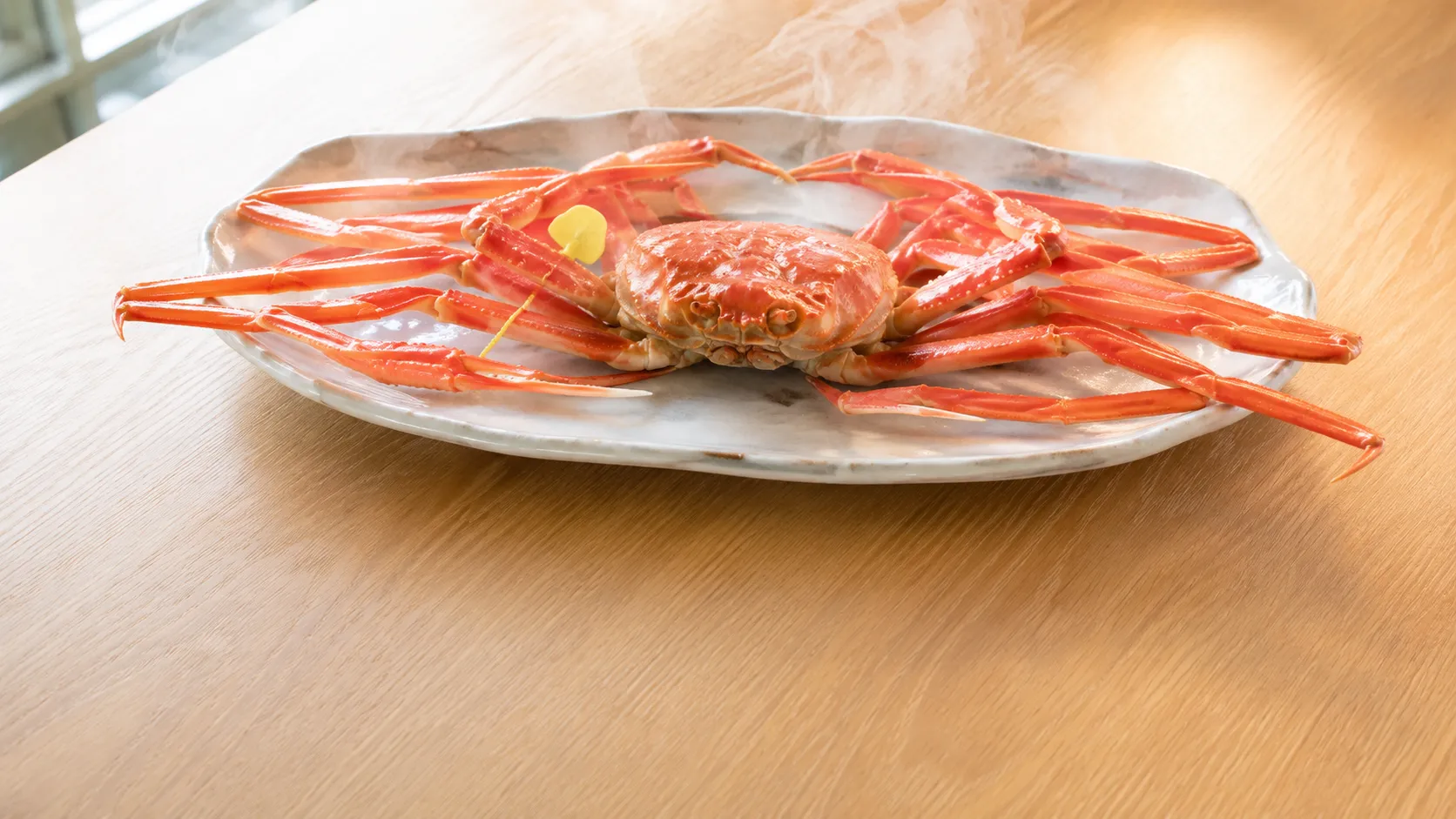
Local FoodSakaiminato, Tottori
Matsuba-gani (松葉ガニ)
There's a small plastic tag clipped to the crab's leg like a name badge, and once someone explains what it means you will never look at a crab the same way again.
September 2, 2026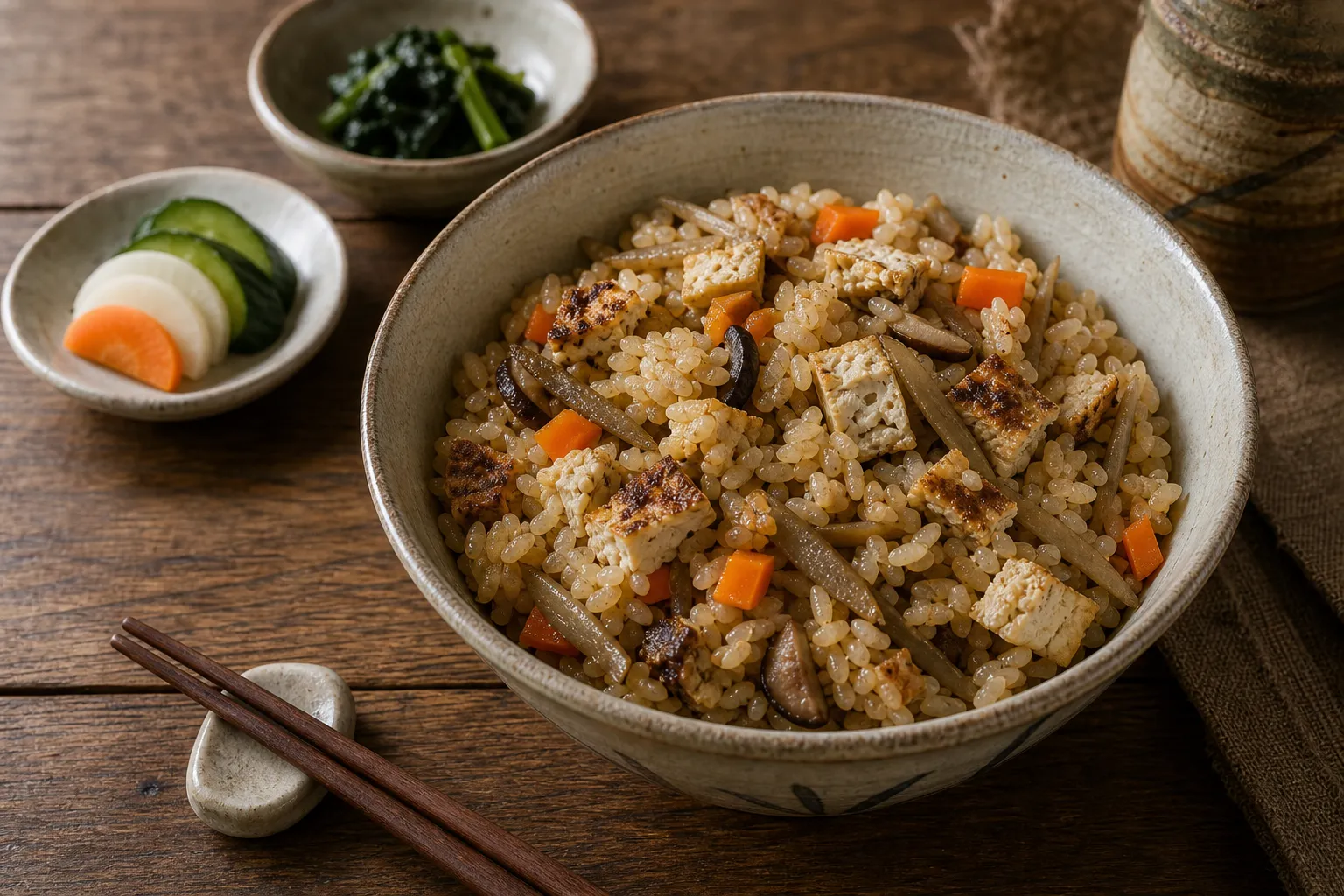
Local FoodTottori
Dondoroke-meshi (どんどろけ飯)
Rice named after thunder — because the tofu crackles like a storm when it hits the hot pan. Crumbled grilled tofu, carrot and burdock cooked right into the rice: humble Tottori country food with the best name in Japan.
July 12, 2026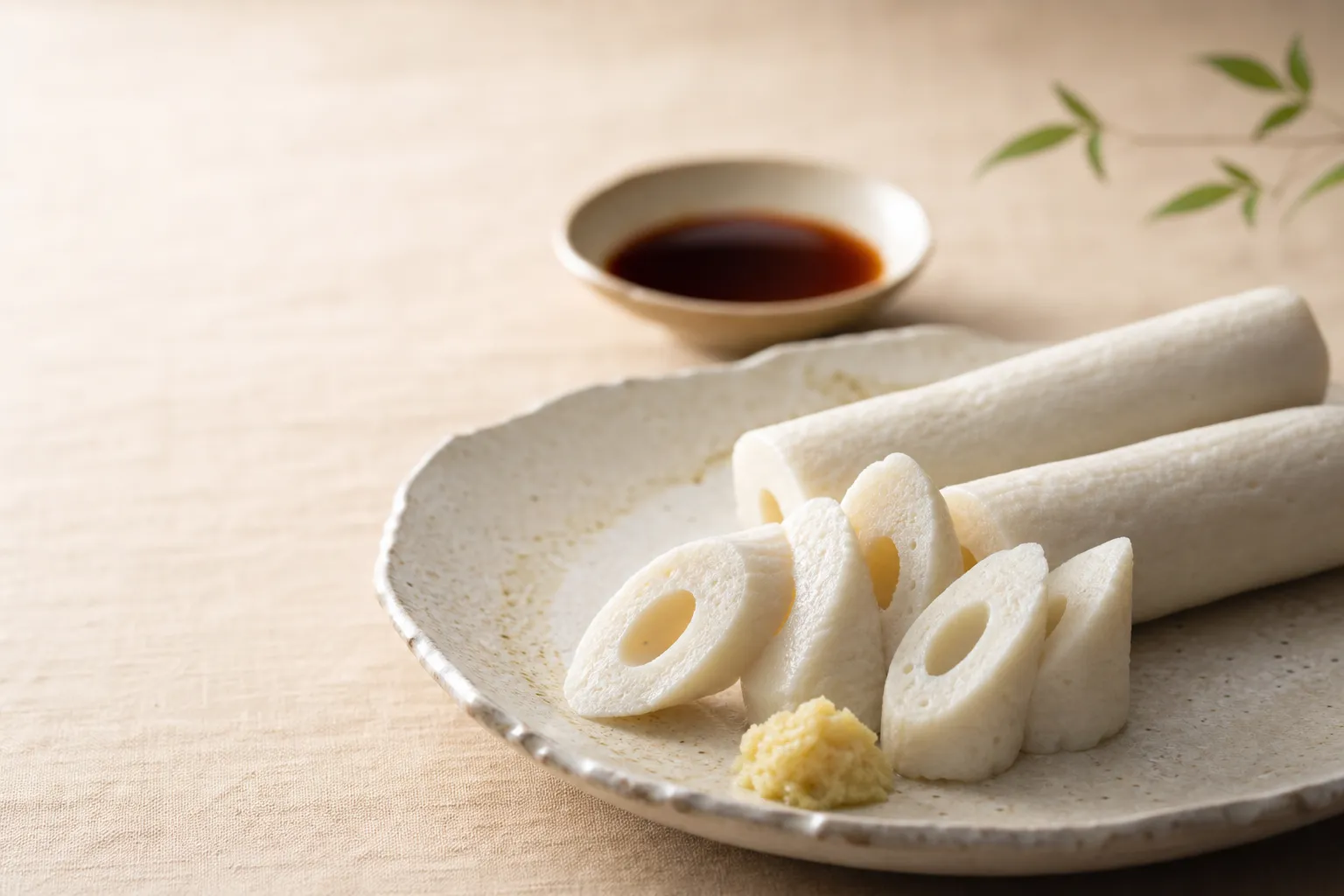
Local FoodTottori
Tofu Chikuwa (豆腐ちくわ)
Half tofu, half fish paste, and lighter than either one has any right to be — Tottori took a chewy snack tube and made it pillowy, and I'm still thinking about it.
July 5, 2026