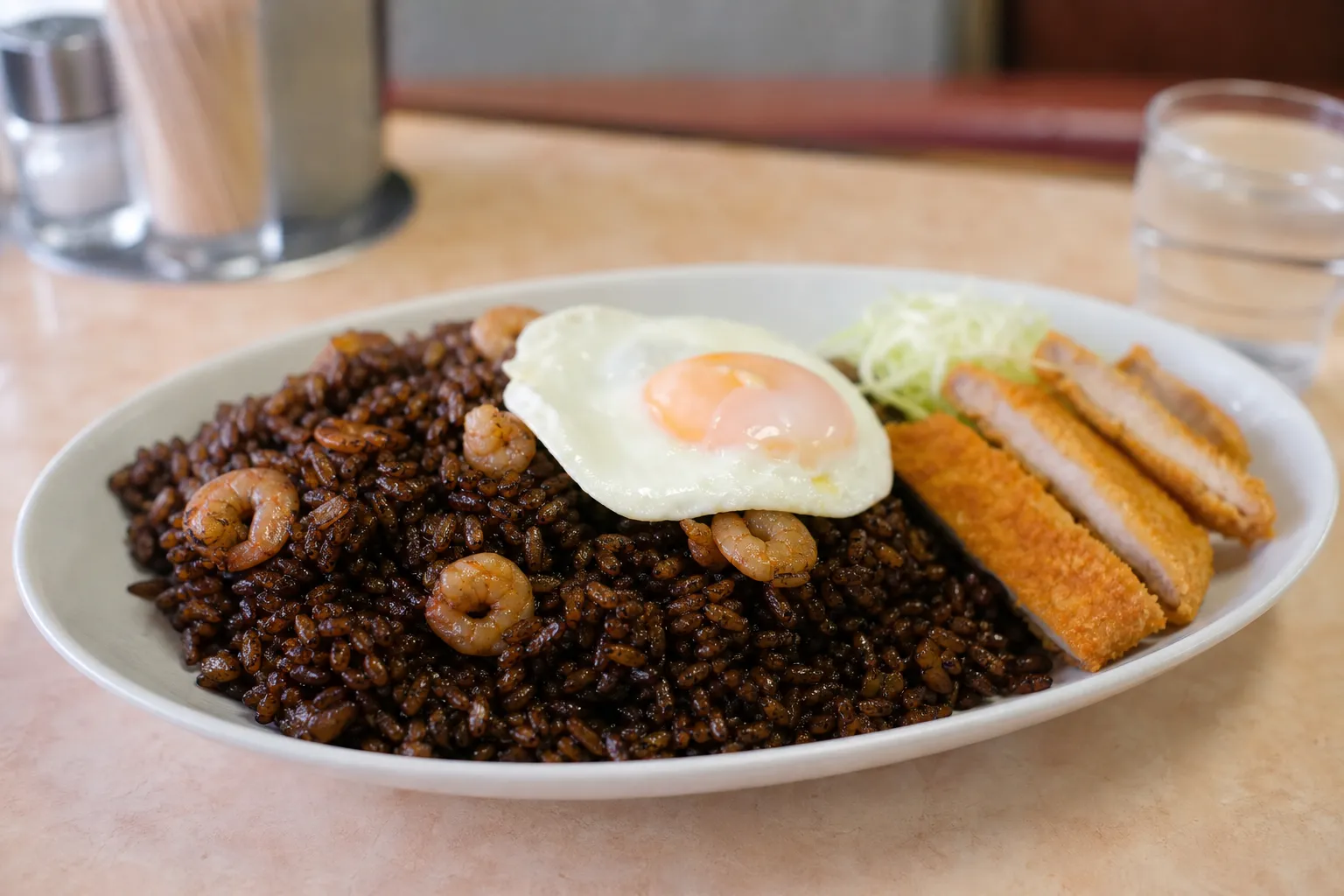
The plate arrives and my first instinct is did something go wrong. The rice is dark — almost black, glossy like it's been lacquered — and every part of my brain trained on golden fried rice says this is a mistake. Then the small pink shrimp scattered on top register, and then the smell hits, deep and savory and faintly sweet, and I realize: no, this is exactly right. This is just what it's supposed to look like.
Share this dish


The rice is black. Not burnt-black — on-purpose black, glossy and rich, and I did not trust it until the first bite made me a believer.
Would you try this dish?
Rate how much you would like to try it.
🍜 Build your Okayama food trip around Okayama Ebimeshi.Add to Food Planner →
 Add to Food Planner →
I ate the whole plate slightly suspicious of myself the entire time, because it should not have been that good, that dark, that simple. And yet.
Ebimeshi — Okayama's own fried rice — is rice fried with small shrimp in a rich, dark Worcestershire-style sauce until the grains turn a deep brown-black, usually served with a fried egg or a thin pork cutlet alongside. It looks nothing like the fried rice you're picturing right now, and that's the whole point.
A yōshoku diner's happy accident
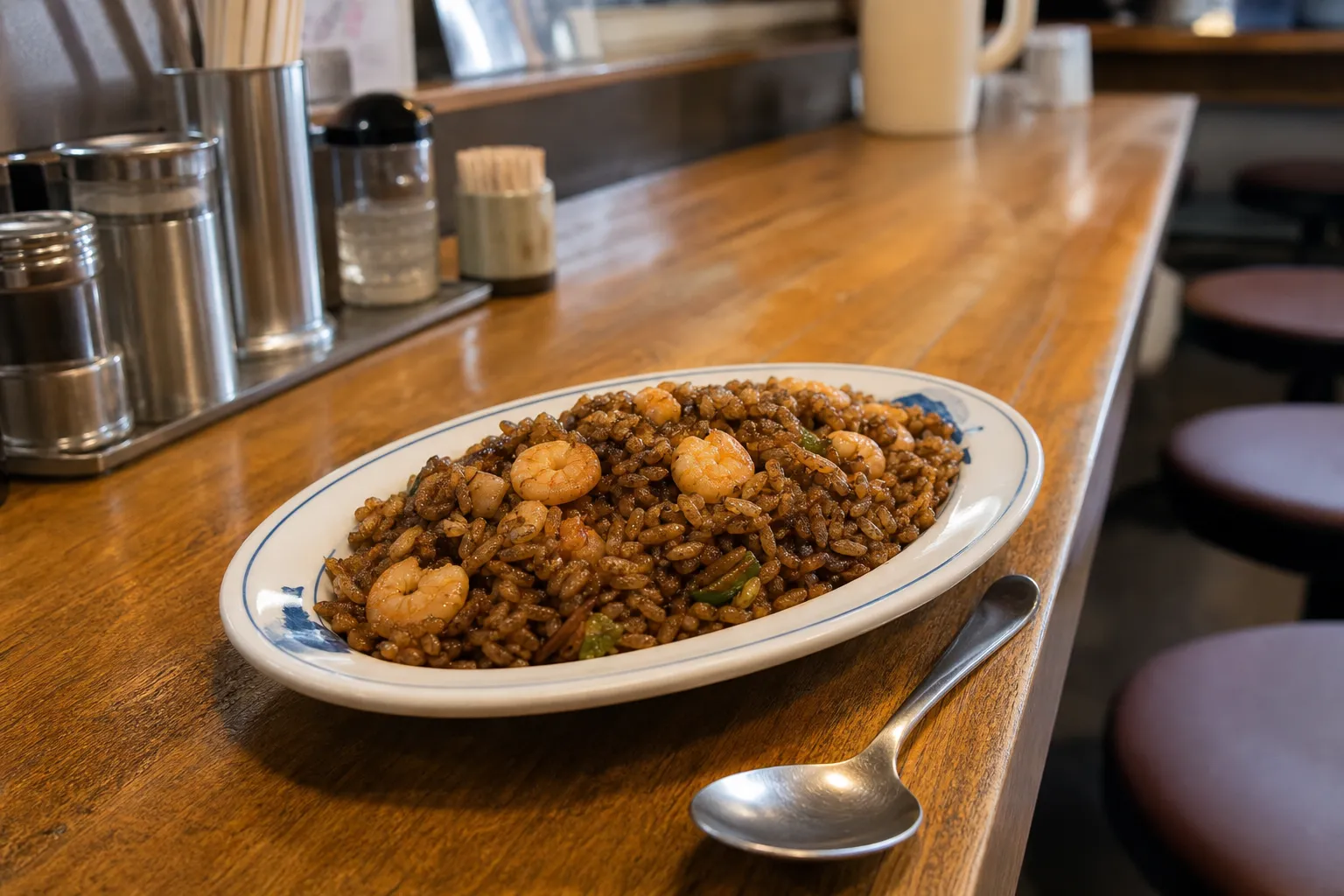
Ebimeshi's origin traces back to a Western-style diner (yōshoku-ya) in Okayama City decades ago, where the story goes that a cook was looking for a way to make fried rice with more depth than the usual soy-and-salt version. Worcestershire-style sauce — already a beloved Okayama pantry staple, the same family of sauce used all over the region's cutlet dishes — became the answer, cooked down into the rice itself rather than just drizzled on top.
The result stuck around and became a defining local dish, with a dedicated specialty restaurant eventually built entirely around it. I find something wonderful about a whole regional identity built on someone deciding fried rice needed to be browner. Sometimes greatness really is that simple.
Why the color is the whole story
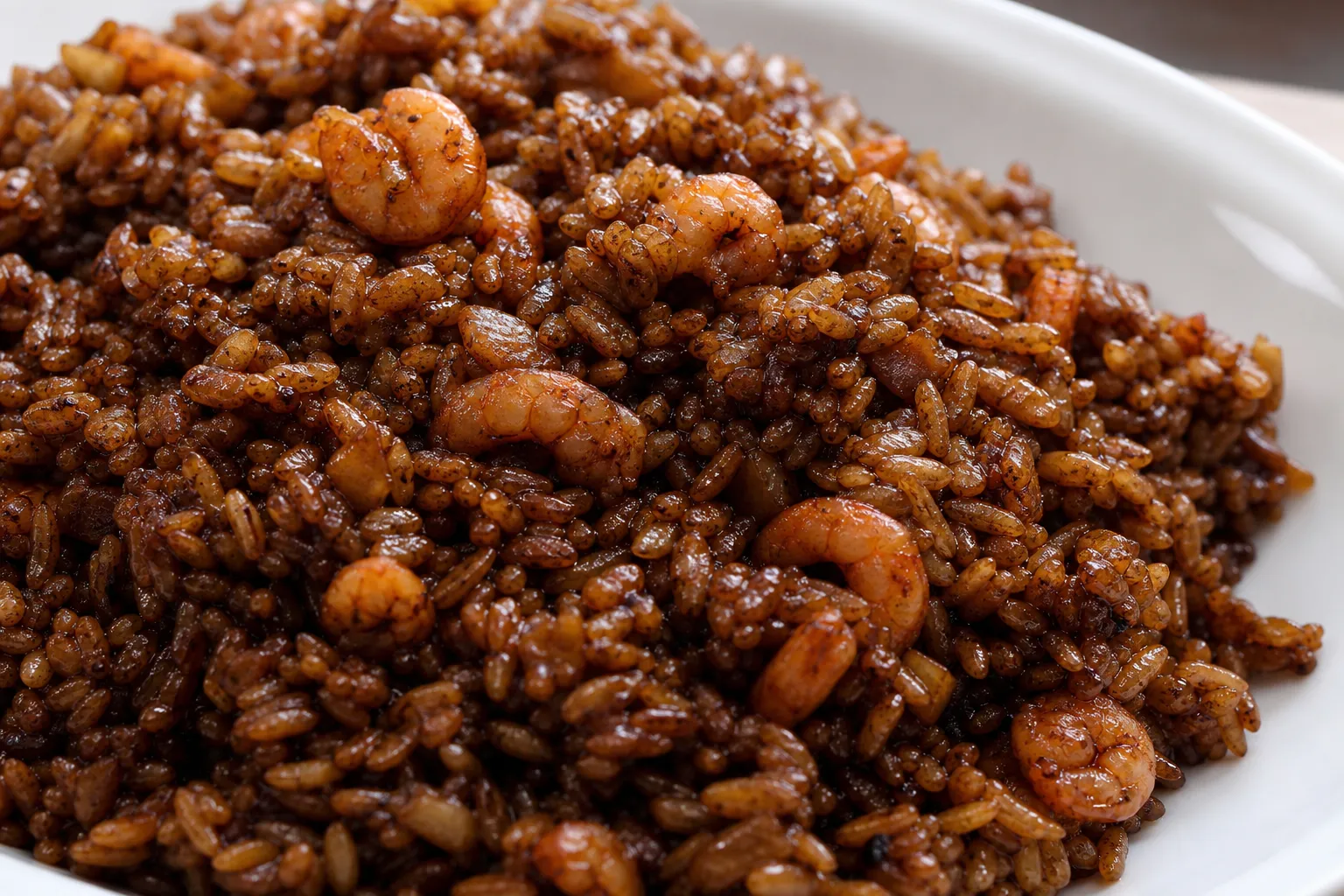
The first thing to understand is that the dark color isn't a flaw, it's the entire flavor mechanism. The Worcestershire-style sauce cooks directly into every grain of rice, turning it a deep mahogany-black and giving it a savory, tangy, faintly fruity depth that plain soy sauce fried rice just doesn't have. Against that dark backdrop, the small pink shrimp practically glow, and a fried egg on top — bright yolk against black rice — might be one of the most quietly dramatic plates in Japanese comfort food.
It eats lighter than it looks, too. This isn't a heavy, greasy fried rice — it's more like a savory-sweet, almost tangy version, closer in spirit to a good demi-glace than to soy sauce. I went back for a second plate on the same trip. I have no defense.
How it's made
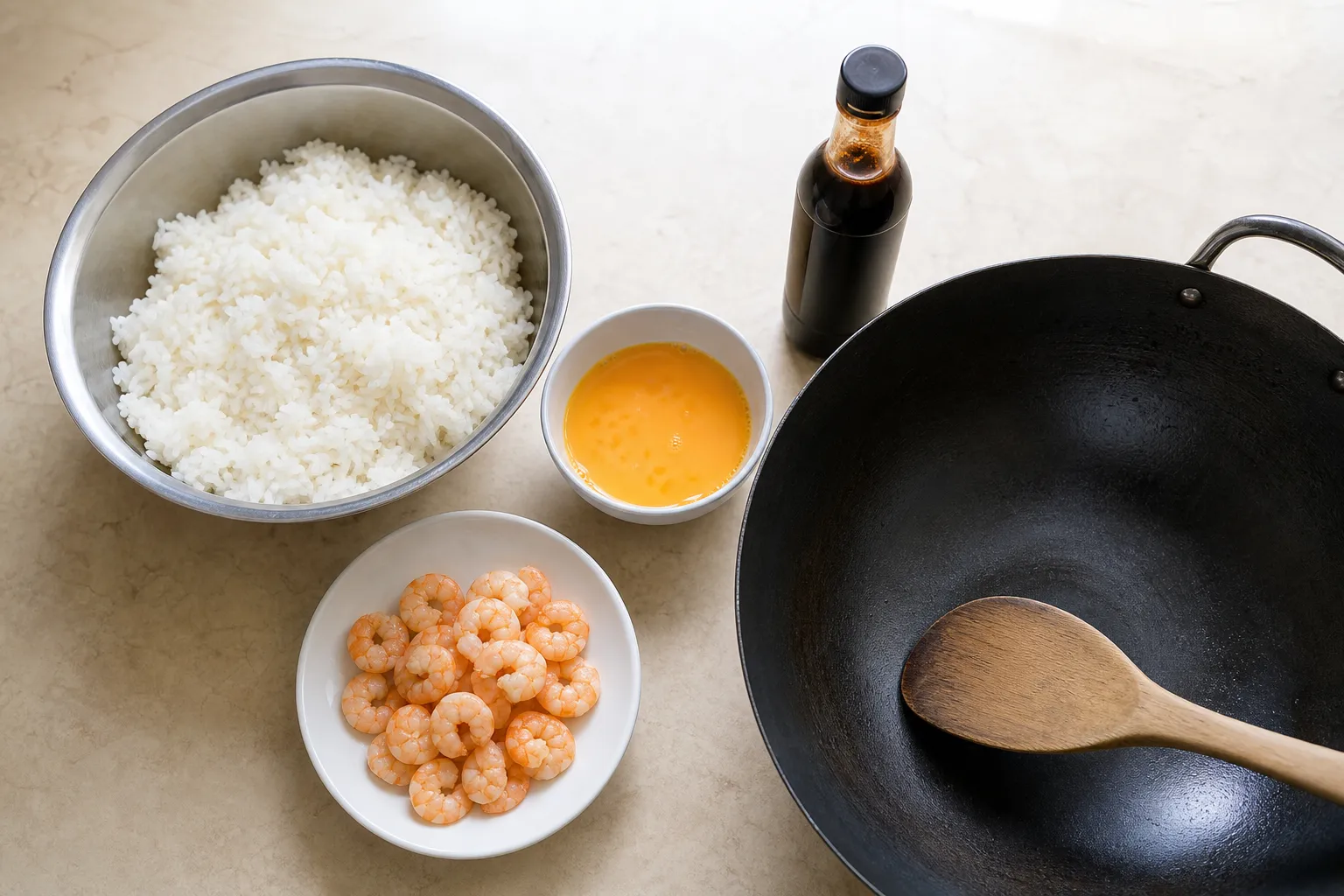
- Sauté small peeled shrimp until just cooked, then set aside
- Fry cooked rice in a hot pan or wok with oil, breaking up clumps
- Add a generous amount of Worcestershire-style sauce (and often ketchup or demi-glace-style seasoning) directly into the rice, frying it until every grain darkens evenly
- Fold the shrimp back in
- Plate it up, typically with a fried egg, shredded cabbage, or a thin pork cutlet on the side
Step 3 is where the whole dish lives or dies — too little sauce and it's just brown rice with shrimp; too much and it turns bitter. The good places have clearly done this a thousand times.
Before you go — the stuff that actually matters
Your questions, answered honestly
"Is the rice actually burnt?" — No. That dark color is entirely from the sauce cooking into the rice, not scorching. It's supposed to look like that.
"Is this the same as omurice?" — No — omurice is rice wrapped inside a thin omelette, and the rice inside is usually ketchup-red, not dark brown. Ebimeshi is a different dish entirely, though some menus do serve it alongside or near omurice.
"Is it spicy?" — Not remotely. It's savory-sweet, more like a rich sauce than heat.
"What comes with it?" — Most places add a fried egg, shredded raw cabbage, or a breaded pork or fish cutlet on the side. Ask if you're not sure what's included.
"Can I get a bigger or smaller portion?" — Usually yes — most diners offer a regular and a larger size, sometimes labeled in Japanese as normal / large.
What the staff will ask you
| You'll hear | Romaji | Meaning | Just say |
|---|---|---|---|
| 普通盛りと大盛り、どちらにしますか? | Futsū-mori to ōmori, dochira ni shimasu ka? | "Regular or large portion?" | Futsū de (regular) / Ōmori de (large) |
| 目玉焼きは付けますか? | Medama-yaki wa tsukemasu ka? | "Add a fried egg?" | Hai, onegaishimasu (yes, please) |
| お飲み物はいかがですか? | Onomimono wa ikaga desu ka? | "Anything to drink?" | Kekkō desu (no, thank you) |
| カツも付けますか? | Katsu mo tsukemasu ka? | "Add a cutlet too?" | Hai (yes) / Iie, kekkō desu (no, thanks) |
| お会計ご一緒ですか? | Okaikei go-issho desu ka? | "Paying together?" | Hai / Betsu de (separately) |
To order, just say "Ebimeshi kudasai" (えびめしください) — "Ebimeshi, please."
Where to eat it
- Ganso Ebimeshi-ya (元祖えびめしや) — a well-known specialty shop in Okayama City built specifically around the dish, a solid starting point for the "original-style" version.
- Local yōshoku-style diners around Okayama Station and the city center — many casual Western-style diners across the city serve their own take on ebimeshi as a menu staple.
Hours and menus change, so double-check before you make a special trip — and if a local recommends "their" favorite ebimeshi spot, trust them; this is very much a hometown-pride dish.
Soul Score
Local Roots4/5
First-Timer Friendly4/5
Adventure Level3/5
Comfort Level5/5
Travel Worthy4/5
These scores are one obsessed eater's gut feeling — not a verdict. A low number isn't a bad mark, just a different kind of adventure.
Know someone planning Japan?
← All Articles
Local Food · Okayama, Okayama
Still hungry?
Eat more from Okayama
Local FoodHiruzen, Okayama
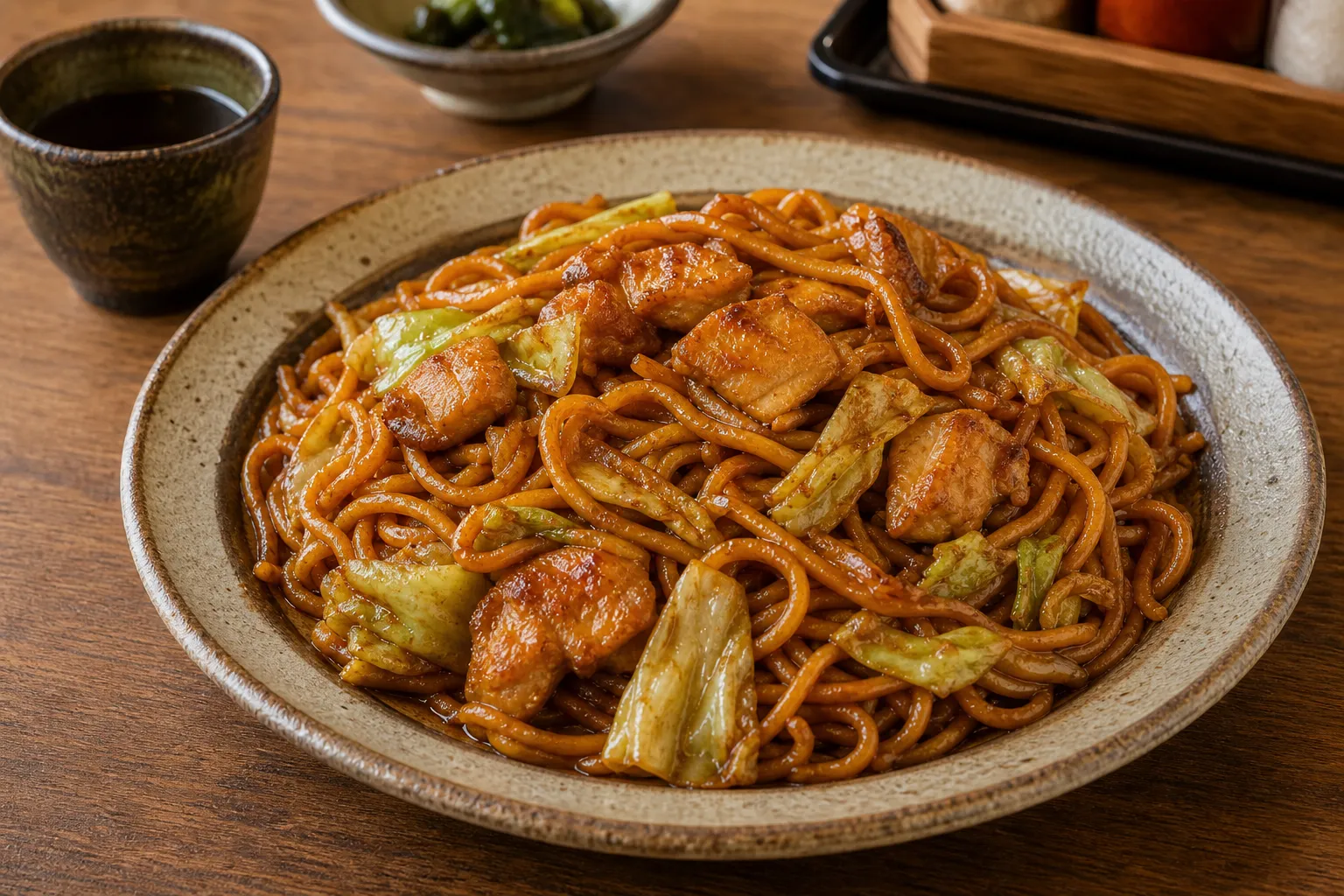
Hiruzen Yakisoba (蒜山焼きそば)
Forget the brown-sauce yakisoba you know. Up in Okayama's Hiruzen highlands they coat the noodles in a garlicky, sweet-savory miso dare with chicken and cabbage — and it ruins you for the normal kind.
July 12, 2026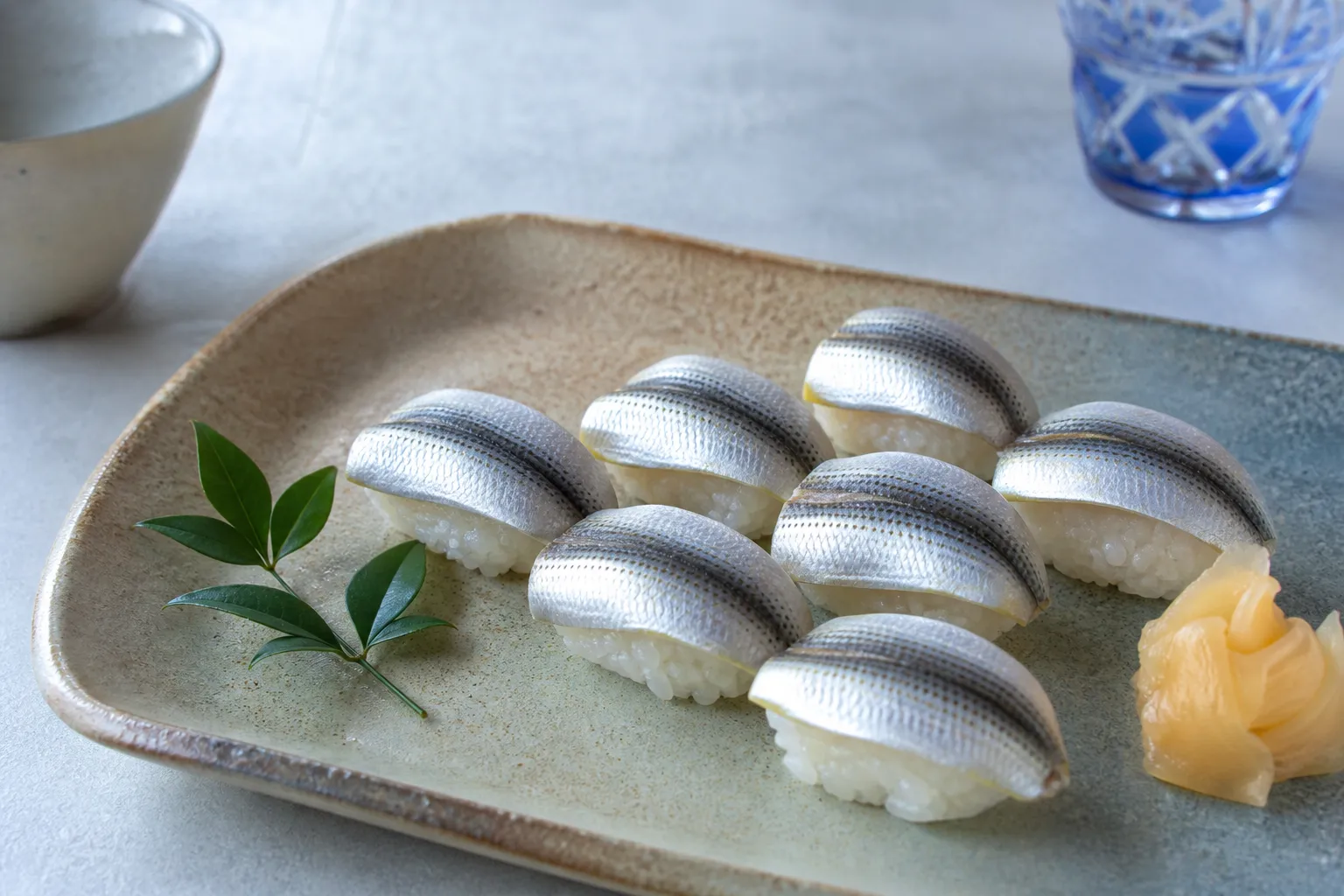
Local FoodOkayama
Mamakari-zushi (ままかり寿司)
Silvery little vinegar-cured fish draped over sushi rice — so good, the Okayama legend goes, that you'll run next door to borrow more rice. The name is a joke about greed, and honestly it undersells the fish.
July 12, 2026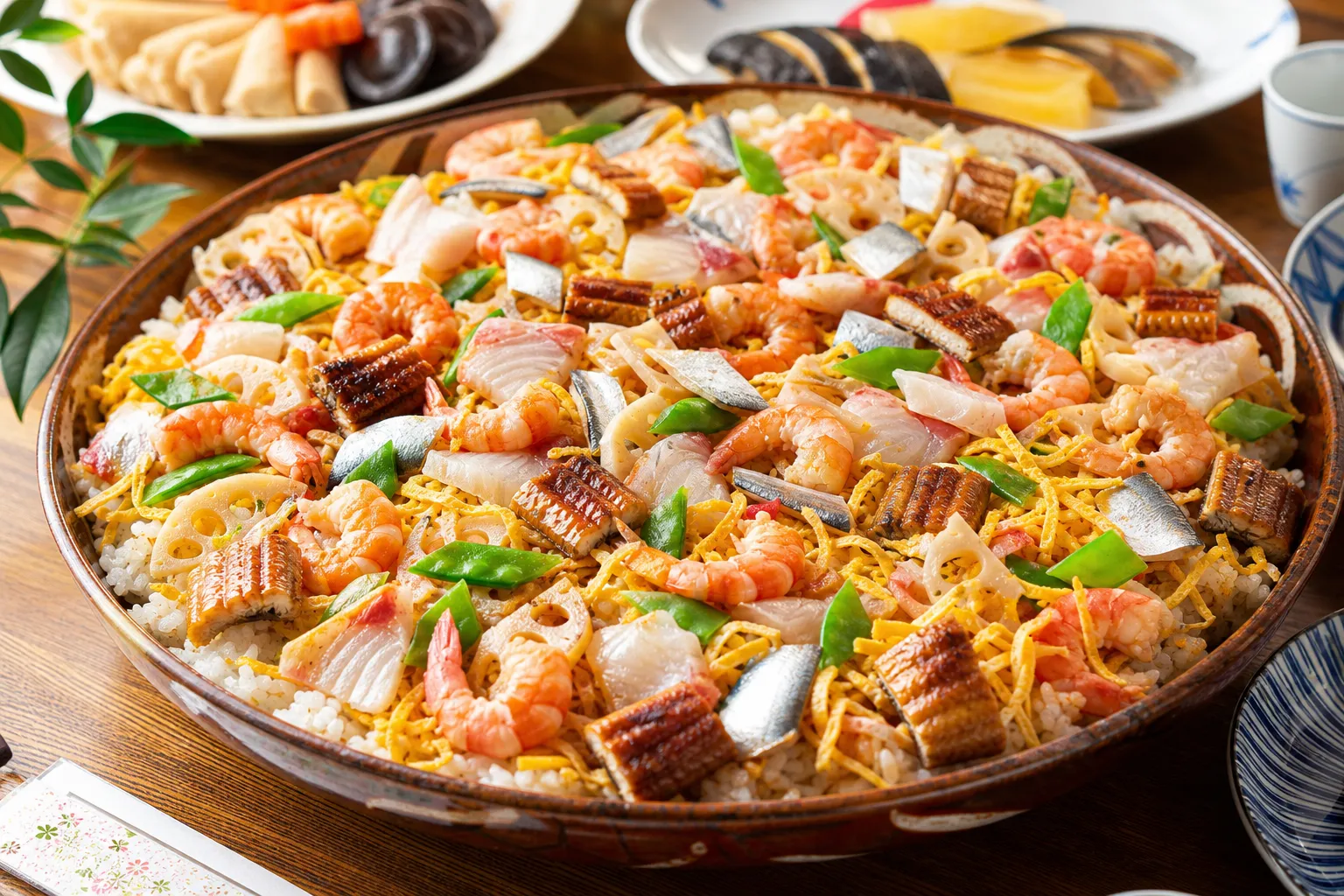
Local FoodOkayama
Bara-zushi (ばらずし)
One plate, eight or nine kinds of seafood, and not a single grain of rice left uncovered — Okayama basically dared its neighbors to out-decorate this and nobody has.
July 4, 2026