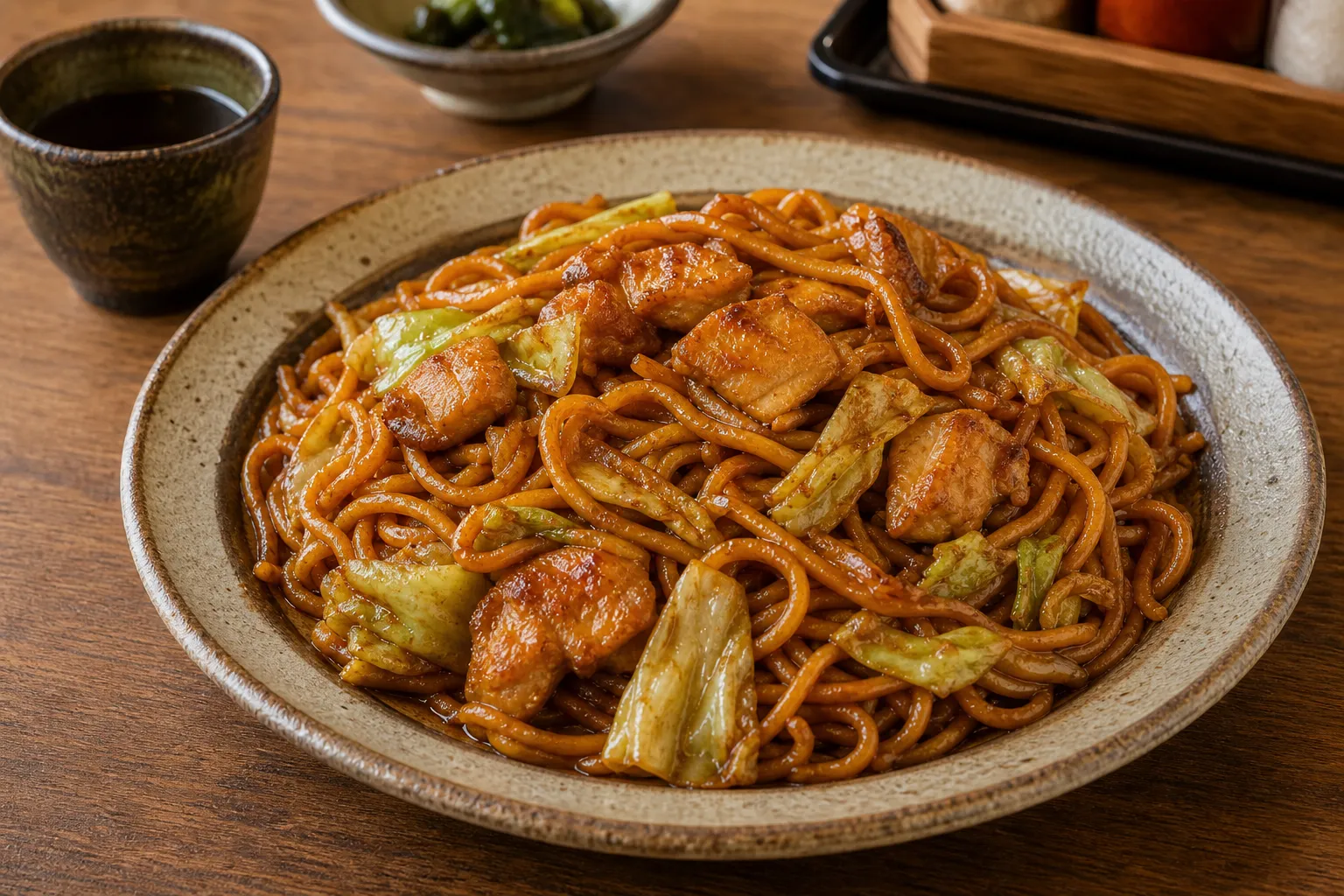
The smell hit me before the plate did — garlic and miso caramelizing on a hot iron griddle, sweet and deep and savory in a way plain yakisoba has never once smelled. I'd ordered it half-expecting the usual: brown sauce, bonito flakes, the festival-stall standard. What landed was darker, richer, stickier with flavor, the noodles glistening in a garlicky miso glaze with tender chicken and sweet highland cabbage — and I put my chopsticks down after the first bite just to process it. Then I ate the rest embarrassingly fast. This is not the yakisoba you think you know.
Share this dish


Forget the brown-sauce yakisoba you know. Up in Okayama's Hiruzen highlands they coat the noodles in a garlicky, sweet-savory miso dare with chicken and cabbage — and it ruins you for the normal kind.
🍜 Planning a food trip to Okayama?Add this dish to my Food Trip →
 Add this dish to my Food Trip →
Here's what it is: Hiruzen yakisoba (蒜山焼きそば) is the pride of the Hiruzen highlands in northern Okayama — stir-fried yakisoba noodles tossed with chicken and cabbage in a rich, sweet-savory miso-based dare built on garlic and fermented-bean depth. The miso-garlic sauce is the whole difference: where ordinary yakisoba wears a Worcestershire-style brown sauce, Hiruzen's wears a thick, dark, garlicky miso glaze. It's a beloved local B-grade specialty (and a national B-1 grand-prix winner), and no, it is absolutely not fried rice and not your average festival yakisoba.
Highland comfort food, born from family miso jars
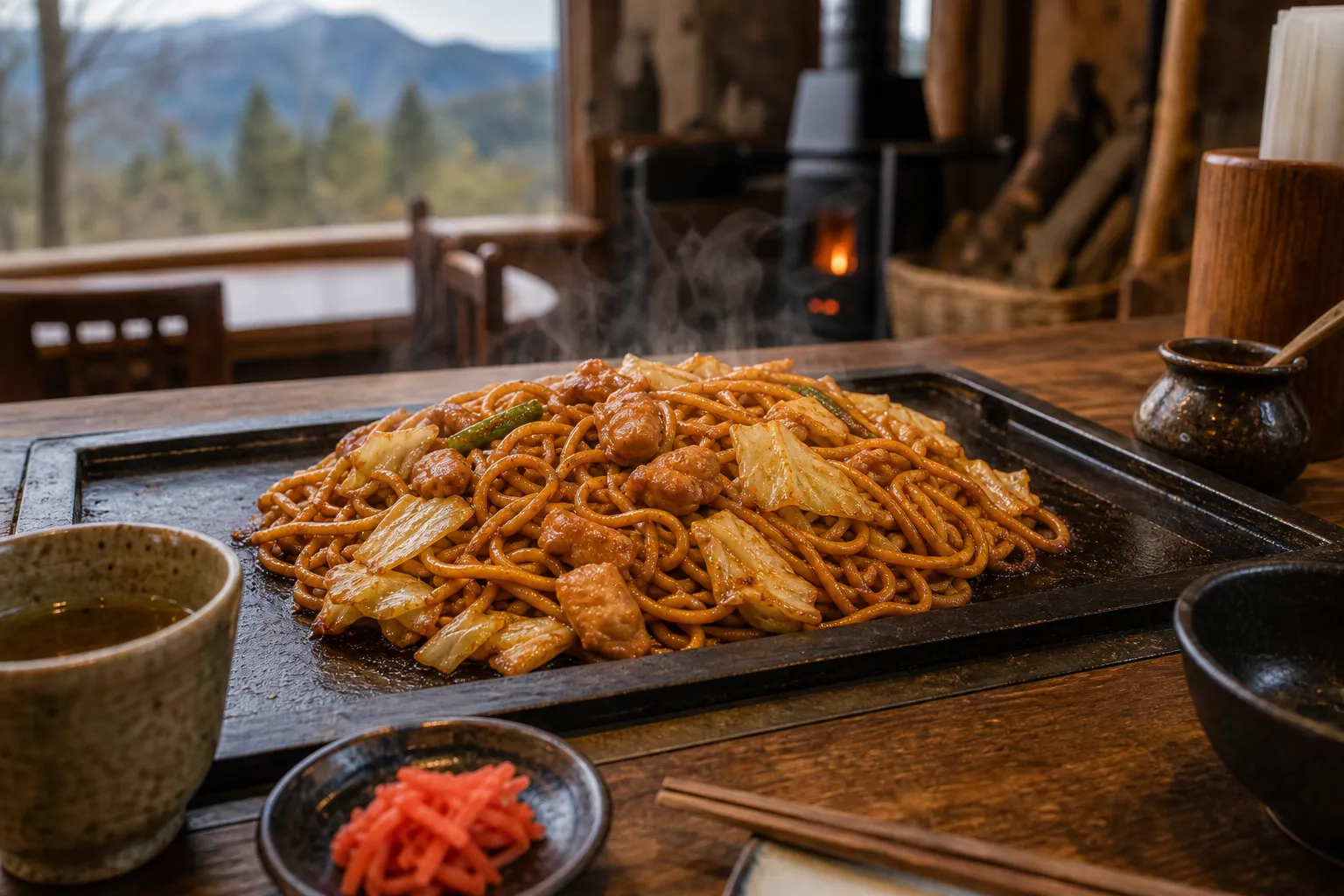
The Hiruzen highlands are cool, green plateau country in Okayama's north — dairy cows, jersey milk, ski slopes in winter, hiking in summer. The story goes that decades ago local households started dressing their yakisoba not with bottled sauce but with their own homemade miso dare, each family building a garlicky, fruity, sweet-savory paste to their own taste. Chicken was the meat on hand, highland cabbage was sweet and plentiful, and the dish became the everyday flavor of the region — different in every kitchen, unified by that miso-garlic soul.
I love that its origin is basically "everyone's mom had her own sauce." There's no single official recipe, because the dare is a family heirloom — some lean sweeter, some pack in more garlic, some sneak in apple or fruit for fruitiness. When Hiruzen yakisoba went on to win the national B-1 Grand Prix, it put this quiet highland dish on the map, but the heart of it is still that homemade, hyper-local jar of miso. Eating it up in the cool highland air, with a glass of the local jersey milk, feels like being let in on a regional secret. I would drive back up there just for this.
What makes the eating experience different
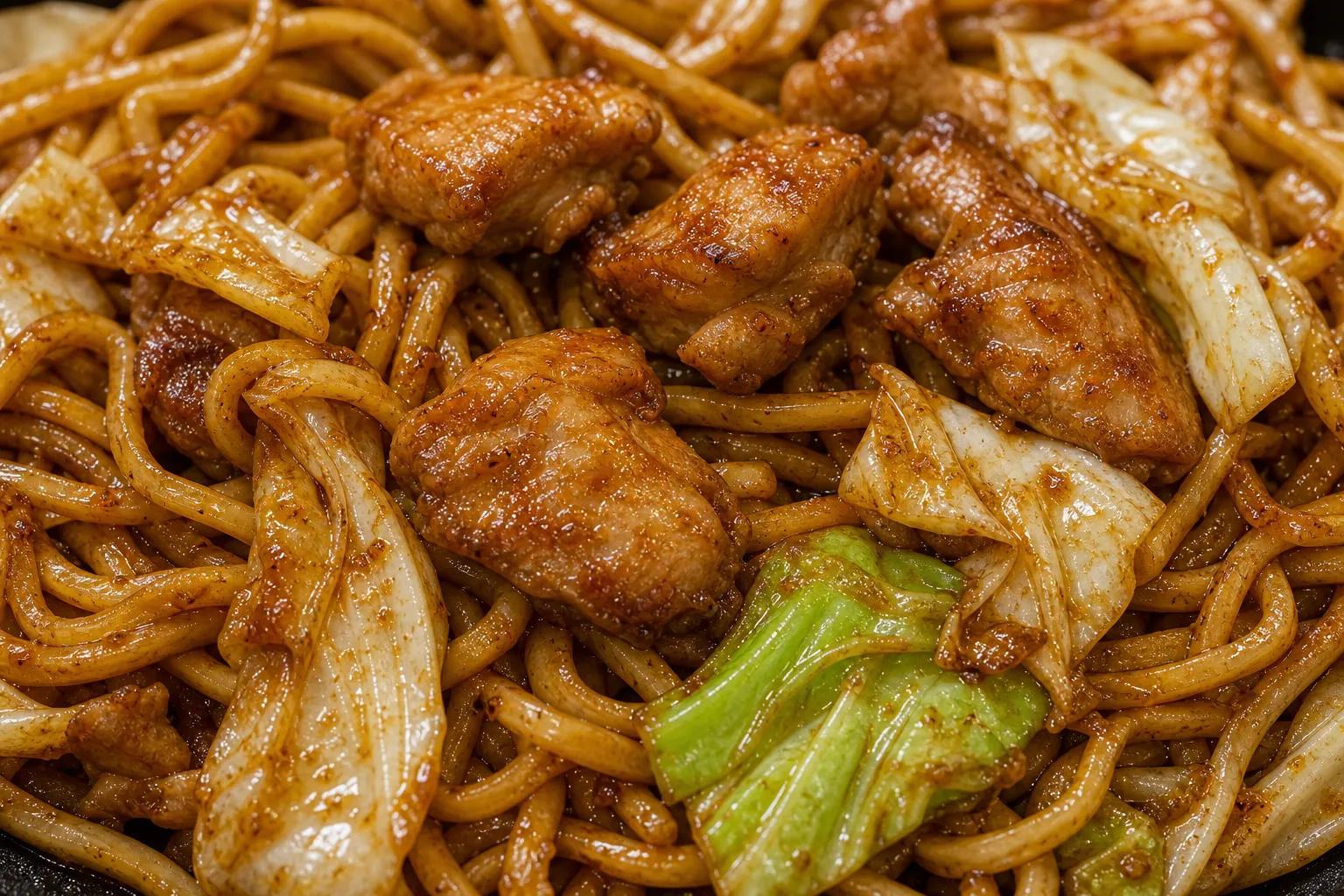
- The sauce is miso, not brown sauce. A thick, dark, sweet-savory miso dare built on garlic — deeper, richer and more umami than the tangy Worcestershire-style sauce on regular yakisoba. This is the whole identity of the dish.
- Garlic runs through everything. The dare is unmistakably garlicky, giving the noodles a savory punch that lingers.
- Chicken, not pork. Hiruzen uses chicken as the standard meat — a regional signature that sets it apart from the usual pork yakisoba.
- Sweet highland cabbage. Plentiful local cabbage adds sweetness and crunch that balances the deep miso.
- Every shop tastes a little different. Because the dare is a guarded family recipe, no two shops' versions are identical — sweeter here, more garlic there — so it rewards trying more than one.
How it's made
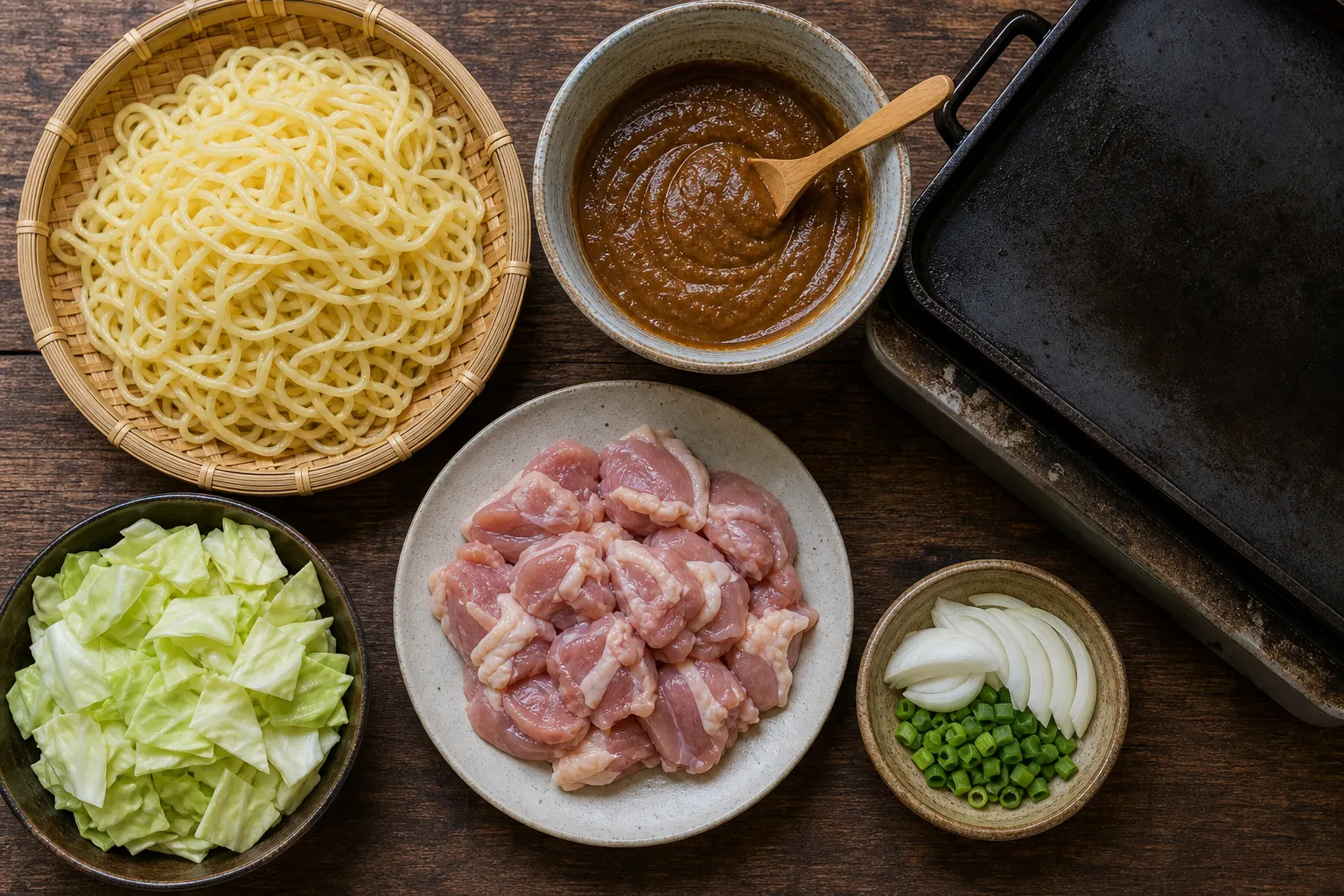
- Make the miso dare. Miso is blended with garlic, sugar or mirin, soy, and often fruit (like apple) into a thick, sweet-savory, garlicky paste — each family's ratio is its own secret.
- Sear the chicken. Bite-size chicken is cooked on a hot iron griddle (teppan) until done and lightly browned.
- Add cabbage. Chopped highland cabbage goes on and is stir-fried until it softens but keeps some sweetness and bite.
- Toss in the noodles. Steamed yakisoba noodles are added and stir-fried together with the chicken and cabbage.
- Glaze with the dare. The garlic-miso dare is poured over and everything is tossed on the hot griddle until the sauce coats the noodles and caramelizes slightly. Served hot off the teppan.
The craft is entirely in the dare — the balance of miso, garlic, sweetness and fruit — and in tossing it hot enough that the sauce clings and chars a touch without burning. Nail that, and the noodles do the rest.
Before you go — chase it up into the Hiruzen highlands
Your questions, answered honestly
"How is this different from normal yakisoba?" — The sauce. Ordinary yakisoba wears a tangy brown (Worcestershire-style) sauce; Hiruzen yakisoba wears a rich, dark, sweet-savory garlic-miso dare, and usually uses chicken instead of pork. It's deeper, more savory, and unmistakable once you've tried it.
"Is it spicy?" — Not really. It's savory, garlicky and a little sweet from the miso rather than hot. Some family recipes add a touch of chili, but it's flavor-forward, not fiery. If heat matters to you, ask.
"Why does each shop taste different?" — Because the miso dare is a family recipe, not a standardized sauce — every kitchen guards its own balance of miso, garlic and sweetness (some add fruit). That variation is part of the fun; try more than one shop if you can.
"Can I get it without chicken?" — Chicken is the regional standard, but some places offer variations. Ingredients and recipes vary shop to shop, so if you have dietary needs, check the specific ingredients before ordering rather than assuming.
What the staff will ask you
| You'll hear | Romaji | Meaning | Just say |
|---|---|---|---|
| 大盛りにしますか? | Ōmori ni shimasu ka? | "Make it a large portion?" | Futsū de (regular, please) |
| 目玉焼きは付けますか? | Medama-yaki wa tsukemasu ka? | "Add a fried egg on top?" | Onegai shimasu (yes, please) |
| 少々お待ちください | Shōshō o-machi kudasai | "Please wait a moment" | Hai (okay) |
To order, just say "Hiruzen yakisoba o kudasai" (蒜山焼きそばをください) — "Hiruzen yakisoba, please."
Where to eat it
- The Hiruzen highlands, northern Okayama — the dish's home turf. Restaurants, cafes and roadside eateries across the Hiruzen plateau serve it, each with its own family miso dare.
- Around Hiruzen Kogen (highland resort area) — the tourist-friendly highland zone with its rest areas, dairy attractions and eateries is the easiest place to find a plate, ideally with local jersey milk or soft-serve alongside.
- Michi-no-Eki and highland rest stops — roadside stations in the Hiruzen area are a reliable, casual place to try the local yakisoba if you're driving through.
Hiruzen is a highland resort region where many shops are seasonal or keep limited hours, and each guards its own dare recipe — check opening times and days before a special trip, especially in the off-season.
Soul Score
Local Roots4/5
First-Timer Friendly5/5
Adventure Level3/5
Comfort Level5/5
Travel Worthy4/5
These scores are one obsessed eater's gut feeling — not a verdict. A low number isn't a bad mark, just a different kind of adventure.
Know someone planning Japan?
← All Articles
Local Food · Hiruzen, Okayama
Still hungry?
Eat more from Okayama
Local FoodOkayama, Okayama
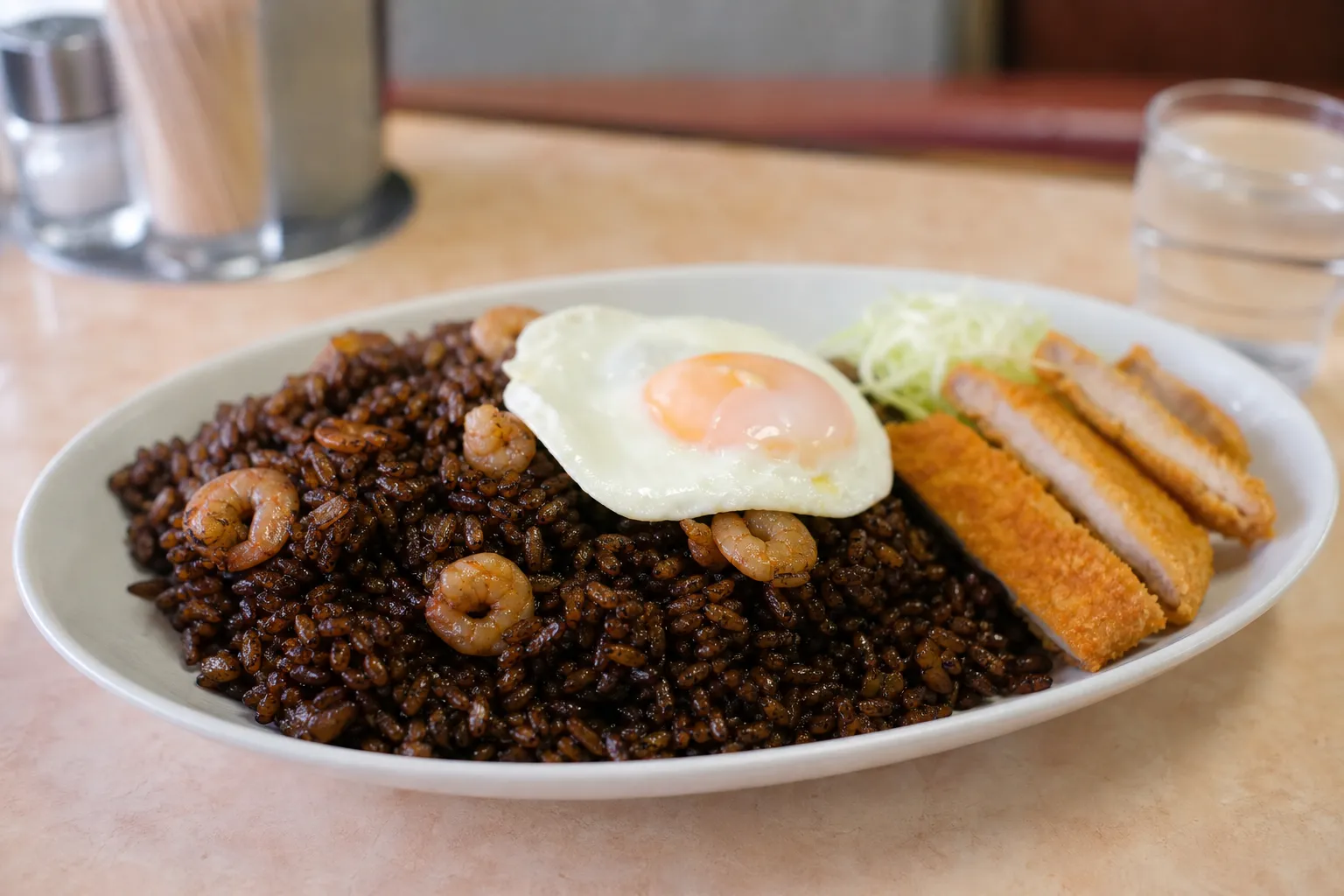
Okayama Ebimeshi (えびめし)
The rice is black. Not burnt-black — on-purpose black, glossy and rich, and I did not trust it until the first bite made me a believer.
August 2, 2026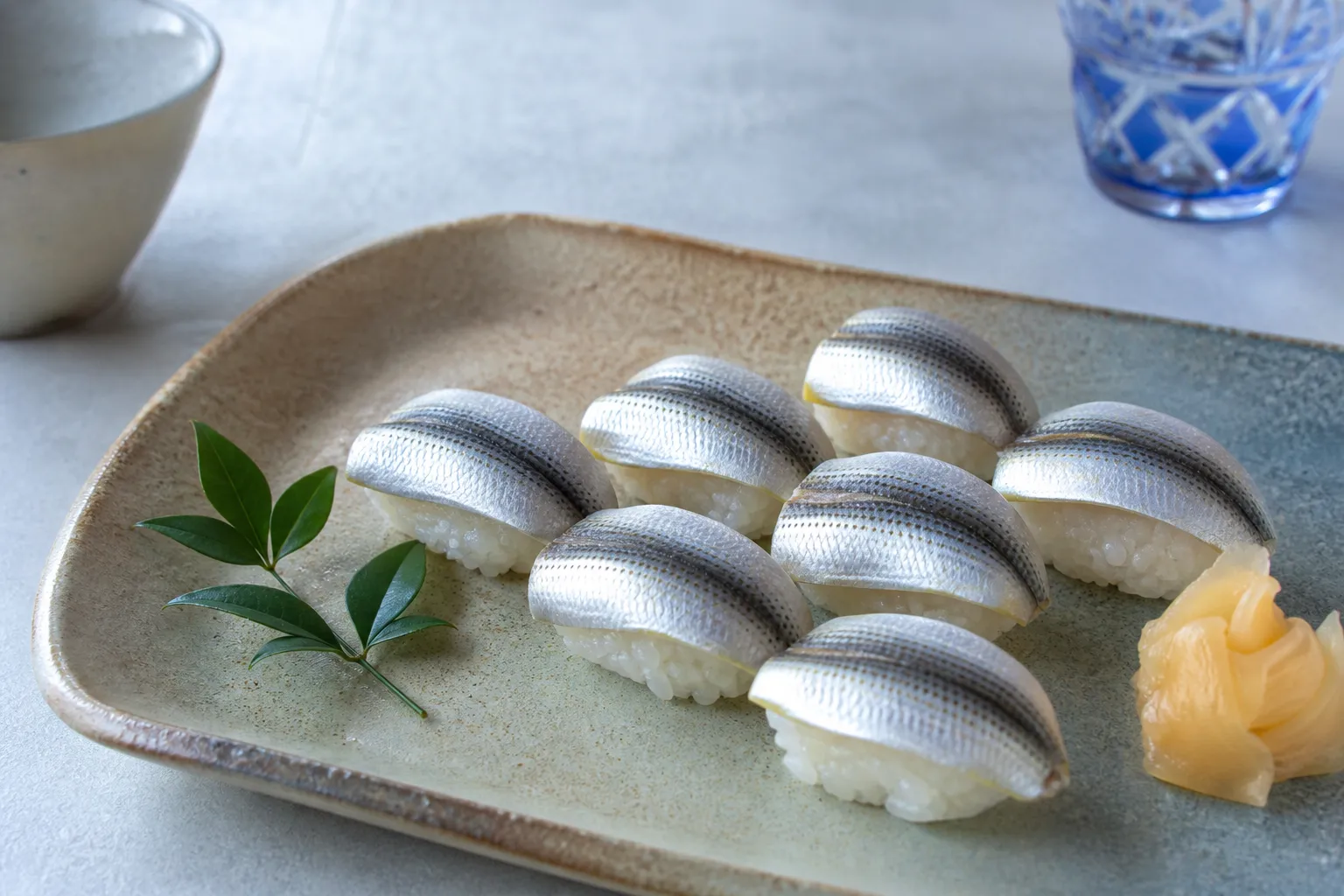
Local FoodOkayama
Mamakari-zushi (ままかり寿司)
Silvery little vinegar-cured fish draped over sushi rice — so good, the Okayama legend goes, that you'll run next door to borrow more rice. The name is a joke about greed, and honestly it undersells the fish.
July 12, 2026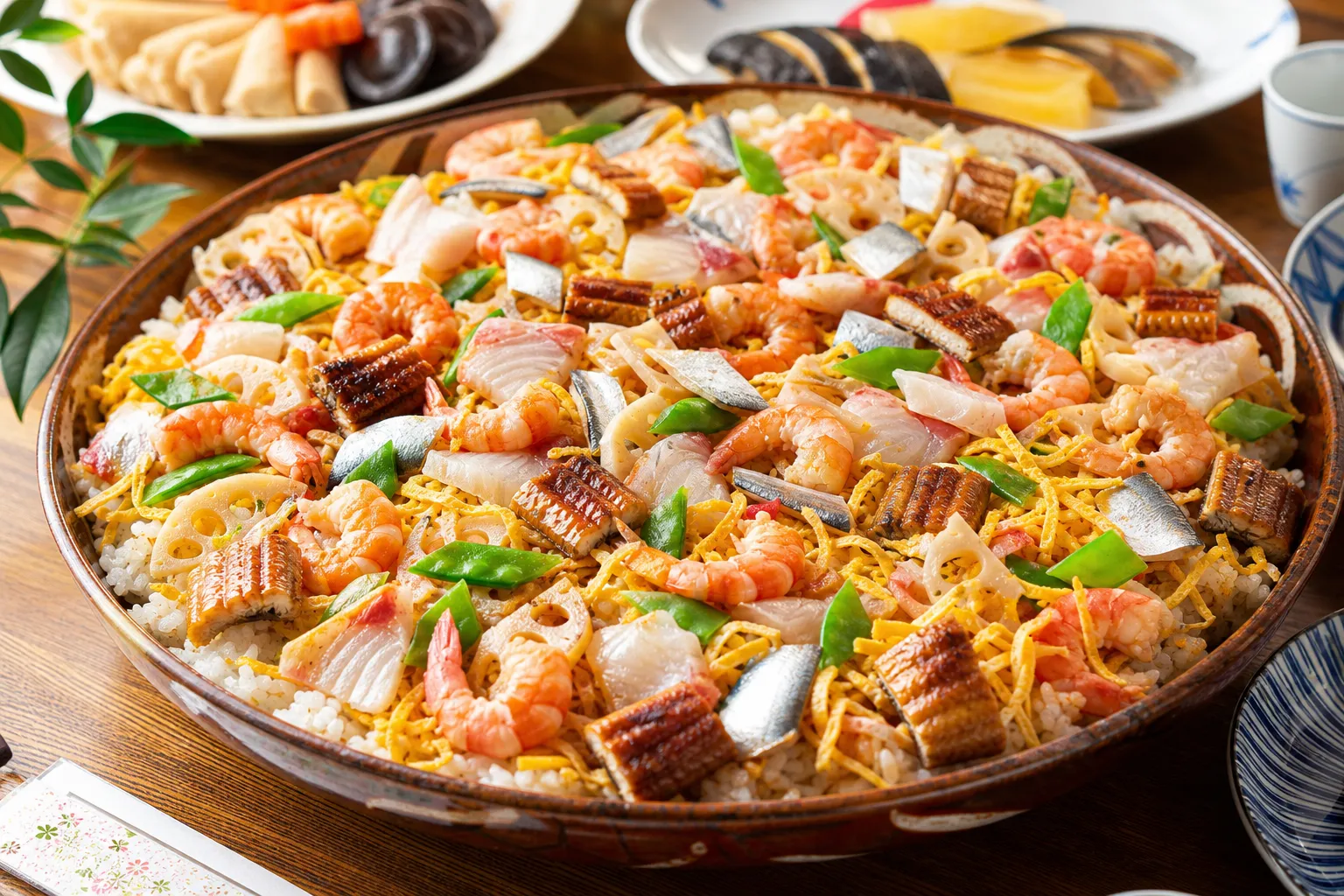
Local FoodOkayama
Bara-zushi (ばらずし)
One plate, eight or nine kinds of seafood, and not a single grain of rice left uncovered — Okayama basically dared its neighbors to out-decorate this and nobody has.
July 4, 2026