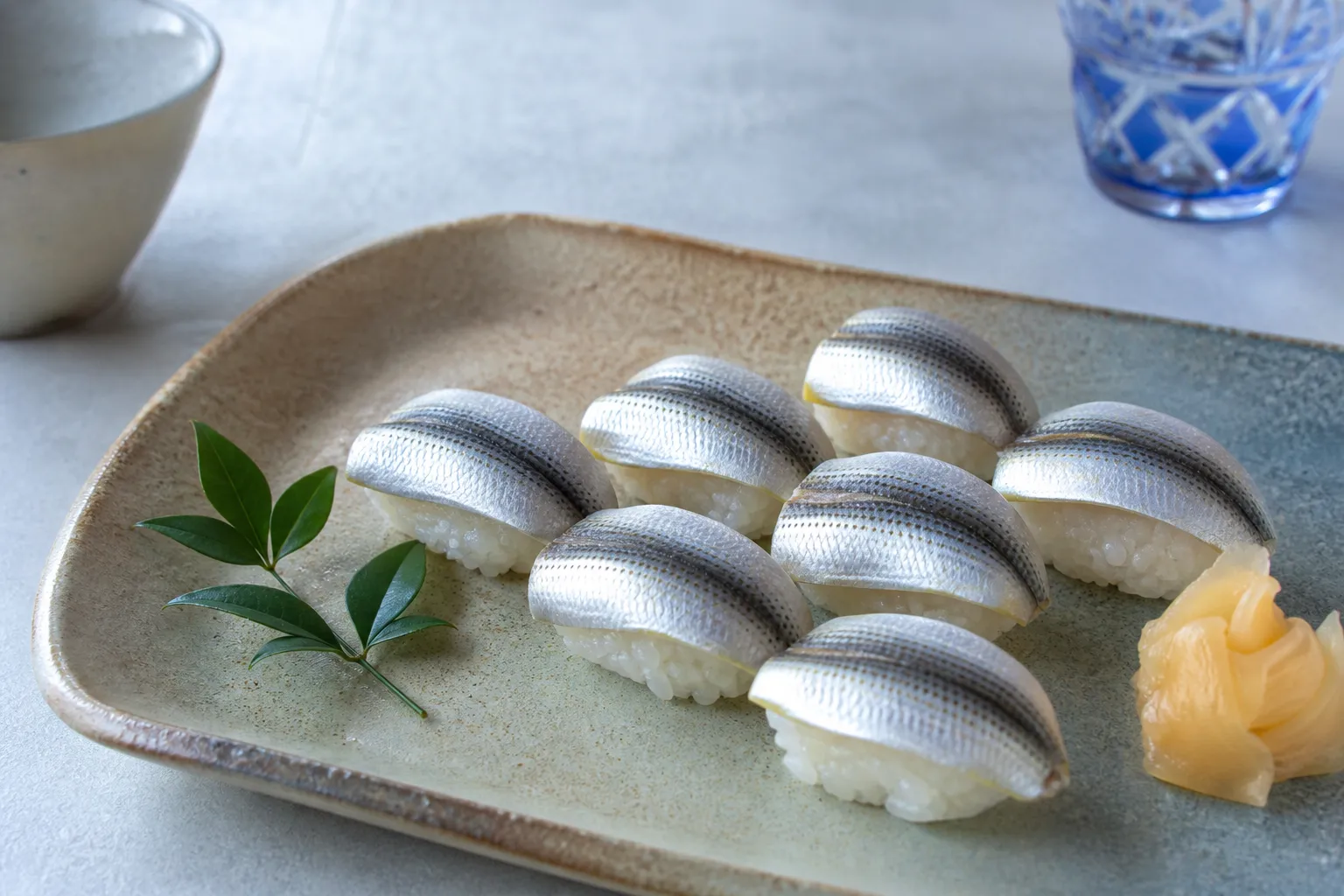
The name is a dare. Locals will tell you, half-grinning, that mamakari is so ridiculously good with rice that you'll tear through your own bowl and then go bang on the neighbor's door to borrow more — "mama" (rice) "kari" (borrow) — and after one bite I stopped thinking it was a cute exaggeration. That little silvery fish, cured just enough in vinegar to go tender and bright and gently sour, sitting on a warm pillow of vinegared rice... it hits this tangy-rich-oily sweet spot that makes you reach for the next piece before you've swallowed the first. I did not borrow rice from anyone. But I understood, deeply, the impulse.
Share this dish


Silvery little vinegar-cured fish draped over sushi rice — so good, the Okayama legend goes, that you'll run next door to borrow more rice. The name is a joke about greed, and honestly it undersells the fish.
🍜 Planning a food trip to Okayama?Add this dish to my Food Trip →
 Add this dish to my Food Trip →
Here's what it is: mamakari-zushi (ままかり寿司) is a small, silvery, vinegar-cured fish — mamakari, the sappa or gizzard shad — laid over vinegared sushi rice. It's a bite-size, tangy, oily-fish sushi that's a proud specialty of Okayama, on the Seto Inland Sea. It's not big fatty nigiri and it's not a grilled sardine — it's a modest, sharp, deeply local little thing whose whole personality is tang and richness and a name that jokes about your own greed.
The fish with the greedy name
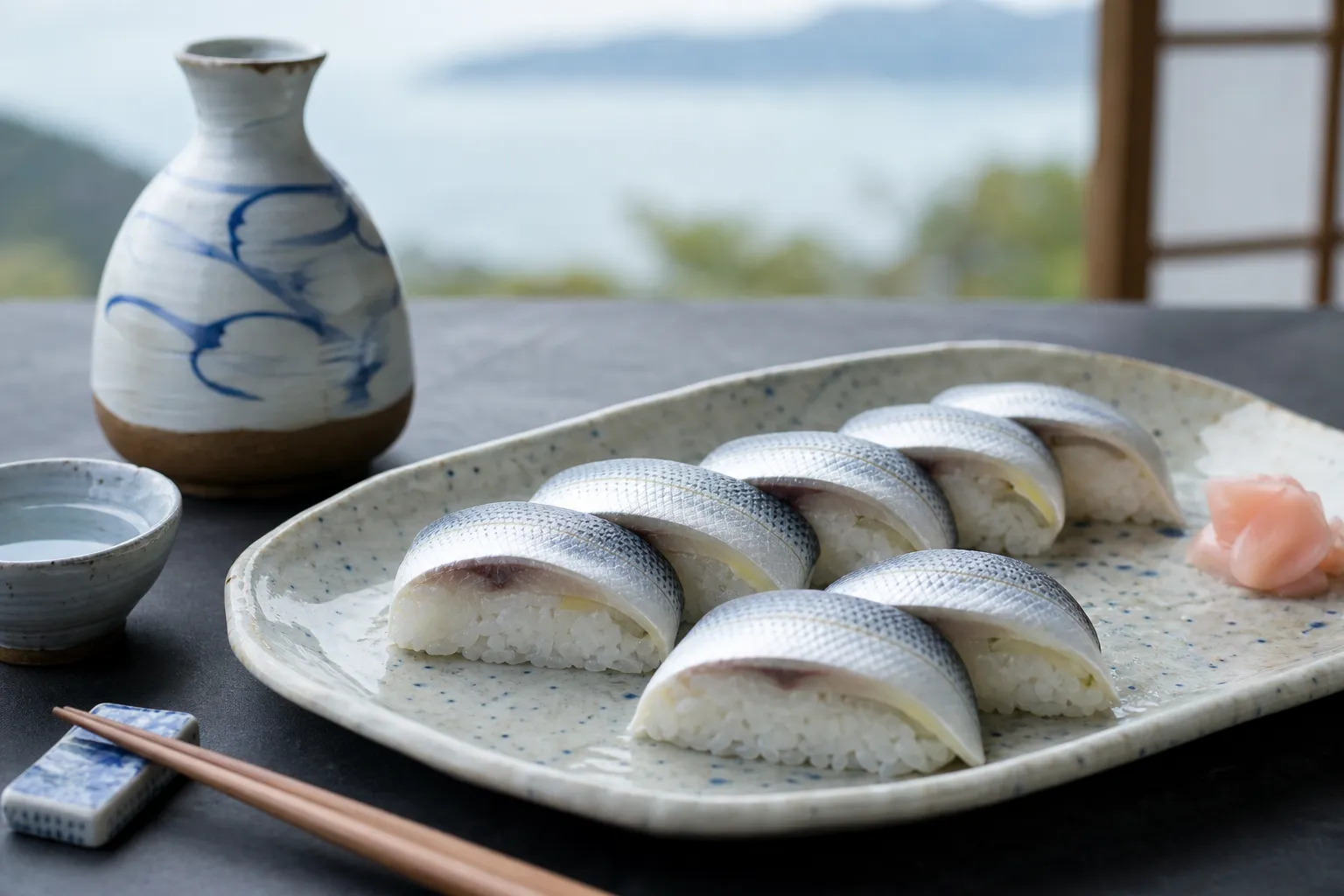
Mamakari swim in the Seto Inland Sea off Okayama, and they've been a local staple for generations — cheap, abundant, and full of flavor, the kind of humble fish that coastal communities turn into something wonderful out of long familiarity. Curing them in vinegar was practical (it preserved the catch and tamed the oily blue-fish edge) and delicious, and laying that cured fish over vinegared rice made it into a little celebration food that shows up at festivals, gatherings, and on New Year and special-occasion tables around Okayama.
And that name — I can't get enough of it. Mama is a regional word for cooked rice, kari means to borrow: "borrow-rice fish," because you'll eat all your rice and have to borrow the neighbor's. It's food that comes with its own built-in joke about how good it is, which is such a confident, charming way to name a dish. There's something very Okayama about it: unpretentious sea fish, cured with care, served with rice, and packaged in a bit of self-deprecating humor. It's soul food that laughs at itself and then dares you to prove the joke wrong.
What makes the eating experience different
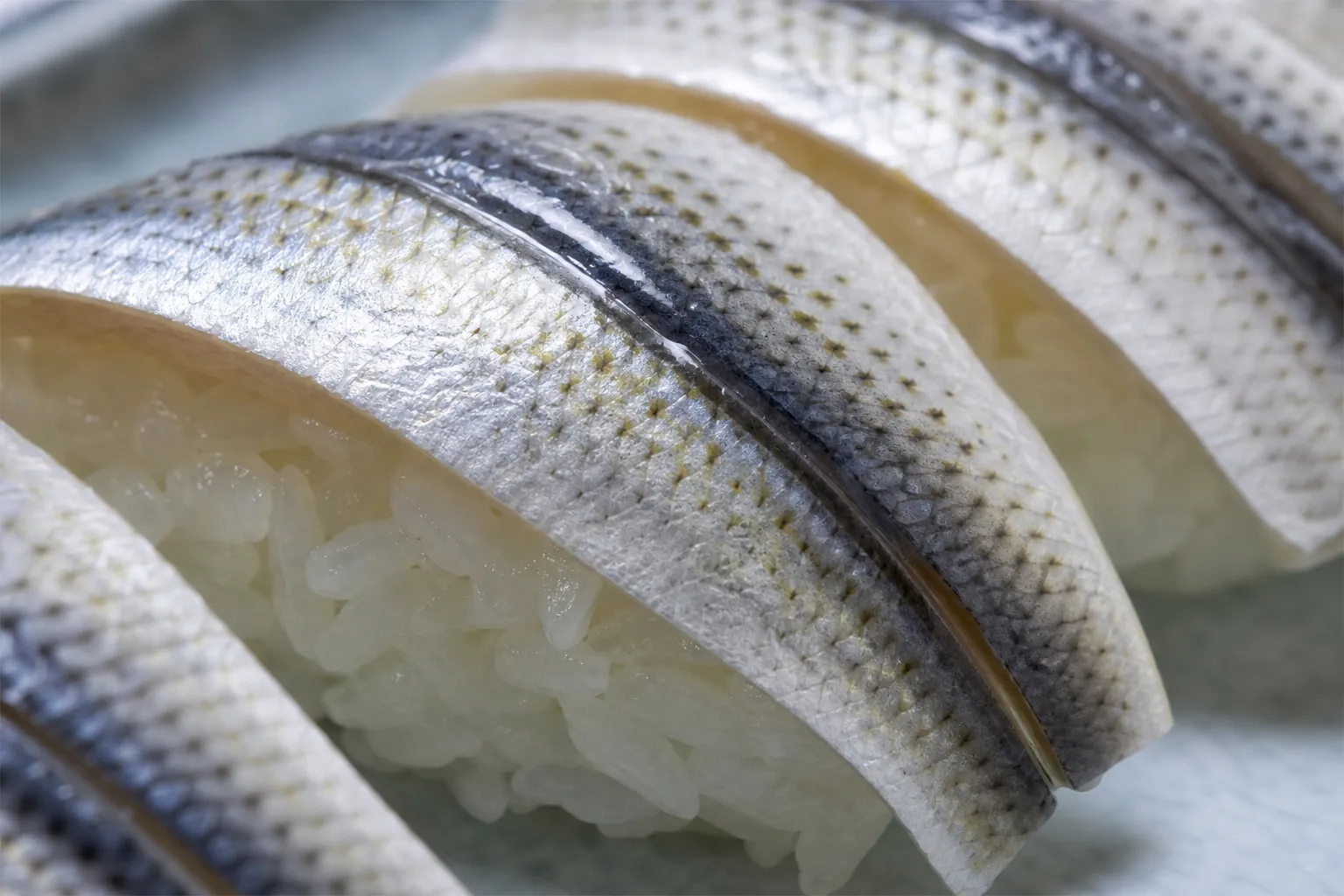
- The vinegar cure is everything — it turns the little fish tender and bright and gently sour, cutting the oily-fish richness into something clean and moreish
- It's a small, silvery blue fish with real flavor — richer and more characterful than a mild white-fish sushi, with a satisfying oily depth
- The double tang — cured fish and vinegared rice — gives it a sharp, refreshing bite that genuinely makes you want the next piece immediately
- It's bite-size and made for grazing, which is exactly why the "borrow more rice" legend exists
- It tastes of a specific sea — the Seto Inland Sea — so eating it in Okayama connects you straight to the local catch and its long, humble history
How it's made
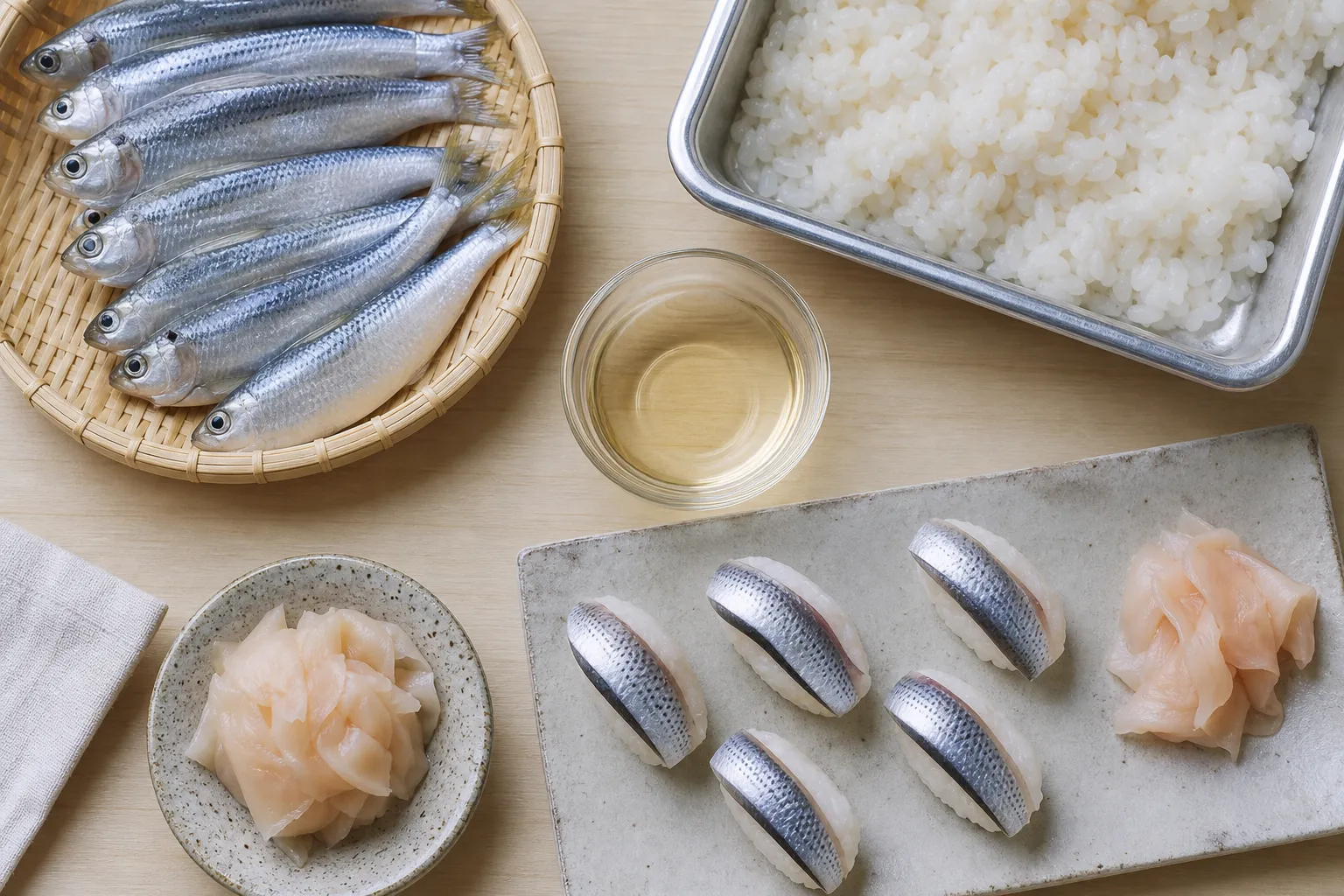
- Clean the fish. Fresh mamakari (sappa / gizzard shad) are scaled, gutted and filleted into small pieces.
- Salt them. The fillets are lightly salted for a time to firm the flesh and draw out moisture.
- Cure in vinegar. The salted fish are marinated in vinegar (often with a little sugar) until tender, bright and gently sour — the signature step.
- Prepare the sushi rice. Rice is cooked and seasoned with sushi vinegar into tangy vinegared rice.
- Assemble. The cured fish is laid over hand-pressed rice (nigiri-style) or arranged in a pressed/box style, then served — sometimes with a touch of ginger.
The craft is all in the cure: enough salt and vinegar to firm the fish and tame its oily edge, but not so much that it goes hard or harsh. Get that balance right, set it on tangy rice, and you've built the exact bite the name is bragging about.
Before you go — take the "borrow rice" dare
Your questions, answered honestly
"What is mamakari, really?" — It's a small silvery blue fish, sappa (gizzard shad), caught in the Seto Inland Sea. Think in the sardine/shad family: oily, flavorful, and much better than "small cheap fish" makes it sound — especially once it's vinegar-cured.
"Is it raw?" — Not exactly. It's vinegar-cured — salted and marinated in vinegar rather than served fully raw. That cure tenderizes it and tames the oily-fish edge, giving it that bright, tangy character. (It's still oily blue fish, so if you're sensitive to that or to seafood, keep it in mind.)
"How is it different from a sardine or from big nigiri?" — It's smaller and vinegar-cured, not grilled like a sardine and not a big fatty slab of nigiri. The whole point is the tangy cure plus tangy rice in a little two-tone bite — sharper and more refreshing than rich tuna-style sushi.
"Why the strange name?" — Because it's that good with rice. Mama (rice) + kari (borrow): you'll finish your rice and want to borrow the neighbor's. It's a local joke about how moreish it is — and, fair warning, it earns it.
What the staff will ask you
| You'll hear | Romaji | Meaning | Just say |
|---|---|---|---|
| 何貫にしますか? | Nan-kan ni shimasu ka? | "How many pieces?" | Yon-kan kudasai (four pieces, please) |
| わさびは入れますか? | Wasabi wa iremasu ka? | "Wasabi in it?" | Sabi-nuki de (without wasabi) / Onegaishimasu (yes please) |
| 地酒はいかがですか? | Jizake wa ikaga desu ka? | "How about a local sake?" | Osusume o kudasai (your recommendation, please) |
To order, just say "Mamakari-zushi o kudasai" (ままかり寿司をください) — "Mamakari sushi, please."
Where to eat it
- Okayama City sushi counters and izakaya — the specialty's home base; local sushi restaurants and izakaya that feature Seto Inland Sea seafood commonly serve mamakari-zushi, and it pairs famously with local sake.
- Okayama seafood markets and coastal towns — markets and eateries around Okayama's Seto Inland Sea coast serve the fresh local catch, both as sushi and as other mamakari preparations.
- Festivals, New Year and special-occasion tables — it's a celebratory local dish, so you'll find it at seasonal and festive settings around the prefecture as well as on everyday menus.
Mamakari-zushi depends on the local catch and appears at a range of Okayama sushi spots, izakaya and markets — specific shops, seasons and hours vary, so check what's available when you go.
Soul Score
Local Roots5/5
First-Timer Friendly3/5
Adventure Level4/5
Comfort Level4/5
Travel Worthy4/5
These scores are one obsessed eater's gut feeling — not a verdict. A low number isn't a bad mark, just a different kind of adventure.
Know someone planning Japan?
← All Articles
Local Food · Okayama
Still hungry?
Eat more from Okayama
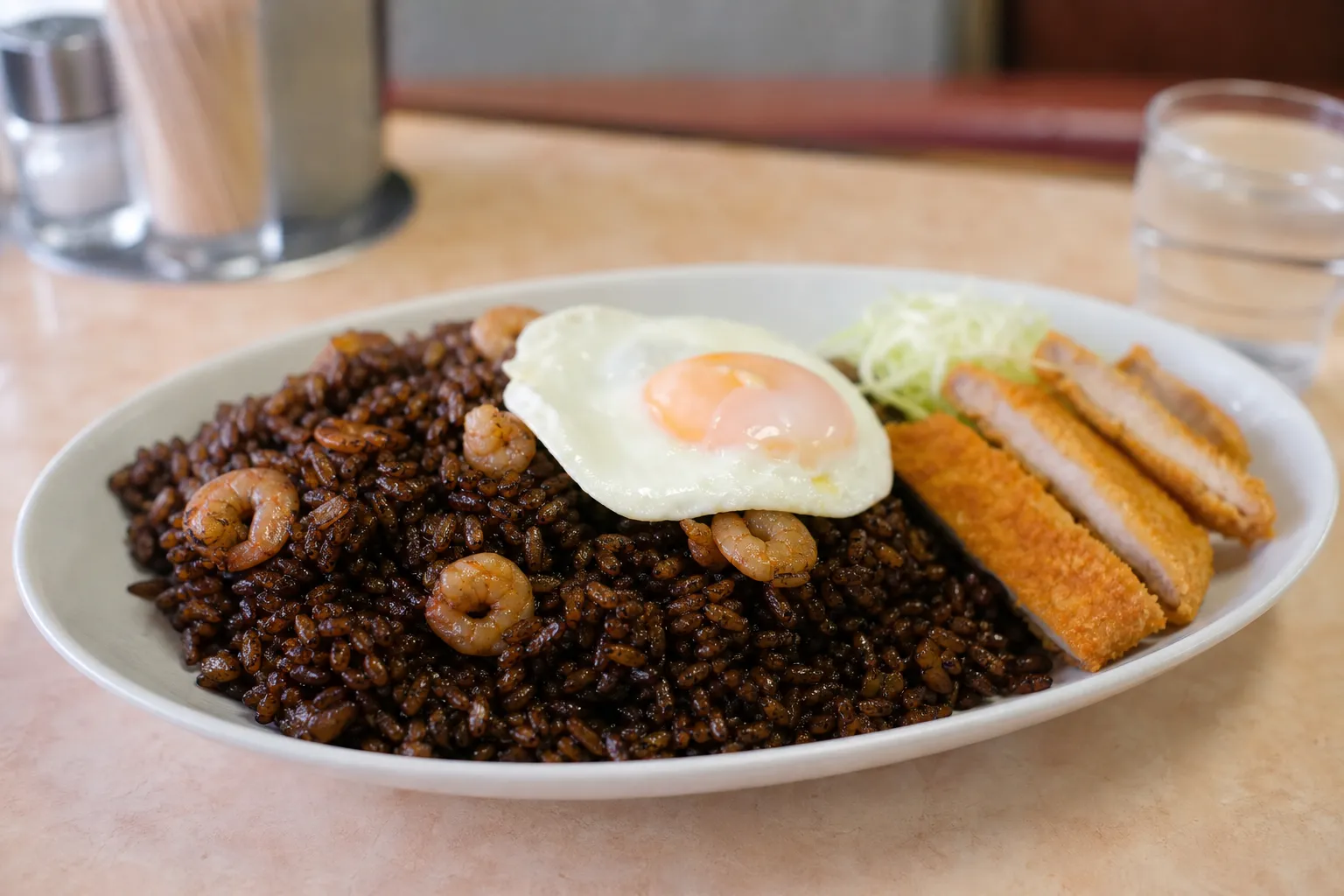
Local FoodOkayama, Okayama
Okayama Ebimeshi (えびめし)
The rice is black. Not burnt-black — on-purpose black, glossy and rich, and I did not trust it until the first bite made me a believer.
August 2, 2026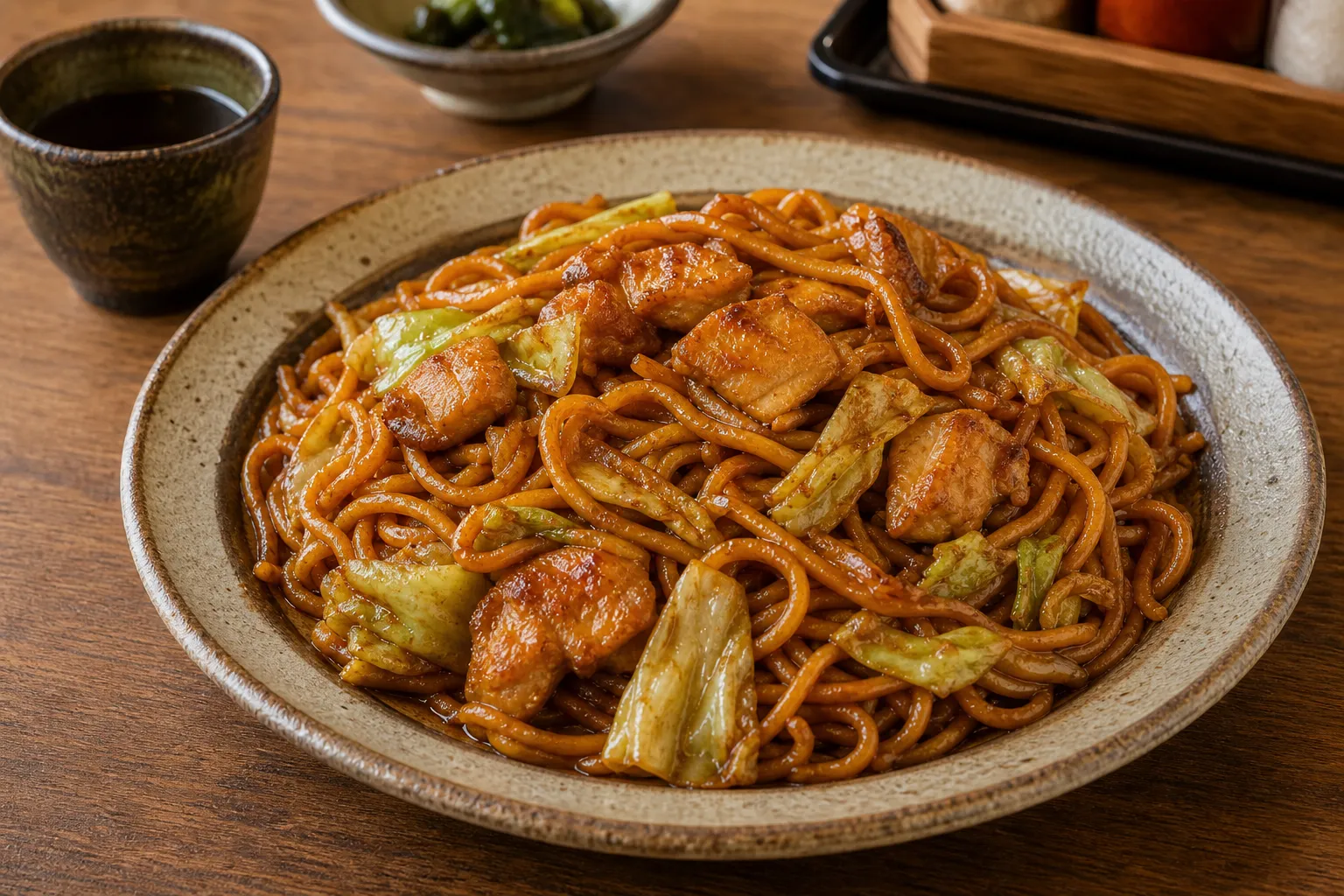
Local FoodHiruzen, Okayama
Hiruzen Yakisoba (蒜山焼きそば)
Forget the brown-sauce yakisoba you know. Up in Okayama's Hiruzen highlands they coat the noodles in a garlicky, sweet-savory miso dare with chicken and cabbage — and it ruins you for the normal kind.
July 12, 2026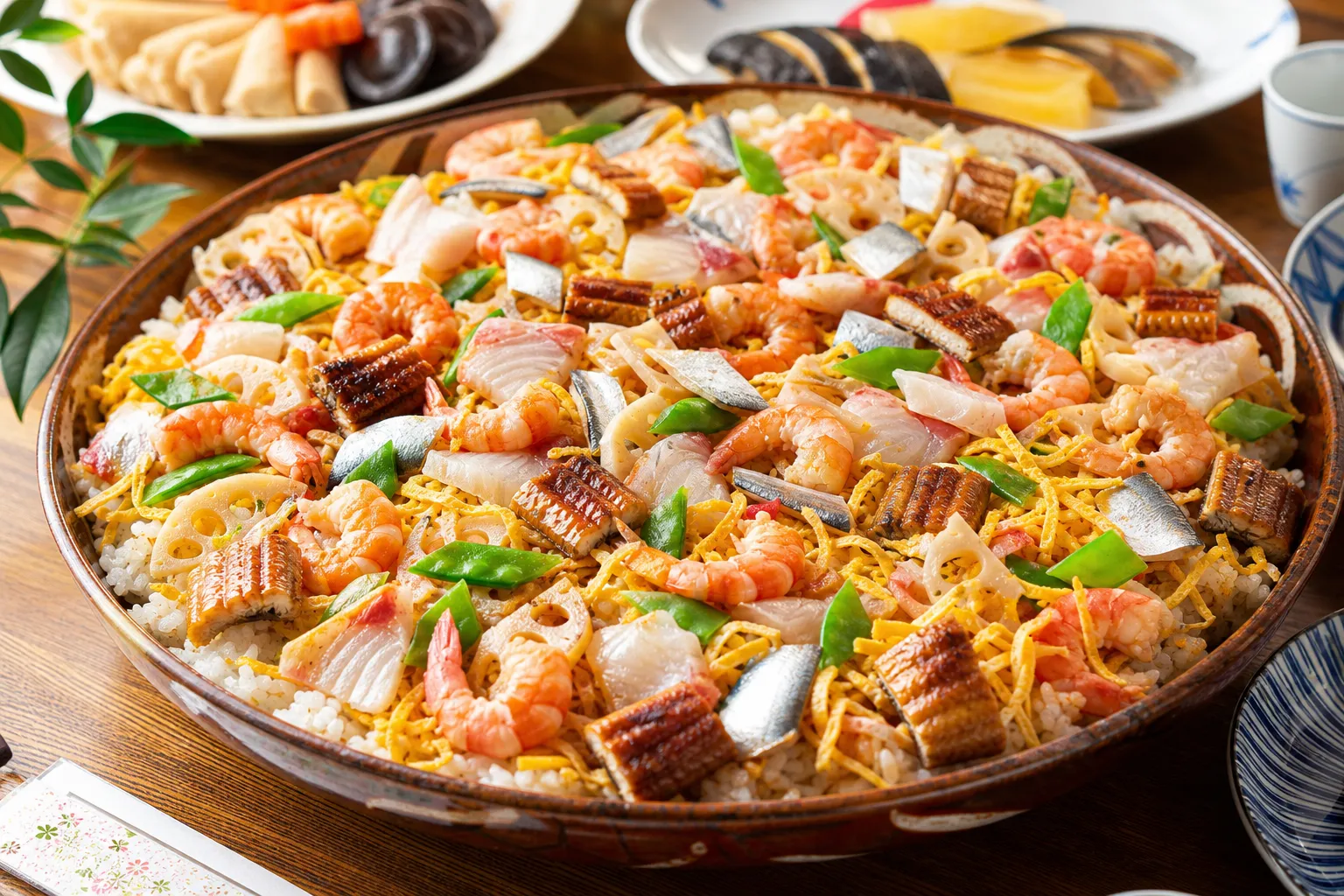
Local FoodOkayama
Bara-zushi (ばらずし)
One plate, eight or nine kinds of seafood, and not a single grain of rice left uncovered — Okayama basically dared its neighbors to out-decorate this and nobody has.
July 4, 2026