
I tipped the little glass jar and the pudding didn't slide out in one clean, dignified block the way I expected — it slumped, folded over itself, and pooled slowly around the caramel sauce like it had never intended to hold a shape at all. I've had plenty of firm, retro-style purin that turns out of its mold looking almost architectural. This wasn't that. This was something closer to drinking a custard, and I was not remotely prepared for how good that turned out to be.
Share this dish


The spoon went in and the pudding just gave way, slumping and flowing instead of holding its shape — this is not the firm pudding you think you know.
🍜 Planning a food trip to Japan?Add this dish to my Food Trip →
 Add this dish to my Food Trip →
Here's what it is: nama purin (生プリン, literally "raw" or "fresh" pudding) is an extremely soft, unbaked custard pudding, prized specifically for a silky, barely-set texture that slumps and flows rather than holding a firm shape. It's the deliberate opposite of the classic firm, hard-caramel purin found at old-school kissaten (coffee shops) — where that style is nostalgic and solid, nama purin is delicate, premium, and often given as a gift, usually sold in small glass jars with a pool of caramel sauce on top.
The soft rebellion against Japan's firm, retro pudding
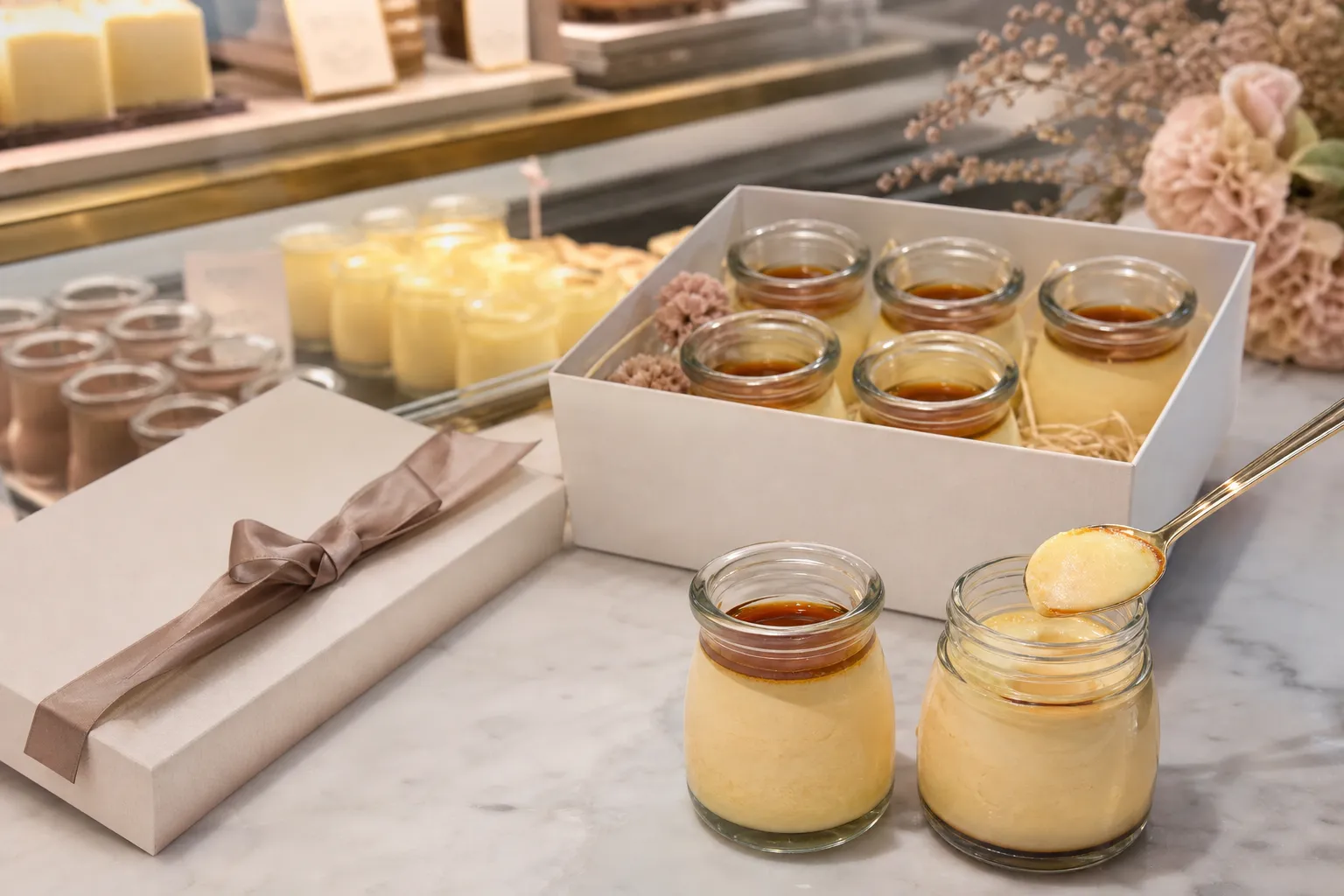
Japan has a long-running love for firm, Showa-era kissaten pudding — the kind turned out onto a plate in one solid cylinder, with a hard, dark caramel sauce pooling around it. Nama purin emerged as something of a quiet counter-movement to that: specialty dessert makers began selling an unbaked, ultra-smooth version using fresh cream, positioning it as a premium, gift-worthy treat rather than a nostalgic diner dessert. It caught on especially as a popular souvenir and gift item, the kind of thing you bring to someone's house rather than eat standing at a counter.
I find the contrast genuinely charming — two versions of the same basic idea, deliberately built to feel like opposites, both proudly Japanese, both entirely valid. Nama purin isn't trying to replace the classic firm pudding; it's just staking out the opposite end of the texture spectrum, and it does it with real confidence.
Why the texture is the whole point

- It's unbaked, using fresh cream and gentle setting rather than a firm oven-baked custard
- The texture is deliberately soft — a spoonful should slowly slump and flow rather than hold a clean edge
- It's usually served in the jar it was made in, glass so you can see the caramel layered underneath
- The caramel sauce is often less bitter and more glossy-sweet than the deep, almost burnt caramel of retro-style pudding
- It's meant to be eaten chilled, straight from the jar with a small spoon — not turned out onto a plate
I have eaten one slowly, on purpose, just to watch how long it took to actually leave the spoon. Longer than you'd think. Worth every extra second.
How it's made
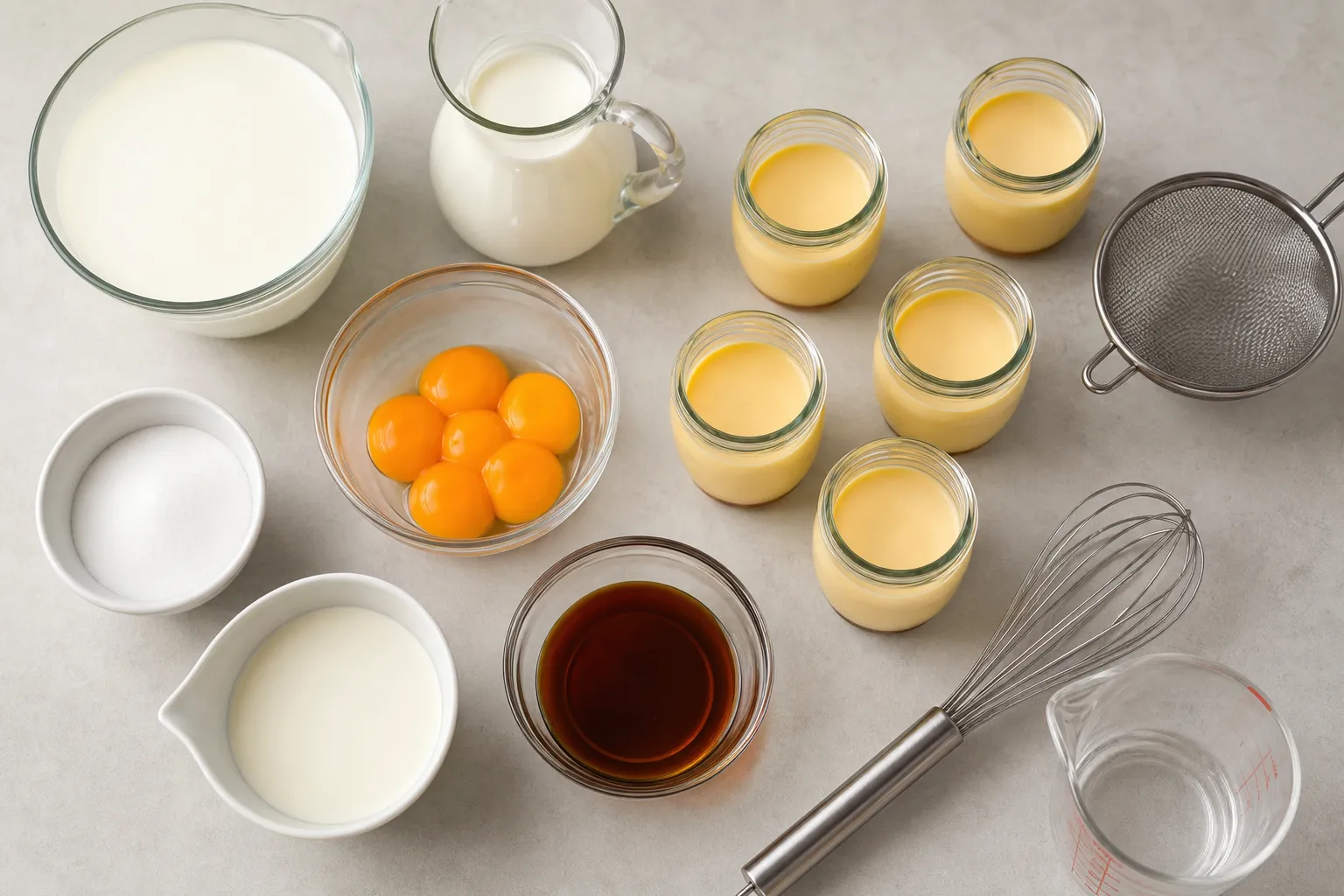
- Fresh cream, milk, and egg yolks are combined into a rich custard base, often with a higher cream ratio than standard pudding.
- A caramel sauce is prepared separately, generally glossier and less deeply burnt than the caramel used in firm-style pudding.
- The caramel is poured into small glass jars, followed by the custard base.
- The jars are gently set — chilled and lightly cooked or steamed just enough to hold together, without the fuller baking a firm pudding gets.
- The pudding is served straight from the jar, chilled, with a small spoon.
Before you go — the pudding that isn't trying to hold its shape
Your questions, answered honestly
"Is this the same as regular purin?" — Same basic idea (custard and caramel), very different execution. Regular kissaten-style purin is firm and turned out onto a plate; nama purin is deliberately soft and eaten straight from its jar.
"Is it very sweet?" — Moderately — the custard itself is more milky than sugary, with the sweetness concentrated in the caramel layer at the bottom.
"Does it make a good gift?" — Yes, this is one of its main uses in Japan — sold in individual jars, often in nicer packaging, specifically for bringing to someone's home.
"How long does it keep?" — It's a fresh, unbaked dessert, so it doesn't keep as long as a firm baked pudding — check the shop's guidance and plan to eat it within the recommended day or two.
What the staff will ask you
| You'll hear | Romaji | Meaning | Just say |
|---|---|---|---|
| いくつになさいますか? | Ikutsu ni nasaimasu ka? | "How many?" | Futatsu onegaishimasu (two, please) |
| 贈答用になさいますか? | Zōtō-yō ni nasaimasu ka? | "Is this for a gift?" | Iie, jibun-yō desu (no, it's for myself) |
| 保冷剤はお付けしますか? | Horeizai wa o-tsuke shimasu ka? | "Should I add an ice pack?" | Onegaishimasu (yes, please) |
To order, just say "Nama purin o kudasai" (生プリンをください) — "Nama purin, please."
Where to eat it
- Specialty dessert shops in Tokyo and other major cities — the primary source for the genuine soft, unbaked style.
- Department store food halls (depachika) — a reliable place to find gift-boxed nama purin.
- Airport and station gift shops — popular as a last-minute souvenir, though check cold-storage requirements before flying.
Nama purin needs refrigeration and has a shorter shelf life than baked pudding — check the shop's advice on keeping it cold, especially if traveling.
Soul Score
Local Roots3/5
First-Timer Friendly4/5
Adventure Level3/5
Comfort Level4/5
Travel Worthy4/5
These scores are one obsessed eater's gut feeling — not a verdict. A low number isn't a bad mark, just a different kind of adventure.
Know someone planning Japan?
← All Articles
Sweets & Snacks · Nationwide
Still hungry?
You might also like
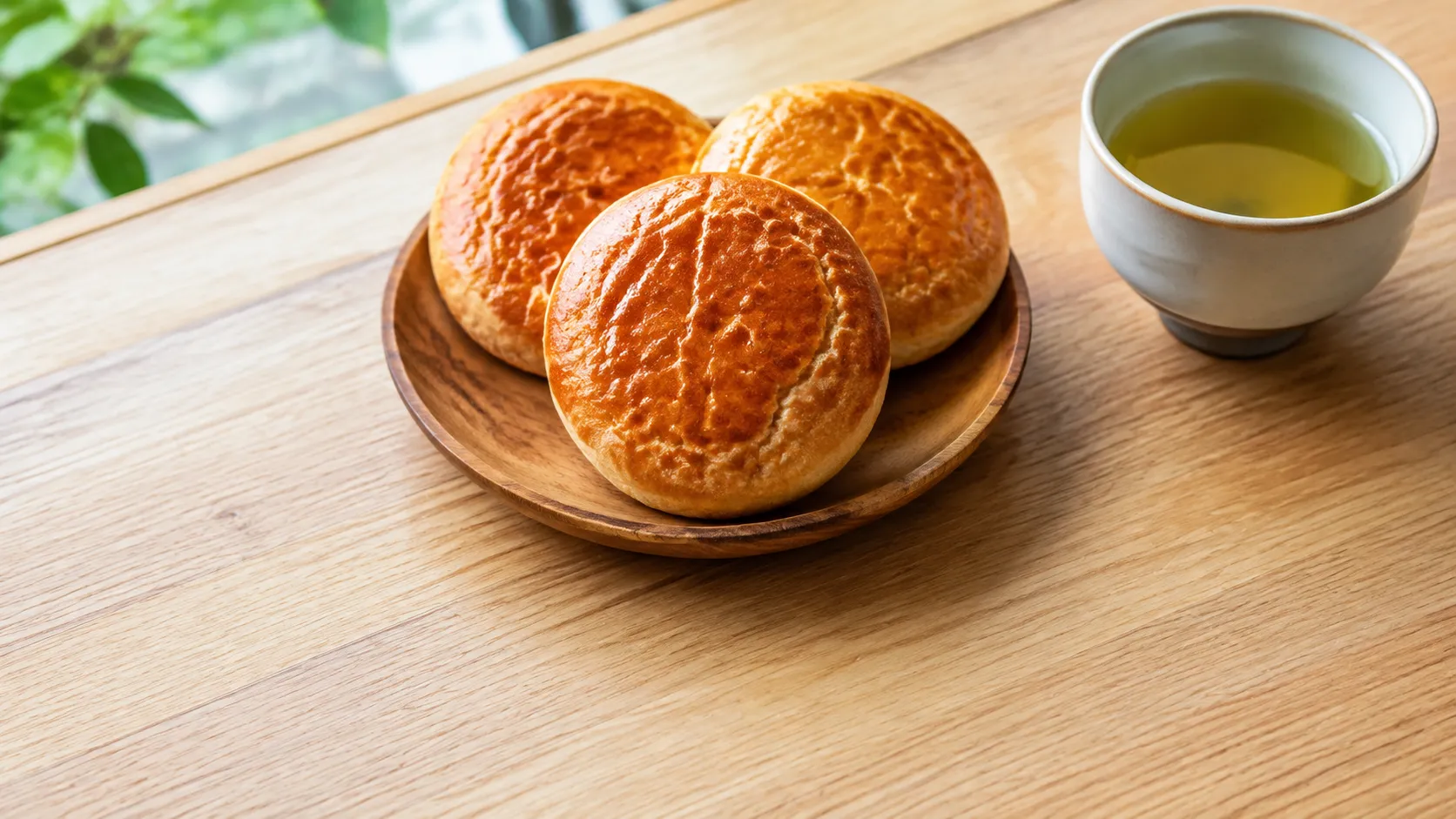
Sweets & SnacksSaga
Maruboro (丸ぼうろ)
It looks like the most boring biscuit in Japan. Then you bite it and it's soft, and honey-warm, and about four hundred years of Portuguese sailors arrive all at once.
September 2, 2026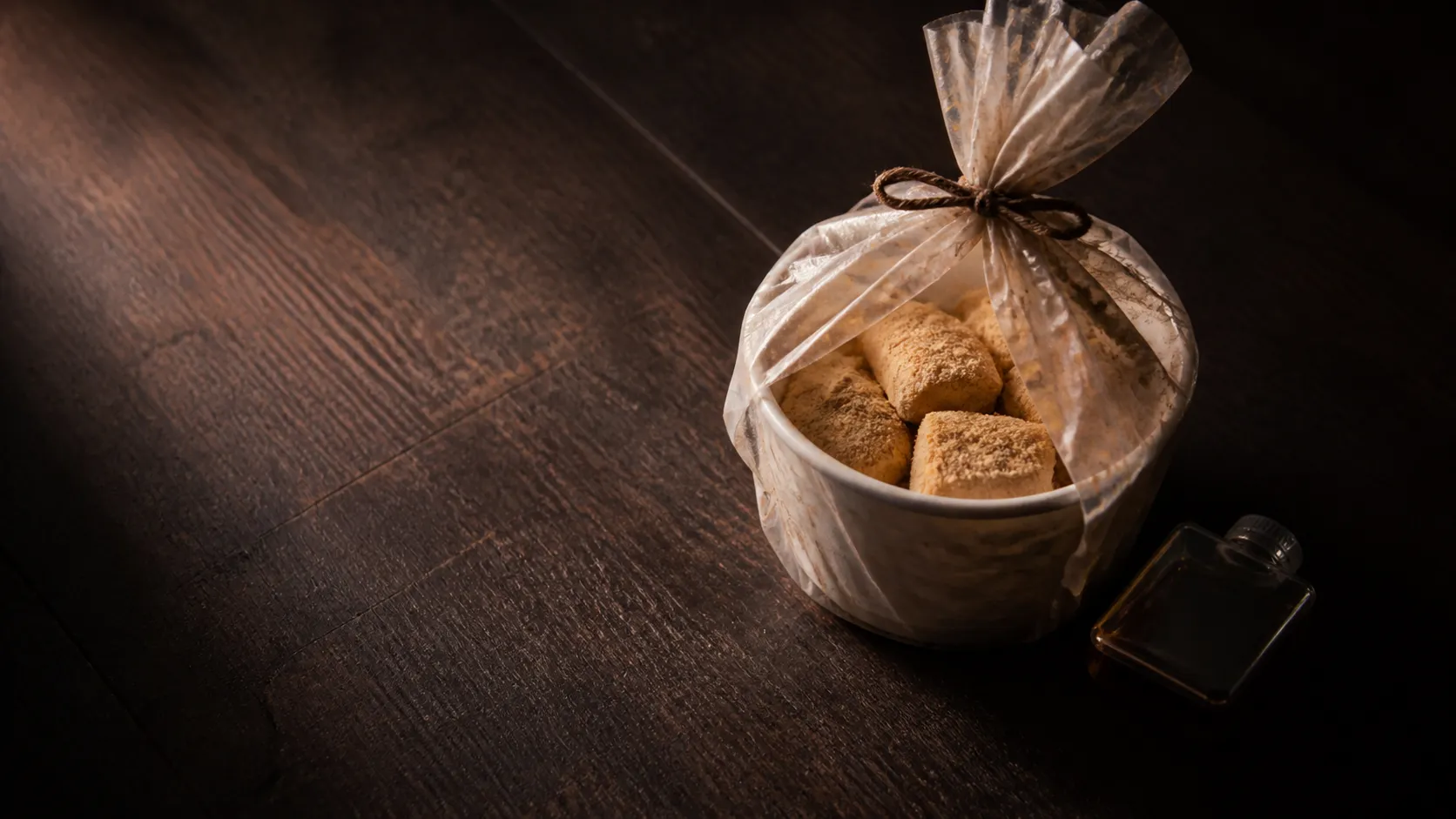
Sweets & SnacksYamanashi
Shingen Mochi (信玄餅)
There is a correct way to eat this and I did not know it, so I made a mess in front of several Yamanashi locals who were extremely kind about it and absolutely watching.
September 2, 2026
Sweets & SnacksTokyo
Anpan (あんパン)
A soft little bun, one bite in, and suddenly it's dense, dark, sweet red bean all the way through — the bread that talked 1870s Japan into eating Western-style bread at all.
July 27, 2026