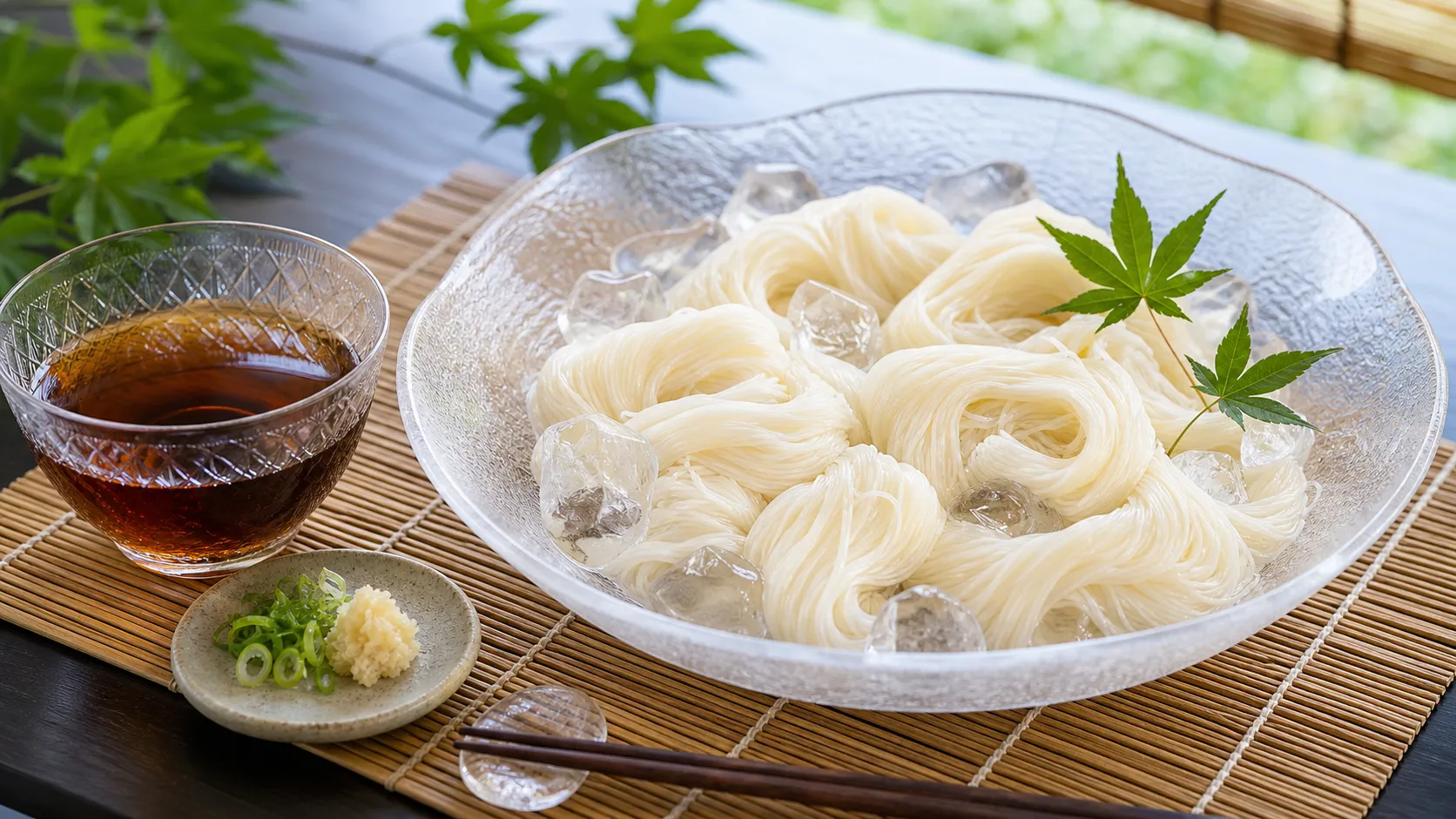
One slurp. That's all it took — I lifted a tangle of these impossibly fine white threads out of the ice water, dipped them in the cool tsuyu, and they were gone, sliding down before I'd even finished the intake of breath, leaving just a clean wheaty sweetness and the memory of something silky. I sat there on a hot Nara afternoon, condensation beading on the glass bowl, and thought: how is something this simple this good? Then I did it again. And again. I am not a dignified somen eater.
Share this dish


Threads of wheat so fine they barely register — then they hit the tsuyu and vanish, cool and silky, in a single slurp. Nara's Miwa is where somen was born, and it shows.
🍜 Planning a food trip to Nara?Add this dish to my Food Trip →
 Add this dish to my Food Trip →
Here's what it is: Miwa somen (三輪そうめん) is somen from the Miwa area of Nara — very fine, thin white wheat noodles, hand-stretched and dried, traditionally served chilled over ice with a dipping tsuyu in summer (or hot in a light broth as nyumen in the cold months). What makes Miwa special isn't a topping or a sauce — it's the pedigree: Miwa is regarded as the birthplace of somen in Japan. These are threads, not ropes — nothing like thick, chewy udon, nothing like ramen or "cold ramen." Just wheat, salt, water, and centuries of craft, pulled thinner than seems reasonable.
Where somen began, at the foot of a sacred mountain
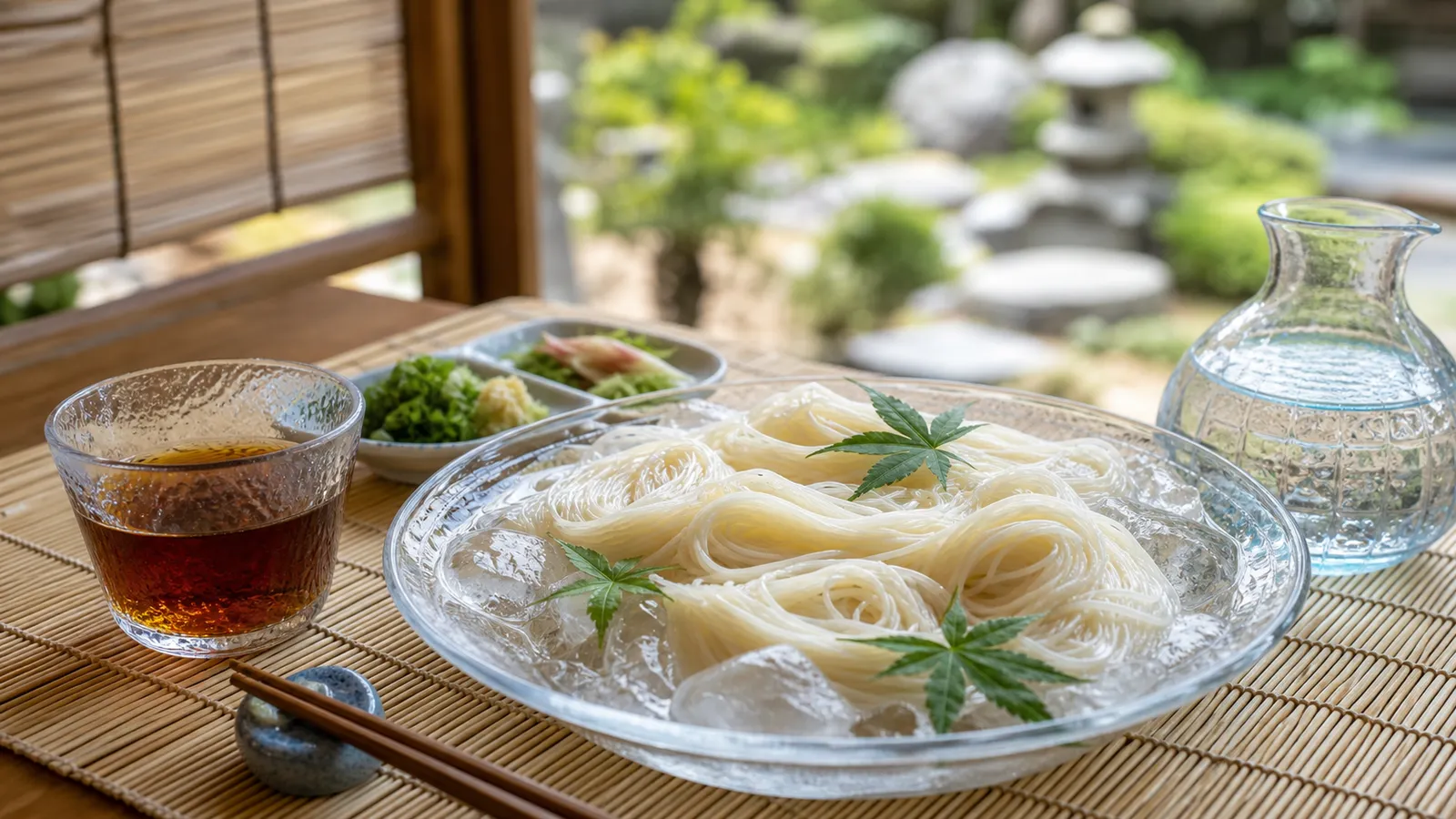
Miwa sits at the foot of Mt. Miwa, home to Ōmiwa Shrine, one of Japan's oldest Shinto shrines — the mountain itself is the deity. The tradition holds that somen was first made here well over a thousand years ago, when wheat grown in the area was stretched into fine noodles, and that the craft spread from Miwa across the country to the other great somen regions. Standing in that landscape, eating the noodle in the place it was supposedly born, gives even a cheap bowl a quiet weight.
I find that genuinely moving — that something as humble and everyday as somen has a birthplace, and that you can go stand in it. The dry, cold winter winds off the Nara basin are part of the recipe: somen is traditionally hand-stretched and dried in the coldest months, the low humidity letting the noodles firm up fine and strong. Miwa somen is graded by fineness, and the finest, longest-aged strands (aged noodles are called hinemono and prized for their firmer bite) are treated almost like fine wine. It's the opposite of flashy. It's a noodle that asks you to slow down and notice how little it takes to be perfect.
What makes the eating experience different
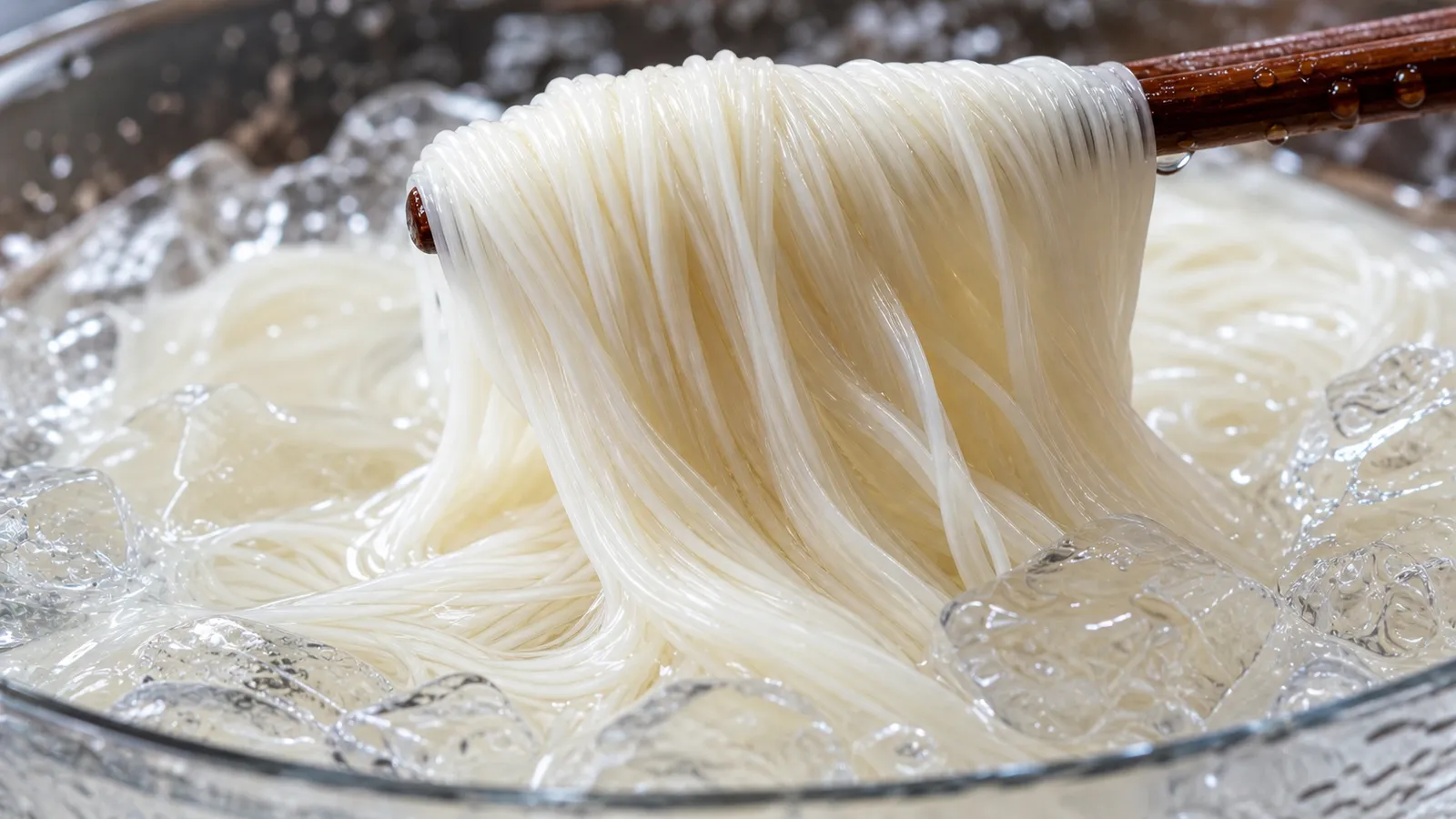
- The strands are astonishingly fine. Miwa somen is stretched thin — noodles like white silk thread, far finer than udon, so they cook in barely a minute and slip down in a single slurp.
- Firm, clean bite despite the fineness. Good Miwa somen, especially aged hinemono, has a surprising snap and firmness rather than going soft and mushy.
- Served cold over ice. In summer it comes chilled in ice water in a glass bowl — cooling, refreshing, the ultimate hot-day food.
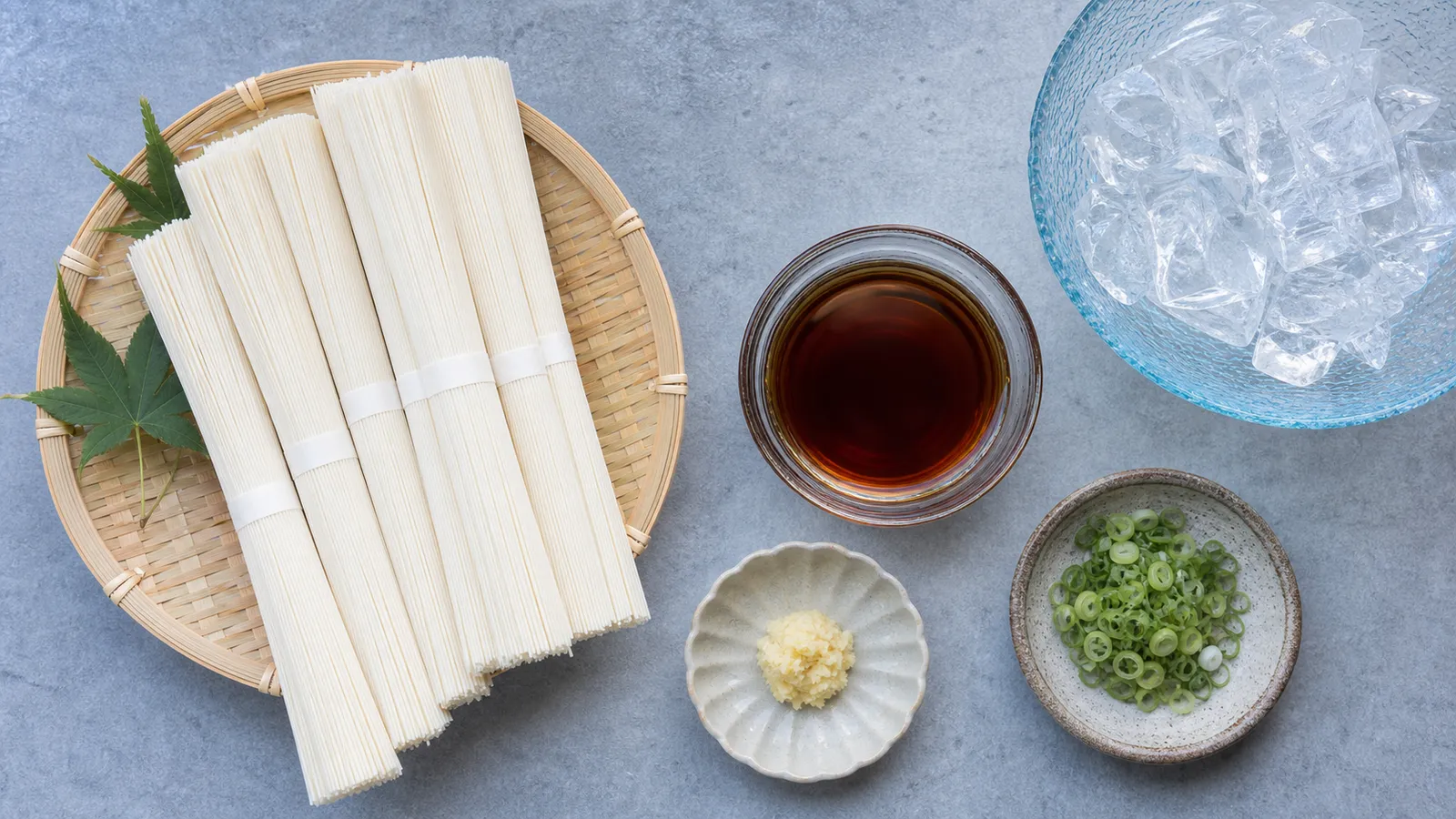
- The tsuyu does the flavoring. A cold dashi-soy dipping sauce, often with grated ginger, myoga or spring onion, provides all the savory contrast the delicate noodle needs.
- It has a winter form too. As nyumen, the same noodles are served hot in a light, clear broth — proof this is a year-round noodle, not just a summer novelty.
How it's made
- Make a salted wheat dough. Wheat flour, salt and water are kneaded into a firm dough — the salt is key to the noodle's elasticity.
- Oil, coil and rest. The dough is cut into ropes, coated with a little oil, coiled, and rested repeatedly, letting the gluten relax so it can be stretched without tearing.
- Stretch, again and again. The ropes are progressively pulled thinner over many stages, then stretched between two rods and drawn out into long, hair-fine strands — this hand-stretching, done in cold weather, is the heart of the craft.
- Dry in the cold air. The stretched noodles are hung and air-dried in the dry Nara winter, then cut to length and bundled.
- Serve. Boiled briefly (a minute or so), shocked in cold water, and served over ice with tsuyu — or gently in hot broth as nyumen.
The whole art is in the stretch-and-rest rhythm and the cold, dry weather — you can't rush it. Real Miwa somen is a winter-made noodle, aged and then eaten across the year.
Before you go — slurp it cold in Nara, no apologies
Your questions, answered honestly
"How is this different from udon or ramen?" — Completely. Udon is thick, soft and chewy; ramen is a different noodle in a rich hot soup ("cold ramen" is another thing entirely). Somen is ultra-fine wheat thread, usually served cold with a dipping tsuyu. Think delicate and clean, not hearty and slurpy-hot.
"Is it only a summer food?" — Cold somen is the iconic summer version, yes — but the same noodles are served hot as nyumen in a light broth in winter, so you can enjoy Miwa somen year-round. Ask for nyumen if it's cold out.
"How do I actually eat the cold version?" — Pick up a small tangle of noodles, dip it into the cold tsuyu (don't drown it), and slurp. Add the ginger, myoga or spring onion to the tsuyu for lift. Slurping is correct and encouraged — it cools the noodle and is not rude here.
"Is 'aged' somen really better?" — Many locals prize aged noodles (hinemono) for a firmer, cleaner bite. It's a matter of taste, but if a shop offers aged Miwa somen, it's worth trying to see what the fuss is about. Recipes and grades vary by maker.
What the staff will ask you
| You'll hear | Romaji | Meaning | Just say |
|---|---|---|---|
| 冷たいのと温かいの、どちらにしますか? | Tsumetai no to atatakai no, dochira ni shimasu ka? | "Cold, or hot (nyumen)?" | Tsumetai de (cold, please) |
| 薬味はお付けしますか? | Yakumi wa o-tsuke shimasu ka? | "Add the condiments (ginger, onion)?" | Onegai shimasu (yes, please) |
| おつゆはこちらです | O-tsuyu wa kochira desu | "Here's your dipping sauce" | Arigatō (thank you) |
To order, just say "Miwa somen o kudasai" (三輪そうめんをください) — "Miwa somen, please."
Where to eat it
- The Miwa area around Sakurai, Nara — the noodle's birthplace, at the foot of Mt. Miwa. Somen shops and restaurants cluster here, and it's the most meaningful place to eat it.
- Near Ōmiwa Shrine — the approach and streets around this ancient shrine have long-standing somen restaurants where you can pair the noodle with a visit to the mountain that gave it its name.
- Across Nara Prefecture and beyond — Miwa somen is sold dried as a prized souvenir throughout Nara and nationwide, so you can also buy bundles to cook at home; look for the Miwa name and grade on the box.
Miwa somen shops near Ōmiwa Shrine keep their own hours and some emphasize the cold summer version, so check opening times and seasonal offerings before a special trip.
Soul Score
Local Roots5/5
First-Timer Friendly5/5
Adventure Level3/5
Comfort Level5/5
Travel Worthy4/5
These scores are one obsessed eater's gut feeling — not a verdict. A low number isn't a bad mark, just a different kind of adventure.
Know someone planning Japan?
← All Articles
Local Food · Miwa, Nara
Still hungry?
Eat more from Nara
Local FoodAsuka, Nara
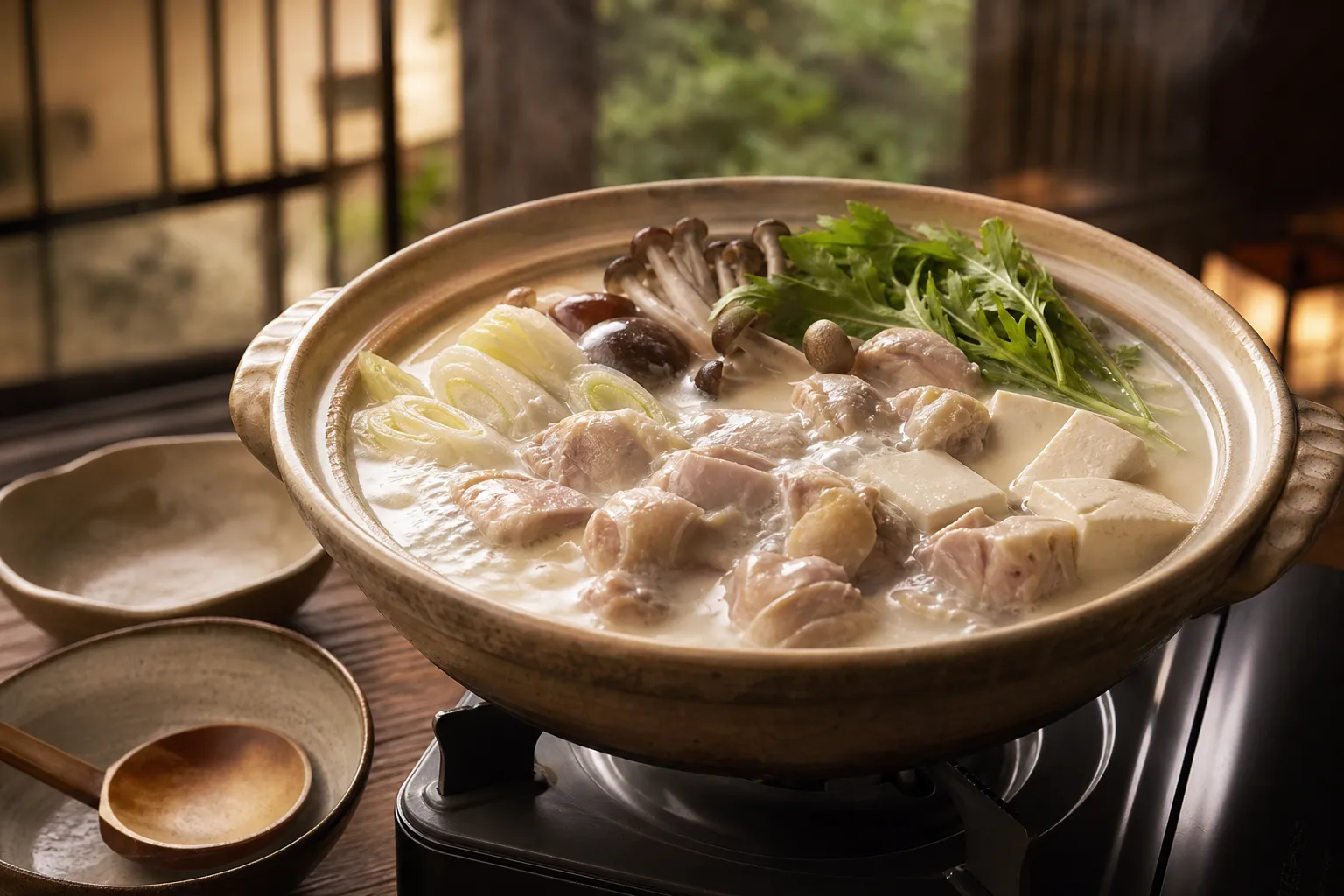
Asuka-nabe (飛鳥鍋)
A chicken hot pot simmered in milk-enriched dashi until the broth turns creamy and white — a mild, warming nabe from Nara's ancient Asuka region that tastes like a 1,300-year-old dairy experiment finally paying off.
July 12, 2026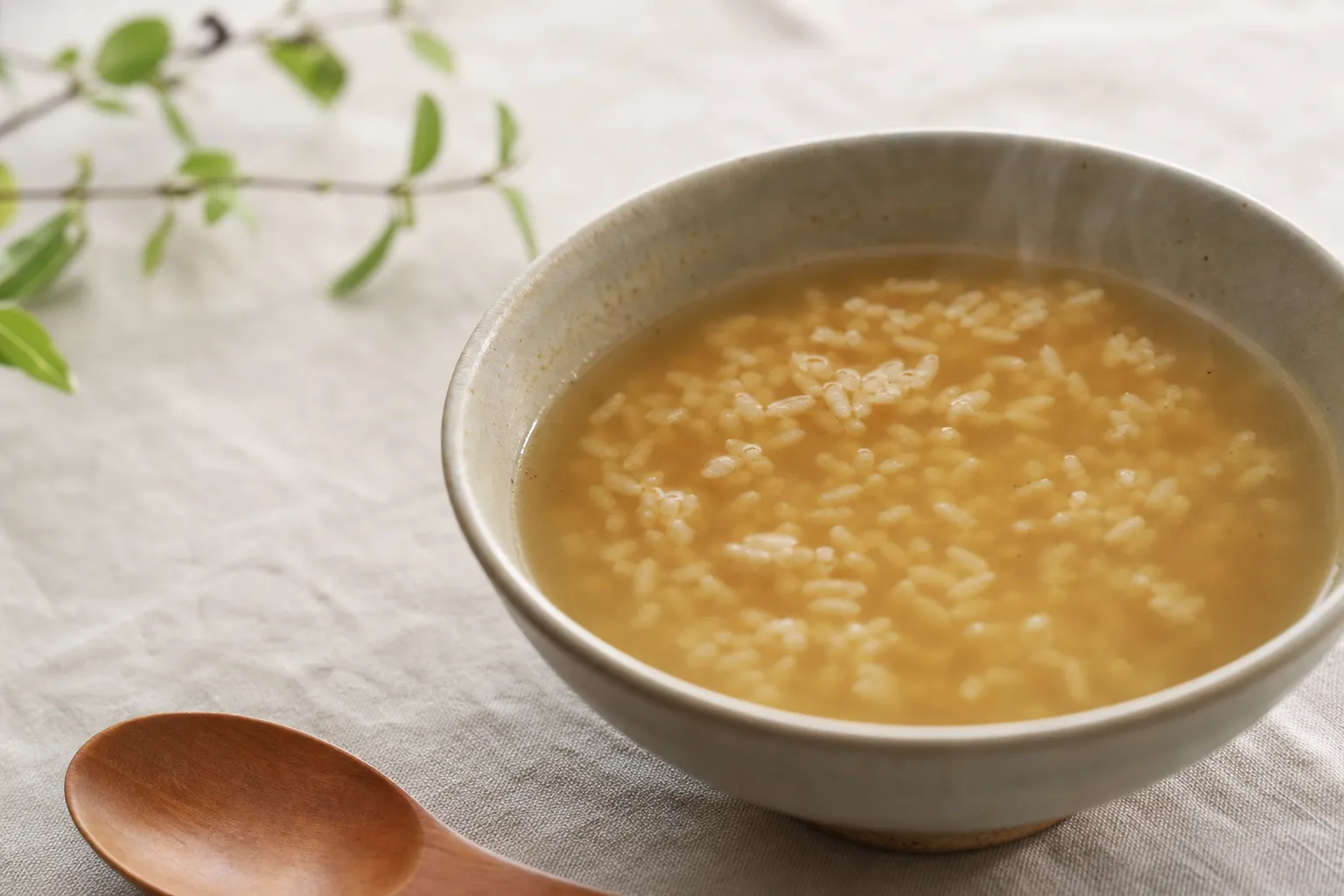
Local FoodNara
Chagayu (茶がゆ)
A thin, tea-colored rice porridge so gentle it almost isn't there — Nara has started its mornings with this whisper of a breakfast for over a thousand years.
July 5, 2026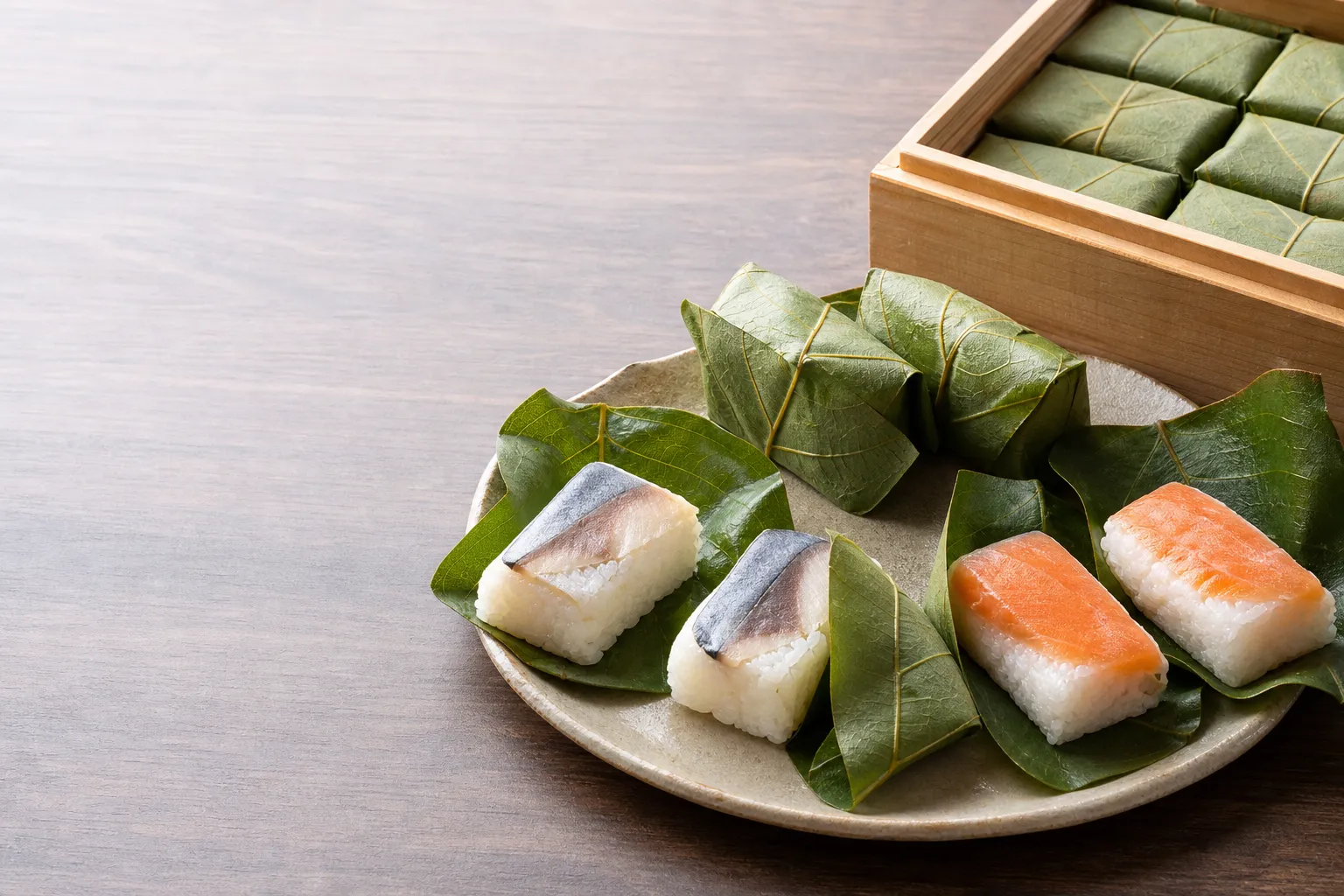
Local FoodNara
Kakinoha-zushi (柿の葉寿司)
Pressed sushi wrapped in a persimmon leaf and left to mellow — mountain food from landlocked Nara, where salted mackerel learned to travel. Unwrap it like a tiny present.
July 1, 2026