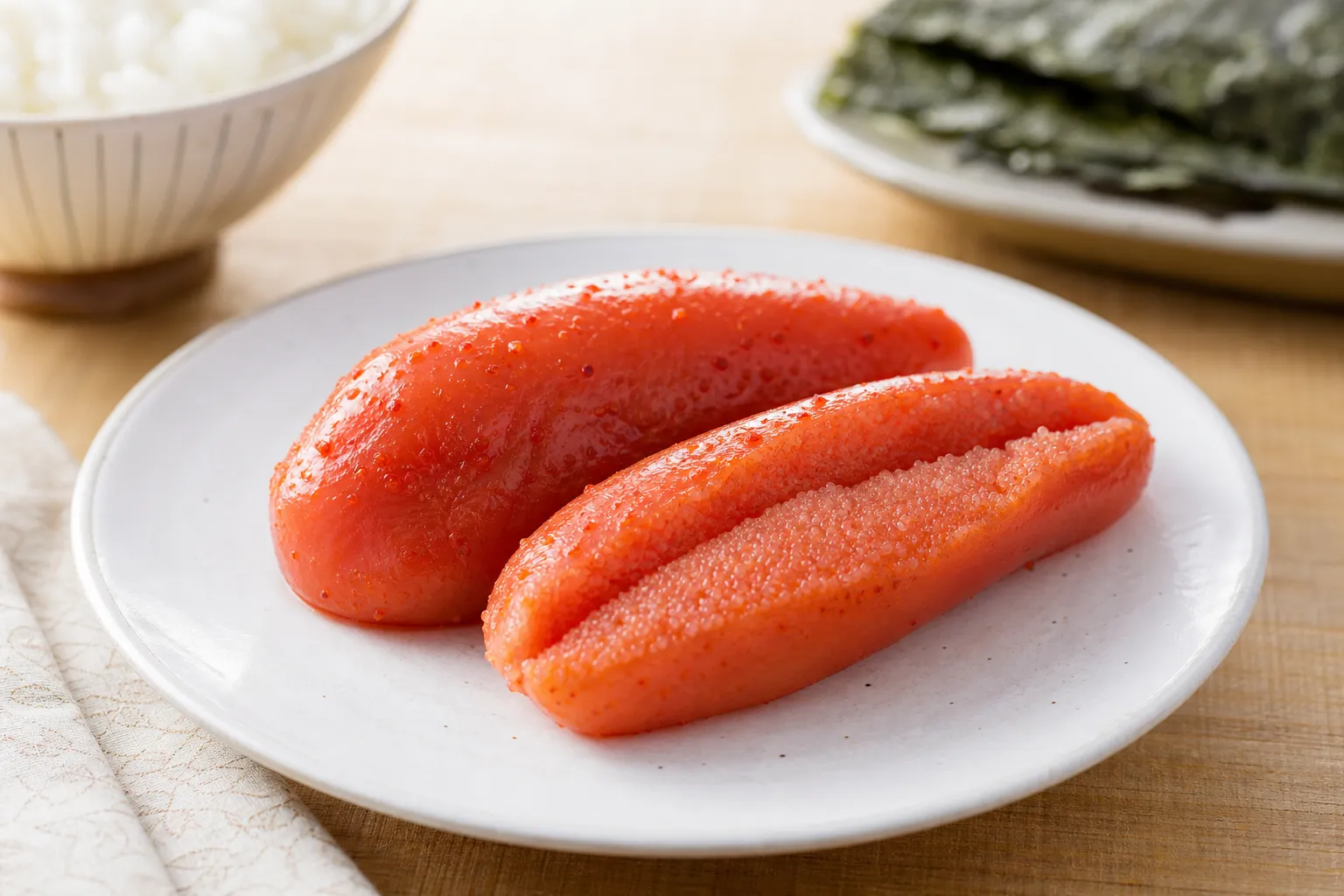
The rice was still steaming when the mentaiko went on top, and for about two seconds it was just salty and warm and unremarkable — and then the chili caught up with me, this slow creeping heat blooming behind the saltiness, and I found myself reaching for a second, smaller scoop before I'd even swallowed the first bite properly. Nobody warned me breakfast could do that.
Share this dish


One bite of rice buried under a spoonful of vivid red roe and a slow chili burn creeps in behind the salt — by the second bowl I understood why Hakata builds entire breakfasts around this stuff.
🍜 Planning a food trip to Fukuoka?Add this dish to my Food Trip →
 Add this dish to my Food Trip →
Here's what it is: mentaiko (明太子) is chili-marinated pollock roe — the egg sacs of Alaska pollock, cured in salt and seasoned with chili pepper and other spices until they turn a vivid red-orange. It's Hakata's (Fukuoka's) most famous culinary export, eaten straight over hot rice, tucked into onigiri, stirred into pasta, or served as a simple side at breakfast. Don't mix it up with tarako (plain, unseasoned cod or pollock roe, pale pink) or ikura (loose, round salmon roe eggs) — mentaiko is specifically the spicy, chili-red, elongated roe sac, and once you've had it you won't confuse the three again.
A Korean-inspired dish that became Hakata's icon
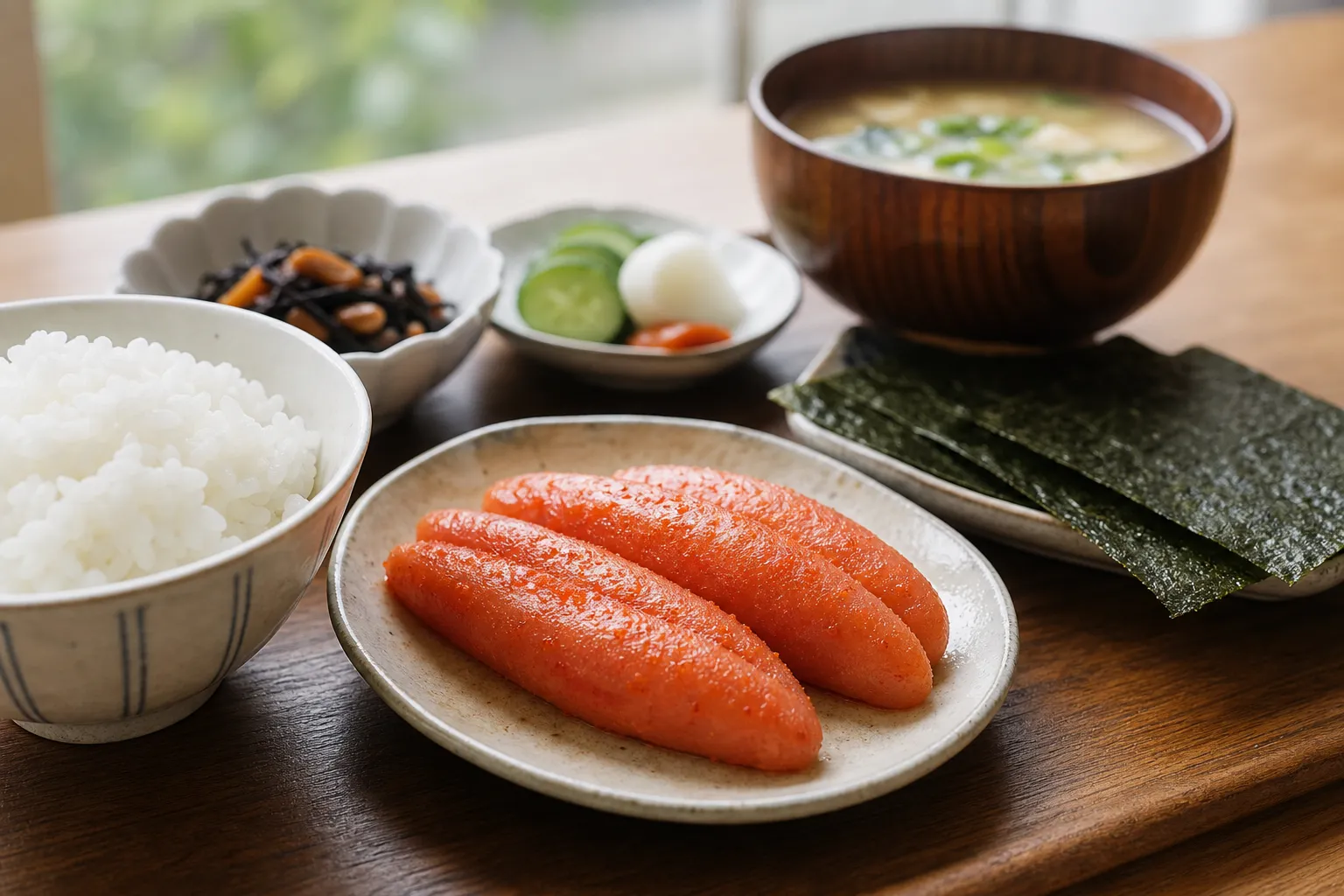
Mentaiko's roots trace back to Korean-style spiced pollock roe, brought to Fukuoka after the war by people with ties to the Korean peninsula, where a similar chili-cured roe (myeongnan-jeot) was already a staple. A Fukuoka shop began adapting the recipe for local tastes in the late 1940s, softening and refining the seasoning until it became something distinctly its own — and from there it spread across the country, showing up in convenience stores and supermarkets from Hokkaido to Okinawa. I find that migration genuinely moving: a dish that crossed the sea, got reinvented in one city's back streets, and then quietly became a fixture on breakfast tables nationwide.
Even so, Fukuoka guards its claim to mentaiko fiercely, and Hakata remains the place to try it at its freshest and most varied — from delicate, barely-spicy versions to fiery ones that make your eyes water. Sitting at a Hakata breakfast counter with rice, nori, and a whole sac of mentaiko in front of you, it's obvious this isn't just a topping here, it's a genuine local identity.
Why the texture and heat both matter
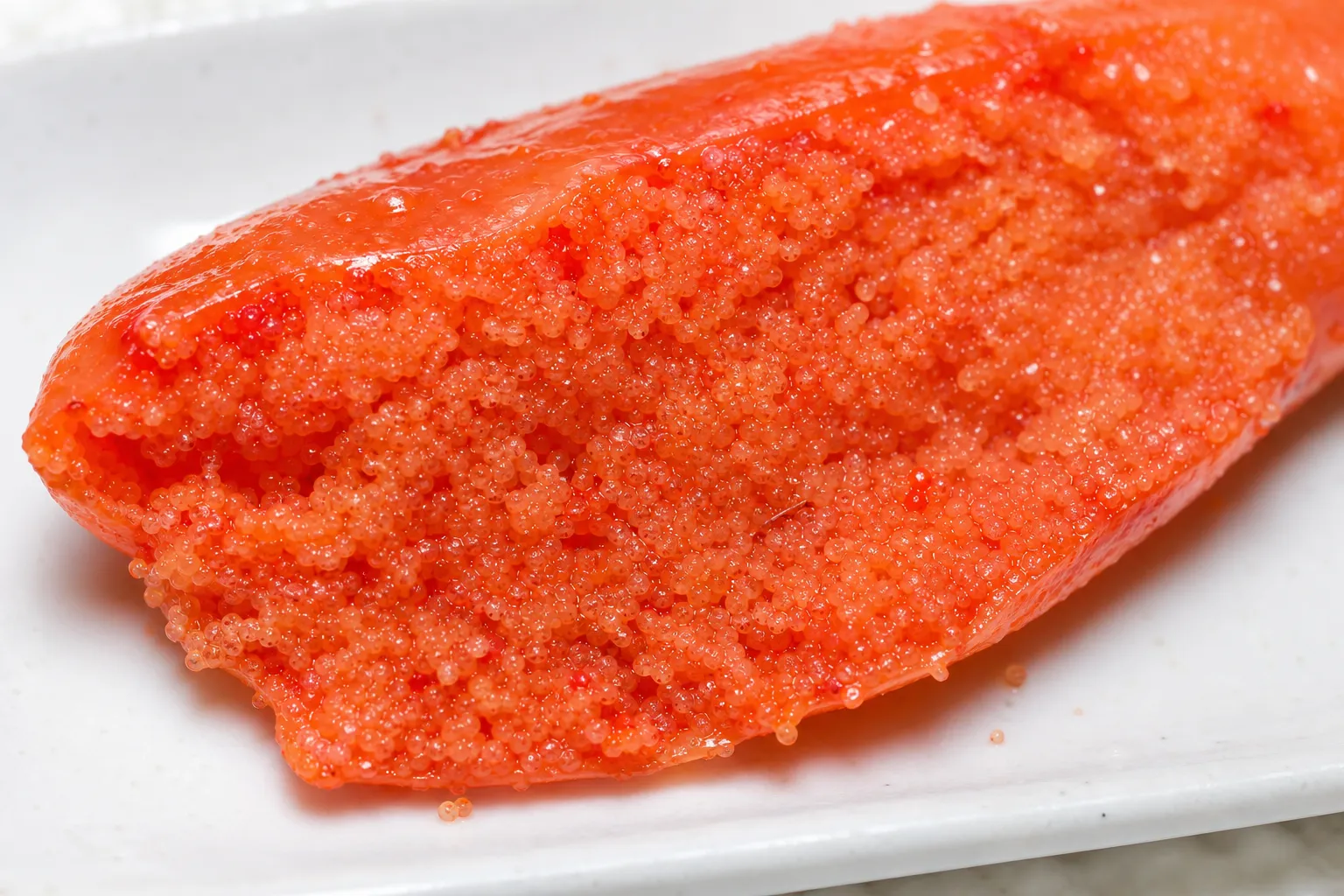
- The roe grains are fine and slightly firm, giving a gentle pop against the tongue rather than a mushy texture
- The color is a genuine red-orange, distinct from pale tarako and much deeper than loose ikura beads
- The heat is a slow burn, not a sharp spike — it builds a few seconds after the initial salty hit
- It's endlessly versatile: straight over rice, wrapped in nori as onigiri, mixed into mayonnaise as a dip, or tossed through pasta in a popular Japanese-Italian fusion dish
- Quality varies a lot — freshly cut sacs from a specialist Hakata shop taste noticeably brighter and less salty than mass-market packaged versions
How it's made
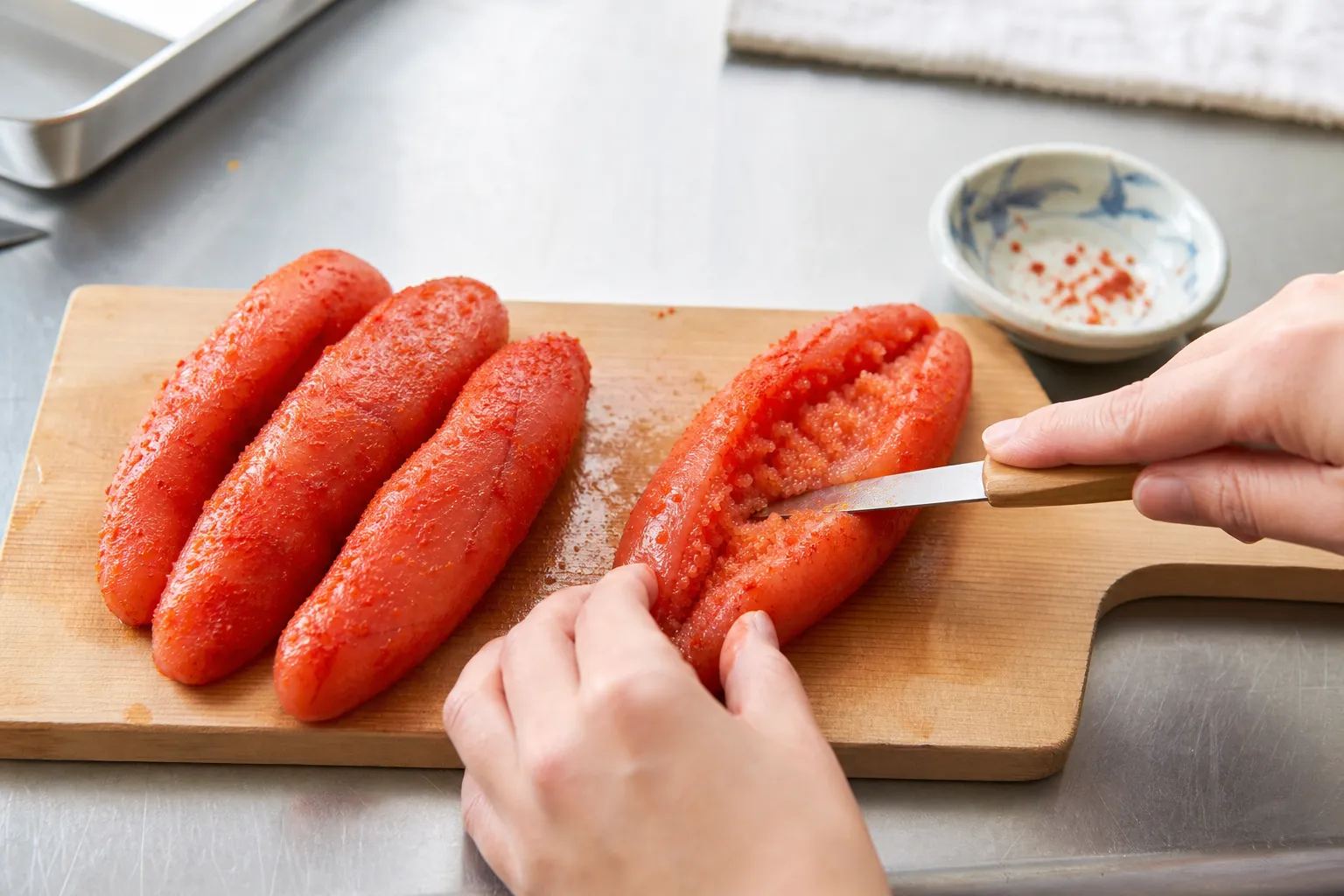
- Whole roe sacs are removed from Alaska pollock, kept intact rather than loosened into separate eggs.
- Cured in salt briefly to firm up the texture and draw out excess moisture.
- Marinated in a chili-based seasoning liquid, along with other spices, for anywhere from a day to over a week depending on the shop's recipe.
- Graded and sorted by color, size, and firmness — the finest sacs are sold as premium gift boxes.
- Sold whole or sliced open, ready to spoon straight onto rice, or used as an ingredient in other dishes at home or in restaurants.
Before you go — spicy roe, warm rice, one very good breakfast
Your questions, answered honestly
"Is it too spicy for someone who doesn't like spicy food?" — Most standard mentaiko is only mildly spicy — a warm background heat rather than a sharp chili hit. If you're sensitive to spice, ask for a mild version (amakuchi, 甘口) rather than the hot one (karakuchi, 辛口).
"Is it safe to eat raw?" — Yes — mentaiko is cured, not raw in the sushi sense, and it's a completely normal breakfast and everyday food in Japan, including for children (in milder versions).
"What's the difference between mentaiko and tarako again?" — Tarako is the same type of roe but with no chili seasoning, just salt — pale pink and much milder. Mentaiko is the red, spicy, marinated version. If a menu just says tarako, expect no heat at all.
"Where's the best place to try it fresh?" — A specialist Hakata mentaiko shop or a Fukuoka breakfast set will give you a noticeably fresher, brighter version than a packaged supermarket sac elsewhere in the country.
What the staff will ask you
| You'll hear | Romaji | Meaning | Just say |
|---|---|---|---|
| 辛口と甘口、どちらになさいますか? | Karakuchi to amakuchi, dochira ni nasaimasu ka? | "Spicy or mild version?" | Amakuchi de onegaishimasu (mild, please) |
| ご飯と一緒にしますか? | Gohan to issho ni shimasu ka? | "Would you like it with rice?" | Hai, onegaishimasu (yes, please) |
| 贈答用になさいますか? | Zōtō-yō ni nasaimasu ka? | "Is this for a gift?" | Iie, jibun-yō desu (no, it's for myself) |
To order, just say "Mentaiko o kudasai" (明太子をください) — "Mentaiko, please."
Where to eat it
- Hakata / Fukuoka City — the home of mentaiko, with dedicated shops, morning market stalls, and breakfast sets built entirely around it.
- Fukuoka Airport and Hakata Station — well-known for mentaiko gift shops selling vacuum-packed sacs to take home; a very popular souvenir.
- Department store food halls (depachika) nationwide — carry Fukuoka mentaiko brands, a good option if you're not visiting Kyushu but still want to try the real thing.
Fresh mentaiko needs refrigeration and doesn't travel as well as some souvenirs, so check the shop's advice on keeping it cold if you're bringing it home.
Soul Score
Local Roots4/5
First-Timer Friendly4/5
Adventure Level3/5
Comfort Level5/5
Travel Worthy3/5
These scores are one obsessed eater's gut feeling — not a verdict. A low number isn't a bad mark, just a different kind of adventure.
Know someone planning Japan?
← All Articles
Local Food · Fukuoka
Still hungry?
Eat more from Fukuoka
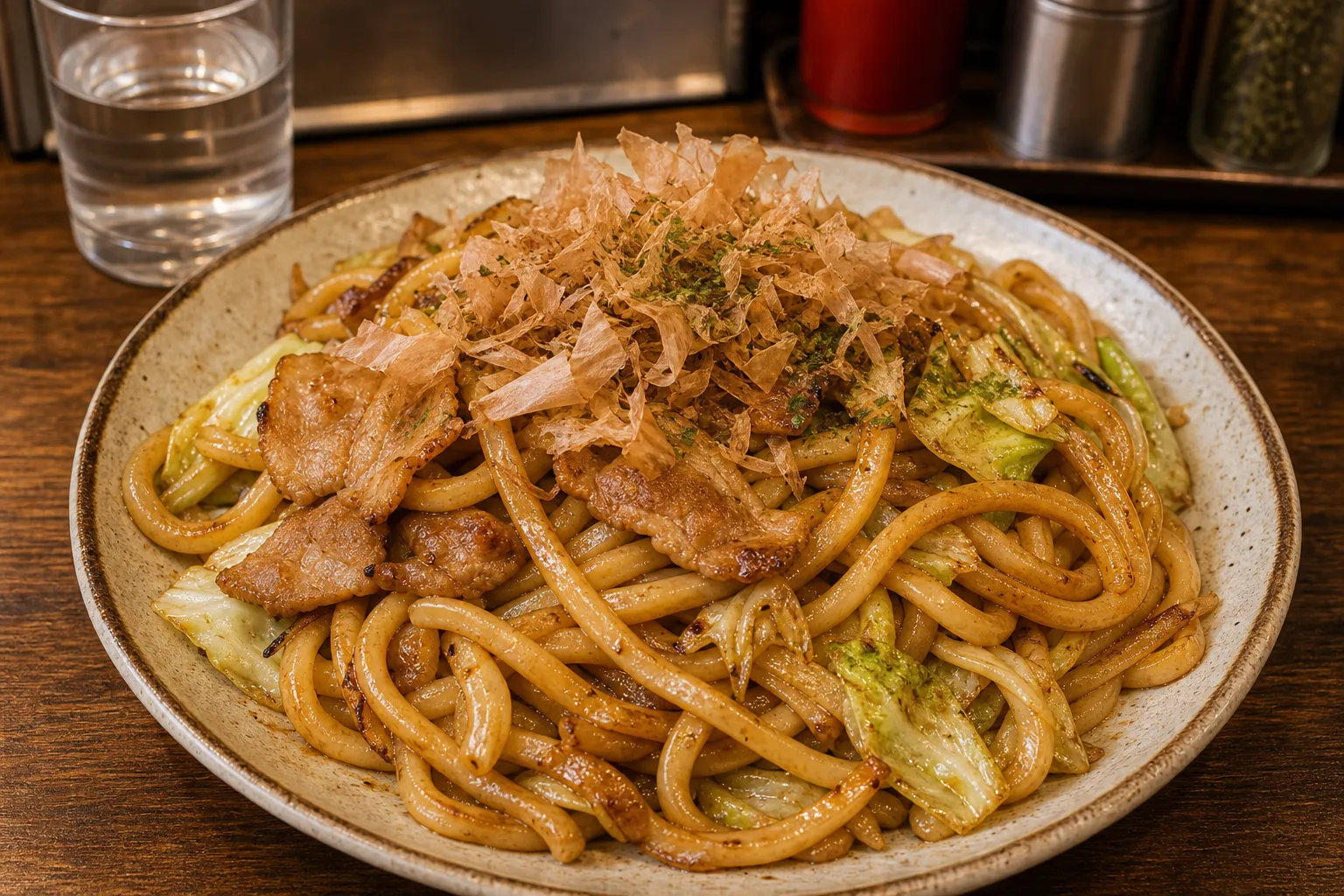
Local FoodKitakyushu, Fukuoka
Yaki Udon (焼きうどん)
Fat udon noodles thrown on a hot griddle, seared with pork and cabbage until glossy and browned, then crowned with bonito flakes that literally dance. Kokura's post-war comfort food, and I love it more than yakisoba.
July 9, 2026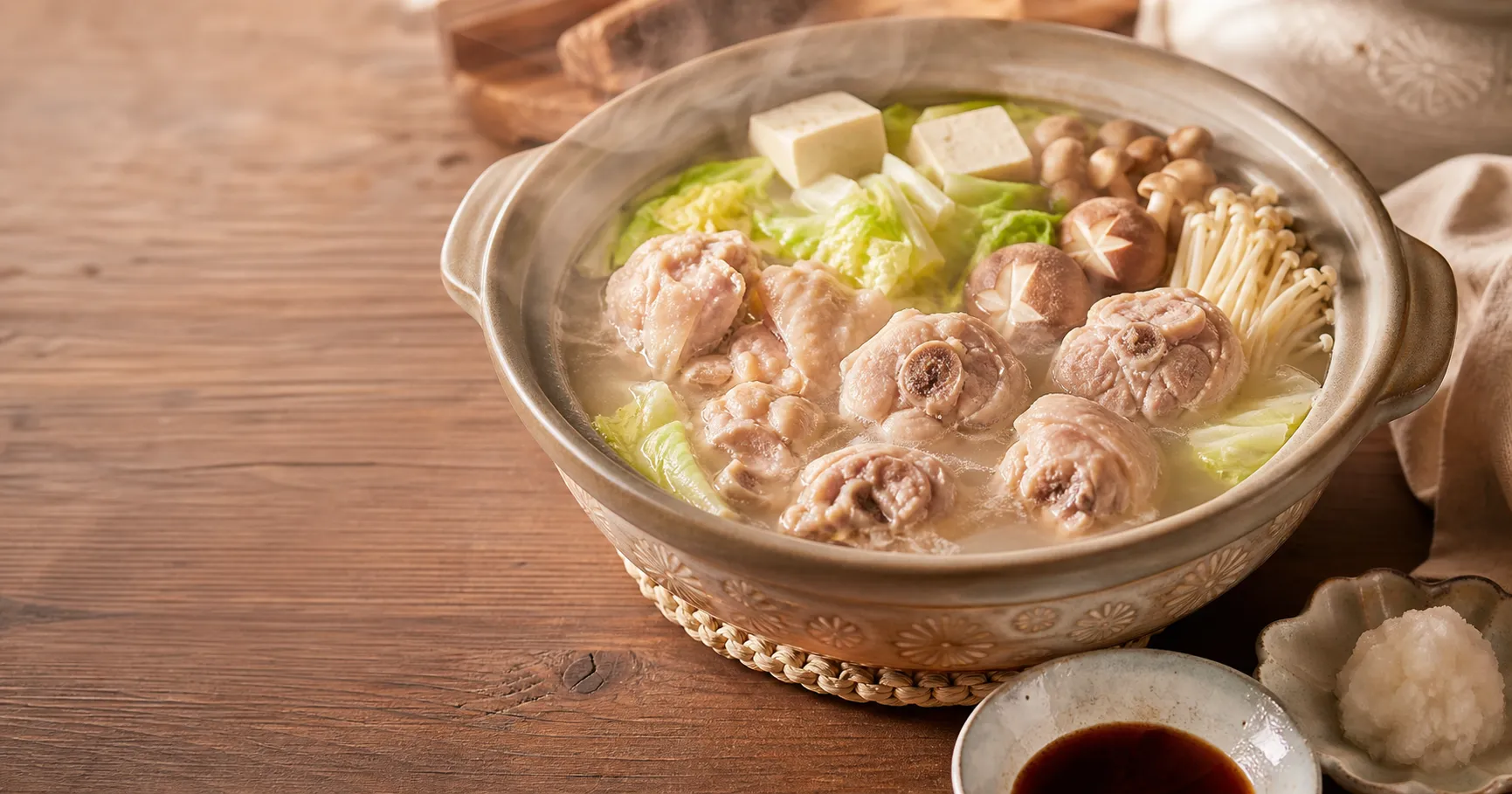
Local FoodHakata, Fukuoka
Mizutaki (水炊き)
A pale, cloudy chicken broth so pure it stops you mid-sentence. Hakata's gentle chicken hot pot is winter comfort itself — dipped in citrus ponzu, finished as rice porridge, warm to the very last drop.
July 3, 2026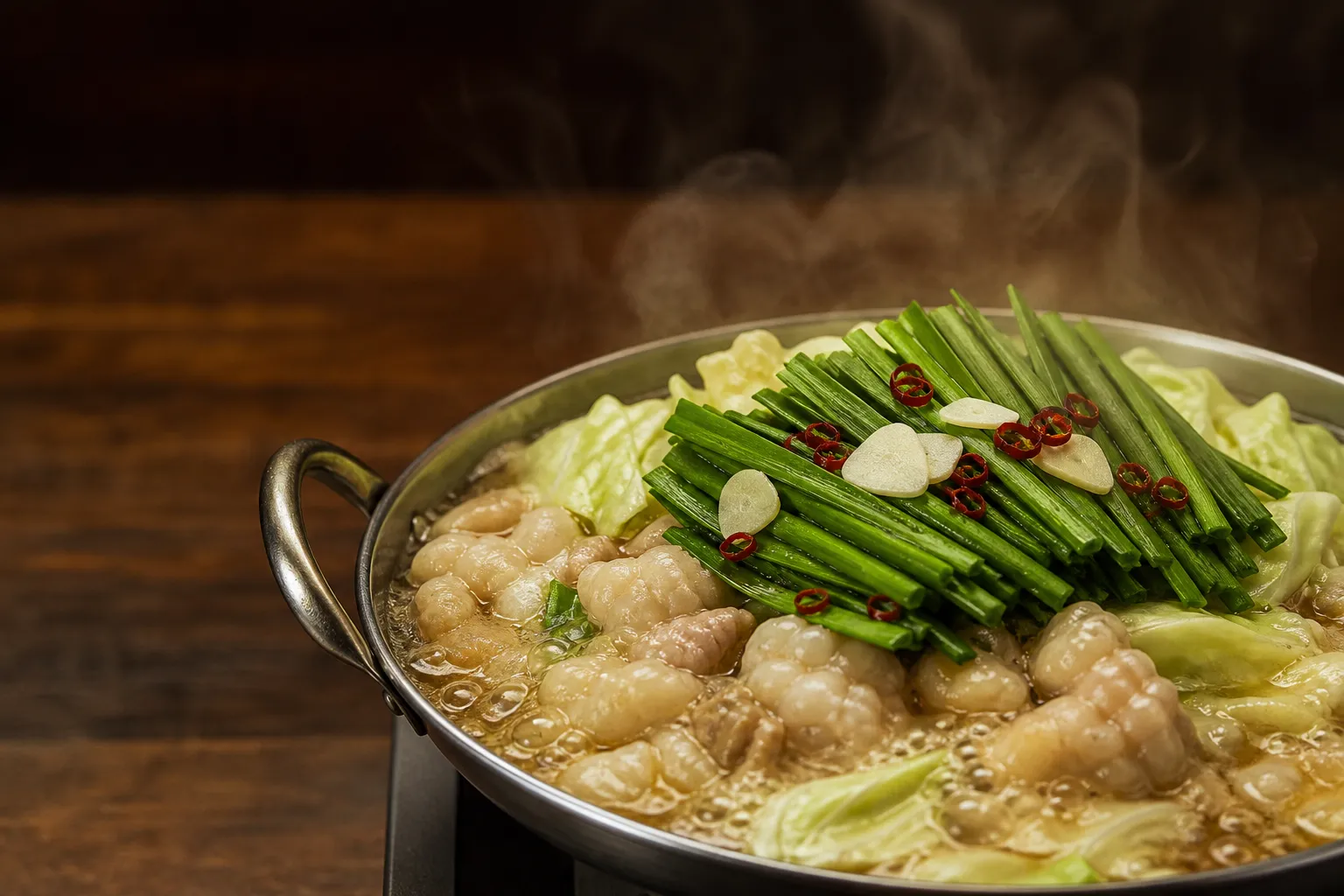
Local FoodHakata, Fukuoka
Motsunabe (もつ鍋)
Soft, clean, and drowning in garlic and chives — Hakata's offal hot pot turns the scariest thing on the menu into the best. A steamy communal pot that makes a table of strangers feel like old friends by the last spoonful.
July 3, 2026