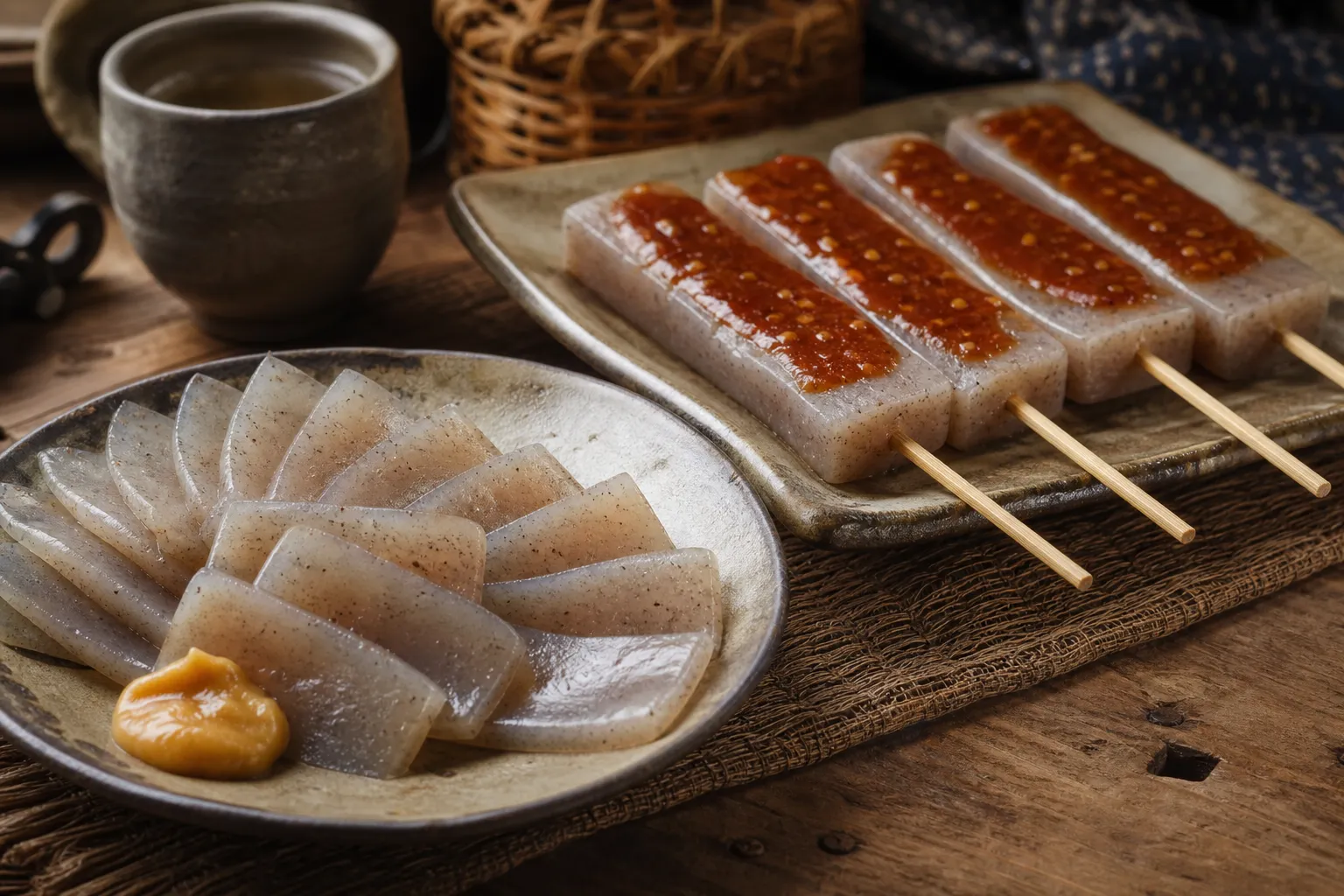
Bounce. That's the first thing — you bite down and the thing bounces back, cool and slippery and springy, like the food equivalent of poking a balloon. Then the vinegar-miso hits, sweet-tart and bright, and I stood there in a Gunma market thinking: this is basically a wobbly grey rectangle with almost no calories, why do I want to eat the entire plate? But I did. I do. Konnyaku got me.
Share this dish


Wobbly, near-zero-calorie, and somehow deeply satisfying — Gunma turns a grey mountain tuber into springy sashimi and blistered miso skewers, and I will fight for it.
🍜 Planning a food trip to Gunma?Add this dish to my Food Trip →
 Add this dish to my Food Trip →
Here's what it is: konnyaku ryōri (こんにゃく料理) is the whole spread of dishes made from konjac — a firm, jiggly, nearly calorie-free jelly set from the starchy konjac potato (konnyaku-imo). Think "sashimi konnyaku," cool thin slices eaten with vinegar-miso, and dengaku, thick blocks skewered and lacquered with sweet miso glaze. It is not tofu (that's soybean, soft, and crumbly) and it is not a jelly dessert (this is savory and springy, not sweet and soft). It's Gunma's signature ingredient, and Gunma grows almost all of Japan's konjac.
Gunma's grey gold
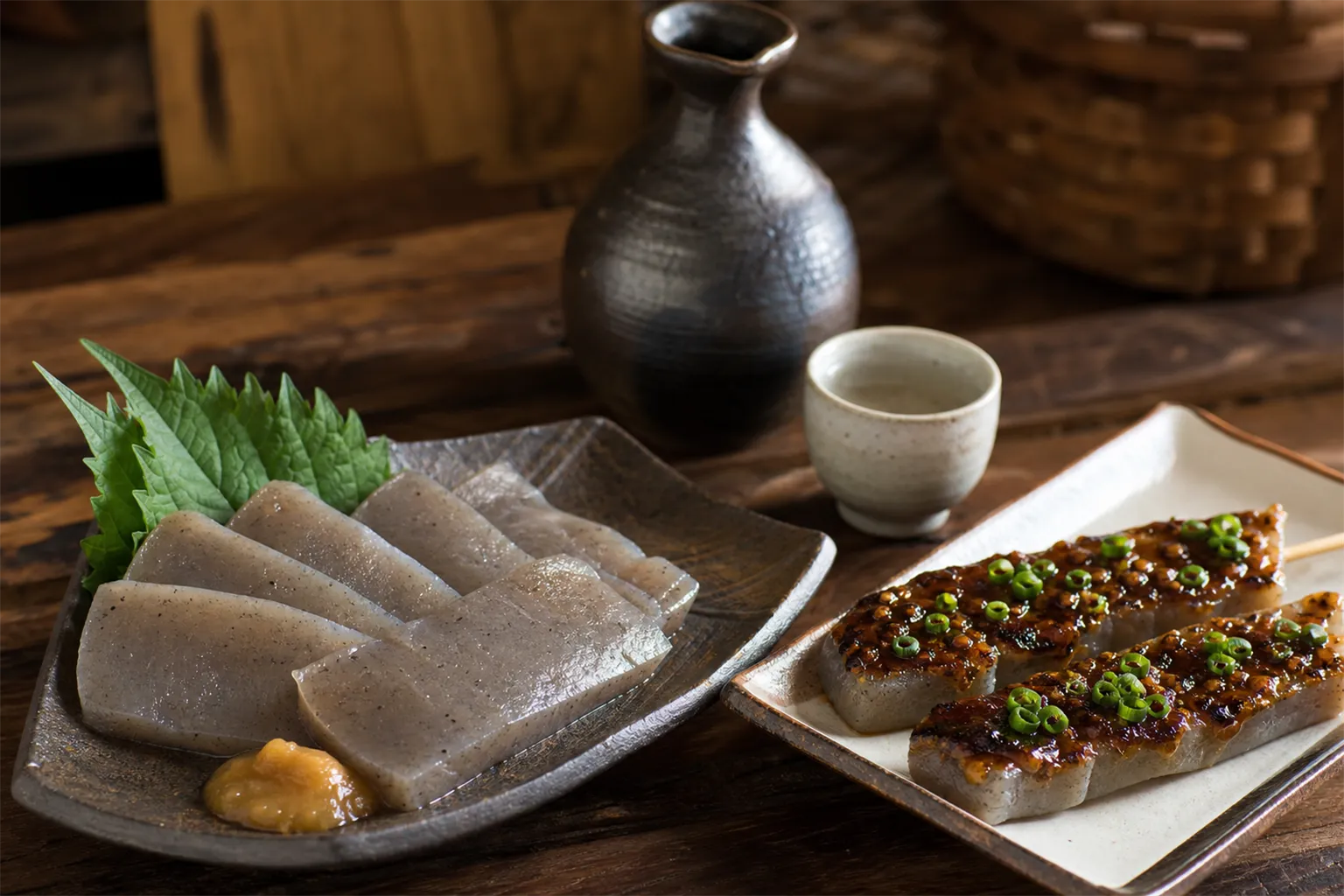
Drive through the hills of Gunma and you're in konjac country — the prefecture grows the overwhelming majority of Japan's konjac potato, on cool mountain slopes where the tuber likes to sit for a few years before it's ready. That patience is the story: konjac isn't a quick crop, it's a plant you invest in, and generations of Gunma farmers built a whole culture around turning an inedible-raw, faintly intimidating tuber into something you'd actually want on your plate.
Honestly, I love that this is the local pride here. Not a luxury food, not a rare fish — a humble, cheap, virtuous grey block. Konjac has been eaten in Japan for centuries as温 diet food, temple food, New Year oden food, and Gunma leans all the way in: konjac theme parks, all-you-can-eat konjac tastings, sashimi konjac tinted with seaweed. It's the kind of regional obsession that makes you grin. They took the least glamorous vegetable in Japan and made it a destination.
What makes the eating experience different
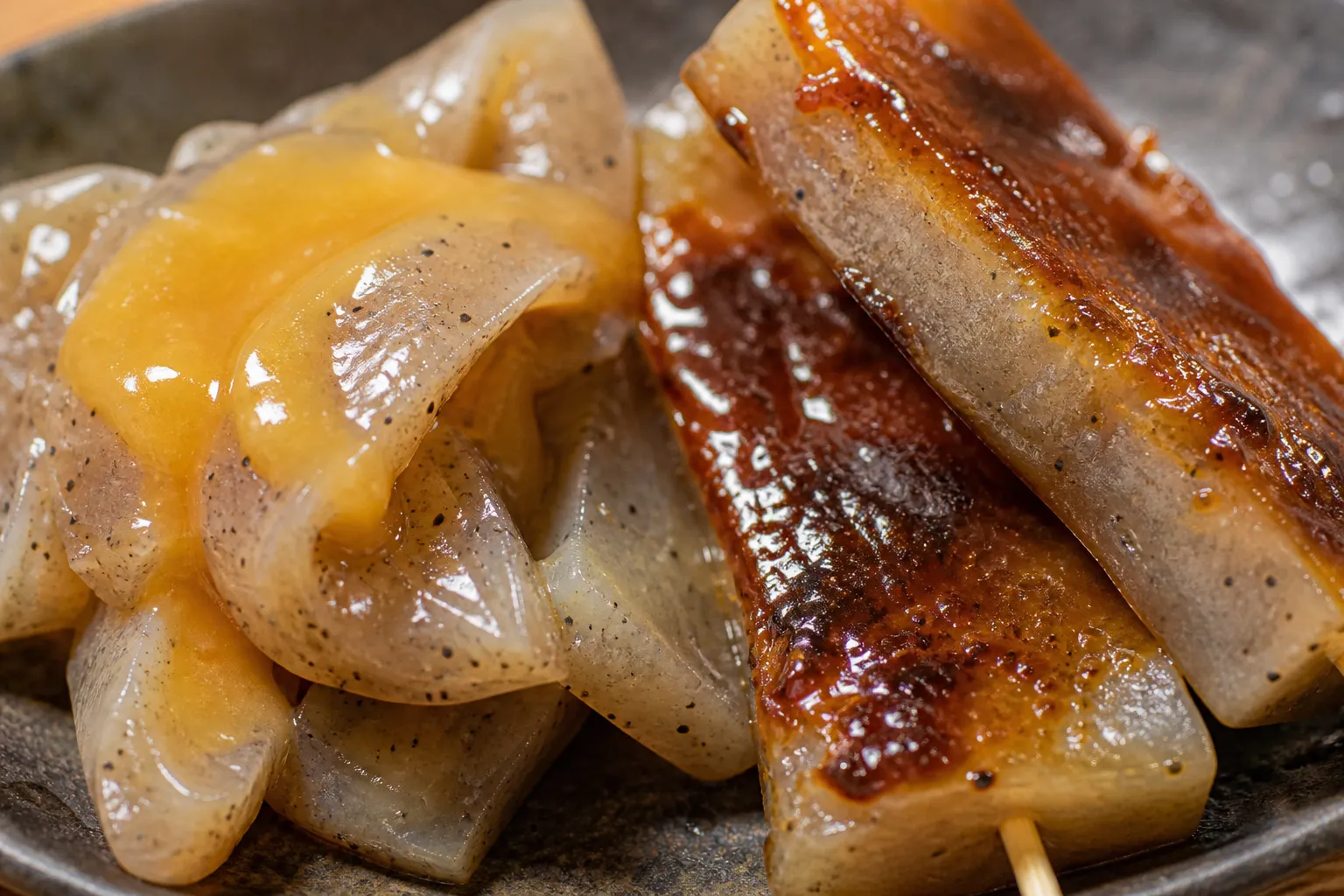
- That bounce. The defining sensation — firm, springy, resilient, almost squeaky against the teeth. Nothing else on a Japanese table feels quite like it.
- It's a flavor sponge. Konjac is nearly tasteless on its own, so it drinks up whatever it's in — that's why the sauce is everything (vinegar-miso, sweet dengaku miso, soy-simmered oden broth).
- Virtuously light. It's mostly water and fiber — near-zero calories, filling, gut-friendly. You can eat a lot and feel great, which feels almost like cheating.
- Cool or hot, it delivers. Chilled sashimi-style with vinegar-miso in summer; blistered dengaku skewers or long-simmered oden blocks in winter.
- It shrugs off cooking. It won't fall apart, won't overcook, holds its shape and bounce through grilling and hours of simmering.
How it's made
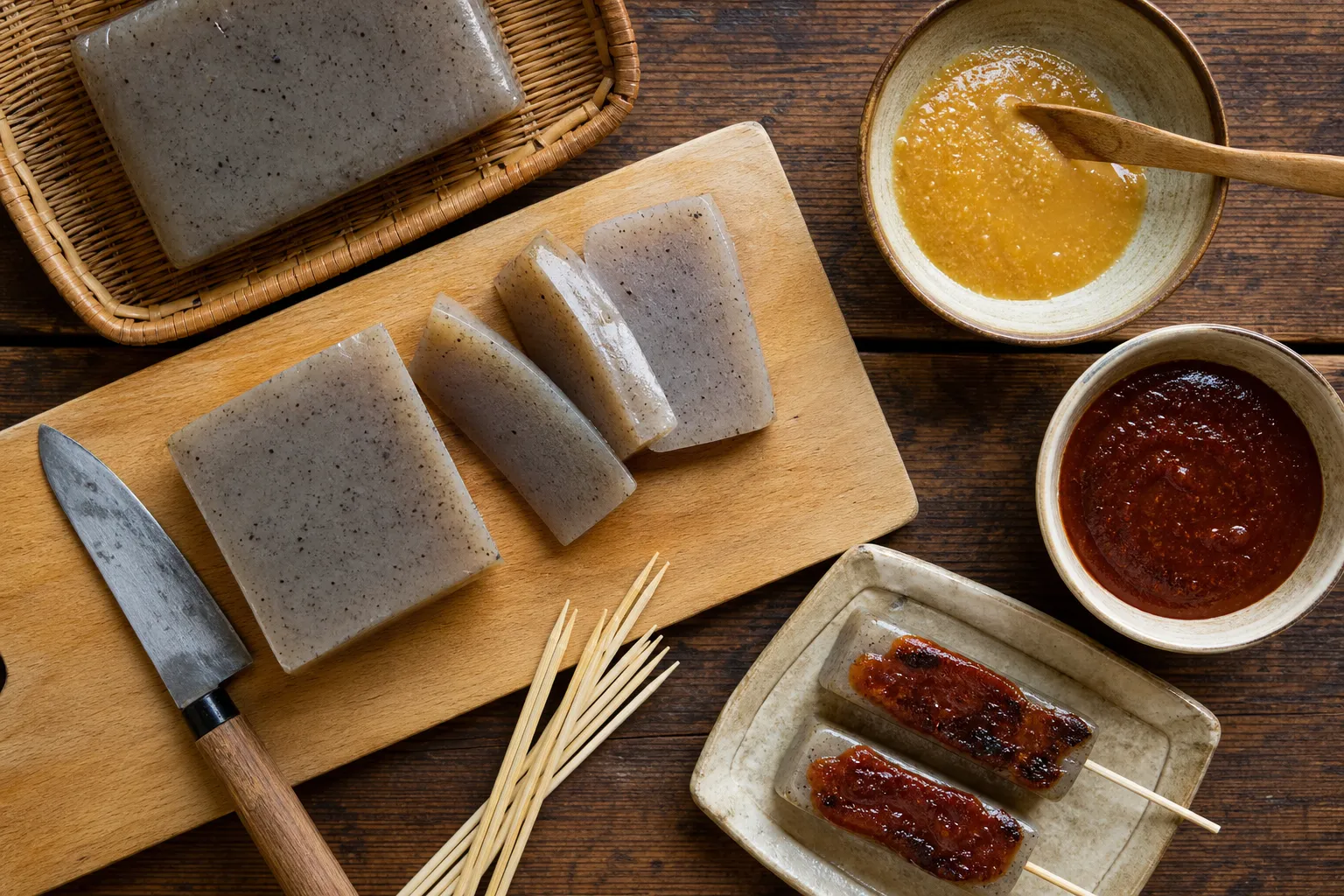
- Start with the tuber (or its flour). The konjac potato is ground to a paste, or dried and milled into konjac flour (konnyaku-ko) and rehydrated.
- Set it firm. An alkaline coagulant (traditionally lime water / sui) is stirred in — this is what turns the paste into that famous firm, springy jelly.
- Shape and firm up. The mix is poured into molds or shaped by hand, then boiled to set fully into blocks, noodles (shirataki), or balls.
- For sashimi konnyaku: it's sliced thin (often tinted green with seaweed), chilled, and served with vinegar-miso (sumiso).
- For dengaku: thick blocks are skewered, warmed, and painted with sweet miso glaze, then grilled or torched until the miso blisters.
The magic step is the coagulant — get it right and you have that unmistakable bounce; that single alkaline addition is what separates konjac from every soft jelly it superficially resembles.
Before you go — bounce your way through Gunma
Your questions, answered honestly
"Is this basically tofu?" — No, and don't say that to a Gunma local. Tofu is soft, crumbly soybean curd; konnyaku is firm, springy konjac jelly with an entirely different bite. They're both pale blocks, and that's where the resemblance ends.
"It has no flavor — what's the point?" — The point is texture plus sauce. Konjac is a near-blank canvas that carries vinegar-miso, sweet dengaku miso, or oden broth beautifully, while adding a bounce and satisfying fullness for almost no calories. It's a supporting actor that steals the scene.
"Is sashimi konnyaku raw / risky?" — "Sashimi" here just means served cold and sliced like sashimi — it's fully cooked/set konjac, no raw fish involved. It's about as safe as food gets; the only surprise is the springy texture.
"Will it fill me up?" — Surprisingly, yes. It's mostly fiber and water, so it's genuinely filling and light at the same time — which is exactly why it's beloved as diet and everyday food.
What the staff will ask you
| You'll hear | Romaji | Meaning | Just say |
|---|---|---|---|
| お刺身と田楽、どちらにしますか? | O-sashimi to dengaku, dochira ni shimasu ka? | "Sashimi-style or dengaku?" | Ryōhō kudasai (both, please) |
| 酢味噌でよろしいですか? | Sumiso de yoroshii desu ka? | "Vinegar-miso okay?" | Hai, onegaishimasu (yes, please) |
| 温かいのと冷たいの、どちらが? | Atatakai no to tsumetai no, dochira ga? | "Warm or cold?" | Tsumetai no de (the cold one) |
To order, just say "Konnyaku ryōri o kudasai" (こんにゃく料理をください) — "Konjac dishes, please."
Where to eat it
- Konjac-focused parks and factories in Gunma — the prefecture has konjac attractions with tastings and all-you-can-eat konjac spreads; a fun, reliable place to try many styles at once.
- Gunma roadside stations (michi-no-eki) and hot-spring towns — areas like Kusatsu and Ikaho serve local konjac dishes and sell blocks fresh from local makers.
- Winter oden stalls and izakaya across Gunma — long-simmered konjac triangles are an oden staple; dengaku skewers turn up on izakaya menus.
Konjac dishes are widely available in Gunma but styles and hours vary by shop and season — check ahead, and try both the cold vinegar-miso and the hot dengaku versions.
Soul Score
Local Roots5/5
First-Timer Friendly3/5
Adventure Level4/5
Comfort Level4/5
Travel Worthy4/5
These scores are one obsessed eater's gut feeling — not a verdict. A low number isn't a bad mark, just a different kind of adventure.
Know someone planning Japan?
← All Articles
Local Food · Gunma
Still hungry?
Eat more from Gunma
Local FoodKiryu, Gunma
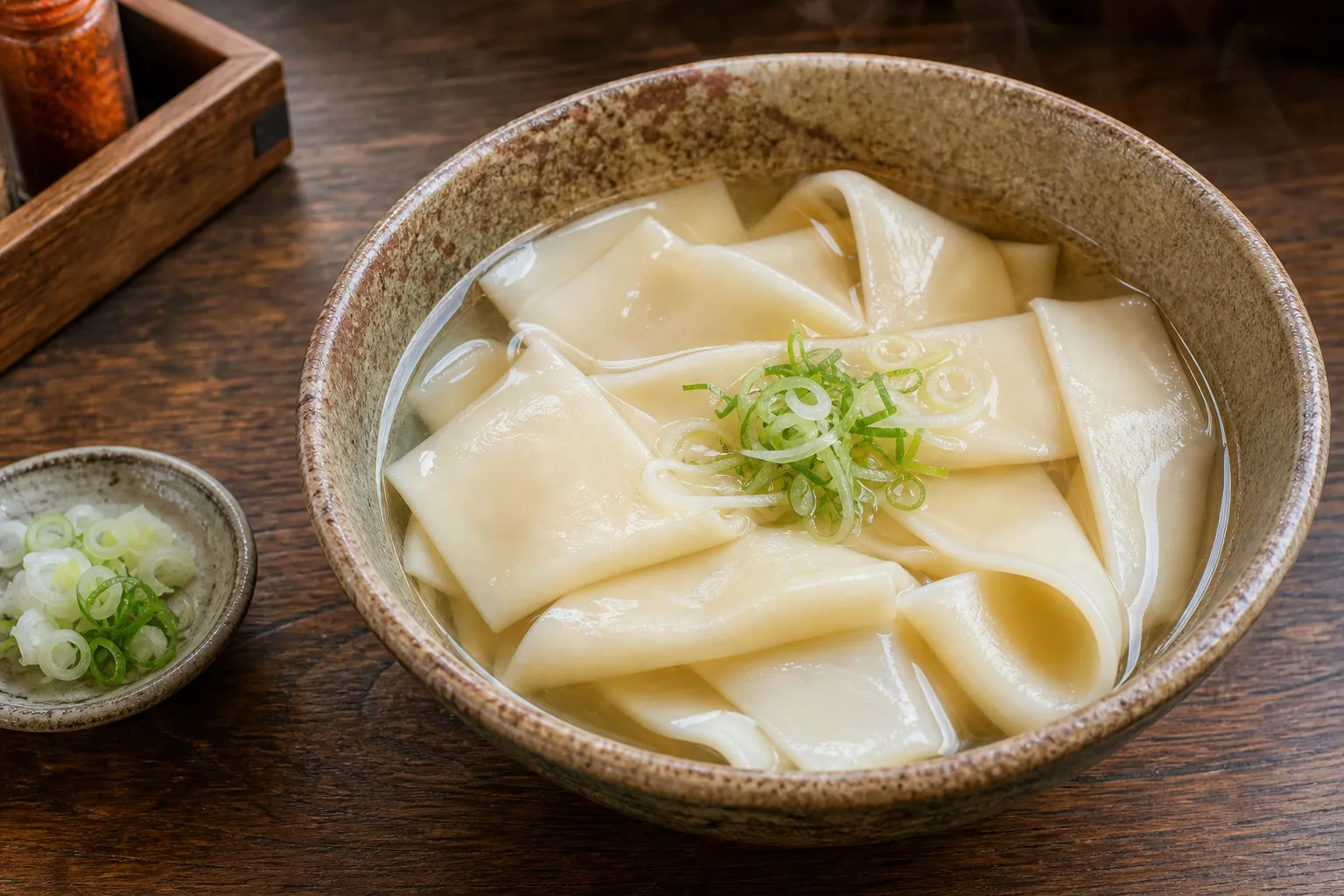
Himokawa Udon (ひもかわうどん)
You order udon and the bowl arrives holding what looks like a folded silk scarf. One noodle wider than your hand, slippery and light — you laugh out loud before you even taste it.
July 12, 2026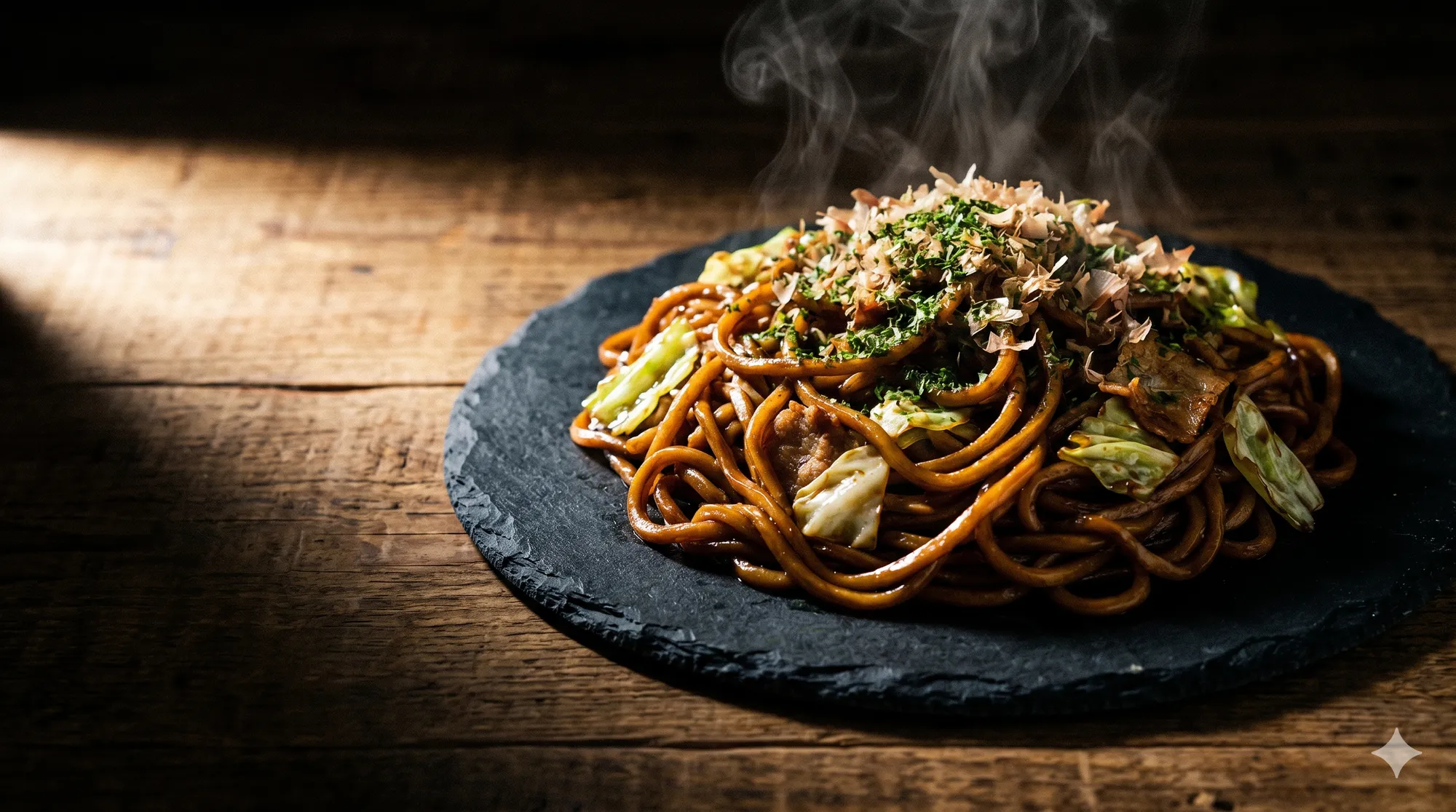
Local FoodOta, Gunma
Ota Yakisoba (太田焼きそば)
Noodles so thick they look like udon, slicked in a dark, intense sauce, with barely any toppings to get in the way. A factory town's honest, no-frills yakisoba — and it's proud of it.
July 21, 2024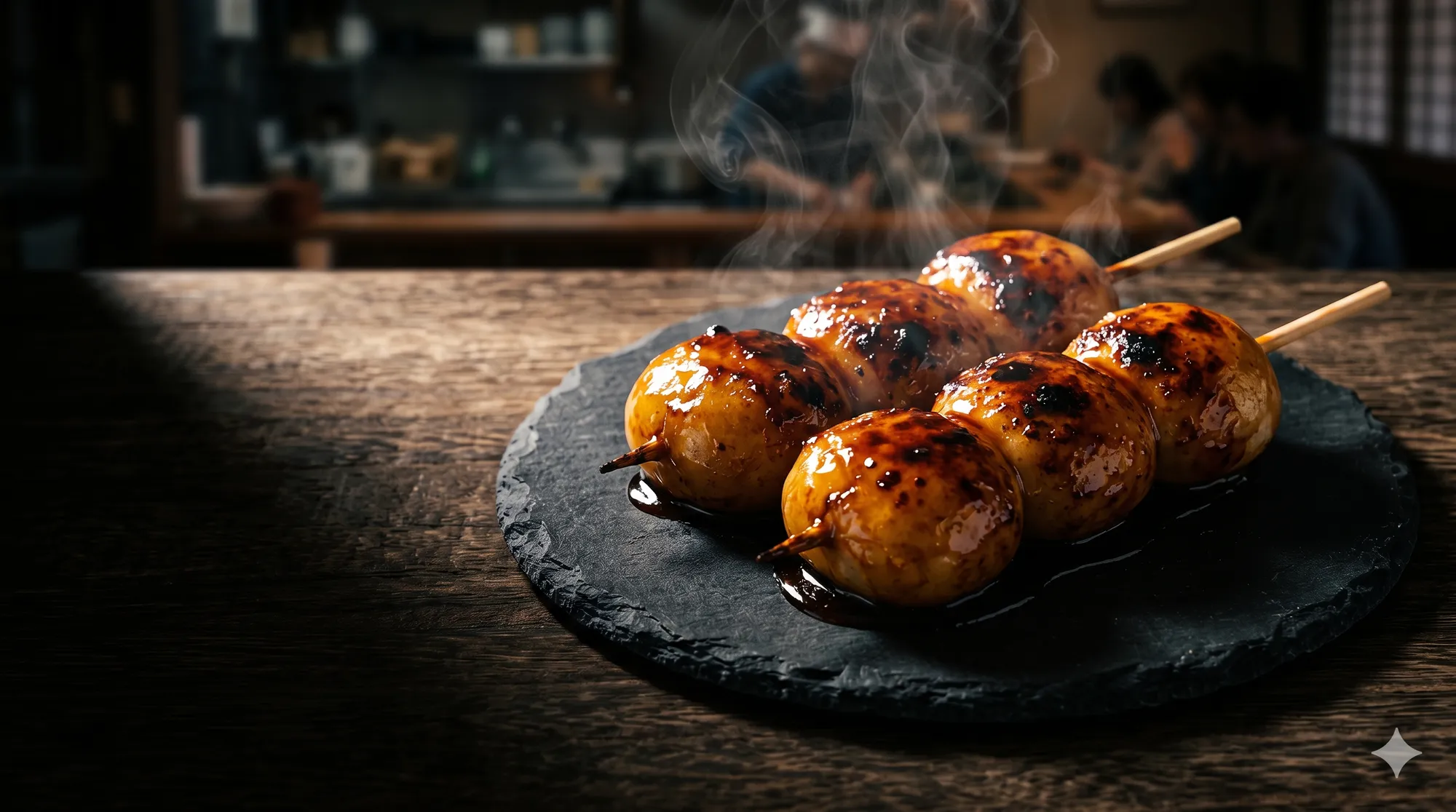
Local FoodGunma
Yakimanju (やきまんじゅう)
Fluffy fermented dough skewered, charcoal-grilled, and painted with sweet-savory miso until it caramelizes. Gunma's festival soul food — sticky-fingered, smoky, unforgettable.
July 12, 2024