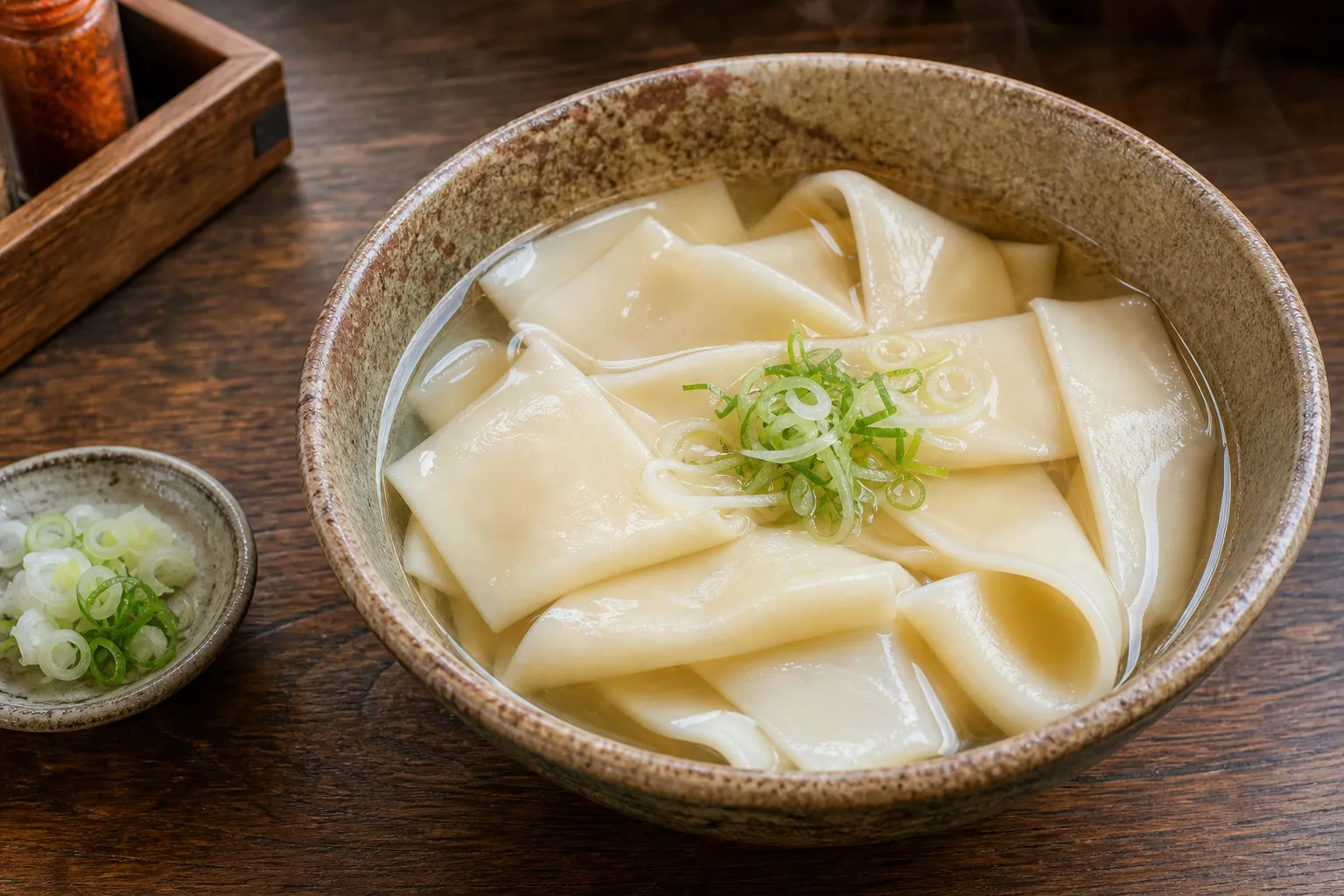
The waiter set the bowl down and I actually laughed. There, draped over the edge of my chopsticks like a length of pale silk, was a single noodle wider than my whole hand — a flat, translucent ribbon rippling in the broth. I had ordered udon. This was udon? I lifted it and it unfurled, thin and slippery and impossibly light, and when I finally managed to slurp it (badly, gloriously, broth everywhere), it slid over my tongue in a soft, wobbling sheet. I have never had so much fun eating a noodle. Not most fun tasting — most fun eating.
Share this dish


You order udon and the bowl arrives holding what looks like a folded silk scarf. One noodle wider than your hand, slippery and light — you laugh out loud before you even taste it.
🍜 Planning a food trip to Gunma?Add this dish to my Food Trip →
 Add this dish to my Food Trip →
Here's what it is: himokawa udon (ひもかわうどん) is udon rolled out extremely wide and paper-thin — flat ribbons commonly several centimeters across, and at some shops stretched to a jaw-dropping 10cm or more wide, wide as a bookmark, wide as a tie. It's served in hot broth or cold with a dipping sauce (tsuke), and it's the pride of Kiryu, an old textile city in Gunma. Don't mistake it for normal round udon — the whole identity is that width and thinness — and it's wider and more delicate than kishimen, the flat udon of Nagoya. Same wheat and water; radically different shape, and the shape changes everything about how it eats.
A noodle from a city of cloth
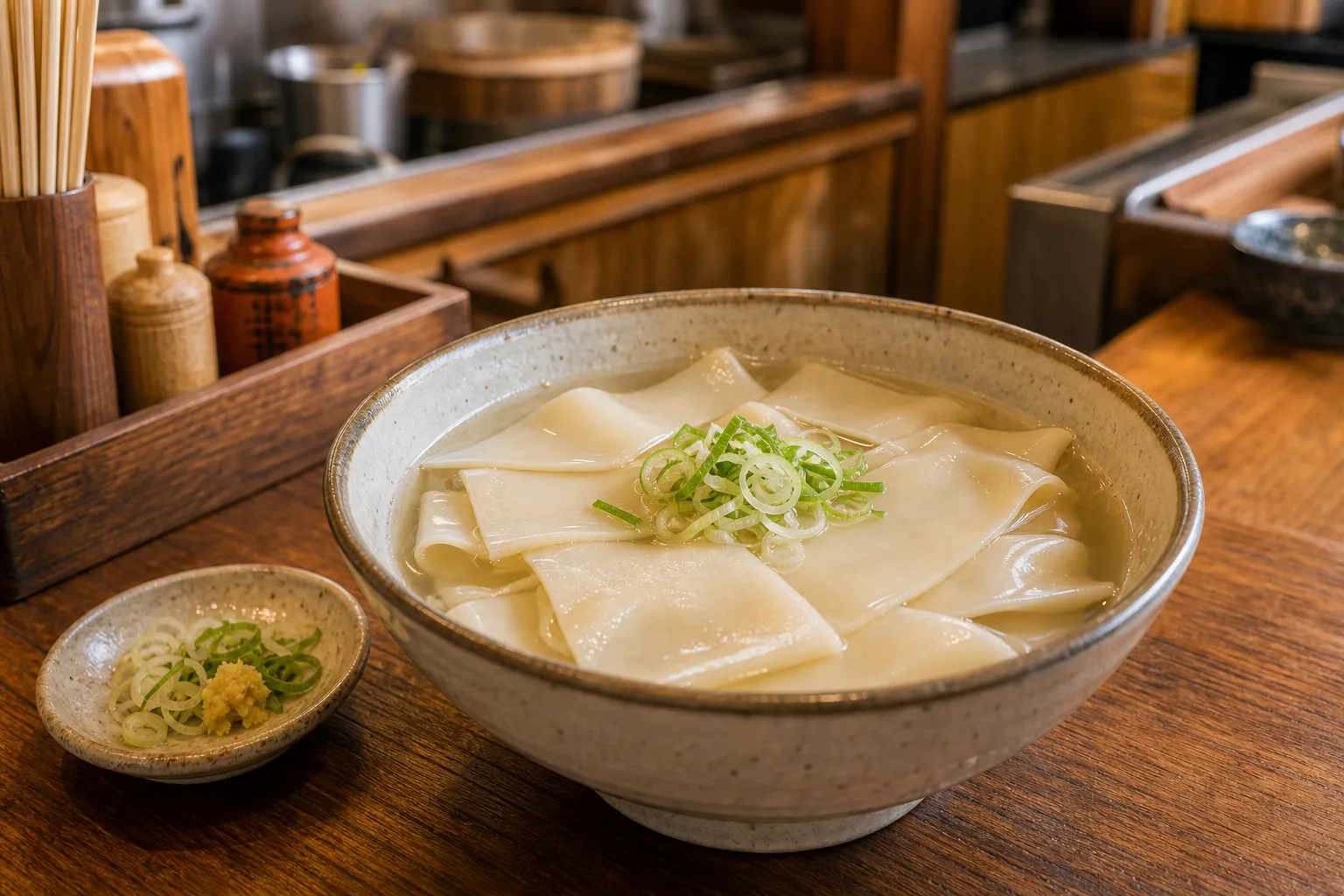
There's a poetry to where this noodle comes from. Kiryu made its name for centuries in textiles — silk and fine woven cloth, "Kiryu weaving" famous across Japan — and here's a local noodle that looks exactly like a length of unrolled fabric. Whether or not the town's weavers consciously made a noodle in the image of their cloth, eating a shimmering ribbon of himokawa in a city built on shimmering ribbons of silk feels right. The name itself points at something long and flat — a strip, a strap — and each shop rolls it to its own width, some restrained, some showing off with ribbons as wide as your palm.
I find the whole thing quietly delightful. Every udon-loving town in Japan has its house style, but Kiryu's answer was to take the humblest wheat noodle and make it theatrical — thin as breath, wide as cloth, a little bit of showmanship in a bowl. It's regional pride you can see across the room. And in a town that's watched its old textile mills quiet down over the decades, there's something warm about a food that still proudly waves the city's weaving heritage every single lunch.
What makes the eating experience different
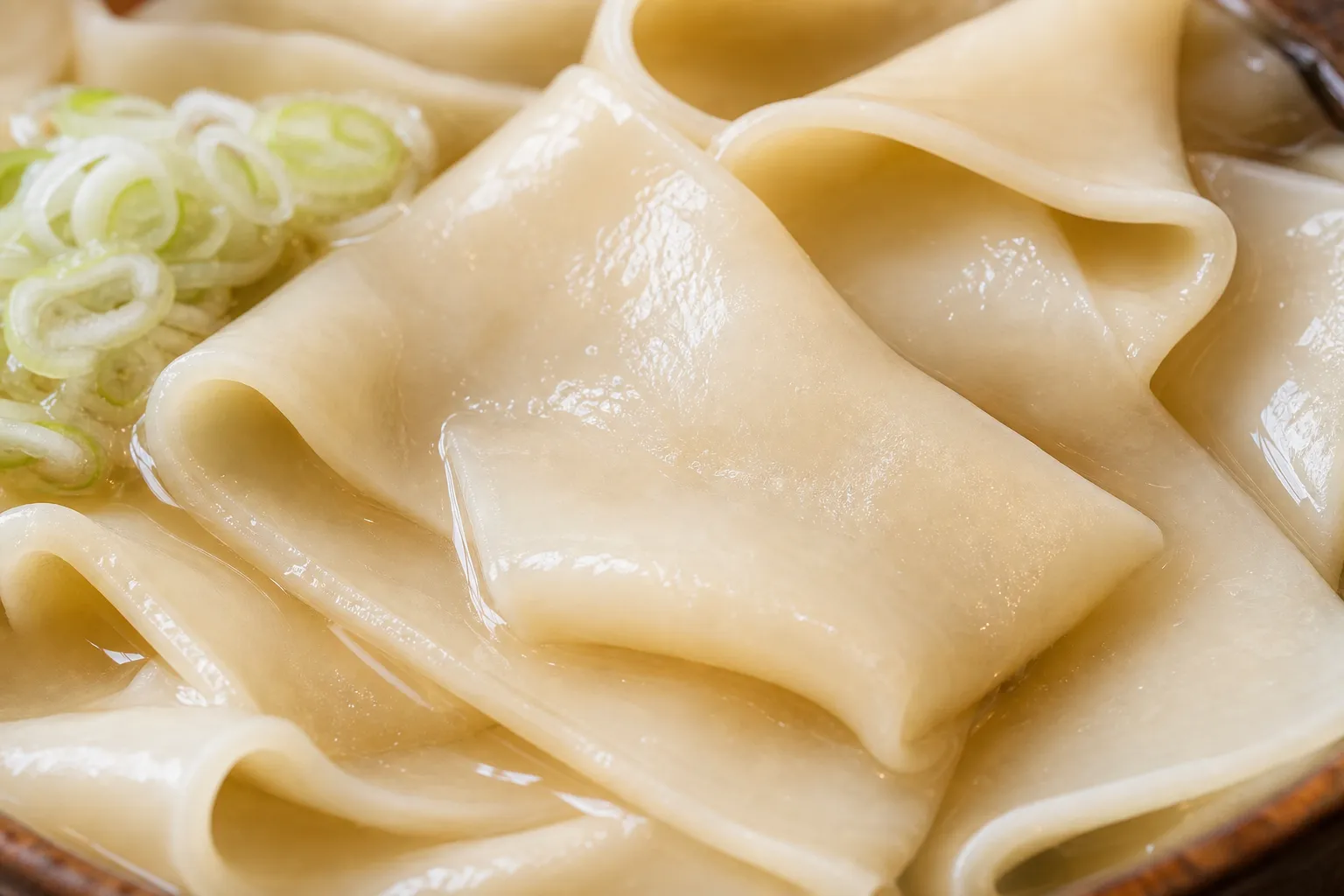
- The width is the whole show — flat ribbons several centimeters to over 10cm wide, unlike anything a round noodle can do
- Because it's paper-thin, it's light and slippery — it drinks up broth and slides rather than chews
- The mouthfeel is soft and wobbling, a silky sheet across the tongue instead of a firm springy bite
- It's broth-forward — that huge flat surface carries a lot of soy-dashi flavor with every slurp
- Slurping is a delightful challenge — the ribbons are big and floppy, so eating it is genuinely a little adventure (bring your sense of humor and a napkin)
How it's made
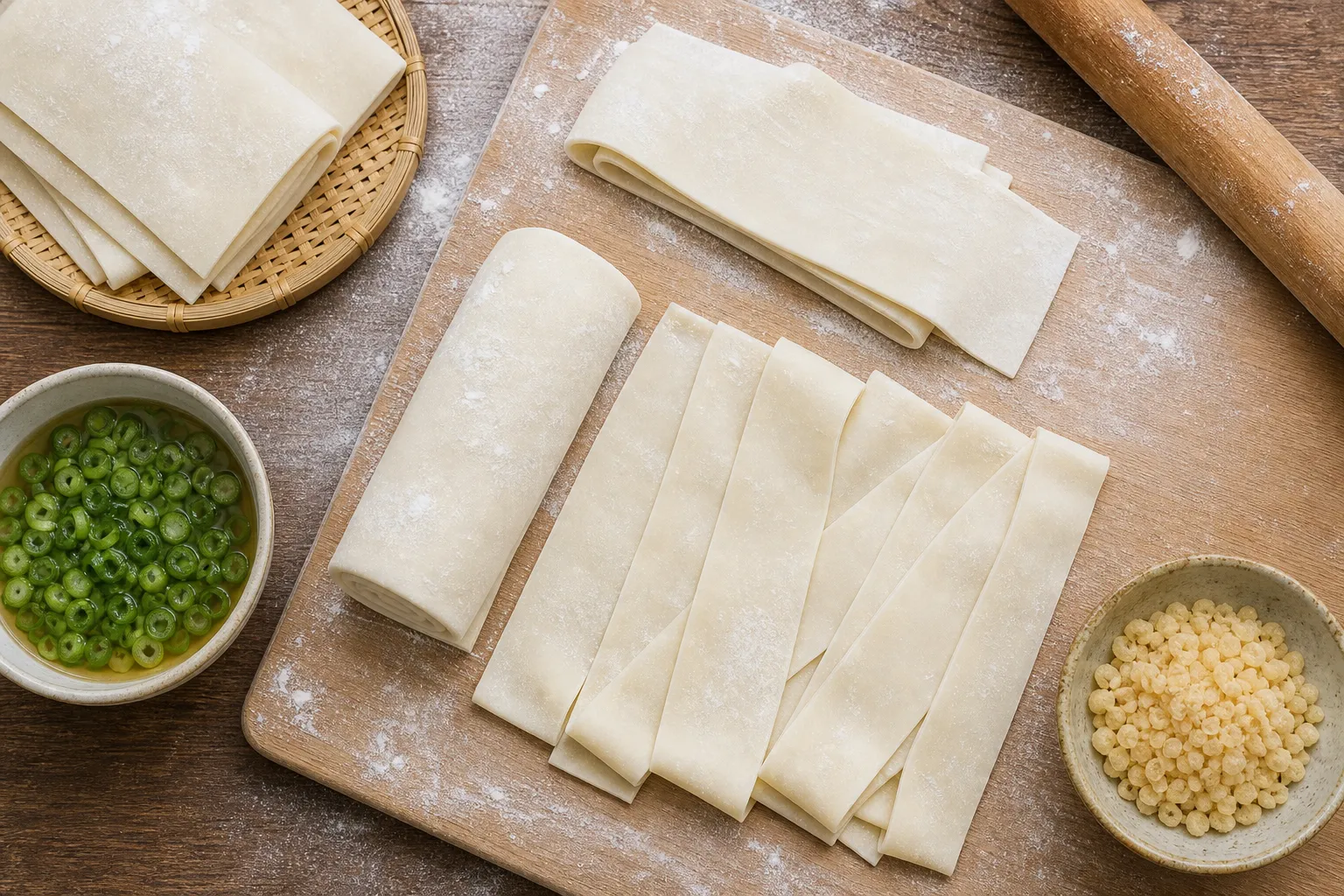
- Make the dough. Wheat flour, water and salt are kneaded into a firm udon dough and rested so the gluten relaxes.
- Roll it out wide and thin. The dough is rolled far thinner and broader than for ordinary udon — this thinness is what lets the noodle be cut so wide without turning heavy.
- Cut into broad ribbons. Instead of thin square strands, the sheet is cut into wide flat straps — several centimeters up to 10cm-plus, depending on the shop.
- Boil gently. The delicate ribbons are boiled carefully so they cook evenly without tearing.
- Serve hot or cold. Either bathed in a hot soy-dashi broth, or chilled and served with a dipping sauce so you can taste the noodle's texture cleanly.
The craft is all in the rolling: thin enough to stay light and silky, strong enough dough that a hand-wide ribbon doesn't fall apart in the pot.
Before you go — slurp it in Kiryu
Your questions, answered honestly
"How is this different from regular udon or kishimen?" — Regular udon is round and springy. Kishimen (from Nagoya) is flat but relatively narrow. Himokawa takes flatness to an extreme — much wider and thinner, sometimes over 10cm across. It's the widest, most delicate, most theatrical of the flat udons.
"Hot or cold — which should I get?" — Both are traditional. Hot in soy-dashi broth is cozy and lets the ribbons soak up flavor; cold with dipping sauce (tsuke) shows off the silky texture best. If it's your first time, cold dipping makes the noodle itself the star.
"How on earth do I eat something this wide?" — Take a few ribbons at a time, not the whole bowl; slurp with confidence (the airflow actually helps you get it in and cools it); and accept that a little splash is part of the experience. Locals slurp — you should too.
"Is it filling?" — Surprisingly light for how it looks, because it's so thin. A standard bowl is a satisfying lunch, but it won't sit like a heavy plate of noodles — which is part of why it's so easy to love in summer, cold.
What the staff will ask you
| You'll hear | Romaji | Meaning | Just say |
|---|---|---|---|
| 温かいのと冷たいの、どちらにしますか? | Atatakai no to tsumetai no, dochira ni shimasu ka? | "Hot or cold?" | Tsumetai de / Atatakai de (cold / hot) |
| つけ汁でよろしいですか? | Tsuke-jiru de yoroshii desu ka? | "Dipping-sauce style, okay?" | Onegaishimasu (yes, please) |
| 大盛りにしますか? | Ōmori ni shimasu ka? | "Would you like a large portion?" | Futsū de / Ōmori de (regular / large) |
To order, just say "Himokawa udon o kudasai" (ひもかわうどんをください) — "Himokawa udon, please."
Where to eat it
- Kiryu city, Gunma — the noodle's home; udon and soba restaurants around the old textile town are the place to eat it, and several are known specifically for extra-wide ribbons.
- Central and eastern Gunma more broadly — Gunma is major wheat country and a noodle-loving prefecture, so you'll find himokawa on menus around the region.
- Kiryu souvenir and local-product shops — dried himokawa is sold to cook at home, a good edible souvenir of the city.
Himokawa's width varies dramatically from shop to shop, and individual restaurants' hours and menus change — check before you go if you're traveling specifically to try the extra-wide ribbons at a particular place.
Soul Score
Local Roots5/5
First-Timer Friendly4/5
Adventure Level4/5
Comfort Level4/5
Travel Worthy4/5
These scores are one obsessed eater's gut feeling — not a verdict. A low number isn't a bad mark, just a different kind of adventure.
Know someone planning Japan?
← All Articles
Local Food · Kiryu, Gunma
Still hungry?
Eat more from Gunma
Local FoodGunma
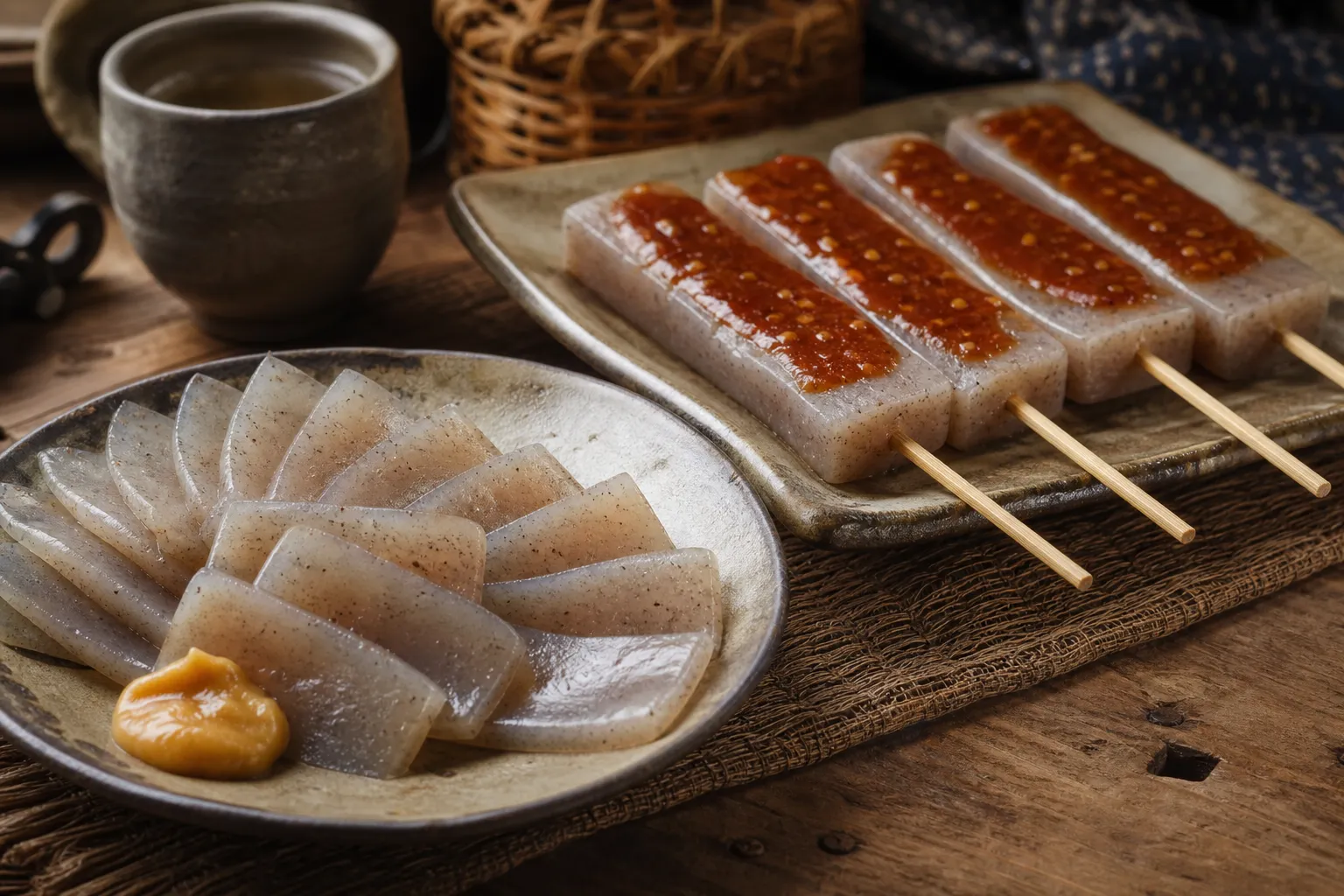
Konnyaku Dishes (こんにゃく料理)
Wobbly, near-zero-calorie, and somehow deeply satisfying — Gunma turns a grey mountain tuber into springy sashimi and blistered miso skewers, and I will fight for it.
July 12, 2026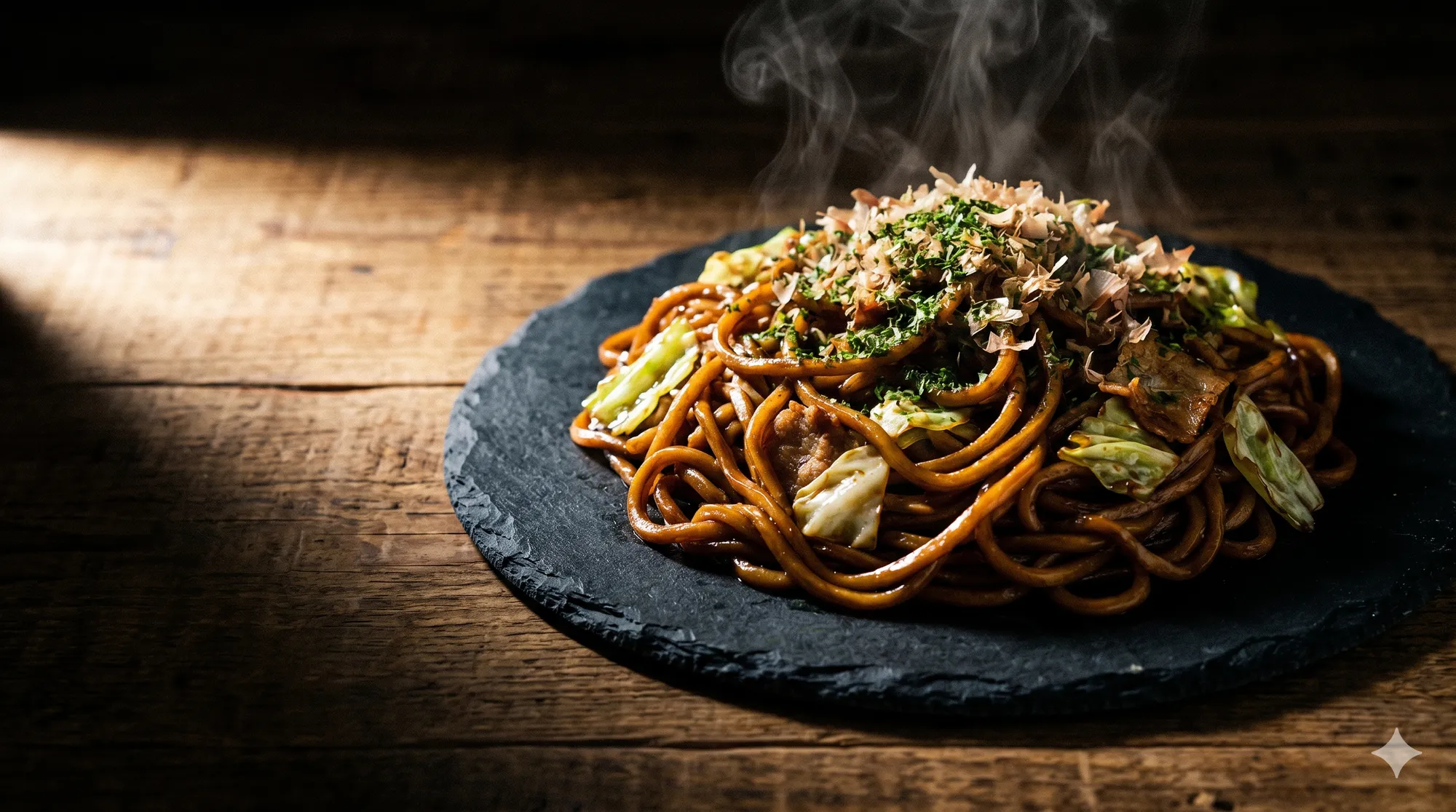
Local FoodOta, Gunma
Ota Yakisoba (太田焼きそば)
Noodles so thick they look like udon, slicked in a dark, intense sauce, with barely any toppings to get in the way. A factory town's honest, no-frills yakisoba — and it's proud of it.
July 21, 2024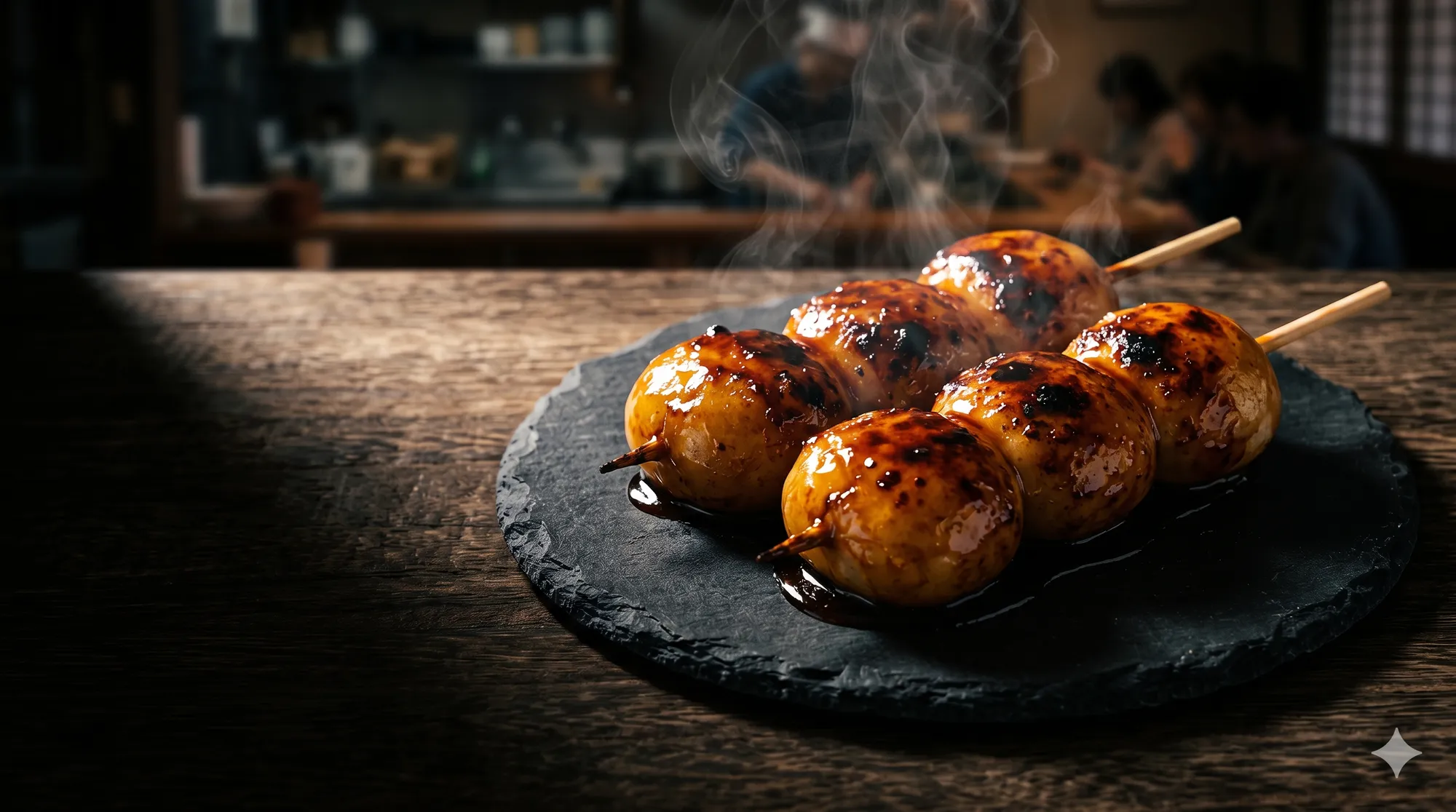
Local FoodGunma
Yakimanju (やきまんじゅう)
Fluffy fermented dough skewered, charcoal-grilled, and painted with sweet-savory miso until it caramelizes. Gunma's festival soul food — sticky-fingered, smoky, unforgettable.
July 12, 2024