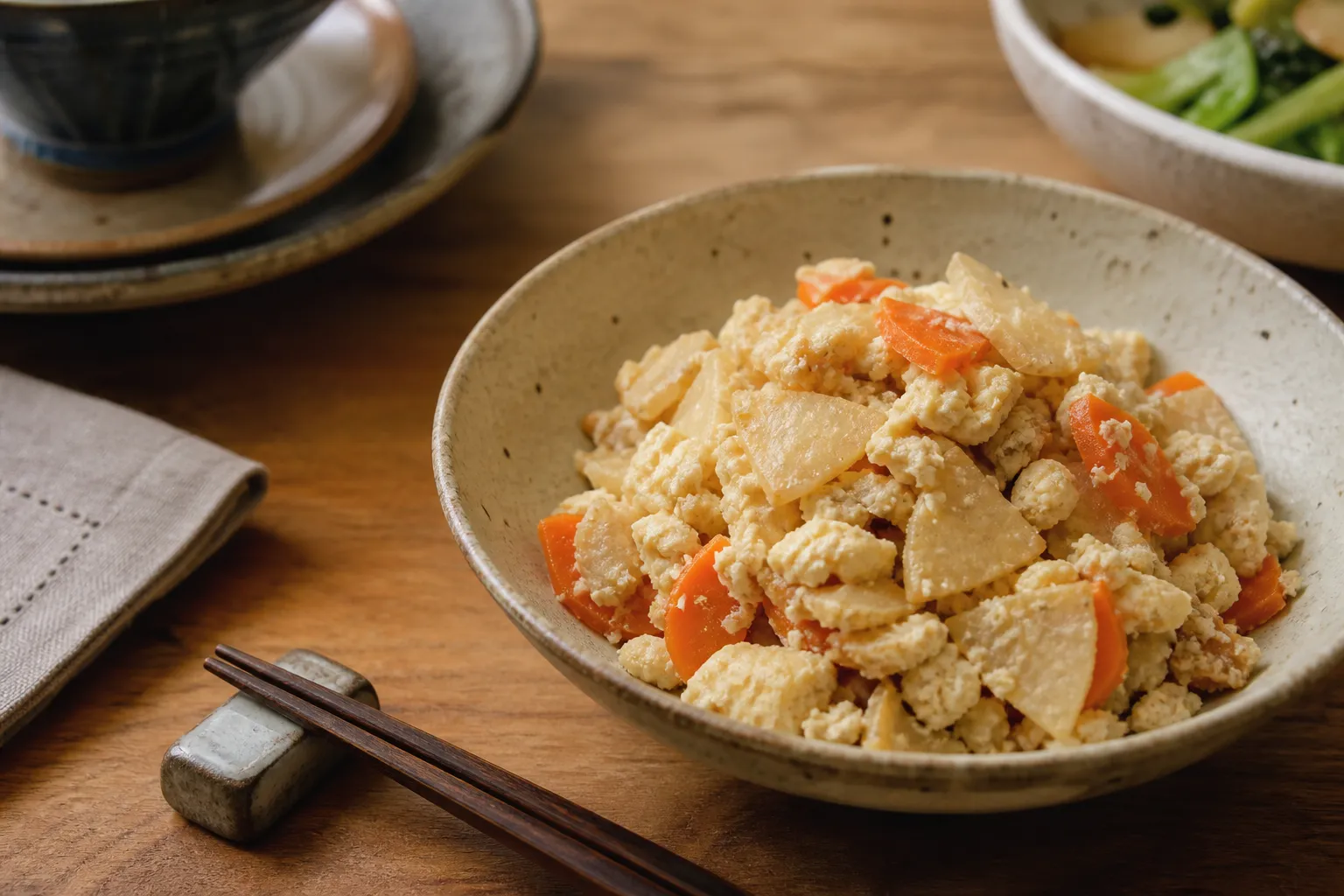
The first spoonful tasted like someone's grandmother had been cooking all afternoon just for me — warm, soft-crumbled tofu tangled with sweet daikon and carrot, glossed in soy, and so comforting I forgot to ask what it was called until the bowl was empty. It's not a fancy dish. It's not trying to impress anyone. And it flattened me anyway, in the coziest way possible, on a cold night in Yamaguchi.
Share this dish


Not a soup, not a scramble — Yamaguchi's crumbled tofu simmered soft with sweet daikon and carrot until it's gently soy-glossed and disappears bowlful by bowlful. Winter comfort in a pot.
🍜 Planning a food trip to Yamaguchi?Add this dish to my Food Trip →
 Add this dish to my Food Trip →
Here's what it is: kenchou (けんちょう) is a Yamaguchi home dish of crumbled tofu simmered and stir-fried together with daikon and carrot in a sweet-savory soy seasoning until everything is tender and glossy. Key word: moist, not soupy. This is where people get confused — it is not kenchin-jiru, the clear tofu-and-vegetable soup it's related to, and it is not plain okara. The tofu here is squeezed and broken into soft curds that soak up the seasoning, and the whole thing sits somewhere between a stir-fry and a simmer.
Winter cooking from the western tip of Honshu
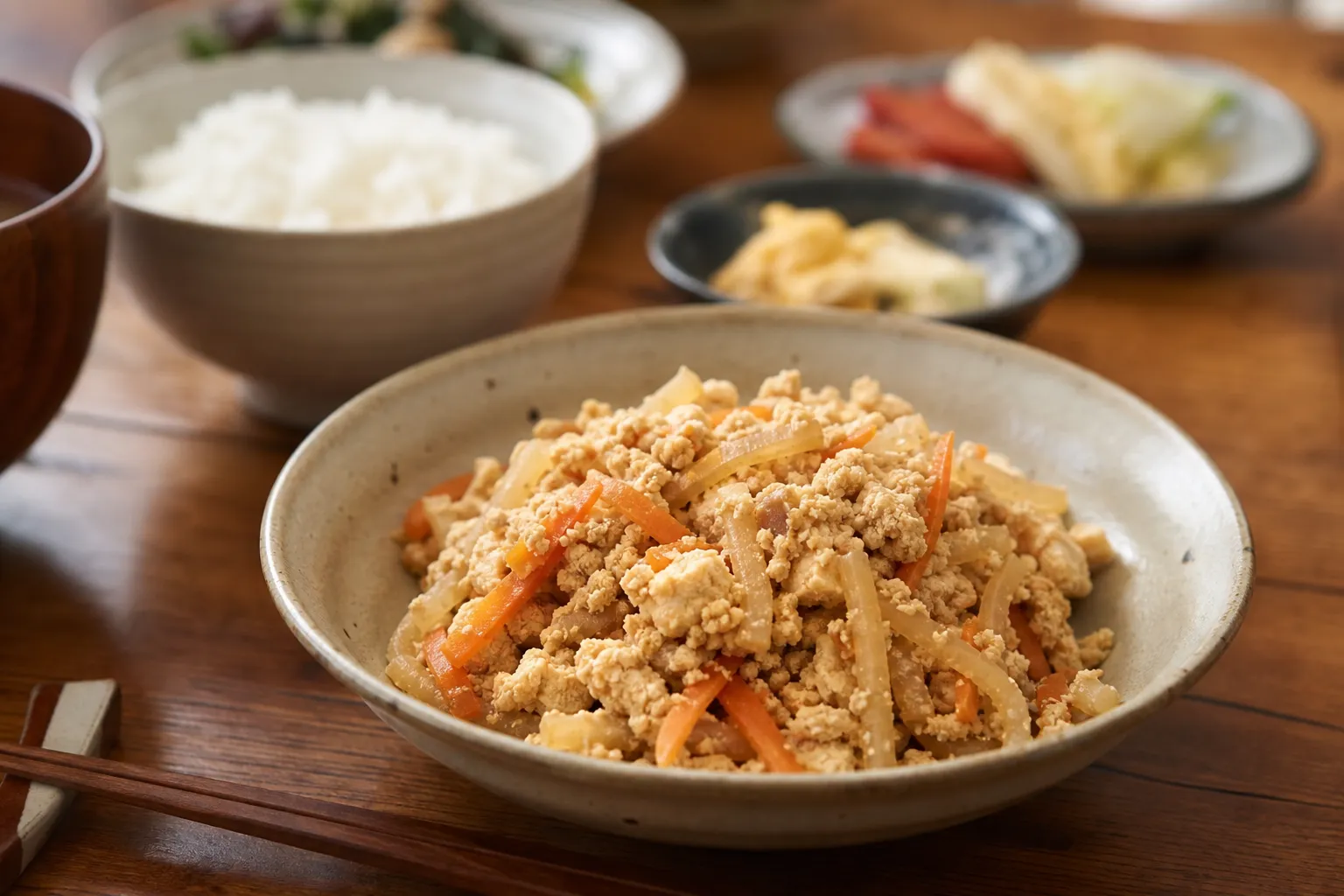
Kenchou is deep-winter Yamaguchi home food, the kind you make in a big pot. When the daikon is fat and sweet in the cold months, families cook up a huge batch of kenchou and eat it for days — and everyone agrees it's better on day two, when the tofu has drunk in even more of the seasoning. It's said to share a root with kenchin-style temple/soup cooking, but Yamaguchi took it in its own direction: less broth, more substance, seasoned to eat with rice.
I find that genuinely comforting to think about — a dish whose entire identity is "we made too much on purpose so we'd have it all week." It's frugal (tofu that's a little past its best gets happily crumbled in), it's nourishing, and it's tied to cold-weather家庭 tables rather than restaurants. Every household has its own balance of sweet to salty, its own choice of extra vegetables. It's not on many tourist itineraries, which is exactly why eating a bowl feels like being let into someone's actual home.
What makes the eating experience different
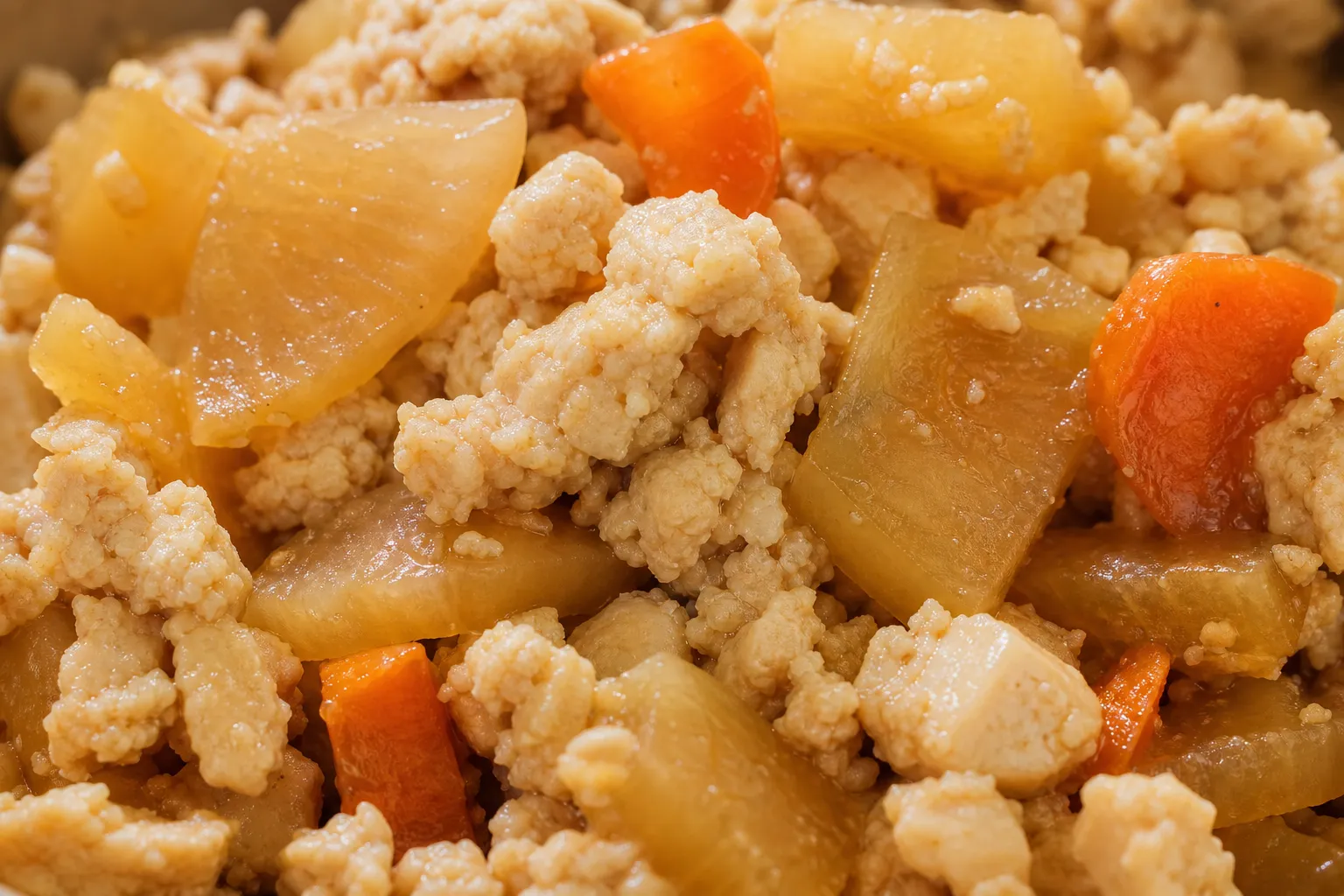
- Moist, not soup. There's just enough seasoned liquid to keep everything glossy and tender — you eat it with chopsticks over rice, not with a spoon like a soup.
- Crumbled tofu, not cubed. The tofu is broken into soft curds that thicken the dish and carry the soy seasoning right into every bite.
- Sweet daikon is the co-star. Winter daikon goes soft and sweet as it simmers, balancing the savory soy — humble vegetables doing quietly beautiful work.
- Better the next day. It reheats gorgeously and deepens overnight, which is why it's cooked in batches — leftovers are the point, not an afterthought.
- Pure comfort, zero drama. No heat, no funk, nothing challenging — just warm, gentle, soy-sweet home cooking that goes down easy.
How it's made
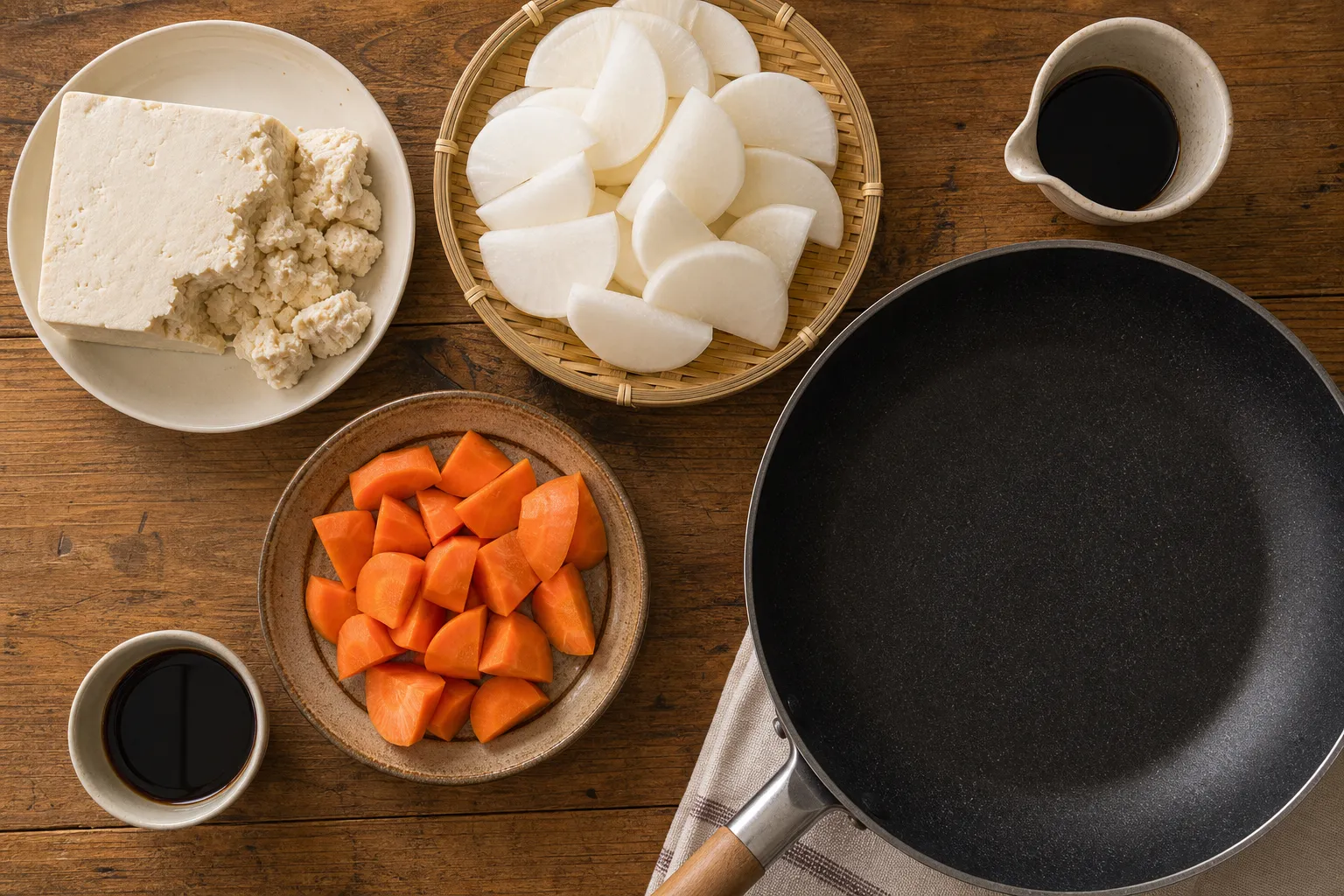
- Drain and crumble the tofu. Firm tofu is pressed to remove water, then broken up by hand into rough curds.
- Cut the vegetables. Daikon and carrot are cut into small pieces or short batons so they cook down evenly (some cooks add konjac or greens).
- Stir-fry to start. Everything is fried in a little oil until the tofu firms slightly and the vegetables take on some color — this builds the savory base.
- Simmer in sweet-soy. Soy sauce, sugar/mirin and dashi are added and it's simmered until the daikon turns soft and sweet and the liquid mostly cooks away.
- Rest, then reheat. It's best after resting so the flavors settle in — and better still reheated the next day.
The craft is the moisture level: enough seasoning to keep it glossy and tender, but simmered down far enough that it's a dish, not a soup. That distinction is the whole soul of kenchou.
Before you go — find it in a Yamaguchi winter
Your questions, answered honestly
"Isn't this just kenchin-jiru?" — This is the big one. Kenchin-jiru is a soup; kenchou is not. Kenchou is simmered/stir-fried down to a moist, chopstick-eaten dish of crumbled tofu and vegetables in sweet-soy. Related roots, but one you drink and one you eat with rice.
"Is it the same as okara?" — No. Okara is the soybean pulp left over from making tofu. Kenchou uses the tofu itself, crumbled — different ingredient, richer texture, seasoned as a proper side dish.
"Where do I actually find it — is it in restaurants?" — It's mainly home cooking, so it's easiest to find at Yamaguchi teishoku (set-meal) spots, local izakaya, roadside stations and home-style eateries, especially in winter. Ask for it as a local specialty.
"Is it filling / vegetarian-ish?" — It's hearty and rice-friendly, built on tofu and vegetables. Note that many versions use dashi (bonito) in the seasoning, so if you avoid fish, check the recipe — home and shop versions vary.
What the staff will ask you
| You'll hear | Romaji | Meaning | Just say |
|---|---|---|---|
| 温かいのでよろしいですか? | Atatakai no de yoroshii desu ka? | "Is warm okay?" | Hai, onegaishimasu (yes, please) |
| ご飯もつけますか? | Gohan mo tsukemasu ka? | "Add rice too?" | Hai, gohan mo kudasai (yes, rice as well) |
| 大盛りにしますか? | Ōmori ni shimasu ka? | "Large portion?" | Futsū de ii desu (regular is fine) |
To order, just say "Kenchou o kudasai" (けんちょうをください) — "Kenchou, please."
Where to eat it
- Yamaguchi teishoku and home-style eateries in winter — set-meal restaurants and izakaya around the prefecture serve kenchou as a seasonal local side; it's most common in the cold months.
- Yamaguchi roadside stations (michi-no-eki) and local-food counters — good places to find home-style regional dishes, sometimes sold as a prepared side.
- Local events and community food spots in Yamaguchi — as a home/community dish, it turns up at seasonal gatherings and local specialty menus.
Kenchou is primarily winter home cooking, so it's seasonal and shop availability varies — check ahead, and if you avoid fish, confirm whether the seasoning uses bonito dashi.
Soul Score
Local Roots5/5
First-Timer Friendly4/5
Adventure Level3/5
Comfort Level5/5
Travel Worthy3/5
These scores are one obsessed eater's gut feeling — not a verdict. A low number isn't a bad mark, just a different kind of adventure.
Know someone planning Japan?
← All Articles
Local Food · Yamaguchi
Still hungry?
Eat more from Yamaguchi
Local FoodIwakuni, Yamaguchi
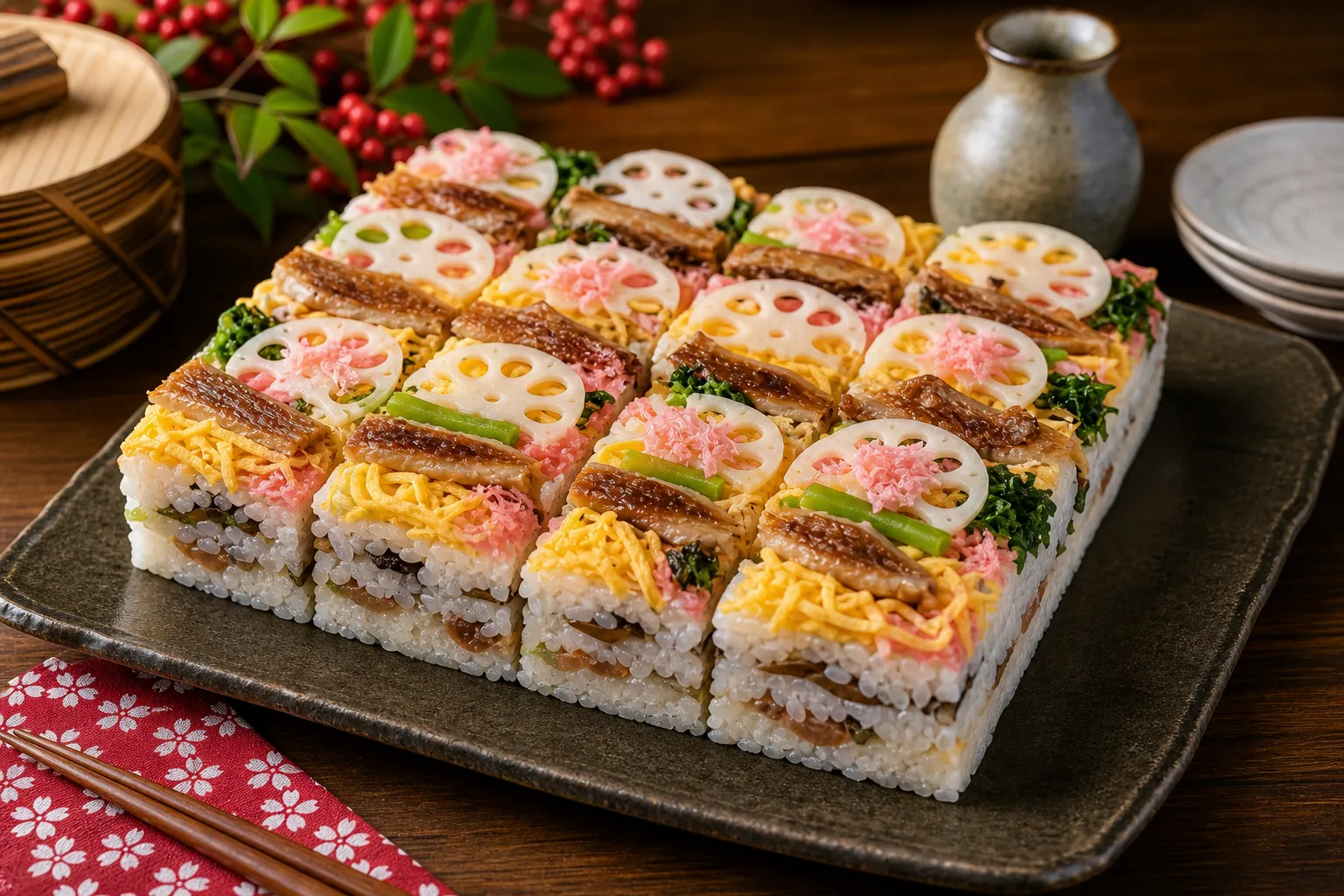
Iwakuni-zushi (岩国寿司)
Sushi built like architecture — pressed in a giant wooden box in colorful layers, then cut into hefty blocks. This is the samurai's answer to feeding a castle, and it lands on the plate like a striped little monument.
July 12, 2026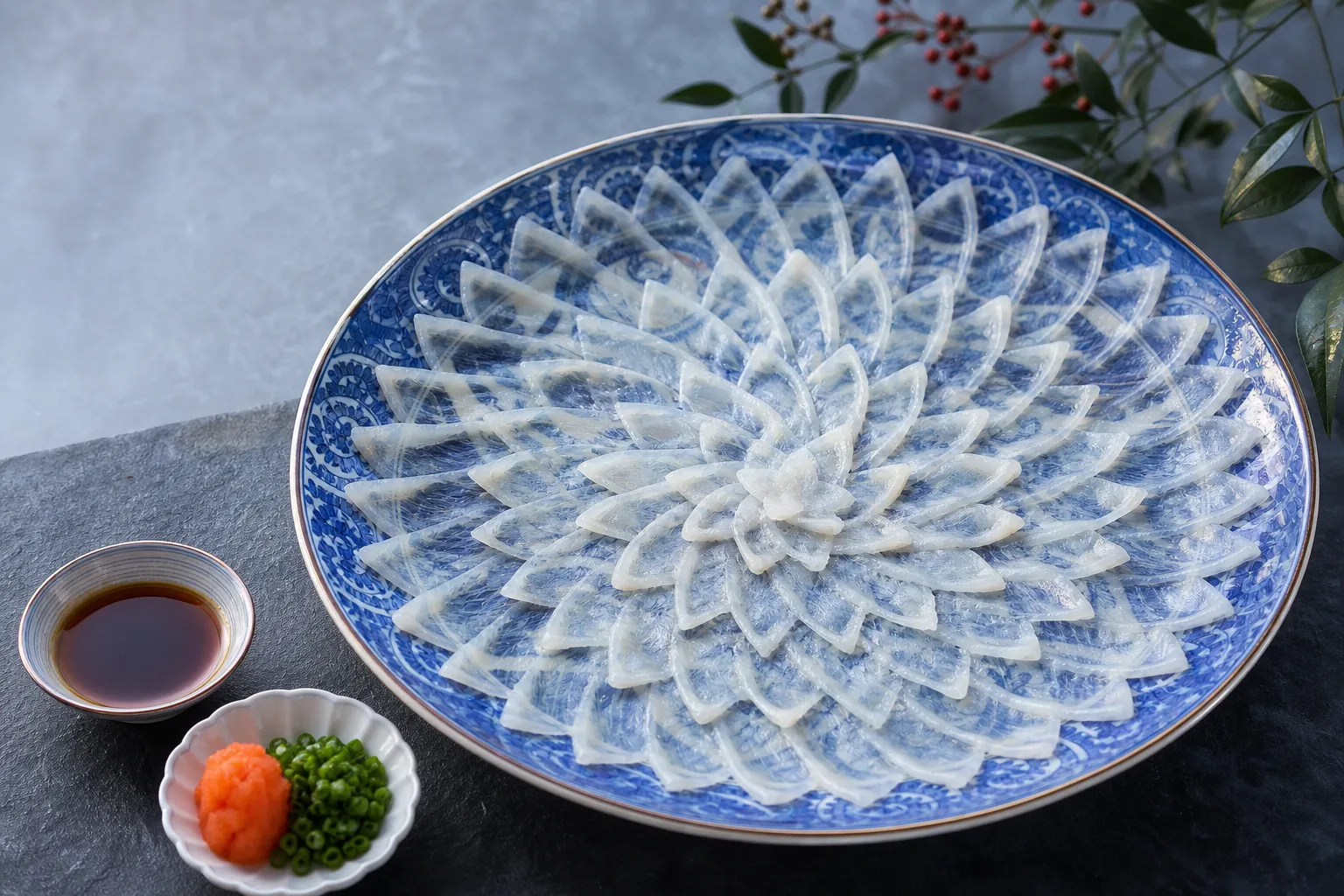
Local FoodShimonoseki, Yamaguchi
Fugu (ふぐ)
The fish that can kill you is sliced so thin you can read the pattern on the plate through it — and somehow that's the least unsettling part of the meal.
July 4, 2026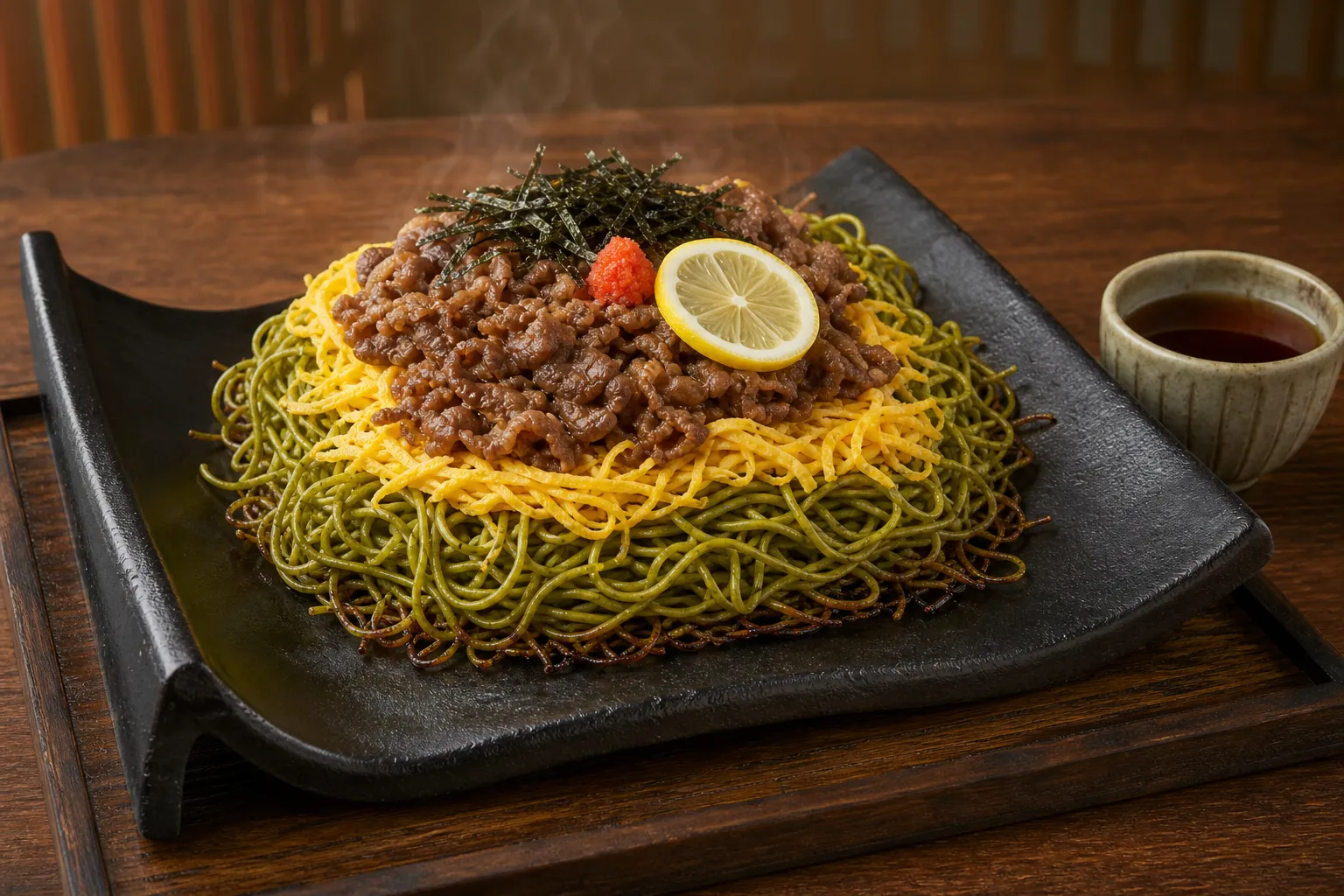
Local FoodKawatana Onsen, Yamaguchi
Kawara Soba (瓦そば)
Green tea noodles served sizzling on a hot roof tile, piled with beef and shredded egg, the bottom layer going crispy against the clay. Yamaguchi turned a battlefield legend into one of the most fun things you can eat.
June 27, 2026