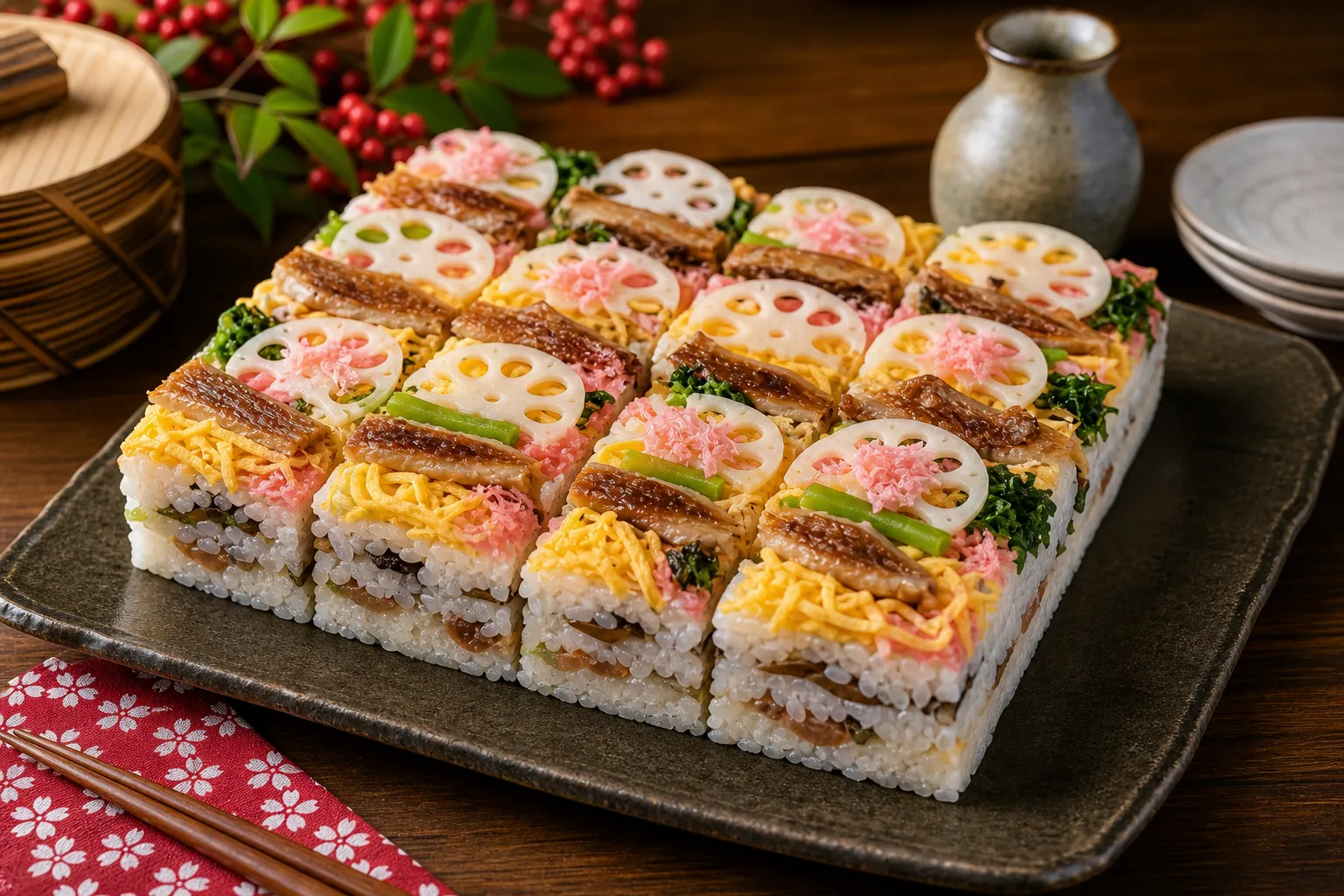
I watched a knife come down through a slab the size of a paving stone and, when the block toppled onto the plate, I actually laughed out loud. There it was in cross-section: a striped little cliff-face of pink fish, yellow egg, white lotus root and green herbs stacked in layers, the whole thing standing up on the plate like a piece of edible architecture. I took a bite and got all of it at once — sweet-tart rice, crunch, savory, herbal — and I thought, who decided sushi should be built like a castle wall? The people of Iwakuni, that's who.
Share this dish


Sushi built like architecture — pressed in a giant wooden box in colorful layers, then cut into hefty blocks. This is the samurai's answer to feeding a castle, and it lands on the plate like a striped little monument.
🍜 Planning a food trip to Yamaguchi?Add this dish to my Food Trip →
 Add this dish to my Food Trip →
Here's what it is: Iwakuni-zushi (岩国寿司) is a large square pressed sushi (oshizushi) built up in a big wooden mold in colorful layers — vinegared rice interleaved with lotus root, shredded egg, seasoned fish, and greens — then weighted, pressed, and cut into thick blocks. It is not hand-pressed nigiri, not a rolled maki, and not loose chirashi scattered in a bowl. It's sushi you construct and slice, and locals proudly call it "samurai sushi."
The sushi a castle built
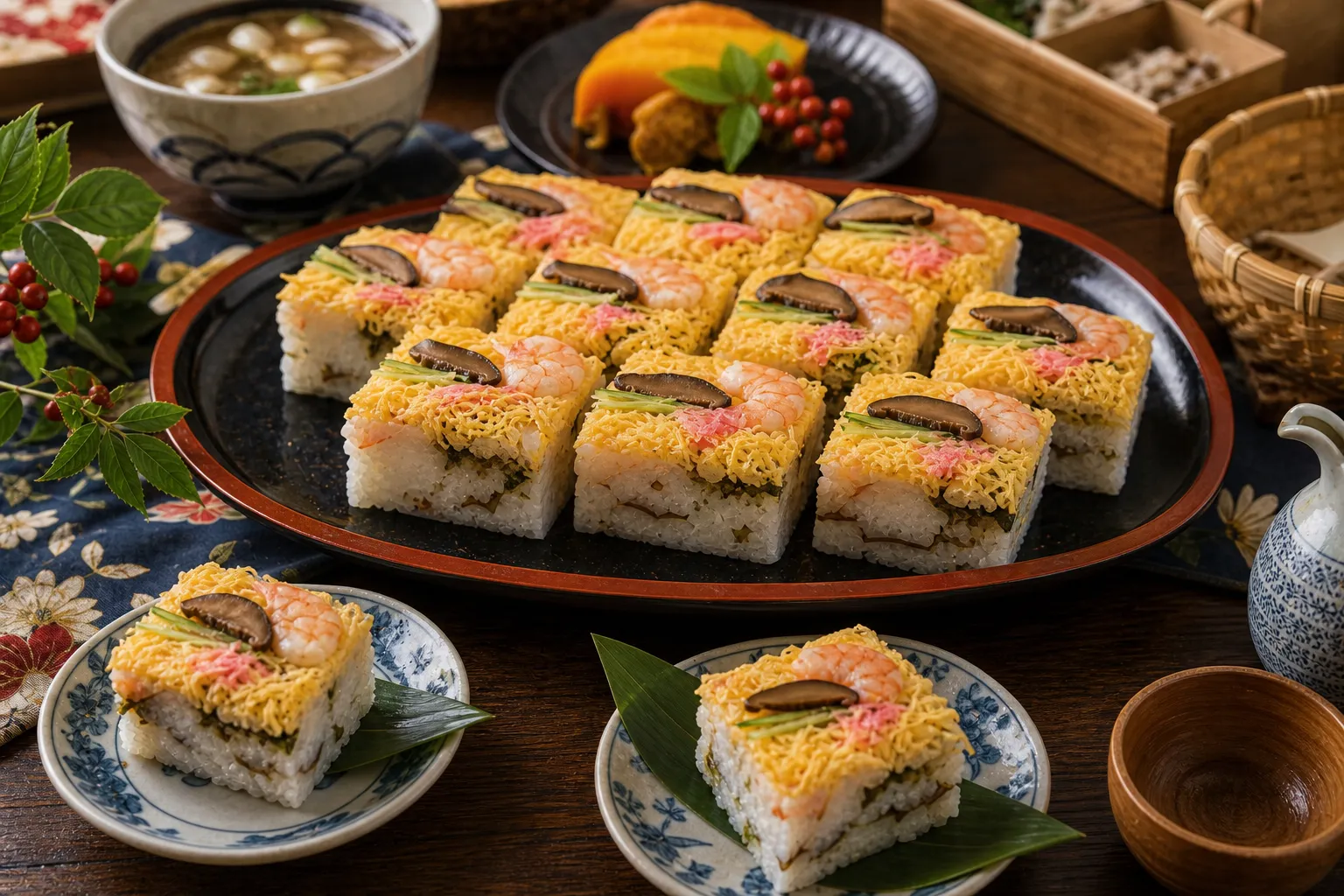
The story goes back to the feudal lords of Iwakuni Castle, up on the hill above the famous Kintaikyo Bridge. The point of this sushi was scale: you could build an enormous batch in one huge mold, press it, and feed a whole garrison or a whole celebration in one go. Some tellings say it was made as provisions a castle could stockpile; others frame it as festive food for a big gathering. Either way the logic is the same — one giant, layered, pressed block, cut up and shared out. I find that genuinely moving, honestly: it's a dish whose whole personality is generosity at scale.
That "samurai sushi" nickname isn't just marketing. This is food designed for a hungry crowd, dressed up beautifully — the layers aren't only for flavor, they're for that gorgeous striped cross-section when you cut it. It says: we fed a lot of people, and we made it look magnificent. In a castle town that already gives you one of Japan's most beautiful bridges, that feels exactly right.
What makes the eating experience different
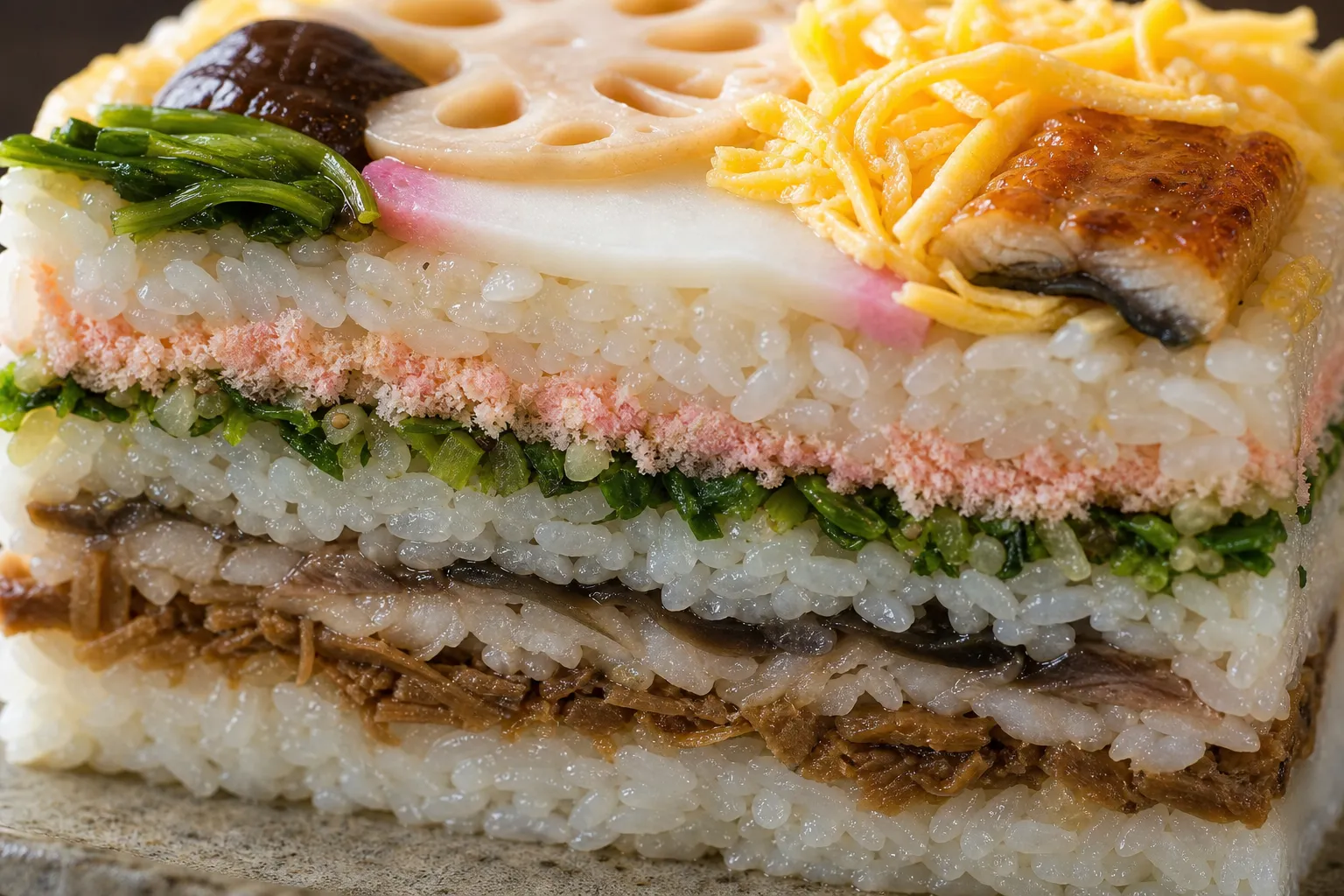
- It arrives as a cut block, not individual pieces — a thick square you eat like a hearty slab, with that beautiful layered cross-section on show
- Every bite is a stack — rice plus lotus root plus egg plus fish plus greens all in one mouthful, instead of the single-topping hit of nigiri
- Pressing changes the texture — the rice is dense and cohesive, not the loose, airy clump of a hand-formed piece
- Lotus root brings an addictive crunch you almost never get in other sushi styles — it's the signature texture here
- It's hearty and shareable — this is sushi that fills you up and gets set in the middle of the table, not a delicate one-and-done
How it's made
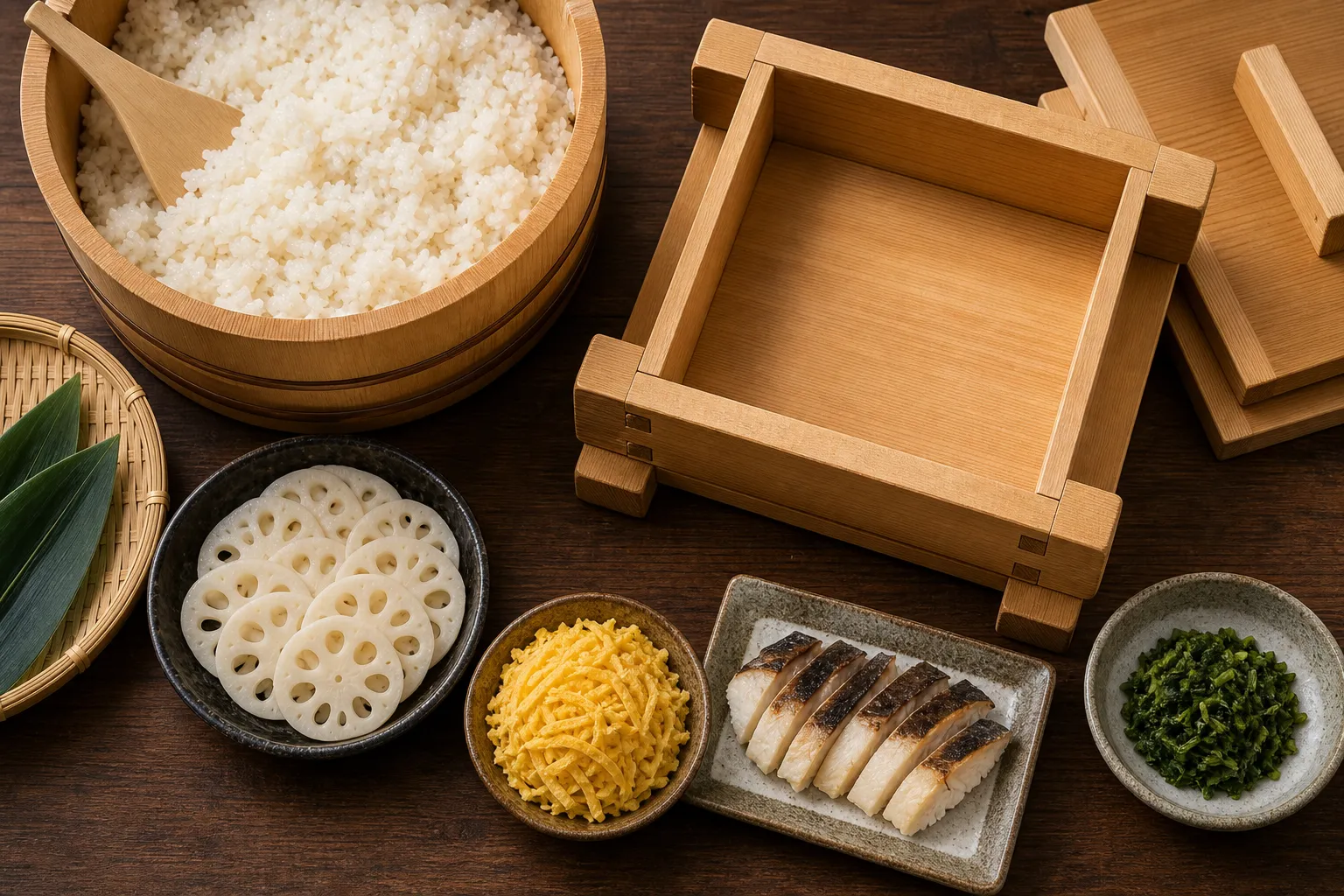
- Make the sushi rice. Cook rice firm, then fold in sweet-tart sushi vinegar.
- Prep the toppings. Simmer and thinly slice lotus root, make shredded (kinshi) egg, season fish or other proteins, and ready greens or herbs like konoha (leafy garnishes).
- Layer it in the mold. Press a bed of rice into a big wooden box, scatter on a layer of toppings, then rice again, then toppings — building up several colorful strata.
- Weight and press. Put the lid on and press down hard (traditionally with real weight on top) so the whole block compacts into one dense, sliceable slab.
- Cut into blocks. Turn it out and cut the pressed slab into thick squares, revealing the layered cross-section — and serve.
The craft is in the pressing and the layering: press unevenly and it slumps, layer carelessly and you lose that clean striped face. Get it right and each cut block stands tall on the plate.
Before you go — eat it in the shadow of the Kintaikyo Bridge
Your questions, answered honestly
"Is this raw fish sushi like nigiri?" — Not really. Iwakuni-zushi is a pressed, layered sushi cut into blocks, and the toppings lean toward seasoned and cooked things — lotus root, egg, greens, and fish that's often cured or cooked, though some versions do include raw fish. If you're avoiding raw, just ask what's in it; recipes vary by shop.
"How big is a serving — is it a whole giant block?" — You don't eat the whole castle-sized slab. It's built huge, then cut down, so a serving is a thick square (or a couple of them). It's substantial and filling — more of a proper meal portion than a light bite.
"How is it different from a sushi roll or chirashi?" — A maki roll is rolled in seaweed; chirashi is loose toppings scattered over a bowl of rice. Iwakuni-zushi is neither — it's pressed in a box in layers and cut into blocks, so you get that dense, architectural, striped-cross-section experience.
"Sweet or sour?" — Mostly sweet-tart from the sushi rice, balanced by savory toppings and the crunch of lotus root. It's gentle and approachable, not sharp.
What the staff will ask you
| You'll hear | Romaji | Meaning | Just say |
|---|---|---|---|
| 何人前にしますか? | Nan-nin-mae ni shimasu ka? | "How many servings?" | Ichi-nin-mae kudasai (one serving, please) |
| 生の魚は入っても大丈夫ですか? | Nama no sakana wa haitte mo daijōbu desu ka? | "Is raw fish okay for you?" | Daijōbu desu (that's fine) / Nama wa nashi de (no raw, please) |
| こちらでお召し上がりですか? | Kochira de omeshiagari desu ka? | "Eating here?" | Hai (yes) / Mochikaeri de (to take away) |
To order, just say "Iwakuni-zushi o kudasai" (岩国寿司をください) — "Iwakuni-zushi, please."
Where to eat it
- Around the Kintaikyo Bridge, Iwakuni — the riverside district by the famous arched bridge is the classic place to find Iwakuni-zushi at local restaurants and specialty shops.
- Iwakuni Castle and the Kikko Park area — the historic castle-town quarter up and around the hill is the dish's home ground; look for it on set menus alongside other local specialties.
- Local restaurants and souvenir food shops in Iwakuni — some sell it by the serving to eat in, others as a boxed portion to take away.
Iwakuni-zushi is a pressed, made-in-batches specialty, so availability and toppings vary by shop and season — check ahead if you want it on a specific day, and ask what's layered inside before you order.
Soul Score
Local Roots5/5
First-Timer Friendly4/5
Adventure Level3/5
Comfort Level4/5
Travel Worthy4/5
These scores are one obsessed eater's gut feeling — not a verdict. A low number isn't a bad mark, just a different kind of adventure.
Know someone planning Japan?
← All Articles
Local Food · Iwakuni, Yamaguchi
Still hungry?
Eat more from Yamaguchi
Local FoodYamaguchi
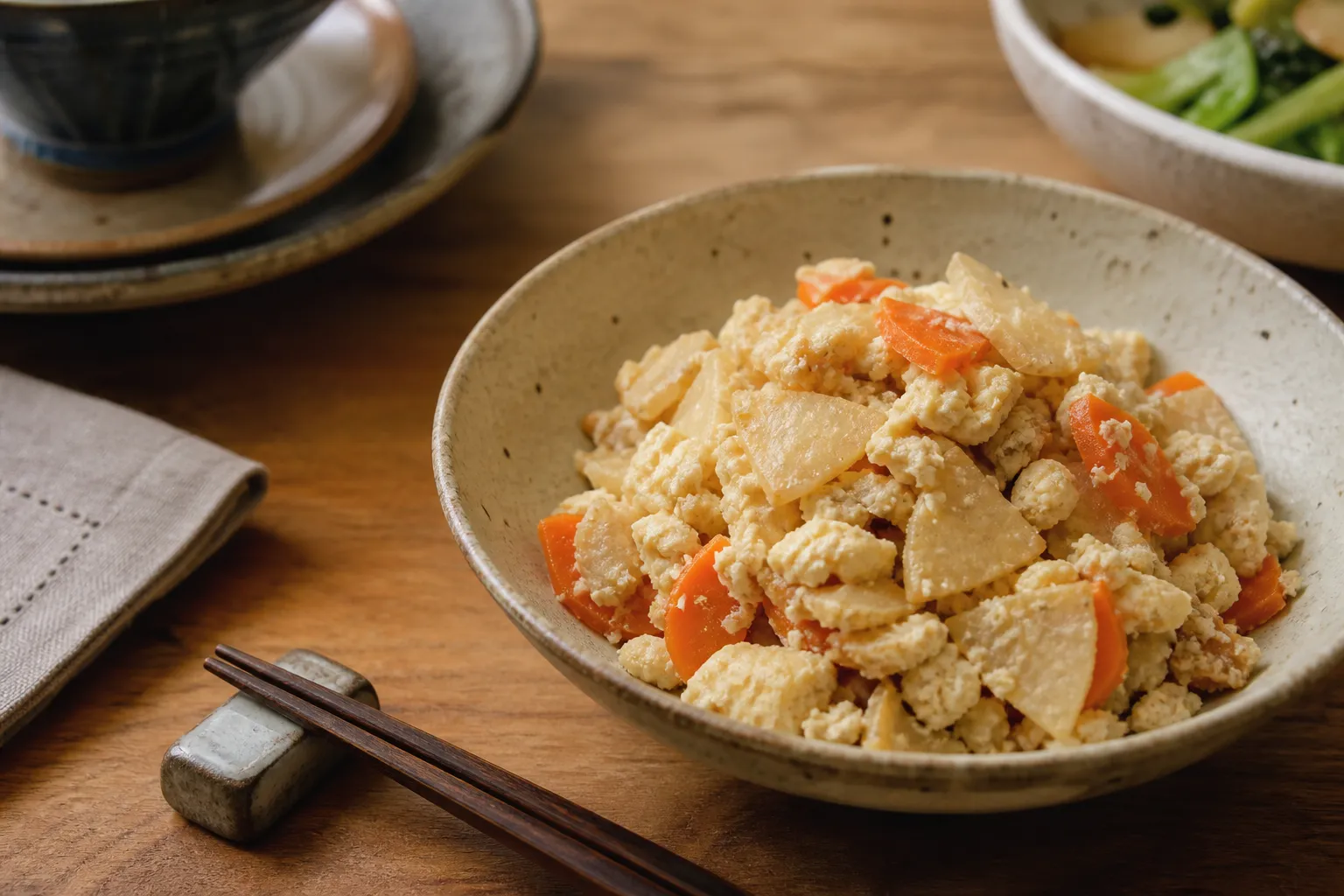
Kenchou (けんちょう)
Not a soup, not a scramble — Yamaguchi's crumbled tofu simmered soft with sweet daikon and carrot until it's gently soy-glossed and disappears bowlful by bowlful. Winter comfort in a pot.
July 12, 2026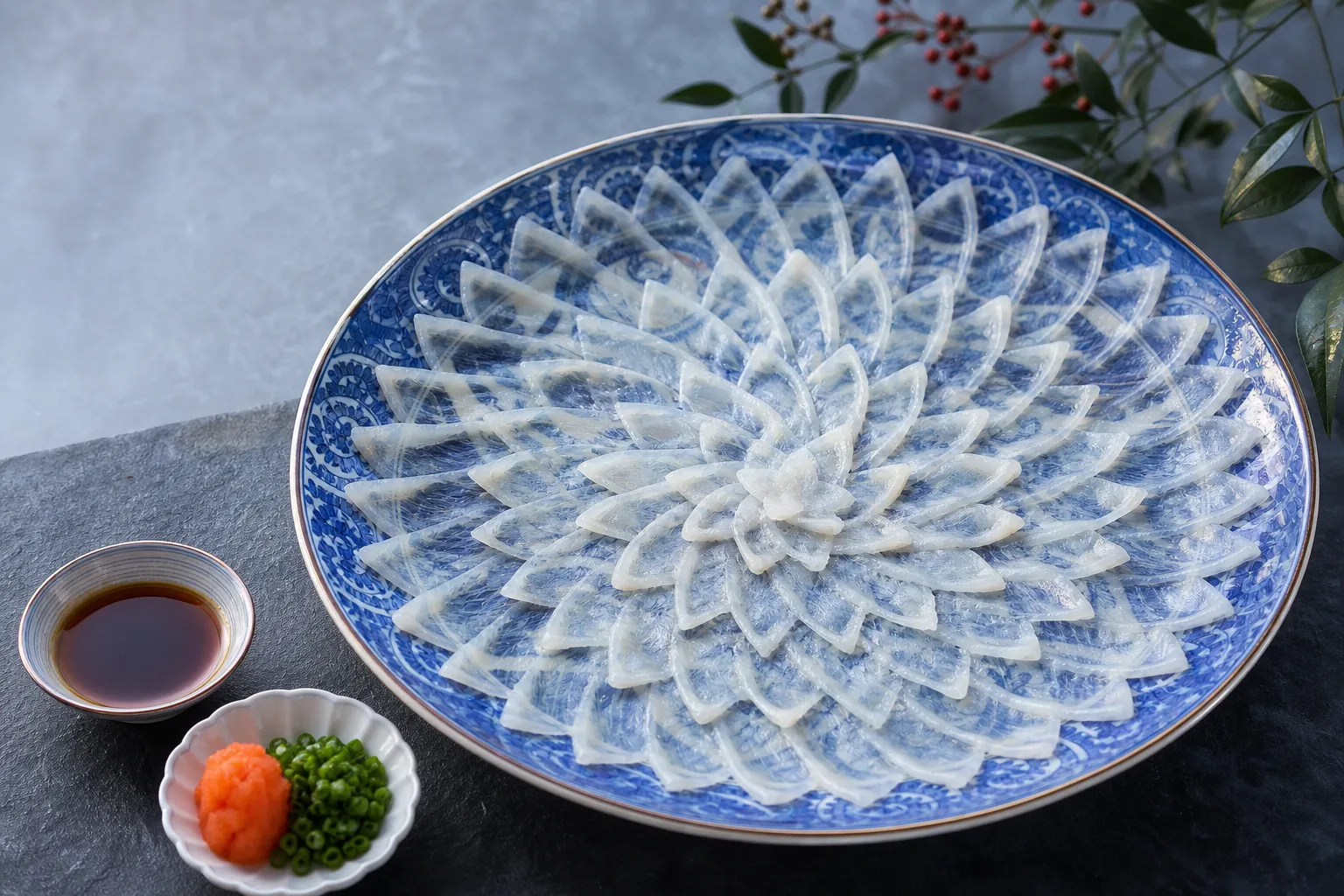
Local FoodShimonoseki, Yamaguchi
Fugu (ふぐ)
The fish that can kill you is sliced so thin you can read the pattern on the plate through it — and somehow that's the least unsettling part of the meal.
July 4, 2026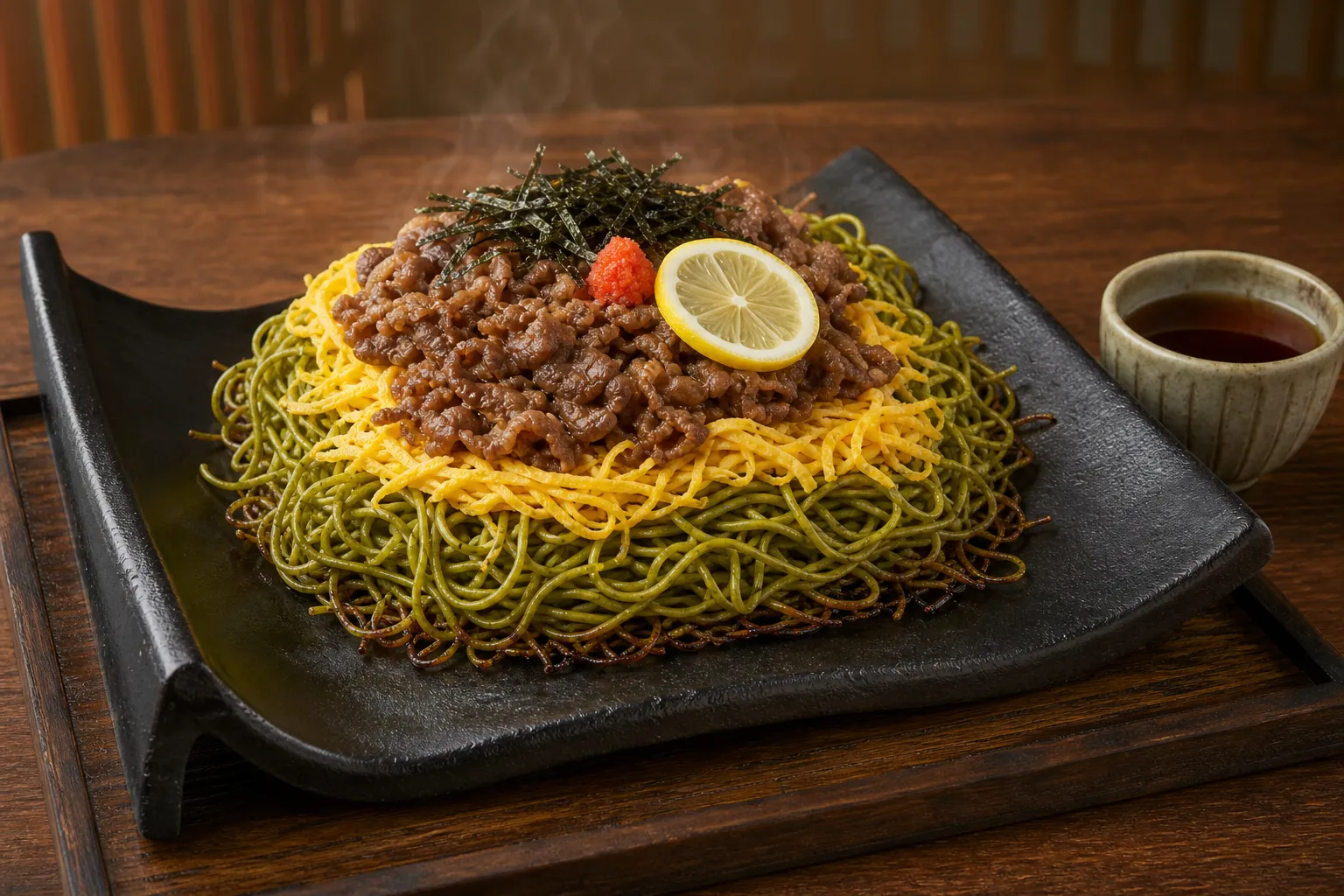
Local FoodKawatana Onsen, Yamaguchi
Kawara Soba (瓦そば)
Green tea noodles served sizzling on a hot roof tile, piled with beef and shredded egg, the bottom layer going crispy against the clay. Yamaguchi turned a battlefield legend into one of the most fun things you can eat.
June 27, 2026