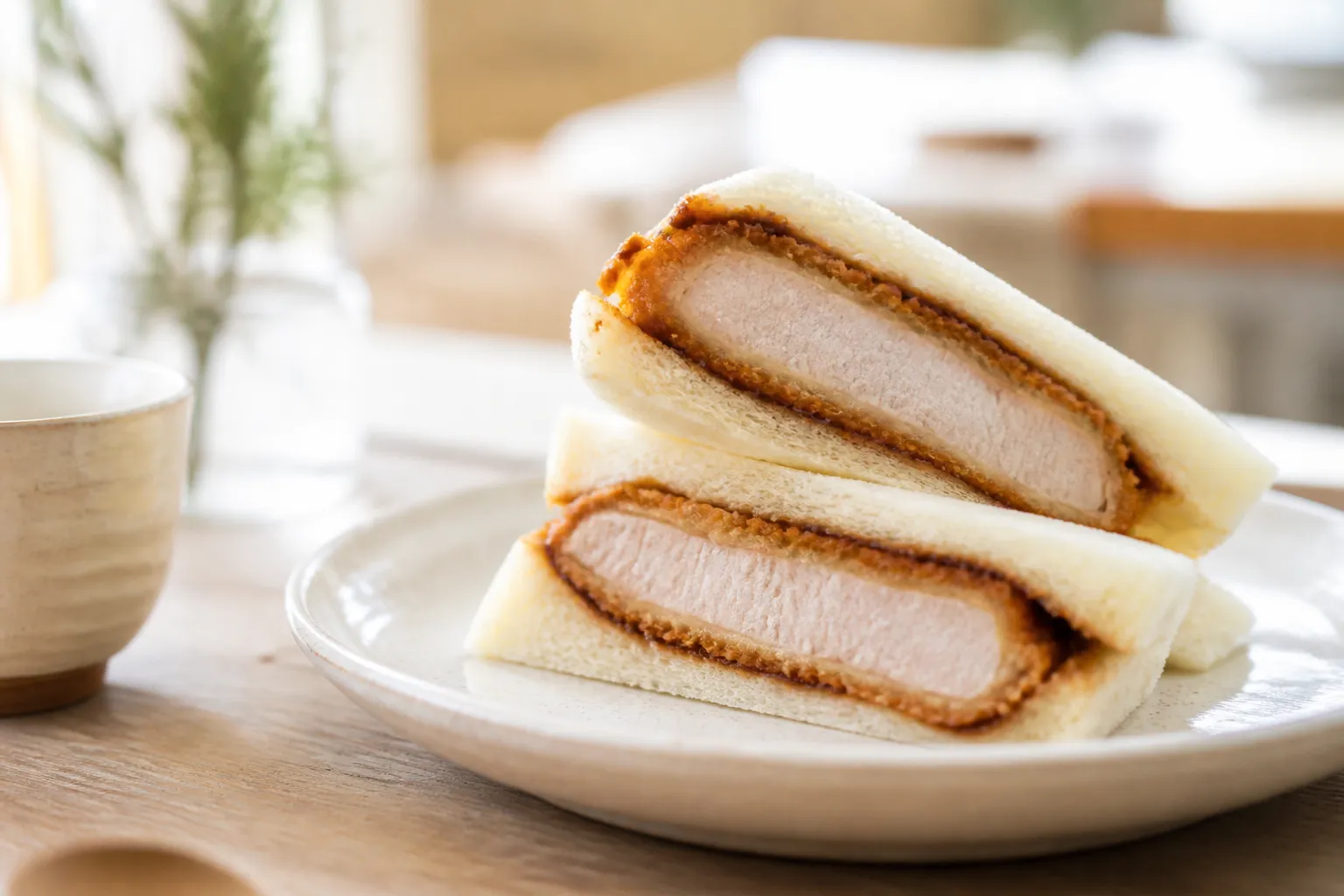
I bought it out of pure convenience-store desperation — cold, jet-lagged, standing under fluorescent lights at 11pm with no better options — and it fixed everything. Crisp breaded pork, still a little warm, a dark ribbon of sauce, soft bread giving way with almost no resistance. I have eaten a lot of sad hotel-adjacent sandwiches in my life. This was not one of them, and I've been quietly obsessed ever since.
Share this dish


A thick, golden-fried pork cutlet, crustless white bread, one bite — and suddenly a convenience-store sandwich has no business tasting this good.
🍜 Planning a food trip to Japan?Add this dish to my Food Trip →
 Add this dish to my Food Trip →
Here's what it is: katsu sando (カツサンド) is a breaded, deep-fried pork cutlet (tonkatsu) sandwiched between two slices of soft, crustless white bread, brushed with a thin layer of tangy-sweet tonkatsu sauce, and cut into neat triangles. It sits at a genuinely wide range: a humble convenience-store staple at one end, and at the other, thick-cut wagyu katsu sando from specialist shops and department-store food halls that has become an international obsession — the kind of thing people queue for and photograph before they eat.
From bento counters to a global obsession
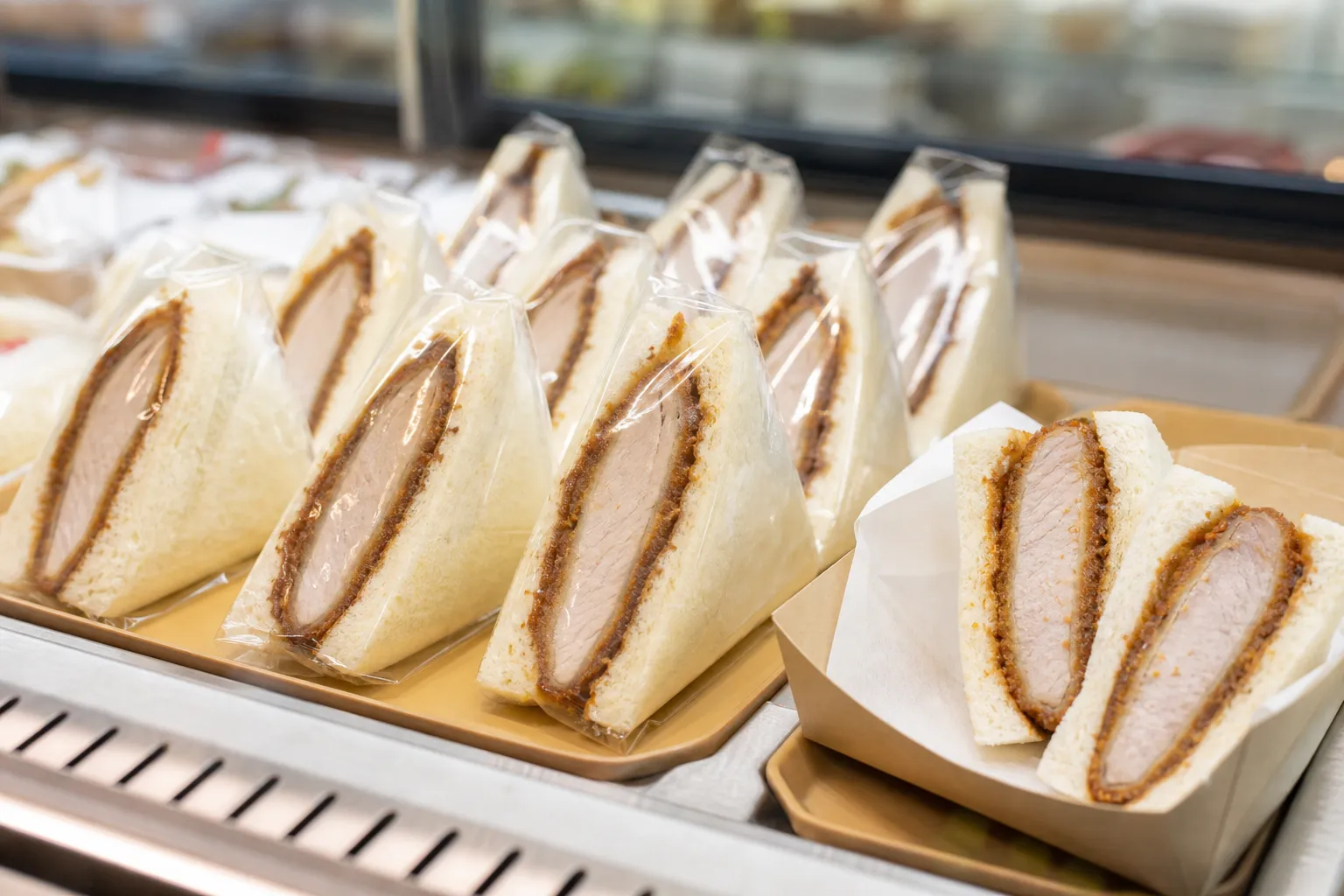
Katsu sando grew out of Japan's much older love affair with yoshoku — Western-style dishes reinvented with Japanese technique, of which tonkatsu itself is a prime example. Once tonkatsu became a fixture of home and restaurant menus, tucking it between slices of milk bread was a small, practical leap: portable, mess-free, easy to eat on a train platform or at a desk. For decades it lived quietly as convenience-store and bento-counter fare, the kind of thing nobody wrote home about.
Then, in the last decade or so, high-end versions built around thick, wagyu-grade cutlets turned it into a bona fide phenomenon — the kind of sandwich with its own queues outside department stores and its own dedicated fan accounts. I find that trajectory genuinely delightful: a humble bread-and-cutlet combo, decades in the making, suddenly treated like a luxury item, and somehow it earns it every time.
Why the cross-section is the whole show
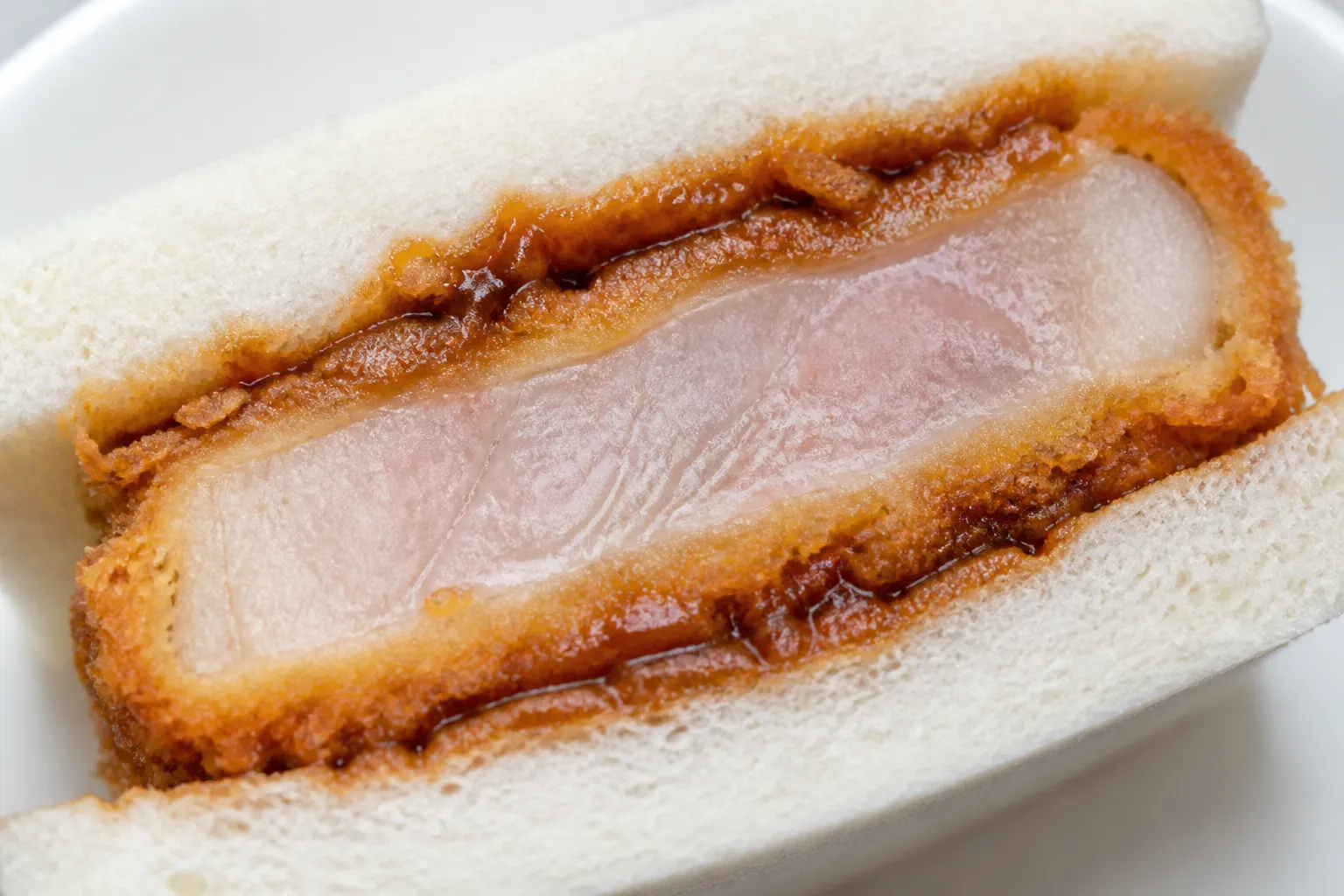
- The bread is soft, crustless, milk bread — built to compress slightly around the cutlet rather than fight it
- A thin layer of tonkatsu sauce (tangy, slightly sweet, almost Worcestershire-like) is the only seasoning, so the pork stays the star
- At specialty shops, the cutlet is cut thick, with visible marbling if it's wagyu, so the cross-section looks almost architectural when sliced
- It's eaten cold or room-temperature far more often than hot — a very different experience from a fresh, sizzling tonkatsu plate
- The triangle cut isn't just presentation — it exposes that dramatic cross-section, which is half the reason people photograph it before eating
How it's made
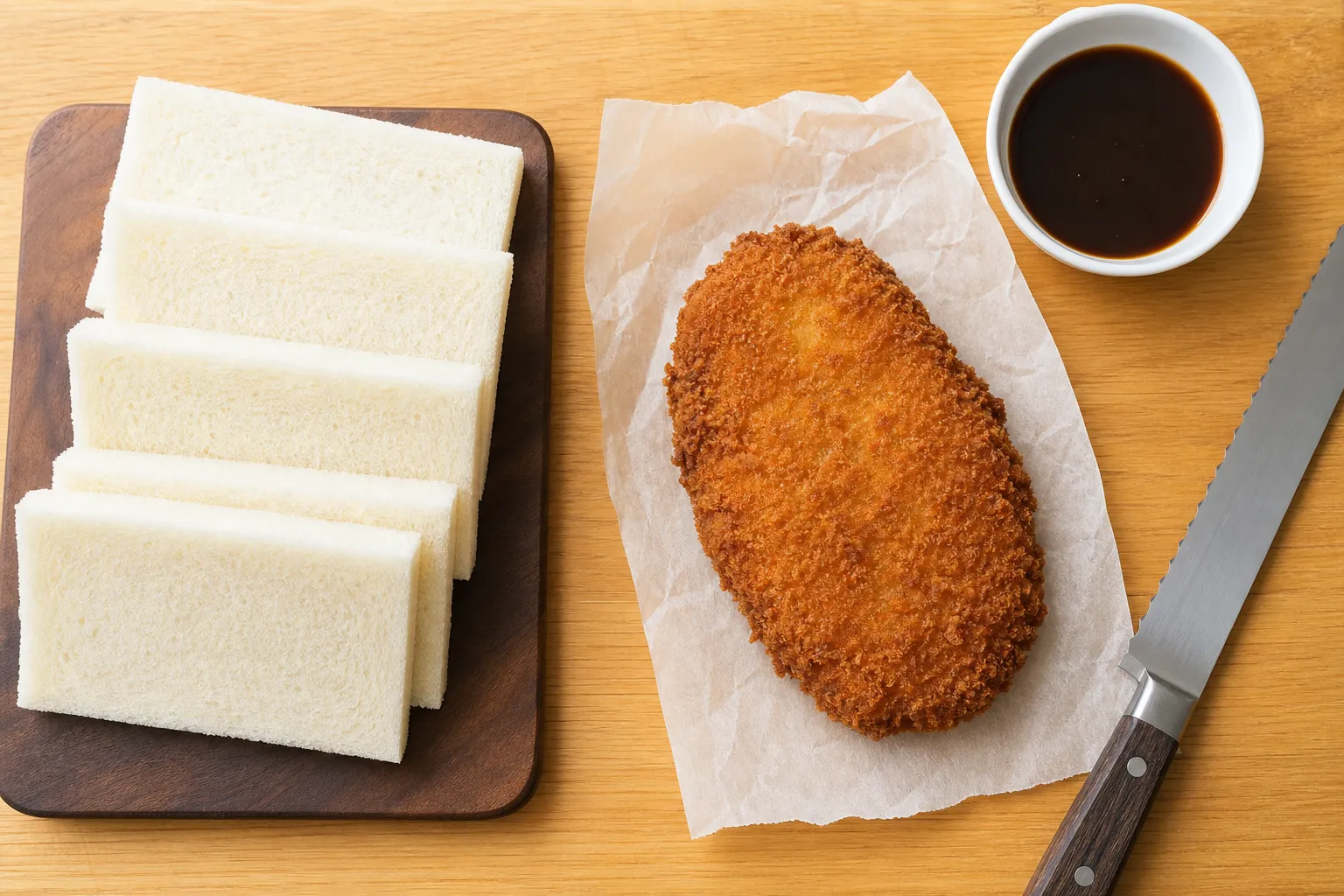
- A pork cutlet is breaded and deep-fried until golden, following standard tonkatsu technique — thicker cuts at specialty shops, thinner at convenience stores.
- The bread is sliced, crusts removed, and often lightly toasted or left soft depending on the shop's style.
- A thin layer of tonkatsu sauce is brushed onto the bread — rarely mayonnaise, rarely mustard, just the sauce.
- The warm cutlet is placed on the bread, sometimes with a small amount of shredded cabbage, and topped with the second slice.
- The sandwich is pressed gently and cut into triangles, showing off the thick cutlet in cross-section.
Before you go — a sandwich worth queuing for
Your questions, answered honestly
"Convenience store or specialty shop — which should I try?" — Try both if you can. The convenience-store version is a genuinely solid, cheap snack; the specialty wagyu version is a different tier entirely and worth seeking out for the cross-section alone.
"Should it be hot or cold?" — Either is normal. Convenience-store versions are eaten cold straight from the package; specialty shops sometimes serve it slightly warm. Don't assume something's wrong if yours isn't hot.
"Is it very filling?" — More than it looks. The bread is light, but the thick cutlet adds up — a whole katsu sando is a proper light meal, not just a snack.
"Why no lettuce or tomato?" — Simplicity is the point. The classic version is just bread, sauce, and cutlet, occasionally with a little cabbage — resist the urge to compare it to a Western sandwich.
What the staff will ask you
| You'll hear | Romaji | Meaning | Just say |
|---|---|---|---|
| 温めますか? | Atatamemasu ka? | "Shall I heat it up?" | Daijōbu desu (no thanks) / Onegaishimasu (yes please) |
| お箸は付けますか? | Ohashi wa tsukemasu ka? | "Do you need chopsticks?" | Daijōbu desu (no, I'll eat it by hand) |
| 袋はご利用ですか? | Fukuro wa goriyō desu ka? | "Do you need a bag?" | Onegaishimasu (yes please) |
To order, just say "Katsu sando o kudasai" (カツサンドをください) — "Katsu sando, please."
Where to eat it
- Convenience stores (Lawson, 7-Eleven, FamilyMart) — nationwide, cheap, and reliably good.
- Department store food halls (depachika) — where premium and wagyu versions are commonly sold, often with a queue.
- Specialist katsu sando shops in major cities — increasingly common in Tokyo and Osaka, offering the thick, gift-box-worthy version.
Popular specialty shops can sell out by early afternoon and queues are common — check current hours and go early if you're chasing a specific shop.
Soul Score
Local Roots3/5
First-Timer Friendly5/5
Adventure Level3/5
Comfort Level5/5
Travel Worthy3/5
These scores are one obsessed eater's gut feeling — not a verdict. A low number isn't a bad mark, just a different kind of adventure.
Know someone planning Japan?
← All Articles
Convenience Store · Nationwide
Still hungry?
You might also like
Convenience StoreNationwide
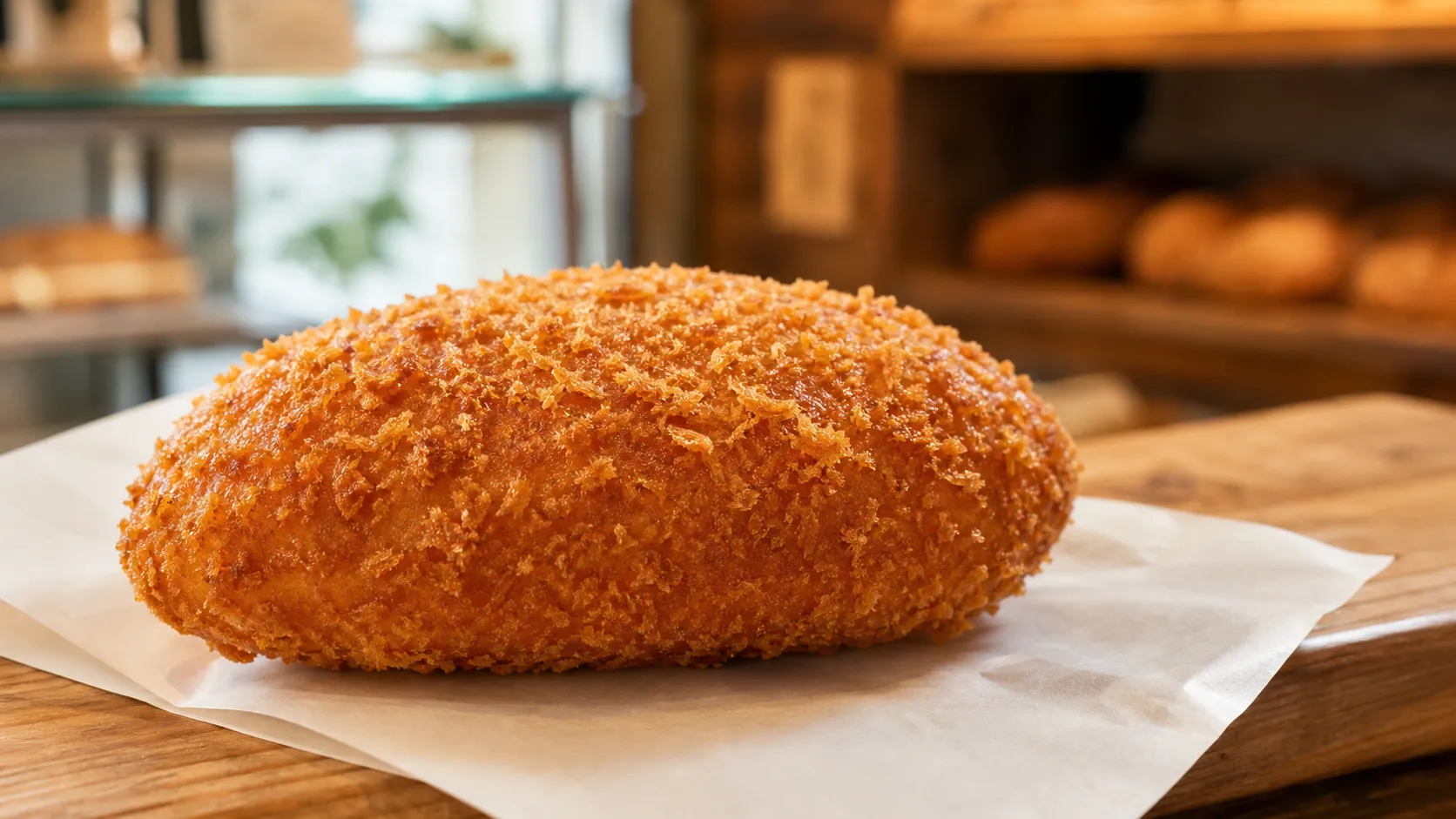
Curry Pan (カレーパン)
Japanese curry sealed inside dough, breaded, and deep-fried until shatteringly crisp. The savory bakery hero — crunchy outside, molten-spicy inside, and dangerously easy to eat two of.
June 20, 2026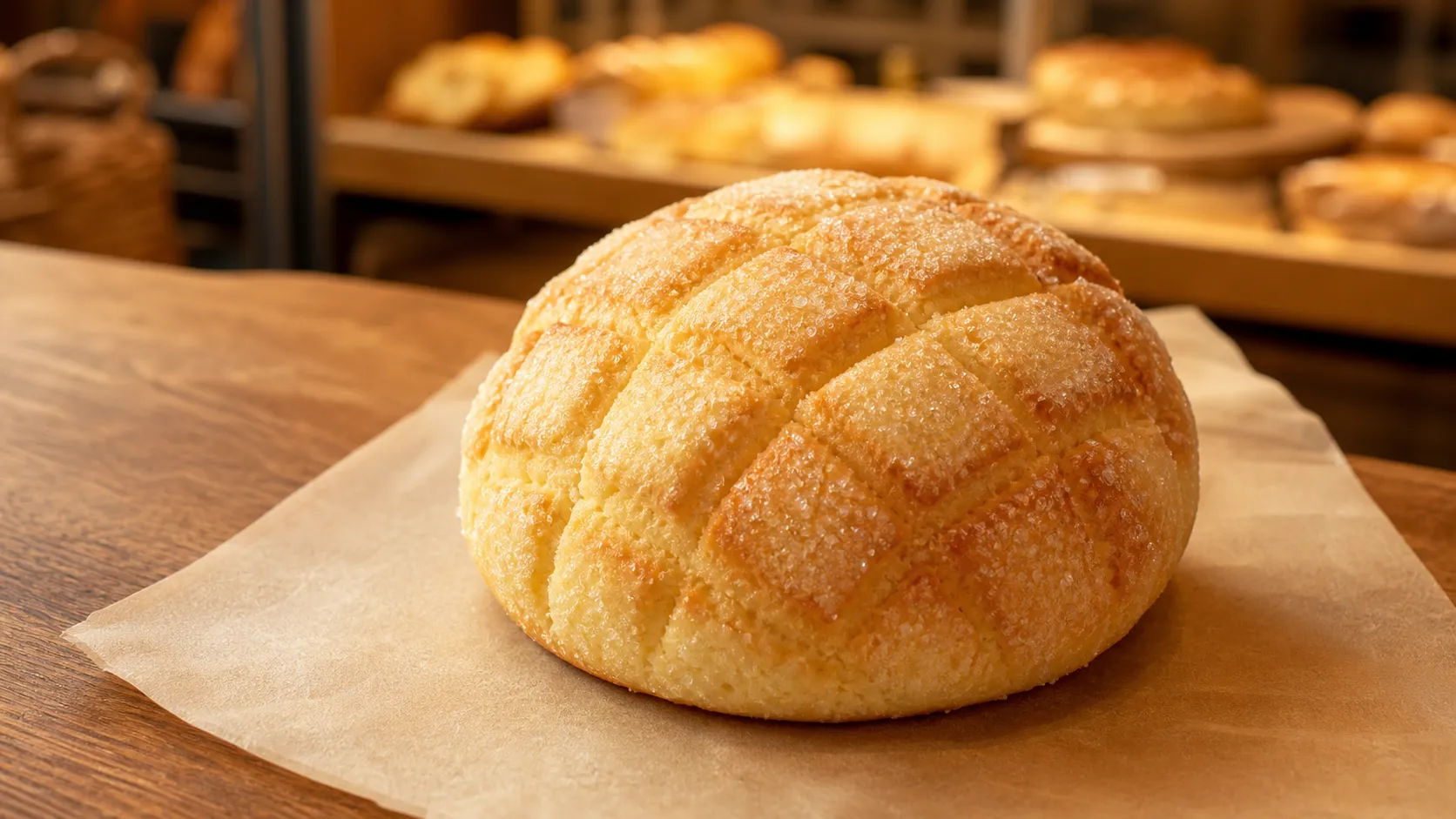
Convenience StoreNationwide
Melonpan (メロンパン)
A soft, fluffy bun under a crisp, sweet, cookie-crust shell scored like a melon. There's usually no melon in it — just one of Japan's most beloved bakery treats, best warm and crackly.
June 20, 2026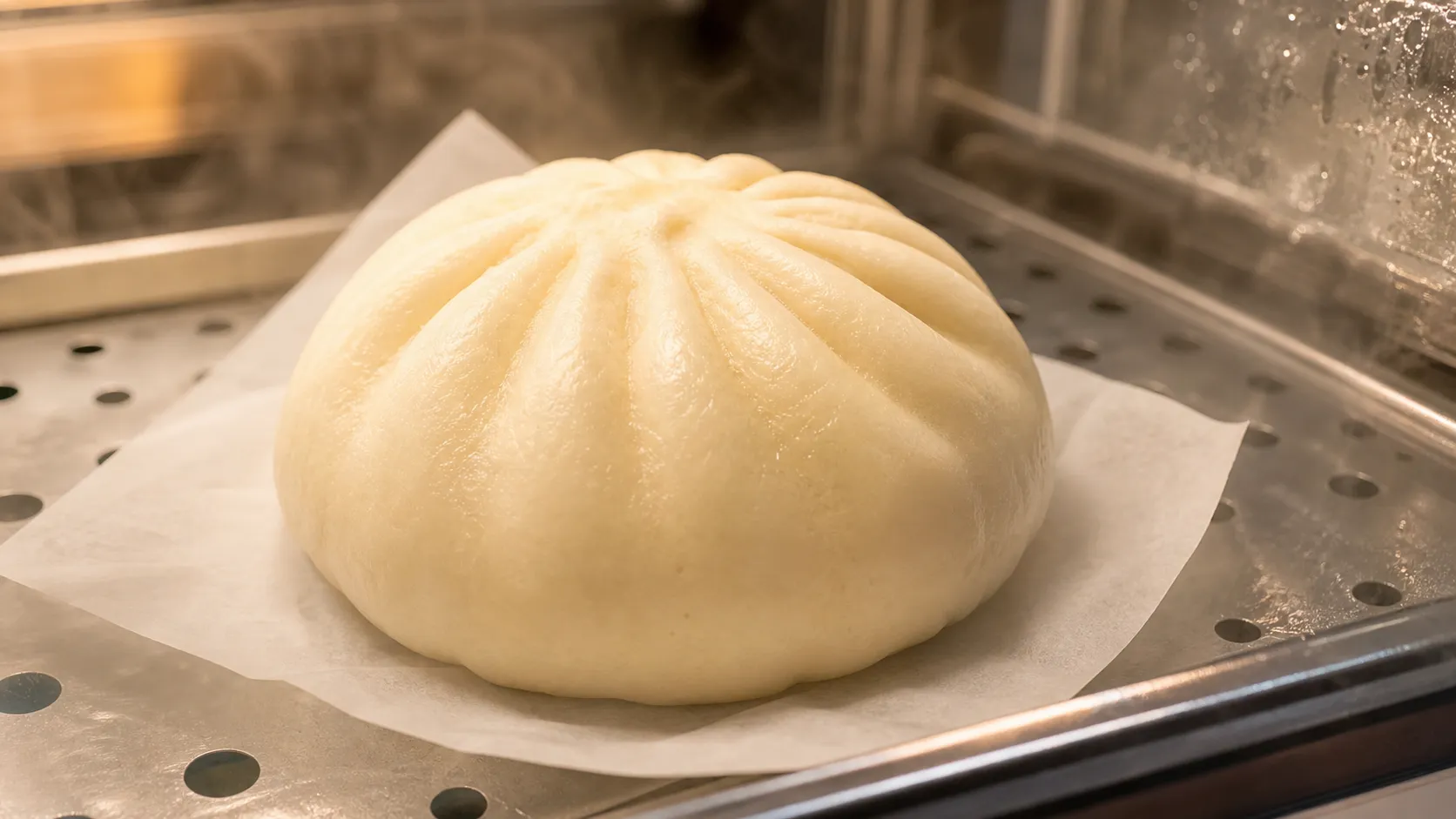
Convenience StoreNationwide
Nikuman (肉まん)
A fluffy steamed white bun stuffed with juicy seasoned pork — pulled hot from the convenience-store steamer on a cold day. Cheap, warming, and one of winter's small perfect pleasures.
June 20, 2026