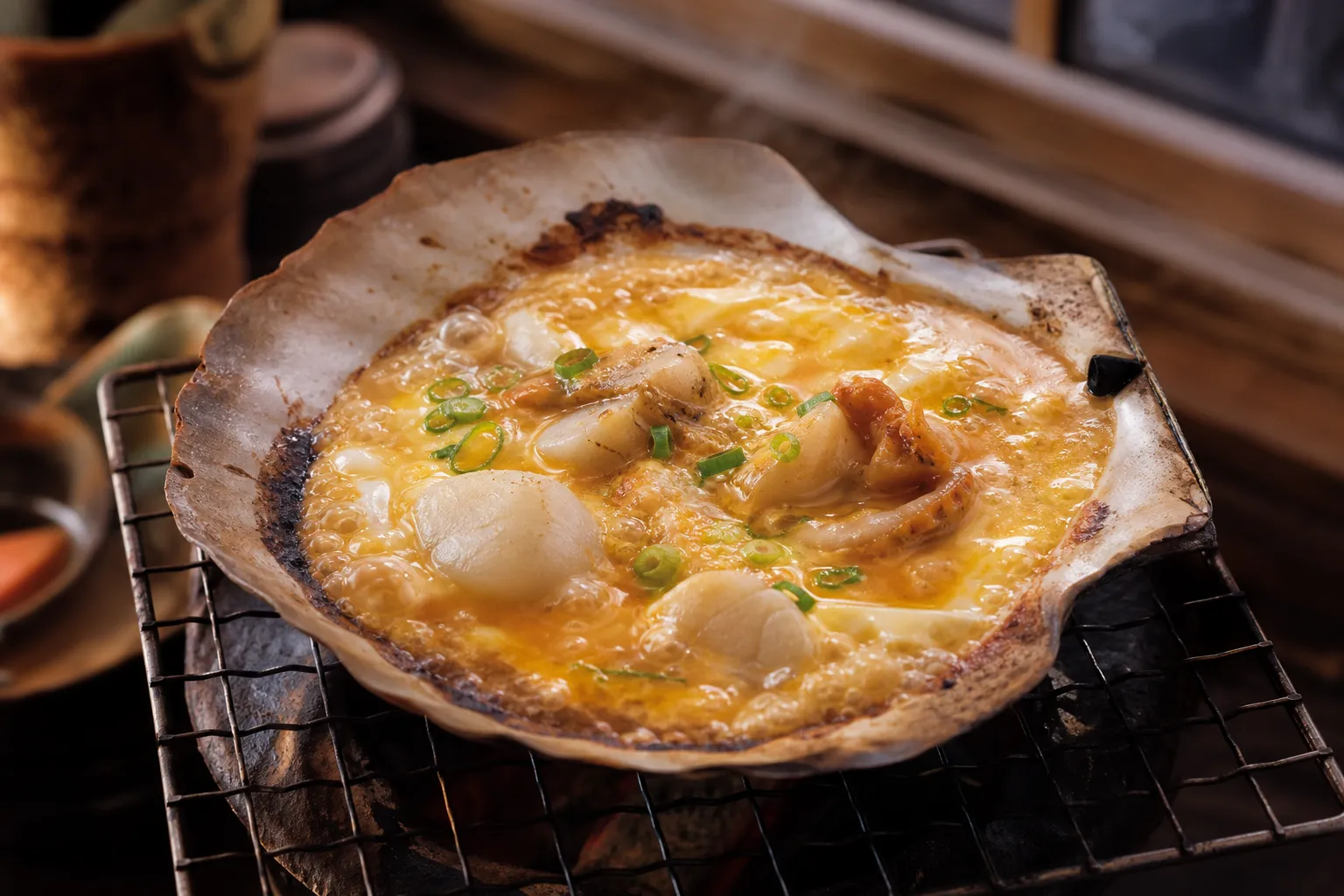
Wait — the plate is the pan? I actually said that out loud the first time. A single enormous scallop shell arrives at the table still hissing, a little raft of miso and egg and sweet scallop steaming inside it, and you're handed chopsticks and told to just eat straight out of the shell. First bite: warm, briny, savory-sweet, the egg barely set into custardy folds, the miso soaking into everything. I made a noise. I ate the whole thing bent over the shell like I was guarding it.
Share this dish


A scallop shell used as its own tiny frying pan — miso, dashi and scallop bubbling away until a beaten egg drapes over it all in soft golden folds. Aomori grandmothers have been cooking dinner in a seashell for generations.
🍜 Planning a food trip to Aomori?Add this dish to my Food Trip →
 Add this dish to my Food Trip →
Here's what it is: kaiyaki-miso (貝焼き味噌) is a home dish from Aomori's Tsugaru region where a large scallop shell is used as a small pan — set over heat and filled with dashi, miso and pieces of scallop, then finished with a beaten egg that's poured in and cooked just until soft-set, so it drapes over the whole thing in tender folds. It is not a plainly grilled scallop, and it is not miso soup, and it is not chawanmushi — it's its own thing: a savory scallop-and-egg simmer cooked and served in the shell.
Born from a seashell and a cold northern kitchen
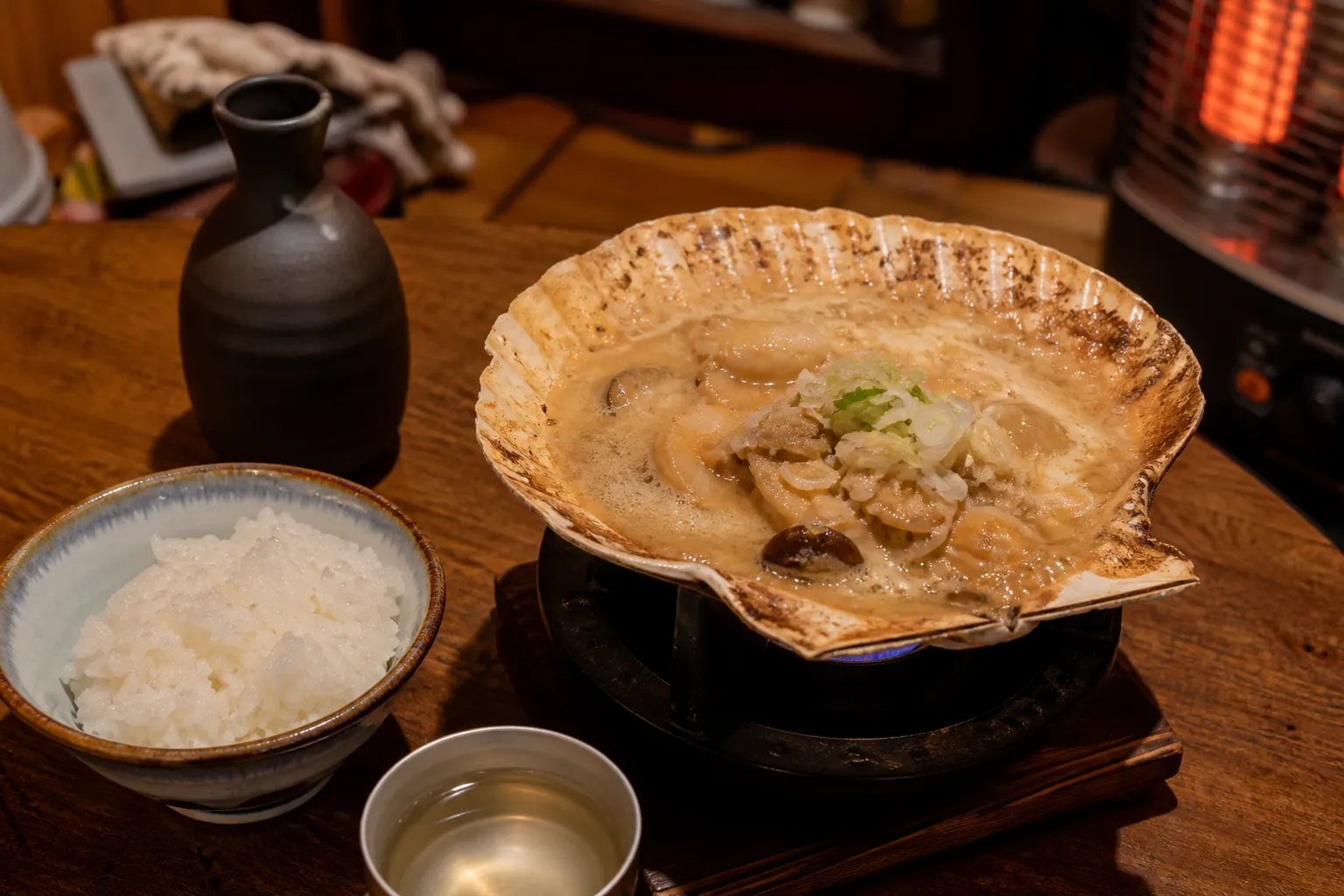
Aomori sits at the very top of Honshu, where the winters are long and hard and Mutsu Bay hands you scallops the size of your palm. Tsugaru cooks did the sensible, brilliant thing: they kept the big shells and used them as tiny pans, set right over the coals or the stove. A little dashi, a spoonful of miso, whatever scallop or fish was around, and an egg to stretch it and make it gentle — and dinner cooks in the same shell you eat from. No extra dishes to wash. I find that deeply practical and deeply moving at the same time.
It was everyday food — a warming, protein-rich thing to eat on a freezing Tsugaru night — and it was also the food you gave someone who was sick or worn out, because it's soft and nourishing and easy on the stomach. You'll hear it called kayaki in the local dialect, and every household guards its own balance of miso to egg. That's the part I love: this isn't restaurant invention, it's grandmother food, and it tastes like someone made it for you specifically.
What makes the eating experience different
- The shell is the pan and the plate. It arrives table-hot, still gently bubbling — you eat straight out of the same scallop shell it cooked in, which is half the joy and all the theater.
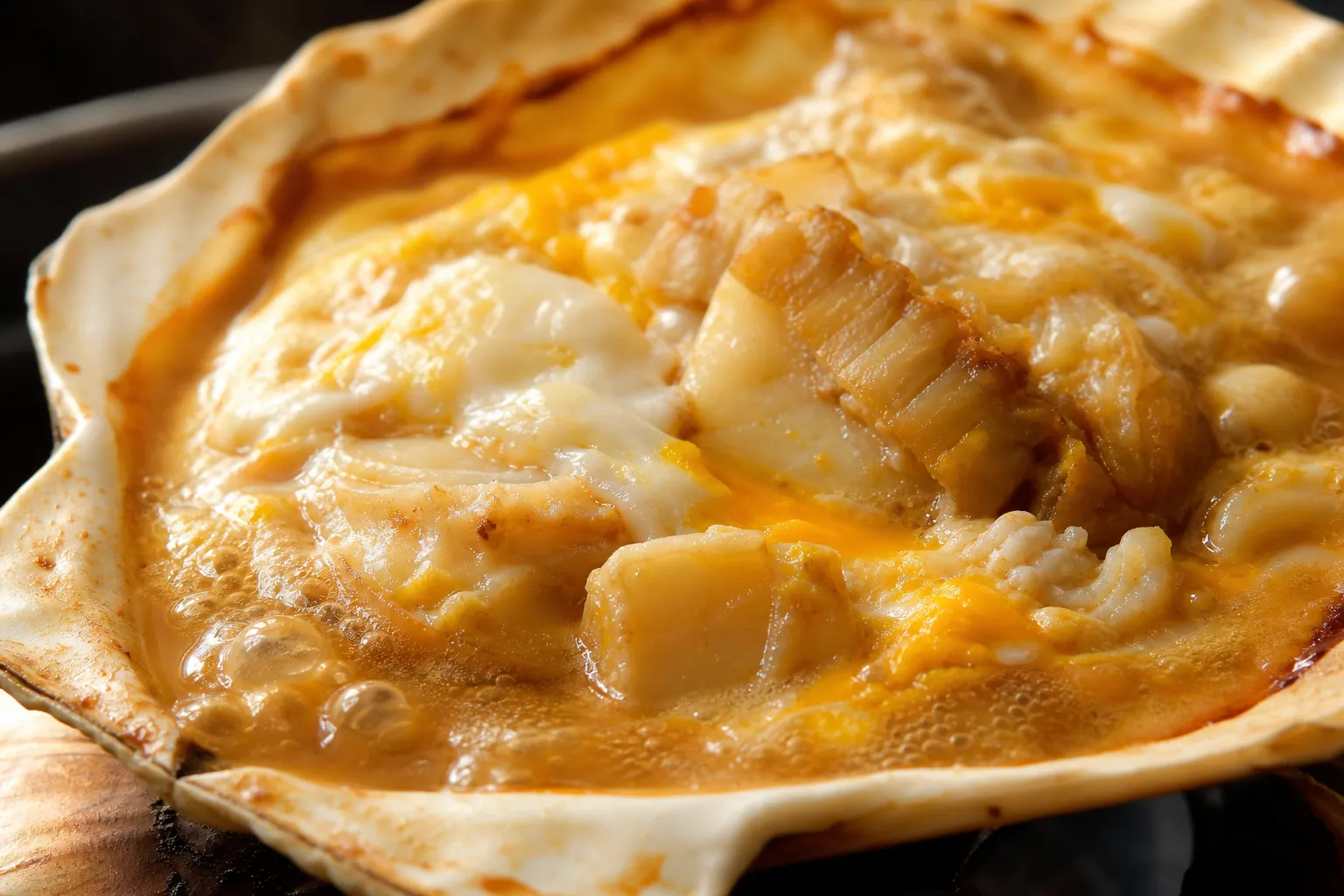
- The egg is soft-set, not firm. Poured in at the end and pulled off the heat early, it stays custardy and loose, draping over the scallop and miso rather than setting into an omelet.
- Miso + dashi + scallop = deep savory-sweet. The scallop gives up its sweetness into the miso broth, and the whole thing tastes richer and more rounded than any miso soup.
- It's gentle, warming, restorative. Soft textures, comforting savor — this is the dish you crave when you're cold or tired, not a showy seafood platter.
- Every version differs. Some add extra scallop, some tuck in a bit of white fish or scallion; the miso-to-egg ratio is a personal, household thing.
How it's made
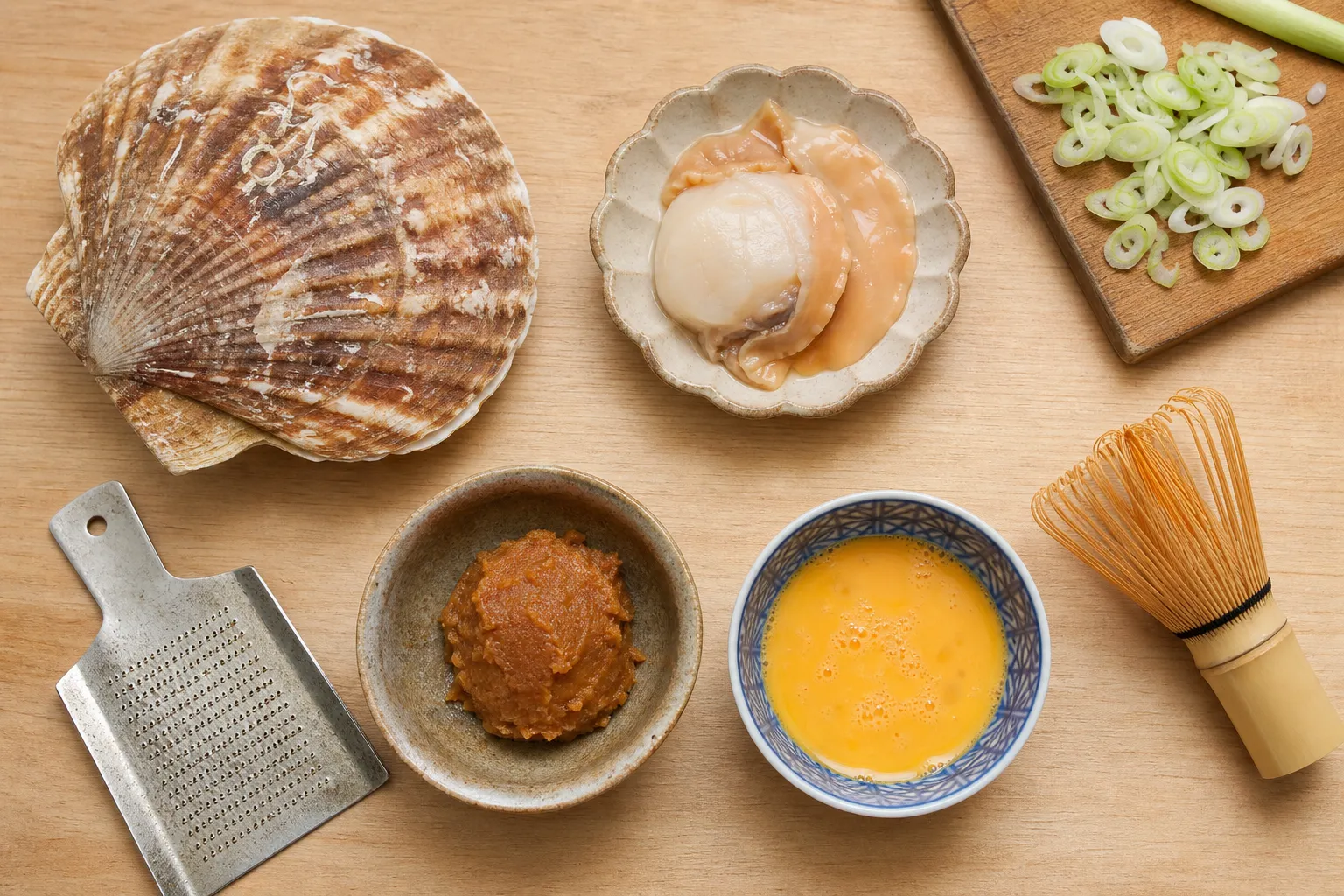
- Set the shell over heat. A large, cleaned scallop shell goes directly over a flame or coals, used as a little pan.
- Build the broth. Dashi goes in, miso is dissolved into it, and it's brought to a gentle simmer right there in the shell.
- Add the scallop. Pieces of scallop (and sometimes a little white fish or scallion) simmer in the miso dashi until just cooked and sweet.
- Pour in the beaten egg. A beaten egg is added and swirled through, then the heat is cut early so it sets softly into custardy folds.
- Serve in the shell. Carried to the table still steaming, eaten straight from the shell with chopsticks — hot, savory, tender.
The whole craft is in the egg timing: pull it too late and it goes rubbery, pull it right and it's silky. The shell holds heat like nothing else, so it keeps cooking after it leaves the flame — good cooks account for that.
Before you go — eat it in Tsugaru, straight from the shell
Your questions, answered honestly
"How is this different from just a grilled scallop?" — Completely. A grilled scallop is dry-cooked meat on a shell. Kaiyaki-miso is a simmer — dashi, miso and egg cooked together into a soft, saucy, savory-sweet dish. The scallop is one ingredient in it, not the whole point.
"Is it basically miso soup, then?" — No. There's far less liquid, the miso is more concentrated, and the soft-set egg turns it into something you eat with chopsticks, not sip from a bowl. Think savory scallop-and-egg braise, not soup.
"Is the shell safe to eat from — is it hot?" — The shell is genuinely the cooking vessel, so it comes out very hot. Eat from inside it with chopsticks; don't pick it up by the rim until it cools. It's totally normal and expected to eat straight from the shell.
"Will it taste 'fishy'?" — Not in a harsh way. Scallop is sweet and mild, and the miso and egg round it out. It reads as cozy and savory, not aggressively seafood-y — a good gateway to Aomori's coastal cooking.
What the staff will ask you
| You'll hear | Romaji | Meaning | Just say |
|---|---|---|---|
| 熱いのでお気をつけて | Atsui node oki o tsukete | "It's hot, please be careful" | Hai, arigatō (yes, thanks) |
| 貝のまま召し上がってください | Kai no mama meshiagatte kudasai | "Eat it straight from the shell" | Wakarimashita (got it) |
| 卵はお好きですか? | Tamago wa osuki desu ka? | "Do you like it with egg?" | Hai, onegai shimasu (yes, please) |
To order, just say "Kaiyaki-miso o kudasai" (貝焼き味噌をください) — "Kaiyaki-miso, please."
Where to eat it
- Aomori City izakaya and set-meal spots — local pubs and teishoku restaurants around Aomori City often serve kaiyaki-miso as a regional specialty, especially places that lean into Tsugaru home cooking.
- Hirosaki, in the heart of Tsugaru — Hirosaki's old-town restaurants and folk-cuisine spots are a classic place to find it, since this is the dish's home turf.
- Aomori seafood markets and morning-market stalls — market eateries near the bay are a good bet for a fresh, shell-cooked version alongside the region's scallops.
Kaiyaki-miso is Tsugaru home cooking, so it turns up more on izakaya and teishoku menus than at big tourist restaurants — hours and offerings vary, so check before you go and ask if it's on the menu that day.
Soul Score
Local Roots5/5
First-Timer Friendly4/5
Adventure Level4/5
Comfort Level5/5
Travel Worthy4/5
These scores are one obsessed eater's gut feeling — not a verdict. A low number isn't a bad mark, just a different kind of adventure.
Know someone planning Japan?
← All Articles
Local Food · Aomori
Still hungry?
Eat more from Aomori
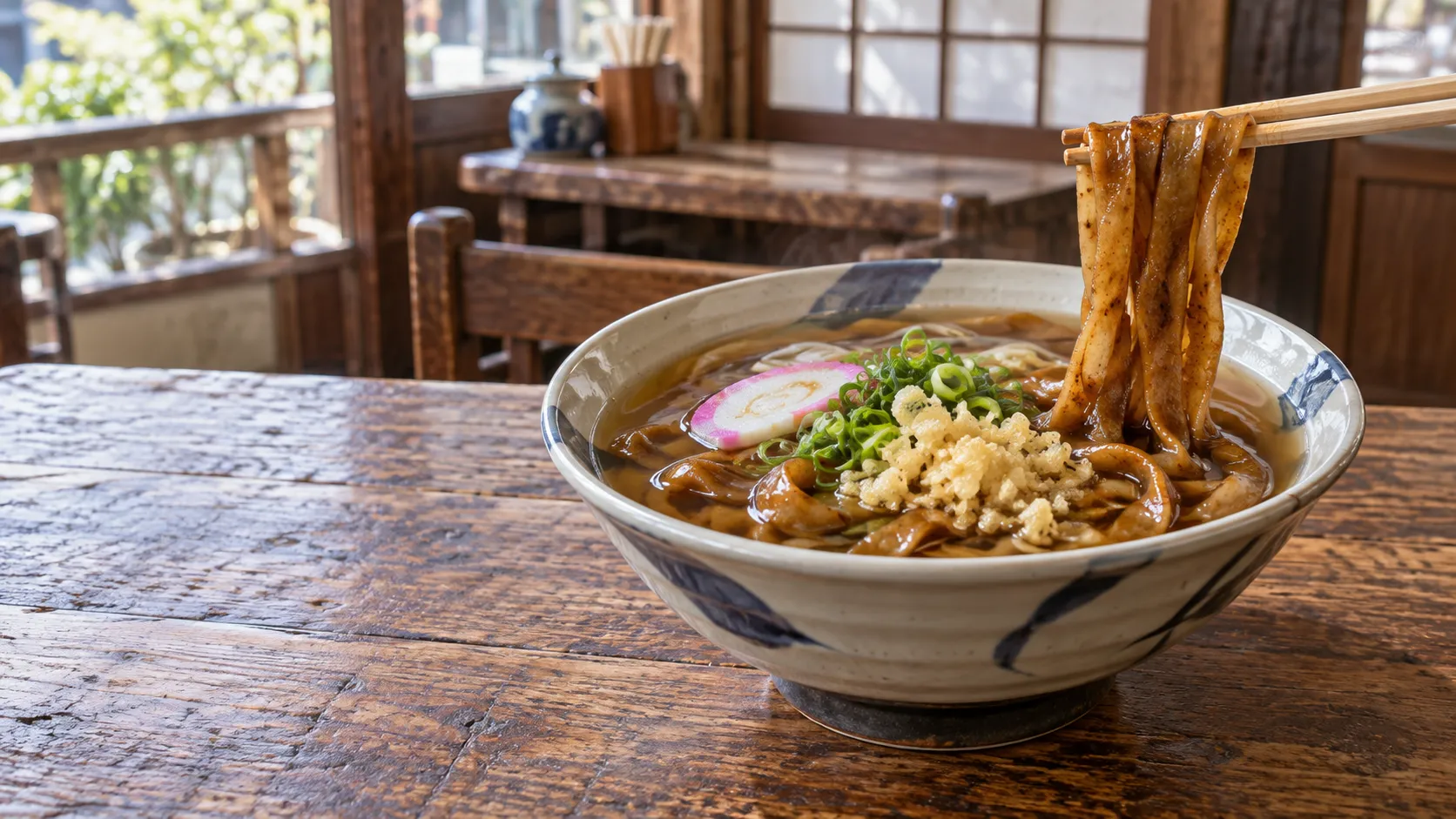
Local FoodKuroishi, Aomori
Kuroishi Tsuyu Yakisoba (黒石つゆやきそば)
Somebody in Kuroishi looked at a plate of fried noodles and thought: what this needs is soup. They were wrong about that. They were also completely right.
September 26, 2026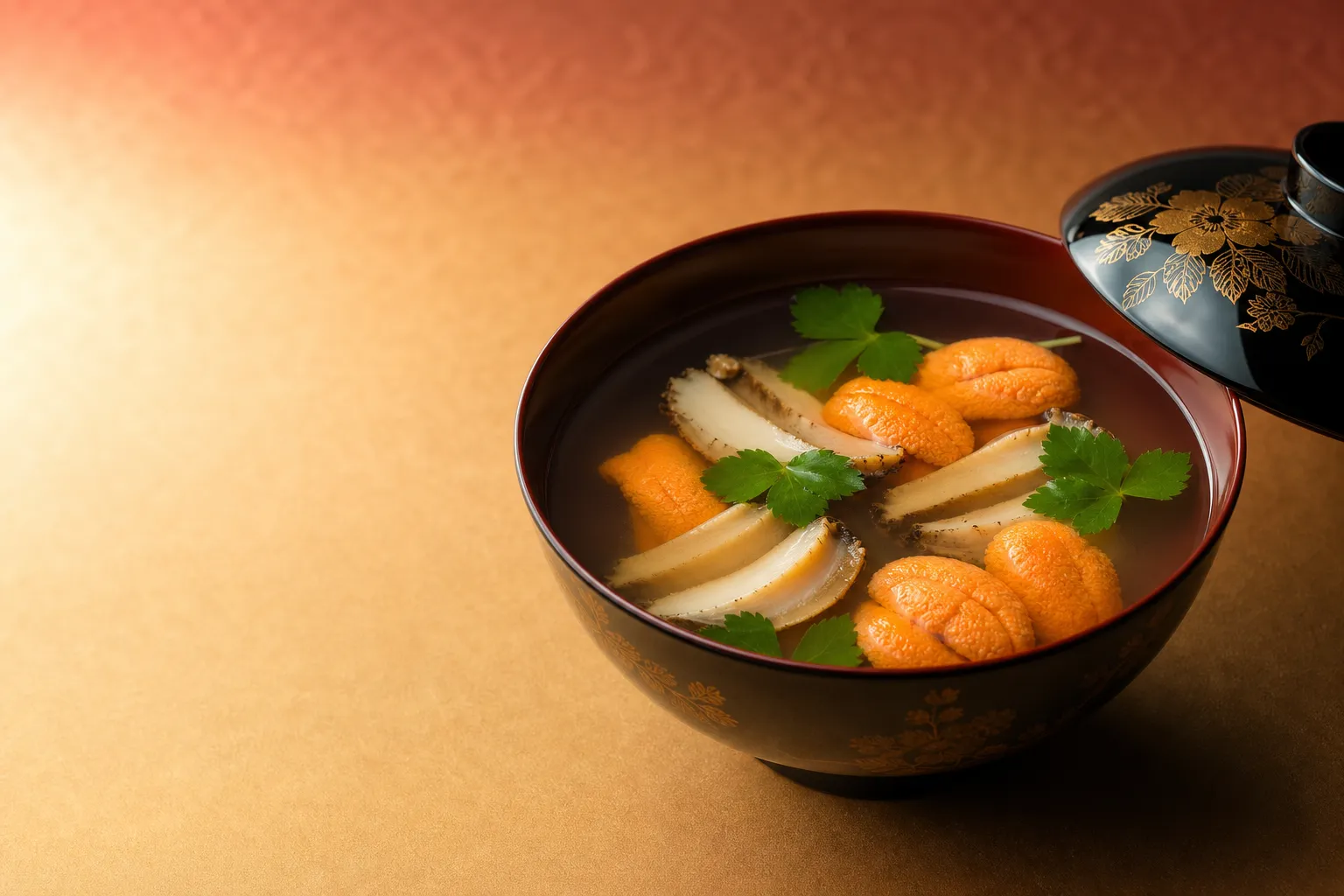
Local FoodHachinohe, Aomori
Ichigo-ni (いちご煮)
I ordered it expecting something fruity and got a bowl of the ocean at its most expensive instead — sea urchin and abalone floating in a broth so clear you could read through it.
July 5, 2026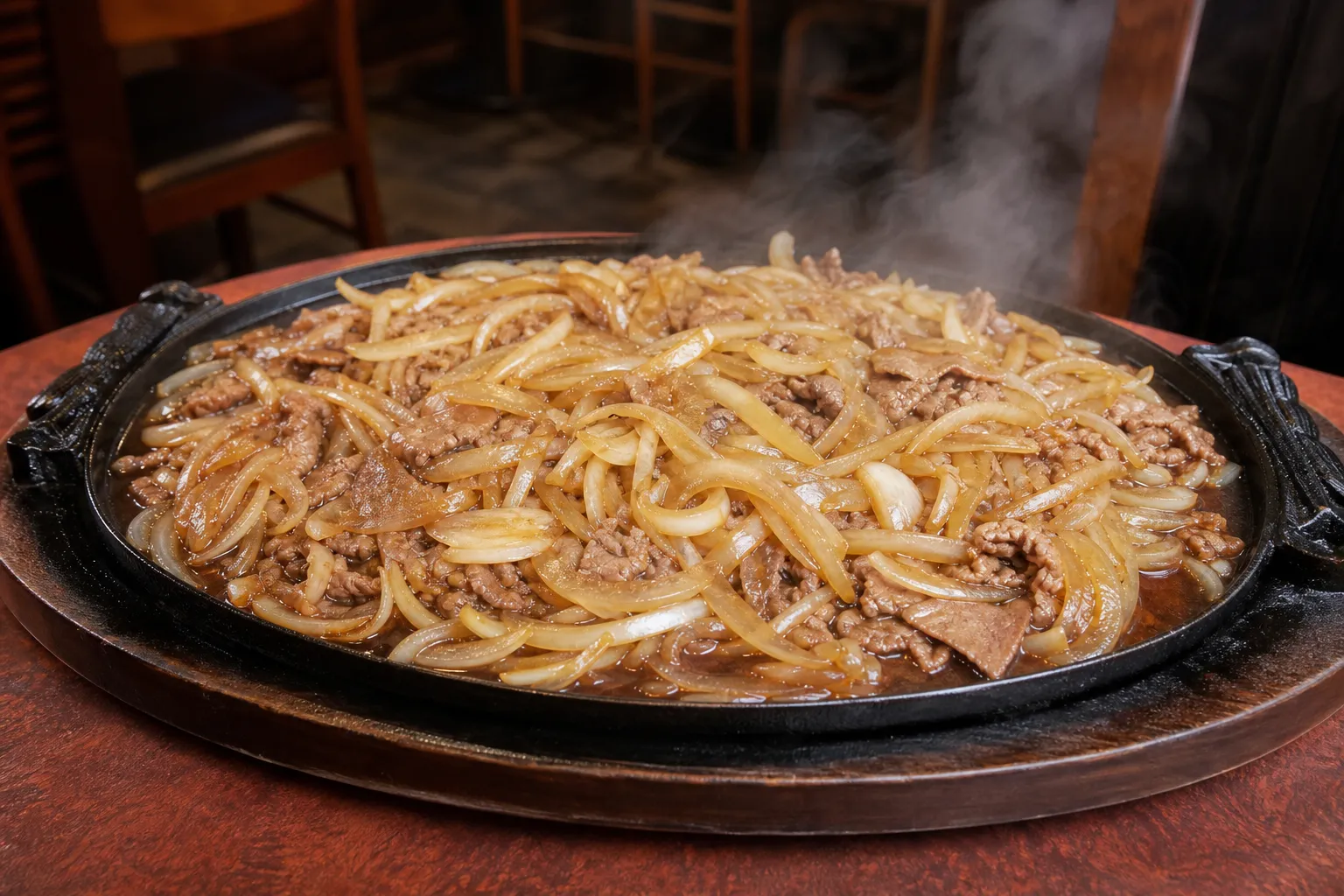
Local FoodTowada, Aomori
Towada Barayaki (十和田バラ焼き)
A hot plate arrives buried under onions, and you can't even see the beef yet — then it starts to sizzle down into a sweet-soy sauce and the whole table goes quiet. This is not yakiniku. This is Towada's own thing.
July 5, 2026