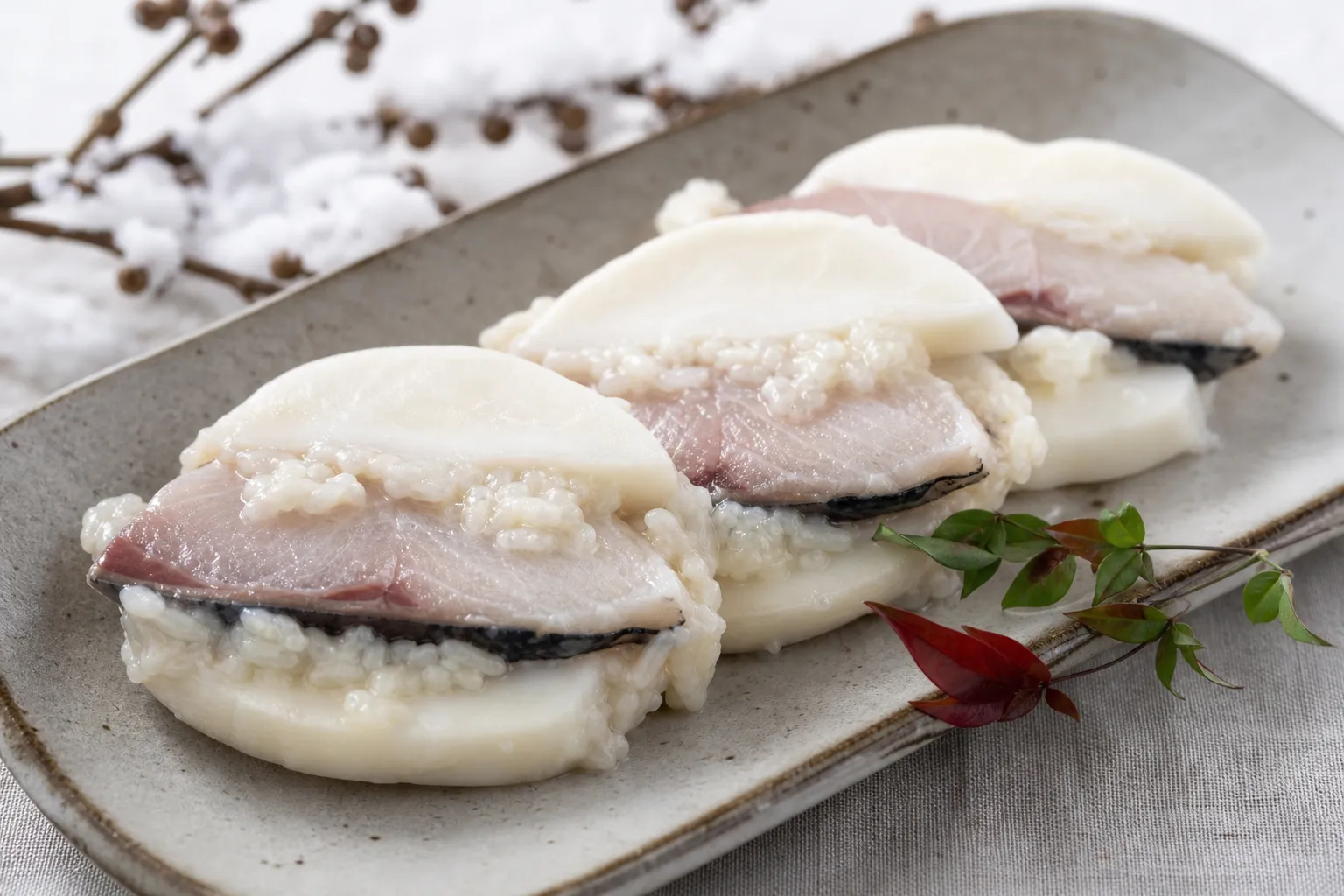
There's a moment of confusion at the first bite — turnip? but also... fish? and it's sweet? and slightly funky? — and then everything clicks and I want the whole plate. Crisp-tender pickled turnip on the outside, a slice of rich cured yellowtail hiding inside, and clinging to all of it this creamy, tangy, faintly boozy sweetness from the koji it fermented in. It tastes like someone spent weeks making a single bite this complicated. Because they did.
Share this dish


Two discs of pickled turnip with a slice of cured yellowtail hidden inside, all buried in sweet rice koji until it ferments into something funky, creamy and impossible to stop eating. Kanazawa's New Year on a plate.
🍜 Planning a food trip to Ishikawa?Add this dish to my Food Trip →
 Add this dish to my Food Trip →
Here's what it is: kabura-zushi (かぶら寿司) is a Kanazawa narezushi — a fermented "sushi" that has nothing to do with nigiri. Rounds of pickled turnip (kabura) are sliced almost through and a slice of cured yellowtail (buri) is sandwiched inside, then the whole thing is packed into sweet rice koji and left to ferment. The koji works its magic on the turnip and the fish together, and what comes out is tangy, savory, mellow-sweet and gently funky. It is not fresh nigiri and it is not a plain pickle — it's a slow-fermented delicacy where turnip and yellowtail become one thing.
A New Year treasure from a castle town
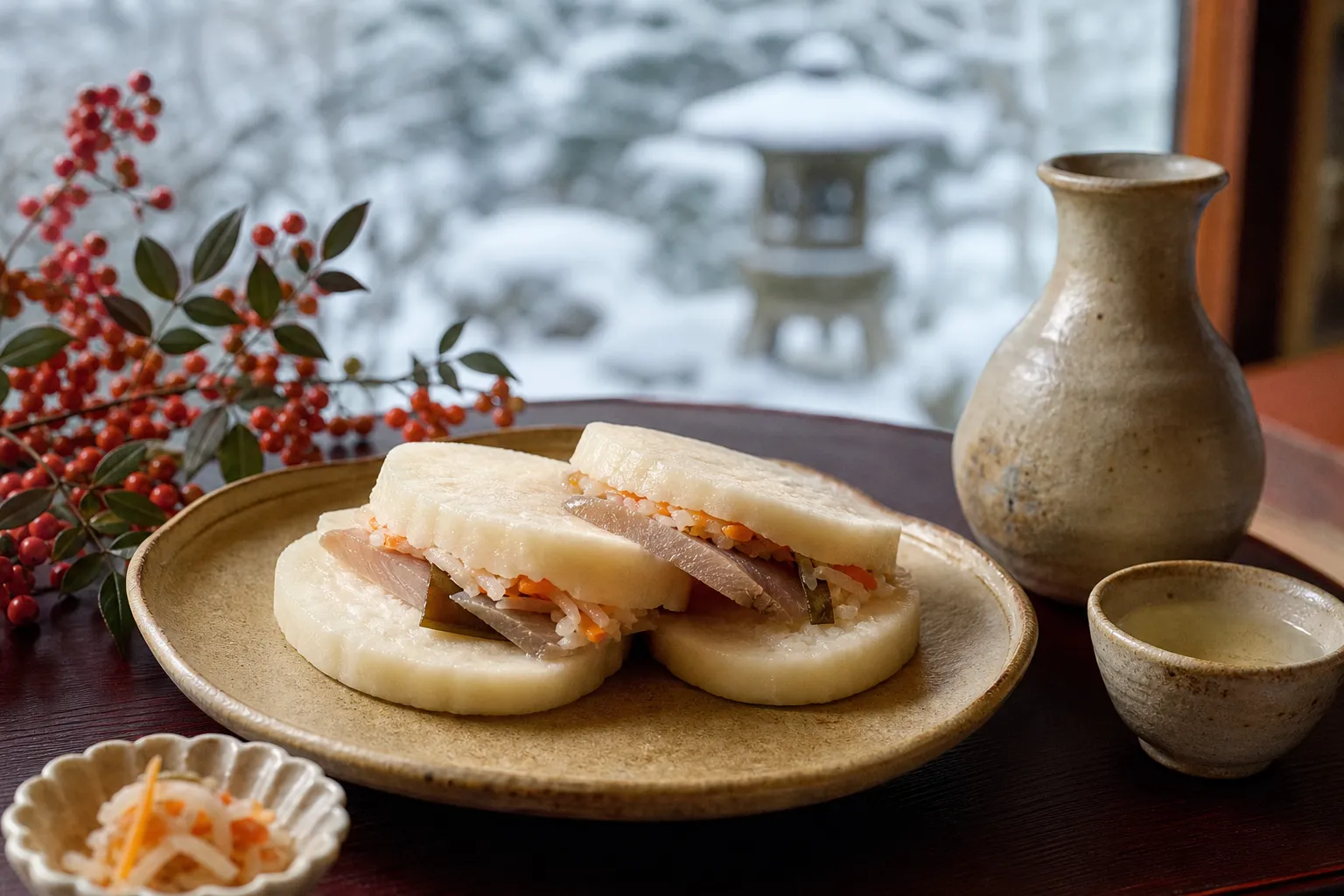
Kanazawa is a refined old castle town, proud of its craft and its cold-country cooking, and kabura-zushi is peak winter-luxury food there. It's made in the depths of winter and eaten around the New Year — a special-occasion dish, the kind of thing families prepare or buy for the holidays and put out for guests. Yellowtail is at its rich, fatty best in winter, turnips are sweet and firm, and koji fermentation was the old way of turning that seasonal bounty into something that kept and deepened in flavor. It's celebration food with real history in it, and you can taste the care.
I love that it belongs to the narezushi family — the ancient ancestor of all sushi, where fish was preserved through fermentation with rice long before "sushi" meant a fresh slice on vinegared rice. Kabura-zushi is a living piece of that lineage, still made the patient way in Kanazawa each winter. Eating it feels like tasting the New Year in an old snow-country town. I find that genuinely lovely.
What makes the eating experience different
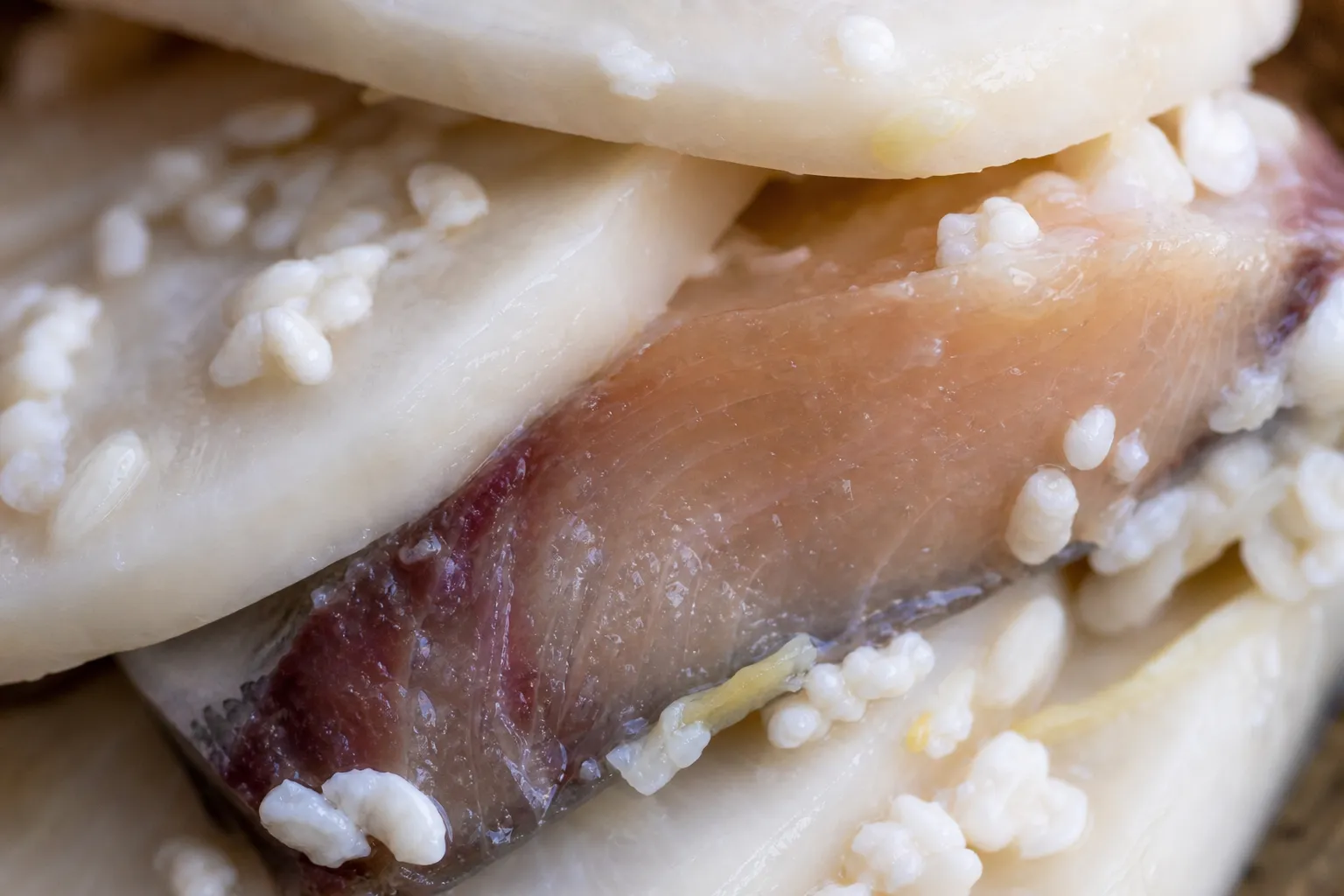
- Turnip outside, cured fish inside. You bite through crisp-tender pickled turnip to reach a rich slice of yellowtail hidden in the middle — a surprise sandwich in every round.
- Koji makes it creamy and sweet. The rice koji it ferments in leaves a soft, sweet, faintly boozy paste clinging to everything, mellow and rounding out the salt.
- It's savory-tangy-funky, all at once. Fermentation gives it a gentle sour-umami funk — deeper and more complex than any quick pickle.
- Textures play off each other. Firm, juicy turnip against soft, fatty fish against creamy koji — three very different mouthfeels in one bite.
- It's a delicacy, eaten in small pieces. Rich and a little salty, it's meant to be savored a slice at a time, often with sake — not eaten by the fistful.
How it's made
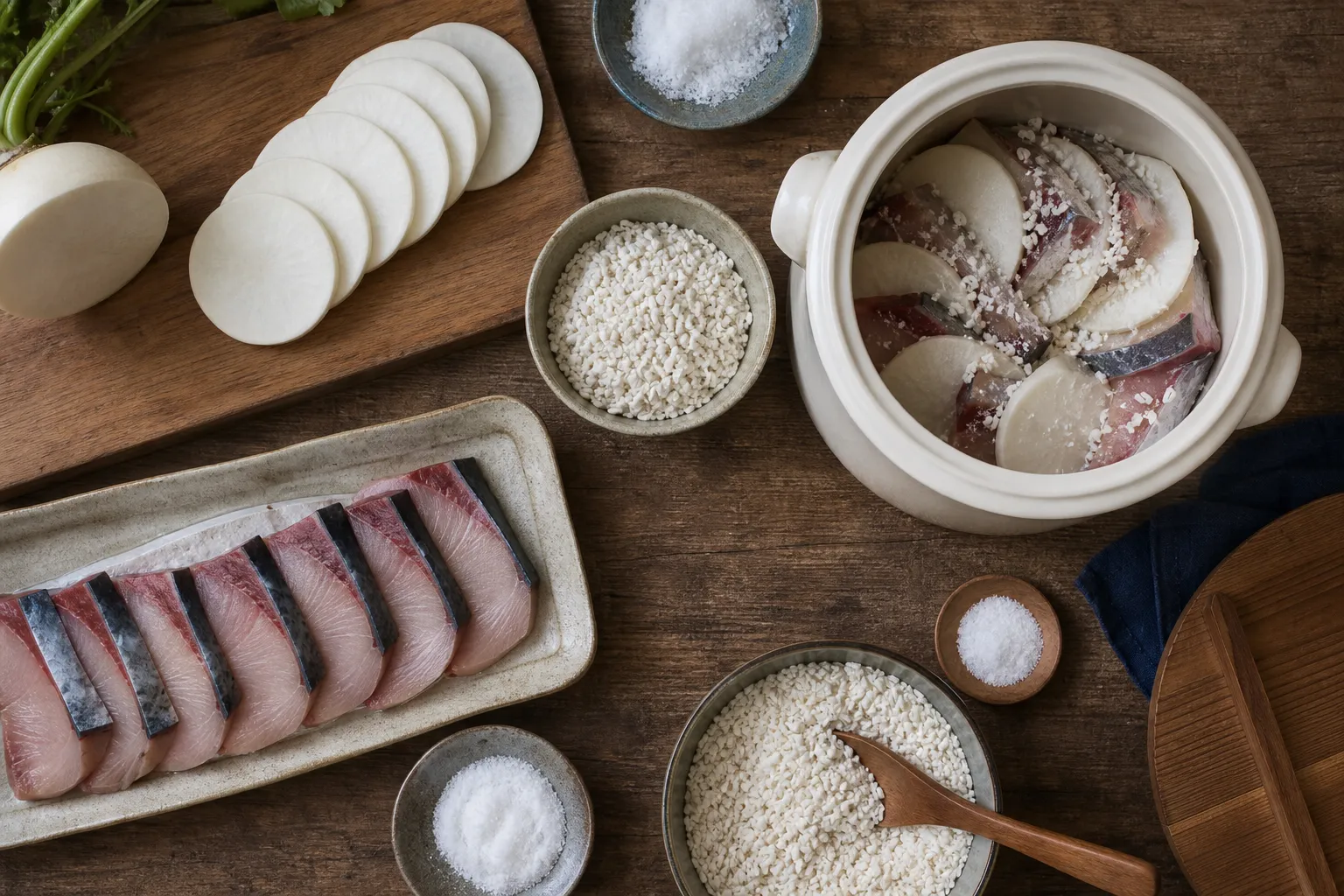
- Salt the turnips. Large turnips are sliced into thick rounds and salted to draw out water and firm them up.
- Cure the yellowtail. Slices of yellowtail are salted/cured so they're seasoned and ready to ferment.
- Sandwich the fish. Each turnip round is cut almost all the way through, and a slice of cured yellowtail is tucked inside like a sandwich.
- Pack in koji. The stuffed rounds are layered in a container with sweet rice koji (a fermented-rice culture), so the koji surrounds everything.
- Ferment and serve. It's pressed and left to ferment in the cold for days to weeks; the finished pieces are sliced and served, koji and all.
The craft is in timing and salt balance: enough salt and cold to ferment safely and slowly, enough koji to turn it sweet and creamy, and enough patience to let turnip and fish meld. Rush it and it's just a stuffed pickle; do it right and it's kabura-zushi.
Before you go — a Kanazawa New Year delicacy
Your questions, answered honestly
"Is this like the sushi I know?" — No — forget nigiri entirely. This is narezushi, the old fermented ancestor of sushi. There's no vinegared rice and no fresh slice on top; it's pickled turnip and cured fish fermented together in koji. Different world, same family tree.
"Will it taste 'off' or too funky?" — It has a mild fermented tang and a rich cured-fish depth, but it's not aggressive — the koji keeps it sweet and mellow. If you enjoy blue cheese, good pickles, or funky umami, you'll likely love it. It can be salty, so small pieces are the way.
"When can I get it?" — It's a winter and New Year specialty, made in the cold months. Around the holidays it's everywhere in Kanazawa's markets and shops; outside that window it's harder to find fresh, though some makers sell it more broadly.
"Is there a version without fish?" — A close local cousin, daikon-zushi, uses daikon radish (often with a different fish like sardine or mackerel), and there are regional variations. If you have concerns about the fish or salt, ask the seller what's inside — recipes vary by maker.
What the staff will ask you
| You'll hear | Romaji | Meaning | Just say |
|---|---|---|---|
| ご贈答用ですか? | Go-zōtō-yō desu ka? | "Is it a gift?" | Jibun-yō desu (it's for myself) |
| 保冷剤をお付けしますか? | Horeizai o otsuke shimasu ka? | "Shall I add an ice pack?" | Onegai shimasu (yes, please) |
| 何個にしますか? | Nan-ko ni shimasu ka? | "How many would you like?" | Hitotsu kudasai (one, please) |
To order, just say "Kabura-zushi o kudasai" (かぶら寿司をください) — "Kabura-zushi, please."
Where to eat it
- Ōmichō Market, Kanazawa — the city's big central market is a classic place to find kabura-zushi from local makers, especially in the winter and New Year season.
- Kanazawa department-store food halls (depachika) and specialty pickle shops — these carry kabura-zushi from established local producers, often packaged for gifts around the holidays.
- Kanazawa restaurants serving Kaga cuisine — traditional local restaurants may offer kabura-zushi as a seasonal appetizer alongside other Kaga specialties.
Kabura-zushi is a fermented winter/New Year specialty, so it's most available in the cold season and best bought from established Kanazawa makers — it's perishable and often sold refrigerated, so check the season and storage before you go.
Soul Score
Local Roots5/5
First-Timer Friendly3/5
Adventure Level4/5
Comfort Level4/5
Travel Worthy4/5
These scores are one obsessed eater's gut feeling — not a verdict. A low number isn't a bad mark, just a different kind of adventure.
Know someone planning Japan?
← All Articles
Local Food · Kanazawa, Ishikawa
Still hungry?
Eat more from Ishikawa
Local FoodKanazawa, Ishikawa
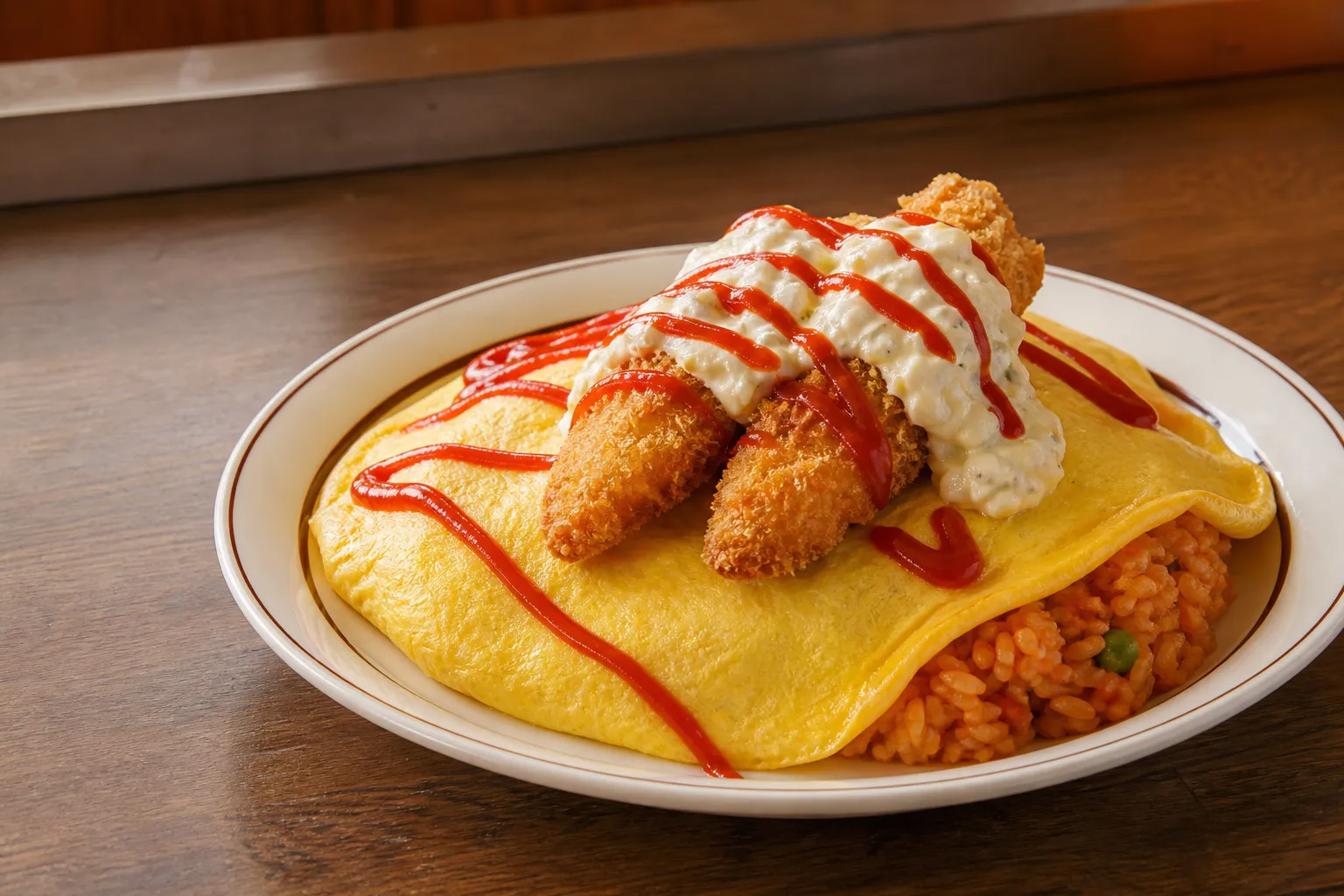
Hanton Rice (ハントンライス)
Ketchup rice, wrapped in egg, crowned with deep-fried fish, drowned in tartar sauce and a red ketchup swirl — Kanazawa built a plate with zero business working this well, and it works perfectly.
July 5, 2026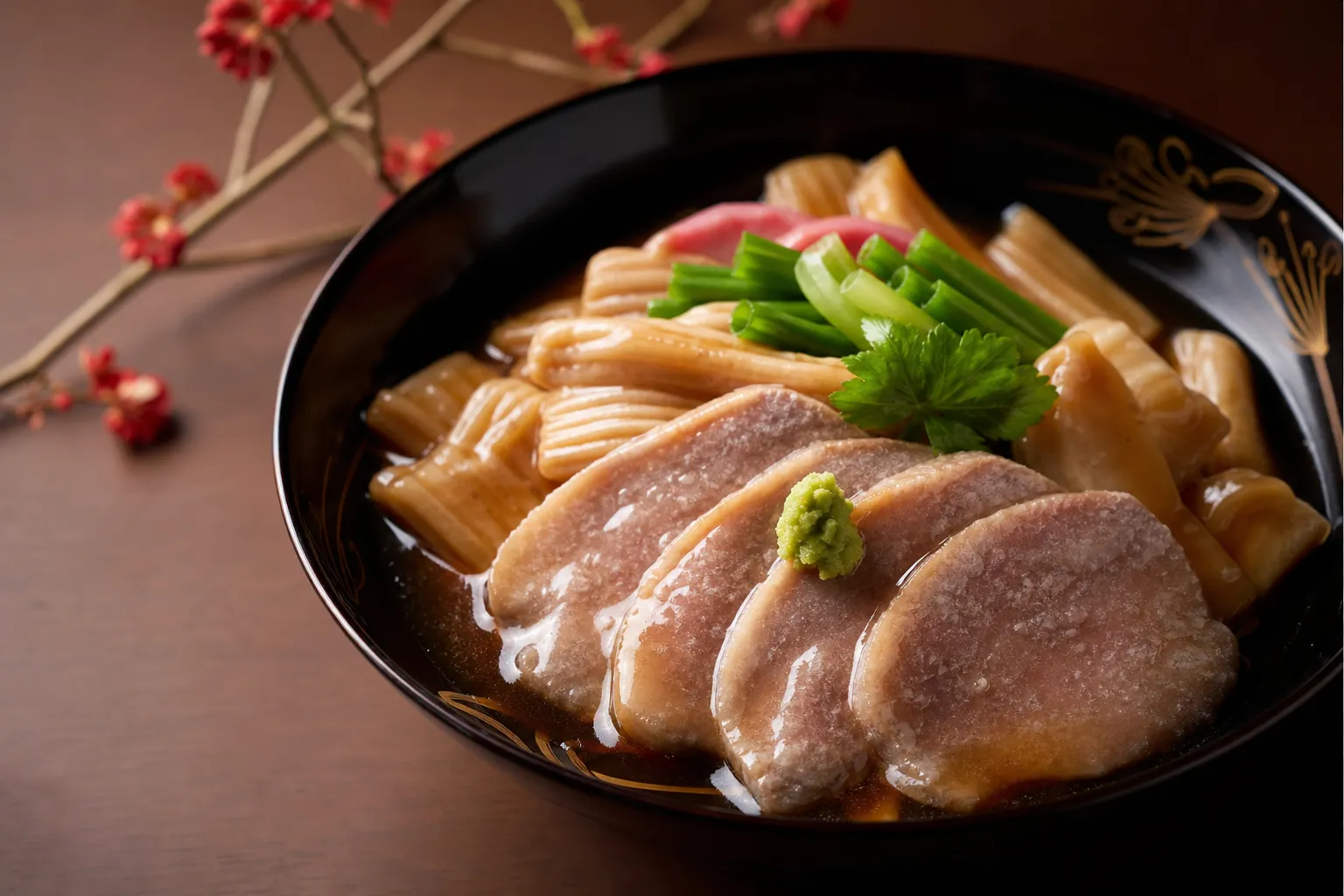
Local FoodKanazawa, Ishikawa
Jibuni (治部煮)
A tiny dab of wasabi on top of a warm, glossy duck stew — it sounds wrong, it looks fussy, and then the spoon hits your mouth and you go quiet.
July 5, 2026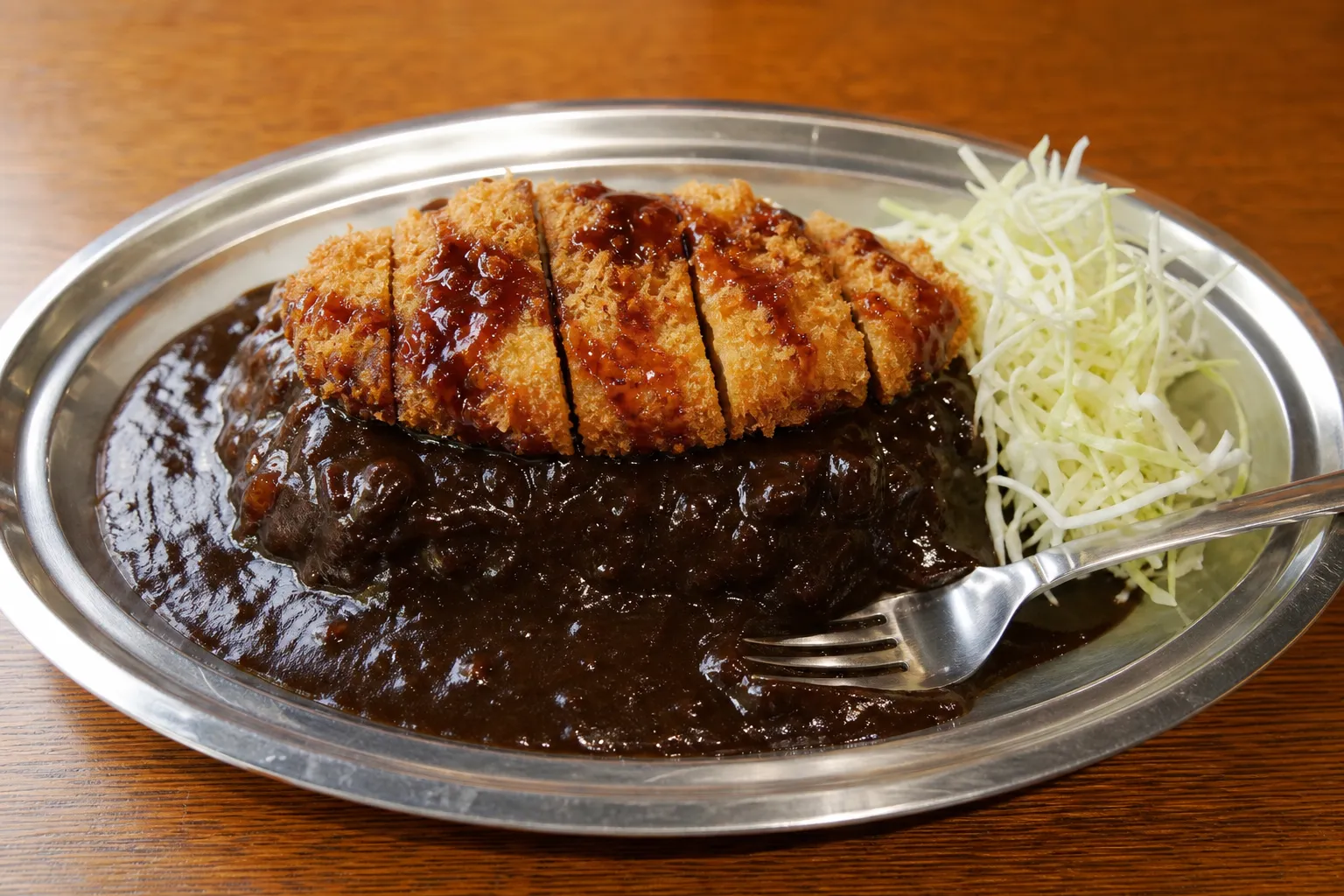
Local FoodKanazawa, Ishikawa
Kanazawa Curry (金沢カレー)
Curry so thick and dark it stands the fork up — served on a steel plate, crowned with a sauced-up katsu, cold cabbage on the side. Ishikawa's gloriously stubborn take on comfort food.
June 27, 2026