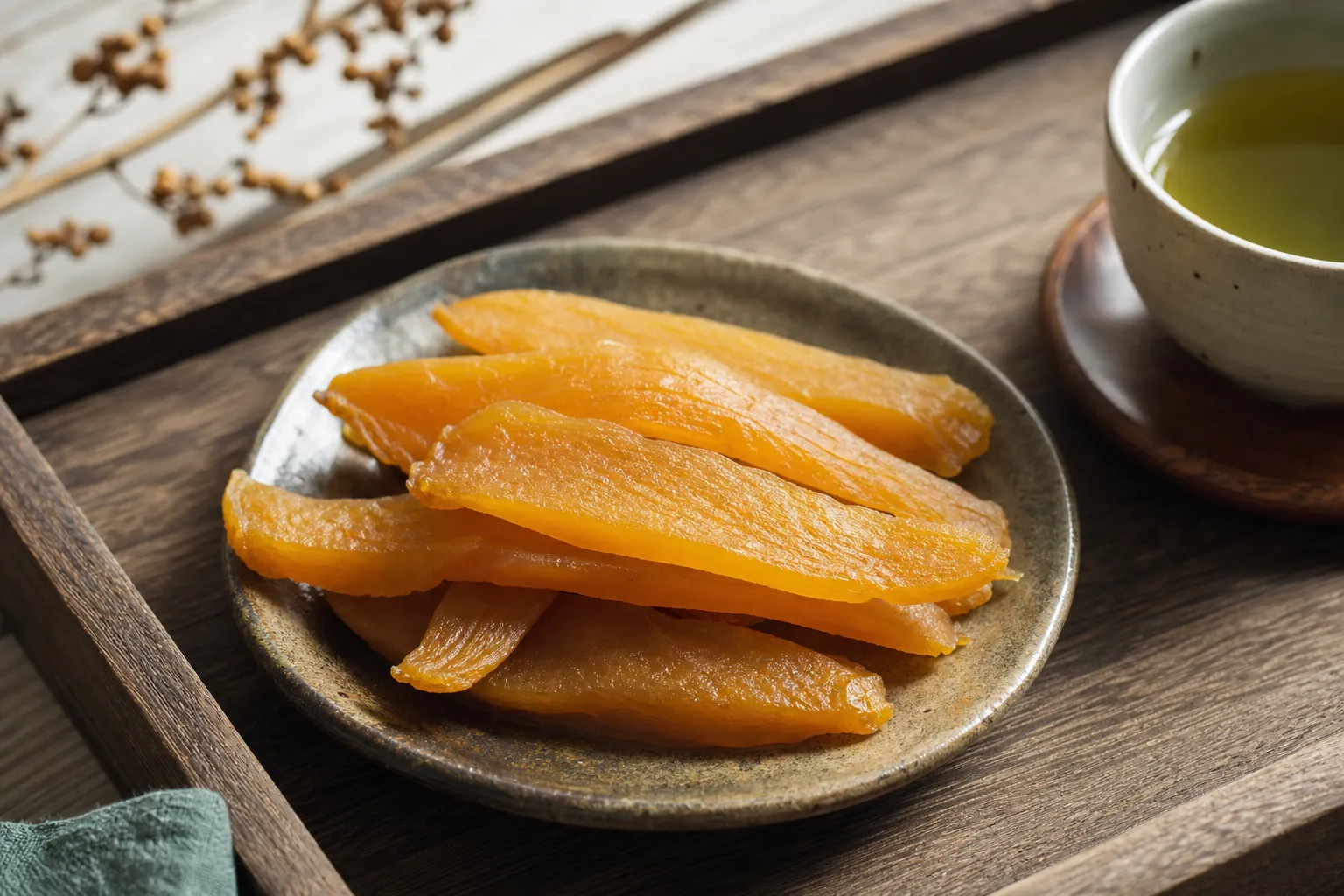
Chewy. Honey-sweet. And it's just a potato. I still don't fully believe it. You bite into this amber, half-see-through slab expecting something plain, and instead your teeth sink into this dense, taffy-chew sweetness that tastes like caramel and roasted chestnut had a very well-behaved child — and then you check the bag and there is exactly one ingredient on it. Sweet potato. That's it. I ate four in a row on a cold platform in Ibaraki and felt no guilt whatsoever, which is the whole miracle of the thing.
Share this dish


Amber, chewy slabs of nothing but sun-dried sweet potato — no sugar, no additives, just winter, patience and Ibaraki sunshine folded into candy that happens to be a vegetable.
🍜 Planning a food trip to Ibaraki?Add this dish to my Food Trip →
 Add this dish to my Food Trip →
Here's what it is: hoshi-imo (干し芋) is sweet potato that's been steamed, sliced, and slowly sun-dried until it turns amber and translucent and chewy. No sugar is added — none. As the moisture leaves, the potato's own starches turn to sugar and concentrate, so what you get is candy that is, technically and gloriously, a vegetable. It's not a fresh sweet potato and it's not a hot roasted yaki-imo — it's the dried, keep-in-your-pocket, eat-all-winter version, and Ibaraki makes almost all of Japan's supply.
A winter habit born on the Ibaraki coast
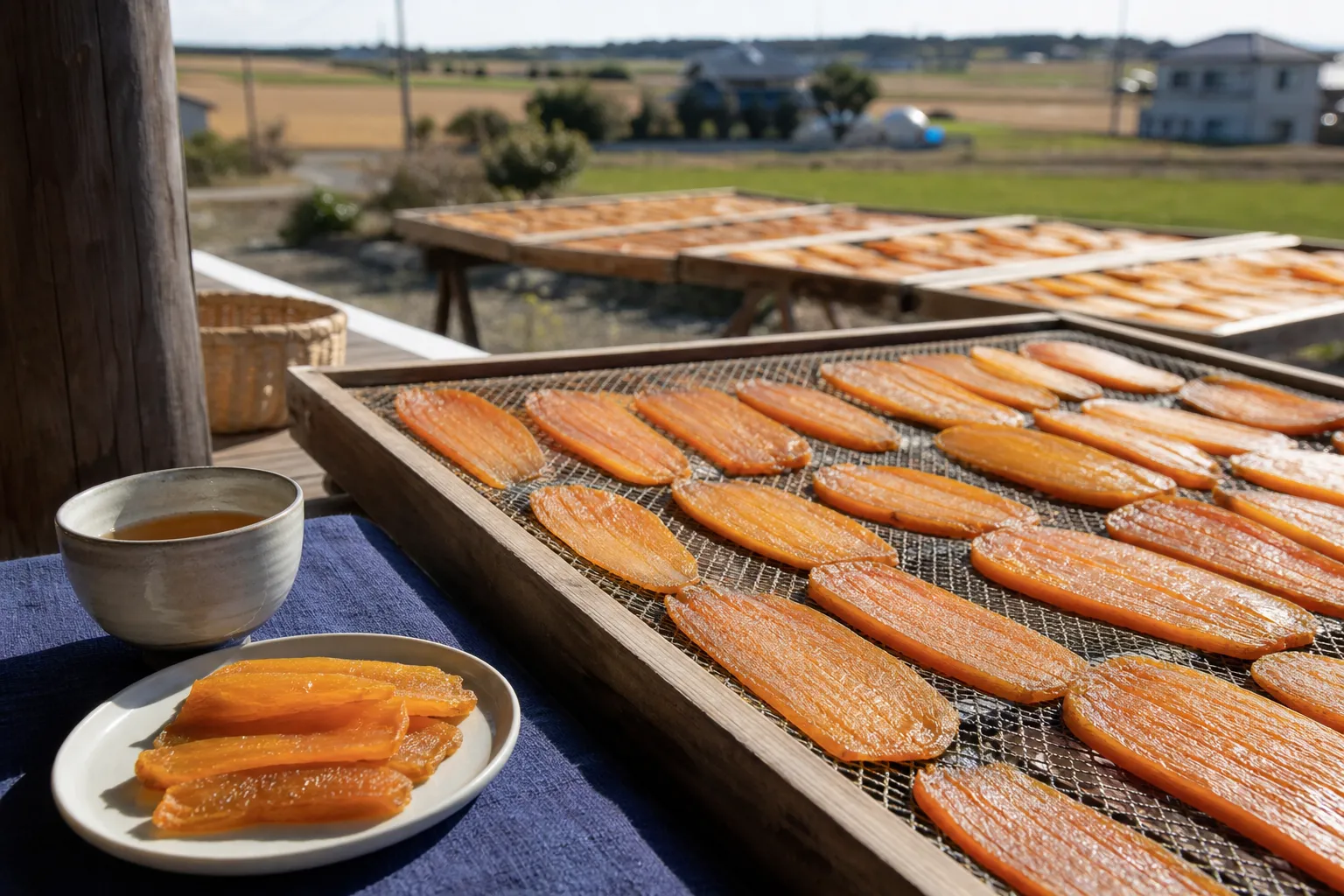
Walk the Hitachinaka coast of Ibaraki in winter and you'll see it: racks and racks of pale-gold potato slices laid out under the cold, dry, sunny sky, drinking in exactly the weather that makes this work — sea breeze, low humidity, bright winter sun. This stretch of coast has been the heartland of hoshi-imo for over a century, and today Ibaraki produces the overwhelming majority of what the whole country eats. It's not a festival food or a restaurant dish; it's a household thing, a winter habit, the snack that lives in a bag by the kotatsu.
I find that quietly moving, honestly. There's no chef, no secret glaze, no trick — just farmers, sunshine, and the patience to let time do the sweetening. It started as a way to preserve the harvest through the cold months, and it became one of the most beloved everyday sweets in Japan without ever pretending to be fancy. Different sweet-potato varieties give different results — some lean chestnut-y and firm, the prized Beni Haruka type leans almost jammy and honey-dense — so locals have real opinions about which cultivar and which farm they trust. It's soul food in the most literal sense: humble, seasonal, and made with sun.
What makes the eating experience different
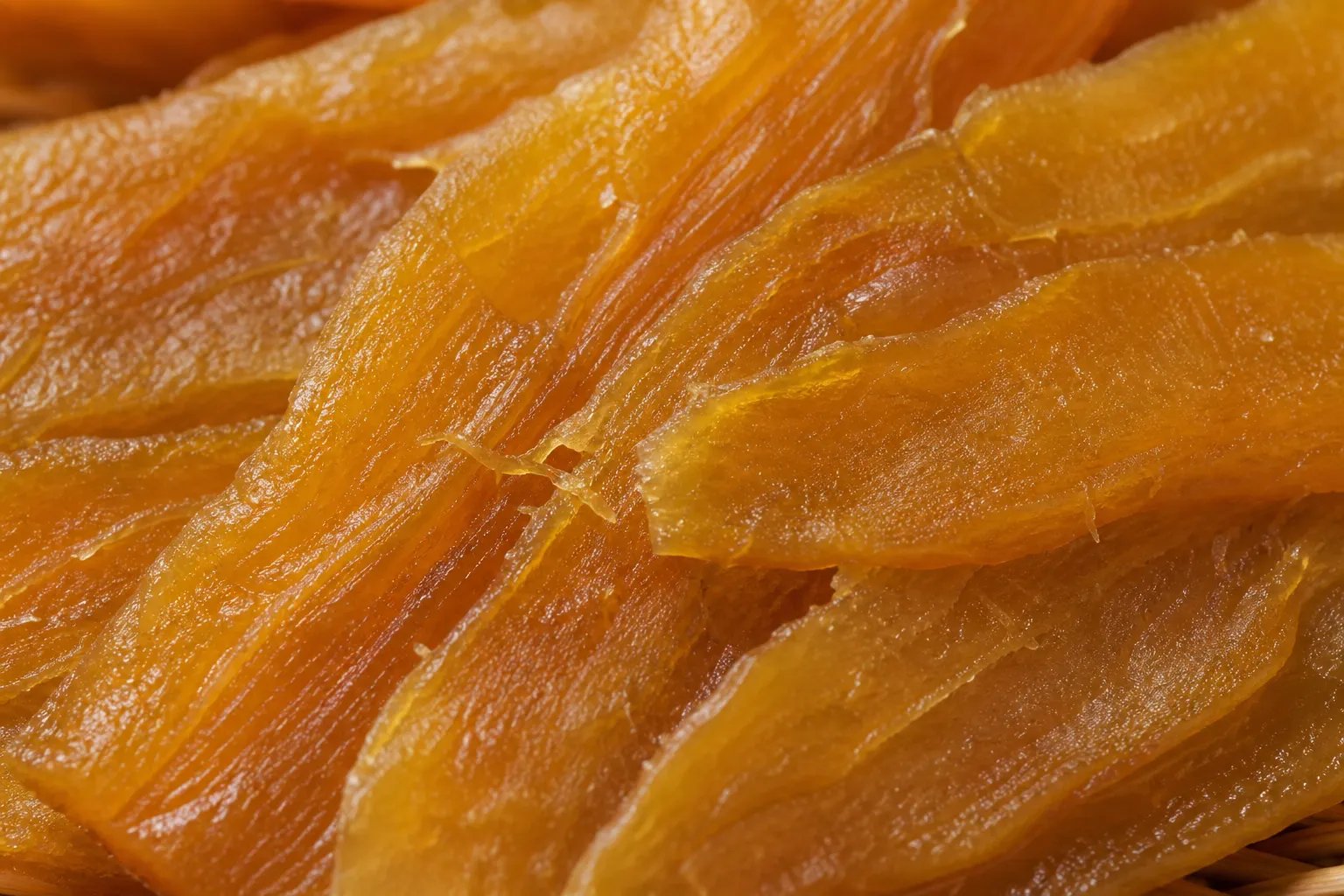
- The texture is the whole event — dense, chewy, taffy-like, with a satisfying resistance that makes you slow down and really work each bite
- The sweetness is entirely natural — no added sugar, just the potato's own starch converted and concentrated, so it tastes clean and honeyed rather than cloying
- That amber, translucent look means it's properly dried; hold a slice to the light and it almost glows
- A light toast transforms it — warm it in a toaster oven or over a flame for a minute and the outside crisps and blisters while the inside goes soft and molten-sweet
- It's the perfect tea companion — a little earthy, a little roasted, and it cuts beautifully against green tea or a cup of hojicha on a cold day
How it's made
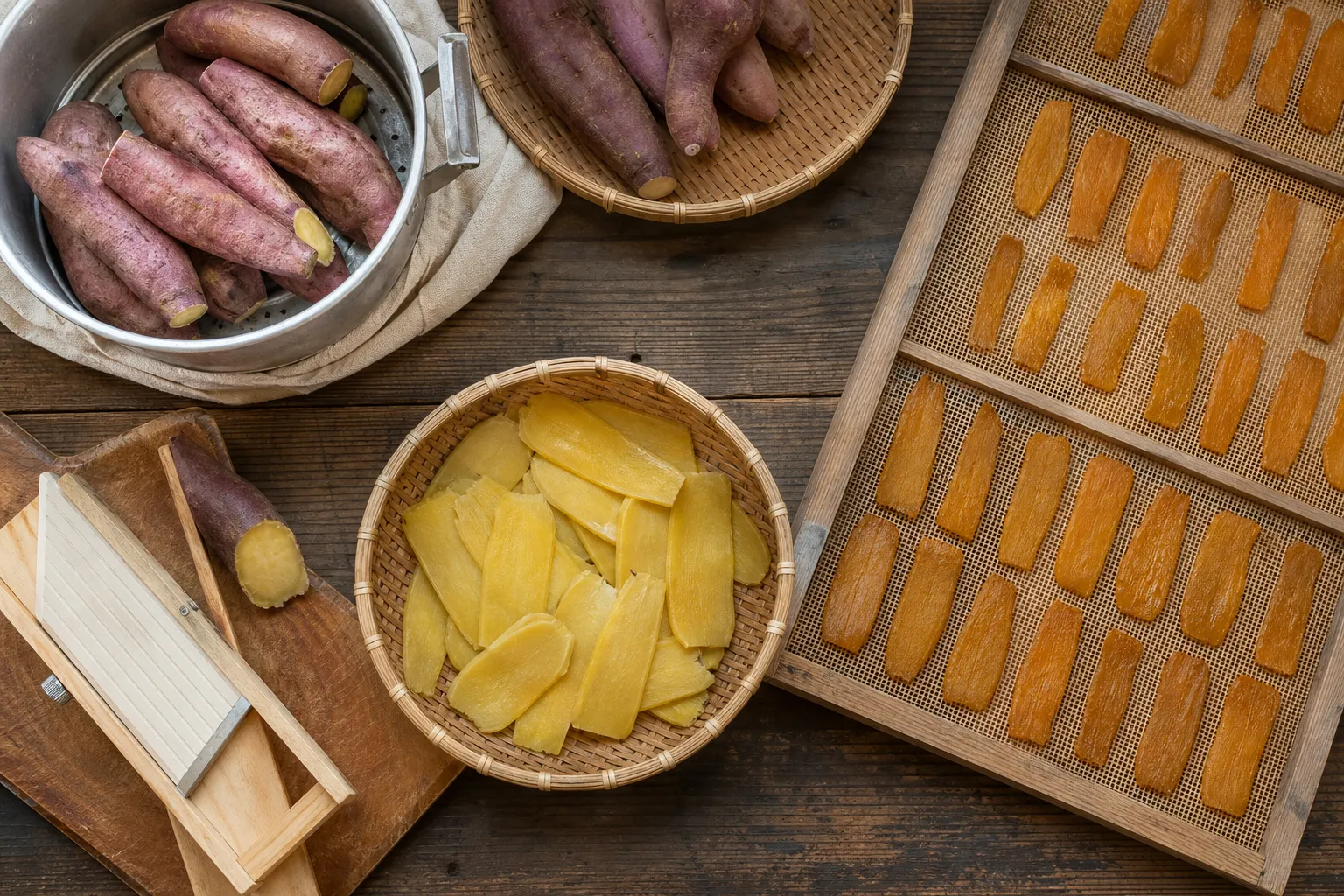
- Choose and cure the potatoes. Suitable sweet-potato varieties are harvested and often rested for weeks so their starches begin turning to sugar.
- Steam them whole. The potatoes are steamed slowly and thoroughly until fully soft and sweet all the way through.
- Peel and slice. While still warm, they're peeled and cut into flat slabs (or left as small whole potatoes for the thicker style).
- Sun-dry on racks. The slices are laid out on drying racks in the cold, dry, sunny winter air for several days, turned so they dry evenly.
- Let the sugar concentrate. As moisture leaves, the sweetness intensifies and the color deepens to amber; a natural white sugar bloom may form on the surface.
That white powder that sometimes coats the surface? Natural crystallized sugar, not mold — a sign the drying went well. The cold, dry, sunny coastal winter of Ibaraki is the not-so-secret ingredient; it's why this region, and not somewhere warmer, became hoshi-imo country.
Before you go — buy a bag, toast a slice, thank the sun
Your questions, answered honestly
"Is there really no sugar added?" — Really. Good hoshi-imo is one ingredient: sweet potato. All that honeyed sweetness comes from the potato's own starch turning to sugar as it dries. Check the label if you're curious — the best ones proudly list nothing else.
"There's white powder on mine — is it moldy?" — Almost certainly not. A thin whitish bloom on the surface is natural crystallized sugar and is completely normal on well-dried hoshi-imo. (Fuzzy, colored, or musty-smelling spots are a different story — use common sense with any dried food and check before eating.)
"Do I eat it as-is or do something to it?" — Both are great. Straight from the bag it's chewy and sweet. But give it a light toast — a minute in a toaster oven or briefly over a flame — and the surface crisps and blisters while the inside turns warm and soft. That's my favorite way, with tea.
"It's really chewy — is that right?" — Yes, that dense chew is the point, not a flaw. Softer, thicker styles exist if you prefer, and small whole-potato versions are chewier still. If you want it softer, the toast trick helps.
What the staff will ask you
| You'll hear | Romaji | Meaning | Just say |
|---|---|---|---|
| やわらかめと硬め、どちらがお好みですか? | Yawarakame to katame, dochira ga okonomi desu ka? | "Softer or firmer style?" | Yawarakame de (the soft one, please) |
| 平干しと丸干し、どちらにしますか? | Hirabosi to marubosi, dochira ni shimasu ka? | "Flat slices or whole-dried?" | Osusume de (your recommendation) |
| 何袋にしますか? | Nan-fukuro ni shimasu ka? | "How many bags?" | Futa-fukuro kudasai (two bags, please) |
To order, just say "Hoshi-imo o kudasai" (干し芋をください) — "Hoshi-imo, please."
Where to eat it
- Ibaraki's Hitachinaka / Tokai coast — the historic heartland of hoshi-imo; farm shops, roadside stations (michi-no-eki) and local markets in the Hitachinaka area sell fresh-season bags, often by variety and farm.
- Ibaraki JR stations and highway service areas — station kiosks and expressway rest stops around the prefecture stock it as the signature local souvenir, especially in the winter drying season.
- Farmers' markets and antenna shops — Ibaraki produce markets and the prefecture's antenna shops (including in Tokyo) carry it; look for the Beni Haruka variety if you want the honey-dense, jammy style.
Hoshi-imo is at its best in the cold-weather drying season (roughly late autumn through winter); availability and specific varieties change with the harvest, so check what's fresh when you go.
Soul Score
Local Roots5/5
First-Timer Friendly5/5
Adventure Level3/5
Comfort Level5/5
Travel Worthy4/5
These scores are one obsessed eater's gut feeling — not a verdict. A low number isn't a bad mark, just a different kind of adventure.
Know someone planning Japan?
← All Articles
Local Food · Ibaraki
Still hungry?
Eat more from Ibaraki
Local FoodMito, Ibaraki
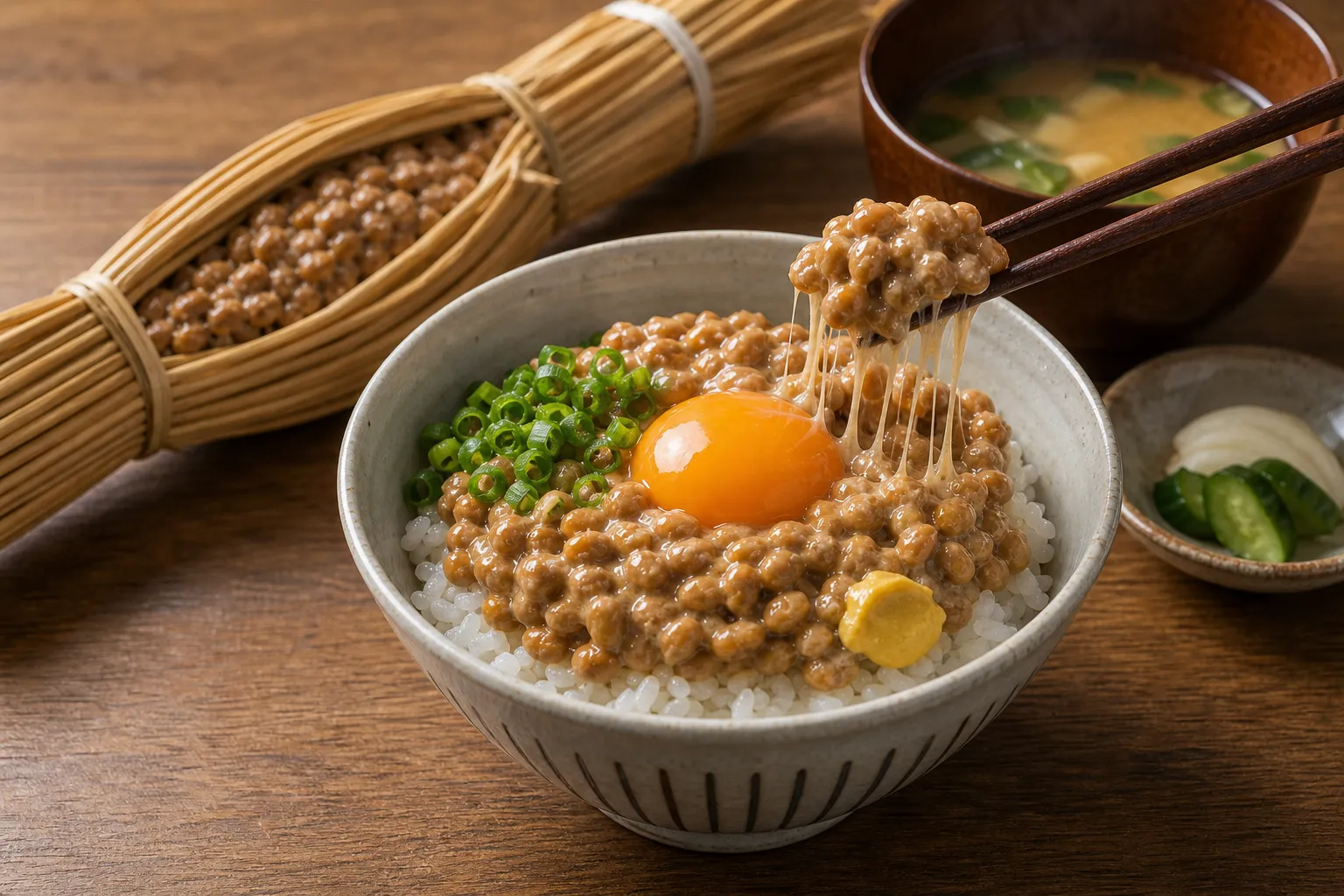
Mito Natto (水戸納豆)
The smell arrives before the beans do. Stir, and the strings pull a foot into the air. This is the food Japan dares you to love — and in Mito, the whole city is on natto's side.
July 12, 2026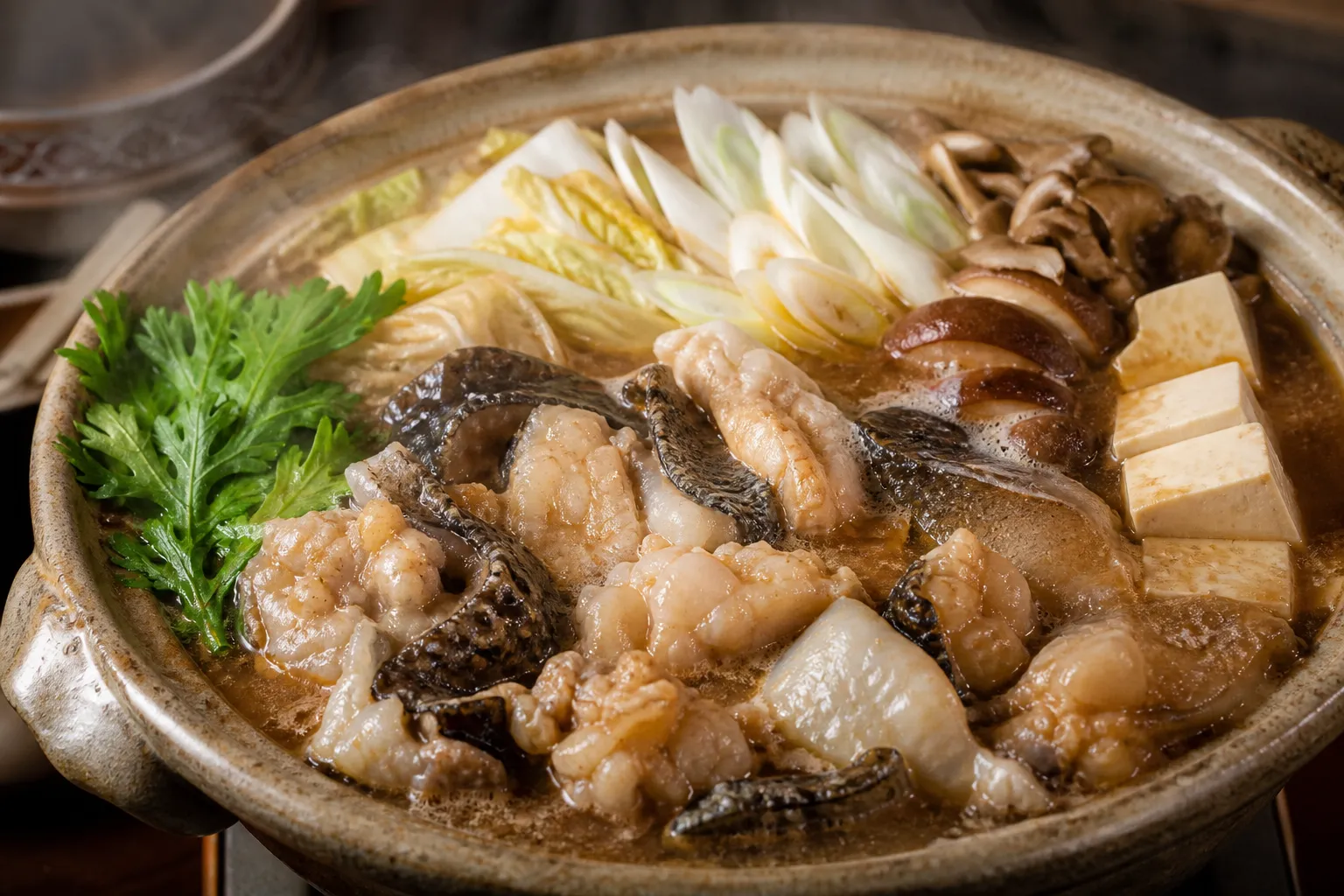
Local FoodOarai, Ibaraki
Anko-nabe (あんこう鍋)
One of the ugliest fish in the entire ocean somehow makes one of the best winter pots in Japan — and the secret weapon is its liver, melted straight into the broth until the whole thing turns rich enough to make you gasp.
July 5, 2026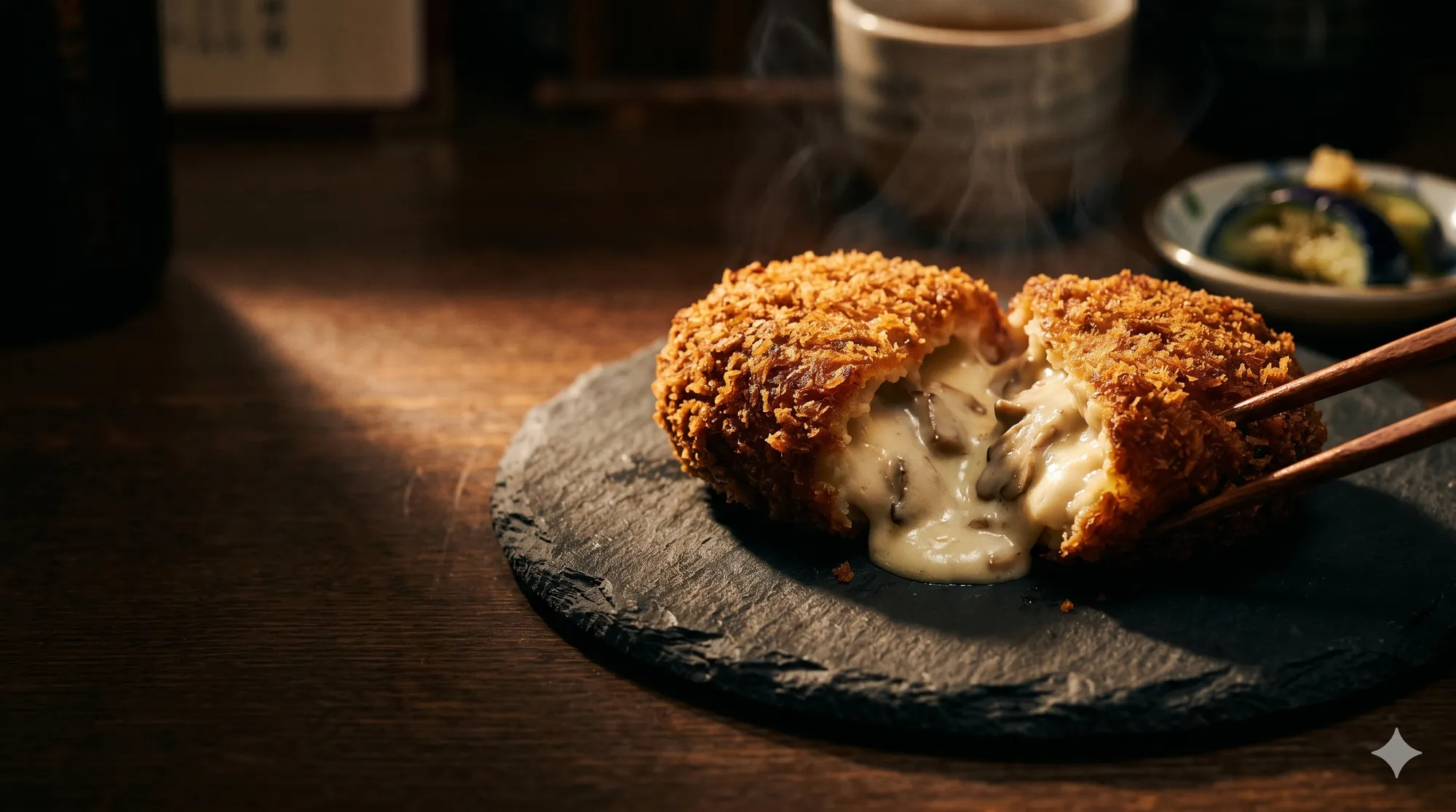
Local FoodIbaraki
Ryugasaki Croquettes (竜ケ崎コロッケ)
A small-town croquette so good it won a national contest. The star? A rice-flour cream croquette oozing maitake and béchamel. Underdog energy, championship flavor.
July 11, 2024