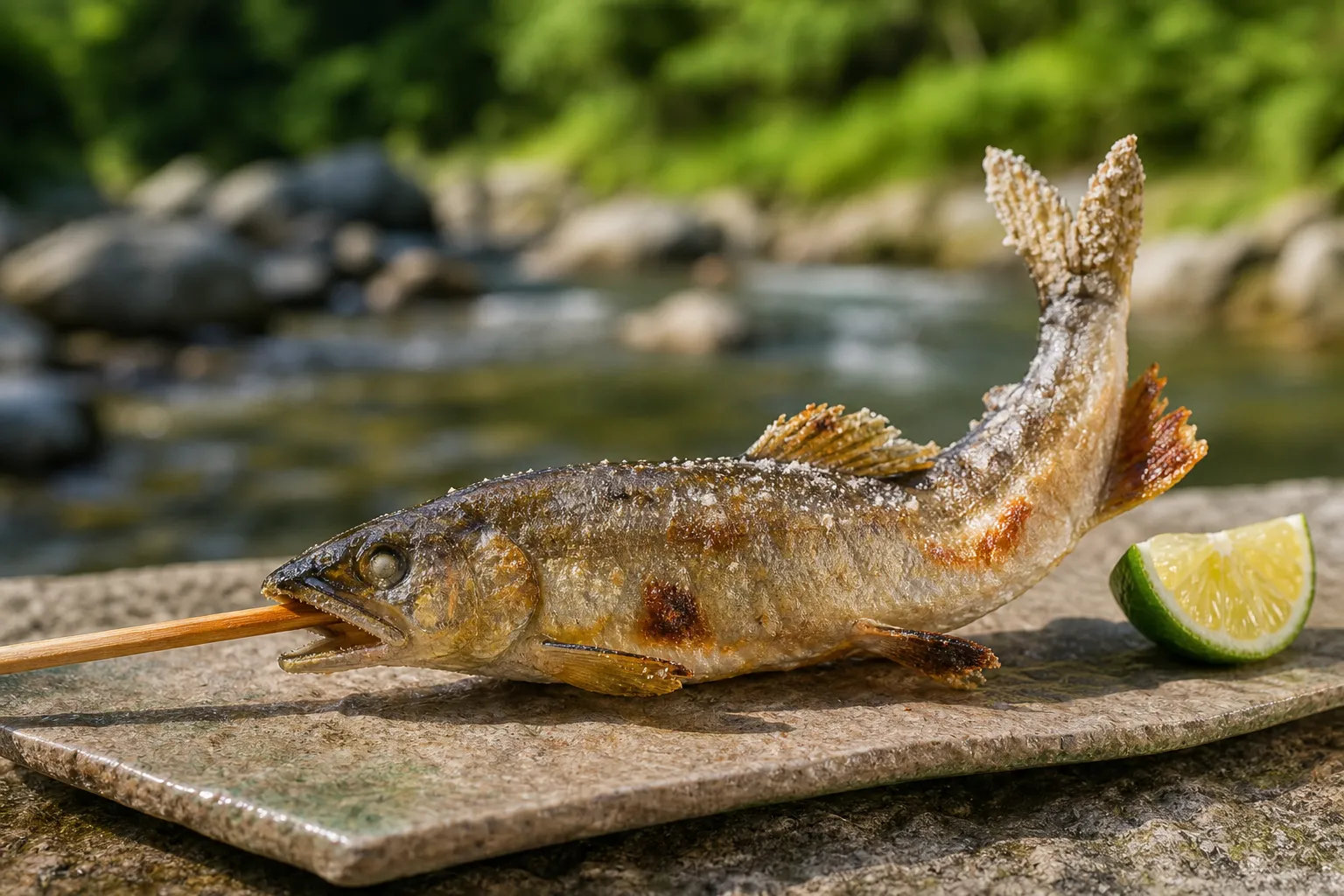
The tail fin snaps between my teeth like a potato chip, and I actually laugh out loud standing there by the river. It has no business being this good — a whole fish, on a stick, salted and grilled, and I'm eating all of it: the crisp fins, the delicate white flesh, the faintly bitter belly, right down to the tiny head. There's a clean, green, almost cucumber-melon scent that rises off it, and for a second I understand why people in Gifu have been obsessed with this fish for centuries.
Share this dish


A whole river fish, salted and grilled over coals until the skin blisters and the fins go crisp — and then you eat the entire thing, head to tail, chasing the clean green taste of the Nagara River.
🍜 Planning a food trip to Gifu?Add this dish to my Food Trip →
 Add this dish to my Food Trip →
Here's what it is: ayu no shioyaki (鮎の塩焼き) is a whole ayu — a sweetfish from cold, clear rivers — threaded onto a skewer in a lively S-curve so it looks like it's still swimming, dusted all over with salt (with extra salt packed onto the fins so they don't burn), and grilled slowly over charcoal until the skin blisters and the whole thing is eaten head-to-tail with a squeeze of sudachi. This isn't a fatty grilled saury or a rich mackerel, and it's definitely not fried — it's lean, mineral, faintly sweet river fish, cooked as simply as food can be cooked, and it tastes of the river it came from.
The fish of the Nagara River
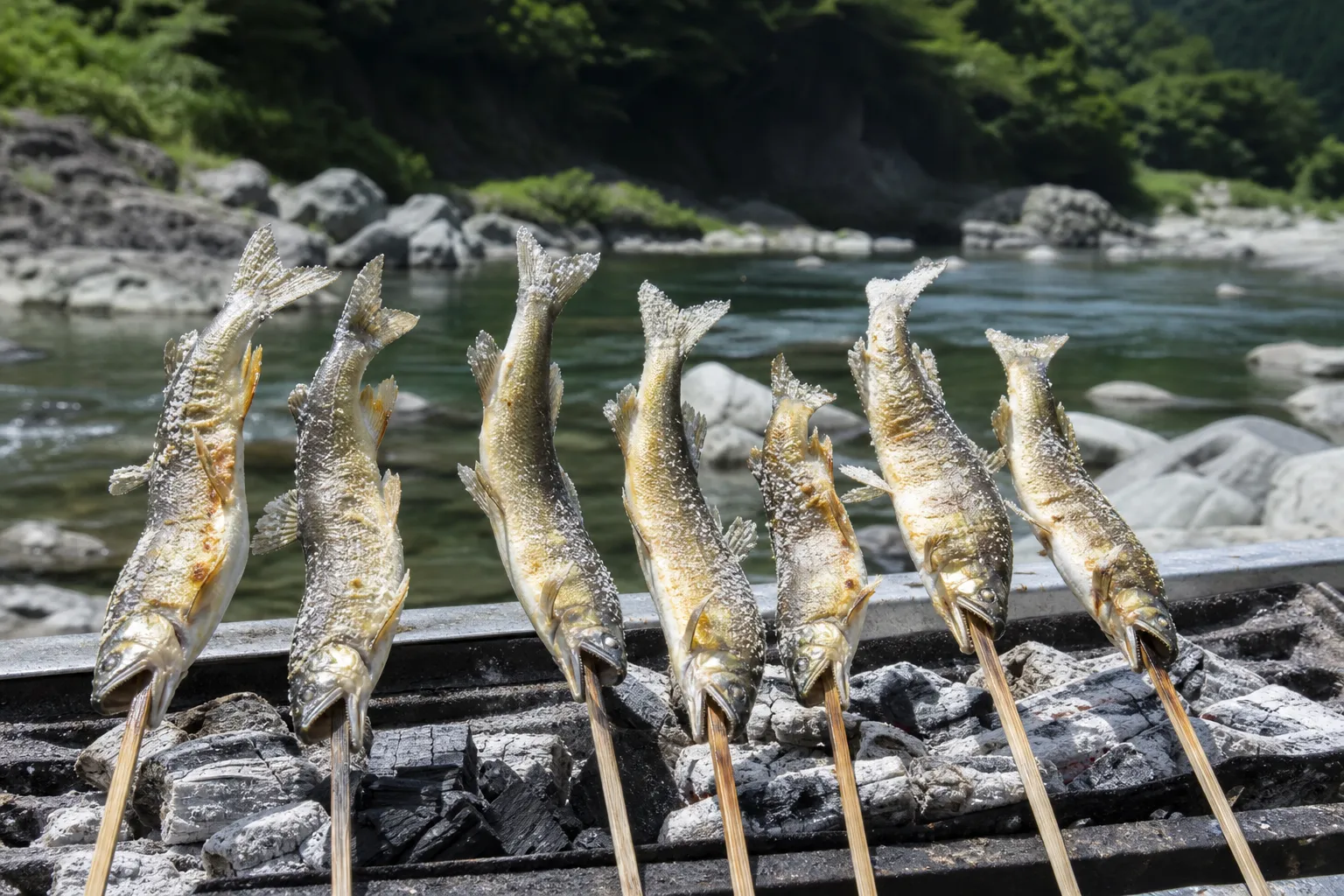
Ayu is the river fish of Japan, and nowhere is it more sacred than the Nagara River in Gifu. This is the home of ukai — cormorant fishing — a 1,300-year-old tradition where fishermen in straw skirts guide trained cormorants by torchlight to catch ayu on summer nights. It's so old and so treasured that the Nagara River ukai masters are officially employees of the Imperial Household Agency, and the fish they catch is offered to the Emperor. I find that genuinely moving: a whole living tradition, boats and birds and fire on the water, all of it in service of this one lean little fish.
And the reason for the obsession is the flavor. Ayu is sometimes called kōgyo, the "fragrant fish," because a wild one that's been eating river algae smells faintly of cucumber, watermelon, sweet grass — the taste of the river itself. Eat one grilled on the riverbank in Gifu on a summer evening, watching the ukai torches drift downstream, and it stops being a snack and becomes a whole sense of place. I've done it. I didn't want the night to end.
What makes the eating experience different
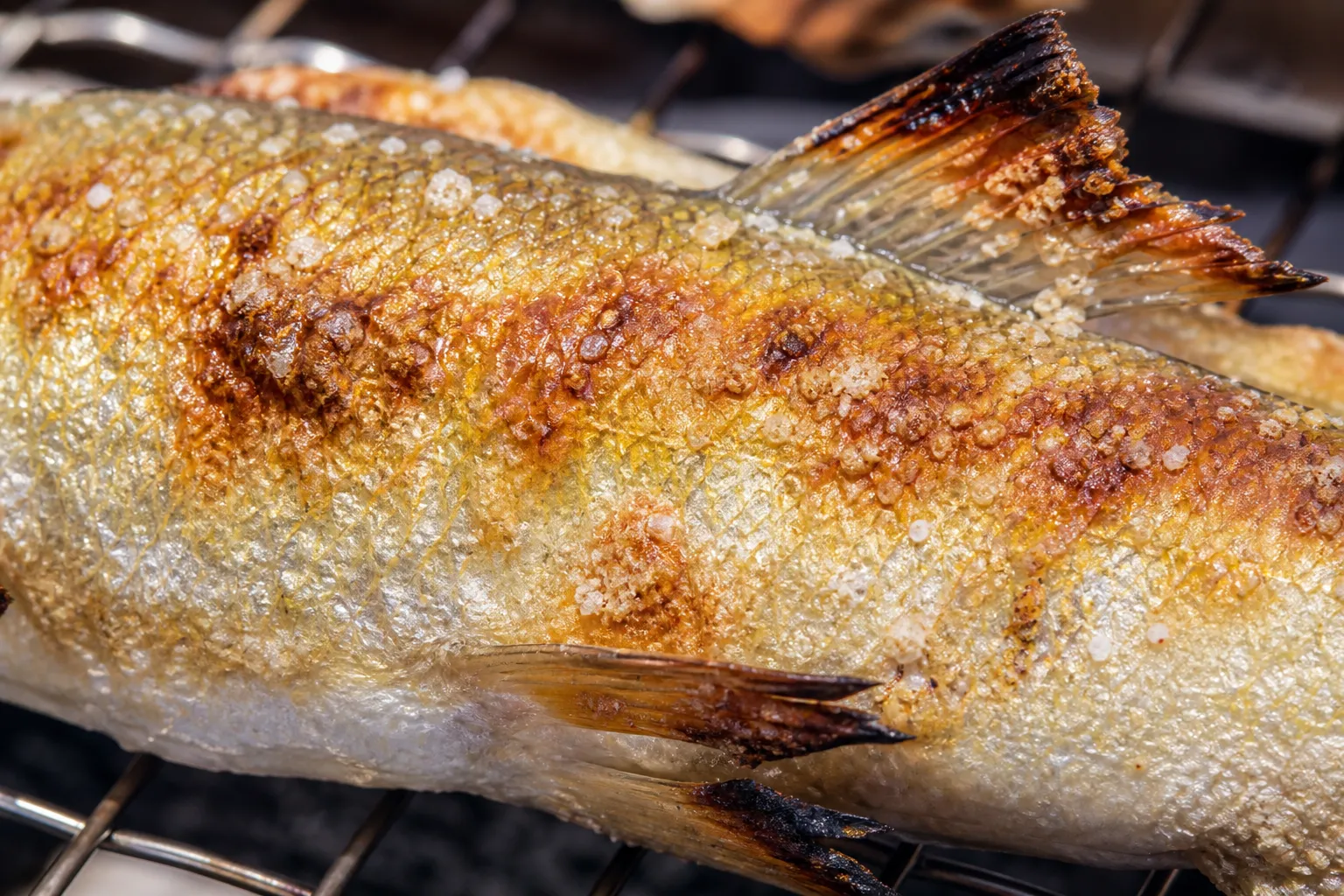
- You eat the whole fish — head, fins, bones and all. Grilled low and slow, everything goes tender and crisp enough to eat, so there's almost nothing left on the stick when you're done.
- The fin salt (keshō-jio, "makeup salt") is packed thick onto the tail and fins so they crisp instead of burning — those fins shatter like a chip, and they're the best bite.
- The belly is pleasantly bitter. Those guts are the signature ayu flavor — grassy, green, a little bitter — and locals prize it. Don't skip it; that bitterness is the fish.
- The flesh is lean, white and delicate, faintly sweet, nothing like an oily saury or mackerel — clean and mineral, tasting of cold river water.
- A squeeze of sudachi (a small green citrus) cuts through and lifts the whole thing. The salt, the char, the bitter belly, the citrus — it's an incredibly simple dish doing a lot at once.
How it's made
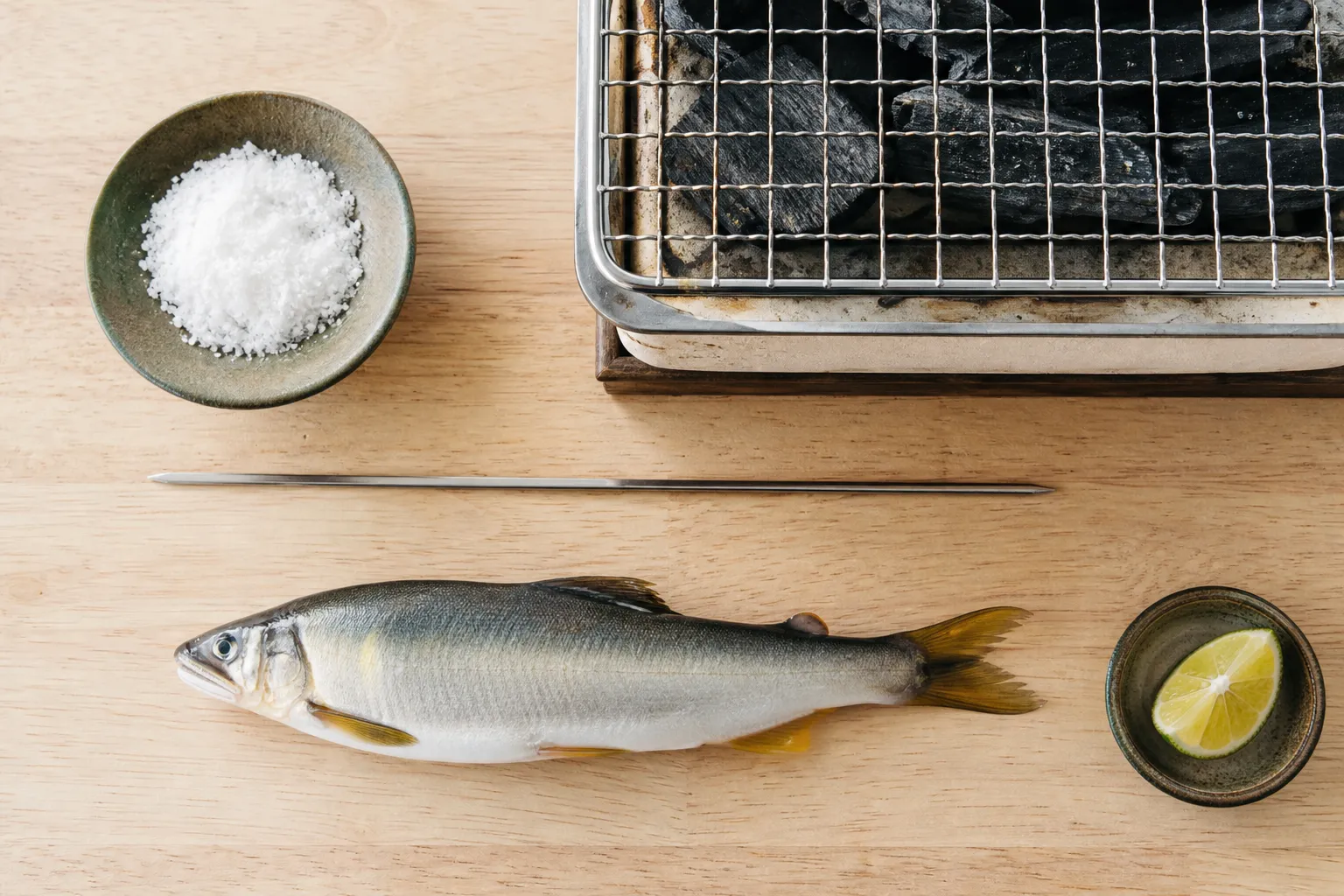
- Choose a fresh ayu. Ideally a wild river fish in summer season, still glistening.
- Skewer it 'swimming'. The fish is threaded onto a skewer in a wave-like S-curve (odori-gushi, "dancing skewer") so that, grilled, it looks alive and mid-swim.
- Salt it — and salt the fins extra. The whole fish is dusted with salt, then thick salt (keshō-jio) is pressed onto the tail and fins so they crisp up rather than char to ash.
- Grill slowly over charcoal. Stood up around the coals or laid over them, the ayu is cooked low and slow so the flesh sets, the skin blisters, and even the bones soften enough to eat.
- Serve whole with sudachi. Straight off the skewer, hot, with a wedge of sudachi (or a little grated daikon) to squeeze over.
The slow charcoal grilling is the whole craft — rush it and the outside burns while the inside stays raw and the bones stay hard. Done right, over patient coals, the entire fish becomes edible, crisp outside and tender within.
Before you go — eat it by the river, in summer
Your questions, answered honestly
"Do I really eat the head and bones?" — Yes, and you'll want to. A properly slow-grilled ayu has soft enough bones and crisp enough fins that you can eat the whole thing head-to-tail. If you're nervous, start at the belly and work outward — but at least try the tail fin, it's the crisp, salty best part.
"Is the bitter belly a mistake?" — No — it's the point. The slightly bitter, grassy guts are the true ayu flavor, and locals consider it the mark of a good wild fish. Sweet flesh up front, that green bitterness in the belly, salt and citrus around it. Sit with it; it grows on you fast.
"How is this different from other grilled fish like saury or mackerel?" — Those are oily, rich, ocean fish. Ayu is a river fish: lean, white, delicate and faintly sweet, with that famous cucumber-melon fragrance and a signature bitter belly. Simpler, cleaner, more about the river than the fat. And it's grilled whole on a skewer, not filleted.
"When and where is it best?" — Summer, when ayu is in season, and ideally on the Nagara River in Gifu, where you can pair it with watching the ukai cormorant fishing. A fresh wild river ayu, grilled riverside, in July or August — that's the version worth traveling for.
What the staff will ask you
| You'll hear | Romaji | Meaning | Just say |
|---|---|---|---|
| 何匹にしますか? | Nan-biki ni shimasu ka? | "How many fish?" | Ippiki kudasai (one, please) |
| 天然と養殖、どちらにしますか? | Tennen to yōshoku, dochira ni shimasu ka? | "Wild-caught or farmed?" | Tennen de (wild, please) |
| すだちをおつけしますか? | Sudachi o o-tsuke shimasu ka? | "Shall I add sudachi?" | Onegai shimasu (yes, please) |
To order, just say "Ayu no shioyaki o kudasai" (鮎の塩焼きをください) — "Salt-grilled ayu, please."
Where to eat it
- Along the Nagara River in Gifu City — the classic setting, where riverside restaurants and stalls serve salt-grilled ayu, especially during the ukai (cormorant fishing) season. Watching the ukai and eating ayu is the full experience.
- Gujō-Hachiman and the upper Nagara — this clear-water river town in Gifu is famous for its ayu; look for specialist restaurants and grills near the river.
- Summer festivals and riverside grills across Gifu — ayu-grilling stands appear at summer events throughout the prefecture, cooking fish over charcoal right by the water.
Ayu is a seasonal summer fish and ukai cormorant fishing runs on a set season (roughly mid-May to mid-October on the Nagara), so check dates, boat reservations and restaurant hours before you go — they change year to year.
Soul Score
Local Roots5/5
First-Timer Friendly3/5
Adventure Level4/5
Comfort Level4/5
Travel Worthy5/5
These scores are one obsessed eater's gut feeling — not a verdict. A low number isn't a bad mark, just a different kind of adventure.
Know someone planning Japan?
← All Articles
Local Food · Gifu
Still hungry?
Eat more from Gifu
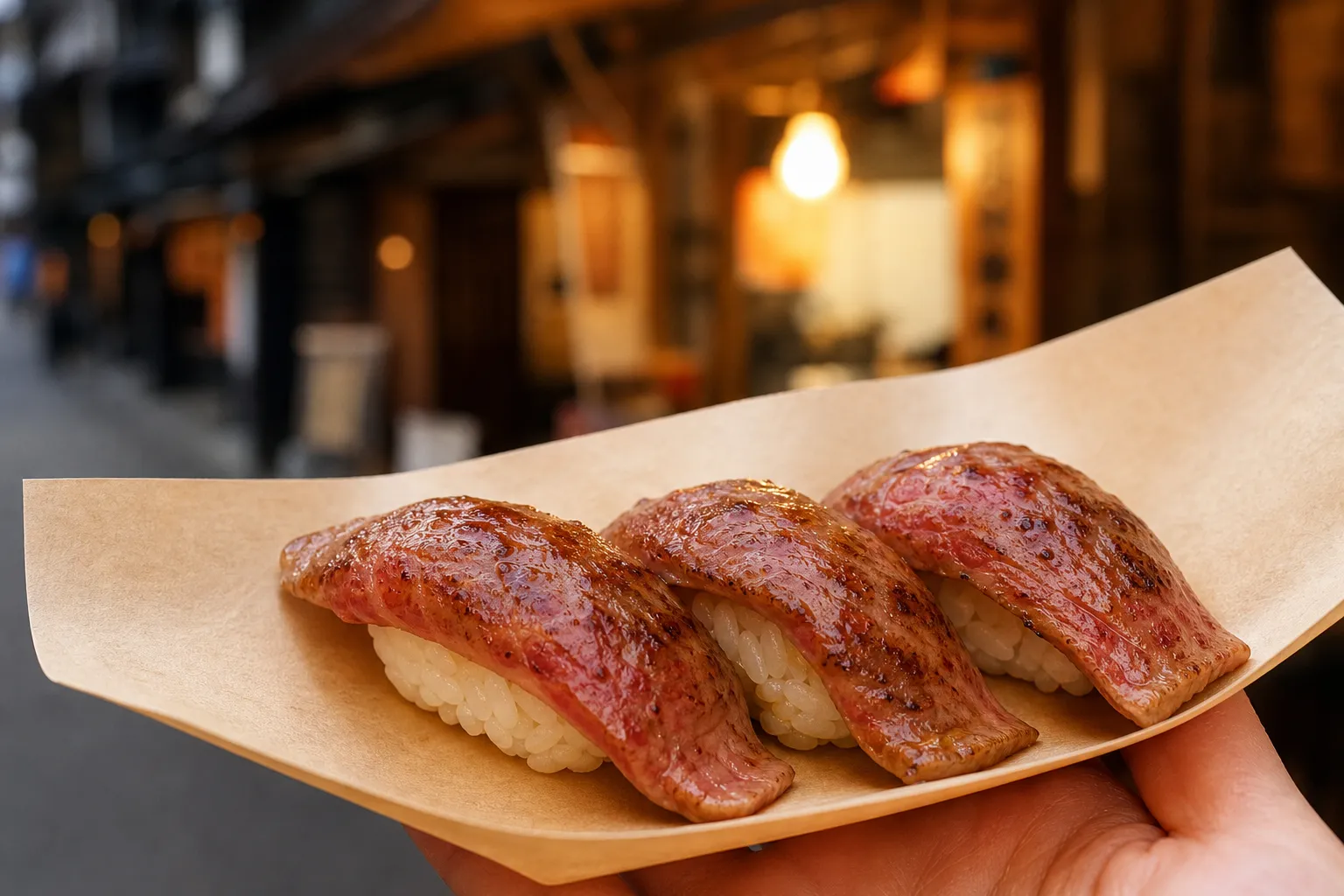
Local FoodGifu
Hida Beef (飛騨牛)
A torch flares over a single bite of beef sushi on a wooden boat, someone hands it to you still warm, and you eat Japan's most-awarded wagyu standing in the middle of a street.
July 22, 2026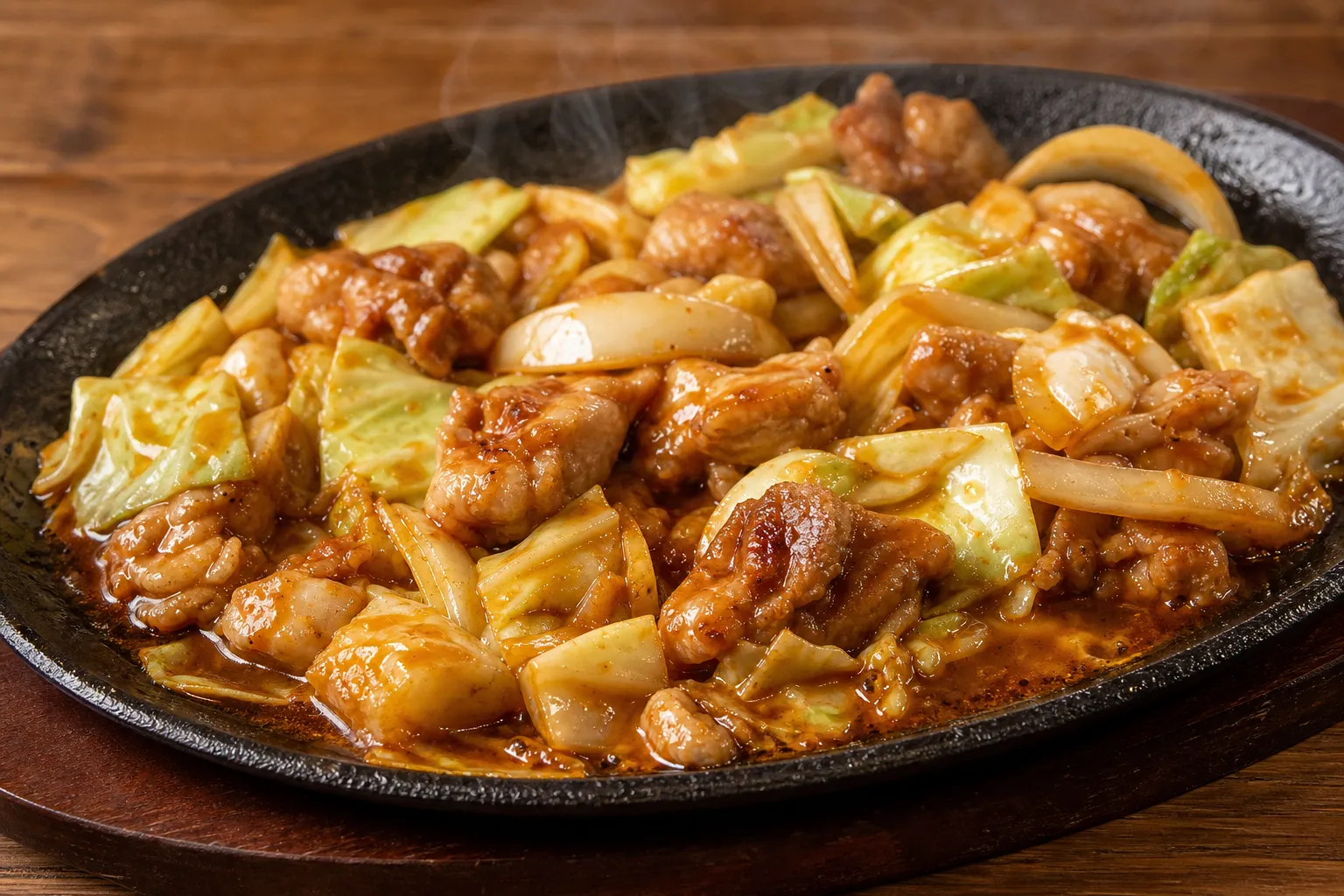
Local FoodOkumino, Gifu
Keichan (けいちゃん)
Chicken and cabbage hit a screaming-hot iron plate slathered in miso, and the whole table leans in — this is food you cook together, argue over, and fight for the last piece of.
July 5, 2026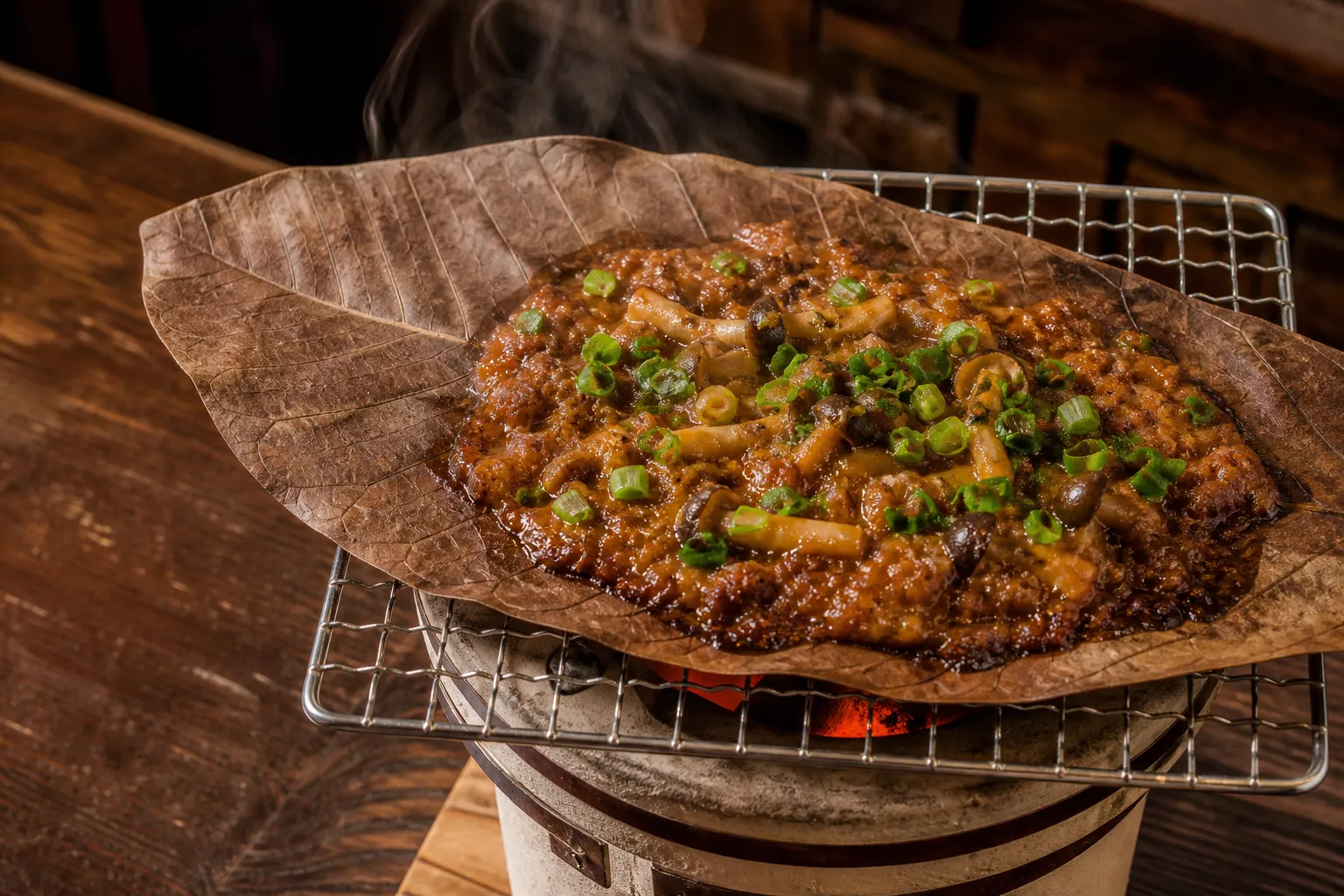
Local FoodTakayama, Gifu
Hoba Miso (朴葉味噌)
Sweet miso bubbling and caramelizing on a big dried magnolia leaf over a tabletop flame — Hida-Takayama's mountain breakfast turns one scoop of miso into the best reason to keep eating rice.
July 3, 2026