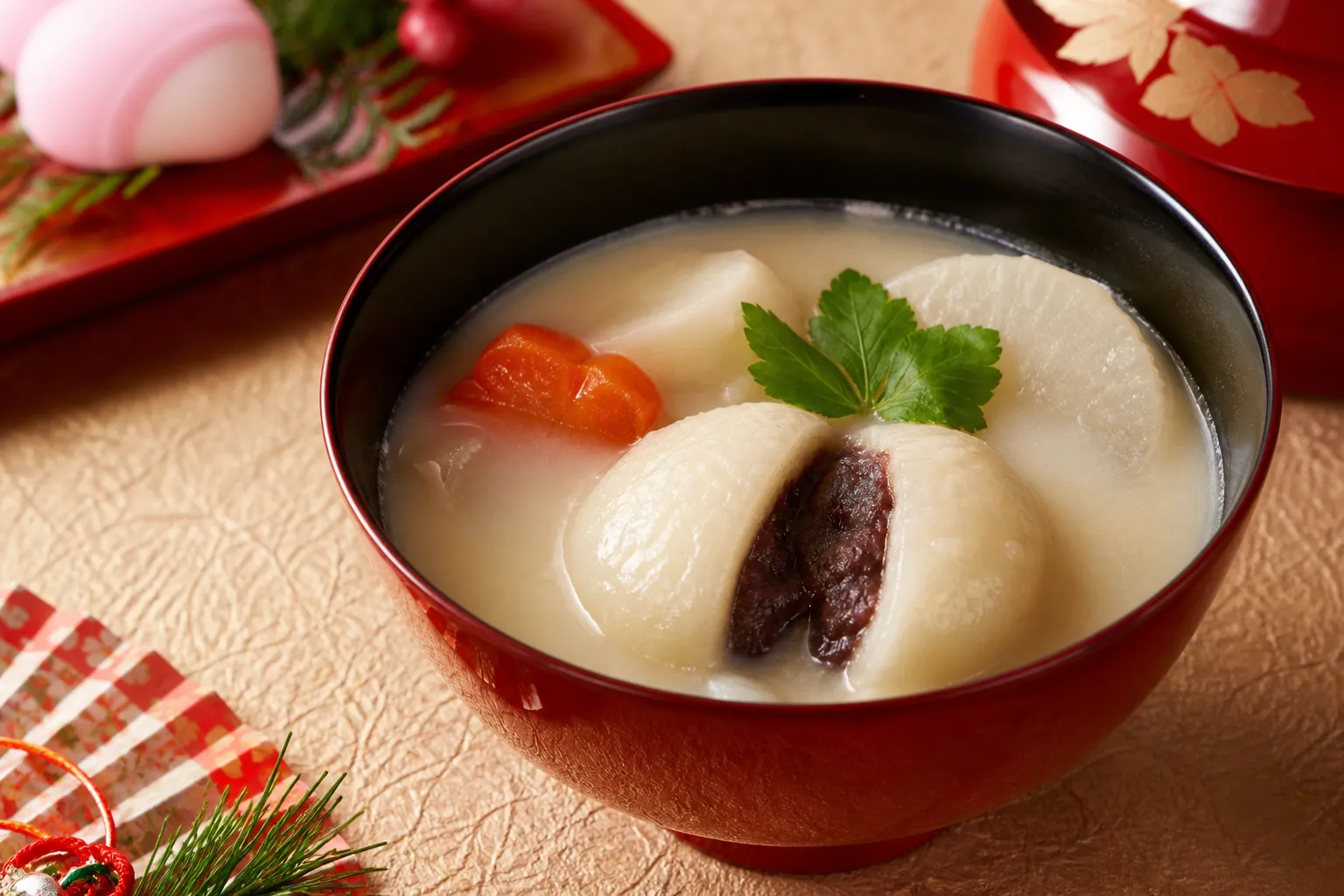
The mochi gives, the way mochi does, all soft and stretchy — and then my mouth fills with sweet red-bean paste, sitting in a bowl of savory miso soup, and my brain briefly refuses to process it. Sweet? In the soup? On purpose?? I take another bite just to make sure I understood correctly. I did. And by the third bite the mellow white miso and the sweet anko have made peace, and I'm a convert. This is one of the most delightfully confusing things I've eaten in Japan.
Share this dish


You bite into the mochi in your New Year soup and — wait — it's full of sweet red-bean paste, in a savory white-miso broth. Kagawa's gloriously confusing New Year bowl, born from a secret history of sugar.
🍜 Planning a food trip to Kagawa?Add this dish to my Food Trip →
 Add this dish to my Food Trip →
Here's what it is: an-mochi zoni (あん餅雑煮) is a New Year zoni (mochi soup) from Kagawa, made with a sweet, mellow white-miso broth, daikon and carrot — and a round mochi that has sweet red-bean paste (anko) hidden inside it. Bite the mochi and the sweet anko oozes into the savory broth. This isn't a plain, clear-broth zoni like most of Japan makes, and it's definitely not a bowl of sweet zenzai red-bean soup — it's a genuine savory soup with a sweet secret at its heart, and it comes from a very specific piece of local history.
A sweet secret born from sugar
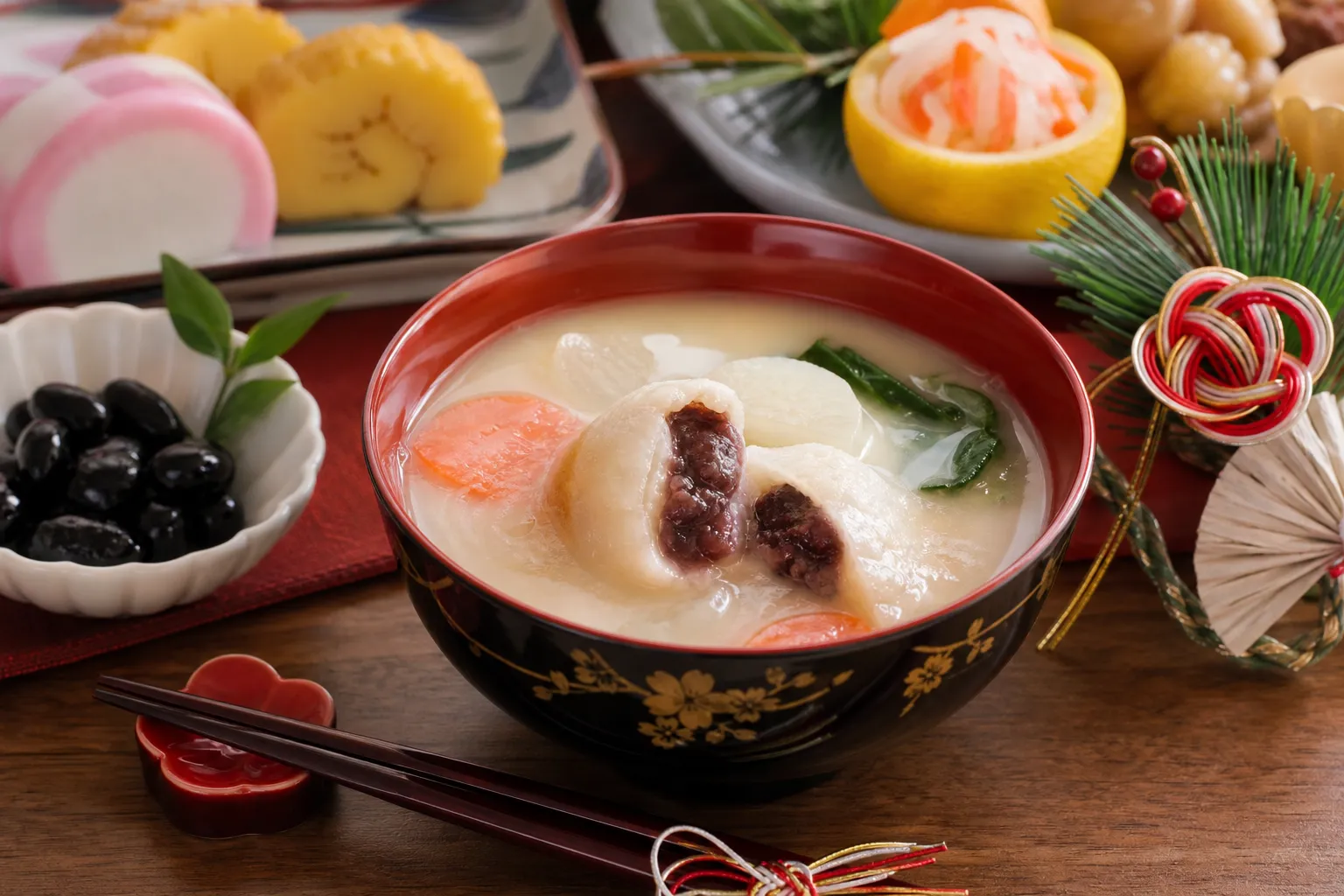
Why on earth would you hide sweet bean paste in a New Year soup? Sugar. During the Edo period, the domain that is now Kagawa (old Sanuki) became one of Japan's rare producers of sugar — the prized wasanbon fine sugar is a Sanuki specialty to this day. But sugar was a valuable cash crop, taxed and sold, far too precious for ordinary families to eat freely. So the story goes that people could only indulge in it once a year — and at New Year, they smuggled a little forbidden sweetness into the family zoni by hiding anko inside the mochi. A small, sweet act of joy, buried where the tax man couldn't see it. I find that genuinely lovely.
So this bowl isn't a gimmick — it's a whole regional history you can taste: a sugar-producing domain, a precious luxury, and a clever, tender way of sneaking a treat into the most important meal of the year. Families in Kagawa still make it every New Year, and the surprise on a first-timer's face is, I suspect, half the point. It's comfort food with a punchline and a backstory, which is exactly my favorite kind.
What makes the eating experience different
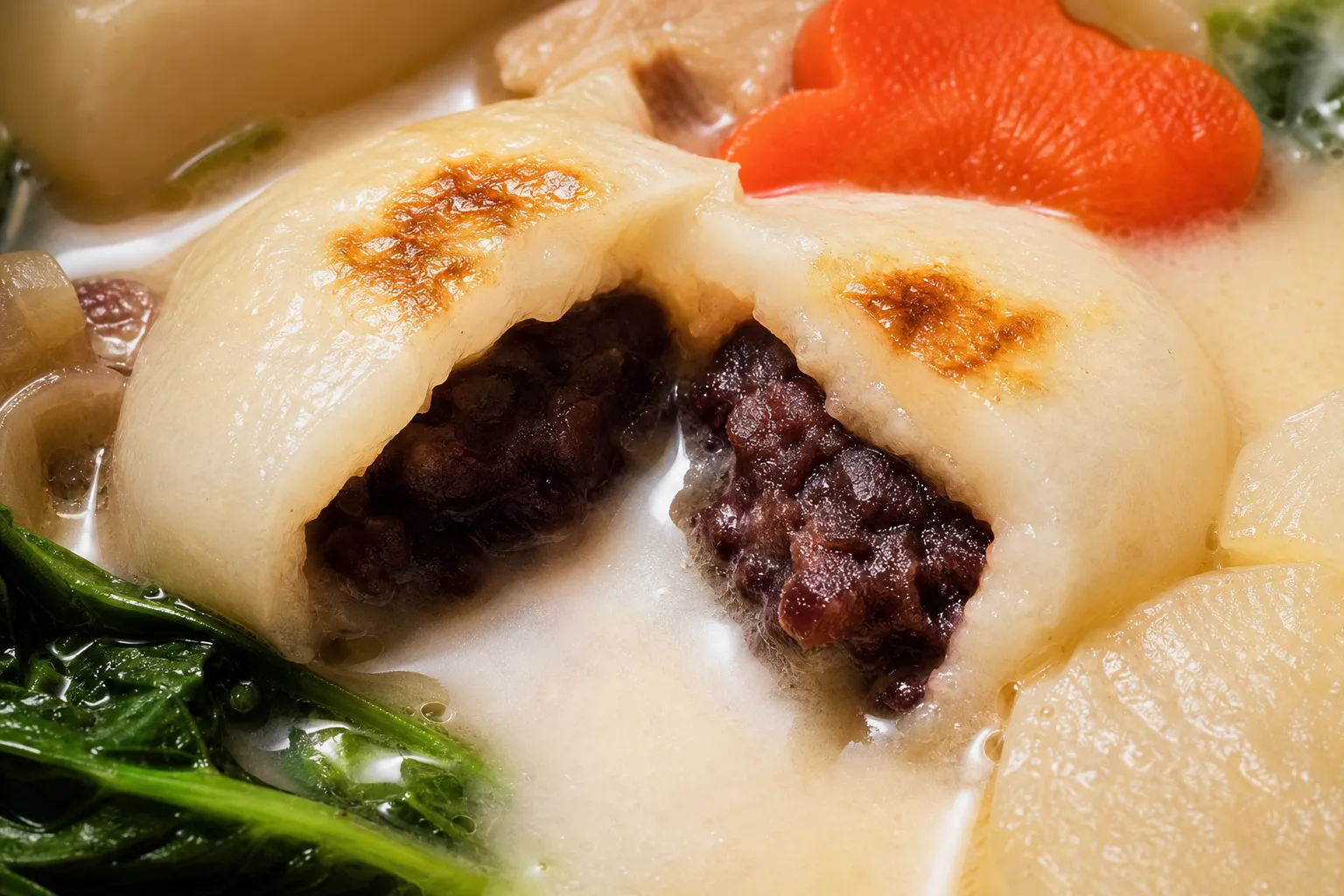
- The hidden anko. The mochi looks like an ordinary round rice cake — until you bite in and sweet red-bean paste spills out. The surprise is the entire experience.
- Sweet meets savory in the bowl. As the anko melts into the mellow white-miso broth, you get this uncanny, comforting sweet-savory blend — less strange than it sounds, more delicious than you'd expect.
- The broth is sweet-mild white miso (Sanuki-style), gentle and creamy-tasting, not sharp — the perfect mellow stage for the sweet mochi.
- Daikon and carrot are simmered in, often cut into rounds — a nod to family harmony and good fortune for the New Year.
- It's festive comfort food — warm, soft, sweet, savory, surprising — the taste of a Kagawa New Year in one bowl.
How it's made
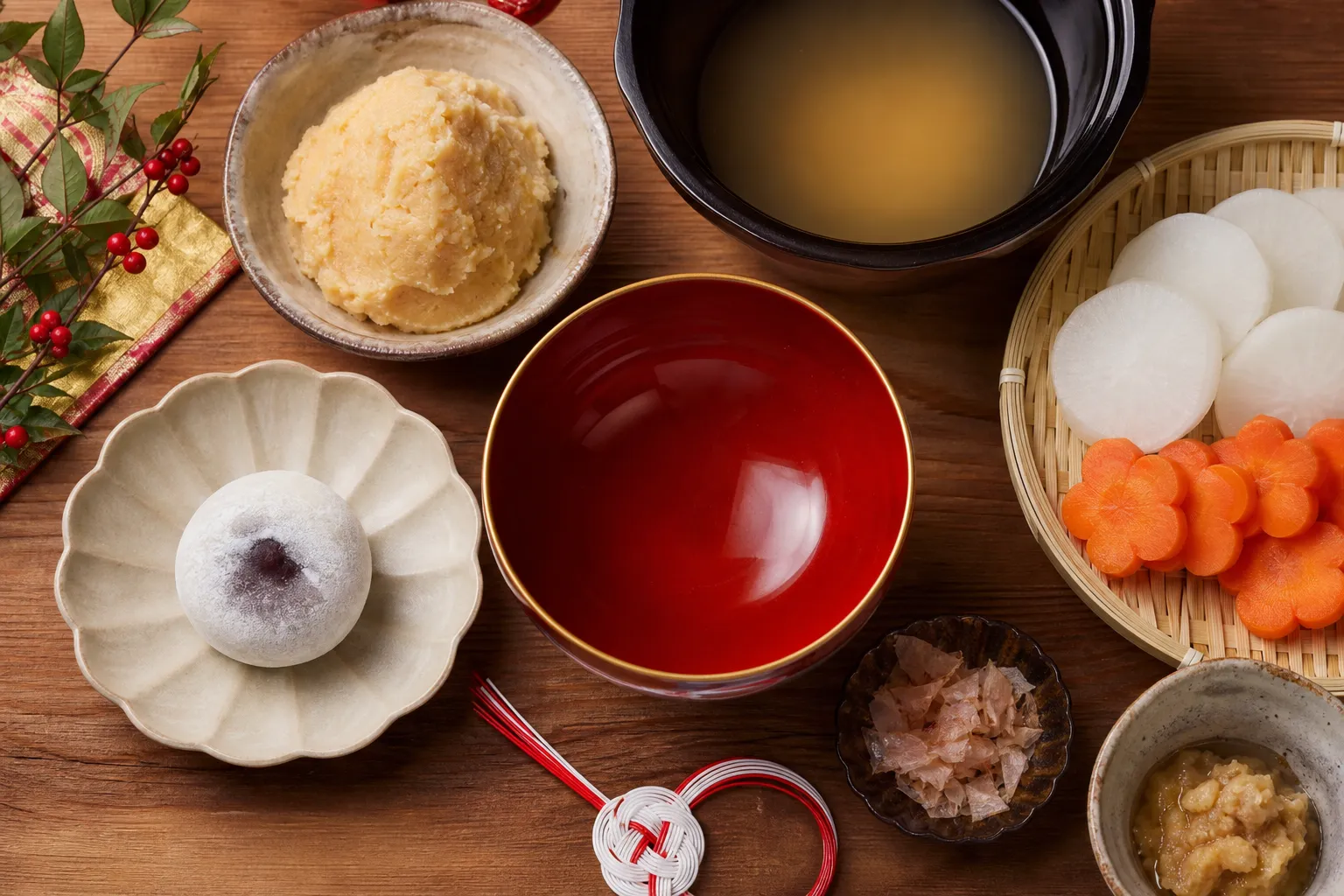
- Make the an-mochi. Sweet red-bean paste (anko) is wrapped inside a round of pounded mochi and sealed, so the sweetness is completely hidden inside.
- Simmer the vegetables. Daikon and carrot (often cut in rounds) are simmered until tender in a dashi base — commonly an iriko (dried sardine) dashi typical of the region.
- Season with white miso. The broth is seasoned with sweet, mellow white miso into a gentle, slightly sweet soup.
- Cook the an-mochi. The anko-filled mochi is heated (boiled or added to the pot) until soft and stretchy.
- Assemble the bowl. The mochi goes into the bowl with the vegetables and broth, ready to surprise whoever bites in.
The trick is sealing the anko fully inside the mochi so it stays a secret until the first bite — and balancing the sweet miso so it welcomes the sweet bean paste instead of fighting it. Get both right and the sweet-savory magic just works.
Before you go — brace for the sweet surprise
Your questions, answered honestly
"Wait — there's sweet bean paste in a savory soup?" — Yes, and it's wonderful. The mochi is filled with sweet anko, sitting in a mellow white-miso broth. As it melts, sweet and savory blend into something surprisingly harmonious. Go in expecting the surprise and you'll love it.
"Is this the same as zenzai (sweet red-bean soup)?" — No. Zenzai is a fully sweet dessert soup. An-mochi zoni is a savory miso soup with vegetables — the sweetness is hidden inside the mochi, not the whole broth. Different dish, different intent: this one is a New Year meal, not a dessert.
"How is it different from normal zoni?" — Most of Japan's zoni has plain mochi in a clear or miso broth. Kagawa's version uses a sweet white-miso broth and mochi stuffed with anko — the sweet-savory twist is unique to the region, and it comes straight out of its sugar-producing history.
"When can I eat it?" — It's above all a New Year dish, so early January is the surest time. Some Kagawa restaurants, cafes and udon shops serve it year-round or seasonally, but availability varies — check locally.
What the staff will ask you
| You'll hear | Romaji | Meaning | Just say |
|---|---|---|---|
| あん餅、初めてですか? | An-mochi, hajimete desu ka? | "Is this your first time with an-mochi?" | Hai, tanoshimi desu (yes, looking forward to it) |
| お餅は何個にしますか? | O-mochi wa nan-ko ni shimasu ka? | "How many mochi?" | Ni-ko de (two, please) |
| 温かいうちにどうぞ | Atatakai uchi ni dōzo | "Please enjoy it while it's hot" | Itadakimasu (thank you, let's eat) |
To order, just say "An-mochi zoni o kudasai" (あん餅雑煮をください) — "An-mochi zoni, please."
Where to eat it
- Takamatsu and across Kagawa — the prefectural home of the dish; look for it at local restaurants, cafes and traditional eateries, especially around the New Year season.
- Kagawa udon shops and local-cuisine restaurants — some udon and Sanuki-cuisine restaurants offer an-mochi zoni as a regional specialty; a number serve it beyond just the New Year period.
- Sanuki wasanbon and local sweet makers — the region's famous fine sugar (wasanbon) is part of the same sweet heritage; food-focused shops and markets in Kagawa are good places to learn the backstory.
An-mochi zoni is strongly tied to New Year, so year-round availability is limited and varies by shop — check before you go, especially outside the January season.
Soul Score
Local Roots5/5
First-Timer Friendly4/5
Adventure Level4/5
Comfort Level5/5
Travel Worthy4/5
These scores are one obsessed eater's gut feeling — not a verdict. A low number isn't a bad mark, just a different kind of adventure.
Know someone planning Japan?
← All Articles
Local Food · Kagawa
Still hungry?
Eat more from Kagawa
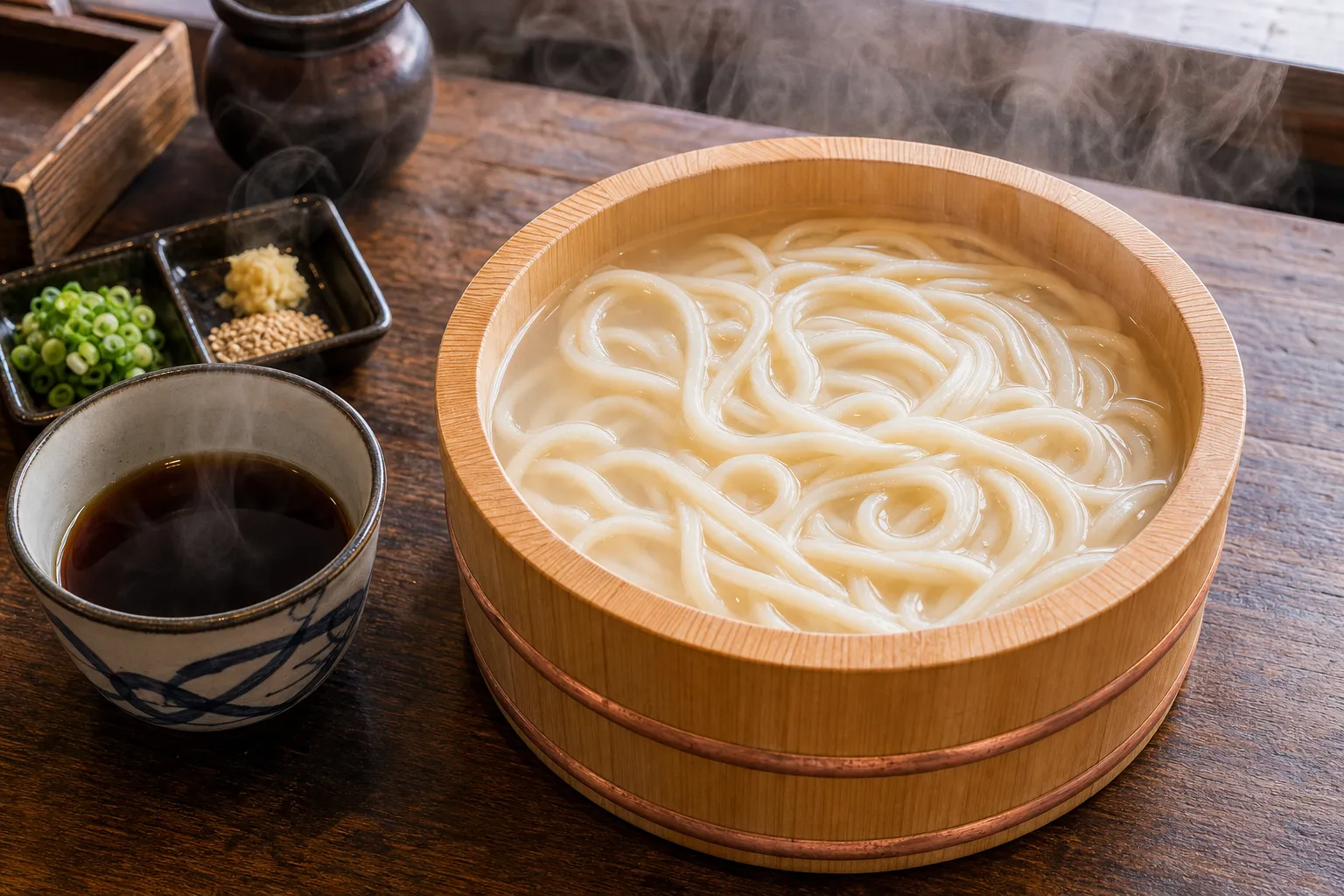
Local FoodKagawa
Kamaage Udon (釜揚げうどん)
Straight from the pot to your tub, still swimming in its own cloudy cooking water, steam curling up — no cold rinse, no soup, nothing hiding the noodle. Kagawa serves udon at its softest, warmest, most naked, and it's a revelation.
July 9, 2026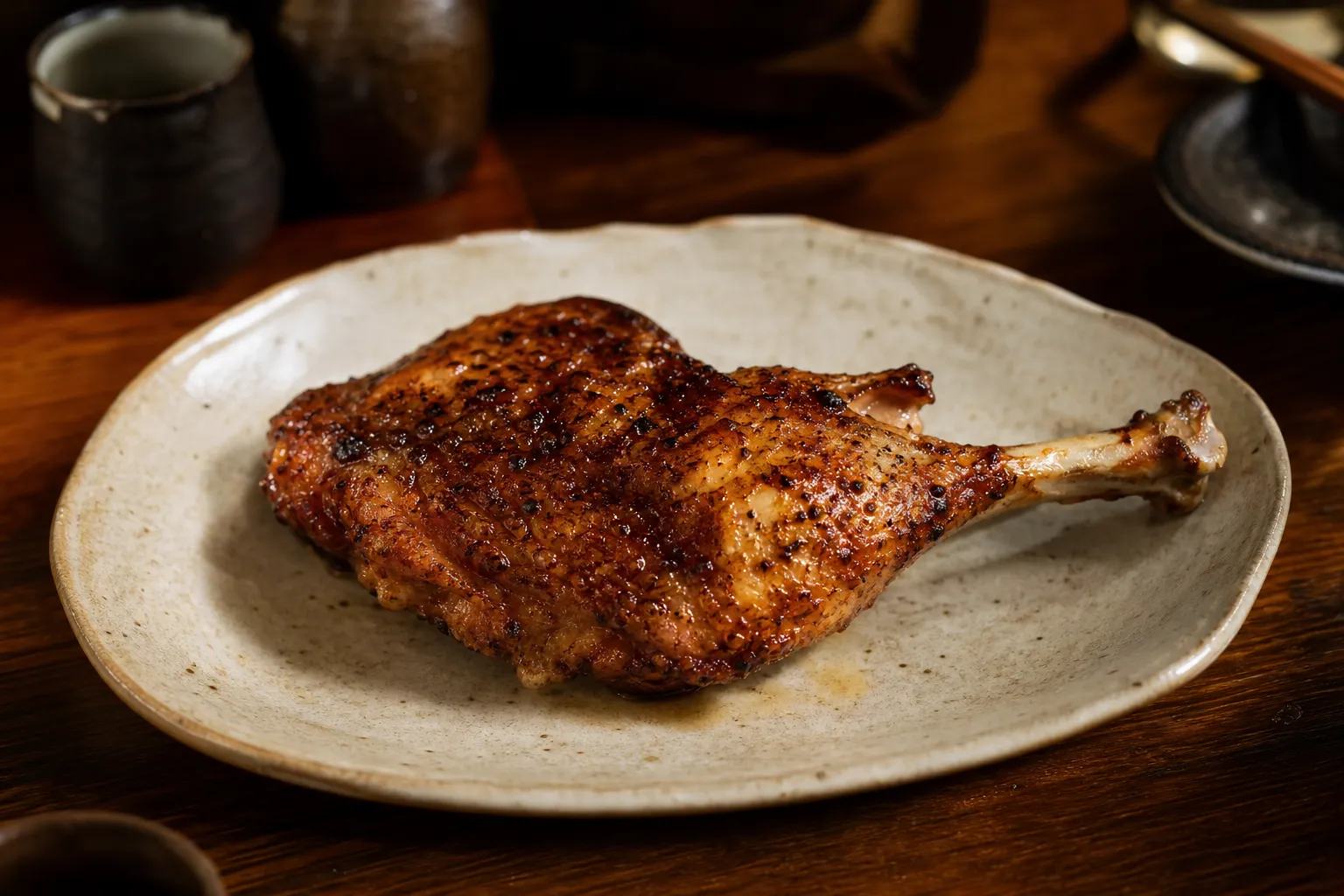
Local FoodMarugame, Kagawa
Honetsuki-dori (骨付鳥)
You don't cut it, you don't fork it — you grab the bone with a napkin and bite, and the first thing that hits you is the black pepper, hard, before you've even tasted the chicken.
July 5, 2026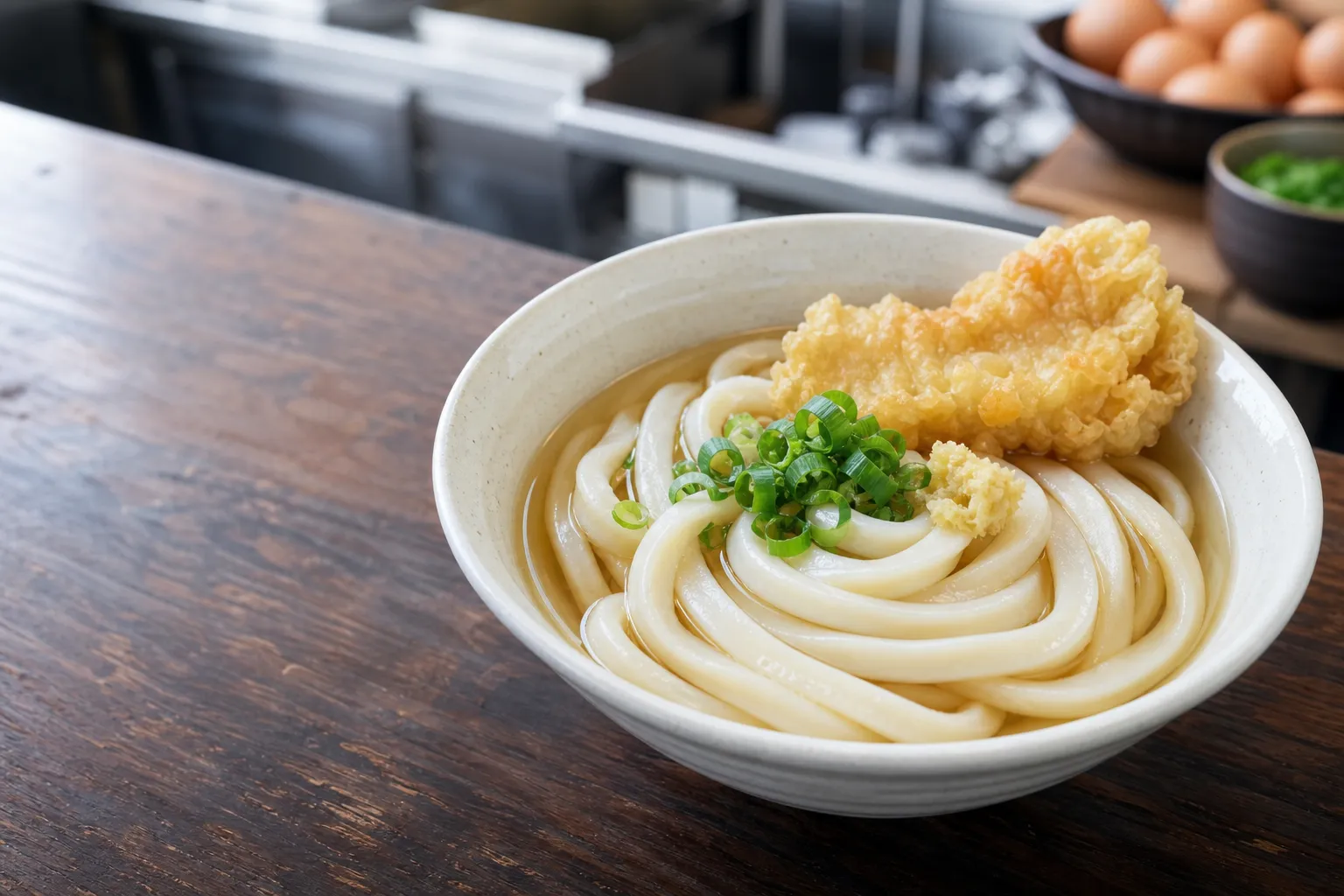
Local FoodTakamatsu, Kagawa
Sanuki Udon (讃岐うどん)
Thick, square-edged, defiantly chewy udon in a clear dashi — so good that a whole prefecture rebranded itself 'Udon Prefecture.' You grab a tray, you slurp, you leave changed.
June 27, 2026