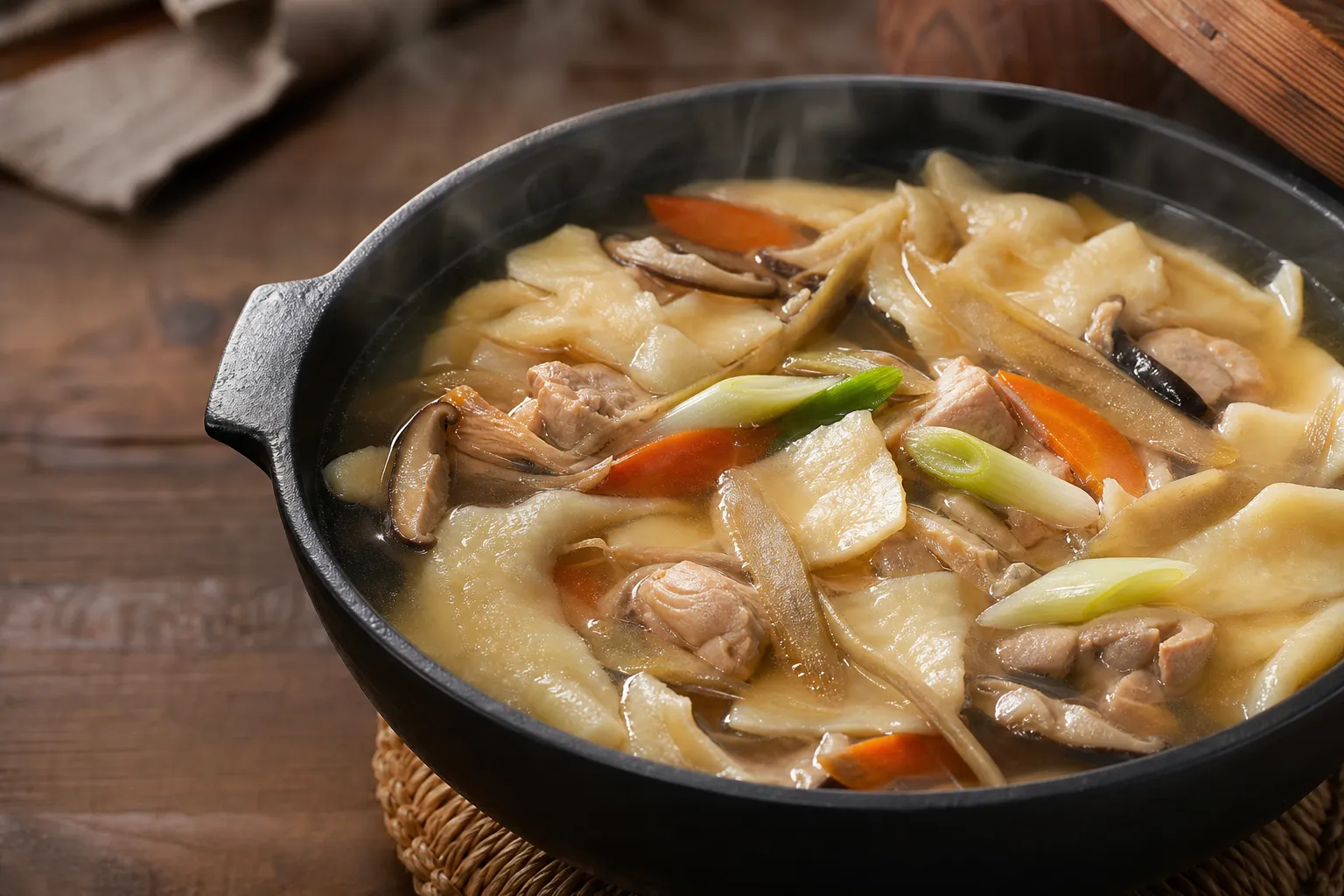
The first spoonful was broth — clean, savory, chicken-and-soy warm — and then my chopsticks snagged something that fought back. A flat, chewy, floppy little scrap of dough, slippery and springy, torn into no shape in particular. I chased it around the bowl, caught it, and understood immediately why anyone in a Tohoku winter would want a bowl of this. It's the kind of chewy that feels like it's on your side.
Share this dish


Torn scraps of wheat dough, pinched off by hand and dropped straight into a clear chicken-and-soy dashi thick with burdock and mushrooms — Iwate's answer to a freezing winter, chewy and slippery and made to fill you up.
🍜 Planning a food trip to Iwate?Add this dish to my Food Trip →
 Add this dish to my Food Trip →
Here's what it is: hittsumi (ひっつみ) is a Iwate soup where wheat dough is pinched and torn by hand into flat, irregular pieces and dropped straight into a clear soy-flavored dashi simmered with chicken, burdock, carrot and mushrooms. It belongs to the suiton family of dumpling soups, but the name is the key: "hittsumu" means to pinch or tear, and that's literally the cooking method — you rip the dough with your fingers into the pot. It is not gyoza, it is not udon, and it is not mochi soup — the "noodle" is a hand-torn dough rag, and that's the whole personality of the dish.
Northern winter food, made from what you had
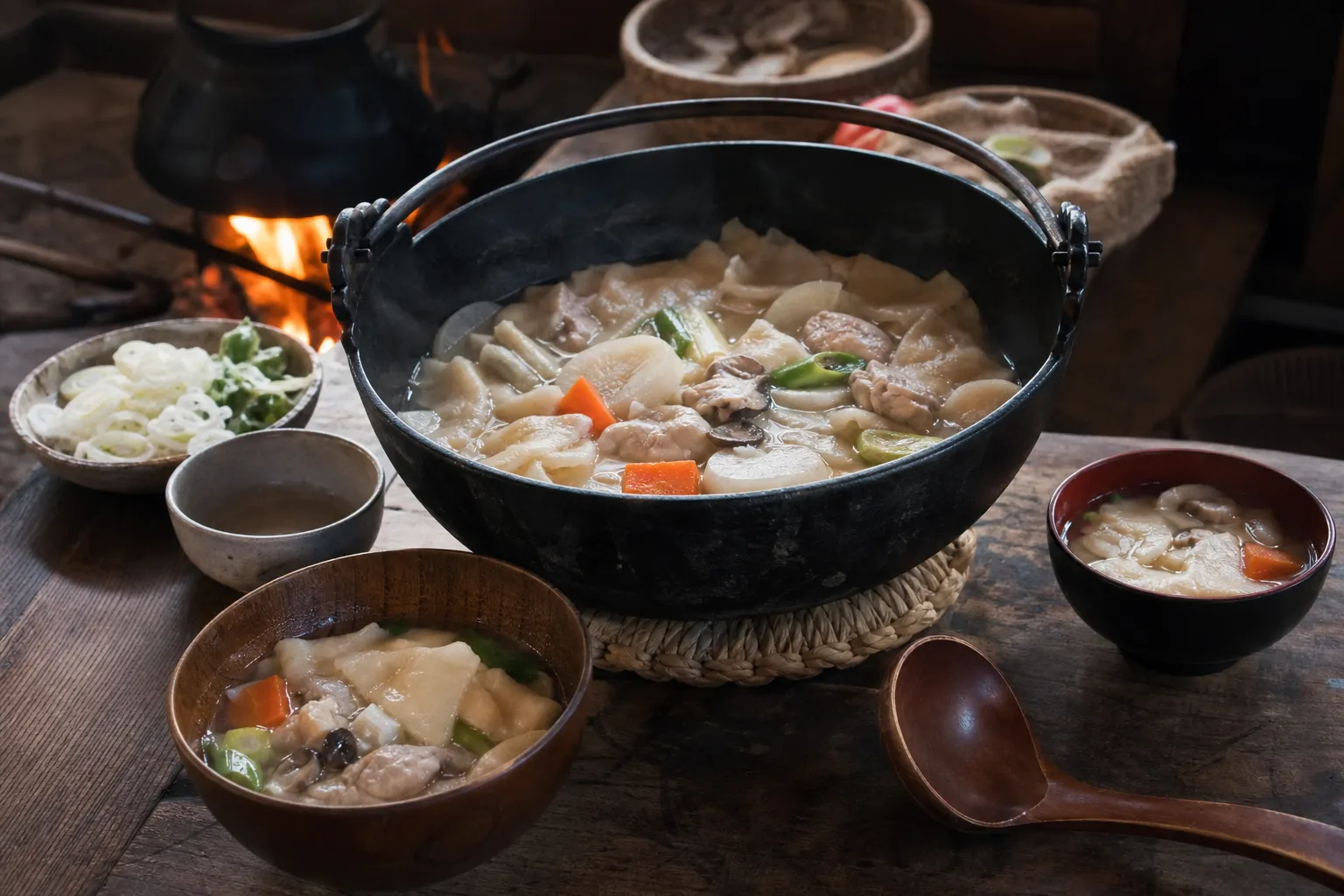
Iwate is big, mountainous and cold, and rice didn't always come easy in the northern reaches — but wheat did. So home cooks did what cold-country cooks everywhere do: they stretched a little flour, a little chicken, and whatever root vegetables were in the cellar into a pot big enough to warm the whole family. No rolling pins, no cutting boards, no fuss — you just tear the dough straight into the simmering broth with your hands. I love that the technique is the recipe. It's peasant-smart in the best way.
This is deep everyday soul food up here — the thing simmering on the stove when you come in from the snow, the thing that makes a farmhouse kitchen smell like dinner. You'll find close cousins all over Tohoku under different names (suiton, tsumeri), but in Iwate it's hittsumi, and locals will happily argue their grandmother's was better than yours. I believe every one of them. Food this humble gets fiercely personal.
What makes the eating experience different
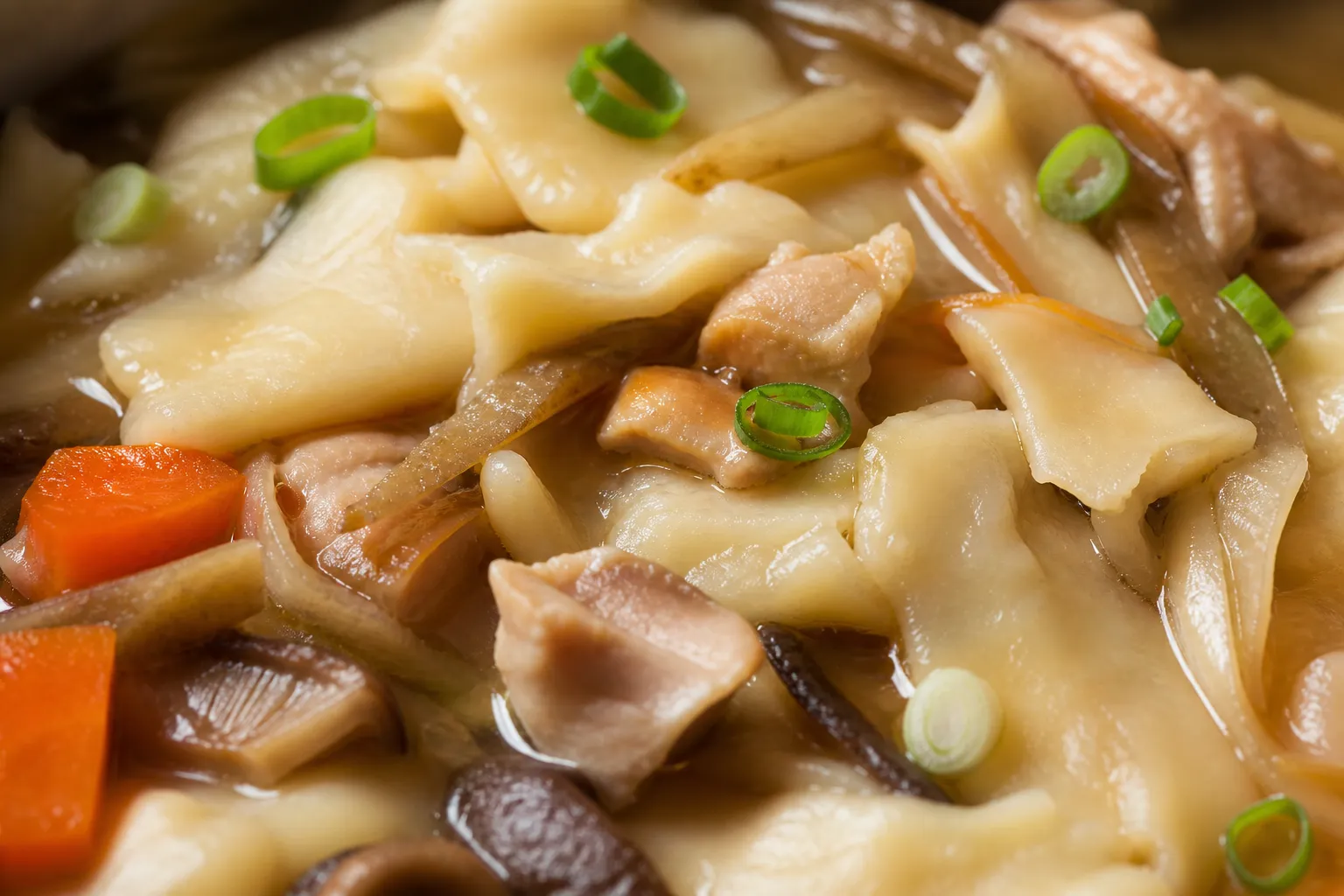
- The dough is torn, not cut. Every piece is a different flat, irregular shape, thin at the edges and thicker in the middle — you get a range of chew in a single bowl.
- That chew is the point. Slippery outside, springy and dense inside — it's satisfying to bite and it soaks up broth like it was built for it.
- The broth is clean and clear. A light chicken-and-soy dashi, not a heavy stew — savory and warming without being rich, so it never gets tiring.
- Root vegetables do a lot of work. Burdock and mushrooms give it an earthy, woodsy depth; carrot adds a little sweetness and color.
- It's genuinely filling. Wheat dough plus chicken plus vegetables in one bowl — this is a meal, and a cheap, honest one at that.
How it's made
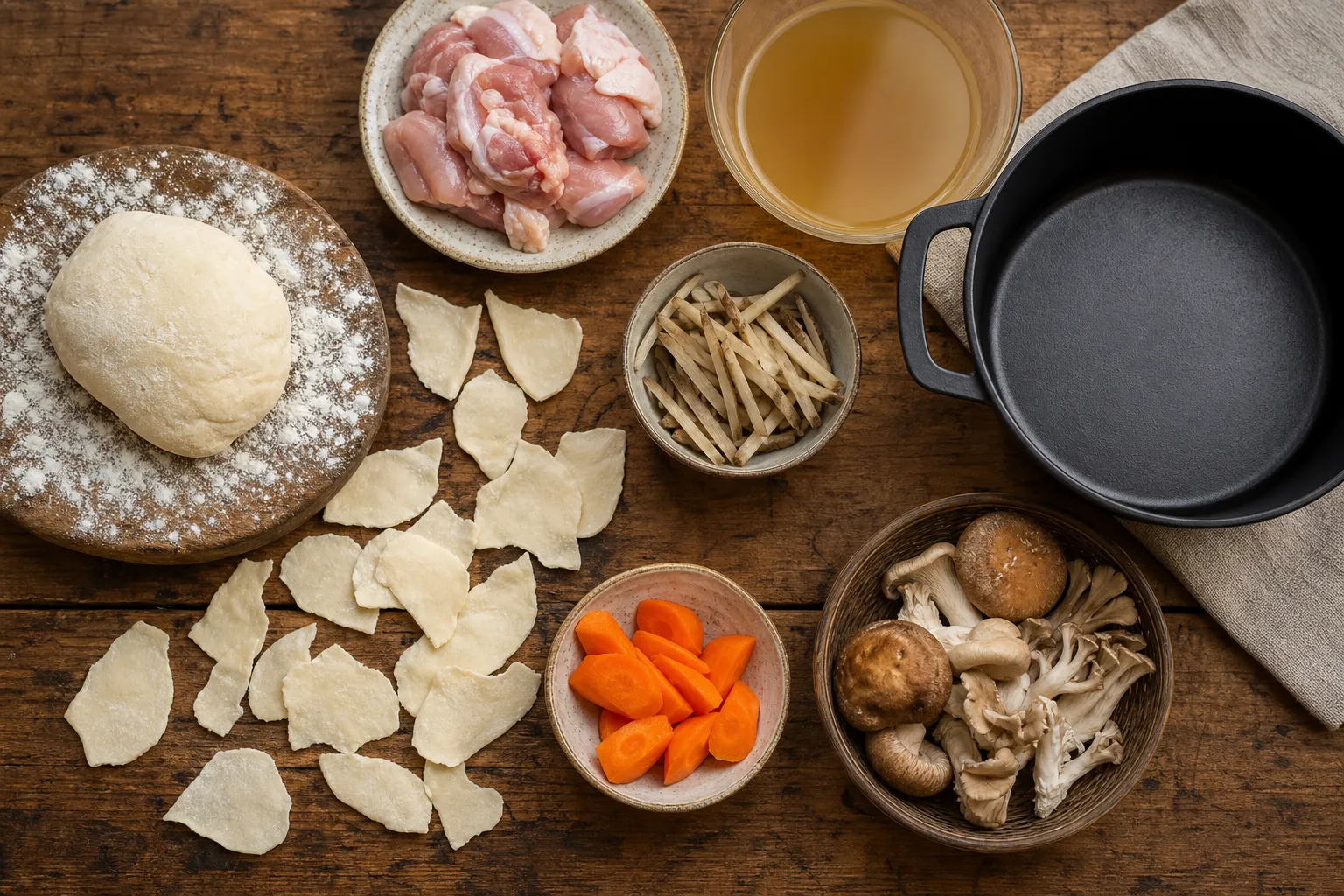
- Make the dough. Wheat flour is mixed with water into a soft dough and rested so it turns smooth and stretchy.
- Build the broth. A dashi is simmered with chicken, and seasoned with soy sauce (and a little sake/mirin) into a clear, savory soup.
- Add the vegetables. Burdock, carrot and mushrooms go in and simmer until tender and their flavors join the broth.
- Tear the dough in. With wet hands, the rested dough is pinched and stretched into flat, thin pieces and dropped straight into the simmering pot — this is the hittsumu step.
- Simmer and serve. The dough cooks in a few minutes until it floats and turns springy; ladle it out hot, often with a scatter of scallion.
The craft is in the tearing: stretch each piece thin enough to cook through and stay tender, but not so thin it falls apart. Wet hands keep the dough from sticking, and resting the dough first makes it stretch instead of snap.
Before you go — eat it hot in an Iwate winter
Your questions, answered honestly
"Is this just udon by another name?" — No. Udon is dough rolled and cut into uniform noodles. Hittsumi is dough torn by hand into flat, irregular pieces — different shape, different chew, and it's served in its soup as one dish, not dipped or topped like a noodle bowl.
"How is it different from suiton?" — They're close relatives — both are wheat-dumpling soups. Hittsumi is Iwate's version and its name specifically means the tearing/pinching method. Regional cooks will insist on the distinctions; for a traveler, expect flat torn dough in clear chicken-soy broth.
"Is it filling enough to be a meal?" — Absolutely. Between the wheat dough, the chicken and the vegetables, one bowl is a proper meal. It's classic stretch-a-little-into-a-lot country cooking.
"Will I like it if I don't love strong flavors?" — Very likely yes. The broth is clean and gentle, not funky or heavy. The adventure here is the texture of hand-torn dough, not any bold taste — it's comfort food through and through.
What the staff will ask you
| You'll hear | Romaji | Meaning | Just say |
|---|---|---|---|
| 温かいのでお気をつけて | Atatakai node oki o tsukete | "It's hot, please be careful" | Hai, arigatō (yes, thanks) |
| ご飯もつけますか? | Gohan mo tsukemasu ka? | "Add a side of rice too?" | Onegai shimasu / Kekkō desu (yes please / no thanks) |
| ねぎはお好きですか? | Negi wa osuki desu ka? | "Do you like scallion on top?" | Hai, onegai shimasu (yes, please) |
To order, just say "Hittsumi o kudasai" (ひっつみをください) — "Hittsumi, please."
Where to eat it
- Morioka's local-food restaurants — Iwate's capital is a good base for finding hittsumi on kyōdo-ryōri (regional cuisine) menus, especially set-meal and country-cooking spots.
- Rural Iwate roadside stations (michi-no-eki) and farmhouse eateries — some countryside rest stops and folk-cooking restaurants serve hittsumi, particularly in the colder months.
- Iwate food festivals and winter events — regional-cuisine stalls at local events are a classic place to try a hot bowl; offerings are seasonal, so it's most common in autumn and winter.
Hittsumi is home-style and seasonal, so it appears more on regional-cuisine menus than at big-name restaurants, and it's most common in the colder months — check before you go and ask if it's available that day.
Soul Score
Local Roots5/5
First-Timer Friendly4/5
Adventure Level3/5
Comfort Level5/5
Travel Worthy4/5
These scores are one obsessed eater's gut feeling — not a verdict. A low number isn't a bad mark, just a different kind of adventure.
Know someone planning Japan?
← All Articles
Local Food · Iwate
Still hungry?
Eat more from Iwate
Local FoodMorioka, Iwate
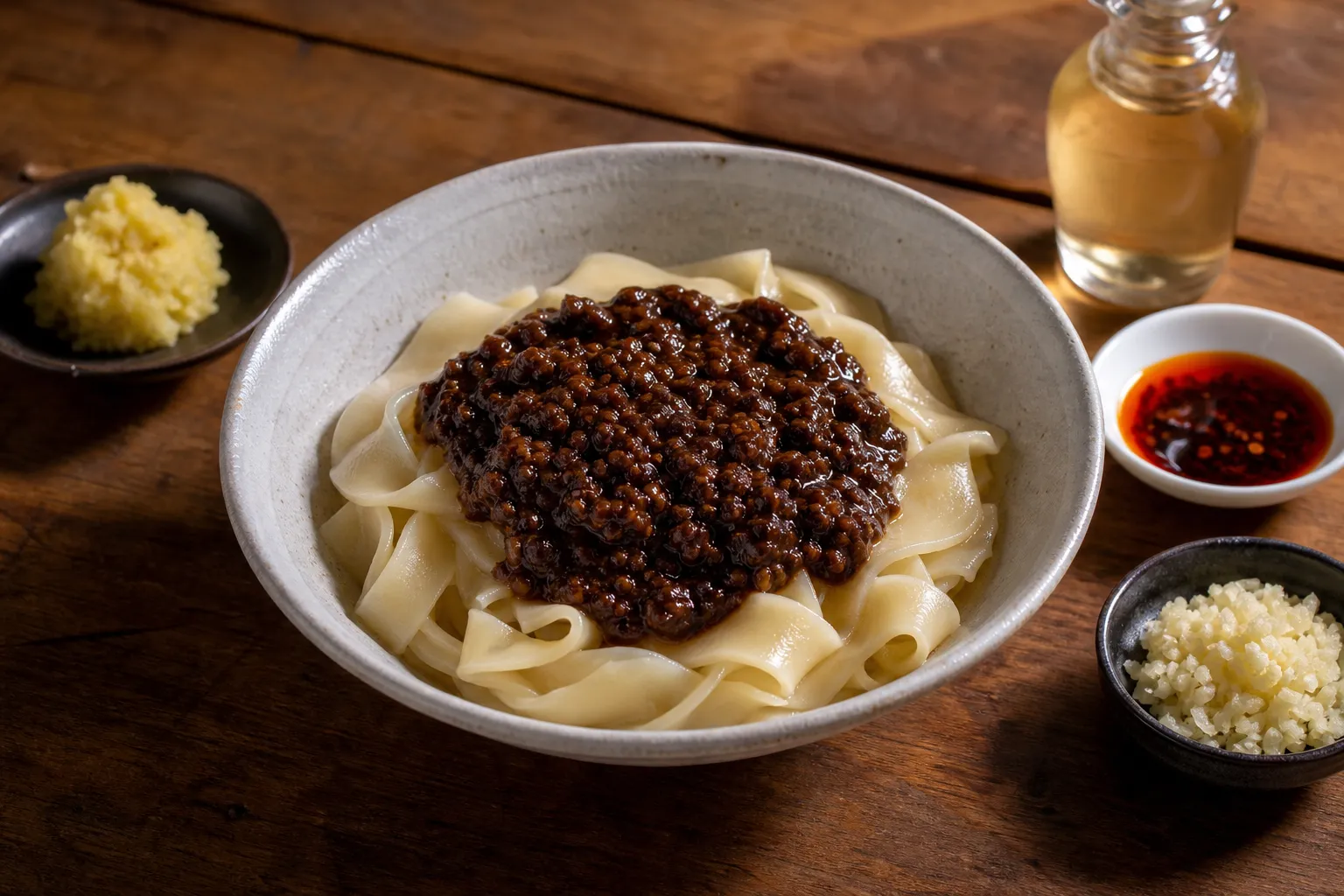
Jajamen (じゃじゃ麺)
Morioka's strangest noodle: flat udon topped with a miso-meat paste you stir yourself, eaten down to the last noodle, then you crack a raw egg into the remaining sauce and the kitchen pours broth over it. That's the real ending.
June 25, 2026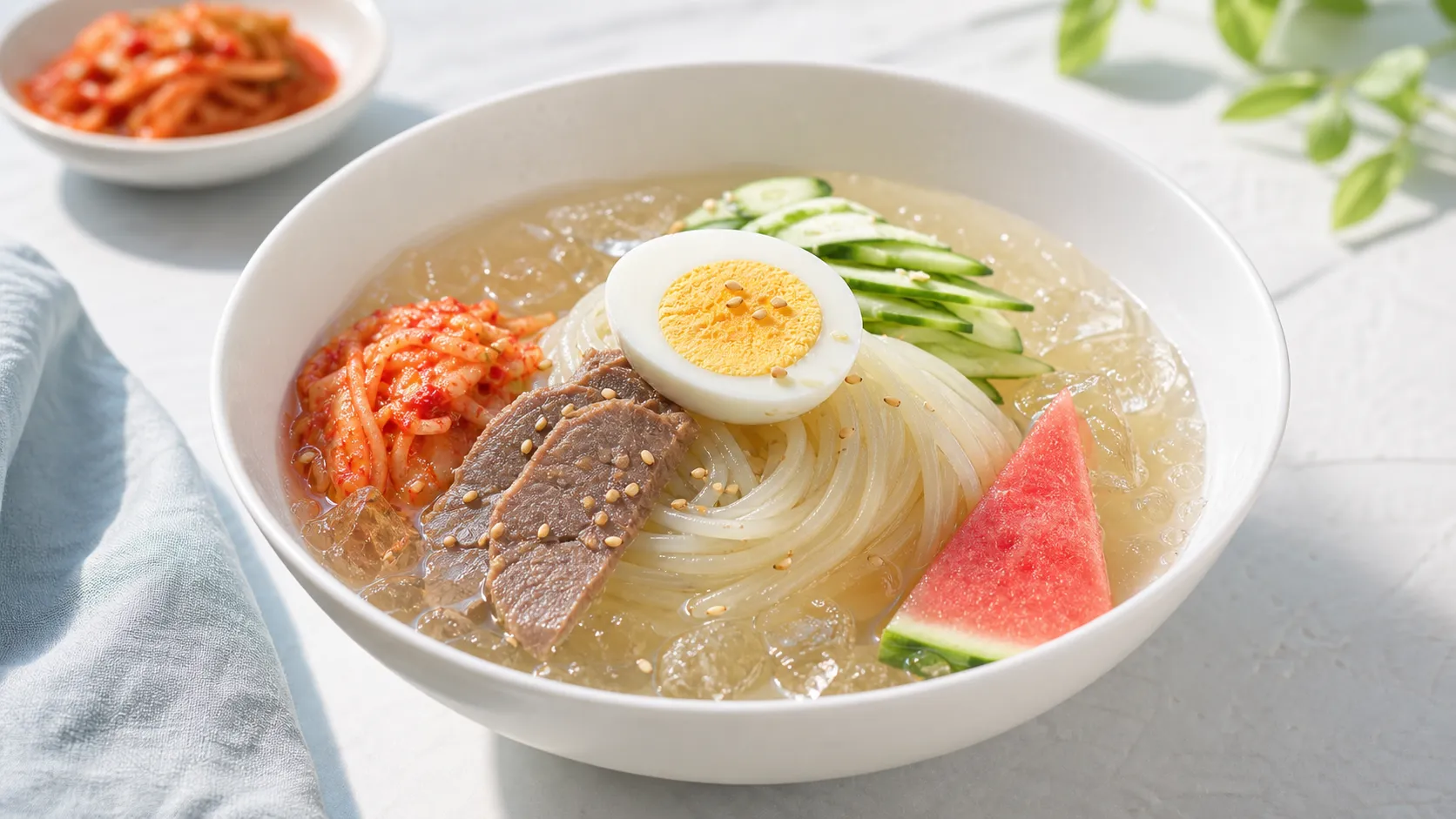
Local FoodMorioka, Iwate
Morioka Reimen (盛岡冷麺)
Morioka's cold noodles: gloriously chewy, translucent, sitting in an icy beef broth with kimchi and a slice of watermelon. Yes, watermelon. It works. Trust the noodle.
June 25, 2026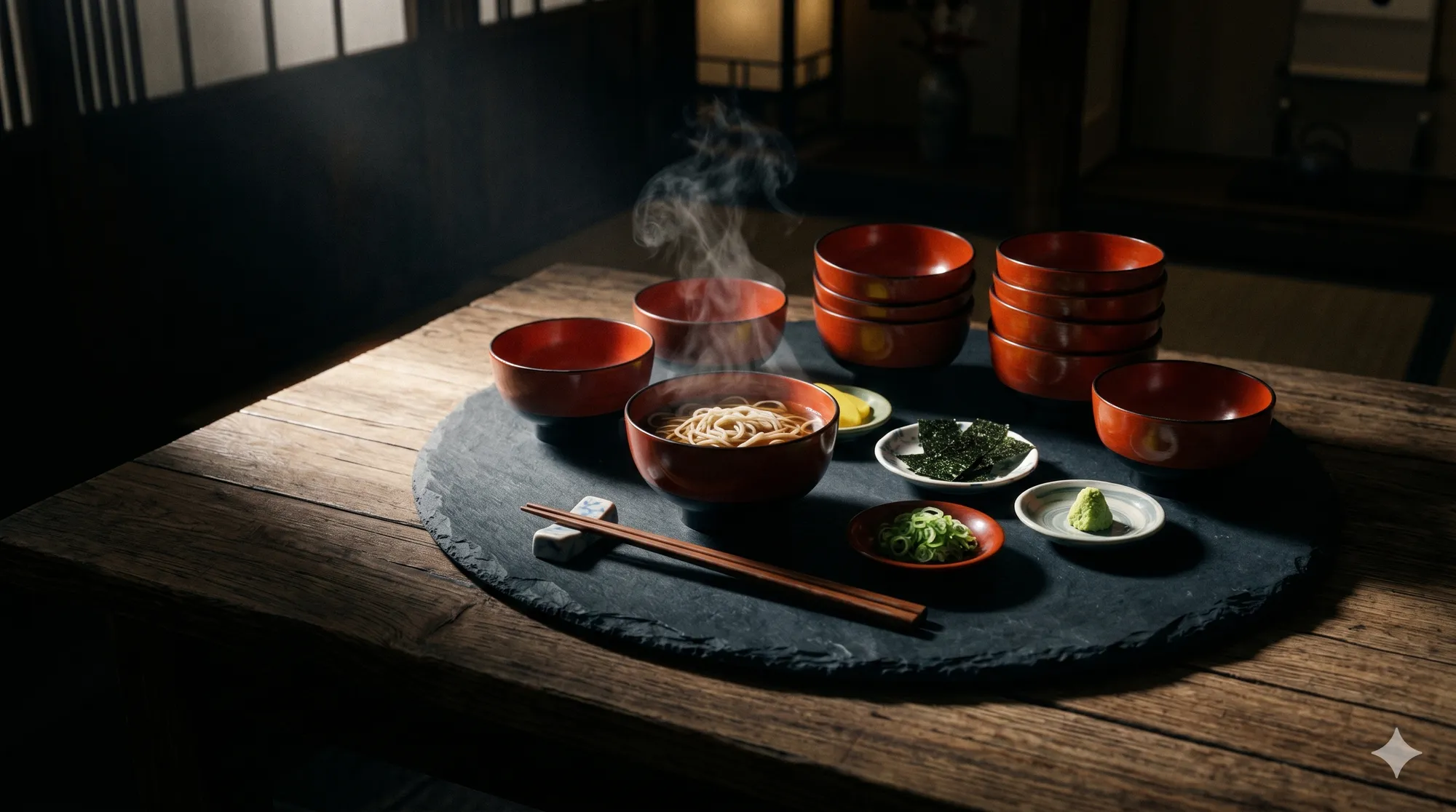
Local FoodIwate
Wanko Soba (わんこそば)
Tiny bowls of soba refilled the instant you empty them, a server cheering you on, and only one way to make it stop. Iwate turned dinner into a sport — and it's the most fun you'll have eating.
June 15, 2026