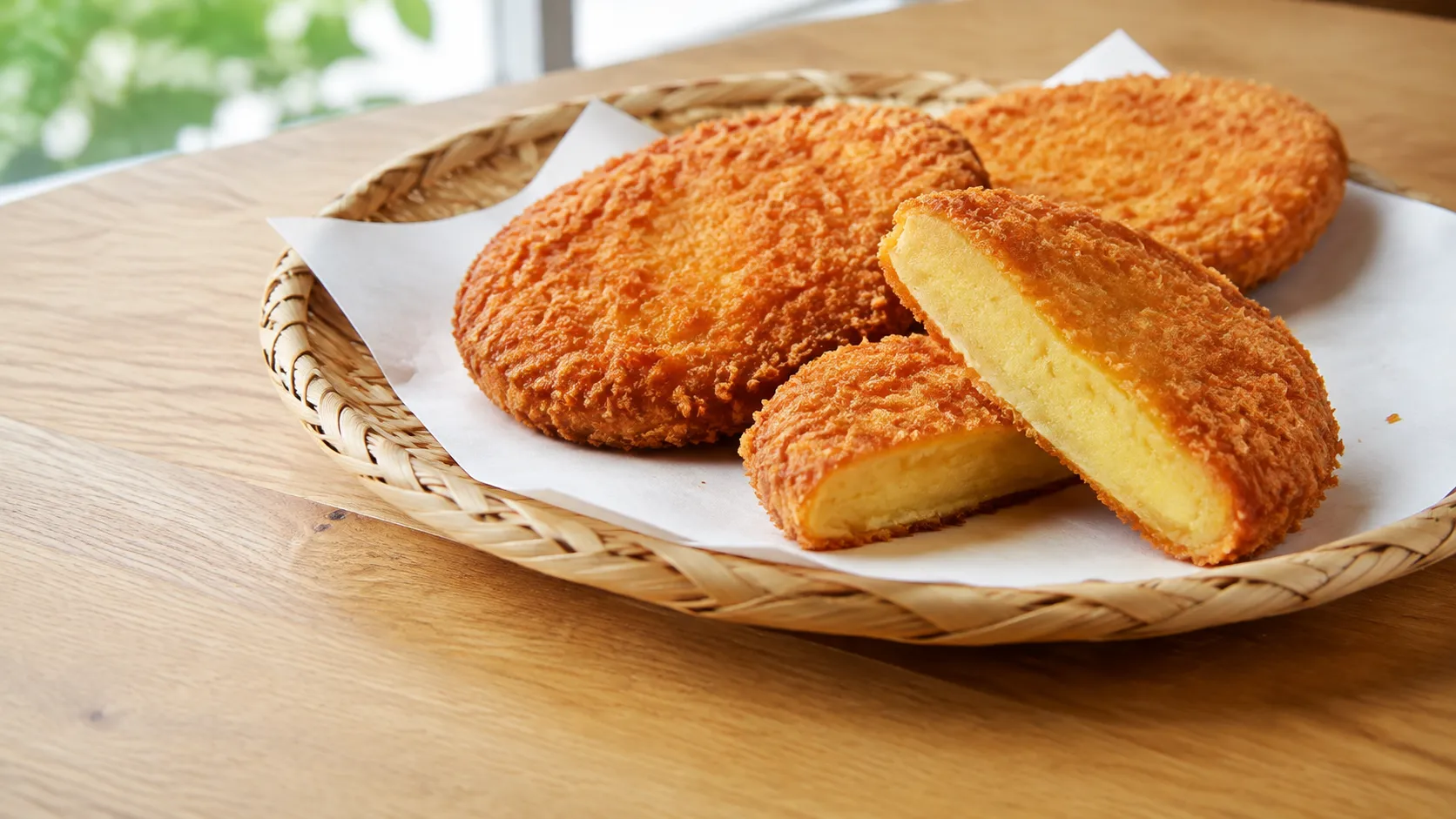
"Katsu," the woman said, and handed me a flat golden oval in a paper sleeve.
Share this dish


In Tokushima, saying "katsu" does not get you a pork cutlet. It gets you this — and the moment I understood that, a whole prefecture rearranged itself in my head.
🍜 Planning a food trip to Tokushima?Add this dish to my Food Trip →
 Add this dish to my Food Trip →
I looked at it. I looked at her. Something was wrong with my understanding of the universe, because katsu means a breaded pork cutlet, and this was not that — it was thinner, lighter, more uniform, and when I bit into it the inside was pale yellow and springy and bouncy and unmistakably made of fish.
And curry. There was curry powder in there. In a fish cake. Fried in panko. For about a hundred yen.
I stood in that shopping arcade genuinely recalibrating, because I'd been in Tokushima for two days by then and had apparently misunderstood every conversation involving the word katsu. Here, this is what the word means. The pork one needs a qualifier. An entire prefecture quietly redefined a national food word around a fish cake, and nobody outside Shikoku seems to have been informed.
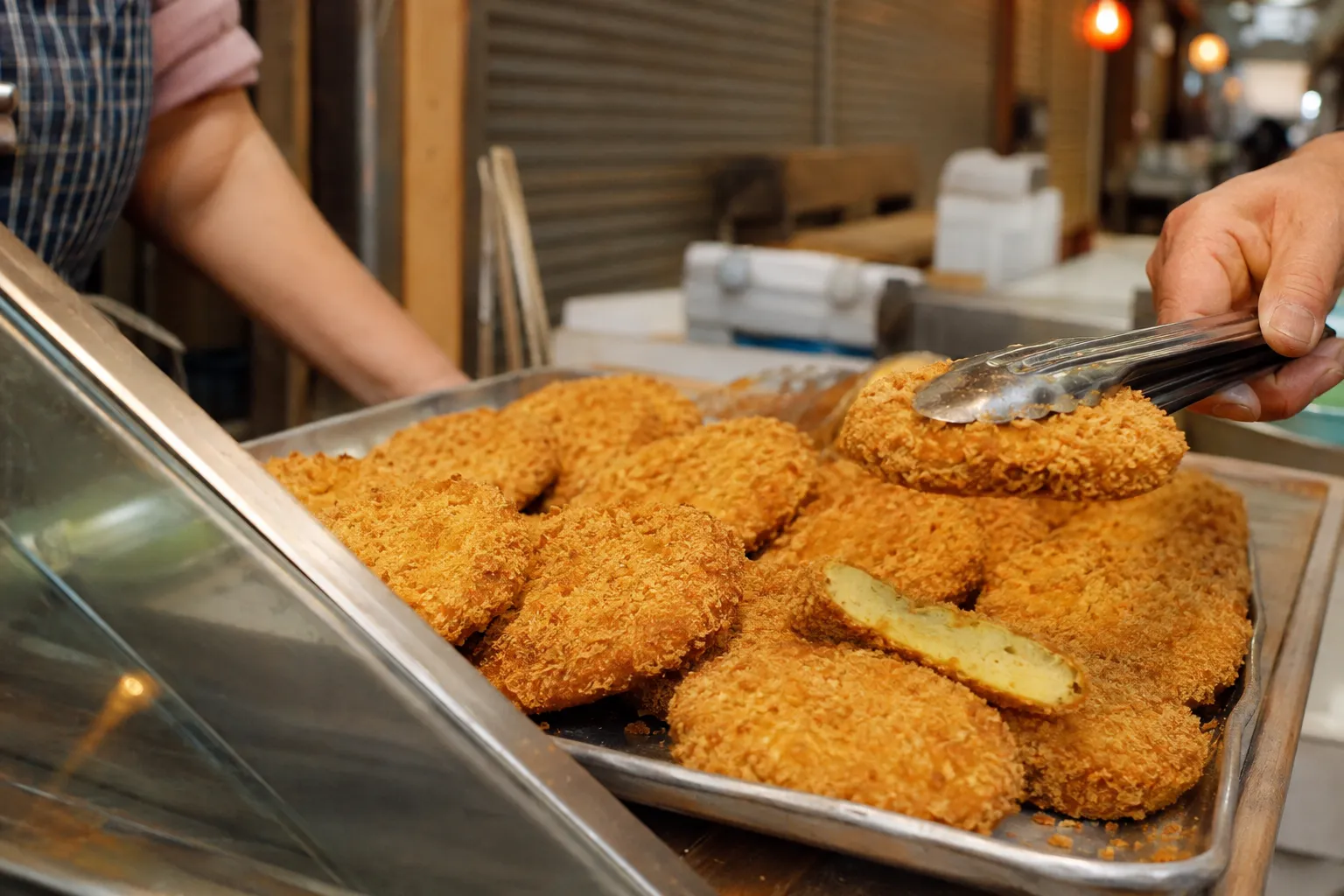
Fish katsu is fish paste seasoned with curry powder, pressed flat, coated in panko and deep-fried — Tokushima's everyday snack, sold in supermarkets, at fish-cake shops, and in bakeries slotted into bread rolls. It costs almost nothing, and I ate an unreasonable number of them.
What a fishing prefecture does with a surplus
Tokushima faces the Pacific and the churning Naruto strait, and it has a long, serious history of neri-mono — fish paste products. Kamaboko, chikuwa, satsuma-age: the whole family of foods built on the same clever premise, which is that you can take small, bony, unglamorous fish nobody wants to eat whole, mince them into a paste, and make something with far more shelf life and far more appeal than the raw material had.
Fish katsu came out of that world in the postwar decades, when Japan was hungry, protein was precious, and cheap Western-influenced flavours — curry powder above all — were arriving and being absorbed at speed. Somebody at a Tokushima fish-cake maker took the local paste, folded in curry powder, and treated it like a cutlet: flatten, bread, fry.
That's such a specific collision. Traditional Japanese preserved-fish craft, a spice blend that arrived in Japan by way of the British navy, and the Western cutlet form — all resolved into a snack that costs a hundred yen and is sold next to the register.
And it stayed local in a way I find genuinely surprising given how good and how cheap it is. This never went national. Cross into the next prefecture and you're back to katsu meaning pork. Tokushima kept it, the way places sometimes keep a thing without ever quite deciding to.
Why it works better than it has any right to
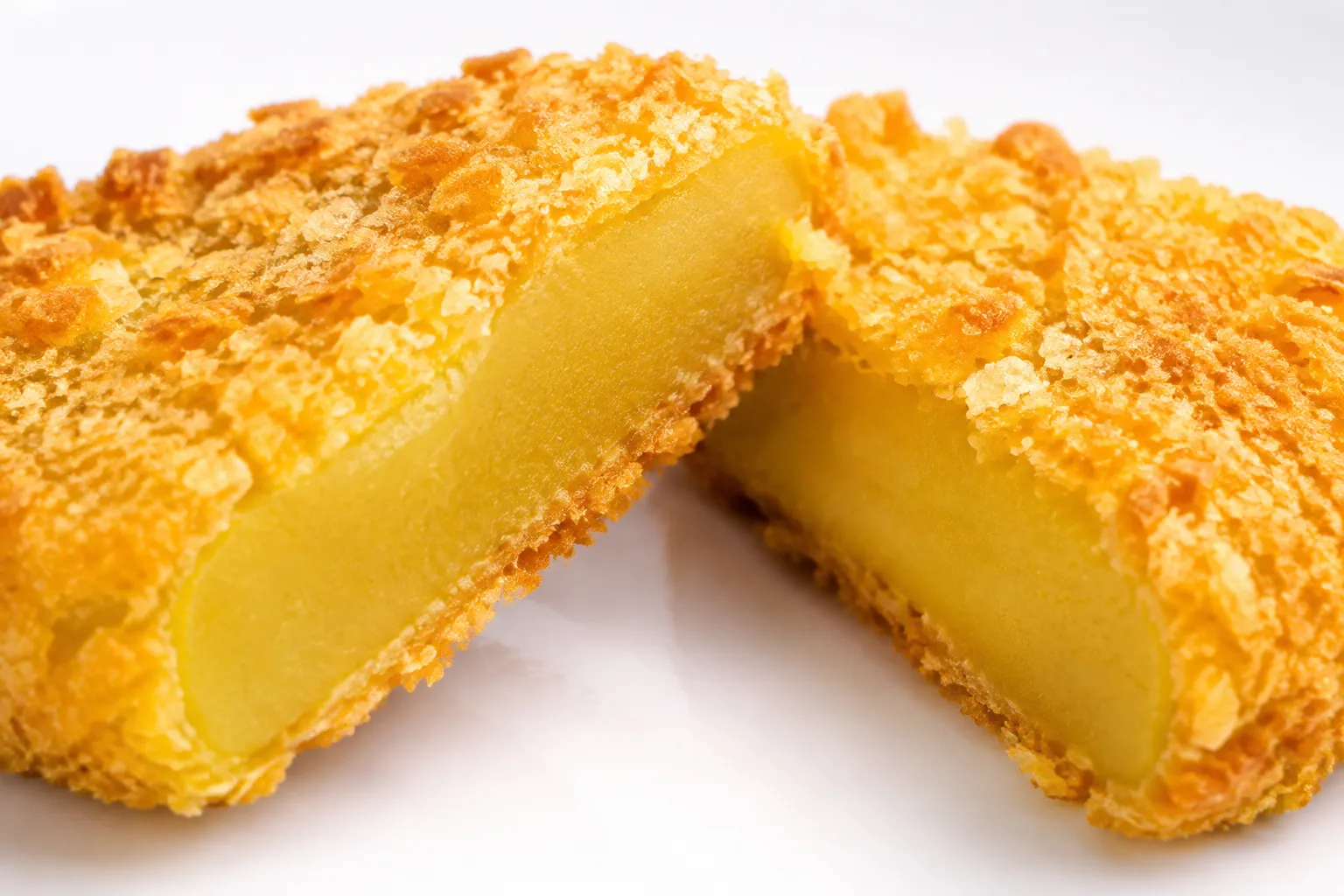
Fish paste has a texture nothing else quite reproduces: springy, dense, faintly bouncy, with a clean snap when you bite that comes from the protein being worked and set rather than cooked as muscle. It's the same quality that makes a good chikuwa satisfying.
Wrap that in panko and fry it and you get an unusually good contrast — crisp shattering crust against something with genuine resistance behind it. A pork cutlet gives you crust and then tender fibres. This gives you crust and then bounce, which is a stranger and, I'd argue, more interesting sensation.
The curry powder is doing the heavy lifting on flavour. It's not there for heat — there's very little — but for aroma: cumin, turmeric, coriander, that warm dusty smell that hits before the first bite. It also does something quietly practical, which is round off any lingering fishiness in the paste. Cheap fish plus curry powder is an old and reliable partnership.
Best eaten warm, ideally within minutes. It's also completely fine cold from a supermarket shelf, which is more than you can say for most fried things and is precisely why it ends up in so many bento boxes.
And the local move: put it in bread. A fish katsu in a bread roll with a little sauce and shredded cabbage is a Tokushima bakery staple, and it's excellent — a fish cutlet sandwich that costs less than a coffee.
How it comes together
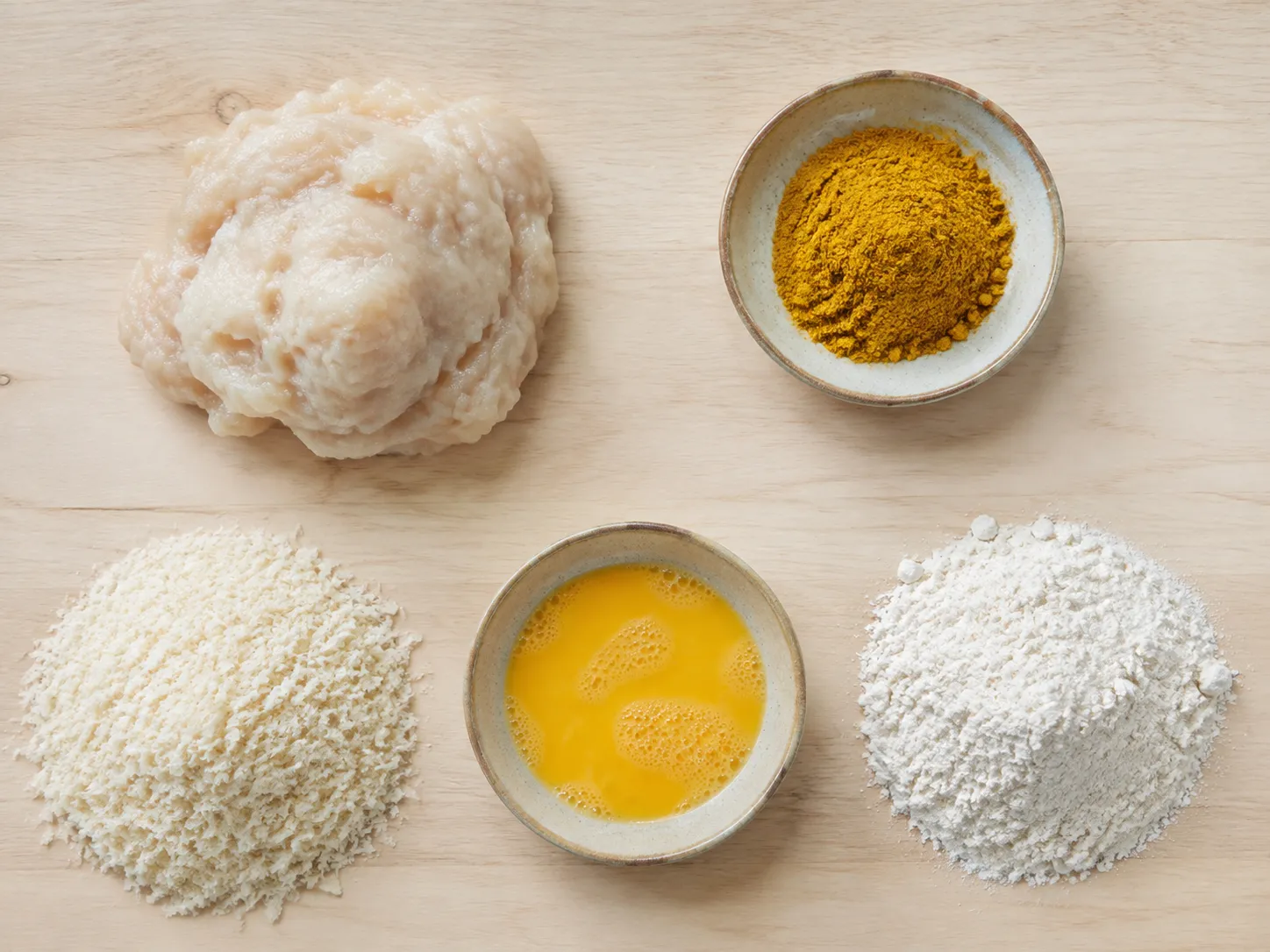
- Grind white fish into a smooth paste with salt, working it until it becomes sticky and elastic
- Mix in curry powder and seasoning, along with a little starch to firm the set
- Press the paste into flat ovals, roughly a centimetre thick — thin enough that it heats through fast
- Coat in flour, then egg, then panko
- Deep-fry until the crust is an even golden-brown and drain — the paste inside is essentially cooked already, so this is quick
Step 1 is the whole craft, and it's the same technique behind every fish cake in Japan. Salt and mechanical work convert the fish protein into a gel that sets springy rather than crumbly. Under-work it and the katsu falls apart in the fryer; over-work it and it turns rubbery. The makers doing this well have been doing it for generations.
Before you go — the stuff that actually matters
Your questions, answered honestly
"Does it taste fishy?" — Mildly, and the curry powder deliberately manages it. It reads more like a savoury croquette with a seafood edge than like eating fish. If you're fine with chikuwa or fish cakes generally, this is easy. If you actively dislike fish, the curry won't hide it completely.
"Is it spicy?" — Basically no. Aromatic, warm, faintly peppery at most. Children eat these constantly. If you were hoping for heat, you'll be disappointed.
"Do I put sauce on it?" — Usually not — it's seasoned inside, and that's the point. Some people add a little Worcestershire-style sauce, and in a bread roll it typically comes with sauce already. Try it plain first.
"Where do I actually buy one?" — Supermarkets are the honest answer, in the refrigerated case with the other fish cakes. Also fish-cake makers' own shops, shopping arcade fishmongers, and bakeries selling them in bread. It's an everyday item, not a specialty-shop item.
"Warm or cold?" — Warm is better if you can get it fresh from a fryer. Cold is genuinely acceptable, which is unusual for fried food and is exactly why it's a bento fixture.
"Can I take it home as a souvenir?" — Vacuum-packed versions exist and travel within Japan fine for a day or two refrigerated. For an international flight, don't — buy the shelf-stable fish cakes instead, and eat the katsu while you're there.
"So what do I say if I actually want pork?" — Tonkatsu. Say the whole word. This is a lesson I paid for.
What the staff will ask you
| You'll hear | Romaji | Meaning | Just say |
|---|---|---|---|
| 何枚にしますか? | Nan-mai ni shimasu ka? | "How many pieces?" | Ni-mai kudasai (two, please) |
| 温めますか? | Atatamemasu ka? | "Shall I warm it up?" | Onegaishimasu (yes, please) |
| パンに挟みますか? | Pan ni hasamimasu ka? | "Would you like it in bread?" | Hai, sore de (yes, that one) |
| ソースはかけますか? | Sōsu wa kakemasu ka? | "Sauce on it?" | Sonomama de (as it is, please) |
| 袋にお入れしますか? | Fukuro ni o-ire shimasu ka? | "Shall I bag it?" | Daijōbu desu (I'm fine, thanks) |
To order, just say "Fisshu katsu kudasai" (フィッシュカツください) — "Fish katsu, please."
Where to eat it
- Supermarkets and shopping arcades in Tokushima city — the everyday home of it, and the cheapest. Look in the refrigerated fish-cake section, or at the fried-food counter.
- Fish-cake (kamaboko) makers' shops across the prefecture — many sell it fresh and warm from their own fryers, which is a considerable upgrade on the packaged version.
- Local bakeries in Tokushima — for the fish katsu bread roll, which is the version I'd send you to if you only eat it once.
This is an everyday product rather than a destination dish, so availability at any single shop varies and fresh-fried stock runs out at busy times — supermarkets are the reliable fallback.
Soul Score
Local Roots4/5
First-Timer Friendly5/5
Adventure Level3/5
Comfort Level5/5
Travel Worthy3/5
These scores are one obsessed eater's gut feeling — not a verdict. A low number isn't a bad mark, just a different kind of adventure.
Know someone planning Japan?
← All Articles
Local Food · Tokushima
Still hungry?
Eat more from Tokushima
Local FoodTsurugi, Tokushima
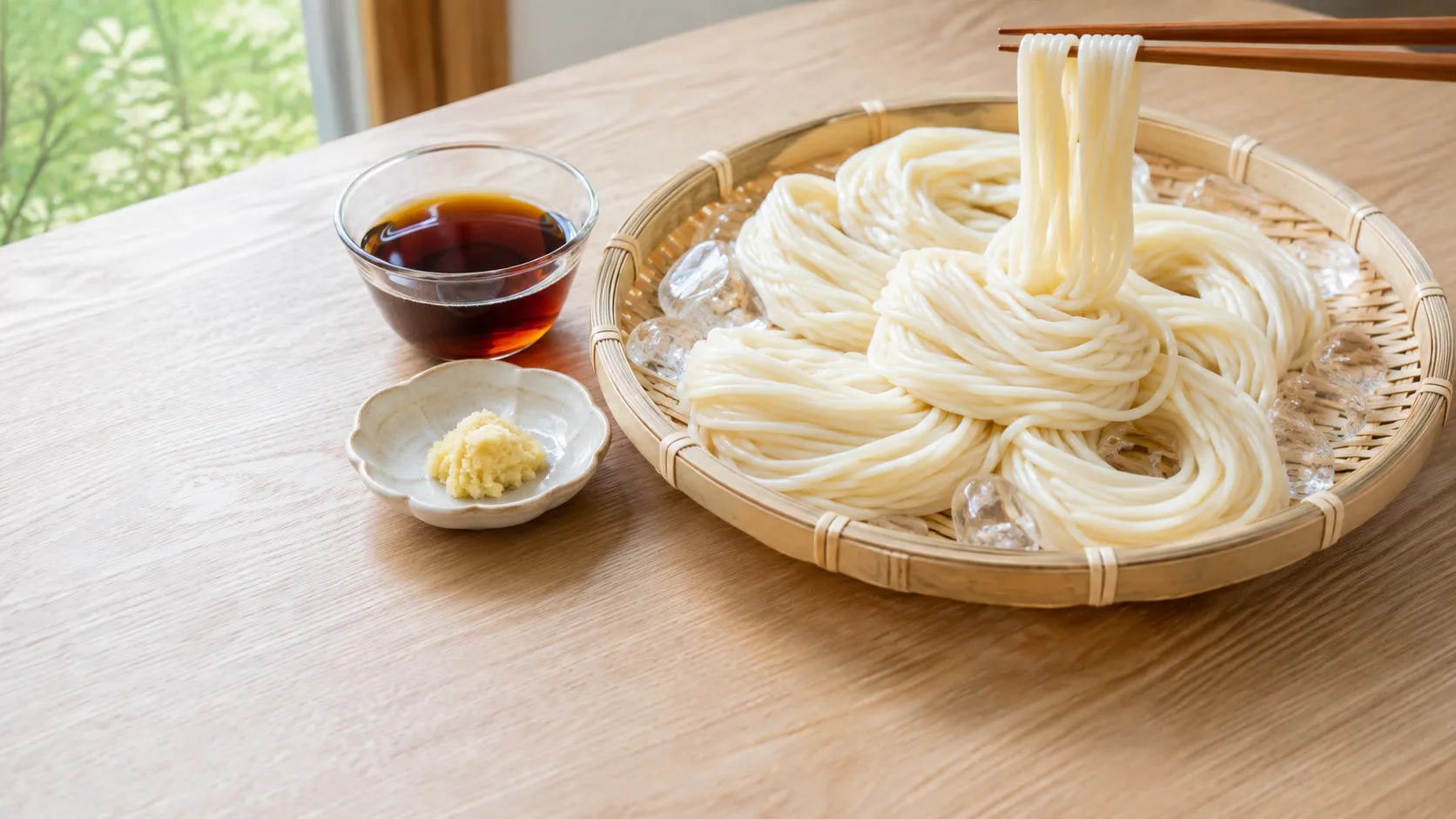
Handa Somen (半田そうめん)
I lifted a bundle out of the ice water and stopped, because somen is supposed to be delicate and this was chewing back at me before I'd even started.
September 2, 2026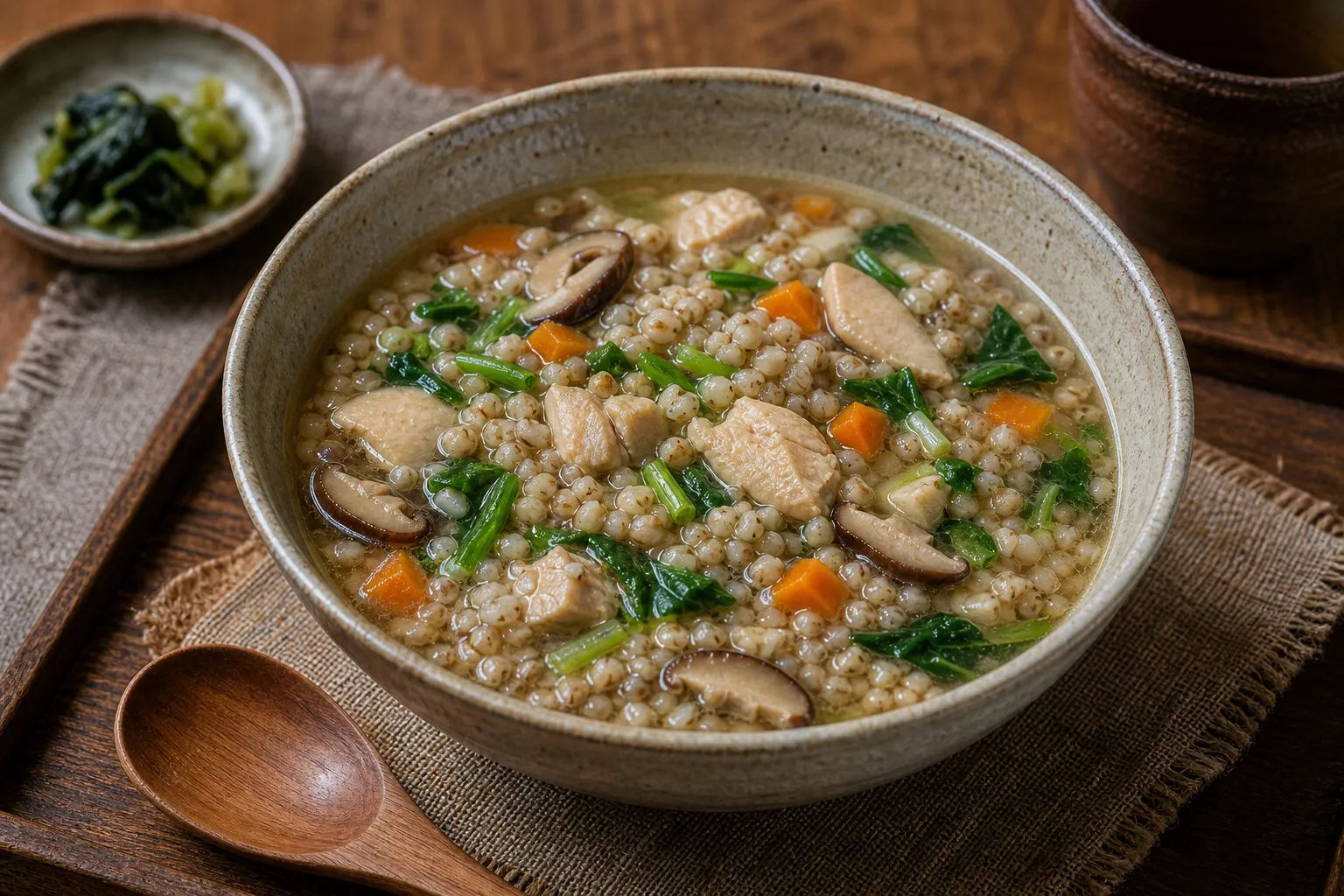
Local FoodTokushima
Sobagome Zosui (そば米雑炊)
Not soba noodles — whole buckwheat grains, plump and nutty, simmered into a warm chicken-and-vegetable soup deep in the Iya Valley. Refugee food that became one of Japan's most quietly comforting bowls.
July 12, 2026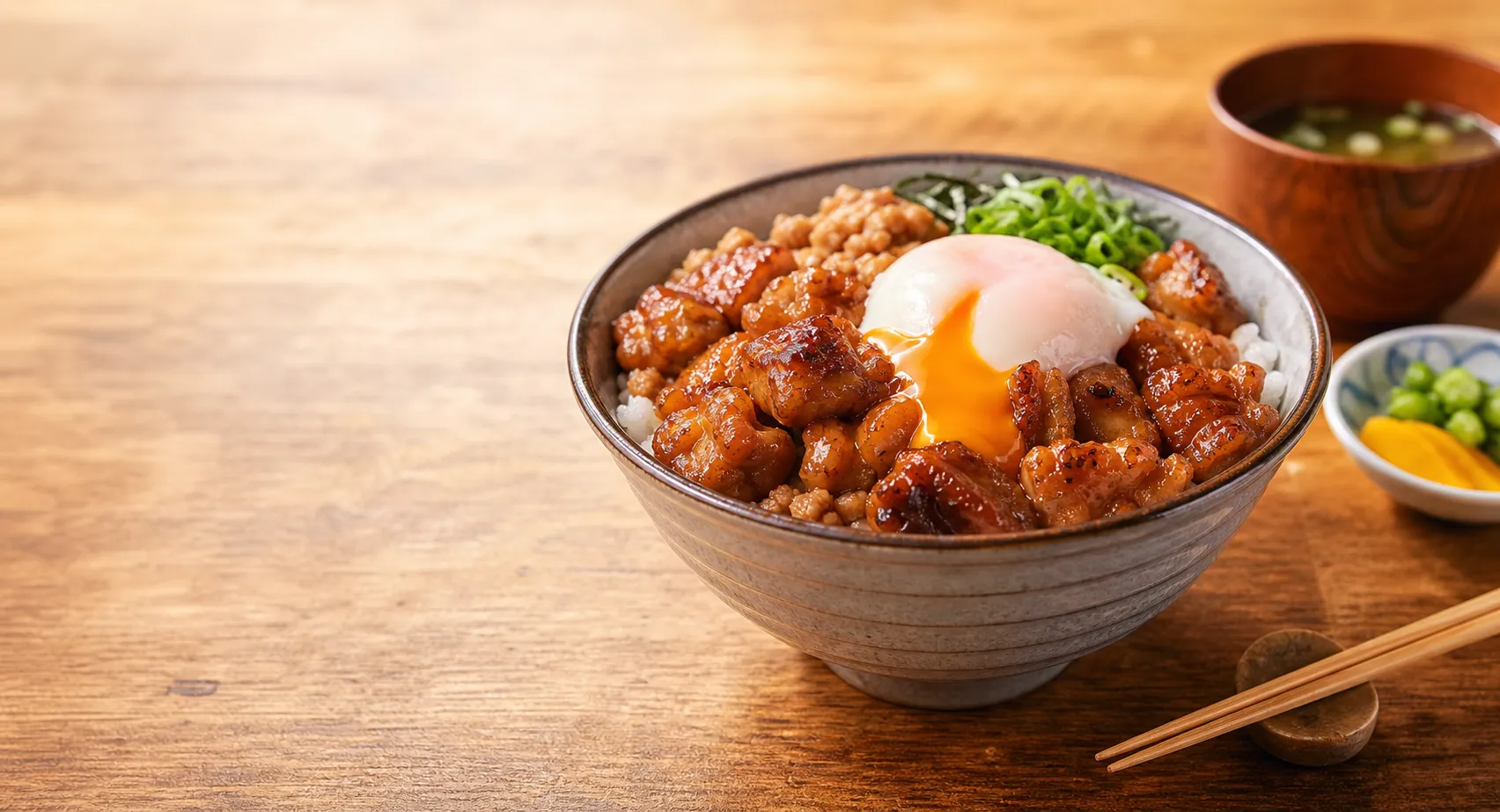
Local FoodTokushima
Tokushima-don (徳島丼)
It's chicken over rice — but it's a very specific chicken, one Tokushima is quietly, competitively proud of, and once you know the backstory you'll never call it 'just a rice bowl' again.
July 5, 2026