"Nan-ban?"
Share this dish


They ask you for a number before they ask you for anything else. I said five like an idiot, and Nobeoka taught me something about myself that afternoon.
Would you try this dish?
Rate how much you would like to try it.
🍜 Build your Miyazaki food trip around Karamen.Add to Food Planner →
 Add to Food Planner →
I didn't know it was a question about pain. I thought it was a table number, or a portion size, or one of the forty things I get asked daily in Japan and answer with a confident noise. So I said five, because five is a nice middle number and I am, apparently, an idiot.
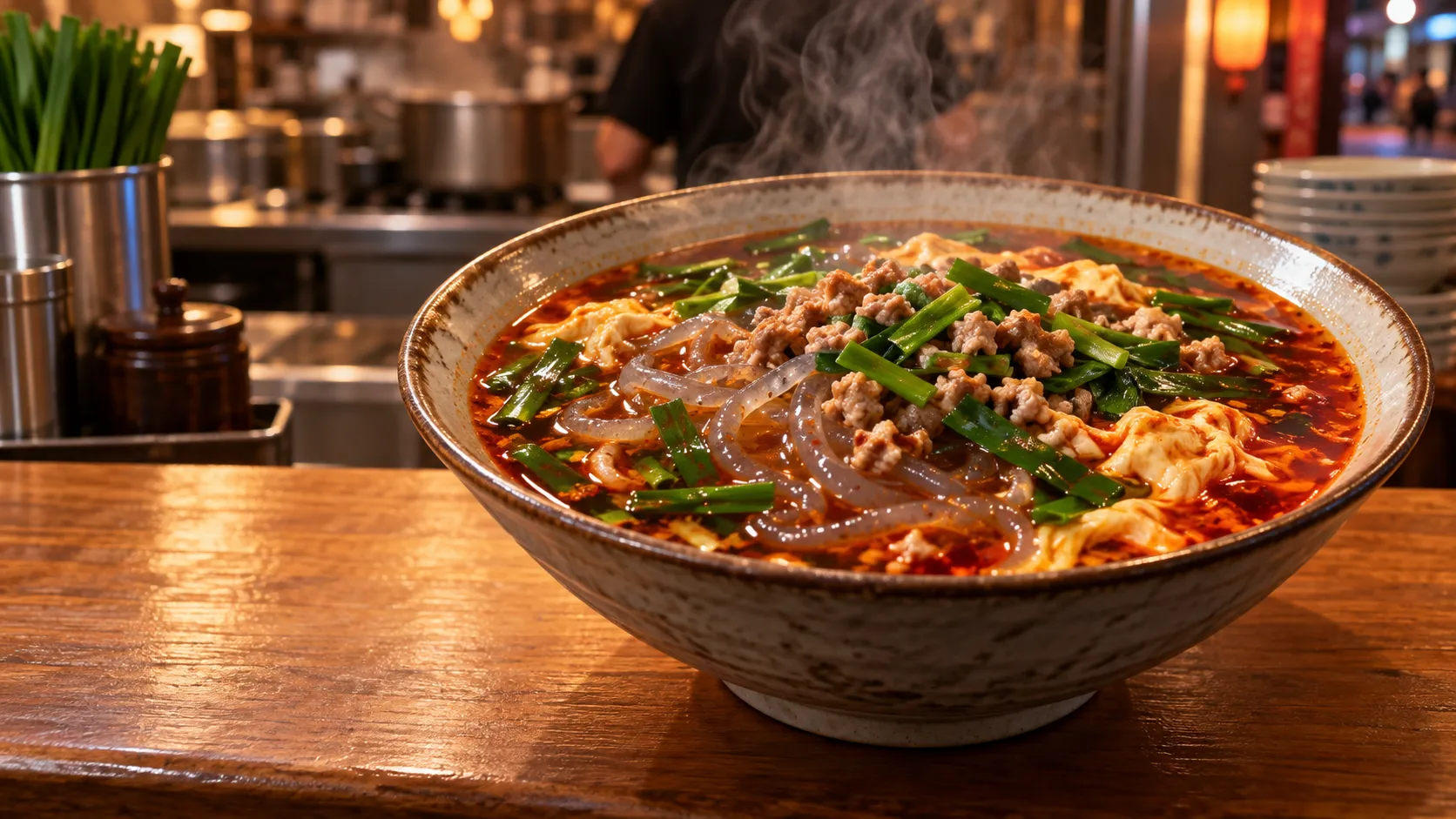
The bowl came out the colour of a brake light.
The first mouthful was fine. That's the trap. Garlic, then a deep savoury pork thing, then noodles with a bounce I wasn't expecting — and then the chilli arrives, not as a spike but as a slow structural takeover, until my forehead was doing something and my ears were hot and I had stopped being able to form opinions about anything other than the bowl.
I finished it. Slowly. With the dignity of a man who has made a decision and intends to live inside it. And then I sat there for a while, sweating gently, feeling — and I want to be precise — fantastic.
Karamen is Nobeoka's chilli-and-garlic noodle soup: minced pork, a mountain of garlic chives, egg swirled through the broth, a heat level you choose by number, and noodles that are usually made of konjac. It is not ramen, and the people who eat it will tell you so.
How a yakiniku town ended up with its own noodle
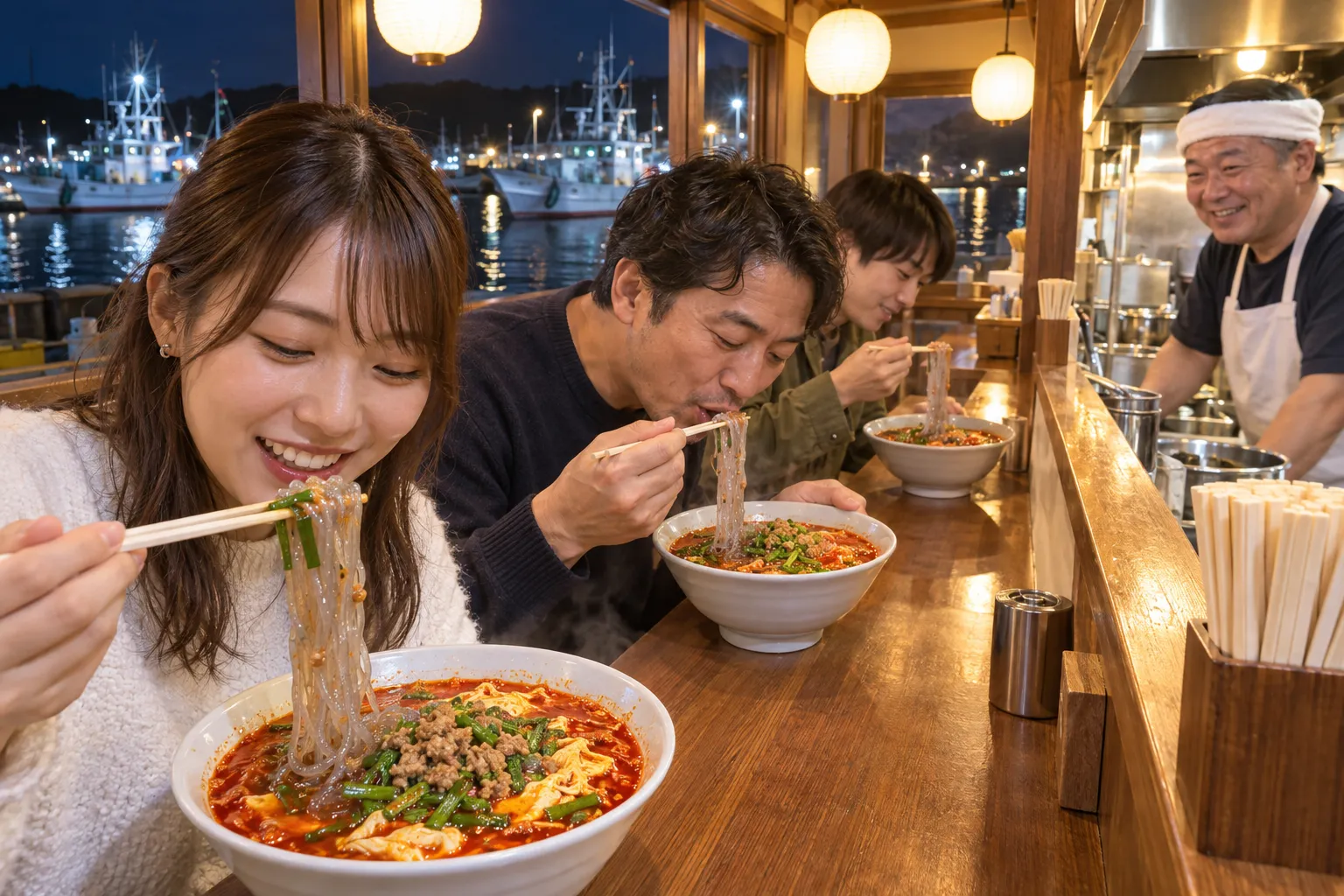
Nobeoka is a port and factory city on Miyazaki's northern coast, not a place most itineraries stop. Karamen was born there, in the back half of the last century, in the world of small grilled-meat restaurants — the kind of shop where somebody is always improvising a late-night noodle for the staff and the regulars.
That parentage explains the bowl completely. The garlic, the chilli, the minced pork, the egg: these are yakiniku-shop instincts applied to soup, closer in spirit to Korean-influenced grilled-meat cooking than to any ramen lineage. It didn't come down from a ramen tradition. It came sideways, out of a different room.
Then it did the thing local food occasionally does, which is refuse to stay local. Shops opened across Miyazaki. Chains carried it to other prefectures. Instant versions appeared. And Nobeoka, having invented it more or less by accident, found itself with a signature.
I love that the origin story has no ancient temple in it. No feudal lord, no imperial visit, no hundred-year scroll. Somebody in a grill shop made a spicy noodle soup that people kept coming back for, and that was enough. That's how most food actually happens, and it's rarer than it should be to see a town be straightforward about it.
The noodles are the plot twist
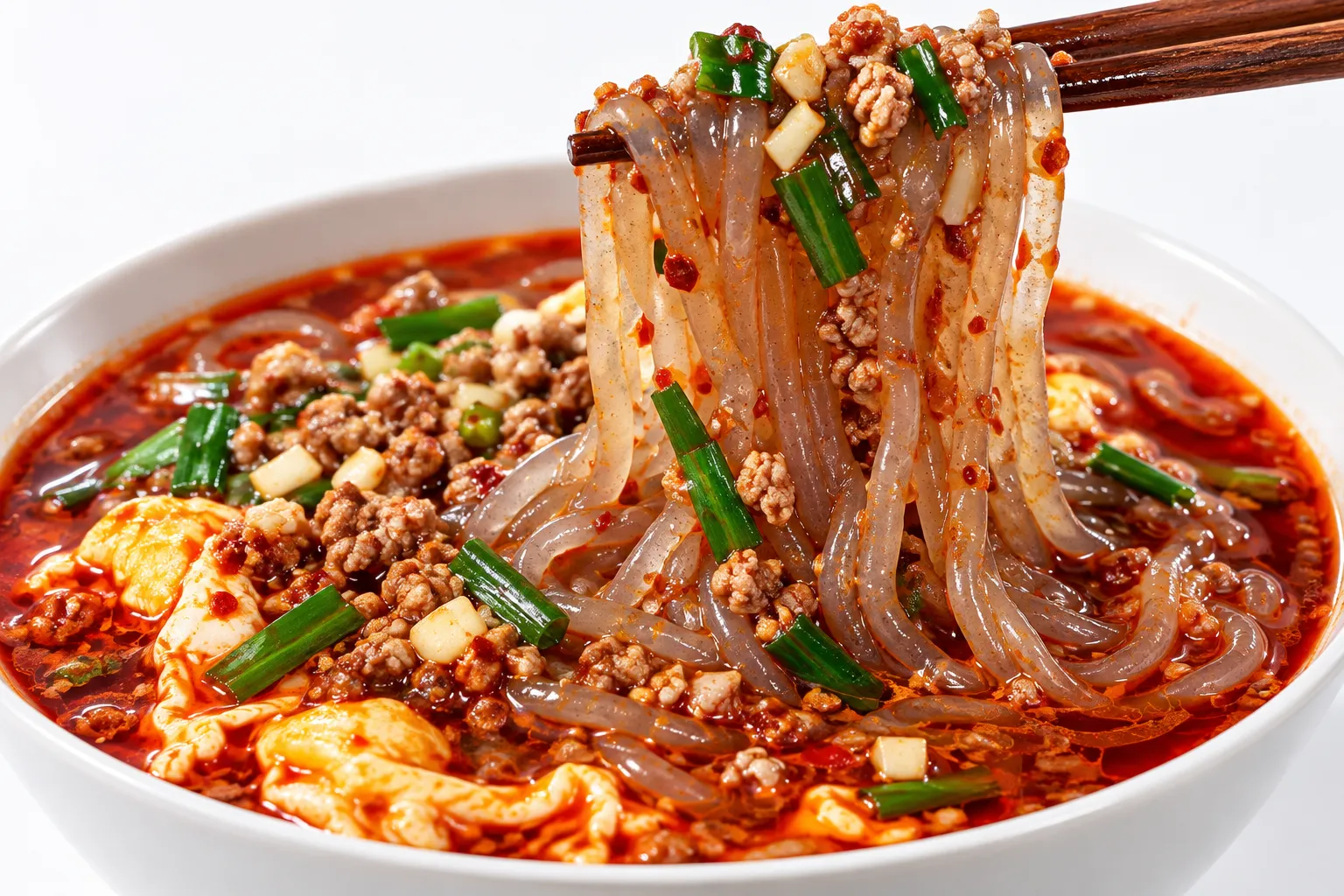
Here's the thing nobody tells you until the bowl is in front of you: the standard noodles aren't wheat. They're konjac — translucent, greyish, and springy in a way wheat noodles simply are not.
They don't soften. They don't go claggy. They hold their bounce right to the bottom of the bowl, which in a soup this aggressive turns out to matter enormously, because you're going to be in there for a while and a normal noodle would have surrendered by minute four. They also carry almost no flavour of their own, so everything you taste is broth, which is the correct arrangement when the broth is this loud.
The broth itself is red and clear rather than thick — no cloudy pork richness, no emulsified fat. It's a garlic-forward, chilli-forward, soy-savoury liquid with real depth under the heat, and the ground pork and the egg are what give it body. The egg goes in near the end and sets in soft ribbons, softening the edges of the chilli exactly where you need it.
And the garlic chives — nira — are not garnish. There's a serious quantity of them, they go slippery and sweet in the heat, and they're doing a genuine job of making the bowl taste green and alive rather than purely punishing.
Then the number system. Most shops let you pick a heat level, commonly starting at zero or one and climbing into genuinely unreasonable territory. The scale is the shop's own — there is no national standard, and a 5 in one place is not a 5 in another. This is the single most important sentence in this article.
How it's built
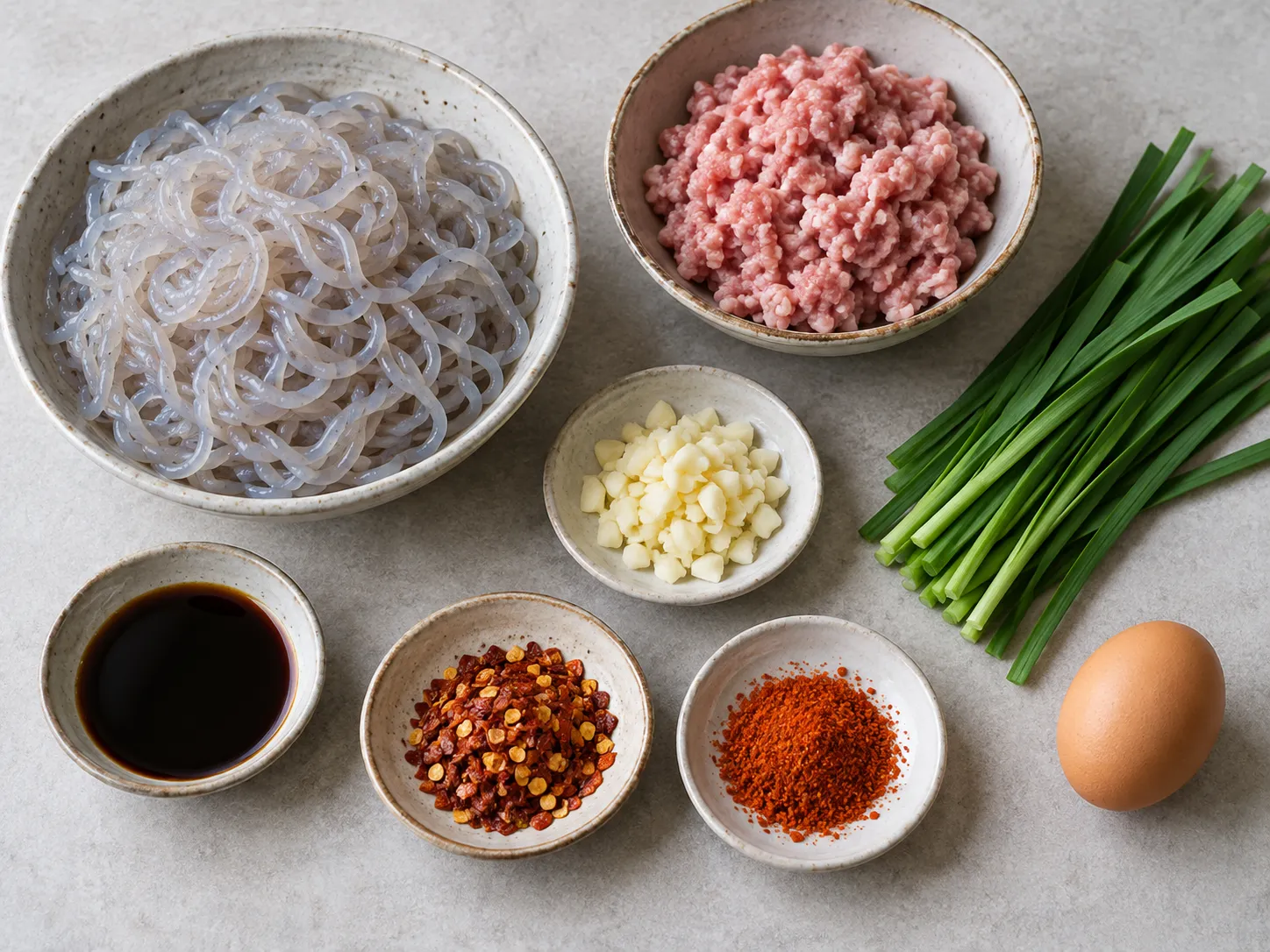
Most shops work roughly like this:
- Garlic and chilli are cooked off first — a lot of garlic, chopped or crushed, and chilli in some combination of flakes, powder and paste, bloomed until the whole shop smells of it.
- Minced pork goes in and is broken up and browned, picking up the chilli oil as it goes.
- The broth is added — a clear soy-based stock rather than a heavy pork bone one — and brought up hot.
- Garlic chives go in generously, cut into lengths, wilting just enough to go slippery without losing their snap.
- Beaten egg is stirred through at the end, setting in ribbons and taking a little of the edge off.
- The noodles are cooked separately — konjac by default, with wheat or half-and-half available in many shops — and the whole thing is assembled and sent out fast.
The order matters more than the ingredient list. Everything hot and aromatic goes in before the liquid, which is why the heat in a good bowl tastes built-in rather than sprinkled on top.
Before you go — the stuff that actually matters
Your questions, answered honestly
"How hot is it really?" — Entirely up to the number you pick, and the number means whatever that shop decides it means. A 1 is approachable for most people. The middle of a shop's range is a genuine event. The top end is a stunt, and the staff know it's a stunt. There is no prize.
"What number should I order?" — If you like spicy food, ask for 2 or 3 and enjoy your meal. If you're unsure, ask for 1. If you're the sort of person who orders the hottest thing on principle, please at least ask ichiban kara wa dono kurai desu ka? first, and look at the answer on their face rather than the number.
"Can I order it not spicy?" — Often yes — many shops go down to zero. It's a perfectly good garlic-pork noodle soup at zero. You are, however, eating a dish named "spicy noodles", and the staff will register the irony with complete politeness.
"Are the noodles really konjac?" — Usually, yes, and they're the default in most shops. Wheat noodles are widely available if you ask, and some places do a mix. Try the konjac first; the texture is half the reason the dish works.
"Is it vegetarian-friendly?" — No. Pork and egg are central and the broth is meat-based. Some shops will do a version without the minced pork, but the stock underneath usually isn't vegetarian, so ask directly rather than assuming.
"Do I drink the broth?" — People do. At low heat levels it's a pleasure. At high heat levels it's a decision. Nobody will judge you either way, and leaving broth is completely normal in Japan.
"I've ordered too hot. What do I do?" — Ask for rice (raisu) and eat it alongside; it helps more than water does. Water spreads the heat around your mouth. A raw egg or extra egg, if the shop offers it, is the other genuine fix. Keep breathing through your nose. It passes.
What the staff will ask you
| You'll hear | Romaji | Meaning | Just say |
|---|---|---|---|
| 辛さは何番にしますか? | Karasa wa nan-ban ni shimasu ka? | "What heat level?" | Ichi-ban de (level one, please) |
| 麺はこんにゃく麺と中華麺どちらですか? | Men wa konnyaku-men to chūka-men dochira desu ka? | "Konjac noodles or wheat noodles?" | Konnyaku-men de (konjac, please) |
| 大盛りにしますか? | Ōmori ni shimasu ka? | "Large portion?" | Futsū de (regular, please) |
| 玉子は追加しますか? | Tamago wa tsuika shimasu ka? | "Extra egg?" | Onegaishimasu (yes, please) |
| ライスはつけますか? | Raisu wa tsukemasu ka? | "Rice with that?" | Onegaishimasu (yes, please) |
To order, just say "Karamen kudasai" (辛麺ください) — "Karamen, please."
Where to eat it
- Nobeoka, Miyazaki — the home of it, and the only place where the range of shops lets you understand it properly. Small independent noodle shops around the city centre are the heart of it.
- Miyazaki City — plenty of shops now, and the easiest place to try it if you're basing yourself in the prefectural capital rather than heading up the coast.
- Karamen chains across Kyushu and beyond — several have spread well outside Miyazaki. Genuinely good, consistent, and an honest introduction, though the Nobeoka independents are the reason to make the trip.
- Supermarkets and souvenir shops in Miyazaki — instant and chilled versions to take home. Better than you'd expect, and the konjac noodles survive the format.
Small noodle shops in Nobeoka often keep short or irregular hours and some close midweek — check current opening times before travelling out there specially.
Soul Score
Local Roots4/5
First-Timer Friendly3/5
Adventure Level5/5
Comfort Level4/5
Travel Worthy4/5
These scores are one obsessed eater's gut feeling — not a verdict. A low number isn't a bad mark, just a different kind of adventure.
Know someone planning Japan?
← All Articles
Local Food · Nobeoka, Miyazaki
Still hungry?
Eat more from Miyazaki
Local FoodMiyazaki
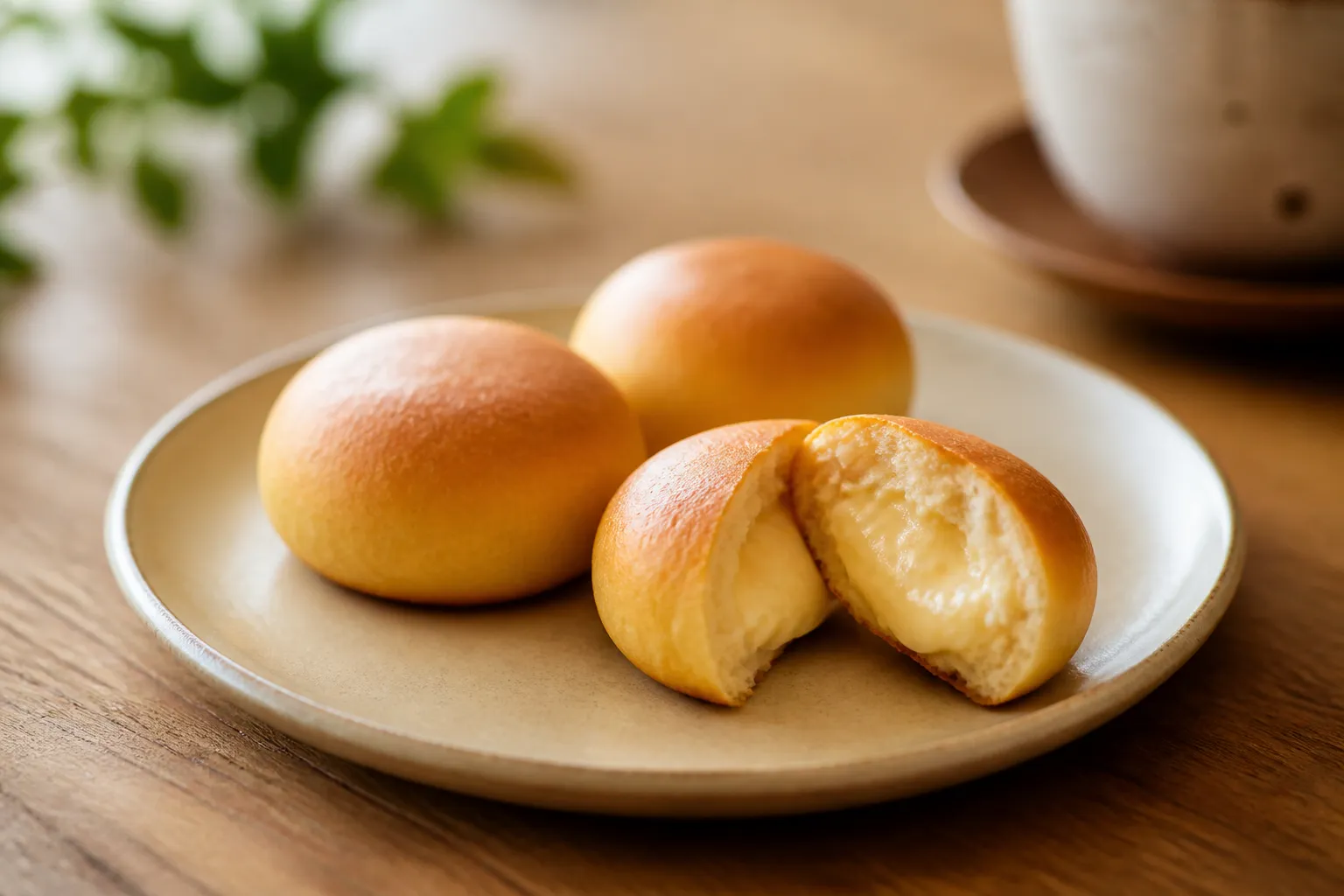
Cheese Manju (チーズ饅頭)
A warm golden bun that looks like a plain cookie until you bite in and hit a molten pocket of cream cheese — Miyazaki's sneaky-brilliant souvenir that ruined me for regular manju.
July 12, 2026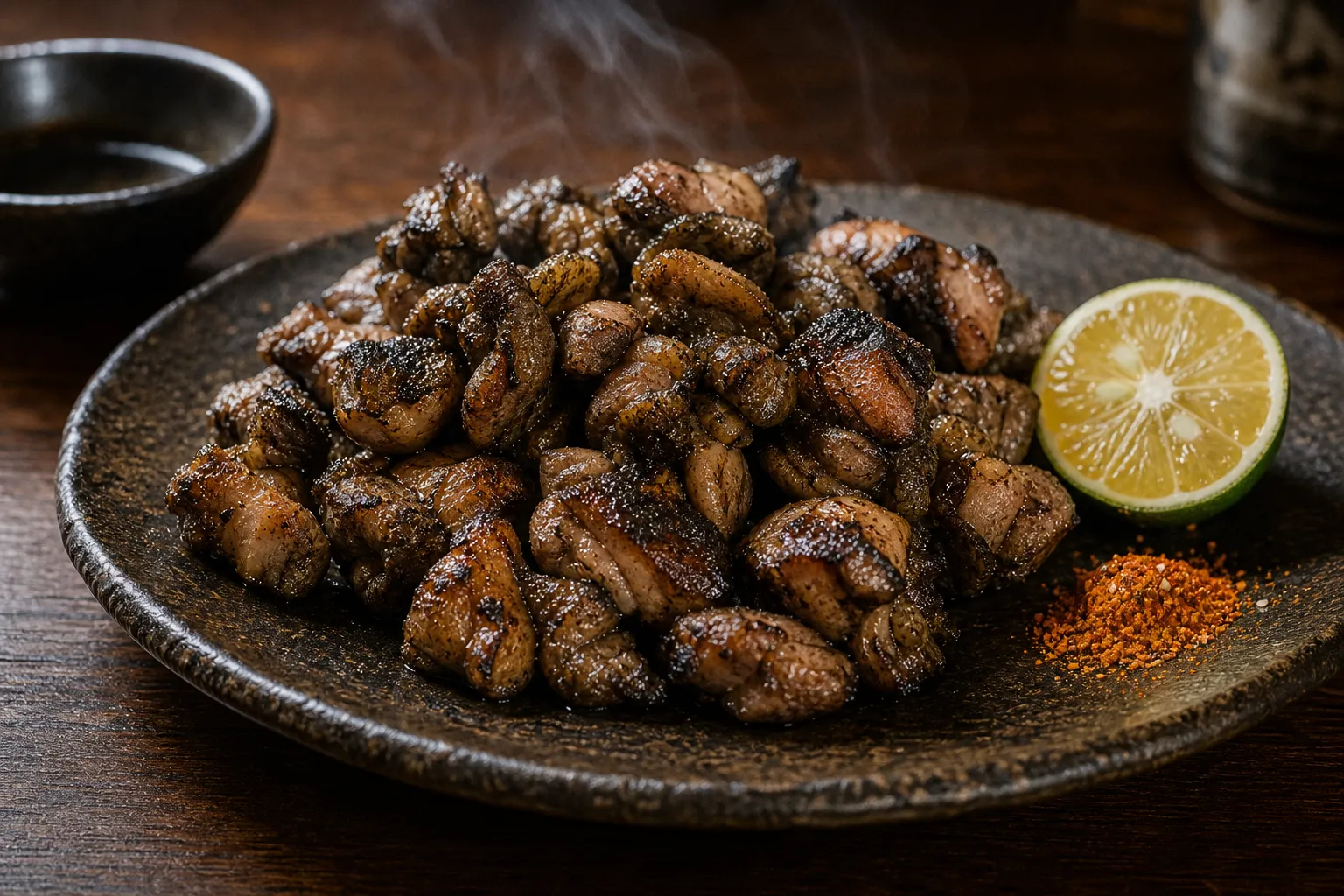
Local FoodMiyazaki
Charcoal-grilled Jidori Chicken (炭火焼地鶏)
Chunks of local jidori thigh thrown over furious charcoal until they're blackened, smoky and impossibly juicy. It looks burnt. It is not burnt. It is the best thing Miyazaki will put in front of you.
July 12, 2026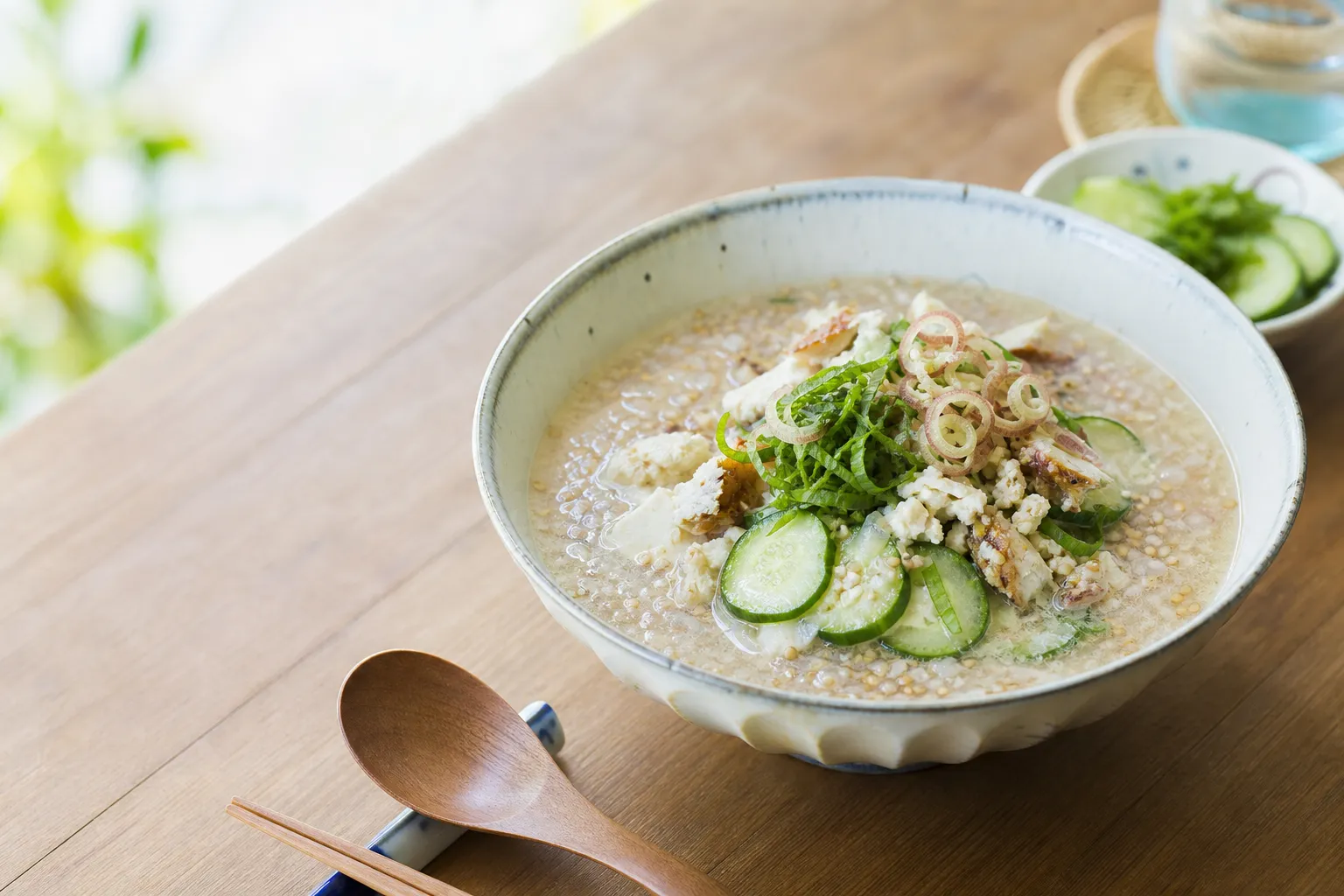
Local FoodMiyazaki, Miyazaki
Hiyajiru (冷や汁)
Cold miso soup. Poured over hot rice. In summer. I know how that sounds — I thought the same thing. Then I ate it on a brutal August afternoon in Miyazaki and understood exactly why farmers have been making it for centuries.
June 28, 2026